
Kingstanding sits on the northern edge of a city with an extraordinary story. Steam engines that drove mills, coins struck by steam, gas lights, a heart medicine from the foxglove, and a typeface still used every day all came out of Birmingham and its neighbours.
Start with the Industrial Pioneers, the people behind Soho and the Lunar Society. Explore Lost Birmingham, the houses, works and streets that have gone. Follow a trail, read the timeline, or open the map and see what once stood near you.
Every page lists its sources. Where historians disagree, we say so.
- Birmingham’s Industrial Pioneers →The people who made Birmingham the workshop of the world — and the places where they did it.
- Lost Birmingham →What used to stand here? Buildings, works, estates and streets the city has lost, and what survives of them.
- Birmingham on the Gough Map →Find Birmingham on one of Britain’s oldest maps and watch the medieval landscape transform into the Britain we know today.
- Lost Birmingham in 3D →Demolished buildings rebuilt where they stood on today’s streets — turn them, zoom in and share them.
- The Lunar Society →Manufacturers, scientists and doctors who met by the full moon, and what came of it.
- The map →Every place on one map of Birmingham, with the 1888–1913 Ordnance Survey to compare.
- The timeline →From the first mechanised spinning to the motor works, in order.
Search Birmingham history
Explore by
Industry and subject
- Japanning and papier-mâché
- Glass
- Food and drink manufacture
- Metals and alloys
- Reform and the vote
- Industrial decline since the 1970s
- Chamberlain Square and Paradise
- The Bull Ring: three rebuildings
- Slum clearance and the back-to-backs
- The Inner Ring Road
- Post-war reconstruction and Herbert Manzoni
- Wartime Birmingham: the Blitz
- Victorian Birmingham: the town remade
- Banking
- Cotton spinning
- Buttons
- The jewellery trade
- Motor electrics
- The motor industry
- Bicycles and motorcycles
- Wire-drawing
- Weighing machines
- Chocolate and cocoa
- Hydraulics and heavy engineering
- Plastics
- Electroplating
- The pen trade
- Screws and fasteners
- The Priestley Riots
- Slavery and abolition
- Medicine and botany
- Printing and type
- The gun trade
- Industrial chemistry
- The toy trade and metalwork
- Gas lighting
- Coinage and minting
- Steam power
What survives
People
- John Handy
- William Church
- Henry Clay
- William Westley Richards
- George Kynoch
- Sir James Timmins Chance
- Robert Lucas Chance
- Sampson Lloyd
- Alfred Bird
- John Cadbury
- George Frederick Muntz
- Edward Thomason
- Ralph Heaton II
- James Pickard
- Samuel Garbett
- John Roebuck
- John Mitchell
- Sir Josiah Mason
- Herbert Manzoni
- Thomas Attwood
- Neville Chamberlain
- Lewis Paul
- John Wyatt
- John Taylor
- William Morris, Lord Nuffield
- Herbert Austin
- Frederick Lanchester
- Harry Lucas
- Joseph Lucas
- James Horsfall
- William Beilby Avery
- Richard Cadbury
- George Cadbury
- George Tangye
- Richard Tangye
- Alexander Parkes
- Henry Elkington
- George Richards Elkington
- Joseph Gillott
- John Sutton Nettlefold
- Joseph Chamberlain
- Josiah Wedgwood
- Erasmus Darwin
- John Baskerville
- Samuel Galton junior
- William Withering
- Joseph Priestley
- James Keir
- William Murdoch
- James Watt
- Matthew Boulton
A long read
Herbert Manzoni: the man who remade Birmingham
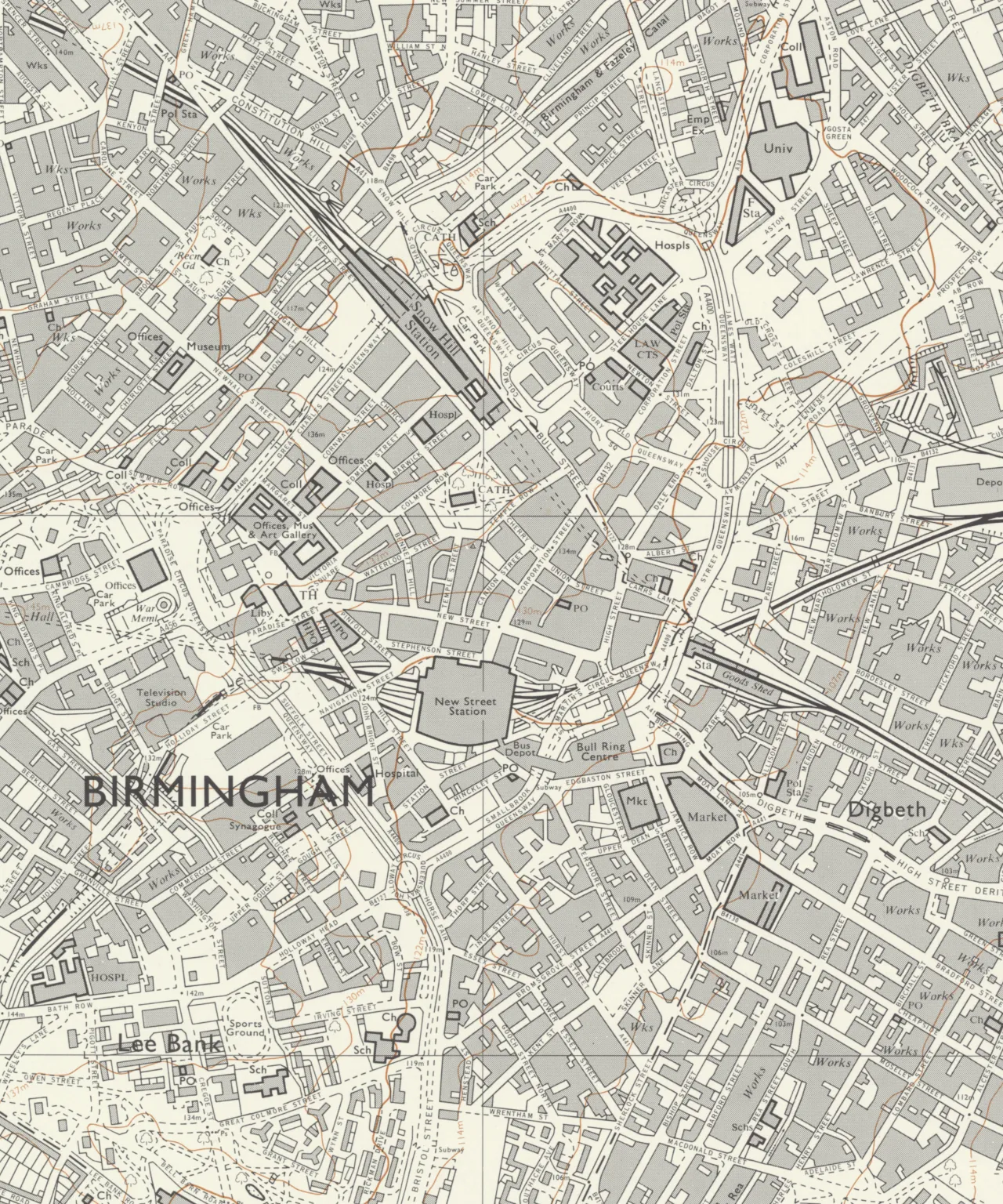
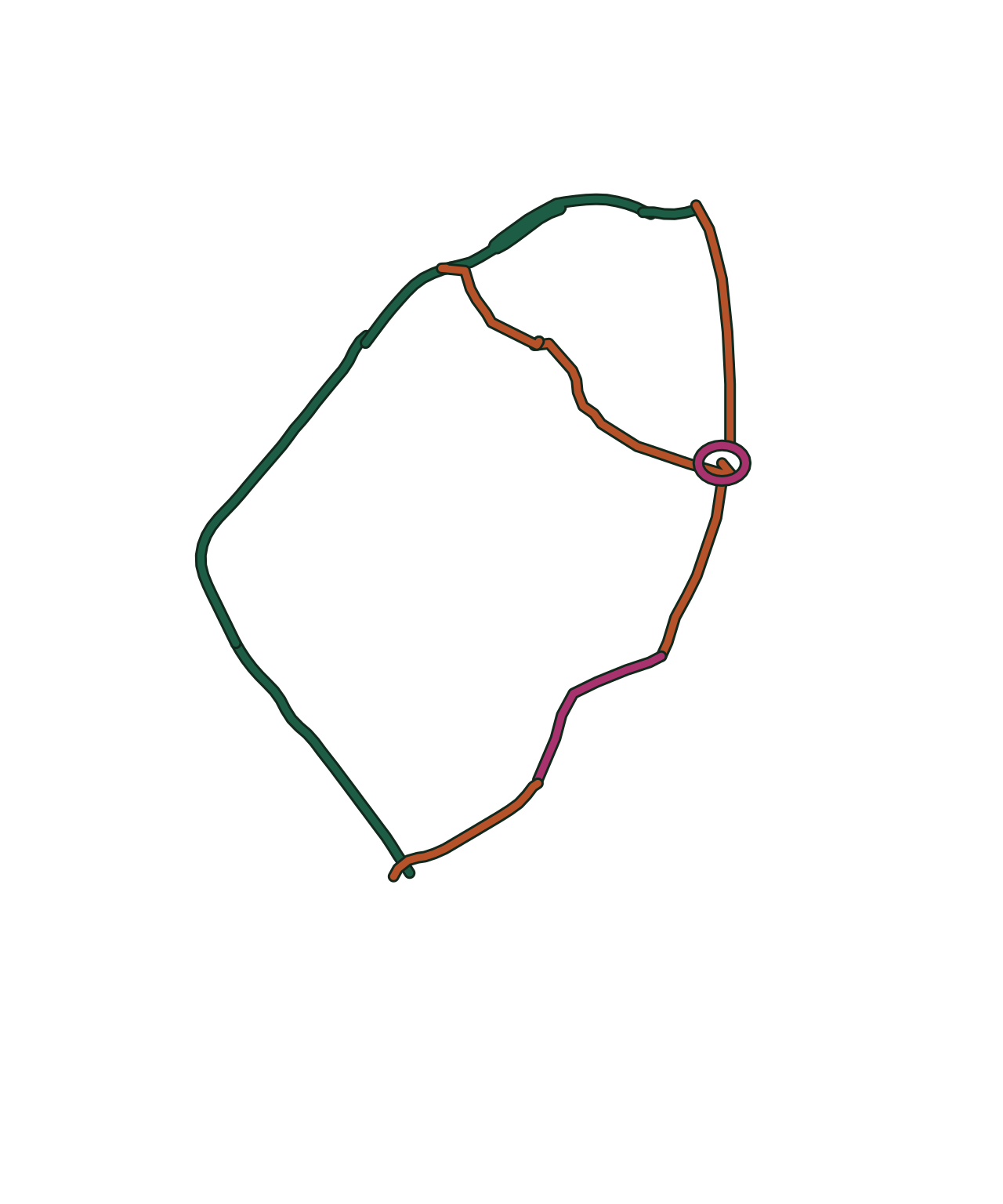
Birmingham survived the Blitz, then rebuilt itself on purpose. Compare the city before and after on four lined-up maps, see what the Inner Ring Road took, and judge for yourself.
People
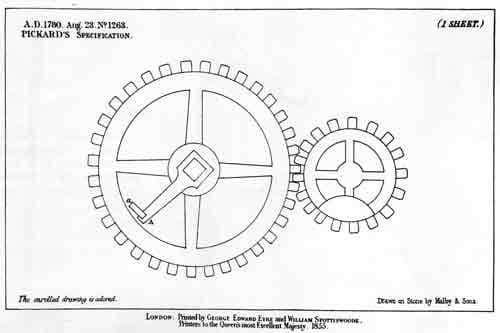 James Pickardactive 1779–1795 · Button maker and miller; holder of the 1780 ‘crank patent’Snow Hill button maker and miller whose mill engine, built by Matthew Wasbrough and refitted with a crank and flywheel in 1780, was among the first to turn a mill directly by steam. His patent of 1780 pushed Boulton & Watt to adopt the sun-and-planet gear.
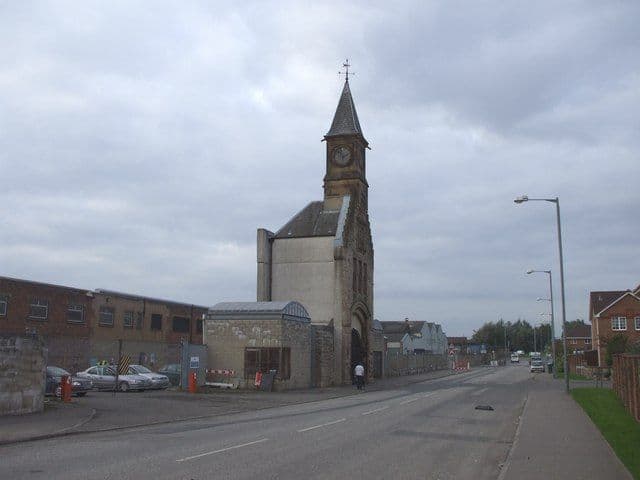 Samuel Garbett1717–1803 · Merchant, refiner, chemical manufacturer, ironworks founder and lobbyistSelf-made Birmingham merchant who refined gold and silver in Steelhouse Lane, made sulphuric acid with John Roebuck, co-founded the Carron ironworks and became the first chairman of the Birmingham Commercial Committee (1783), the ancestor of the Chamber of Commerce.
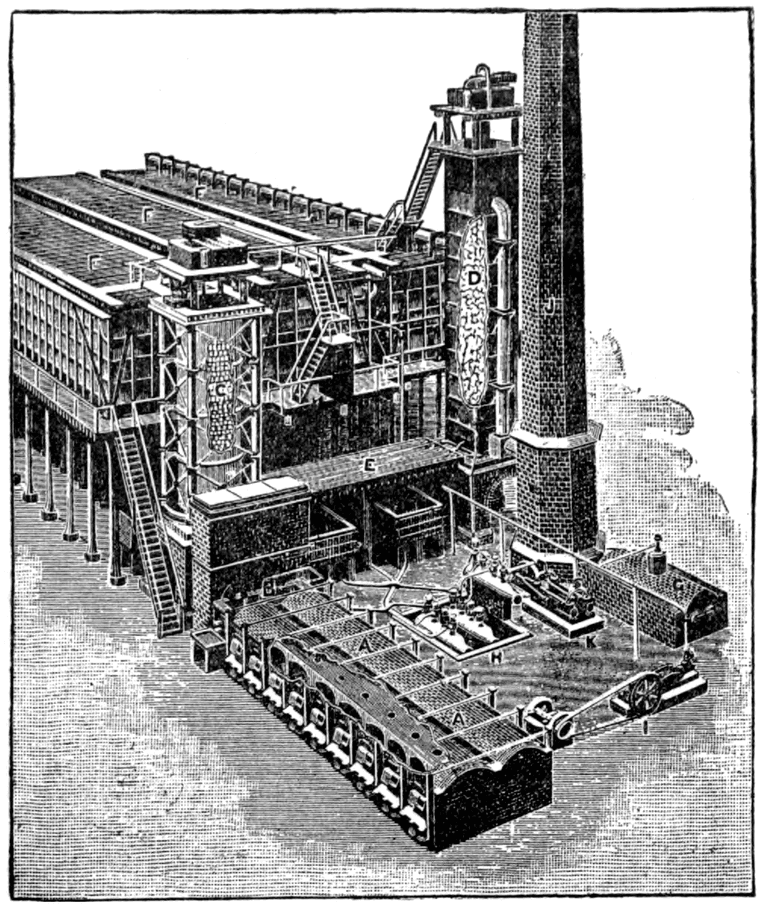 John Roebuck1718–1794 · Physician, chemist, ironmaster and Watt’s first backerSheffield-born doctor who set up a laboratory and refinery in Steelhouse Lane and, with Samuel Garbett, made sulphuric acid cheap by building lead chambers in place of glass (1746). He co-founded the Carron ironworks and was James Watt’s first partner until bankruptcy passed his share to Boulton.
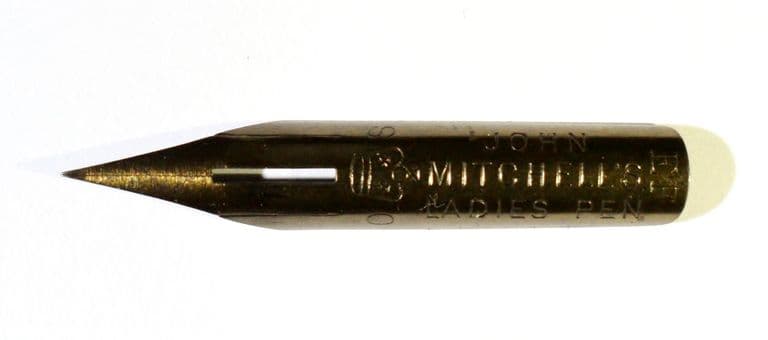 John Mitchellc. 1798–before 1872 · Steel pen manufacturerA Sheffield-born pen maker in Newhall Street whose family were in at the start of Birmingham’s steel-pen trade. His son claimed he was the first to make pens with press tools, about 1822; the Mitchells also taught the business to their brother-in-law, Joseph Gillott.
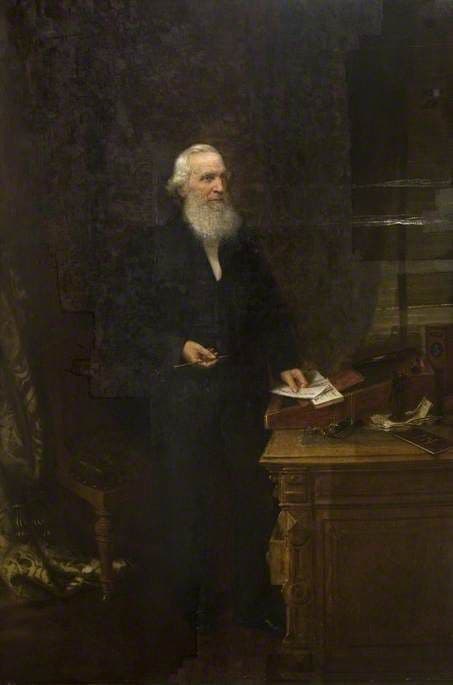 Sir Josiah Mason1795–1881 · Split-ring and steel pen manufacturer, electroplating partner and philanthropistA Kidderminster weaver’s boy who made Perry’s famous pens in secret at Lancaster Street, backed the Elkingtons’ electroplating, then gave his fortune to an orphanage at Erdington and the science college that became the University of Birmingham.
- Herbert Manzoni1899–1972 · Civil engineer; City Engineer and Surveyor of Birmingham, 1935–63; President of the Institution of Civil Engineers, 1960–61For 28 years Birmingham’s City Engineer and Surveyor, Herbert Manzoni planned the Inner Ring Road and the five great slum-clearance areas before the first bomb fell, then spent the post-war decades building them. Few officials have changed a British city so much.
Places
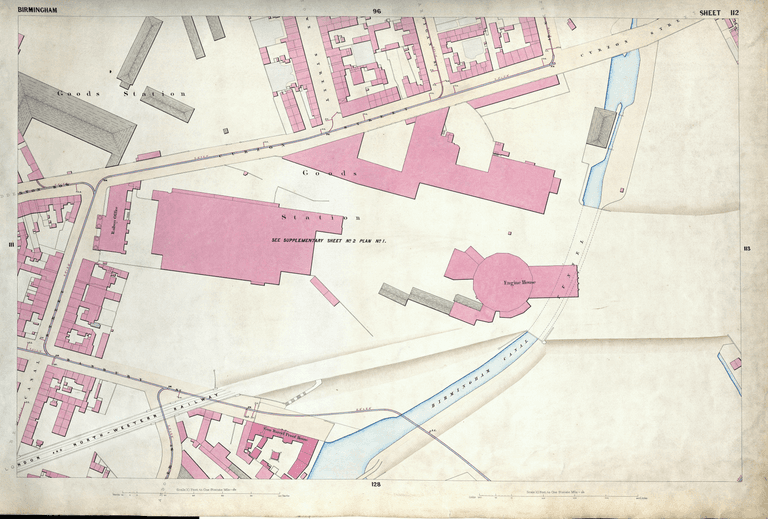 Curzon Street RoundhouseLost · 1837–1860Robert Stephenson’s sixteen-road engine house for the London & Birmingham Railway, in use from 12 November 1837 and demolished in 1860. HS2 excavated it in 2020–21 and reburied it. It is the earliest known railway roundhouse.
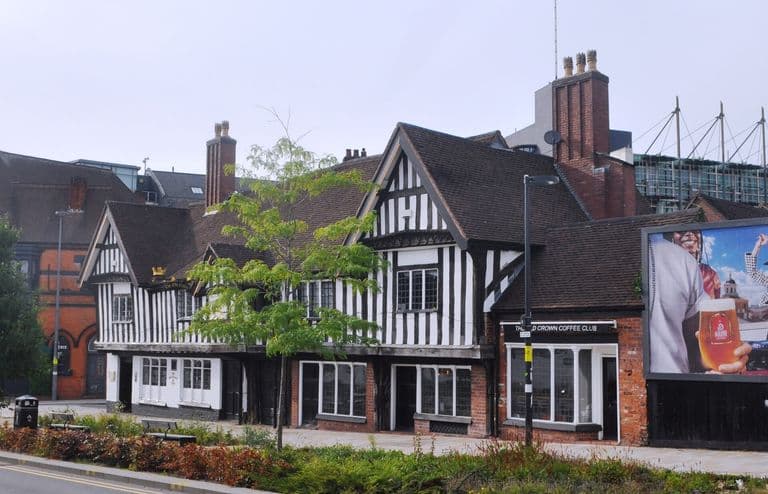 The Old Crown, DeritendSurviving · c. 1500The oldest secular building in central Birmingham: a jettied timber-framed house of the early 16th century on High Street Deritend, identified with the ‘mansion house of timber’ Leland saw. Saved from demolition by Joshua Toulmin Smith, it is Grade II* and still a pub.
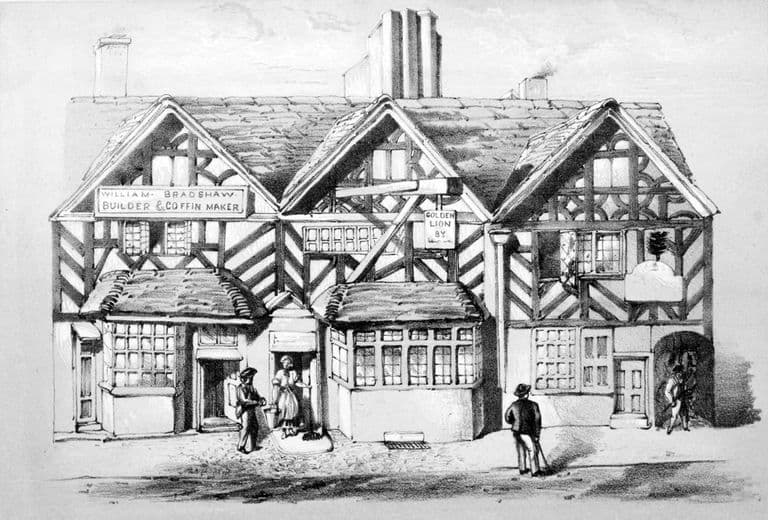 The Golden Lion, DeritendRelocated · c. 1600–1911A three-gabled timber-framed house of about 1600 on the south side of High Street Deritend, for many years an inn. In 1911 it was taken down and rebuilt in Cannon Hill Park, where it still stands, listed Grade II and under repair since 2025.
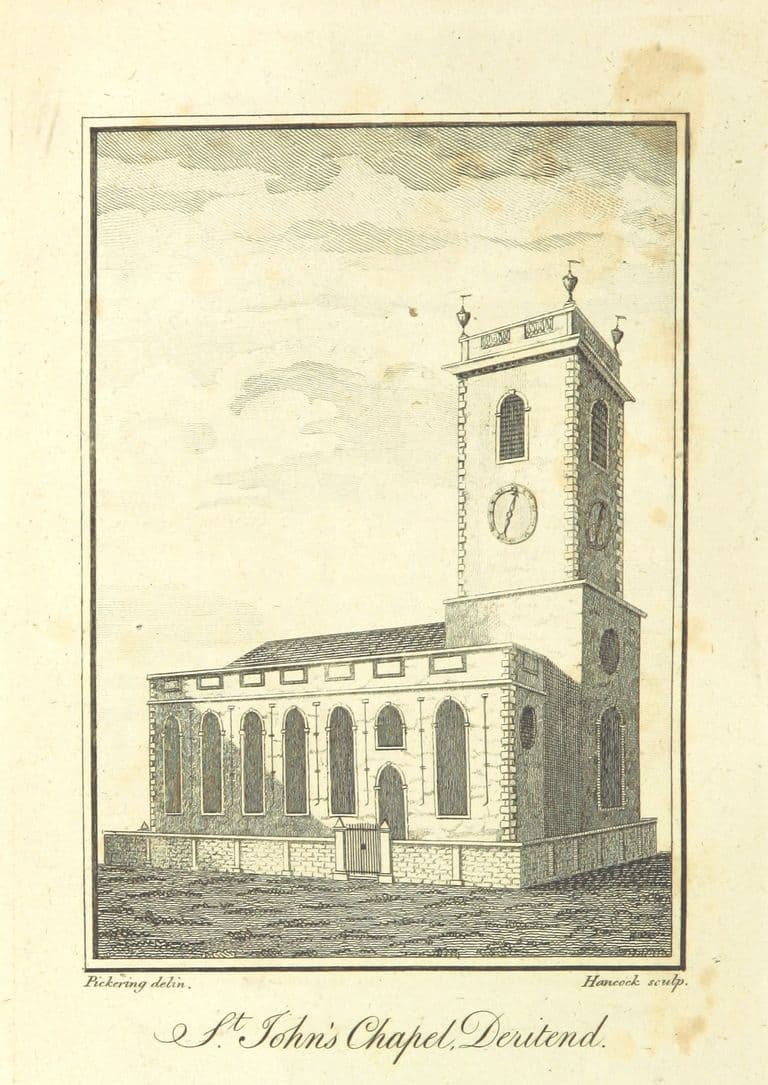 St John’s Chapel, DeritendLost · c. 1381–1947Deritend’s own chapel, built by 1381 so that people across the Rea need not struggle to Aston church. Rebuilt in brick in 1735, it honoured the martyr John Rogers. Bombed in 1940 and demolished in 1947, it lies under High Street Deritend; its bells’ metal hangs in Perry Barr.
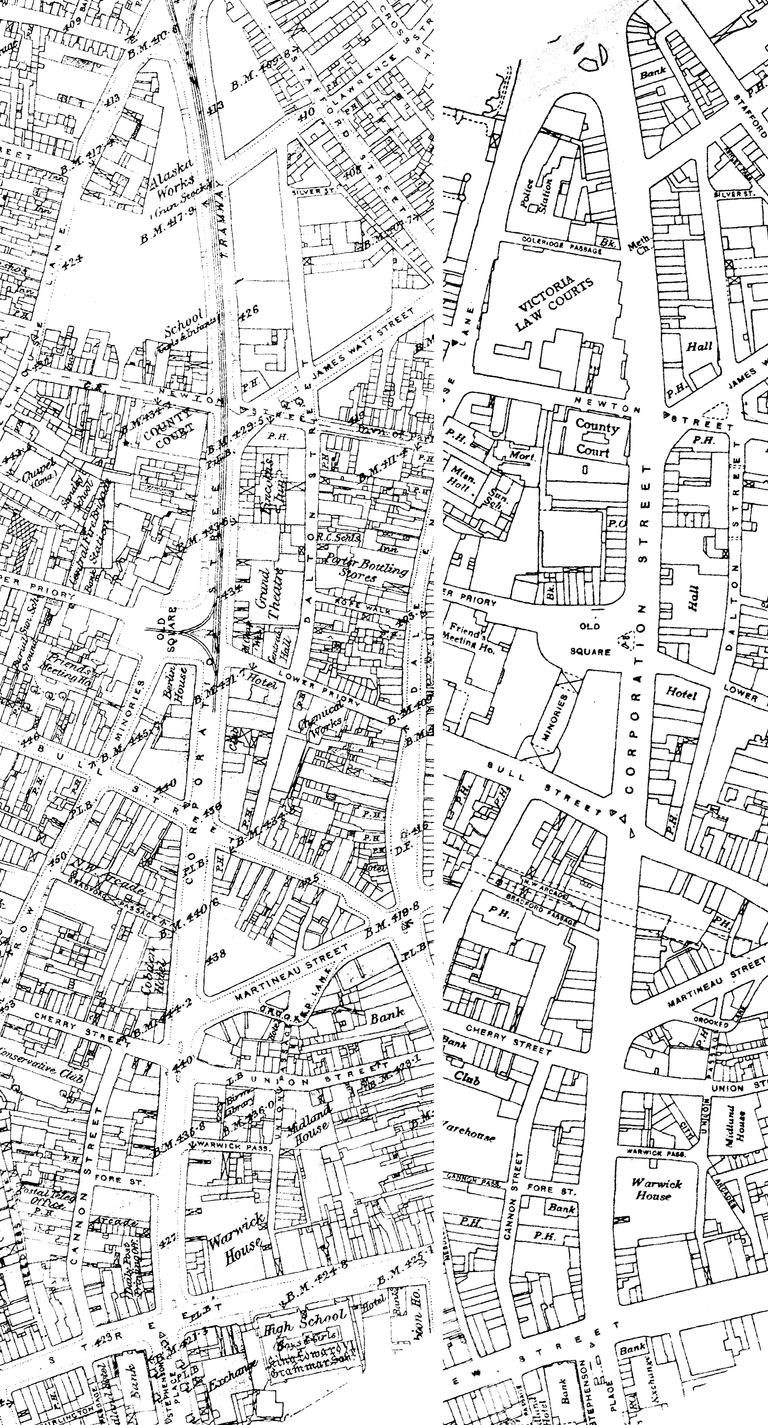 Grand Theatre, Corporation StreetLost, Site redeveloped · 1883–1963A large domed theatre opened in 1883 facing Old Square on Chamberlain’s new Corporation Street. Moss Empires made it a variety house in 1907; it was briefly a cinema, then the Grand Casino ballroom. It closed in 1960 and was demolished in 1963.
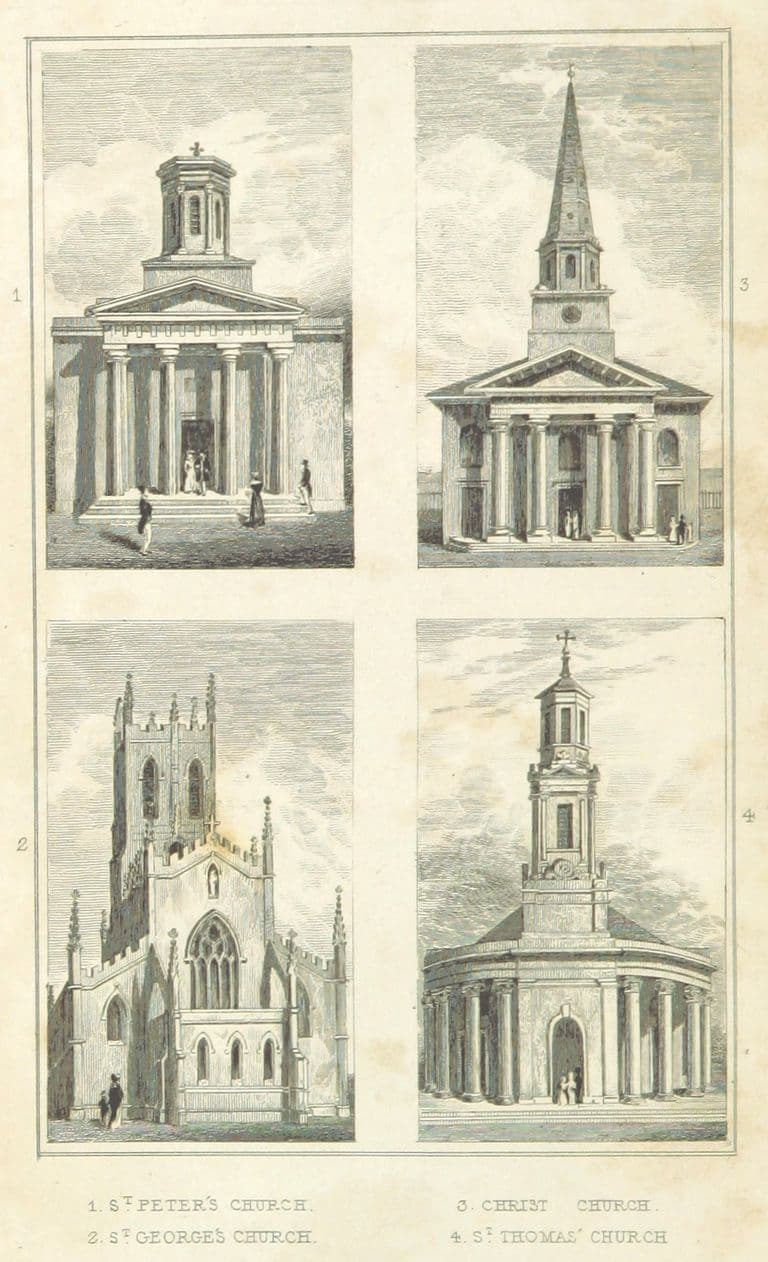 St Thomas’s Church, Bath RowPartly surviving, Lost · 1826–1940Rickman and Hutchinson’s Greek Revival church at Holloway Head, built in 1826–29 with 2,125 seats, 1,500 of them free. Bombing in December 1940 destroyed all but the west front. Its tower and curved Ionic porticos still stand in St Thomas’ Peace Garden off Bath Row.