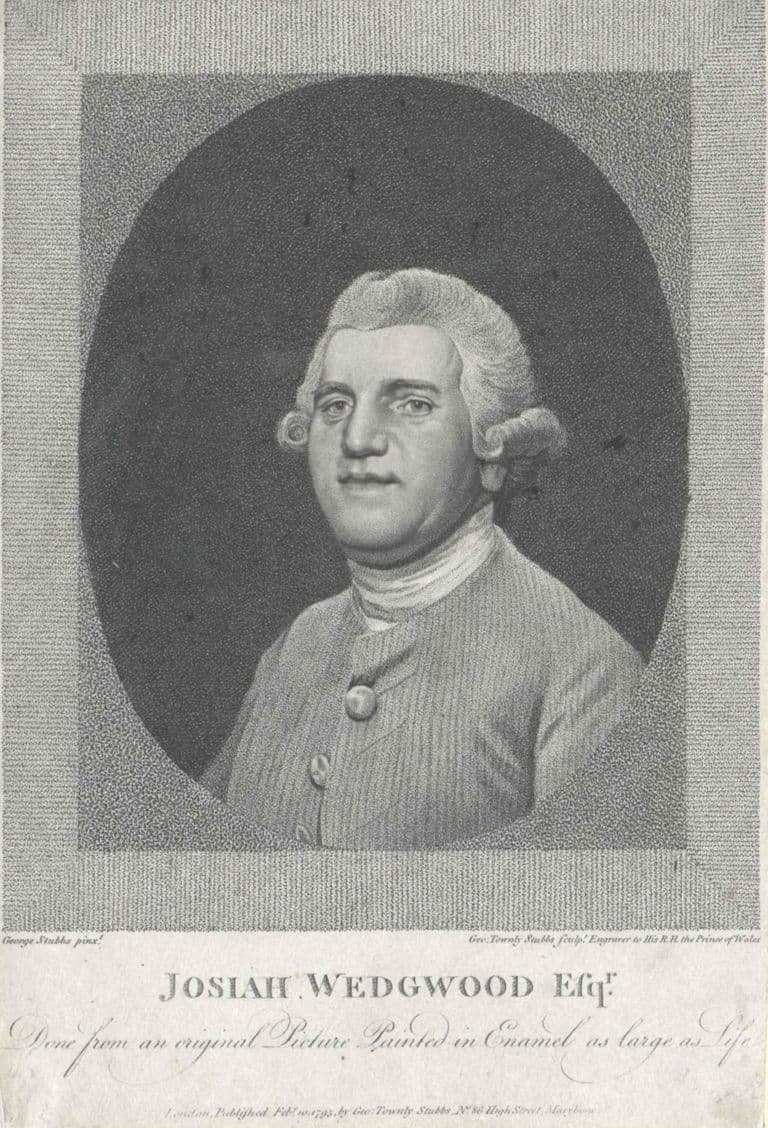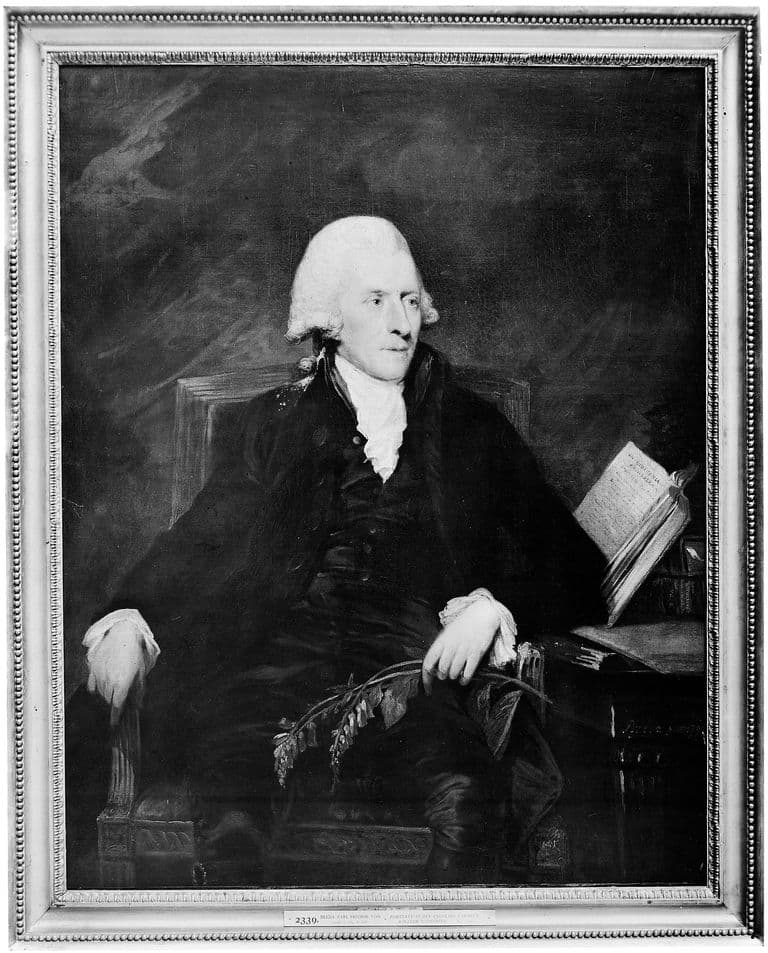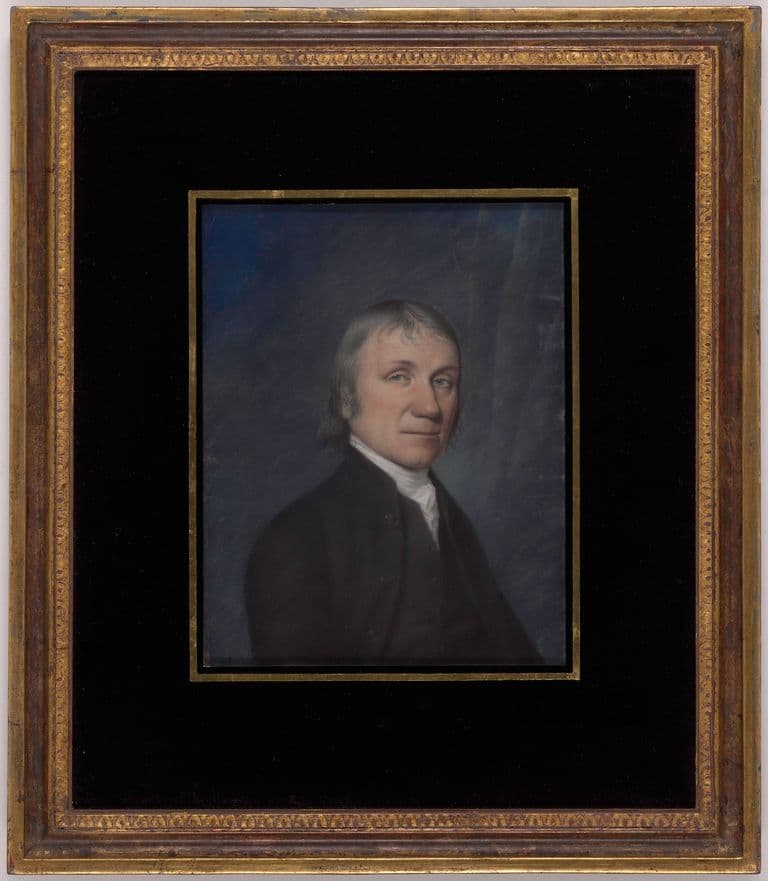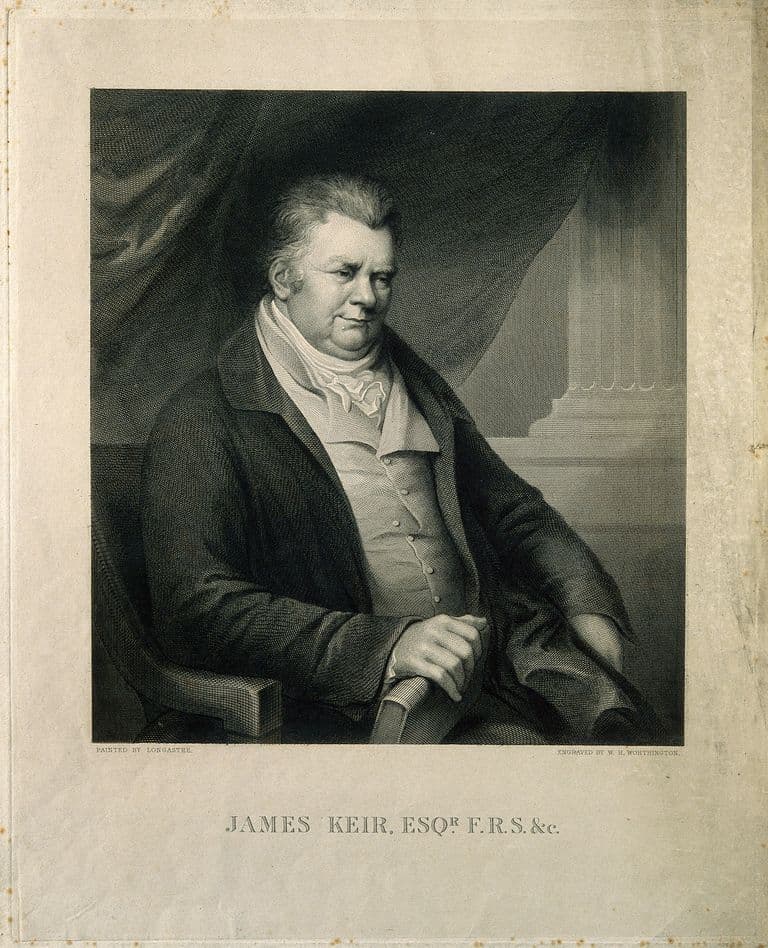
In the 1770s and 1780s chemistry was the most exciting science in Europe, and some of the people doing it lived around Birmingham.
James Keir: from army officer to soap-maker
James Keir had trained in medicine at Edinburgh and served as an army officer in the West Indies before settling at West Bromwich after 1768. He made the jump from theory to industry. From the early 1770s he ran a glassworks at Amblecote, near Stourbridge, making flint glass, window glass and chemical ware, and using the furnaces for his own experiments. He translated Macquer’s French *Dictionary of Chemistry* (1776) and wrote a treatise on gases (1777).
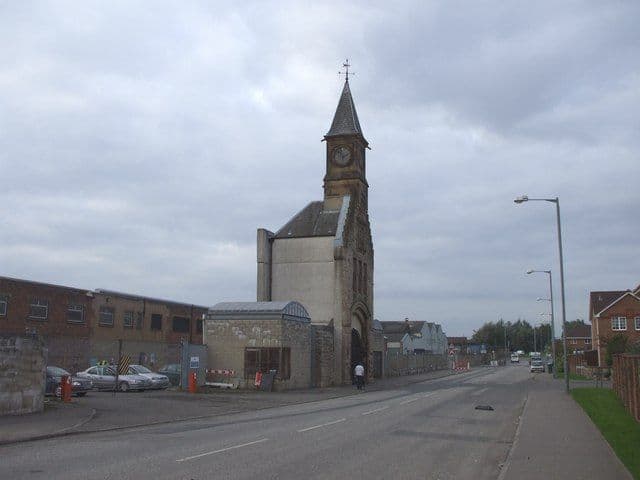
In 1779 he patented an alloy of copper, zinc and iron that could be forged hot or cold, later used for window sashes. In about 1780, with Alexander Blair, he set up a chemical works at Bloomfield in Tipton. It made alkali, soap, white and red lead for potters and glassmakers, and metal window sashes. The canal carried his soap to Hull, Liverpool, Bristol and London. The old name of the road beside it, Soap Factory Road, survives as Factory Road.
Joseph Priestley’s airs
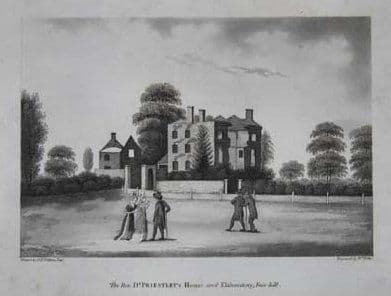
Joseph Priestley had made his famous discoveries before he came to Birmingham in 1780. Oxygen, which he called “dephlogisticated air”, was 1774, at Calne. In Birmingham he carried on, paid for by friends’ subscriptions, publishing more volumes of experiments and papers for the Royal Society. He and Keir worked together on gases.
Arguments and analyses
William Withering analysed minerals. A barium mineral he studied, *terra ponderosa*, was later named witherite after him. James Watt worked on the make-up of water, a question that became a long-running dispute with Henry Cavendish and Antoine Lavoisier. Lavoisier’s new chemistry was sweeping away the old idea of phlogiston. The Birmingham group did not like it. Priestley wrote in 1795 that his Lunar Society friends “were never satisfied with the Anti-phlogistic doctrine”.
They lost that argument. But Keir, Withering and Galton were all elected Fellows of the Royal Society in 1785. The soap boiling in Tipton and the glass cooling in Amblecote showed that Midlands chemistry could pay.
On the map
5 places connected with Industrial chemistry. Tap a number for directions — some sites are private homes or gardens, so each place’s page says what you can see from the street.

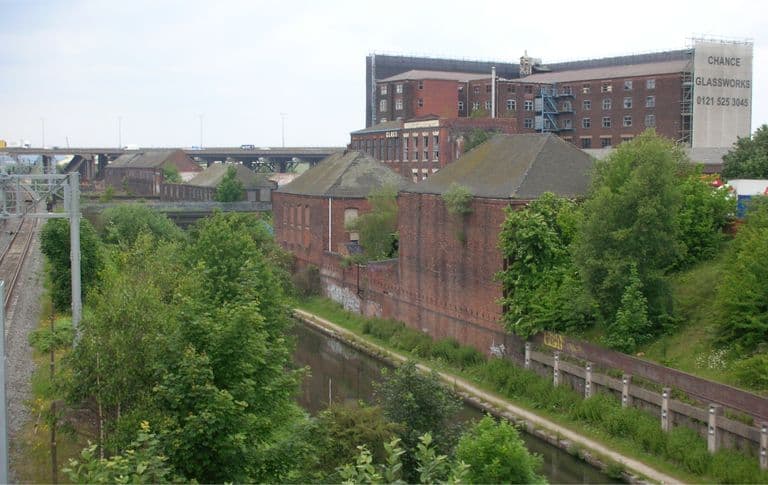
- Chance’s Glassworks, Spon Lane — Partly surviving, At risk · Directions to Chance’s Glassworks, Spon Lane (opens Google Maps)
- Roebuck and Garbett’s laboratory and refinery, Steelhouse Lane — Lost, Site redeveloped
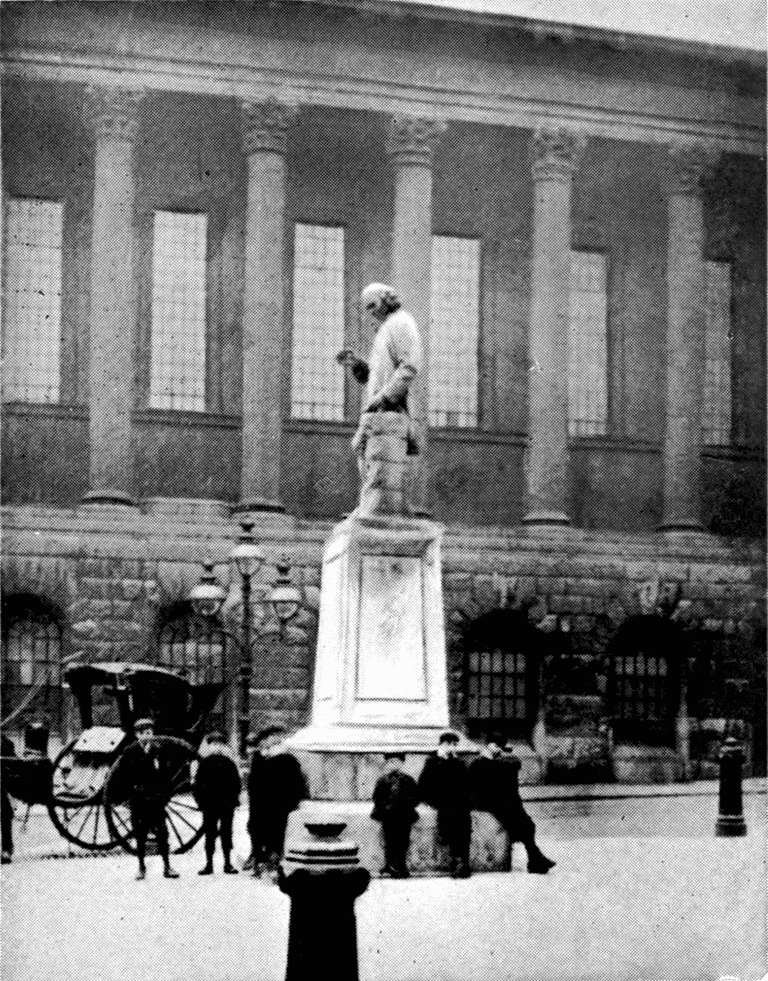
- Statue of Joseph Priestley, Ratcliff Passage — Relocated, Surviving but altered · Directions to Statue of Joseph Priestley, Ratcliff Passage (opens Google Maps)
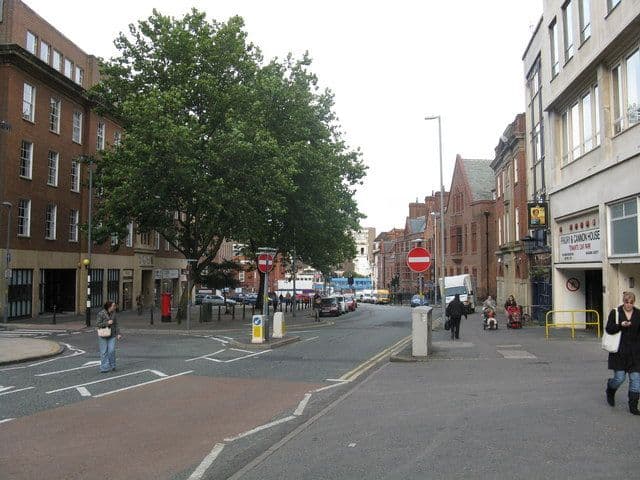
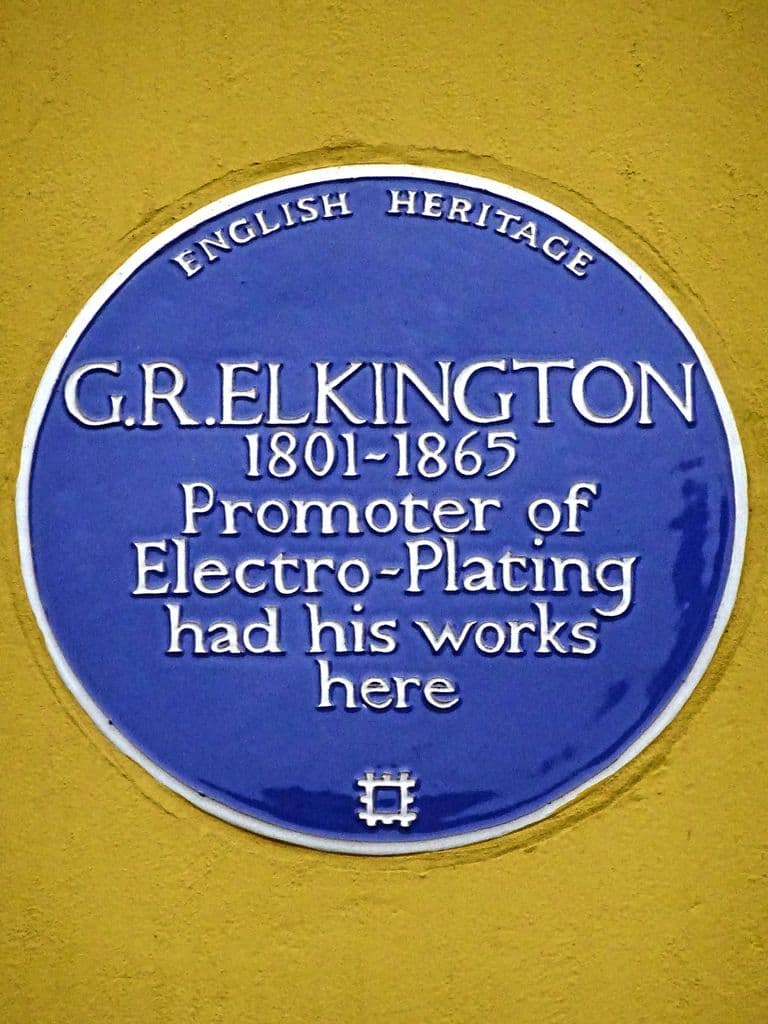
- Elkington’s electroplating works, Newhall Street — Partly surviving, Surviving but altered · Directions to Elkington’s electroplating works, Newhall Street (opens Google Maps)
- Fair Hill — Lost, Site redeveloped
Key dates
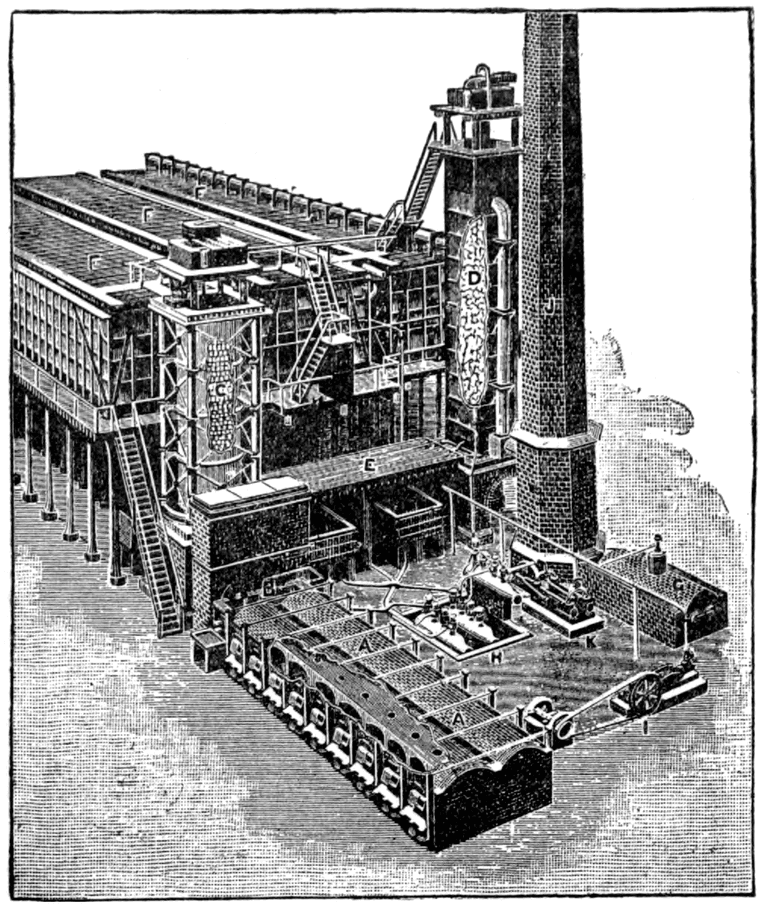
- 1746 — Roebuck and Garbett make sulphuric acid in lead chambersAt their Steelhouse Lane refinery, John Roebuck and Samuel Garbett begin making sulphuric acid on a large scale in chambers of lead instead of glass globes. The unpatented process cuts the cost of the acid to about a quarter and moves to a bigger works at Prestonpans in 1749.
- 1759 — Carron Company foundedJohn Roebuck, Samuel Garbett and partners found the Carron ironworks near Falkirk, with Birmingham capital. Its first furnace is blown on 1 January 1760.
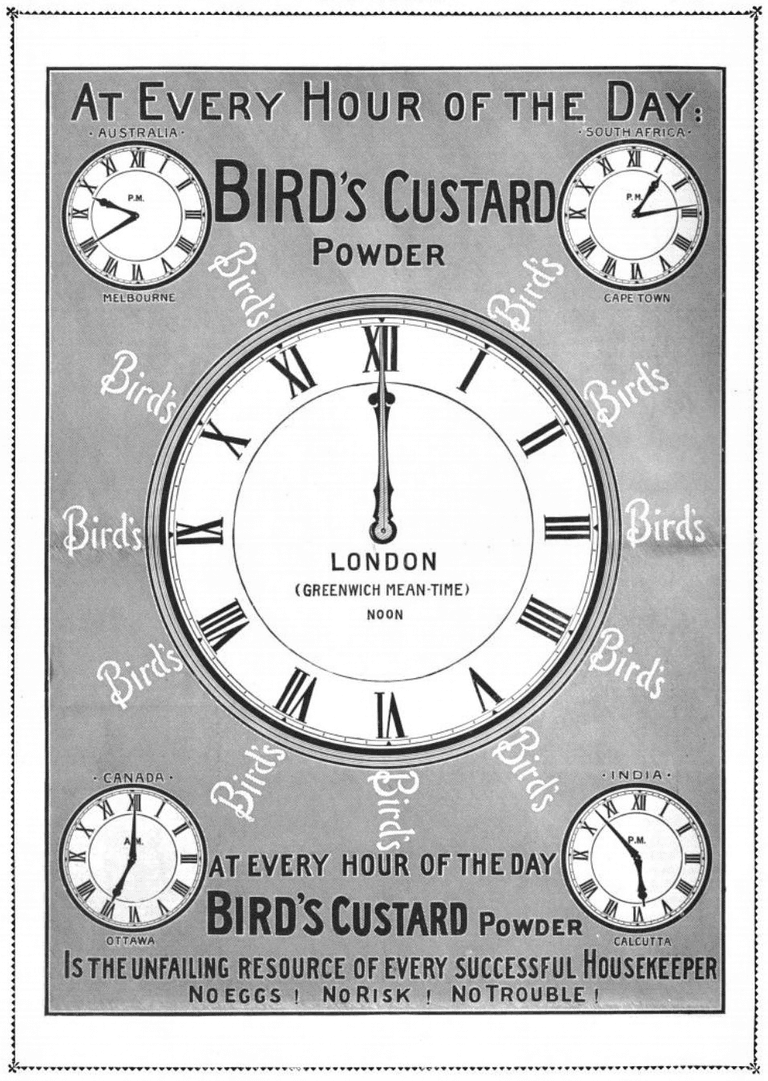
- 1843 — Bird’s Fermenting Powder (baking powder)Alfred Bird produces ‘Bird’s Fermenting Powder’, a baking powder that raises bread without live yeast, first for his wife. In 1855 it was supplied for baking fresh bread for the army in the Crimea.
- 1 August 1874 — Huxley unveils Priestley’s statueA hundred years to the day after Priestley’s experiment that produced oxygen, T. H. Huxley presents F. J. Williamson’s statue of Joseph Priestley to the town of Birmingham.
Sources and further reading
- Keir, James — Dictionary of National Biography, vol. 30 — Gordon Goodwin, Smith, Elder & Co., 1892
- The annals of Tipton: James Keir & Company — Black Country History
- James Keir — West Bromwich Local History Society
- A Portrait of James Keir — Revolutionary Players, History West Midlands
- History and Heritage — Stourbridge Glass Quarter — Dudley Council, Dudley Council
- Memoirs of Dr. Joseph Priestley, to the year 1795, written by himself — Joseph Priestley, London, 1806
- Withering, William — Dictionary of National Biography, Smith, Elder & Co., 1885–1900. witherite
- William Withering — Science in the Making — The Royal Society. Ref. L&P/7/251
- Samuel Galton (1753–1832) — Science in the Making — The Royal Society. Ref. L&P/7/262
- Blue Plaque: James Watt (Handsworth) — Birmingham Civic Society. water