
What was here?
Before Newhall Square, this stretch of Newhall Street by the Birmingham and Fazeley Canal held the works of Elkington, Mason and Co.: a long stucco-fronted manufactory with showrooms, where silver and gold were laid on base metal by electricity. Later it housed the city’s Museum of Science and Industry.
History
Walk down Newhall Street and you pass the place where Birmingham learned to put silver on almost anything.
Silver by electricity
The works opened in 1838. Their owners, the Elkingtons, held patents for electroplating: using an electric current to coat a cheaper metal with a thin skin of silver or gold. The method was of world importance, and it put Birmingham at the front of a new trade.
The business grew fast. The works were altered and extended in the later nineteenth century, with extensions of the 1850s beside the Birmingham and Fazeley Canal. The Victoria County History describes the result: a “long stucco front, classical porch, fine staircase, and large showrooms”. No architect is recorded.
Parkes and the first plastic
One man who worked here went on to change the material world. Alexander Parkes worked on this site for Elkington, Mason and Co. from about 1840 to 1850, according to the Birmingham Civic Society plaque that now marks it. Parkes went on to invent Parkesine, the first plastic.
The same spot, then and now
1888–1913
Today
Old map: Ordnance Survey six-inch, reproduced with the permission of the National Library of Scotland (CC BY 4.0). Today: © OpenStreetMap contributors.
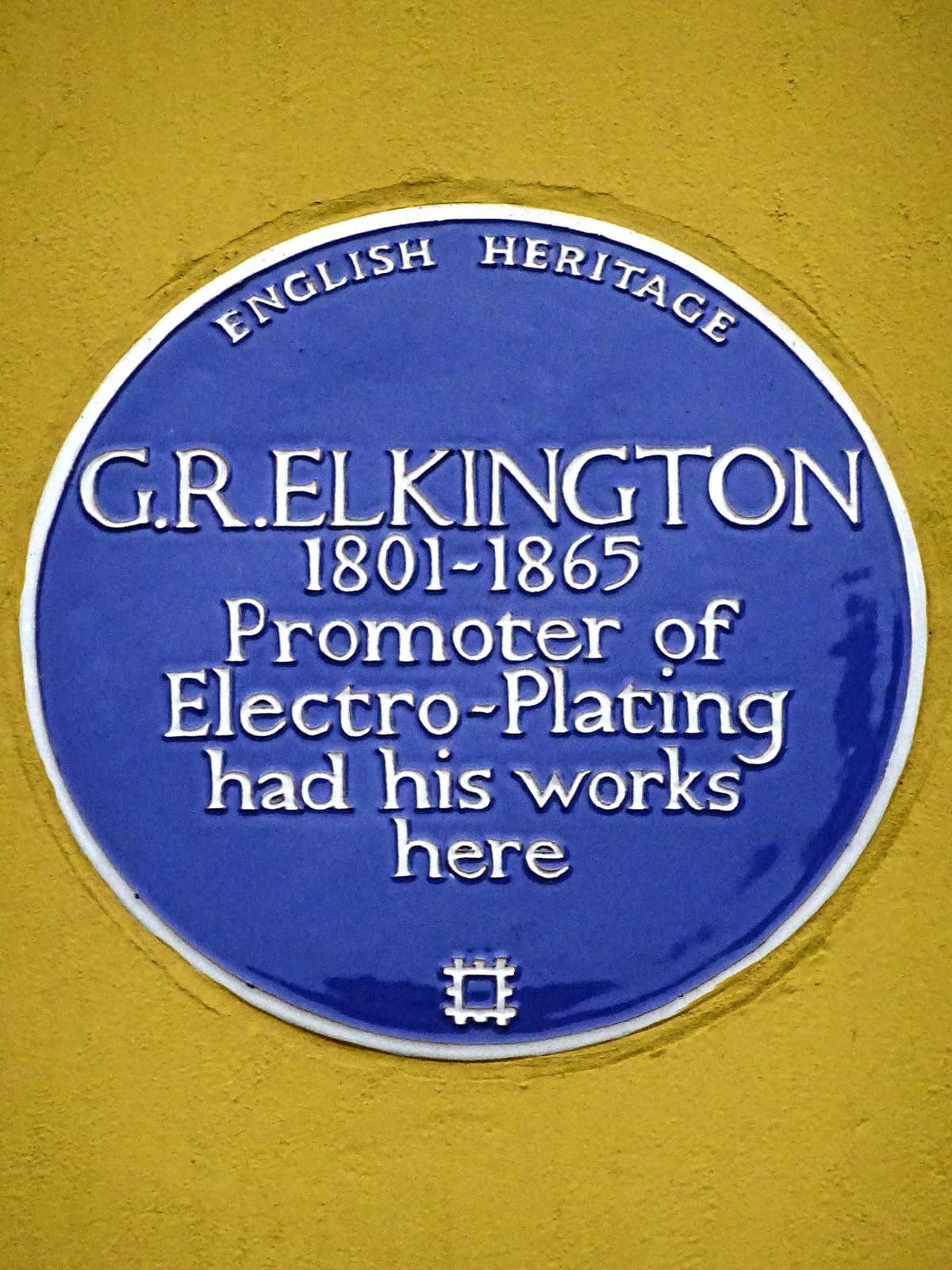
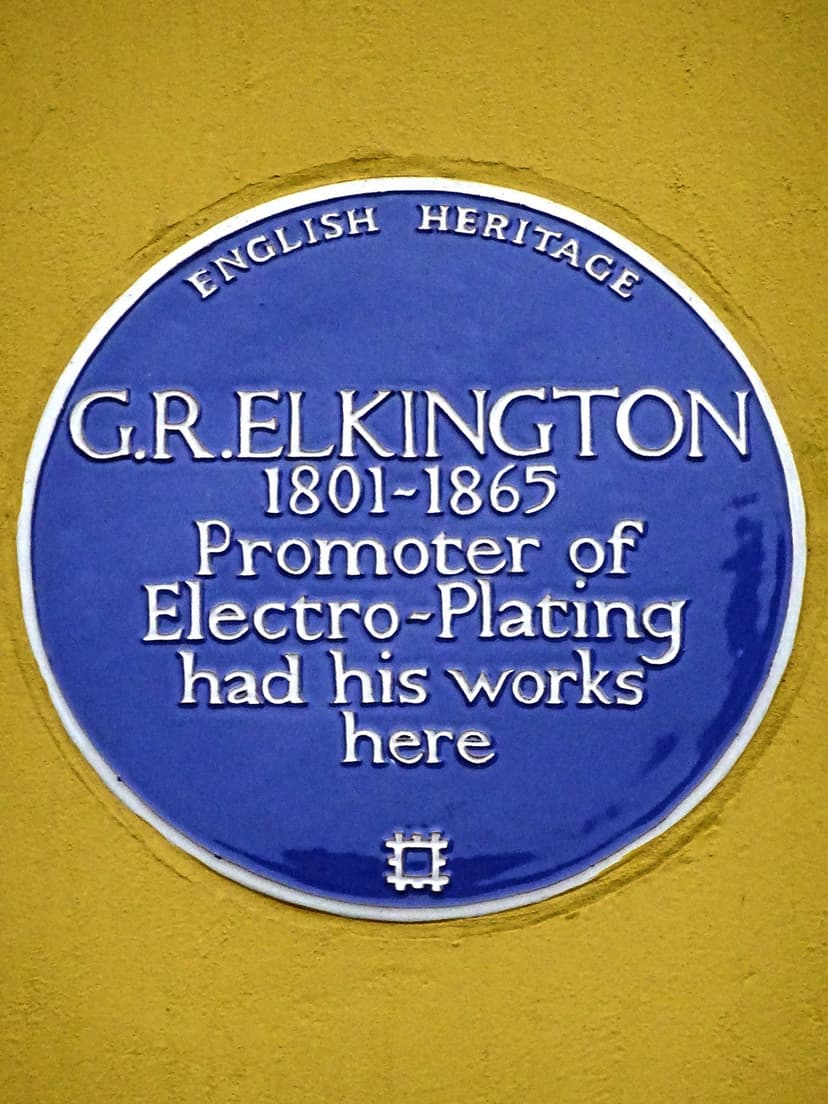
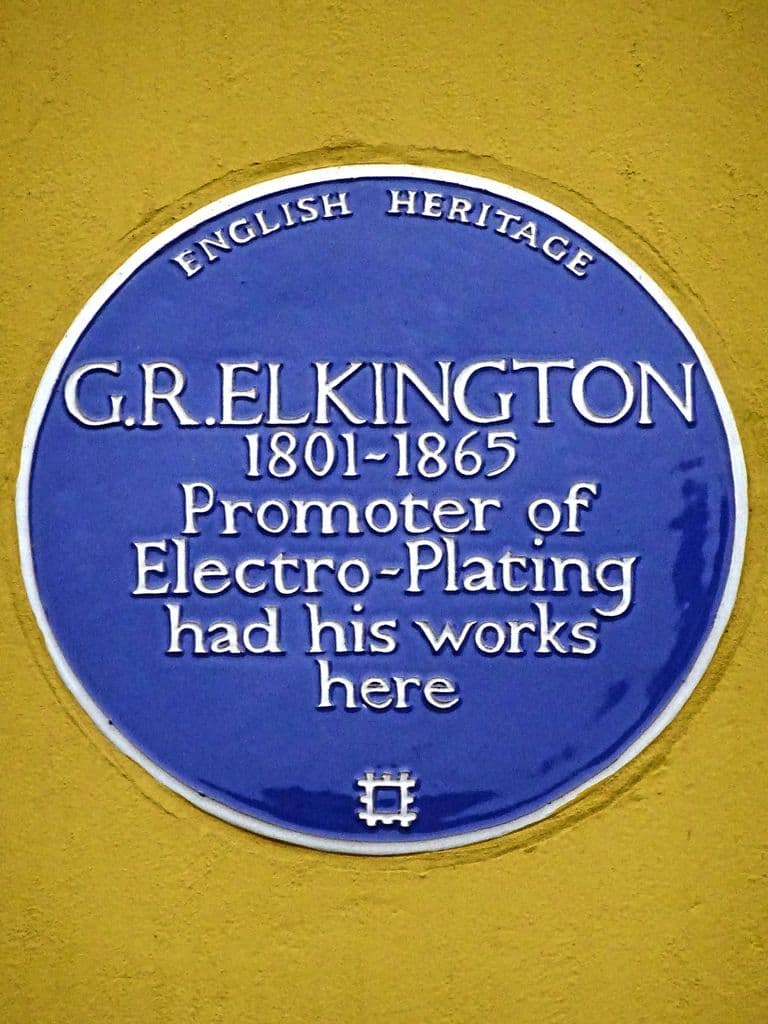
A second blue plaque, put up in May 2003 under English Heritage’s pilot scheme, remembers George Richards Elkington (1801–1865) as the promoter of electroplating, who “had his works here”.
From factory to museum
In 1951 the old works took on a new role, as Birmingham’s Museum of Science and Industry. The Victoria County History, writing in 1964, noted its use “since 1951” as a museum. For almost half a century the machines that had made the city were shown here. The museum closed in 1997, ahead of the opening of Thinktank in 2001.
What was lost and what stayed
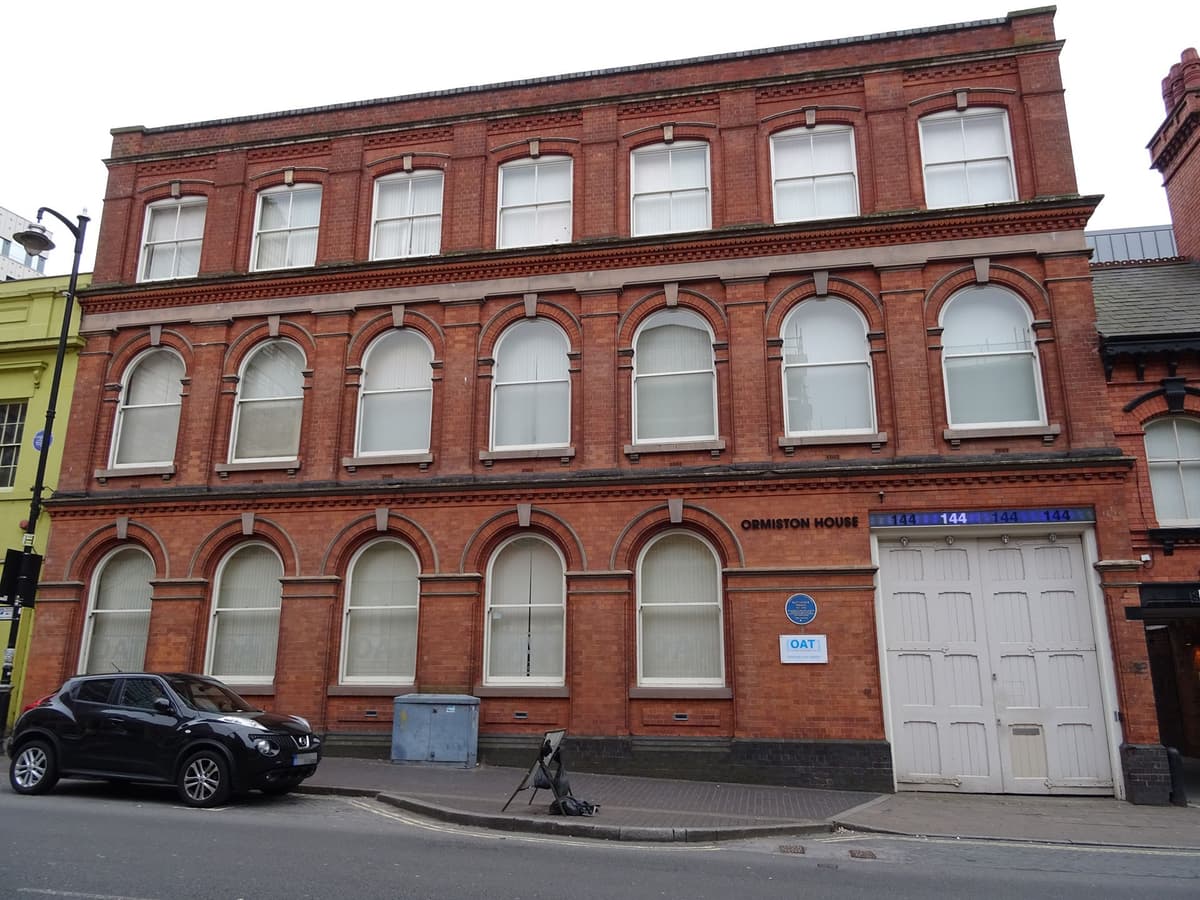
Most of the works did not last. Historic England’s list entry says they were “largely demolished in the 1960’s”. What remains is 144 Newhall Street: a three-storey, seven-bay front range of the late nineteenth century, with timber- and cast-iron-framed workshops behind. The list entry calls it “the surviving element of the electro-gilding and plating works of Elkington Mason and Co.”. It was listed at Grade II on 29 April 2004.
It forms a group with two listed neighbours, the Assay Office and the Queen’s Arms. In 2006 the surviving range was approved as part of the Newhall Square mixed-use scheme, and it now forms part of that development.
The meaning of a fragment
This is a partial survival, not a complete one. But the range that remains still holds the outline of a working factory, with its workshops behind the street front.
Elkington’s works are a reminder that Birmingham’s “toy trade” did not stand still. The same town that had made buttons and buckles by hand learned to plate them with electricity, and on the same site an inventor was taking the first steps towards plastic. Two blue plaques on Newhall Street mark one of the great turning points in the history of making things.
What happened here?
Elkington, Mason and Co. developed electroplating and electro-gilding on an industrial scale here. Alexander Parkes, inventor of Parkesine, the first plastic, worked on the site for the firm c.1840–50. From 1951 to 1997 the buildings housed Birmingham’s Museum of Science and Industry.
Why it mattered
Elkington’s patented electroplating was of world importance, and it kept Birmingham at the front of the metal trades. The works also link the town’s metalworking to the birth of plastics through Alexander Parkes. As the Museum of Science and Industry, the buildings then told the story of Birmingham’s industry to the public for nearly fifty years.
Why it disappeared
Redevelopment
The works were “largely demolished in the 1960’s” (NHLE 1392797). The surviving range at 144 Newhall Street was listed in 2004 and incorporated into the Newhall Square scheme, approved in 2006.
What’s there now
What replaced it
Later buildings on Newhall Street and, from the 2000s, the Newhall Square mixed-use development, which incorporates the surviving range.
What survives
144 Newhall Street, a late nineteenth-century three-storey, seven-bay front range with timber- and cast-iron-framed workshops behind, listed Grade II (NHLE 1392797). Blue plaques to G. R. Elkington (English Heritage pilot scheme, May 2003) and Alexander Parkes (Birmingham Civic Society, 2004).
Today
The surviving range forms part of Newhall Square, on Newhall Street near the Birmingham and Fazeley Canal, close to the Assay Office.
Then and now
Then · 19 March 2016
Now · 19 March 2016
Today
Blue plaque to Alexander Parkes, 144 Newhall Street, 19 March 2016Spudgun67, 19 March 2016. Wikimedia Commons · CC BY-SA 4.0
Key dates
- 1838 — Elkington’s Newhall Street works openElkington’s electro-gilding and electroplating works open on Newhall Street.
- 1840 — The Elkingtons’ cyanide electroplating patentA patent in the Elkingtons’ names covers the Birmingham surgeon John Wright’s discovery that silver and gold dissolved in potassium cyanide plate evenly — the process that made commercial electroplating possible.
- 1841 — Alexander Parkes takes his first patentWorking in Elkington’s casting department, Alexander Parkes patents a process for electro-depositing works of art — the first of dozens of patents.
- 29 March 1842 — Josiah Mason joins the ElkingtonsJosiah Mason signed a partnership deed with George Richards and Henry Elkington, bringing the capital that turned their electroplating patents into a business. The firm traded as Elkington, Mason & Co.
- c. 1960s — Elkington’s works largely demolishedMost of the former Elkington works, by then the Museum of Science and Industry, is demolished. A late 19th-century range survives at 144 Newhall Street.
Sources and further reading
The reason for the 1960s demolition is not given in the sources used here. The exact extent of the museum’s buildings in relation to the surviving range has not been mapped.
The Victoria County History’s description (published 1964) may describe the buildings before or during the 1960s demolition.
- 144 Newhall Street — National Heritage List for England entry 1392797 — Historic England
- A History of the County of Warwick, vol. 7: The City of Birmingham — Secular Architecture, pp. 43–57 — W. B. Stephens (ed.), Victoria County History, 1964. pp. 43–57

Comments
Comments will load here.