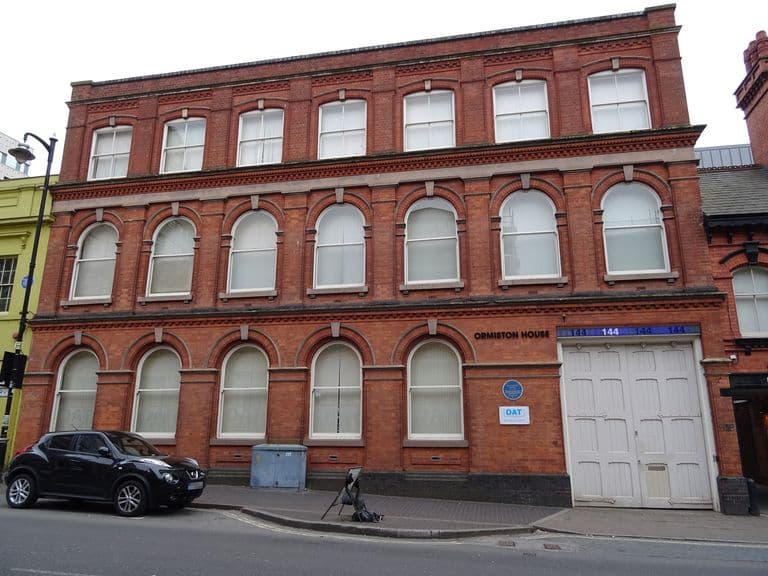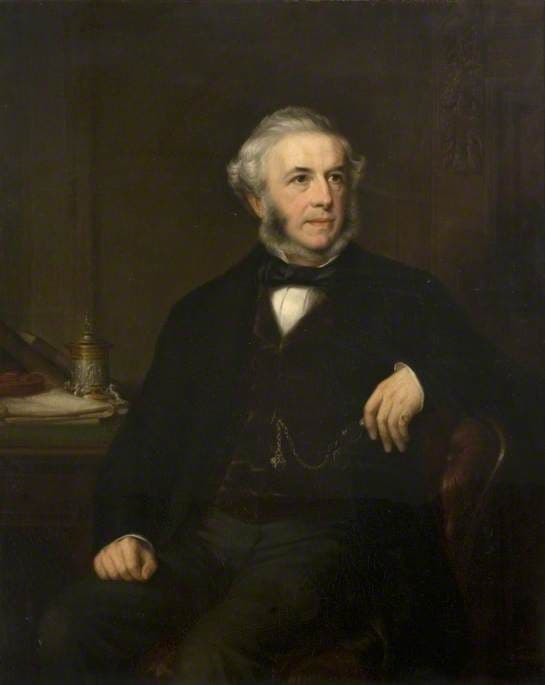
The Elkingtons were Birmingham gilt-toy makers and silver-platers who saw the future in electricity. In 1836 and 1837 the cousins George Richards Elkington and Henry Elkington patented methods of gilding with mercury, and in 1838 a method using a separate electric current. In 1840 a patent in their names covered John Wright’s discovery that silver and gold dissolved in potassium cyanide would plate evenly. In 1842 they bought J. S. Woolrich’s patent for using a magneto-electric machine to supply the current.
Elkington, Mason & Co.
Money came from the pen maker Josiah Mason, and from about 1842 to 1861 the firm traded as Elkington, Mason & Co. Its works on Newhall Street were completed by 1841. After years of struggle against the old plating trade, commercial success came by about 1848. Alexander Parkes ran its casting department and devised new plating methods there.
The leading name in plate
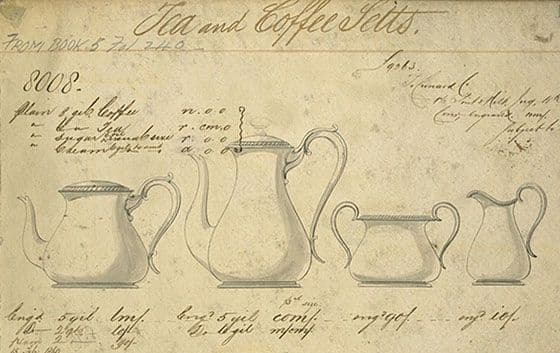
By 1850 the firm employed 500 people, by 1862 it had half the British electroplating trade, and by 1880 it employed well over a thousand. It sold from a gallery in Regent Street in London, employed the French designer Léonard Morel-Ladeuil from 1859, and made electrotype copies of historic treasures for the South Kensington Museum. With Mason it also built copper-smelting works at Pembrey in South Wales.
The Newhall Street works became Birmingham’s Museum of Science and Industry in 1951 and was largely demolished in the 1960s; a range survives at 144 Newhall Street.
Pictures
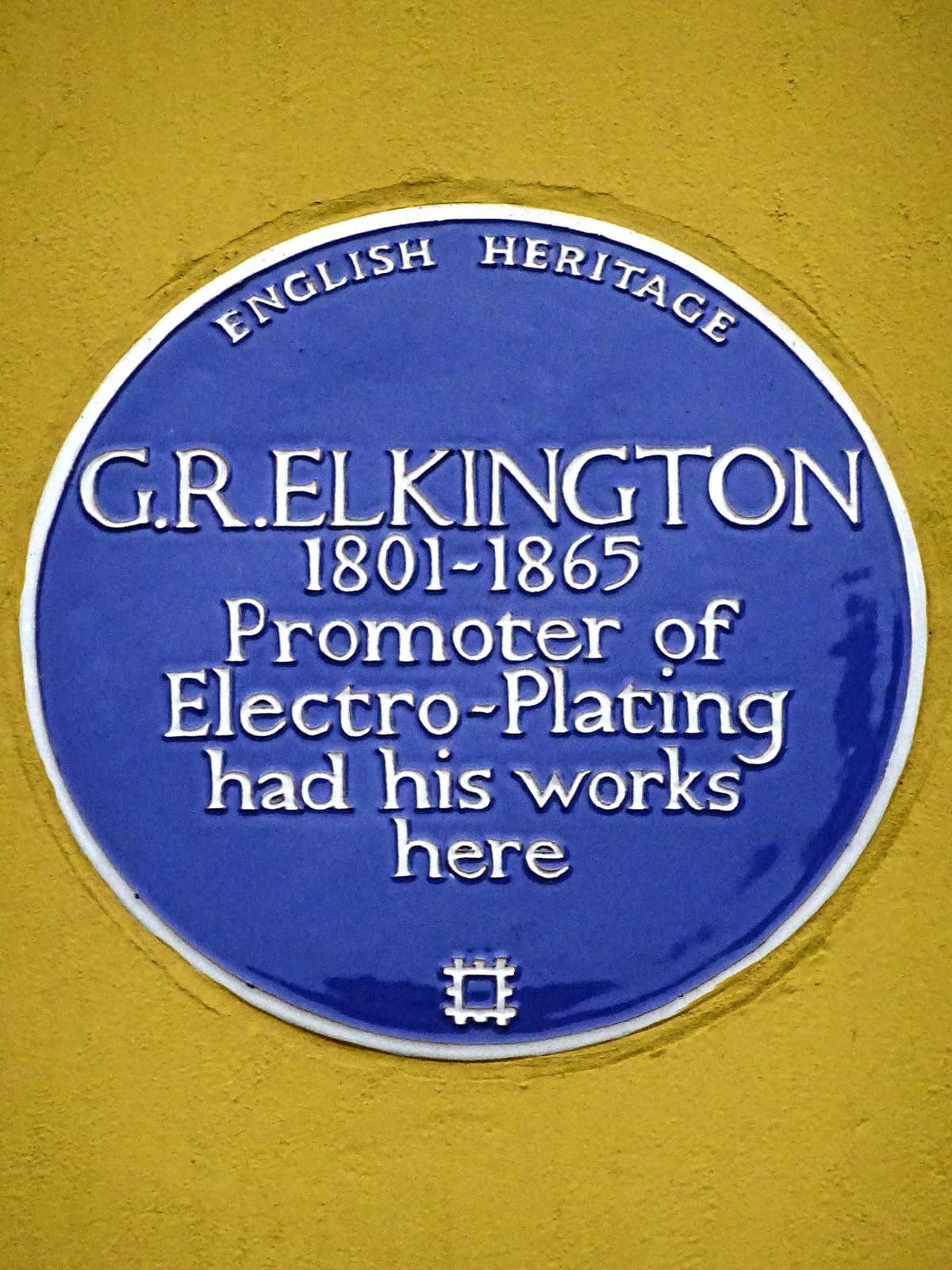
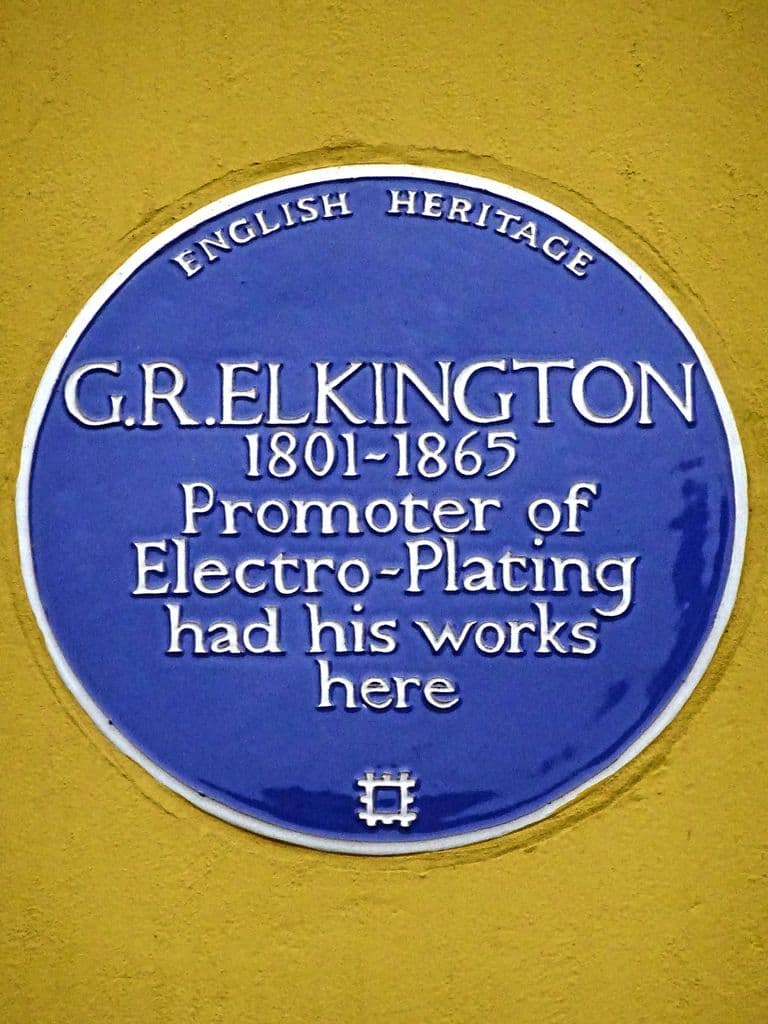
Blue plaque to G. R. Elkington, Newhall Street, 19 March 2016Spudgun67, 19 March 2016. Wikimedia Commons · CC BY-SA 4.0
On the map
One place connected with Elkington & Co.. Tap a number for directions — some sites are private homes or gardens, so each place’s page says what you can see from the street.

- Elkington’s electroplating works, Newhall Street — Partly surviving, Surviving but altered · Directions to Elkington’s electroplating works, Newhall Street (opens Google Maps)
Key dates
- 1840 — The Elkingtons’ cyanide electroplating patentA patent in the Elkingtons’ names covers the Birmingham surgeon John Wright’s discovery that silver and gold dissolved in potassium cyanide plate evenly — the process that made commercial electroplating possible.
- 1841 — Alexander Parkes takes his first patentWorking in Elkington’s casting department, Alexander Parkes patents a process for electro-depositing works of art — the first of dozens of patents.
- 29 March 1842 — Josiah Mason joins the ElkingtonsJosiah Mason signed a partnership deed with George Richards and Henry Elkington, bringing the capital that turned their electroplating patents into a business. The firm traded as Elkington, Mason & Co.
- 26 October 1852 — Henry Elkington diesHenry Elkington, co-patentee of the Elkington plating processes and head of the firm’s artistic side, dies in Birmingham in his early forties and is buried at Northfield.
- 23 September 1865 — George Richards Elkington diesGeorge Richards Elkington, who turned electroplating into a world industry, dies at Pool Park, Denbighshire. His sons carry on the firm.
Sources and further reading
- Elkington and Co — Grace’s Guide, Grace’s Guide to British Industrial History
- Elkington, George Richards — Dictionary of National Biography, vol. 17 (includes Henry Elkington) — William Jerome Harrison, Smith, Elder & Co., 1889
- Economic and Social History: Industry and Trade, 1500–1880, in A History of the County of Warwick, vol. 7, pp. 81–139 — W. B. Stephens (ed.), Victoria County History, 1964. new industries
- The Milton Shield (electrotype) — Victoria and Albert Museum, V&A
- Ewer (electrotype), Elkington & Co., 1888 — Victoria and Albert Museum, V&A
- 144 Newhall Street — National Heritage List for England entry 1392797 — Historic England