
Behind most famous names in Birmingham industry stands someone the history books forget. In the story of electroplating, that person is Henry Elkington.
An inventive apprentice
Henry Elkington was born in 1810 at Princethorpe in Warwickshire, the son of John Elkington. He was apprenticed in Birmingham to his uncle, James Elkington, a maker of gilt toys and spectacles. While still an apprentice, says the Dictionary of National Biography, he invented and patented “pantascopic” spectacles.
James’s son, George Richards Elkington, was nine years older than Henry and already running a plating and gilding business in St Paul’s Square. The two cousins became partners.
Chasing the current
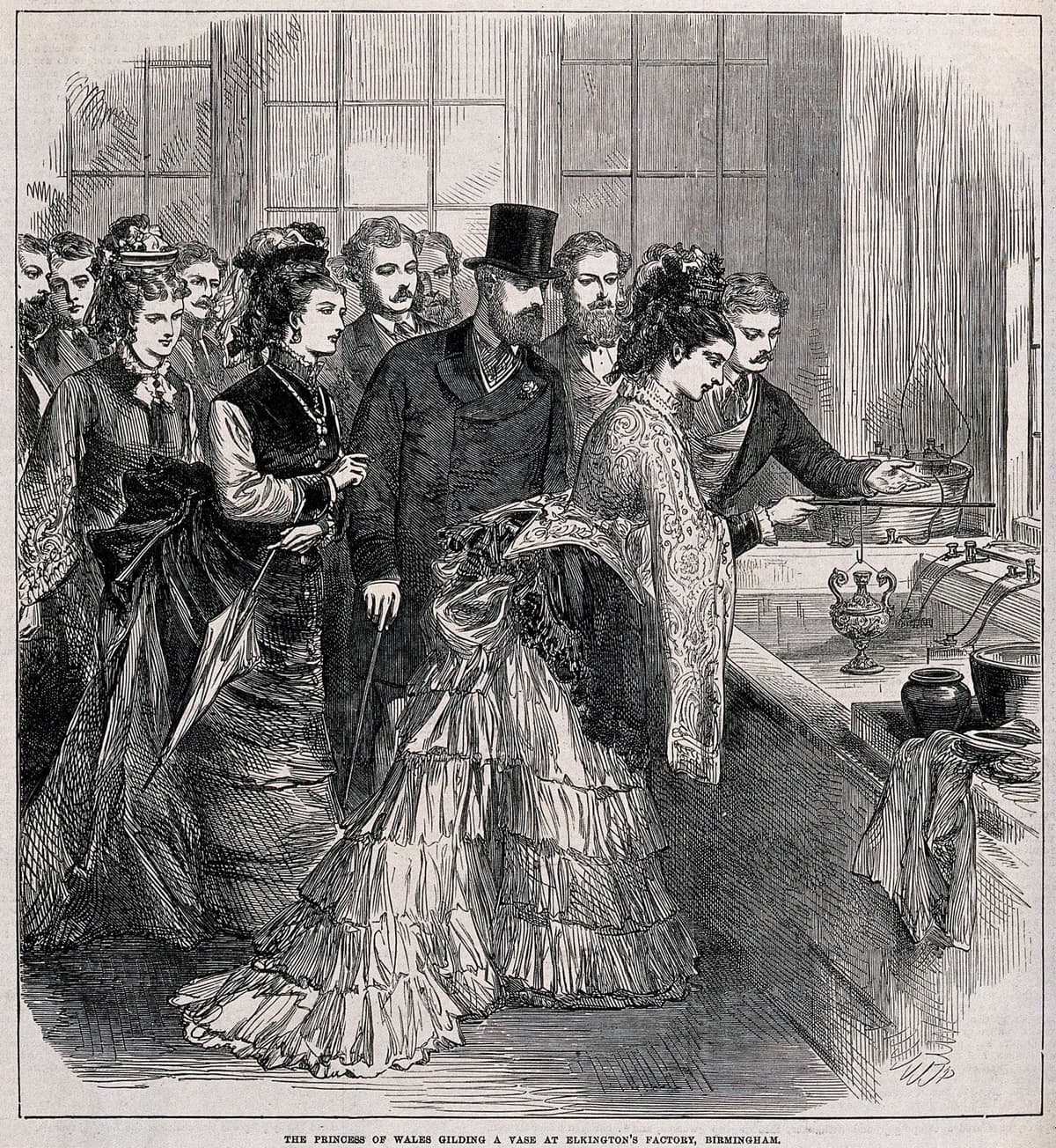
According to the DNB, Henry began to study electroplating about 1832. Scientists in Britain and abroad were working out how to deposit one metal on another with an electric current. The question was whether anyone could make it pay in a workshop rather than a laboratory.
The cousins took out patents together: for gilding with mercury in 1836 and 1837, and, in 1838, a patent that the DNB says was the first to use a separate electric current. In 1840 a patent in the Elkingtons’ names covered the Birmingham surgeon John Wright’s discovery that silver and gold dissolved in potassium cyanide would plate evenly. That was the process that made the firm.
What they were replacing was old and slow. Until about 1840, the DNB says, plated goods were made only by rolling or soldering thin sheets of silver on to copper. Electroplating let a finished object of any shape, however intricate, be coated after it was made. That opened the door to the kind of work Henry cared about most.
The artist of the firm
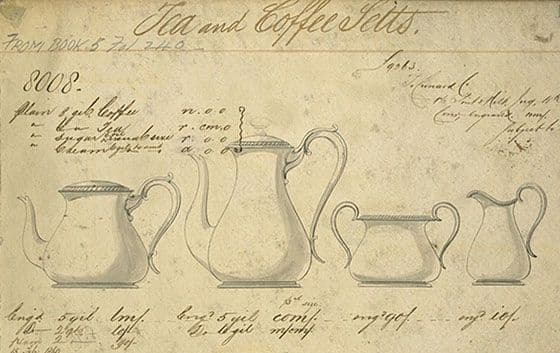
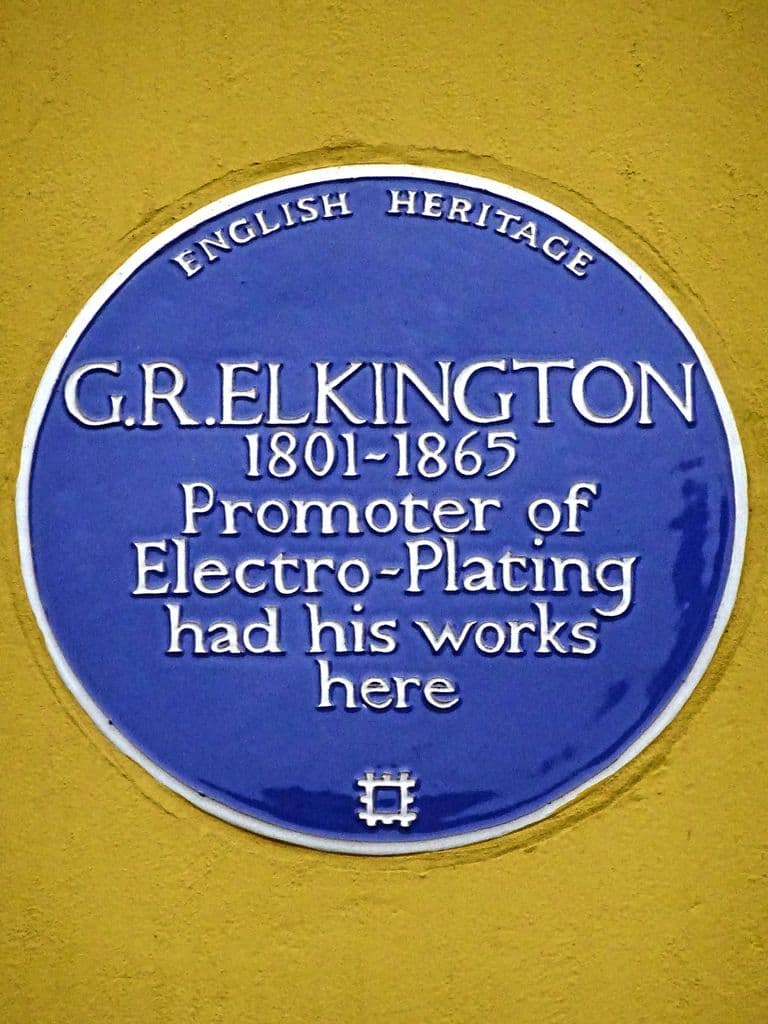
The business that grew from these patents, Elkington & Co., and from the early 1840s Elkington, Mason & Co., became the centre of the new trade, with great works on Newhall Street. George was the driving business partner. Henry, says the DNB, “was specially useful in the artistic department”: the design and finish of the plate, figures and ornaments that came out of the vats.
Census returns give glimpses of him. In 1841 he was living at Selly Oak, in Northfield parish, and gave his trade as gilder. By 1851 he was at 23 Summer Hill Terrace, Ladywood, described as a silversmith employing 40 men. His widowed mother Mary, living with him, was recorded as a partner in electro-plating works employing more than 300.
An early death
Henry’s health failed. An obituary in the Staffordshire Advertiser said that he had largely withdrawn from the works, except for superintending bronze figures intended to ornament the House of Lords. He died on 26 October 1852, in his early forties, and was buried in the churchyard at Northfield, where a monument was placed in the church. The DNB says he left one son, who died young.
His cousin carried the business on for another thirteen years, and George’s sons after him. The artistic ambitions Henry had nurtured grew after his death: from 1859 the firm employed the French designer Léonard Morel-Ladeuil to make great embossed exhibition pieces, and its electrotype copies of historic silver were bought by the South Kensington Museum, now the V&A.
Why it mattered
Henry Elkington lived only forty-two years and left almost no papers of his own, so his share in the firm’s success is hard to measure. But the patents that launched commercial electroplating carry his name alongside his cousin’s, and he gave the firm its eye for design. That mattered. Elkington’s made its name not only with spoons but with fine figures, exhibition pieces and copies of great works of art, the kind of work Henry was in charge of. His mother’s name in the 1851 census, as a partner in works employing hundreds, is a reminder that this was a family firm in every sense. The cousins’ partnership turned a scientific trick into one of Birmingham’s great industries, and the half of it that history usually forgets was the half that made the silver beautiful.
On the map
One place connected with Henry Elkington. Tap a number for directions — some sites are private homes or gardens, so each place’s page says what you can see from the street.

- Elkington’s electroplating works, Newhall Street — Partly surviving, Surviving but altered · Directions to Elkington’s electroplating works, Newhall Street (opens Google Maps)
Key dates
- 1840 — The Elkingtons’ cyanide electroplating patentA patent in the Elkingtons’ names covers the Birmingham surgeon John Wright’s discovery that silver and gold dissolved in potassium cyanide plate evenly — the process that made commercial electroplating possible.
- 29 March 1842 — Josiah Mason joins the ElkingtonsJosiah Mason signed a partnership deed with George Richards and Henry Elkington, bringing the capital that turned their electroplating patents into a business. The firm traded as Elkington, Mason & Co.
- 26 October 1852 — Henry Elkington diesHenry Elkington, co-patentee of the Elkington plating processes and head of the firm’s artistic side, dies in Birmingham in his early forties and is buried at Northfield.
Sources and further reading
Marriage: the DNB says he married George Richards Elkington’s sister. Grace’s Guide names his wife as Emma Spraggett, “a cousin”. These may not conflict, but neither has been checked against parish registers, so the text leaves his marriage out.
Children: the DNB says he left one son who died young. The 1841 census, as transcribed by Grace’s Guide, lists a James (about 11) and an Alfred (about 7) in his household; their relationship to him is not stated.
Age at death: the obituary (as quoted by Grace’s Guide) says 41; with a birth year of 1810 he would have been 41 or 42.
The 1838 and 1840 patents are usually credited to “the Elkingtons”; how the work was divided between the cousins is not recorded in the sources used.
No portrait with a verified open licence has been found.
- Elkington, George Richards — Dictionary of National Biography, vol. 17 (includes Henry Elkington) — William Jerome Harrison, Smith, Elder & Co., 1889. includes Henry Elkington
- Henry Elkington — Grace’s Guide, Grace’s Guide to British Industrial History
- Economic and Social History: Industry and Trade, 1500–1880, in A History of the County of Warwick, vol. 7, pp. 81–139 — W. B. Stephens (ed.), Victoria County History, 1964. new industries
- Elkington and Co — Grace’s Guide, Grace’s Guide to British Industrial History
Comments
Comments will load here.