
In March 1881 an old inventor sat down to answer a question from America: who invented celluloid? “I do wish the World to know who the inventor really was,” he wrote on 7 March, “for it is a poor reward after all I have done to be denied the merit of the invention.”
The writer was Alexander Parkes. Twenty years earlier he had shown the world the first plastic. Others made the money.
Brass and silver
Parkes was born on 29 December 1813 in Suffolk Street, Birmingham, the son of a brass lock manufacturer. He was apprenticed to Messenger & Sons, Birmingham brassfounders, and then joined Elkington’s, where he took charge of the casting department.
He arrived at the right moment. The Elkingtons were turning electroplating into an industry, and Parkes threw himself into it. In 1841 he took his first patent, for electro-depositing works of art. In early patents he called himself an “artist”; later he settled on “chemist”.
“I do wish the World to know who the inventor really was,” he wrote on 7 March, “for it is a poor reward after all I have done to be denied the merit of the invention.”
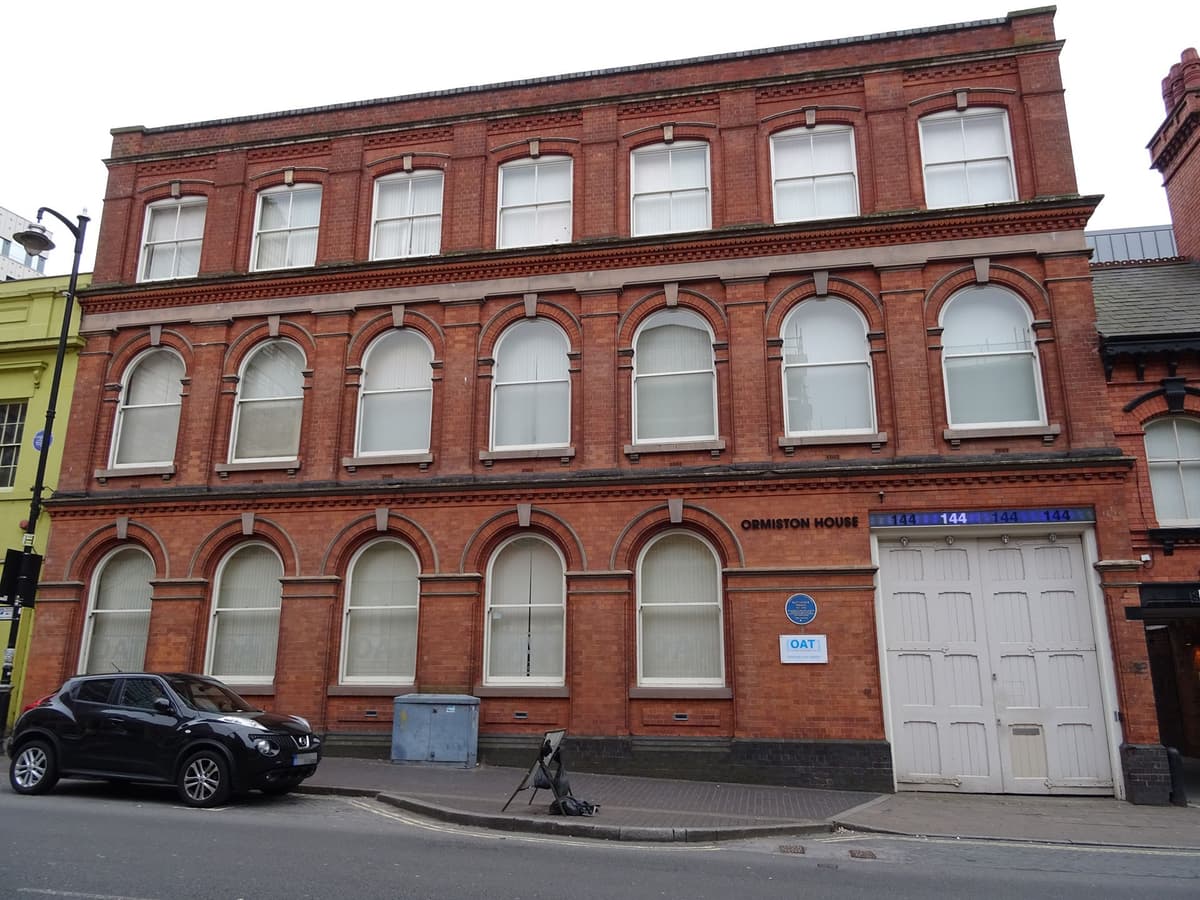
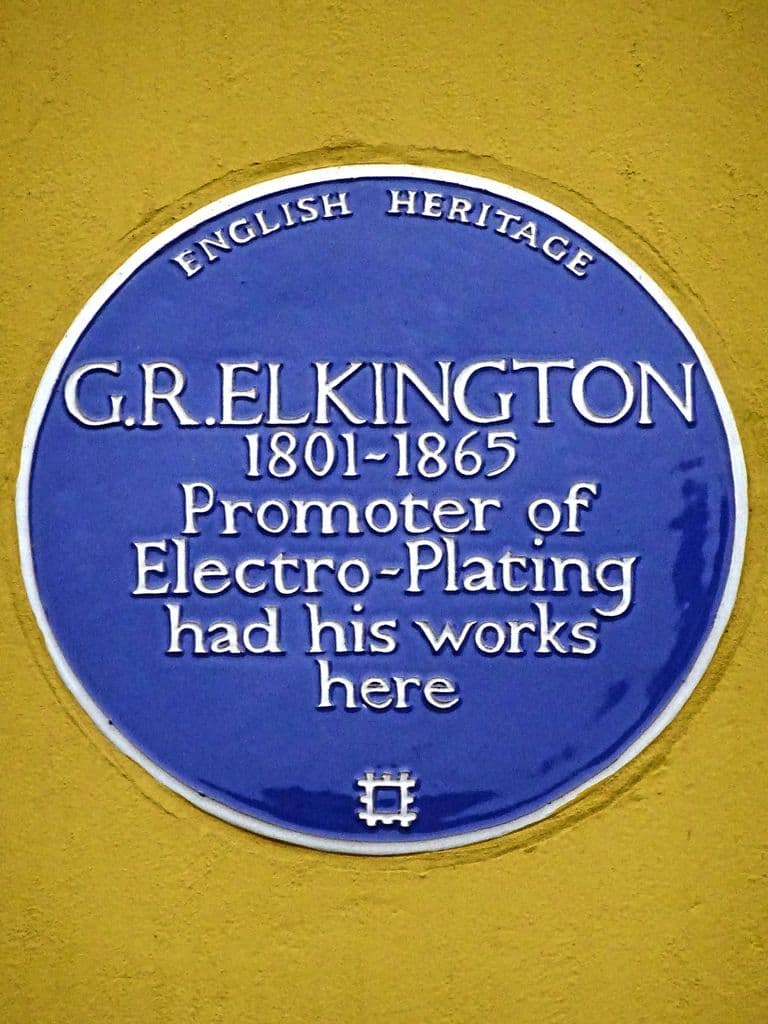
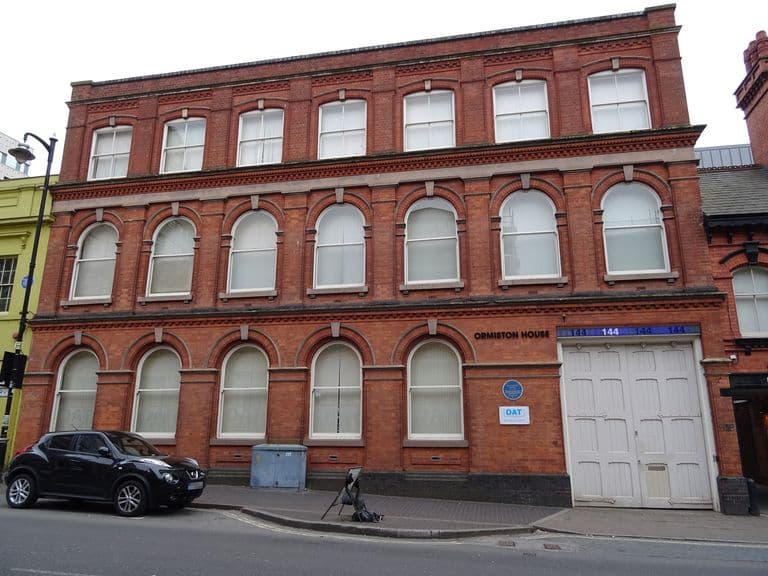
His most famous trick was plating things that should not have survived it. He dipped flowers and other fragile natural objects in a solution of phosphorus and then in silver nitrate, so that a fine film of silver formed and could be built up by electricity. When Prince Albert visited Elkington’s works he was presented with a spider’s web coated in silver. A plaque on Newhall Street records that Parkes worked on the site for Elkington, Mason & Co. from about 1840 to 1850.
A restless mind
Parkes never stopped. The Dictionary of National Biography counts sixty-six patents over forty-six years, mostly on metals. He found a way of waterproofing fabric with a solution of rubber, which Elkington & Mason worked for some years before the patent was sold to the Macintosh company. He suggested adding small amounts of phosphorus to alloys to make them tougher.
His private life was crowded. He married Jane Henshall Moore in Birmingham in 1837; she died in 1850. In 1854 he married Mary Ann Roderick. His younger brother Henry, a chemist, worked alongside him for years. A Science Museum curator notes that when Parkes devised a powerful explosive powder, he refused to sell it to the British, French or Russian governments.
From 1850 to 1853 he was at Pembrey in South Wales, building copper-smelting works for Elkington & Mason. There he patented a method of using zinc to extract silver from lead. The DNB thought it perhaps his most important invention. The “Parkes process” was tried at Sims’s works in Llanelli, attracted attention in Germany and came into universal use in America.
In 1858 he turned to seamless metal tubes for calico-printing rollers, and the 1861 census found him back in Birmingham as a tube manufacturer. By 1865 he was manager of the Stephenson Metal Tube and Copper Roller Company in Liverpool Street, Birmingham.
Parkesine
His great idea was a new material. Cellulose nitrate, made by treating plant fibre with acids, was known as an explosive, gun-cotton. Parkes worked out how to dissolve and soften it into a solid that could be moulded and shaped. He took out his first patent on it in 1855, while living and working in Birmingham, and named it Parkesine.
The Science Museum Group links the work to a practical need: the new electrical industry wanted better insulators. Parkes softened the cellulose nitrate with camphor and other solvents. At the International Exhibition in London in 1862 he showed sheets, medallions and small objects made of it, and won a medal. The Science Museum, which holds many of his specimens, says he had foreseen Parkesine film as a replacement for glass photographic plates as early as 1856.
A silver medal followed at the Paris Exhibition of 1867, and in 1865 he described the whole development to the Society of Arts.
In 1866 the Parkesine Company was set up at Hackney Wick in London to make the material cheaply in bulk. It failed. Parkesine was hard to make consistently, it could crack, and it burned. The company was wound up in 1868. His associate Daniel Spill carried the idea on as Xylonite, and in America John Wesley Hyatt developed a similar material as celluloid, which became a huge commercial success.
Parkes was still in Birmingham through all this; the 1871 census found him living in Erdington, with a large family. He moved to the London area around 1881 and died at West Dulwich on 29 June 1890.
Why it mattered
Parkes was a better inventor than businessman, and he knew it. Celluloid, the direct descendant of Parkesine, went on to imitate ivory and tortoiseshell, to make billiard balls and collars and, above all, cinema film. Every plastic object since stands somewhere downstream of the material he made in Birmingham in the 1850s. In 1937 his son gave a collection of original Parkesine pieces to the Science Museum, where they remain the core of its holdings. Three blue plaques now mark his life: in Dulwich where he died, at Hackney Wick where the first plastics factory stood, and on Newhall Street, on the old Elkington works where a brassfounder’s apprentice learned to coat a spider’s web in silver. He asked the world to remember who the inventor really was. Birmingham does.
On the map
One place connected with Alexander Parkes. Tap a number for directions — some sites are private homes or gardens, so each place’s page says what you can see from the street.

- Elkington’s electroplating works, Newhall Street — Partly surviving, Surviving but altered · Directions to Elkington’s electroplating works, Newhall Street (opens Google Maps)
Key dates
- 1841 — Alexander Parkes takes his first patentWorking in Elkington’s casting department, Alexander Parkes patents a process for electro-depositing works of art — the first of dozens of patents.
- 1855 — First Parkesine patentAlexander Parkes takes out the first of a series of patents for the cellulose-nitrate material he will name Parkesine, the first plastic.
- 1862 — Parkesine shown at the International ExhibitionAlexander Parkes exhibits objects made of Parkesine at the International Exhibition in South Kensington and receives a medal.
- 1866 — The Parkesine Company is formed at Hackney WickA company is set up in London to make Parkesine in bulk. It fails and is wound up in 1868.
Sources and further reading
Patents: the DNB and the Science Museum Group give 66; the Plastics Historical Society says more than 80.
Children: the Science Museum blog says 17; the Plastics Historical Society says 8 by his first wife and 12 by his second; Wikipedia (a lead only) gives 6 and 11. The text does not give a number.
First or semi-synthetic? The Science Museum Group calls Parkesine “the first fully synthetic plastic”; a Science Museum curator’s blog calls it an early semi-synthetic plastic, because it was made from natural cellulose. The text says simply “the first plastic”.
Patent dates: the DNB dates the first Parkesine patent to 1855; Wikipedia gives 1856. The rubber-waterproofing patent is dated 1841 by the DNB and Grace’s Guide and 1846 by other sources.
The Parkesine Company’s backers: Grace’s Guide names George Maule as the principal shareholder; a Science Museum blog says Henry Bessemer topped the list of investors.
Where in Birmingham Parkesine was developed has not been established; his addresses in the 1850s and 1860s need checking in directories.
The 1881 quotation is from a letter quoted on the Science Museum blog (Mossman, 2013); the original has not been seen.
- Parkes, Alexander — Dictionary of National Biography, vol. 43 — Richard Bissell Prosser, Smith, Elder & Co., 1895
- Alexander Parkes (1813–1890) — Science Museum Group, Science Museum Group Collection
- Alexander Parkes – Materials Man and Polymath — Sue Mossman, Science Museum Blog, 2013
- Alexander Parkes (1813–1890) — Plastics Historical Society, Plastics Historical Society
- Alexander Parkes — Grace’s Guide, Grace’s Guide to British Industrial History
- Parkesine Co — Grace’s Guide, Grace’s Guide to British Industrial History
- Alexander Parkes (1813–1890) — plaques — Open Plaques, Open Plaques
- Economic and Social History: Industry and Trade, 1500–1880, in A History of the County of Warwick, vol. 7, pp. 81–139 — W. B. Stephens (ed.), Victoria County History, 1964. new industries
- 144 Newhall Street — National Heritage List for England entry 1392797 — Historic England
Comments
Comments will load here.