
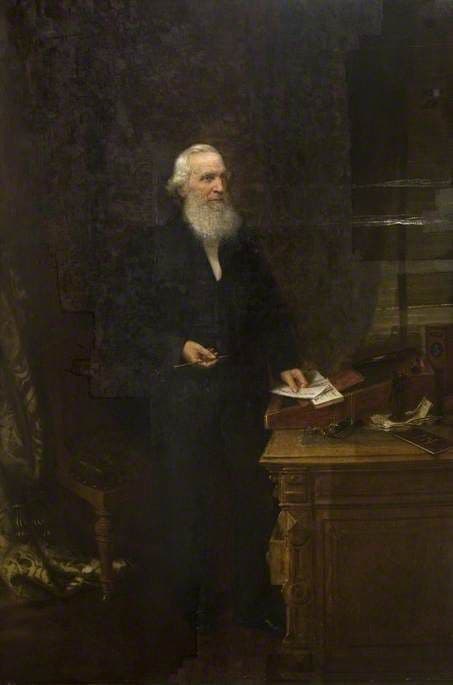
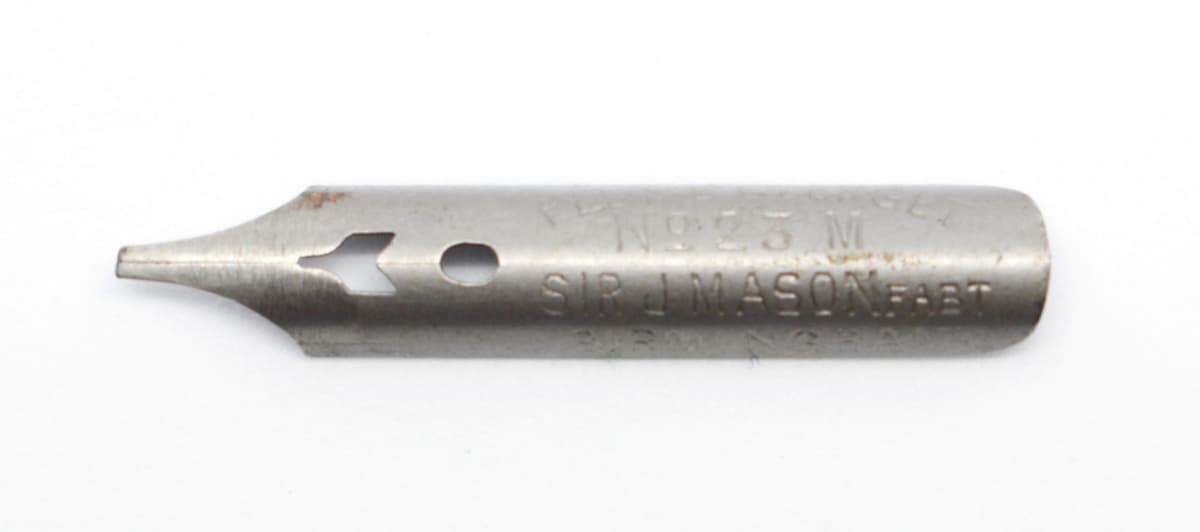
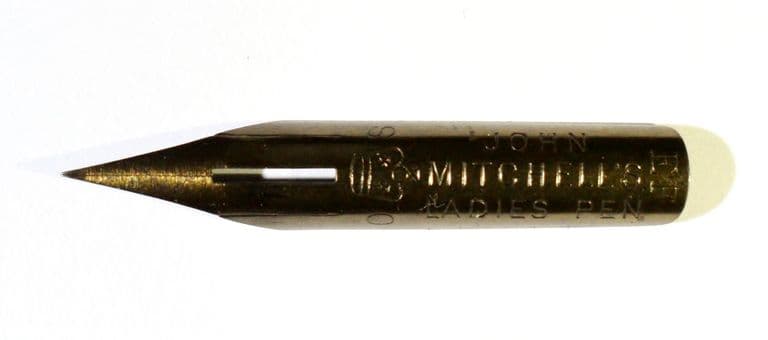
In about 1829 a split-ring maker stopped outside Mr Peart’s bookshop in Bull Street, Birmingham. In the window were nine steel pens on a card, priced at three shillings and sixpence. Peart was writing with one of them and called it “a regular pin”. Josiah Mason bought that one for sixpence, went home and made three better pens that evening. He posted the best to the name stamped on the steel: Perry, Red Lion Square, London. By Mason’s own account, James Perry was at his door in Lancaster Street two days later, by eight o’clock in the morning.
That was how one of Victorian Birmingham’s great fortunes began. Much of it ended up in Erdington.
A weaver’s boy
Josiah Mason was born in Mill Street, Kidderminster, on 23 February 1795, the second son of a carpet weaver. He had almost no schooling. At eight he was selling cakes in the street, then fruit and vegetables from a donkey. He taught himself shoemaking and writing, and earned a little writing letters for neighbours who could not. He tried carpentry, smithing and house-painting, and from 1814 he wove carpets. A pound a week, he decided, was not enough.
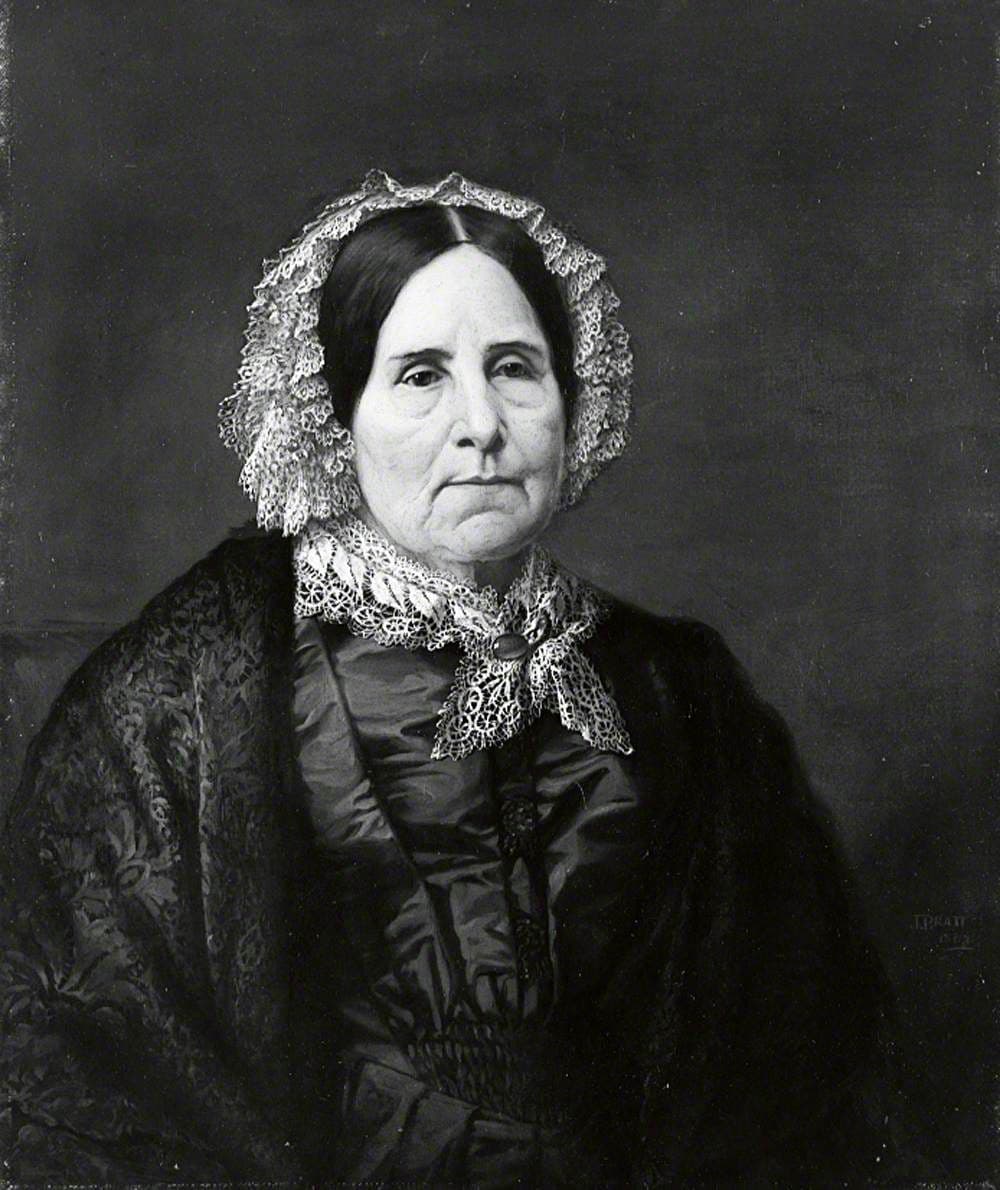
At about 21 he came to Birmingham for a Christmas visit to his uncle, Richard Griffiths, and never went back. In August 1817 he married his cousin, Anne Griffiths, at Aston parish church. For about five years he ran his uncle’s gilt-toy business in Legge Street, making cheap jewellery, on the promise of a share. When it was sold over his head he walked out, turning down £300 a year from the new owner to stay.
Split rings in Lancaster Street
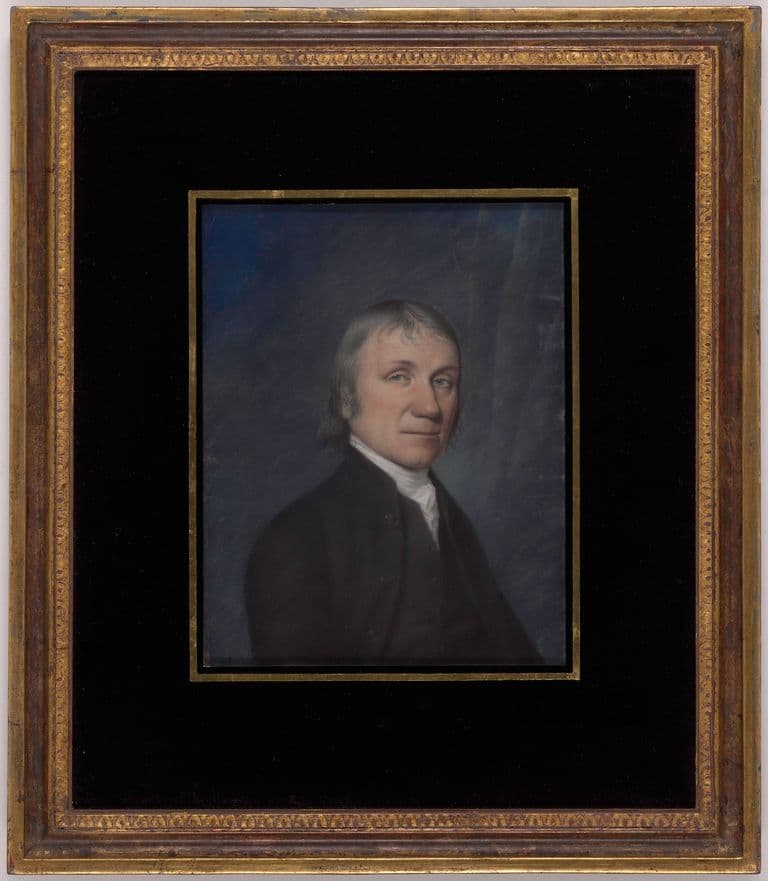
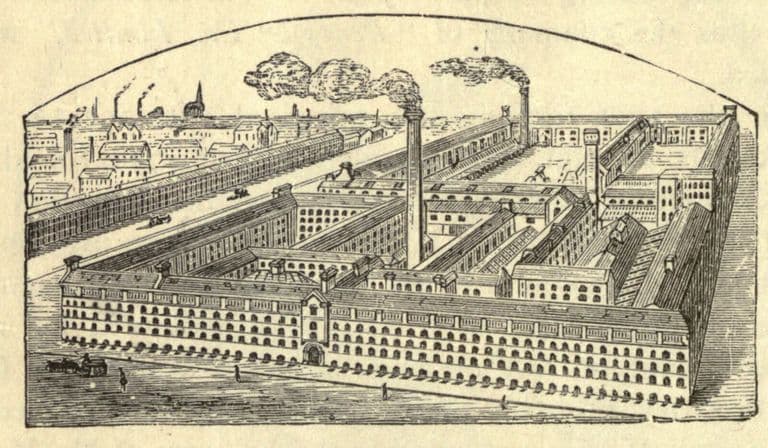
In 1822 a steel-toy maker named Heeley introduced him to Samuel Harrison, an elderly split-ring maker in Lancaster Street. Harrison had adapted the stamping press to make a key ring at a single blow and, Mason later said, had made steel pens for Joseph Priestley around 1780. Within a year he sold Mason the business for £500, to be paid out of profits. According to Mason’s biographer, J. T. Bunce, the last £100 was paid in May 1824. Mason added a bevelling machine of his own and in 1828 bought the premises, 36 Lancaster Street.
Perry’s pens, Mason’s hands
“My connection with Mr. Elkington alarmed my dear and best friends,” Mason wrote, “as they thought certain ruin would be the result of such untried speculation.”
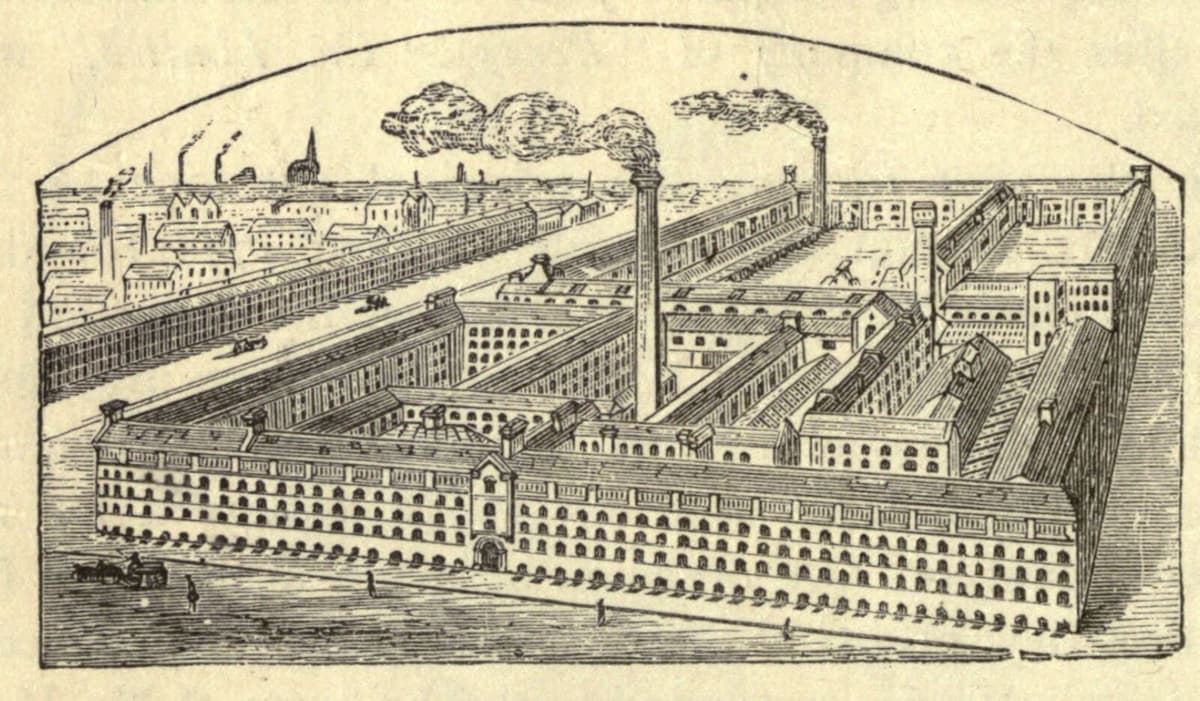
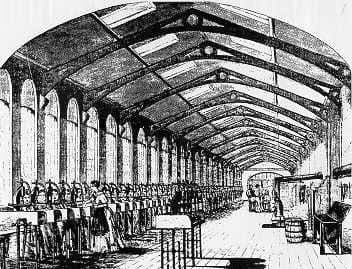
Mason was already making barrel pens. What he offered Perry was a better slip pen, the kind fitted into a holder. Steel pens then were filed into shape by hand, and their slits were cracked with a hammer. Mason cut the slit in a press, with dies and punches he made himself. He kept the slitting presses in a locked room, worked by two or three women. Even the machinist who built them never saw them fitted up.
Perry wanted all of it. He would sell, Mason alone would make, and the pens would carry Perry’s name. Mason agreed. His first order of 100 gross left for London on 20 November 1830. In 1831 he sent Perry pens worth £1,421.
So one of Birmingham’s biggest pen makers was almost invisible. Millions wrote with “Perryian” pens without knowing they came from Lancaster Street. Joseph Gillott once stopped Mason in the street and proposed a partnership: “Let us join, and not another man shall make a pen besides us.” Mason said no, though he sold Gillott penholders.
By the mid-1870s the works employed about 1,000 people, four-fifths of them women, and turned out more than 32,000 gross of pens a week. A government report of 1864 praised its ventilation. Its inspector also met Charles Walters, aged ten, hardening pens from seven in the morning until eight at night, and Mary Saunders, who had polished steel on a wheel for nine years and told him: “Feel stuffed up in the chest, and have a cough.” At the end of 1875 Mason sold the business to a new company, Perry & Co. Ltd.
The Elkington years
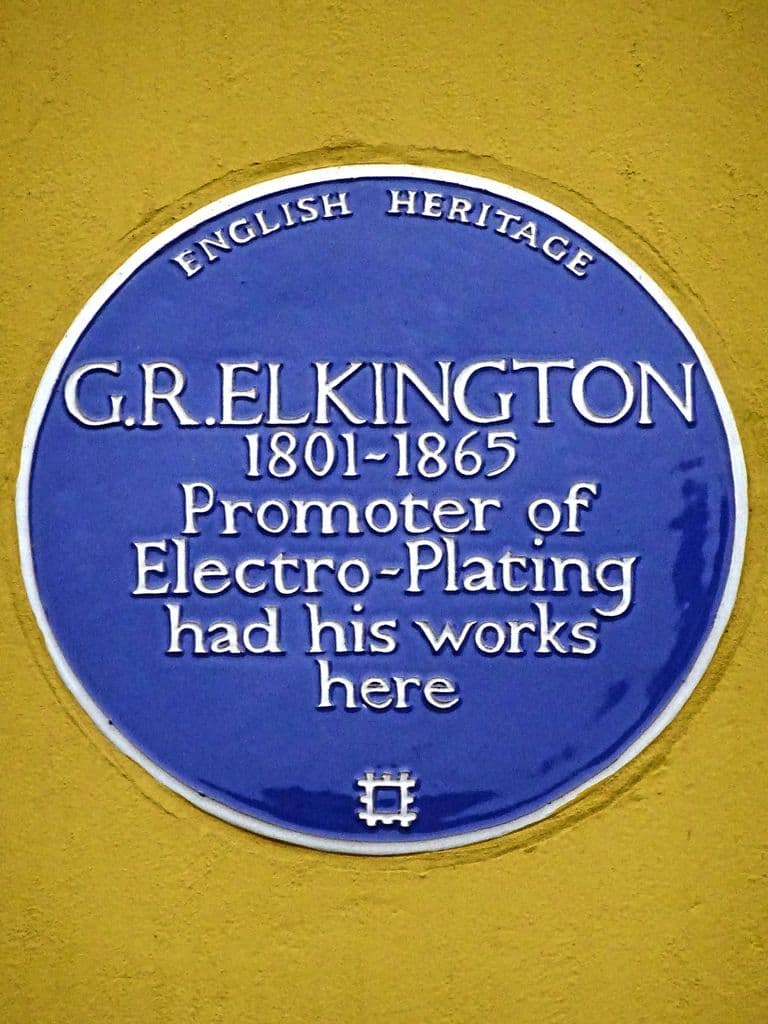
In 1842 Mason staked his money on something newer still. George Richards Elkington and his cousin Henry held the key electroplating patents, but the old platers resisted them and the business needed capital. The two men met when Elkington tried to buy Mason’s country house, Woodbrooke at Northfield. Their partnership deed was signed on 29 March 1842, and the firm became Elkington, Mason & Co. “My connection with Mr. Elkington alarmed my dear and best friends,” Mason wrote, “as they thought certain ruin would be the result of such untried speculation.”
It was not ruin. Mason found the money as the Newhall Street works grew, and Bunce, his friend and admirer, credits him with planning the works and showrooms. With Elkington he built copper-smelting works at Pembrey in South Wales, using Alexander Parkes’s process, with cottages and schools for the workers’ children. The Dictionary of National Biography says he smelted nickel too. The partnership was dissolved by 1862.
Erdington
Mason had no children. In 1858 he built almshouses for old women and a home for orphan girls in Erdington village, on the corner of the Sutton road and what is now Station Road. He explained why himself. Tired of being cheated by beggars, “I first thought of almshouses for aged women … Then I thought of the orphans … ‘Surely it must be some of each’.”
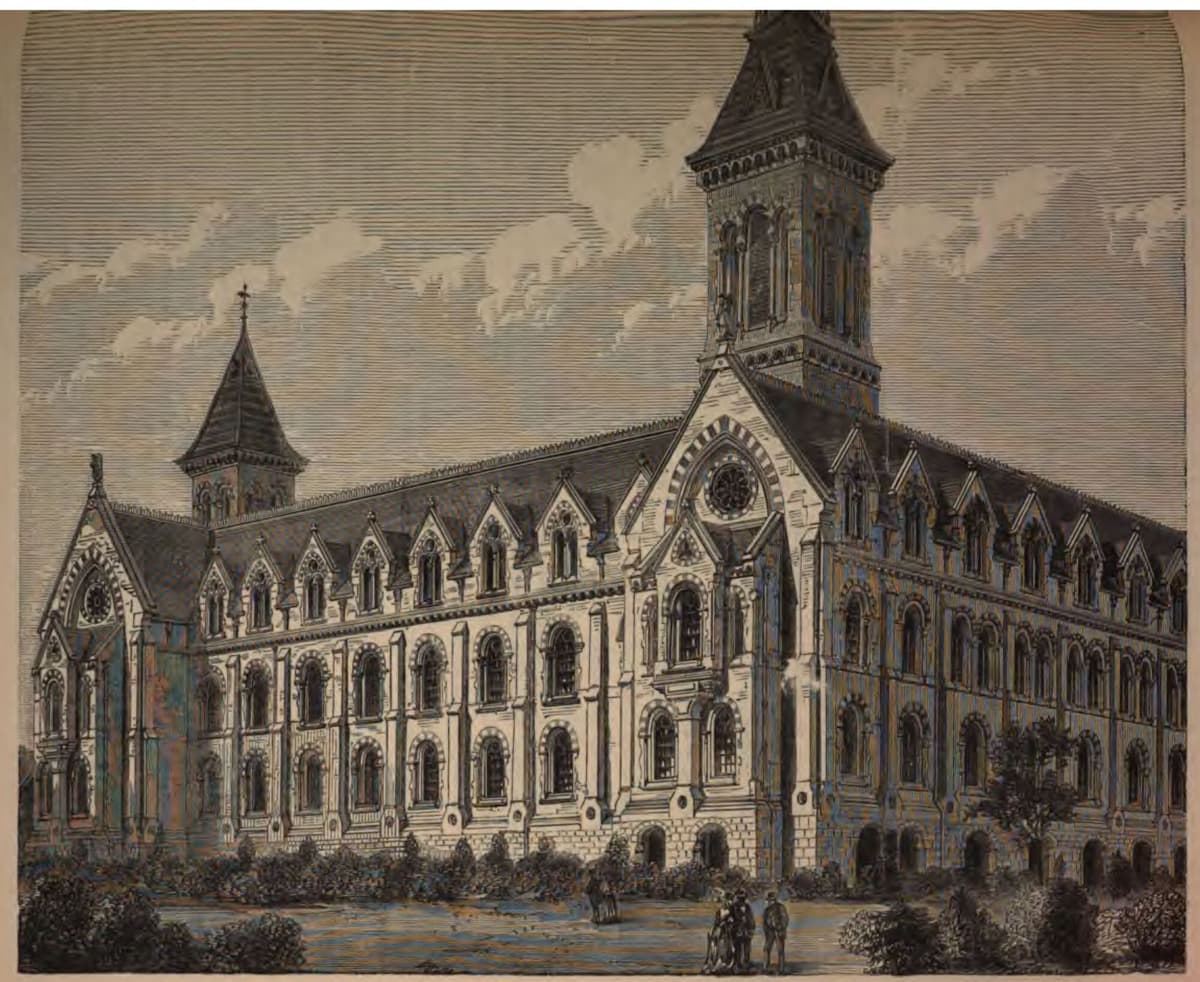
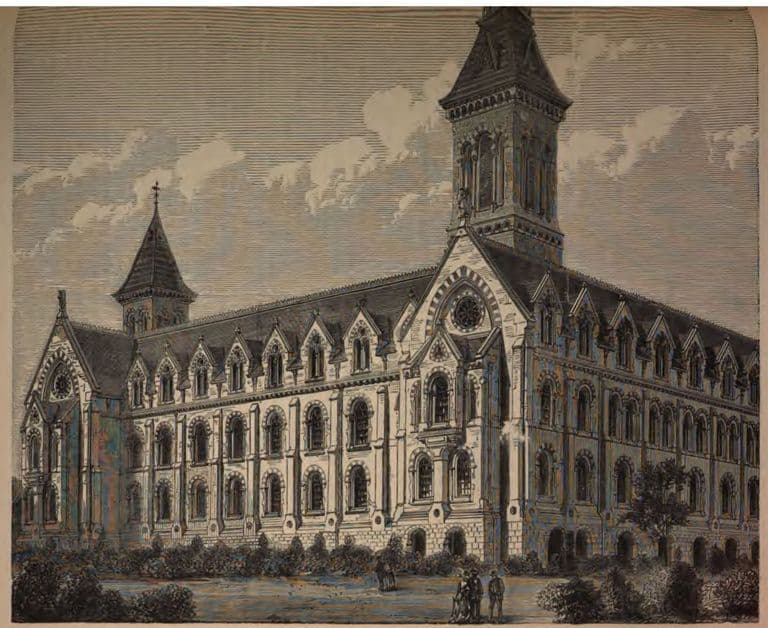
It was soon too small. On 19 September 1860 he privately laid the foundation stone of a far larger orphanage in Bell Lane, now Orphanage Road. Designed by J. R. Botham and finished to Mason’s own plans, it had a central tower about 200 feet high, steam cooking, hot-water heating and a covered playground whose columns were placed, a newspaper report of 1869 noted, with hide-and-seek in mind. It cost about £60,000. Mason endowed it with land worth £200,000, including Tyburn Farm, Walmley Ash Farm and his own home, Norwood House, so that, as one newspaper put it, he became a tenant of his own orphans. It could hold 300 girls, 150 boys and 50 infants. Places went to children whose parents were both dead, with “no restriction whatever as to locality, nationality, or religious persuasion.”
In 1872 he was knighted.
A college for science
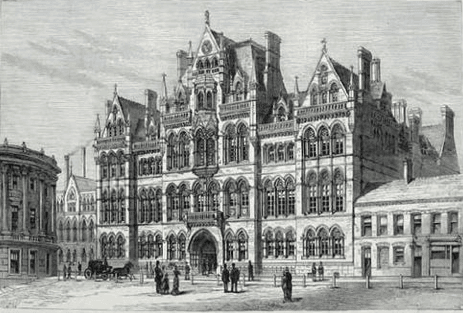
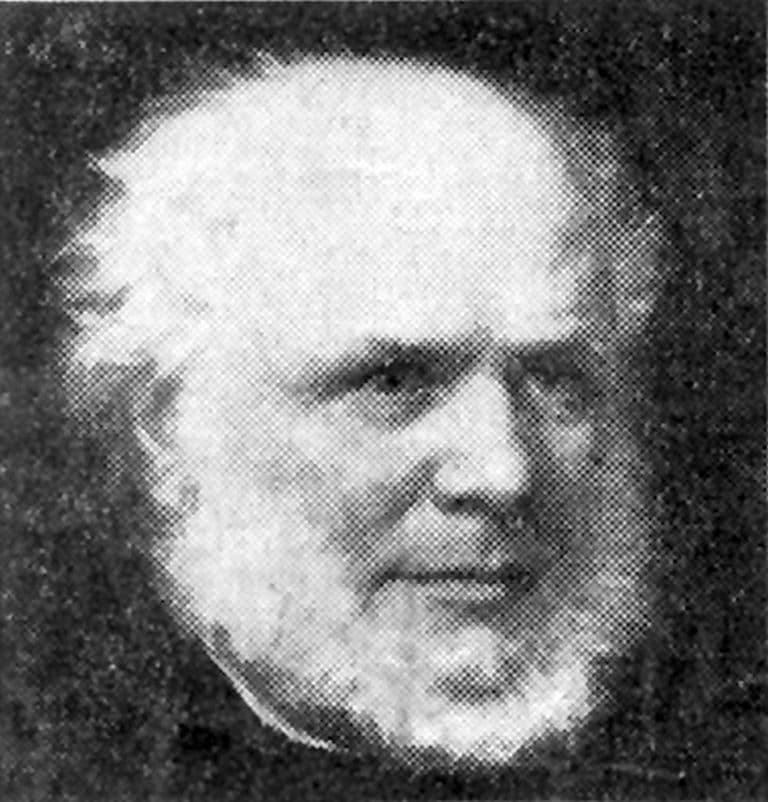
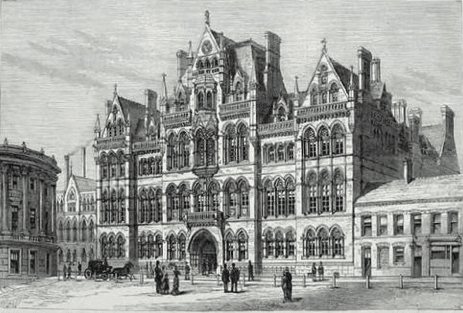
His last and biggest gift was in the city centre. On his 80th birthday, 23 February 1875, Mason laid the first stone of his science college in Edmund Street. The foundation deed excluded “mere literary education and instruction” and all theology: this was to be science for the manufactures of the Midlands. The DNB puts its cost at £180,000. Mason College opened on 1 October 1880, with T. H. Huxley giving the address. It became Mason University College in 1898, and on 24 March 1900 the University of Birmingham received its royal charter.
Mason died at Norwood House on 16 June 1881, aged 86. He was buried, as he had asked, in the vault beneath the mausoleum he had built for his wife in the orphanage grounds. About 350 of the older orphans joined the procession.
What Birmingham kept
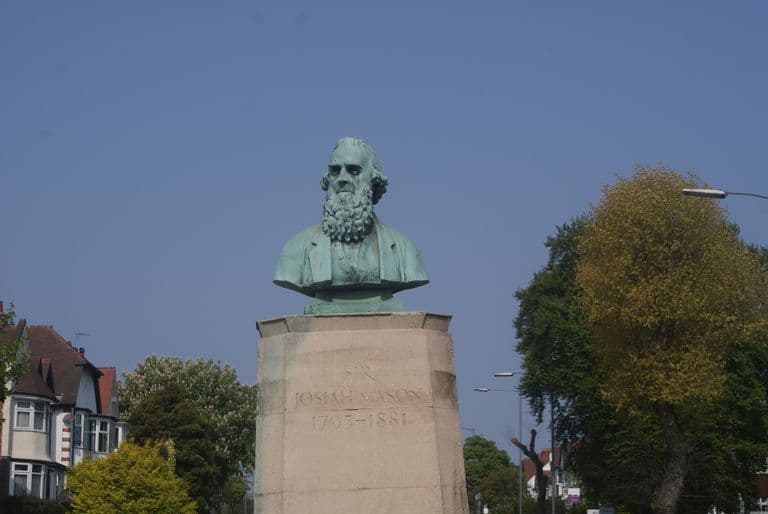
Very little. The orphanage closed around 1960 and was demolished in 1964; its trustees judged it out of date and too costly to maintain. Before it went, the Trust records, Mason’s remains, his wife’s and those of 53 children who had died there were disinterred, cremated and scattered in the Garden of Rest at Perry Barr Crematorium. Mason College was demolished the same year to make way for the new Central Library. The marble statue unveiled opposite it in 1885 had already gone, removed in 1951 in a poor state of repair.
Why it mattered
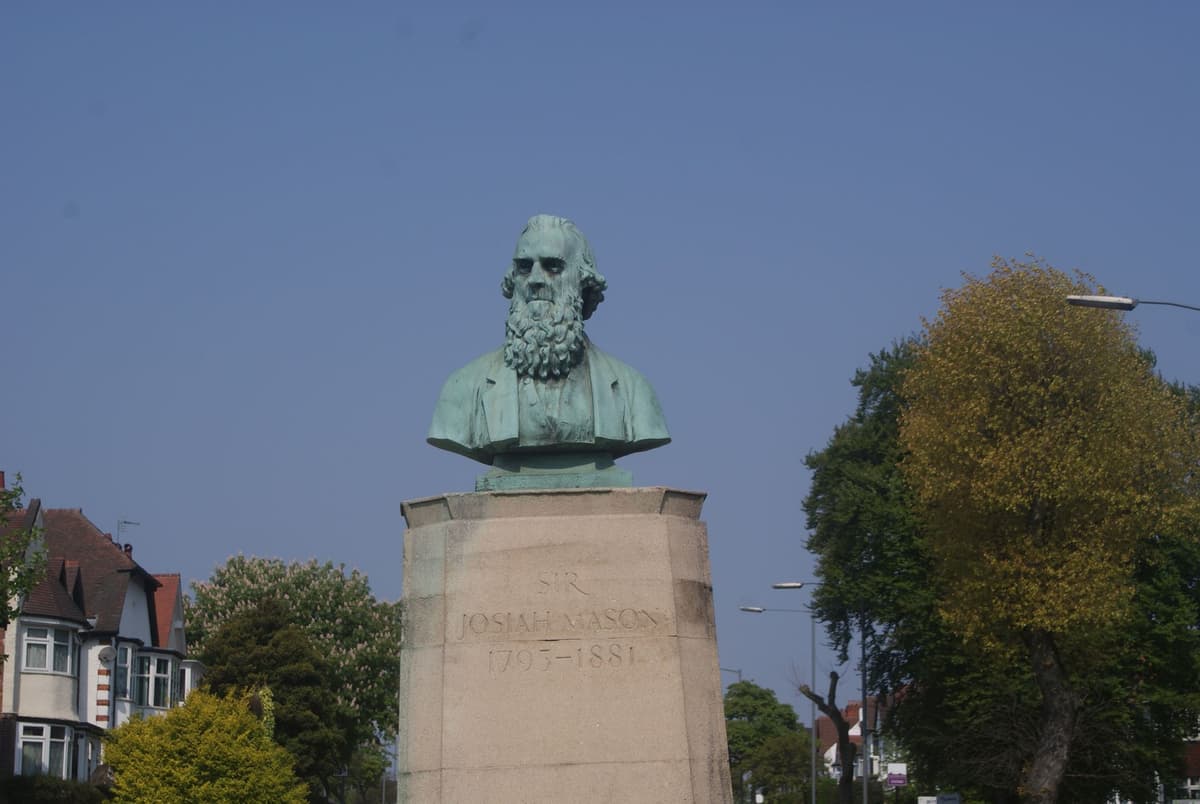
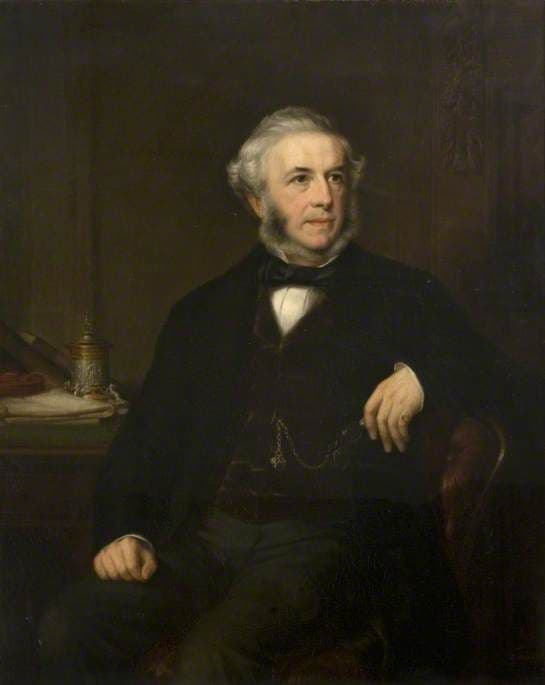
Mason made his money from things almost too small to notice: key rings, nibs, and a thin skin of silver on a spoon. He gave away benefactions of nearly half a million pounds, the Victoria County History reckons, to old women, orphans and students of science. Birmingham did not keep his buildings. The orphanage tower that could be seen for miles across Erdington came down in 1964, and so did his college in Edmund Street. But the institutions outlived the bricks. The Sir Josiah Mason Trust still houses older people, among them the residents of Mason Cottages on part of the orphanage site. The college became the University of Birmingham. And on the island where Orphanage Road meets the Chester Road, a bronze bust cast in 1952 from his lost statue looks down the road towards where his orphans lived. Local people dress it up for jubilees and other occasions. For a man who let another firm’s name go on his pens for decades, it is a very public place to end up.
On the map
7 places connected with Sir Josiah Mason. Tap a number for directions — some sites are private homes or gardens, so each place’s page says what you can see from the street.

- Josiah Mason’s pen works, Lancaster Street — Site redeveloped · Directions to Josiah Mason’s pen works, Lancaster Street (opens Google Maps)
- Bust of Sir Josiah Mason, Chester Road, Erdington — Surviving, Relocated · Directions to Bust of Sir Josiah Mason, Chester Road, Erdington (opens Google Maps)
- Josiah Mason’s Almshouses, Erdington — Lost · Directions to Josiah Mason’s Almshouses, Erdington (opens Google Maps)
- Josiah Mason’s Orphanage, Erdington — Lost, Site redeveloped · Directions to Josiah Mason’s Orphanage, Erdington (opens Google Maps)
- Mason Science College, Edmund Street — Lost, Site redeveloped · Directions to Mason Science College, Edmund Street (opens Google Maps)
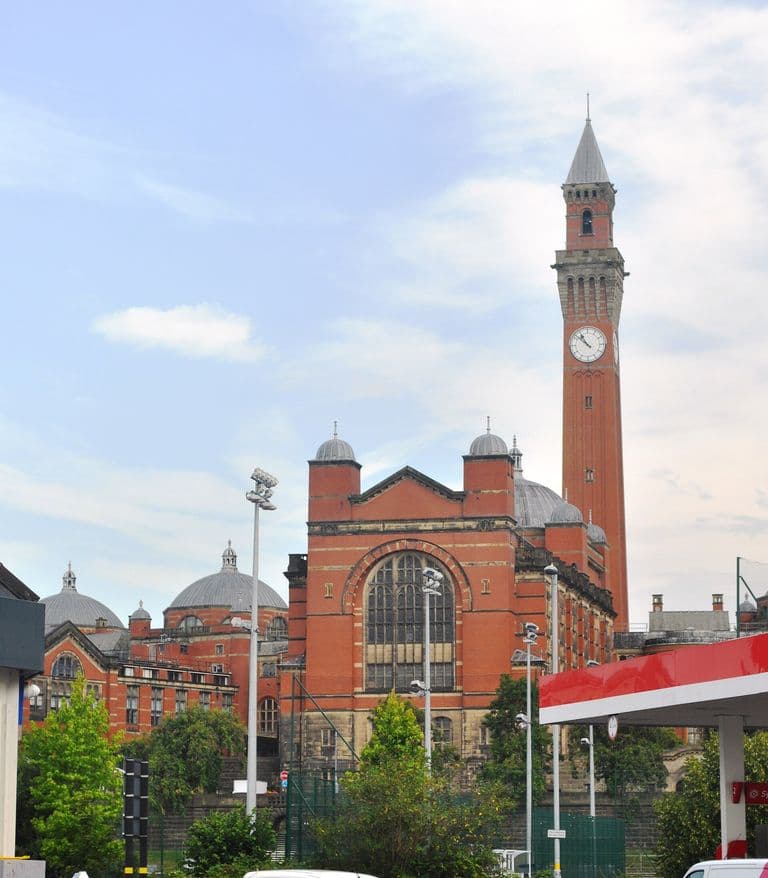
- Old Joe and the Aston Webb buildings, University of Birmingham — Surviving · Directions to Old Joe and the Aston Webb buildings, University of Birmingham (opens Google Maps)
- Elkington’s electroplating works, Newhall Street — Partly surviving, Surviving but altered · Directions to Elkington’s electroplating works, Newhall Street (opens Google Maps)
Key dates
- 20 November 1830 — Josiah Mason’s first big order of pens leaves for PerryJosiah Mason sent his first lot of 100 gross of steel pens from Lancaster Street to James Perry in London. For decades every pen sold under Perry’s name was made by Mason in Birmingham.
- 29 March 1842 — Josiah Mason joins the ElkingtonsJosiah Mason signed a partnership deed with George Richards and Henry Elkington, bringing the capital that turned their electroplating patents into a business. The firm traded as Elkington, Mason & Co.
- 1858 — Mason’s almshouses and orphan home open in ErdingtonJosiah Mason built almshouses for aged women and a home for orphan girls on the corner of the Sutton road and Sheep Street (now Station Road), Erdington: the first of his great charities.
- 1868 (trust deed 29 July 1868) — Josiah Mason’s Orphanage opens in ErdingtonMason’s great orphanage on Bell Lane, begun in 1860, took in its first children, and on 29 July 1868 he handed it to trustees with land worth about £200,000. It was paid for and endowed entirely by him.
- 23 February 1875 — Mason lays the first stone of his science collegeOn his 80th birthday Josiah Mason laid the first stone of his science college in Edmund Street, founded to teach science for the manufactures of the Midlands. It opened in 1880.
- 1880 — Mason Science College opensJosiah Mason’s science college opens in Edmund Street, in a Gothic building by J. A. Cossins. In 1900 it becomes part of the University of Birmingham.
- 24 March 1900 — Mason’s college becomes the University of BirminghamMason University College, as Mason’s college had become in 1898, was turned into the University of Birmingham by royal charter, after a campaign led by Joseph Chamberlain.
- 1964 — Josiah Mason’s Orphanage demolishedThe trustees demolished Mason’s orphanage at Erdington, judging it out of date and too costly to maintain. Mason’s remains, and those of his wife and 53 children buried in the grounds, were removed and cremated. Most of the land became housing.
- 1964 — Mason College demolishedThe Edmund Street building of Mason College, opened in 1880 and the forerunner of the University of Birmingham, is demolished for the new Central Library. Fragments still stood in 1969.
Sources and further reading
Early career dates: the DNB (1893) says Mason became Harrison’s manager in 1824 and bought the business in 1825. Bunce (1882), using Mason’s own account book, says he met Harrison in 1822 and paid the £500 between August 1823 and May 1824. Henry Bore (1890) says he succeeded Harrison in 1823. The text follows Bunce.
First pens: Mason’s own memoranda give 1827 or 1828 for barrel pens and 1828 or “about 1829” for the visit to Peart’s shop. The first 100-gross order (20 November 1830) is consistent in all sources.
Elkington partnership: Bunce prints the deed date, 29 March 1842. Its end is disputed. The DNB says Mason retired in 1856; Bunce says the partnership was renewed in 1852 for fourteen years and dissolved just before Elkington’s death in 1865. A notice signed by both men in the London Gazette of 16 May 1862 says the partnership was dissolved on 31 December “last”, but is dated 11 January 1858 as printed, which may be a misprint for 1862. The text says only that it was dissolved by 1862. The DNB also misdates the Elkingtons’ cyanide patent to 1844.
Architect: the orphanage architect is J. R. Botham in Wellcome Collection and Peter Higginbotham’s records; the scan of Bunce reads “J. E. Botham”. Wikipedia’s figure of 250 feet for the tower is not supported; Bunce gives 200 feet.
The orphanage’s closure is given as 1960 by the Trust and 1964 by Higginbotham; demolition in 1964 is agreed. The exhumation and cremation are recorded by the Sir Josiah Mason Trust and by Bill Dargue; the exact date has not been found.
The statue: details of its 1885 unveiling, its removal in 1951 and the casting of the bust come from the Art UK record (based on George Noszlopy, Public Sculpture of Birmingham, 1998), read only through search extracts because the site blocked direct access.
Pembrey: a local heritage site says the Elkington archive shows Elkington put in £55,000 and Mason £35,000; this has not been checked against the archive and is not used.
- Josiah Mason: a biography — John Thackray Bunce, Simpkin, Marshall & Co.; Cornish Brothers, Birmingham, 1882
- Mason, Sir Josiah — Dictionary of National Biography, vol. 36 — George Clement Boase, Smith, Elder & Co., 1893
- Economic and Social History: Industry and Trade, 1500–1880, in A History of the County of Warwick, vol. 7, pp. 81–139 — W. B. Stephens (ed.), Victoria County History, 1964. pen trade; finance
- The Story of the Invention of Steel Pens, with a Description of the Manufacturing Process by which they are Produced — Henry Bore, Ivison, Blakeman & Co., New York / Perry & Co., London, 1890
- Children’s Employment Commission (1862): Third Report of the Commissioners, evidence of J. E. White on the Birmingham steel pen trade — Children’s Employment Commission, HMSO (command paper), 1864. pp. 87–88, Mr Josiah Mason’s
- Notice of dissolution of partnership: George Richards Elkington and Josiah Mason (Elkington, Mason, and Company) — London Gazette, The Gazette, 1862. Ref. Issue 22626, 16 May 1862, p. 2576
- Old and New Birmingham: a history of the town and its people — Robert K. Dent, Houghton and Hammond, Birmingham, 1880. pp. 590–591
- Mason College (A brief history) — University of Birmingham
- Founder’s Day 2025 — Sir Josiah Mason Trust, 2025
- Birmingham Heritage Week – a potted history of almshouses — Sir Josiah Mason Trust
- Sir Josiah Mason Trust — history — MY Trust
- Josiah Mason’s Orphanage, Erdington, Birmingham, Warwickshire — Peter Higginbotham, Children’s Homes (childrenshomes.org.uk)
- Erdington — History of Birmingham Places & Placenames A to Y — Bill Dargue
- Josiah Mason — Grace’s Guide, Grace’s Guide to British Industrial History
- Elkington, Mason and Co — Grace’s Guide, Grace’s Guide to British Industrial History
- Sir Josiah Mason (1795–1881) (after Francis John Williamson) — Art UK
Comments
Comments will load here.