In Georgian Birmingham a “toy” had nothing to do with children. It was a small metal object: a button, a buckle, a snuff box, a toothpick case. Making them was one of the town’s great trades.
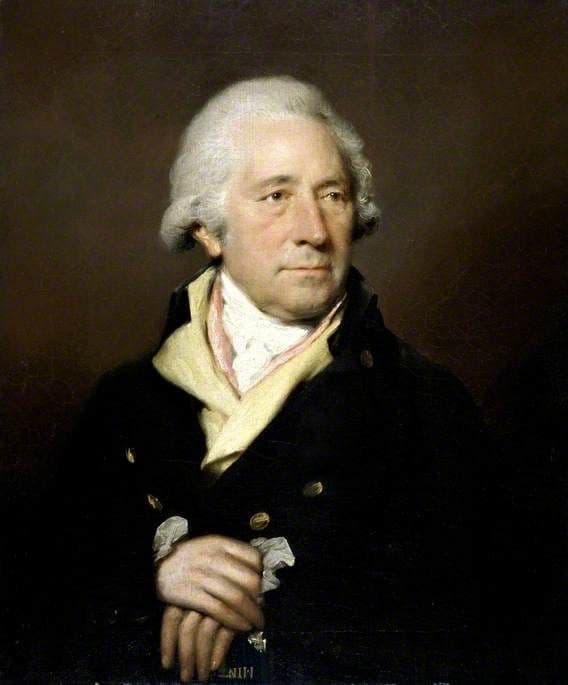
Matthew Boulton was born into the trade. His father made toys, buttons and buckles, and Boulton joined him in 1745. From 1756 to 1761 he leased Sarehole Mill at Hall Green and used it to roll sheet metal for buttons.
Under one roof
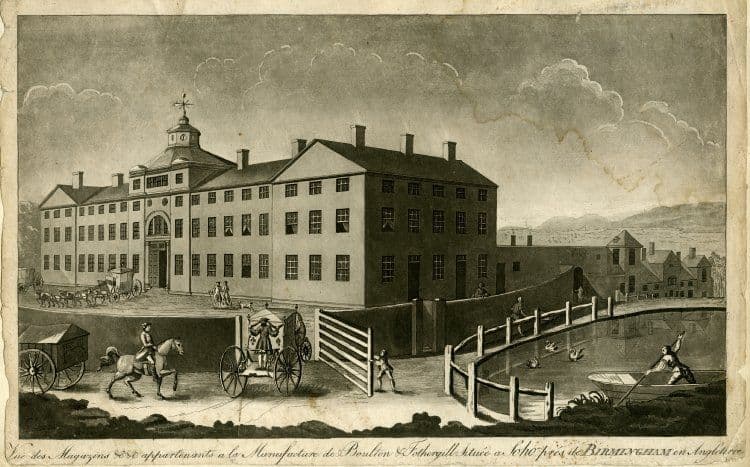
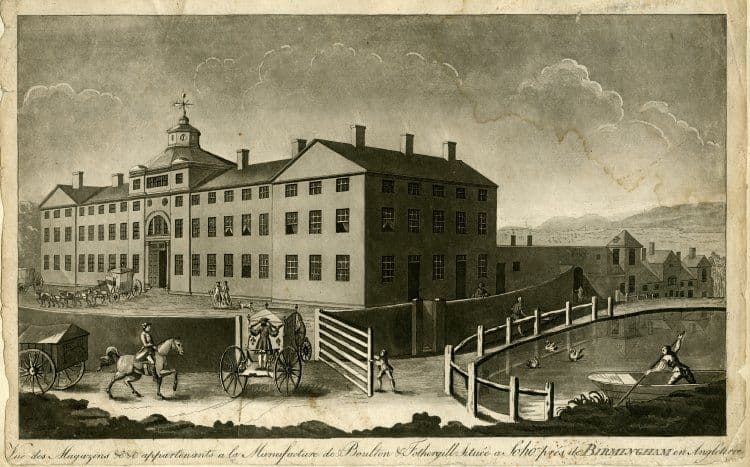
Boulton’s big idea was scale. Most toy-making was put out to small workshops. At the Soho Manufactory, built from 1762, he gathered whole processes under one roof. Boulton & Fothergill made buttons and buckles, but also Sheffield plate, silver, japanned ware and gilded ormolu ornaments. By about 1770 the works employed 800 to 1,000 people.
Silver had to be tested and hallmarked. Boulton led the campaign for an assay office of the town’s own, and one was set up by Act of Parliament in 1773.
Japanning
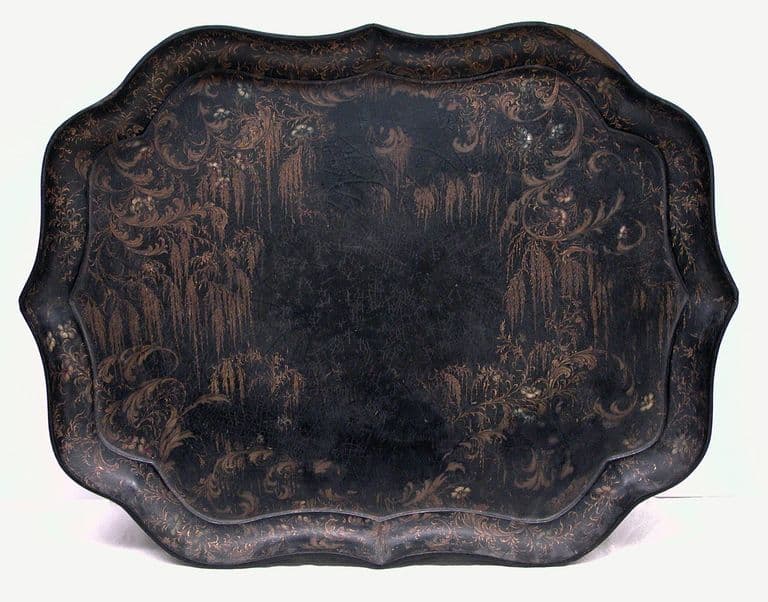
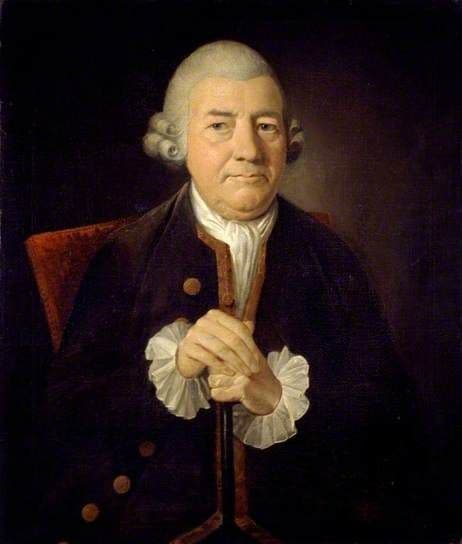
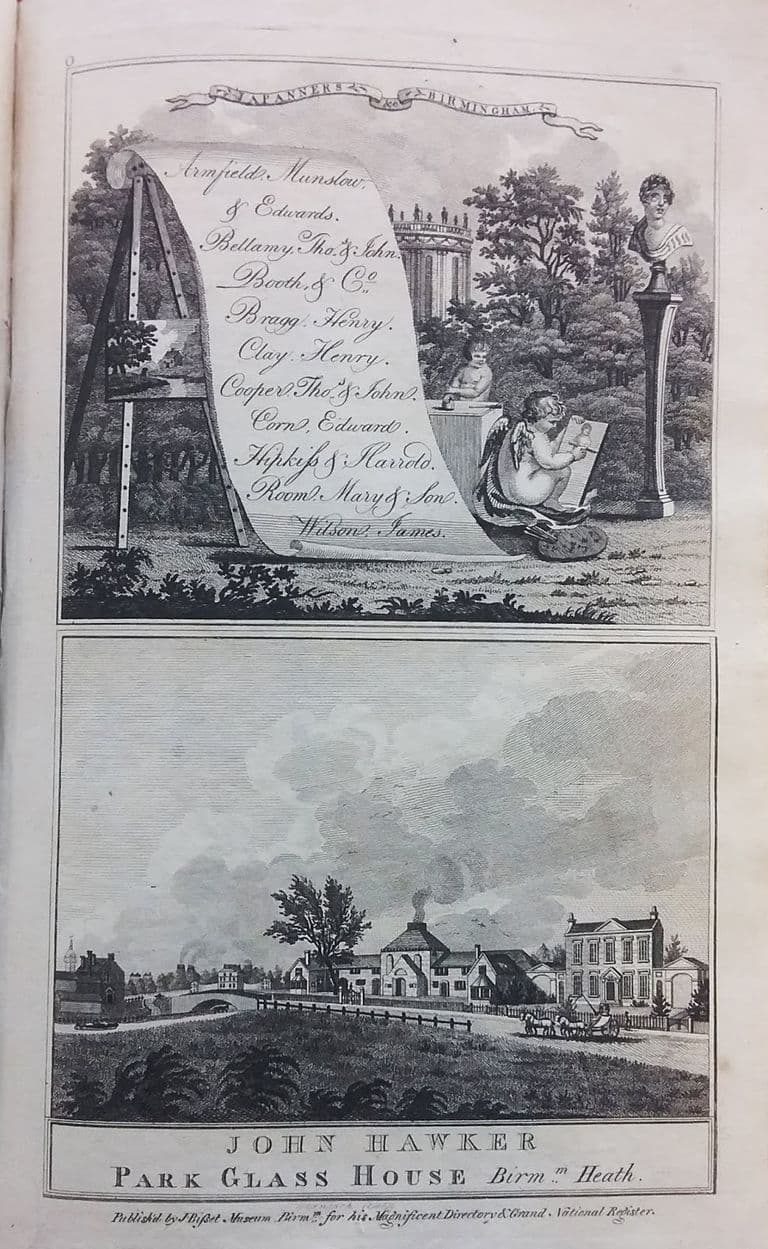
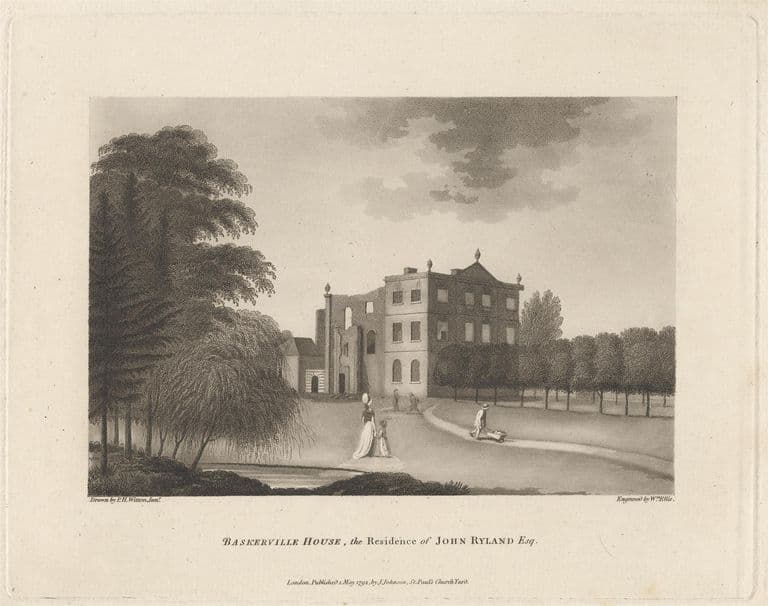
Another Birmingham speciality was japanning: lacquered and painted metal trays, candlesticks and waiters. John Baskerville made his fortune this way. In 1742 he patented a method of rolling and grinding thin metal plates and finishing them to look like mahogany or tortoiseshell. Oddly, no authentic piece of his japanned ware is known to survive.
A darker trade
Not every Birmingham metal good was harmless. The Ashmolean Museum says Birmingham became a major centre for making small brass “Popo” manillas, bracelet-shaped currency used only in the slave trade. That story is told in Slavery and abolition.
Legacy
Rolling and stamping metal was the toy-maker’s craft. At the Soho Mint, Boulton turned the same craft to coins, struck by steam in their millions. The small things led to the big ones.
On the map
18 places connected with The toy trade and metalwork. Tap a number for directions — some sites are private homes or gardens, so each place’s page says what you can see from the street.

- Latchet Building, Soho (site) — Lost · Directions to Latchet Building, Soho (site) (opens Google Maps)
- Birmingham Assay Office, first rooms at the King’s Head, New Street (site) — Lost
- Boulton’s warehouse, Livery Street (site) — Lost, Site redeveloped · Directions to Boulton’s warehouse, Livery Street (site) (opens Google Maps)
- Boulton’s temporary warehouse, Upper Priory (site) — Lost, Site redeveloped
- New Hall, Boulton’s town warehouse (site) — Lost, Site redeveloped · Directions to New Hall, Boulton’s town warehouse (site) (opens Google Maps)
- Sarehole Mill — Surviving but altered · Directions to Sarehole Mill (opens Google Maps)
- Boulton family house and works, Snow Hill — Lost, Site redeveloped
- Henry Clay’s japanning works, Newhall Street — Lost · Directions to Henry Clay’s japanning works, Newhall Street (opens Google Maps)
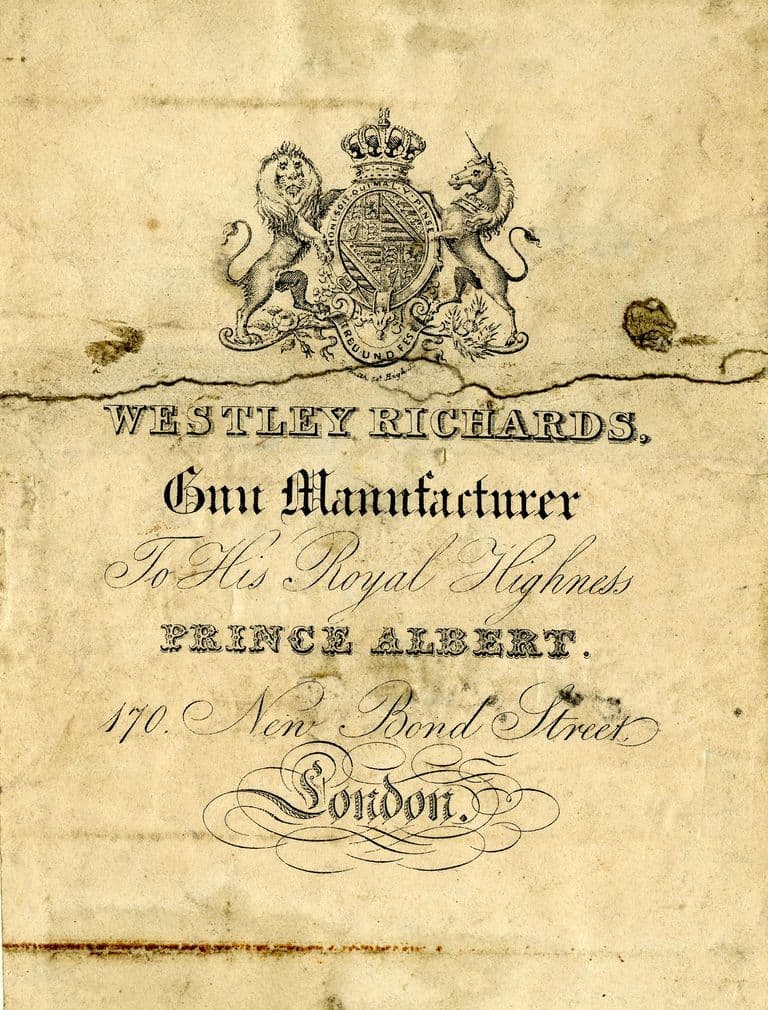
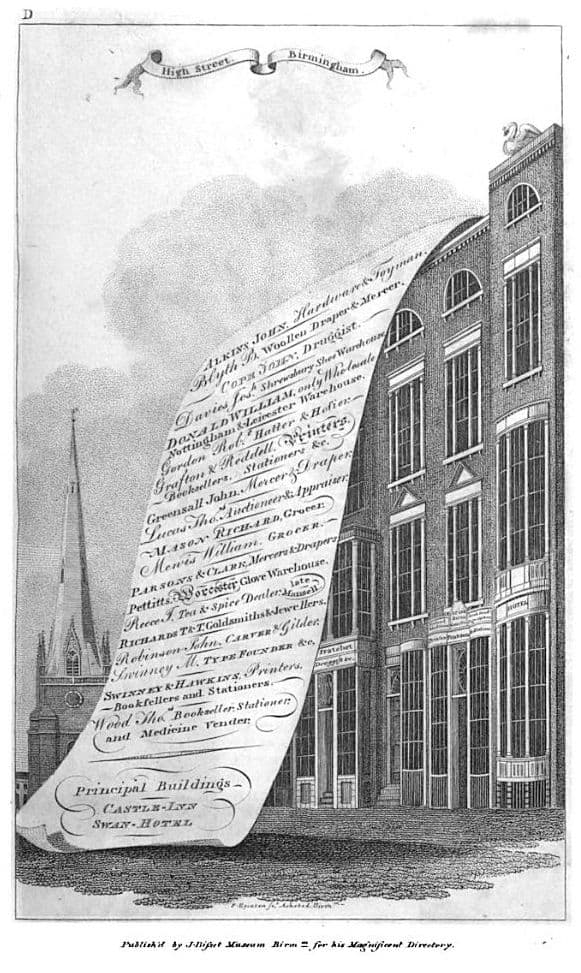
- Westley Richards, 82 High Street — Lost · Directions to Westley Richards, 82 High Street (opens Google Maps)
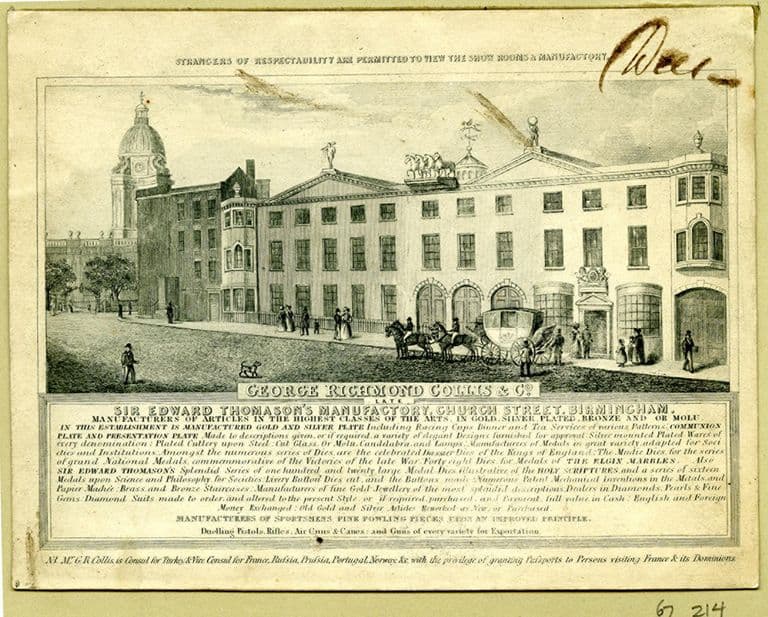
- Thomason’s Manufactory, Church Street — Lost · Directions to Thomason’s Manufactory, Church Street (opens Google Maps)
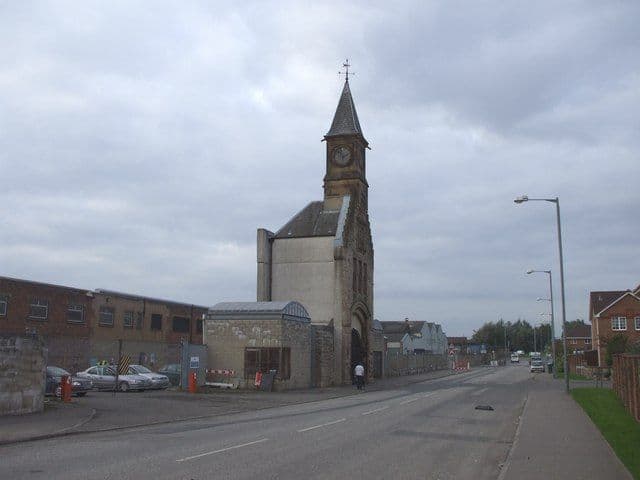
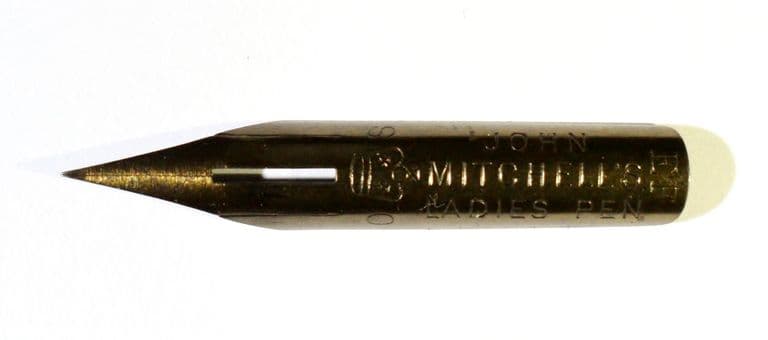
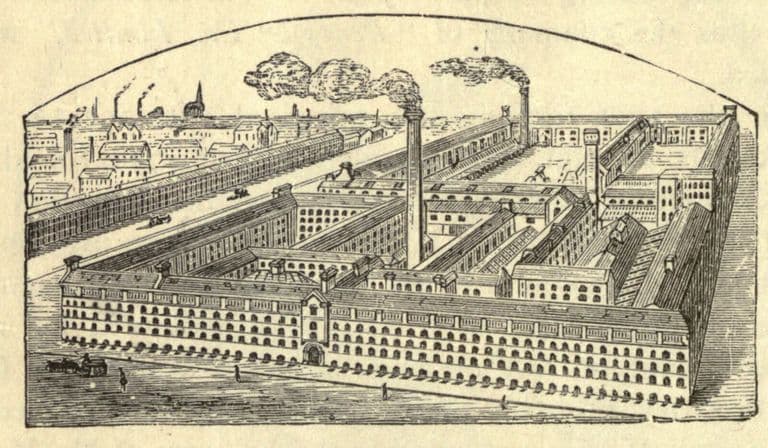
- Josiah Mason’s pen works, Lancaster Street — Site redeveloped · Directions to Josiah Mason’s pen works, Lancaster Street (opens Google Maps)
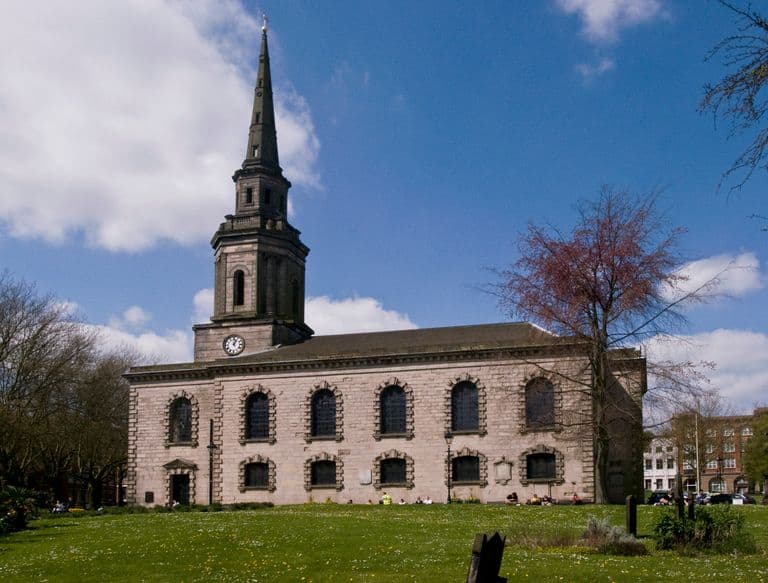
- St Paul’s Church and St Paul’s Square — Surviving, Surviving but altered · Directions to St Paul’s Church and St Paul’s Square (opens Google Maps)
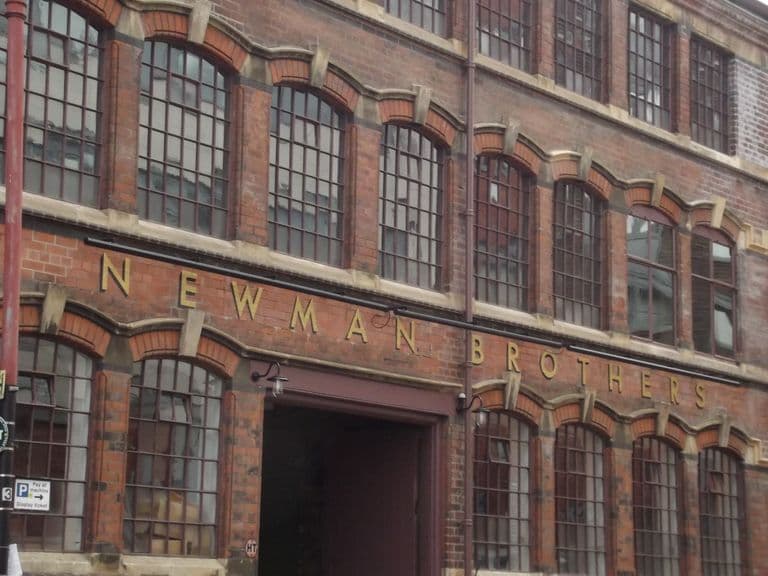
- Newman Brothers Coffin Works — Surviving · Directions to Newman Brothers Coffin Works (opens Google Maps)
- The Jewellery Quarter — Surviving, Surviving but altered
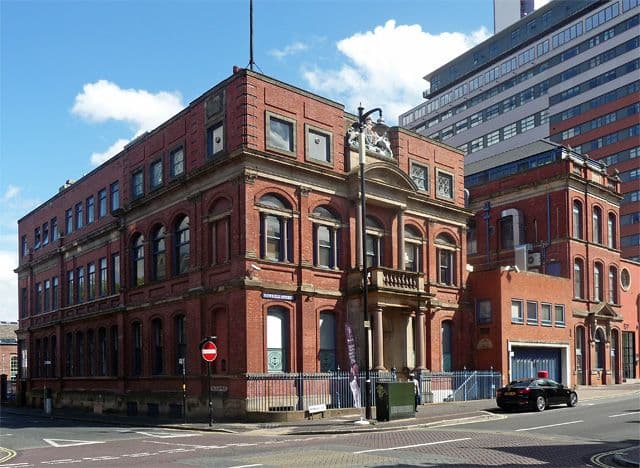
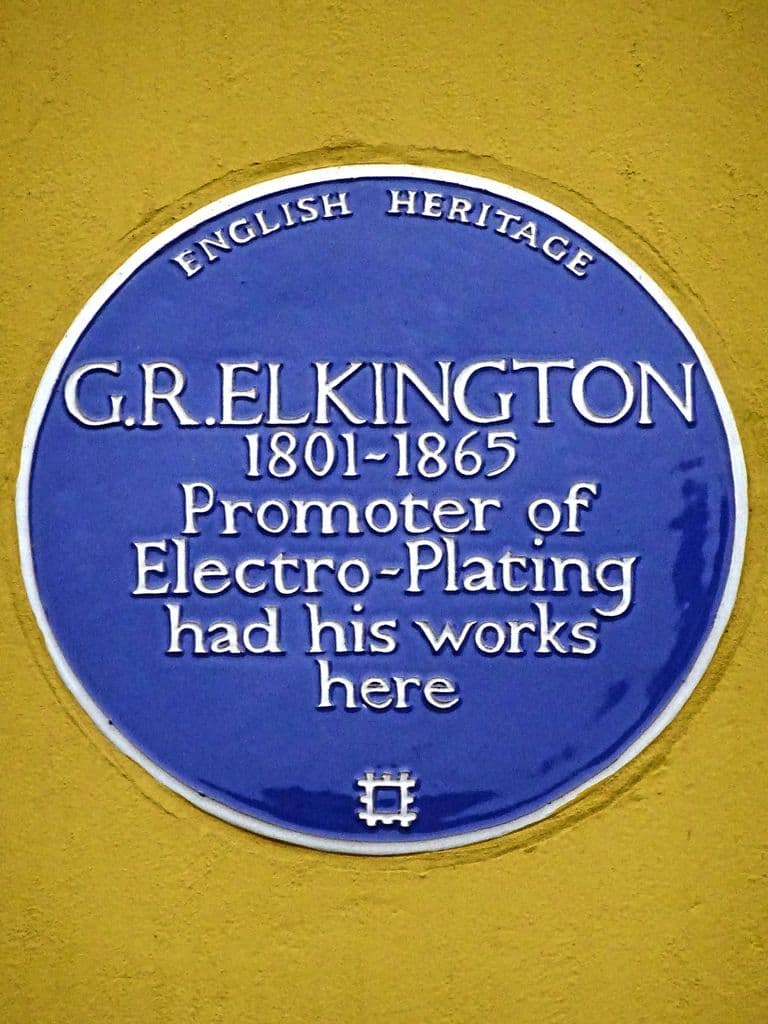
- Elkington’s electroplating works, Newhall Street — Partly surviving, Surviving but altered · Directions to Elkington’s electroplating works, Newhall Street (opens Google Maps)
- Easy Hill — Lost, Site redeveloped · Directions to Easy Hill (opens Google Maps)
- Soho Manufactory — Lost, Site redeveloped · Directions to Soho Manufactory (opens Google Maps)
- Soho House — Surviving · Directions to Soho House (opens Google Maps)
Key dates
- 1742 — Baskerville patents a japanning processJohn Baskerville patents a way of rolling and grinding thin metal plates and finishing them to look like mahogany or tortoiseshell. Japanned metalware makes his fortune.
- 1761 — Boulton takes the Soho estateMatthew Boulton acquires the Soho estate on the Hockley Brook in Handsworth parish, Staffordshire, where a rolling mill already stood. Building of the Soho Manufactory begins the next year.
- 1762 — Building begins at the Soho ManufactoryA year after Matthew Boulton and John Fothergill leased land on the Hockley Brook, building began on the Soho Manufactory. The works were finished around 1765–66.
- May 1766 — Lady Shelburne watches John Taylor enamel a boxLord and Lady Shelburne tour Birmingham’s works. Taylor enamels a landscape on a box in front of them. Shelburne notes that a button passes through fifty hands, and that half the guns sent to Africa will burst.
- 1773 — Birmingham Assay Office establishedAfter a campaign led by Matthew Boulton, an Act of Parliament sets up an assay office in Birmingham to test and hallmark the town’s silver.
- 1783 — Birmingham Commercial Committee formedBirmingham’s merchants and manufacturers form a standing committee to lobby Parliament, with Samuel Garbett as first chairman and Boulton among its members. It fights Pitt’s Irish trade proposals in 1785 and is the ancestor of the Birmingham Chamber of Commerce.
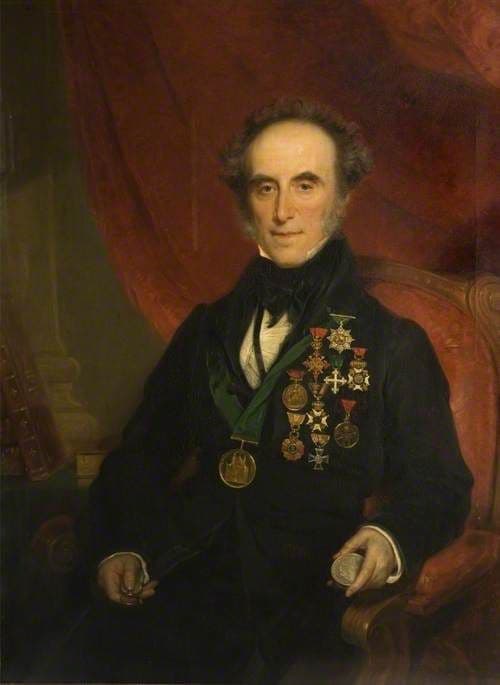
- 1793 — Thomason opens his Church Street manufactoryEdward Thomason, trained at Boulton’s Soho, takes over his father’s buildings at Colmore Row and Church Street and starts making gilt buttons. The works grows into a showpiece making medals, tokens, plate and bronzes.
- 1838 — Elkington’s Newhall Street works openElkington’s electro-gilding and electroplating works open on Newhall Street.
Sources and further reading
- Matthew Boulton (1728 to 1809) — Archives of Soho — Library of Birmingham, Birmingham City Council. Ref. MS 3782/16/1; MS 3782/12/108/1
- A Portrait of Matthew Boulton — Revolutionary Players, History West Midlands
- Sarehole Mill — Birmingham Museums Trust, Birmingham Museums Trust
- Economic and Social History: Industry and Trade, 1500–1880, in A History of the County of Warwick, vol. 7, pp. 81–139 — W. B. Stephens (ed.), Victoria County History, 1964
- John Baskerville, Type-founder and Printer, 1706–1775 — Josiah H. Benton, Boston, 1914. japanning and the 1742 patent
- A brass manilla from West Africa — Ashmolean Museum