
What was here?
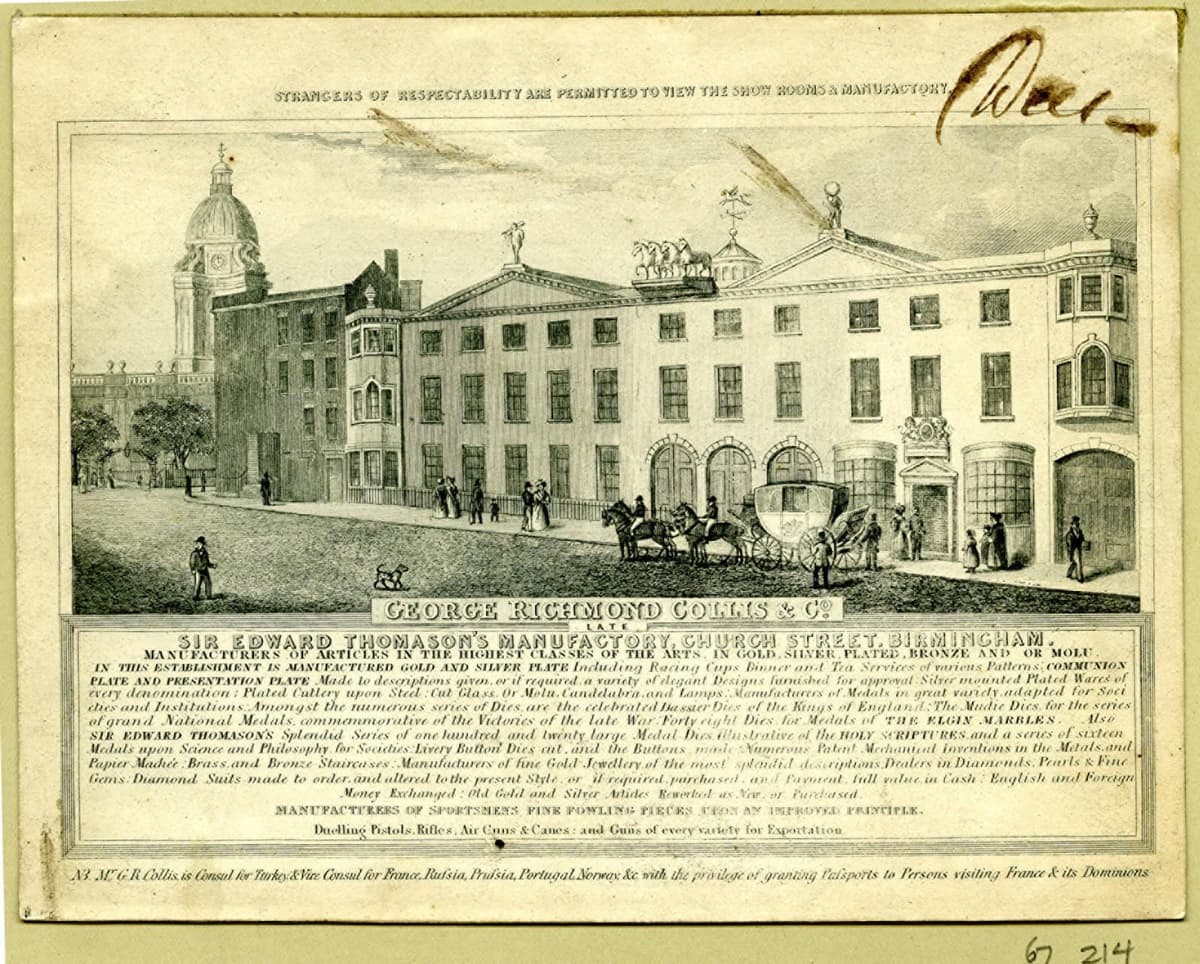
The manufactory and showrooms of Sir Edward Thomason, Boulton’s former apprentice. Buttons, jewellery, tokens, medals, silver plate and bronze castings were made here from 1793, in buildings first used by his father’s buckle business.
History
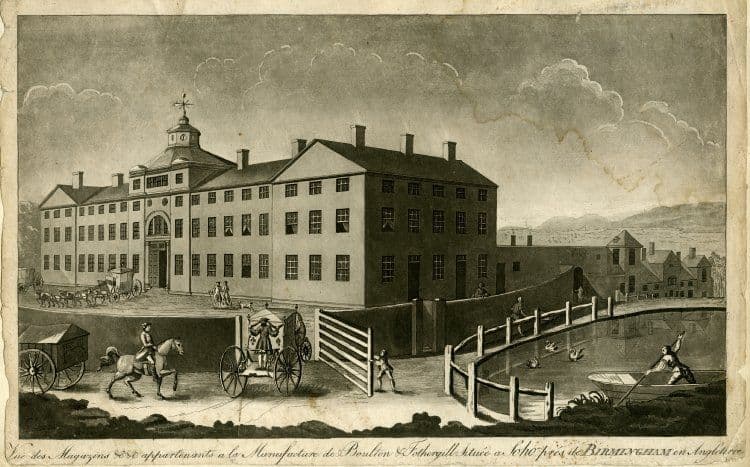
Thomason’s father, a buckle maker, lived on the Colmore Row side of St Philip’s churchyard and owned the houses round the corner into Church Street, with warehouses and workshops behind. In 1793 his son, fresh from Soho, took over the empty buildings.
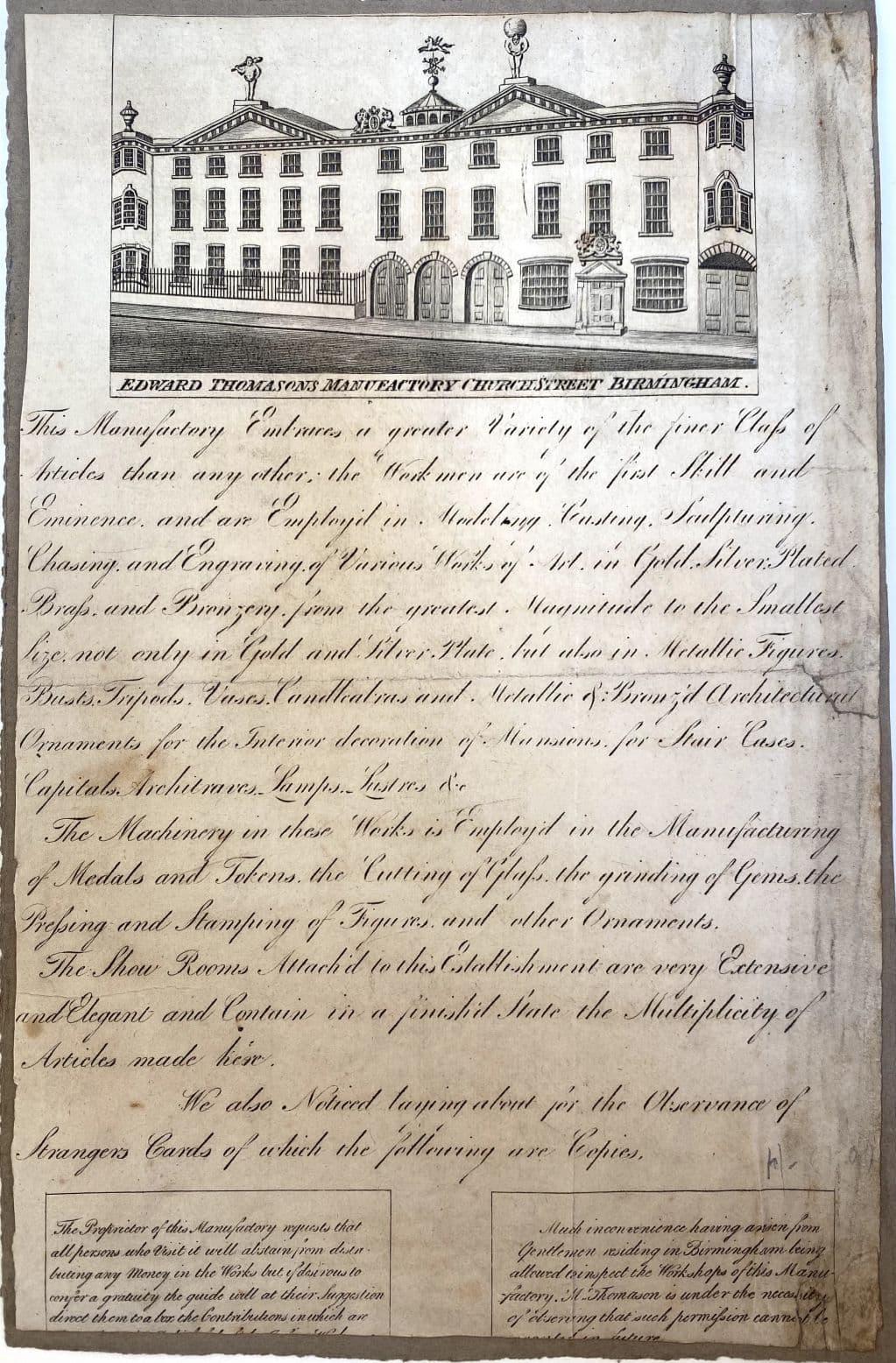
By Thomason’s own account the works grew to sixty or seventy rooms, about twelve of them showrooms. There were departments for gilt buttons, gold jewellery, medals and tokens, bronzes, cut glass and silver plate. The Victoria County History notes that he kept showrooms there and let “persons of distinction” visit the factory. His engraved trade cards show a classical front with four horses on the roof, copies of the horses of St Mark’s in Venice that Thomason modelled in 1823.
Timmins says Thomason sold the works in 1835 to Whitgrave and Collis; a later trade card of George Richmond Collis & Co. still advertised “late Sir Edward Thomason’s Manufactory”.
What happened here?
Buttons, tokens, medals including the Elgin Marbles and Bible series, silver and gold plate, brass-cased tube and bronze castings, including a full-size copy of the Warwick Vase.
Why it mattered
It showed Soho’s methods taken into the town centre by one of Boulton’s apprentices, and after 1809 it was Birmingham’s leading medal works.
Why it disappeared
Redevelopment
The buildings were later replaced as the Colmore Row area was rebuilt; the date has not been established.
The same spot, then and now
1888–1913
Today
Old map: Ordnance Survey six-inch, reproduced with the permission of the National Library of Scotland (CC BY 4.0). Today: © OpenStreetMap contributors.
What’s there now
What replaced it
Later commercial buildings of the Colmore Row business district.
What survives
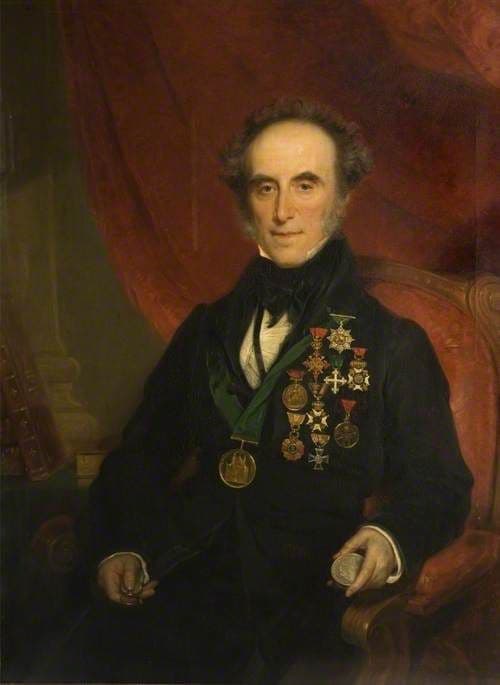
Nothing is known to survive. Thomason’s memorial is in St Philip’s Cathedral nearby, and his portrait is in Birmingham Museums’ collection.
Today
Offices around the junction of Colmore Row and Church Street, opposite St Philip’s Cathedral.
Key dates
- 1793 — Thomason opens his Church Street manufactoryEdward Thomason, trained at Boulton’s Soho, takes over his father’s buildings at Colmore Row and Church Street and starts making gilt buttons. The works grows into a showpiece making medals, tokens, plate and bronzes.
Sources and further reading
The position is taken from Thomason’s memoir (the corner of Colmore Row and Church Street) and an engraved trade card showing St Philip’s down the street. The exact plot and when the buildings were demolished have not been checked against maps.
- Sir Edward Thomason’s Memoirs during Half a Century — Sir Edward Thomason, Longman, Brown, Green, and Longmans, 1845. vol. 1, opening chapter
- Economic and Social History: Industry and Trade, 1500–1880, in A History of the County of Warwick, vol. 7, pp. 81–139 — W. B. Stephens (ed.), Victoria County History, 1964
- The Resources, Products, and Industrial History of Birmingham and the Midland Hardware District — Samuel Timmins (ed.), Robert Hardwicke, London, 1866. pp. 564–65
- Trade card of George Richmond Collis & Co., late Sir Edward Thomason’s Manufactory, Church Street — British Museum. Ref. BM D,2.174
Comments
Comments will load here.