In the 1780s Britain’s small change was a disgrace. When the Royal Mint tested a sample of copper halfpennies in 1787, it found only about 8% were genuine. The rest were forgeries.
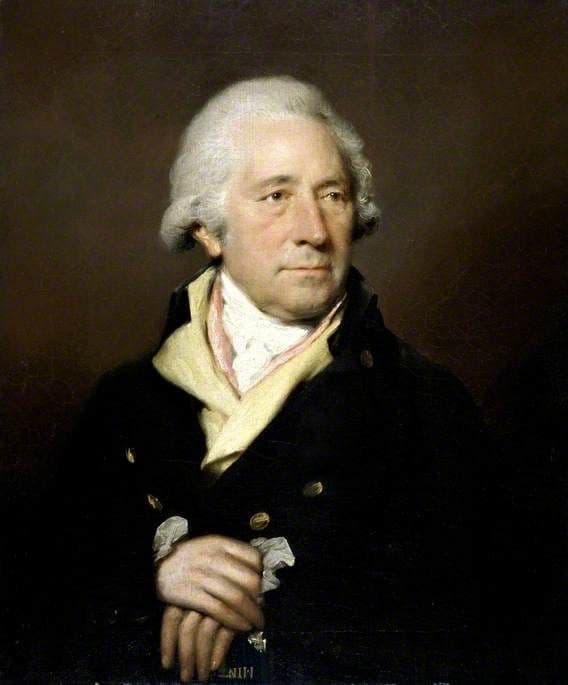
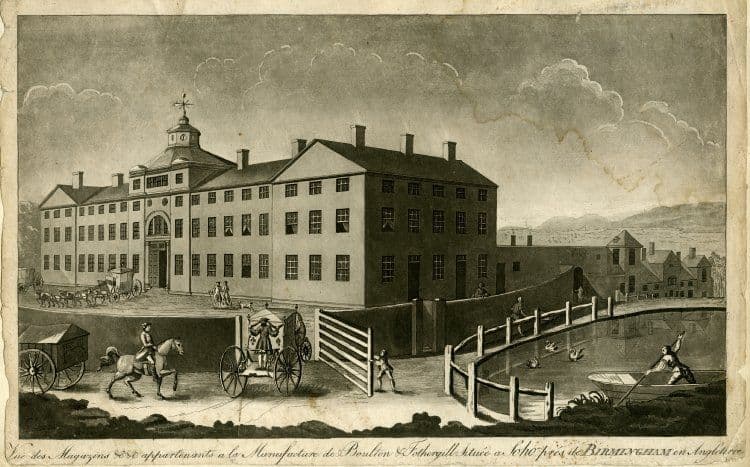
Matthew Boulton thought he could do better. He had been striking trade tokens since 1772. In 1786 Soho made 48 tons of copper blanks for the East India Company’s coins for Bencoolen, though the coins themselves were struck by hand in London. Boulton wanted to do the whole job himself, by steam.
The Soho Mint
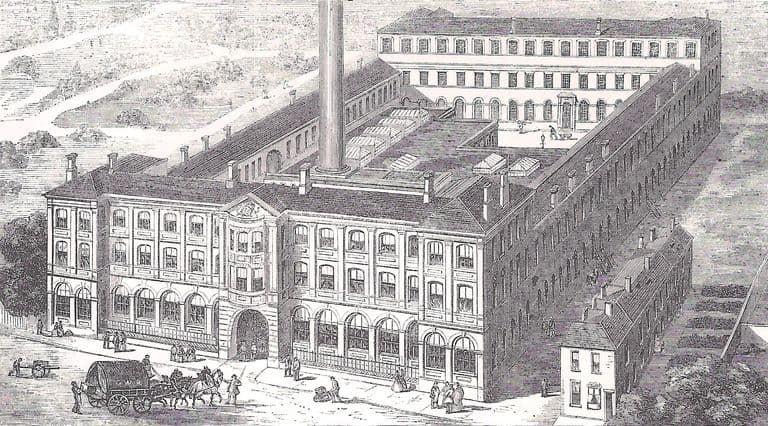
In 1788–89 he built a steam-powered mint on the Soho estate, often described as the first in the world. George Demidowicz’s research shows it sat about 110 metres from the main factory building, tucked away among Boulton’s garden buildings to keep it secret. It was altered in 1798–99 and reorganised in 1824–26 by his son, Matthew Robinson Boulton.
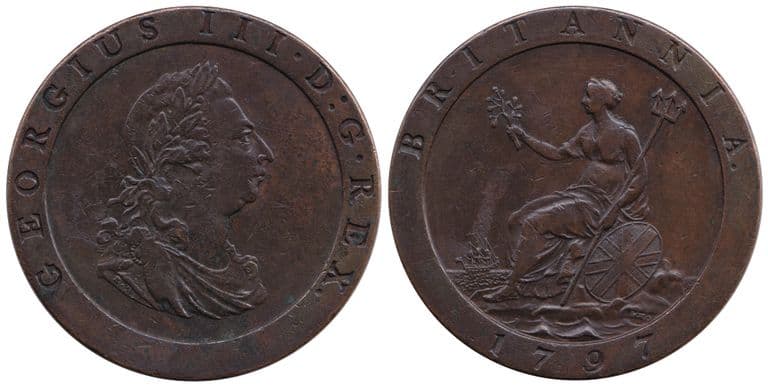
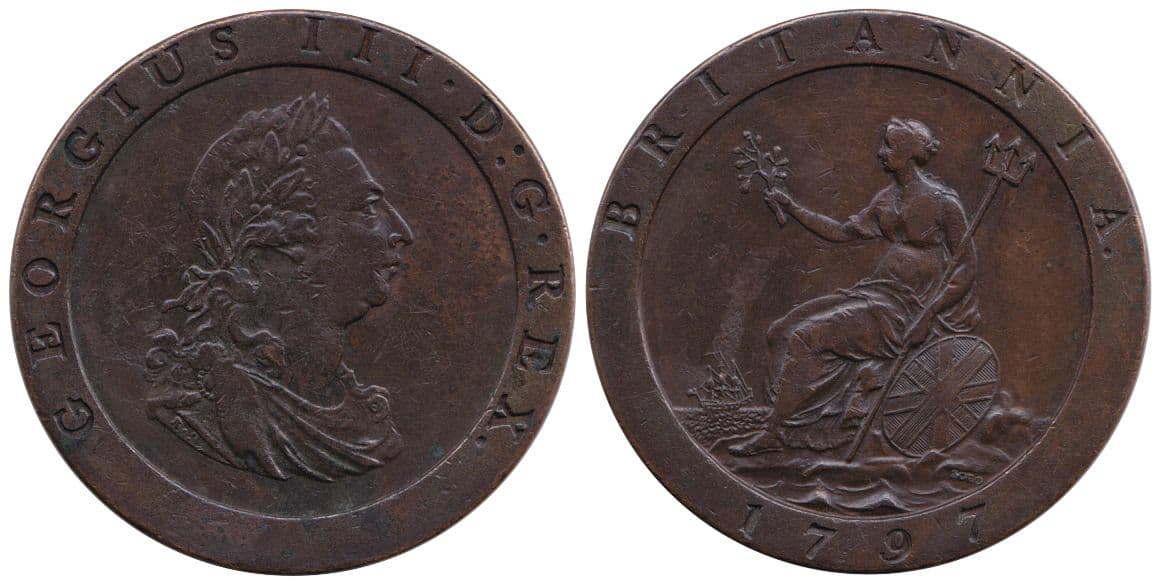
The big prize came in 1797: a government contract for copper coins. A proclamation of 26 July 1797 made them legal tender up to a shilling. The Royal Mint Museum puts the output at about 44 million pennies and 720,000 twopences, all dated 1797, with “SOHO” below Britannia’s shield. Collectors know them as the “cartwheel” coins.
Coins for the world
The Mint struck coins for the Sierra Leone Company in 1791, for the East India Company, and more British coins in 1805–07. It sold minting machinery too, to the rebuilt Royal Mint in London and to mints at Calcutta, Bombay and Mexico.
The end
The Soho Mint closed in 1849. At an auction on 29 April 1850 most of the machinery went to Ralph Heaton, whose Birmingham Mint on Icknield Street carried on the trade, and to James Watt & Co., who opened a new mint at Soho Foundry in 1860. The old Mint building was pulled down and was gone by 1863. In 1996 *Time Team* dug in the back gardens of South Road and found the brick tunnel of its drive shaft. Under those Handsworth lawns lies the place where the cartwheel penny was made.
On the map
7 places connected with Coinage and minting. Tap a number for directions — some sites are private homes or gardens, so each place’s page says what you can see from the street.

- Soho Mint drive-shaft tunnel — Partly surviving · Directions to Soho Mint drive-shaft tunnel (opens Google Maps)
- Latchet Building, Soho (site) — Lost · Directions to Latchet Building, Soho (site) (opens Google Maps)
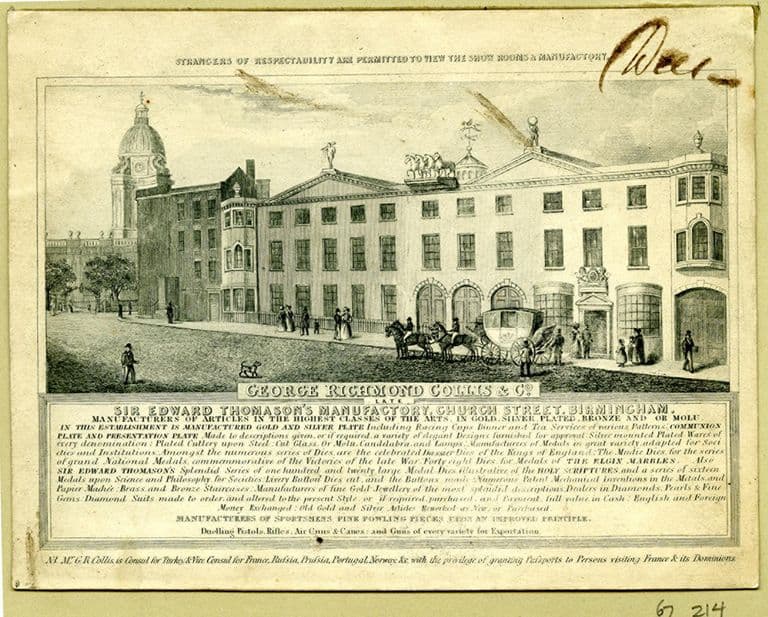
- Thomason’s Manufactory, Church Street — Lost · Directions to Thomason’s Manufactory, Church Street (opens Google Maps)
- Birmingham Mint, Icknield Street — Partly surviving, Surviving but altered · Directions to Birmingham Mint, Icknield Street (opens Google Maps)
- Soho Foundry — Partly surviving, At risk · Directions to Soho Foundry (opens Google Maps)
- Soho Mint — Lost, Site redeveloped · Directions to Soho Mint (opens Google Maps)
- Soho Manufactory — Lost, Site redeveloped · Directions to Soho Manufactory (opens Google Maps)
Key dates
- 1788–89 — Soho Mint builtBoulton builds the steam-powered Soho Mint, hidden among his garden buildings between the Manufactory and Soho House.
- 1797 — Cartwheel coinage struck at SohoBoulton wins the government contract, and the Soho Mint strikes the copper “cartwheel” pennies and twopences, marked “SOHO” beneath Britannia.
- 29 April 1850 — The Soho Mint’s machinery is auctionedA year after the Soho Mint closes, its equipment is sold. Most goes to Ralph Heaton, whose Birmingham Mint carries on the trade, and to James Watt & Co., who open a new mint at Soho Foundry in 1860.
- 1851 — Heaton’s mint strikes coins for ChileA year after buying the Soho Mint’s presses, Ralph Heaton & Sons strike copper coins for Chile, reported to be the first to carry the Heaton ‘H’ mint mark. Contracts for Britain, France and Italy follow.
- 1860–63 — Birmingham strikes Britain’s new bronze coinsBritain replaces its heavy copper coins with smaller bronze ones. About 285 million are struck in 1860–63, and the Royal Mint contracts much of the work to two Birmingham-area mints, James Watt & Co. at Soho Foundry and Ralph Heaton & Sons.
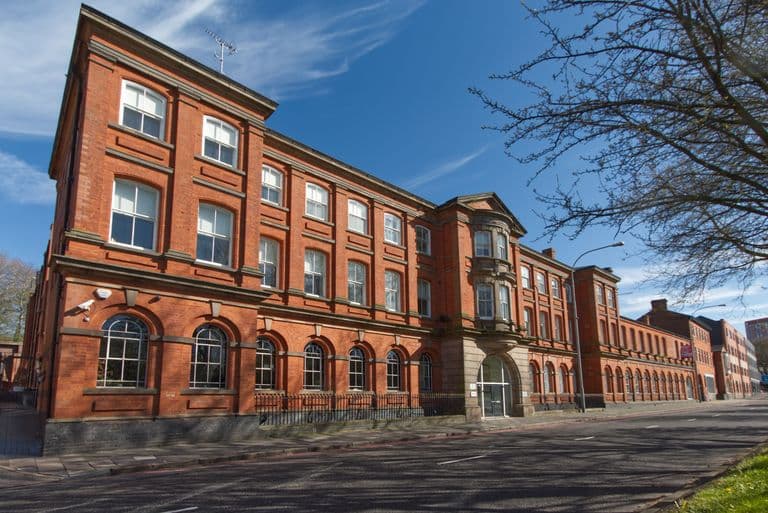
- 1860 — The Heatons move their mint to Icknield StreetRalph Heaton & Sons outgrow Bath Street and move to new works on Icknield Street, beside Warstone Lane Cemetery. Its Italianate front, completed by 1862, survives and is listed Grade II.
- 2003 — The Birmingham Mint closesAfter more than 150 years of coining, the Birmingham Mint goes into administration in March 2003 and closes in May. Its listed Icknield Street front is later converted to housing.
Sources and further reading
- Coinage — Archives of Soho — Library of Birmingham, Birmingham City Council. Ref. MS 3782/13/36/19; MS 3782/12/108/83; MS 3147/5/707-717
- Matthew Boulton and the Soho Mint: copper to customer (PhD thesis) — Sue Tungate, University of Birmingham, 2011
- Penny — Curator’s corner — Royal Mint Museum, Royal Mint Museum
- The Soho Manufactory, Mint and Foundry, West Midlands: Where Boulton, Watt and Murdoch Made History — George Demidowicz, Historic England / Liverpool University Press, 2022. via publisher’s summary
- Matthew Boulton, William Murdock and James Watt: Appraisal for ‘Golden Boys’ Statue — Stephen Mullen, Birmingham Museums Trust, 2021. Sierra Leone Company coins