
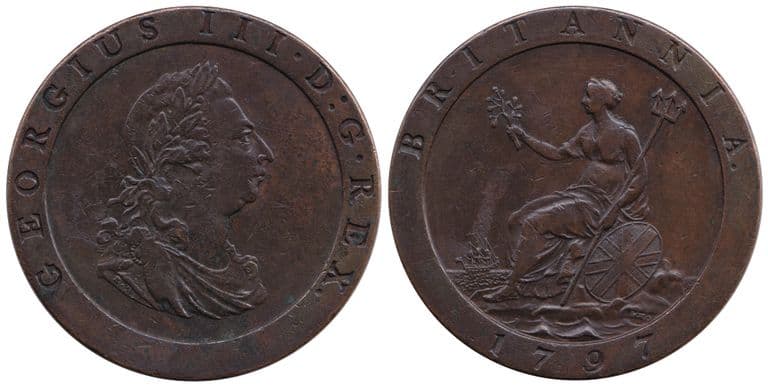
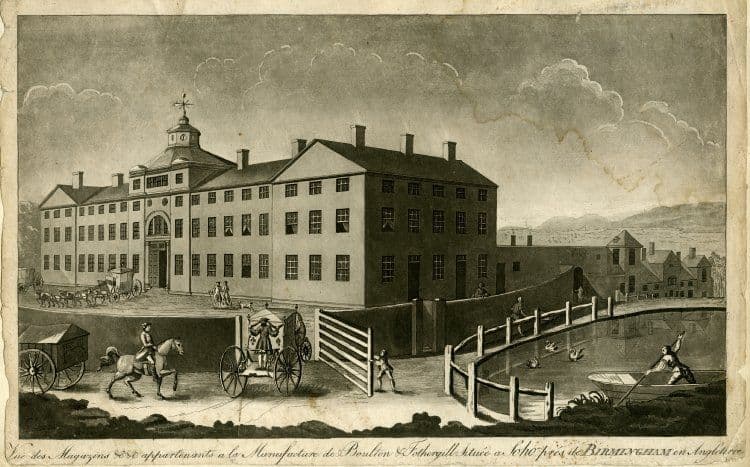
On Monday 29 April 1850 the auctioneers moved into the silent workshops of the Soho Mint. For sixty years this had been the most famous coining works in the world, the place where Matthew Boulton’s steam presses struck the 1797 “cartwheel” penny. Now it was closed, and everything was for sale: lathes, dies, cutting-out presses, and the heavy screw presses that had made money for half the world.
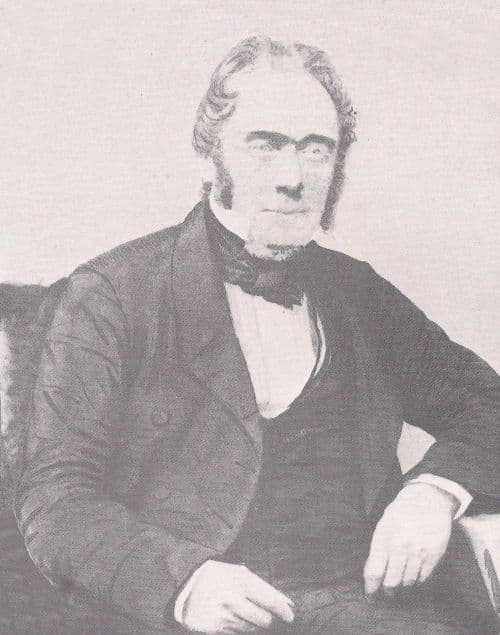
Among the buyers was a Birmingham brassfounder and die-sinker from Bath Street called Ralph Heaton. He was in his mid-fifties, and he was about to change trades. Sixteen years later his son, writing the chapter on coinage for Samuel Timmins’s great survey of Birmingham industry, put it simply. When the Soho Mint was dismantled, “most of the working plant passed into the hands of Messrs. Ralph Heaton and Sons”.
Boulton’s presses had found a new home. Birmingham’s minting story was not over. It was about to get bigger.
A family of machine-makers
The Heatons were mechanics before they were coiners. Ralph Heaton I (1755–1832) set up as a brassfounder in Slaney Street in 1794 and made tools and machines for the town’s trades. Birmingham made buttons by the million, and every button needed a shank, the little loop on the back. Heaton built a machine to make them. The Victoria County History calls it “probably one of the earliest examples of a fully self-acting contrivance capable of performing a whole series of consecutive operations without re-setting”. In other words, an automatic machine, in the 1790s.
opened a new mint at Soho Foundry in 1860, the firm could claim, as Ralph Heaton III later wrote, that “our Mint was the only coinage establishment in England, with the exception of the Royal Mint in London.”
His son Ralph, the second of the name, was born in 1794, the year the foundry opened. He trained as a die-sinker, cutting the hardened steel dies that stamp patterns into metal. In 1817 his father handed him land and buildings at 71 Bath Street, round the corner from the family works in Shadwell Street, near St Chad’s. By 1828 the directory listed him as “brass founder and die sinker, 71 Bath St”.
For thirty years it was a solid, unremarkable Birmingham business. Then his sons came in. Ralph Heaton III joined in 1847 and the firm became Heaton & Son. His brother George followed in 1853, and it became Ralph Heaton & Sons. Keep the names straight: the father bought the Soho machinery and built the new mint; the sons ran it after him.
Buying Boulton’s machines
The Soho Mint had closed in 1849. Ralph Heaton saw an opening. According to the numismatist James Sweeny, who wrote the firm’s history, he came away from the sale with four steam-powered screw presses and six presses for cutting out blanks, the plain metal discs that become coins. He set them up in his Bath Street and Shadwell Street works.
A screw press works like a giant vice. A heavy screw, spun round by a weighted arm, drives the top die down onto a blank sitting on the bottom die, and the force squeezes the design into both faces at once. Boulton’s great idea had been to drive these presses by steam instead of by gangs of men, and to feed the blanks in automatically. Heaton had bought the machines that proved it could be done.
Coining was a strange trade. The Heatons explained in 1866 that a mint might work flat out for months and then stand idle for months more. That kept most people out. From 1850 until James Watt & Co. opened a new mint at Soho Foundry in 1860, the firm could claim, as Ralph Heaton III later wrote, that “our Mint was the only coinage establishment in England, with the exception of the Royal Mint in London.”
Coins for the world
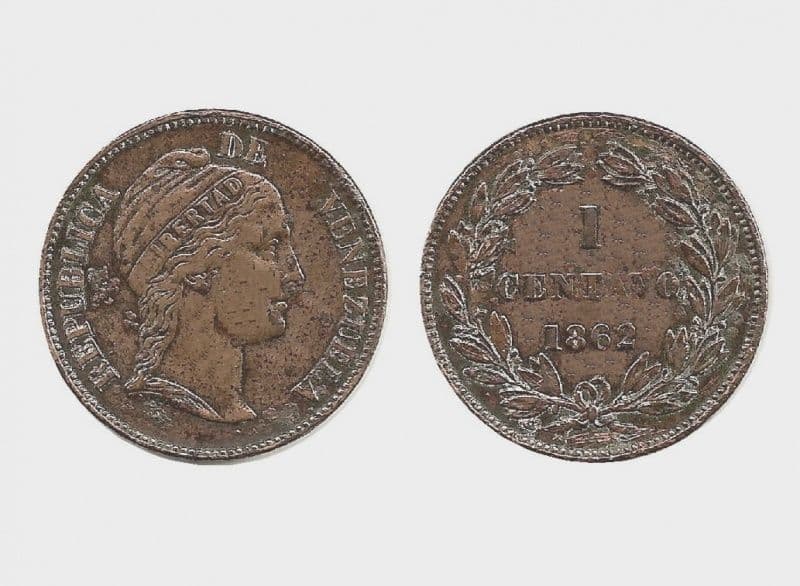
The orders came quickly. In 1851 the firm struck copper coins for Chile. Coin collectors know them as the first to carry the small letter H, the Heaton mint mark. Soon the Royal Mint, short of capacity, was buying blanks from Birmingham, and in 1853 it gave the firm its first British contract, for about 500 tons of copper.
Then came France. Napoleon III’s new empire was replacing its old copper money with smaller coins of bronze, a harder alloy of copper. The Heatons sent men to Marseilles to run the French mint there. “A coinage of 750 tons struck in Marseilles”, the firm recorded in 1866. When Tuscany broke from its grand duke during the war of 1859, the provisional government’s copper coins came from Birmingham. When Tuscany became part of the new Kingdom of Italy, the Heatons struck 1,600 tons of bronze coin in Milan in 1861–62, with the blanks made in Birmingham and shipped out.
Ralph Heaton III’s 1866 tally of Birmingham coining since 1849 reads like a gazetteer: about 2,000 tons of copper and bronze for Britain, 1,490 tons for India, 700 tons for Tunis, and more than 1,000 tons for Turkey, Hong Kong, Haiti, Sarawak, Tuscany, Venezuela, Canada and Chile. Much of this was the small change of the British Empire, struck to order for colonial governments. Add France and Italy and it came, he reckoned, to about two and a half million pounds in face value.
Bronze for Britain
At home, the old copper pennies were huge, heavy and worn. In 1860 the government decided to replace them with bronze, following the French example. The new bronze penny, Heaton noted, weighed “exactly one-half” of the old copper one.
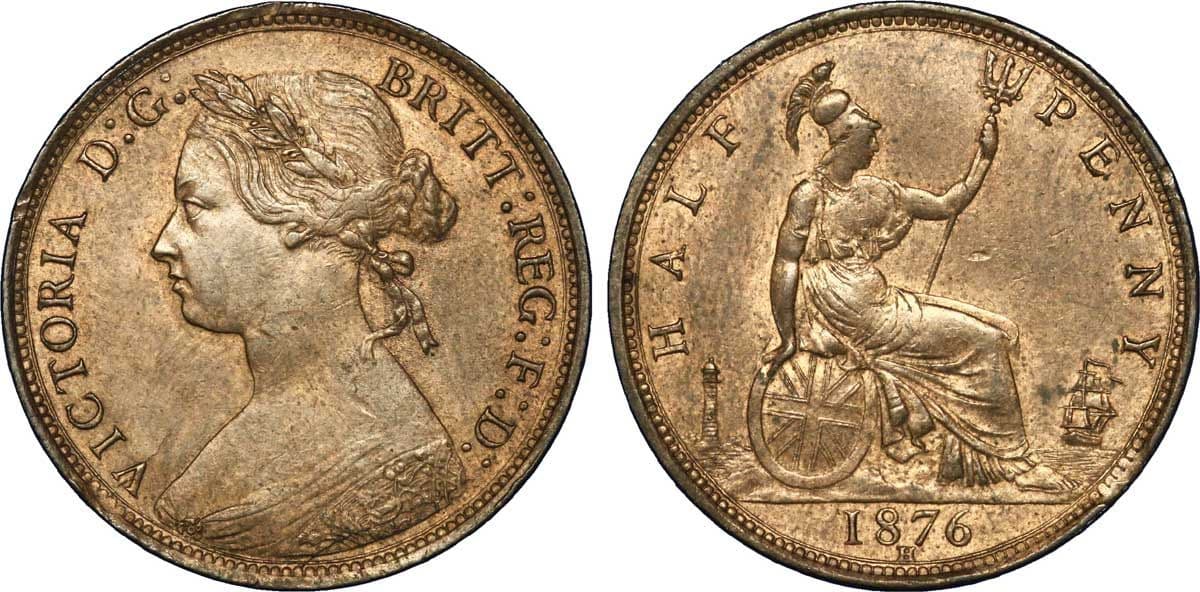
It was an enormous job. The numismatist Paul Holland calculates that some 285 million bronze coins were struck between 1860 and 1863, and the Royal Mint could not do it alone. It contracted much of the work out to two private mints: James Watt & Co. at Soho Foundry in Smethwick, the heirs of Boulton & Watt, and Ralph Heaton & Sons. Heaton recorded that for Britain’s new bronze coinage “more than 17,000 dies were used”. Both firms had bought machinery from Boulton’s old mint. Soho was helping to make Queen Victoria’s pennies.
Icknield Street
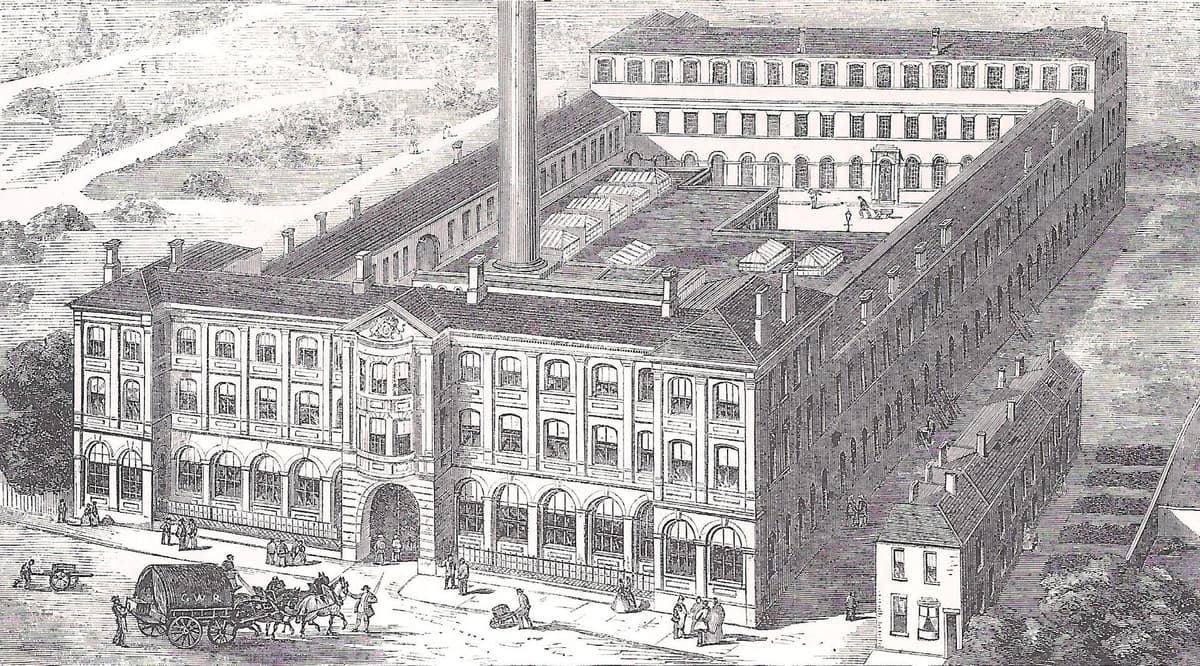
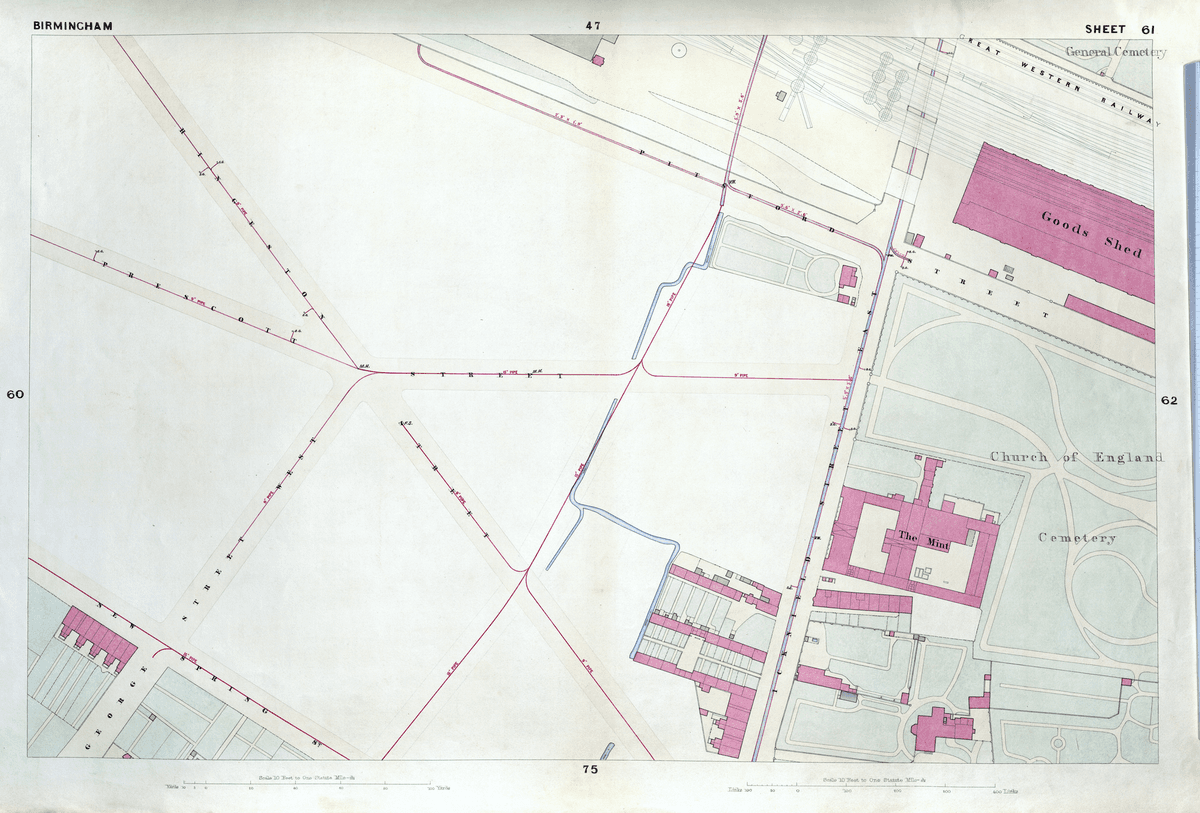
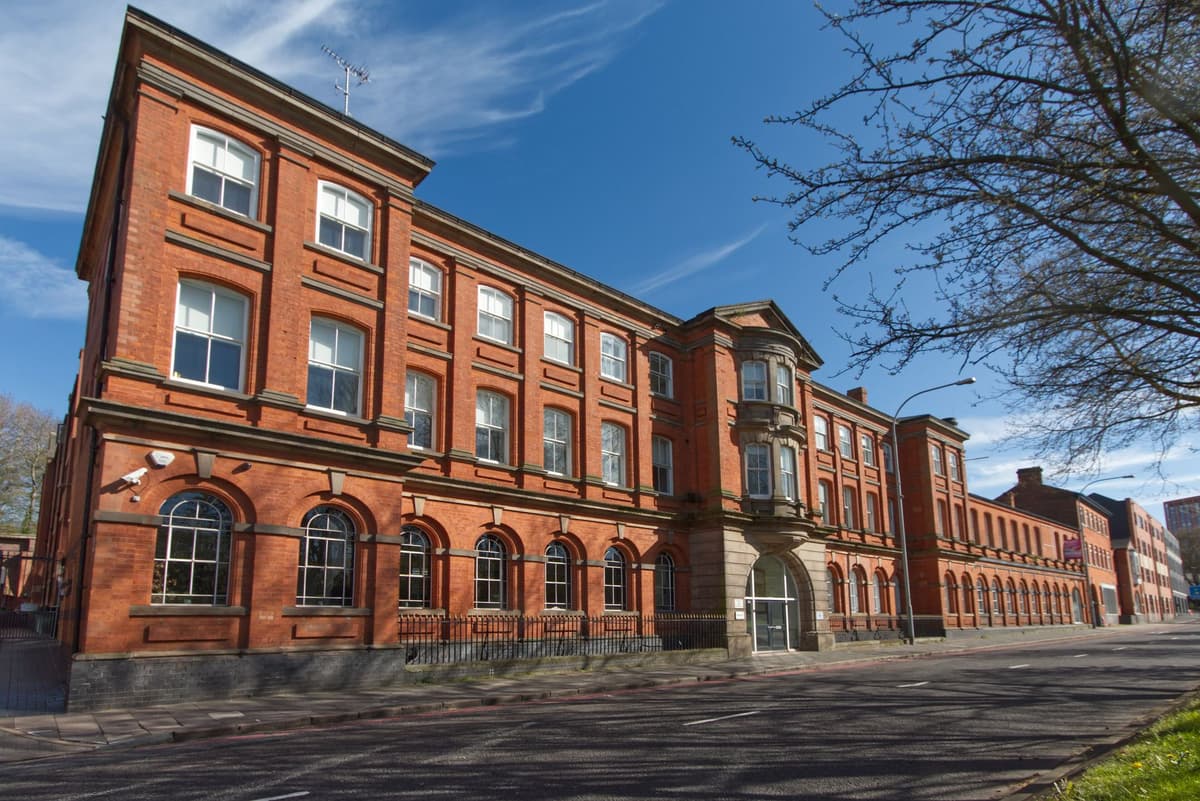
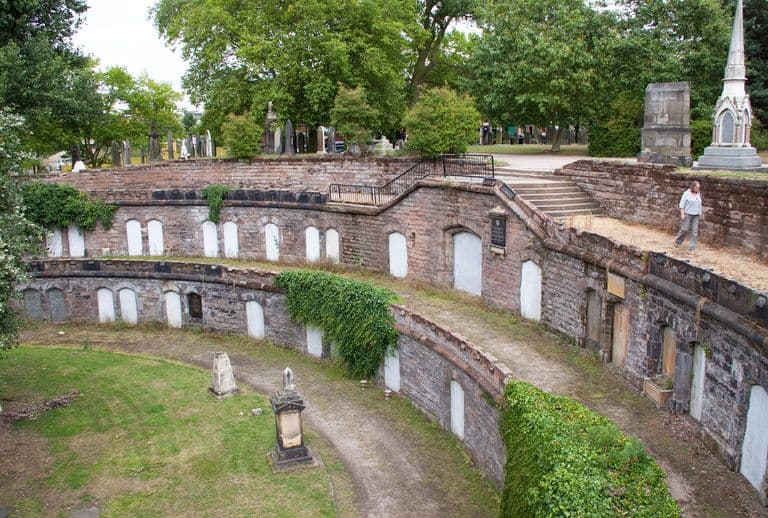
Bath Street was full. In the summer of 1860, as Heaton’s son put it, “we removed and enlarged our Mint”. The firm bought about an acre on Icknield Street, on the western edge of what is now the Jewellery Quarter, beside the Church of England cemetery at Warstone Lane, and put up a purpose-built works.
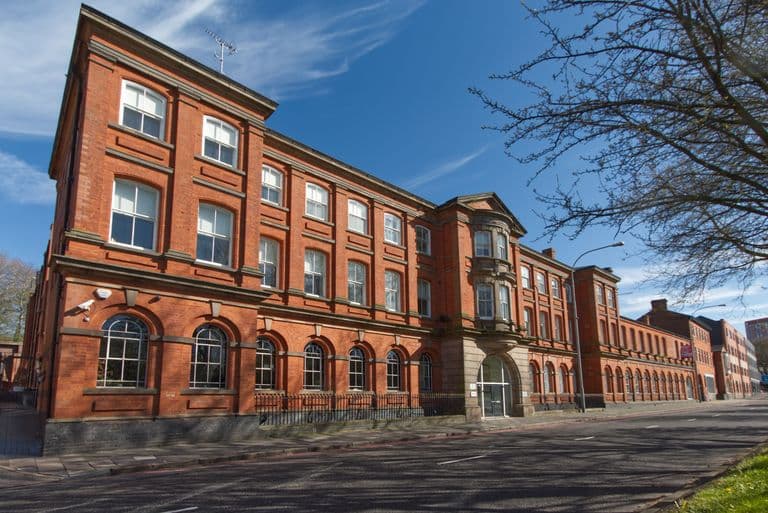
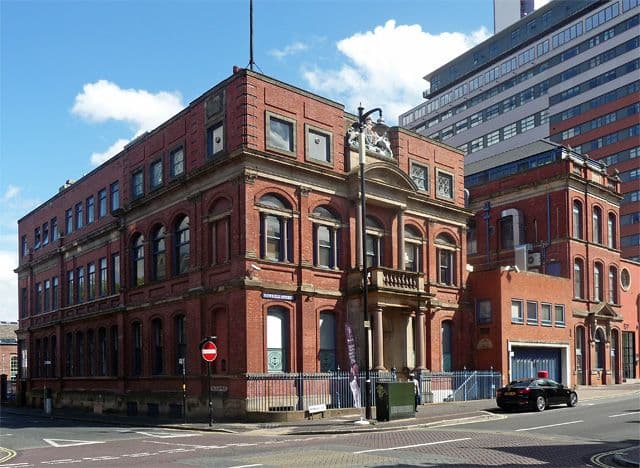
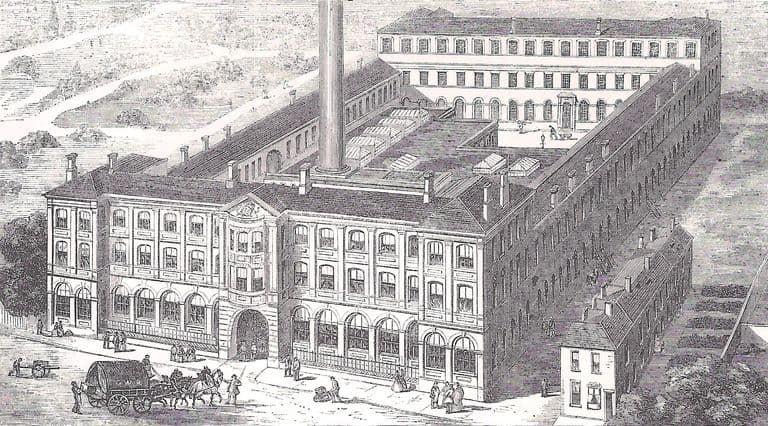
It still stands. The street front is a long, confident Italianate range in red brick with stone trim, three storeys high. Its ground floor is an arcade of round-headed windows, and in the centre a stone arch is crowned by a two-storey stone bow window. Behind it the works were laid out round a quadrangle, with casting shops, rolling mills, an engine house and a boiler house. The Illustrated Times published an engraving of the new building in May 1862.
Inside, steam drove the presses. By 1866 there were “eleven screw and twelve lever coinage presses”. Men packed the coin, boys fed the presses and girls sorted and wrapped the finished pieces. Heaton wrote that they were aged “from about eleven to eighteen or twenty”, and that because orders came and went they were “set on or cast off as necessity requires”. When J. E. White toured Birmingham factories in 1863 for the Children’s Employment Commission, he contrasted the cramped old workshops of the town centre with the new works on its edge. Heaton’s Mint, he found, was new, light and airy.
Ralph Heaton II did not see much of it. He died in 1862, and Ralph Heaton III took over a firm his father had turned from a brass foundry into an international mint in twelve years.
After Ralph
The sons built on what he started. From 1874 some British pennies carried the H below the date. In the 1860s the firm sent equipment and men to set up a royal mint at Mandalay in Burma, and in 1889 it supplied ninety presses for a new mint at Canton in China. The business became a public company, The Mint, Birmingham, Limited, in 1889, and was later known simply as the Birmingham Mint.
It lasted more than a century and a half. In 1991 the engineering group IMI bought it and moved its own mint at Witton, in north Birmingham, into Icknield Street. But it had long struggled against the Royal Mint for foreign orders, and in 2003 the Birmingham Mint went into administration and closed.
Why it mattered
Matthew Boulton showed that coins could be made by steam. Ralph Heaton made sure Birmingham kept doing it after the Boultons gave up. When the Soho Mint was broken up in 1850, its presses could have been scrapped or shipped away. Instead a Bath Street die-sinker bought them, and within ten years his firm was striking coin for France, Italy, Chile and Britain itself.
The Heatons took Boulton’s idea further than Boulton had. They did not only sell coins. They sold the knowledge of making them, sending men and machines to run mints in Marseilles, Milan, Mandalay and Canton. For a century and a half the small H on a coin meant Birmingham.
The mint is closed now. But walk up Icknield Street past Warstone Lane Cemetery and the red-brick front is still there, with its stone bow window over the great arched entrance. Nothing of the Soho Mint survives above ground. This is where its machines went next, and where Birmingham carried on making money for the world.
On the map
5 places connected with Ralph Heaton II. Tap a number for directions — some sites are private homes or gardens, so each place’s page says what you can see from the street.

- Birmingham Mint, Icknield Street — Partly surviving, Surviving but altered · Directions to Birmingham Mint, Icknield Street (opens Google Maps)
- Warstone Lane Cemetery — Surviving, Surviving but altered · Directions to Warstone Lane Cemetery (opens Google Maps)
- The Jewellery Quarter — Surviving, Surviving but altered
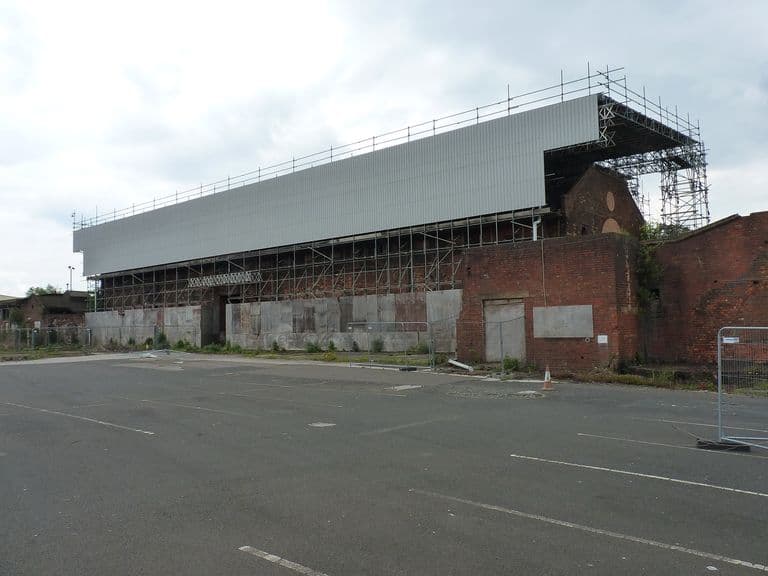
- Soho Foundry — Partly surviving, At risk · Directions to Soho Foundry (opens Google Maps)
- Soho Mint — Lost, Site redeveloped · Directions to Soho Mint (opens Google Maps)
Key dates
- 29 April 1850 — The Soho Mint’s machinery is auctionedA year after the Soho Mint closes, its equipment is sold. Most goes to Ralph Heaton, whose Birmingham Mint carries on the trade, and to James Watt & Co., who open a new mint at Soho Foundry in 1860.
- 1851 — Heaton’s mint strikes coins for ChileA year after buying the Soho Mint’s presses, Ralph Heaton & Sons strike copper coins for Chile, reported to be the first to carry the Heaton ‘H’ mint mark. Contracts for Britain, France and Italy follow.
- 1860–63 — Birmingham strikes Britain’s new bronze coinsBritain replaces its heavy copper coins with smaller bronze ones. About 285 million are struck in 1860–63, and the Royal Mint contracts much of the work to two Birmingham-area mints, James Watt & Co. at Soho Foundry and Ralph Heaton & Sons.
- 1860 — The Heatons move their mint to Icknield StreetRalph Heaton & Sons outgrow Bath Street and move to new works on Icknield Street, beside Warstone Lane Cemetery. Its Italianate front, completed by 1862, survives and is listed Grade II.
Sources and further reading
Which Heaton did what: Ralph Heaton I (1755–1832) founded the brass foundry in 1794; Ralph Heaton II (1794–1862) set up on his own in 1817, bought the Soho machinery and built Icknield Street; his sons Ralph III and George ran the mint after 1862. Ralph I also had a son called George (born 1789), not to be confused with Ralph II’s son. Address in 1817: Grace’s Guide (from directories) gives 71 Bath Street; other accounts say he began inside his father’s Shadwell Street premises. The exact lots bought in 1850 (four screw presses, six blank-cutting presses) come from J. O. Sweeny’s 1981 history as reported by others; Sweeny has not been seen directly. Marseilles: some accounts say Ralph II went in person, others that Ralph III led the workmen. The move to Icknield Street is dated 1860 by the firm itself and by Historic England; some accounts say the building opened in 1862. The H on the 1851 Chilean coins is reported by numismatic writers, not checked against a coin. Ralph II’s exact date of death in 1862 has not been confirmed. Historic England calls the Mint “the largest independent mint in the world” in its day; that is a superlative from the list entry, not checked here.
- The Resources, Products, and Industrial History of Birmingham and the Midland Hardware District — Samuel Timmins (ed.), Robert Hardwicke, London, 1866. Ralph Heaton, ‘Birmingham Coinage’, pp. 552–59
- Economic and Social History: Industry and Trade, 1500–1880, in A History of the County of Warwick, vol. 7, pp. 81–139 — W. B. Stephens (ed.), Victoria County History, 1964. button-shank machine; Heaton’s Mint in 1863
- Front Range of the Birmingham Mint facing Icknield Street, and buildings around the courtyard — National Heritage List for England entry 1076314 — Historic England, 1982
- The Birmingham Mint and Metalworks, Icknield Street, Birmingham: Historic Buildings Report (Report 136/2000) — English Heritage, English Heritage, 2000. plan of the works, via report summary
- The 1860 bronze recoinage of farthings — Paul M. Holland, British Numismatic Journal 89, 2019
- Ralph Heaton and Sons — Grace’s Guide to British Industrial History
- Ralph Heaton (1755–1832) — Grace’s Guide to British Industrial History
- The famous Heaton Mint — George Manz, Coins and Canada, 2002. summarising J. O. Sweeny, A Numismatic History of the Birmingham Mint (1981)
- Jewellery Quarter Conservation Area Character Appraisal and Management Plan — Birmingham City Council (Donald Insall Associates), 2002. section 4, purpose-built works
- The Birmingham Mint (engraving and article) — Illustrated Times, 1862. Ref. 10 May 1862, p. 18
- The rise and fall of a private mint: the Birmingham Mint — MünzenWoche / CoinsWeekly, 2017
- The Birmingham Mint — Mints of the World / 24carat.co.uk. IMI and Witton, 1991
- Birmingham Mint — Wikipedia. lead only
Comments
Comments will load here.