
What was here?
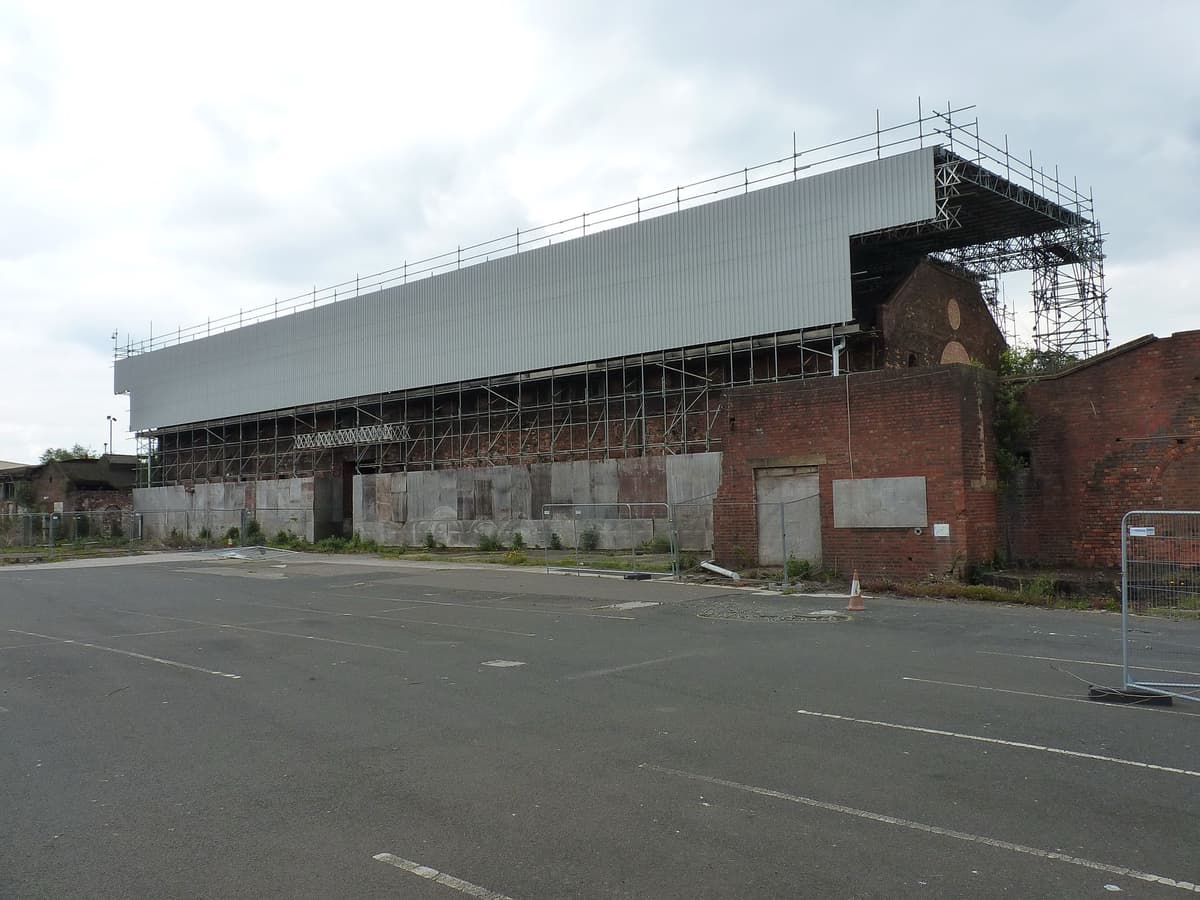
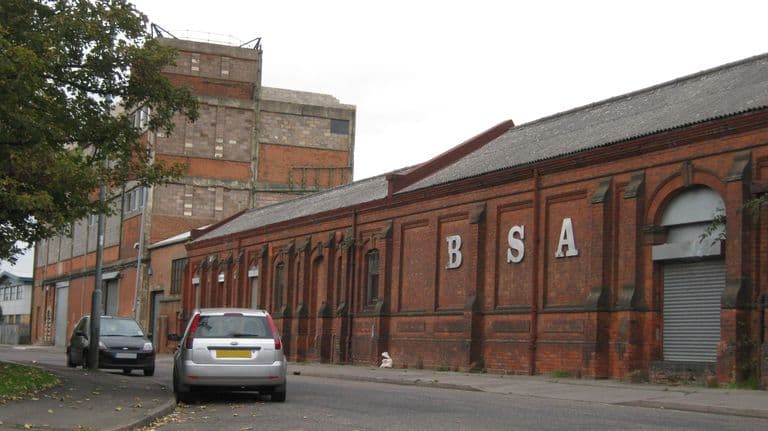
A canal-side engine works in Smethwick, about 1.8 km west of the Soho Manufactory. Built in 1795–96, it made complete steam engines on one site for a century, later including marine engines for Brunel’s Great Eastern. The original foundry, pattern stores and erecting shop still stand inside the Avery works.
History
Two Sohos
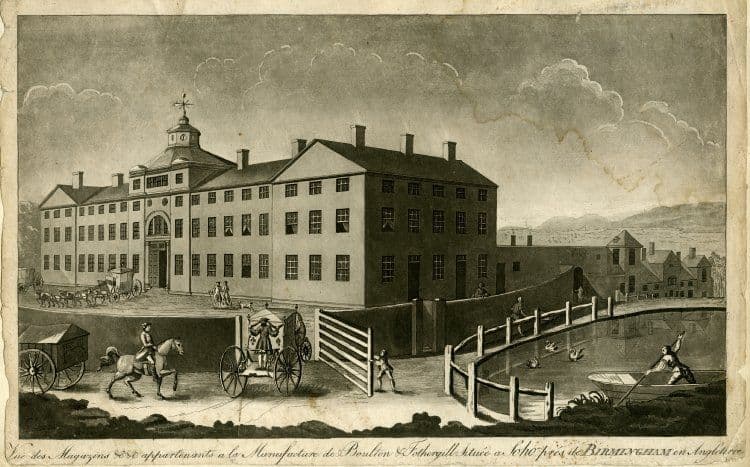
There are two Sohos in this story, and they are easy to muddle. The Soho Manufactory, in Handsworth, was Matthew Boulton’s metal-goods factory and the place where steam power began at Soho. The Soho Foundry, at Smethwick, came thirty years later and did one job: it built steam engines.
By the 1790s the partnership had been building engines for twenty years, and Watt’s extended patent was due to run out in 1800. The next step was a works that could make the whole machine on one site.
Built by the sons
Historic England’s scheduling credits much of the push to the next generation: James Watt junior and Matthew Robinson Boulton. They chose a site in Smethwick, then in Staffordshire, right beside the Birmingham Canal. The list entry says “built 1794–95”, the scheduling says “dating from 1795–6”, and the plaque on site says 1796. Founded in 1795 and working from 1796 is the safe way to put it. An inscription is said to record an opening ceremony by Matthew Boulton on 30 January 1796, though it has not been checked.
It was the first factory built to make complete steam engines on one site. Pattern stores followed in 1797 and were extended in 1799–1800, 1809 and 1845. A great erecting shop, where engines were assembled, came in 1847.
Murdoch and the gas
William Murdoch, the firm’s brilliant Scottish engineer, became manager of the Foundry at the end of the 1790s. He had been experimenting with coal gas in Cornwall since about 1792, and Soho Foundry became one of the earliest factories lit by gas. The sources disagree on the date: the scheduling says the Foundry was “the first factory in the world to be lit with gas from a fixed retort” in 1798, while the list entry says gas lighting was installed in 1800–03. “From about 1798–1803” is fair.
Engines for the world
The same spot, then and now
1888–1913
Today
Old map: Ordnance Survey six-inch, reproduced with the permission of the National Library of Scotland (CC BY 4.0). Today: © OpenStreetMap contributors.
From 1804 the Foundry made marine engines as well. Its most famous order was the screw engines for Isambard Kingdom Brunel’s giant steamship, the Great Eastern.
Not every customer was one to be proud of. After Boulton and Watt themselves retired in 1800, the firm under their sons sold steam engines to sugar plantations in the Caribbean, worked by enslaved people. Stephen Mullen’s 2021 report for Birmingham Museums Trust counts about 119 engines sent there between 1803 and 1825. No such exports are known before 1800.
After the families
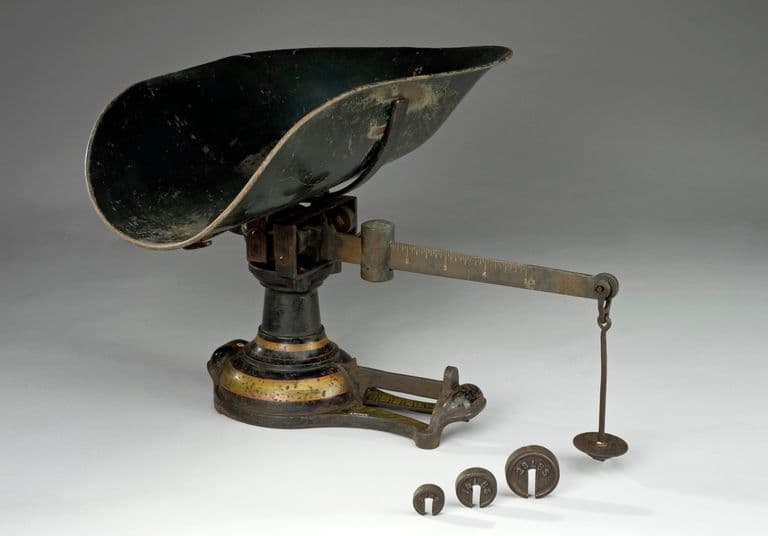
In 1848 the business passed to James Watt & Co., with no Boulton or Watt in the partnership. In 1860 the firm set up a new mint on the site, using machinery bought when the old Soho Mint was sold. In 1895 W & T Avery, the weighing-machine makers, bought the works, ending a century of steam-engine building. The site has been Avery’s ever since.
Rediscovered
For a long time nobody realised what had survived inside the factory fence. Only in 1996 was the significance of the original buildings recognised. The 1795–96 foundry, with its casting pit and boring mill at the east end, the pattern stores and the 1847 erecting shop were listed. Digs in 2000–01 found “extensive and high quality survival” of buried remains, including engine beds, and in 2008 the remains of the foundry and mint were scheduled as an ancient monument. The north-west and north-east walls of a late-18th-century mint building survive within later extensions.
At risk
The buildings are fragile. A temporary roof went over the main foundry in 2008, paid for by English Heritage, Sandwell Council and Avery Weigh-Tronix, and the site is on Historic England’s Heritage at Risk Register. The Chance Heritage Trust, founded in 2015, is working on its future.
The birthplace of the factory-made steam engine is still standing, just. That makes it one of the most important industrial buildings in Britain, and one of the most precarious.
What happened here?
Boulton & Watt, run by their sons, cast, bored and assembled complete steam engines here from 1796. Murdoch managed the works and lit them with gas. Marine engines followed from 1804, including the Great Eastern’s screw engines. James Watt & Co. took over in 1848 and opened a mint in 1860. W & T Avery bought the site in 1895.
Why it mattered
Soho Foundry was the first factory built to make complete steam engines on one site. It turned the steam engine from a craft project into a manufactured product, and its engines drove mills, mines, ships and, after 1800, Caribbean sugar estates. Its surviving buildings are rare physical evidence of that leap.
Why it disappeared
Industrial decline · Condition of the building
Engine-making ended when W & T Avery bought the works in 1895. Later 20th-century changes and neglect have left the historic buildings in poor condition; the site is on Historic England’s Heritage at Risk Register and the main foundry building has had a temporary roof since 2008.
What’s there now
What replaced it
The site remains a working factory: Avery’s, now Avery Weigh-Tronix, with buildings including a 1925 gatehouse and offices.
What survives
The 1795–96 foundry building with casting pit and boring mill, the pattern stores and the 1847 erecting shop (Grade II*); buried engine beds and other remains; walls of an 18th-century mint building (scheduled monument); Grade II gatehouse and offices, office row, gateway and towpath bridge; Murdoch’s cottage and workers’ cottages (Foundry Row). A plaque by Smethwick Local History Society reads ‘Boulton & Watt’s Soho Foundry. Established in 1796… bought by W & T Avery in 1895’. Street names nearby include Foundry Lane, Foundry Road, Soho Street, Soho Way, Watt Street, Wattville Road and Murdock Road.
Today
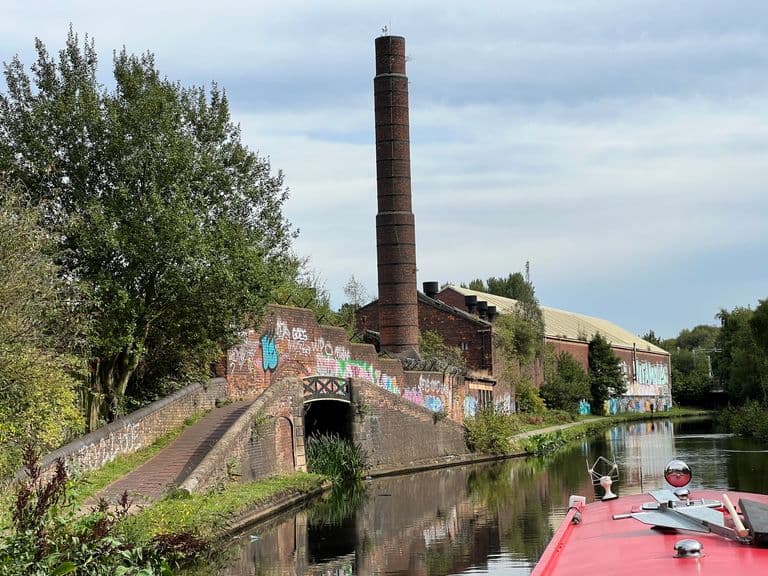
The Foundry stands on Foundry Lane, Smethwick, inside the Avery Weigh-Tronix works beside the Birmingham Canal. From the street you can see the gates and the plaque; the canal towpath gives views of the canal side and the listed towpath bridge. The historic buildings are on private industrial land.
Today
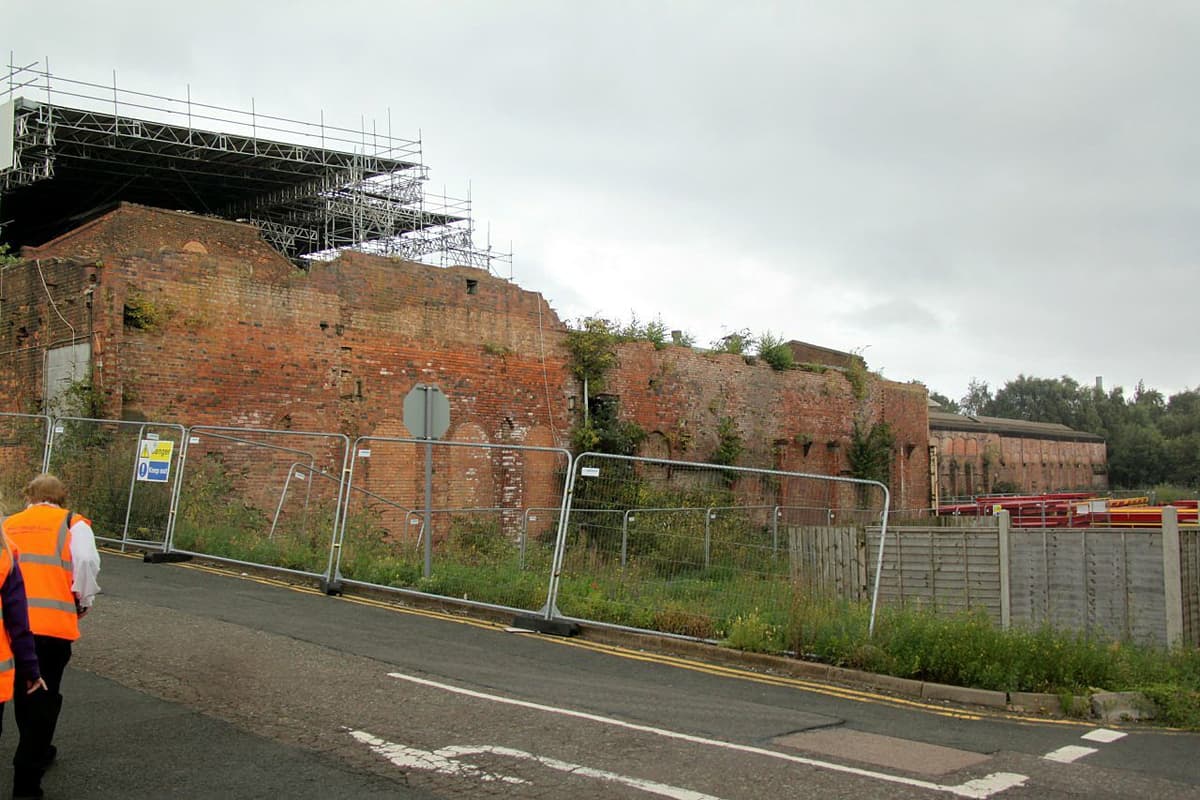
Soho Foundry buildings, 5 September 2019Alan Murray-Rust, 5 September 2019. Geograph Britain and Ireland via Wikimedia Commons · CC BY-SA 2.0 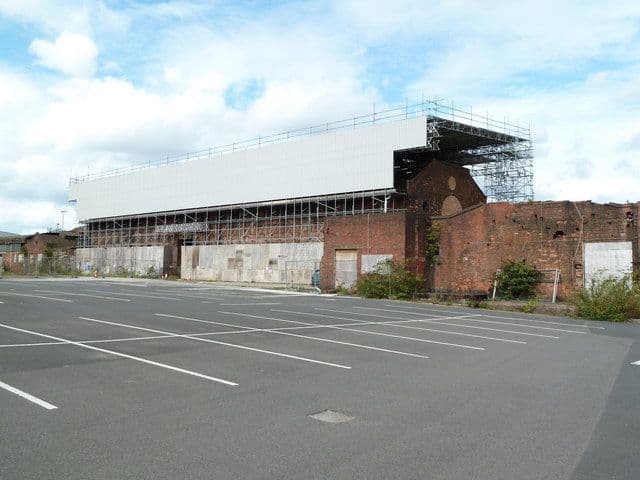
Soho Foundry — listed building, 18 September 2010Chris Allen, 18 September 2010. Geograph via Wikimedia Commons · CC BY-SA 2.0
Key dates
- 1795–96 — Soho Foundry is built at SmethwickBoulton & Watt, led by their sons, build a foundry beside the Birmingham Canal to make complete steam engines on one site. Historic England describes it as the first factory built for the purpose.
- 1800 — The sons take over the engine businessAs Watt’s patent expires, Boulton and Watt hand the engine business to Matthew Robinson Boulton and James Watt junior. Boulton keeps the Mint.
- 1842 — Muntz moves to French Walls, SmethwickWith demand outgrowing his Water Street mill, Muntz buys the French Walls works on the Birmingham Canal opposite Soho Foundry and converts it to non-ferrous metals. It makes yellow metal there until 1932.
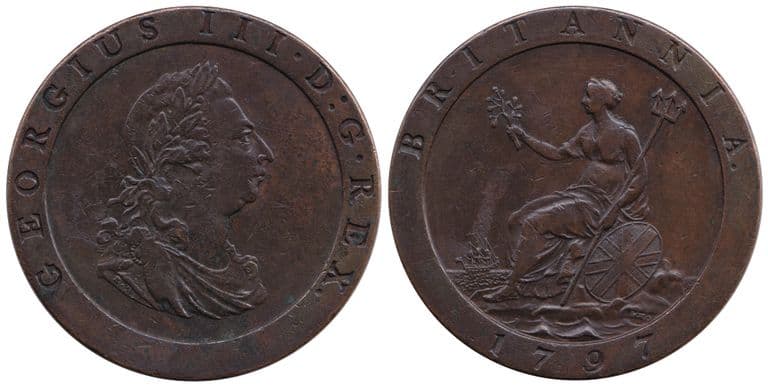
- 1860–63 — Birmingham strikes Britain’s new bronze coinsBritain replaces its heavy copper coins with smaller bronze ones. About 285 million are struck in 1860–63, and the Royal Mint contracts much of the work to two Birmingham-area mints, James Watt & Co. at Soho Foundry and Ralph Heaton & Sons.
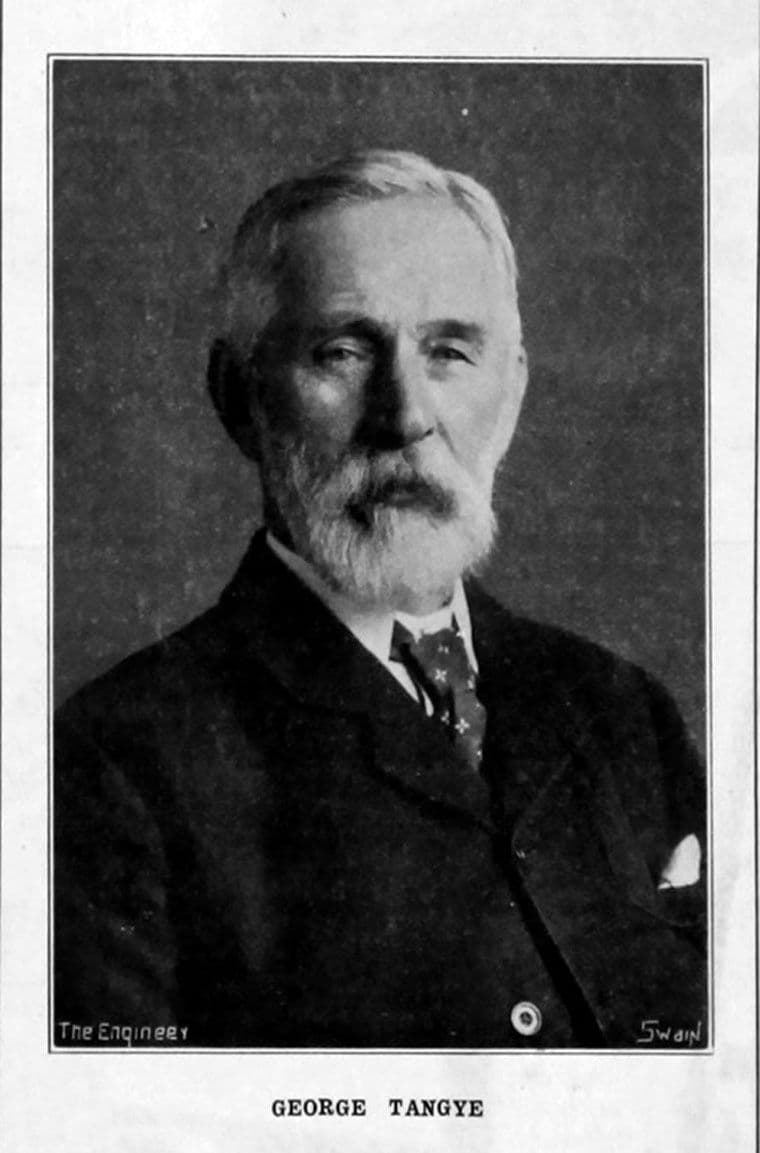
- 1895 — Avery buys Soho FoundryW & T Avery, the weighing-machine makers, buy Soho Foundry from the failing James Watt & Co. and move all their manufacturing there. George Tangye takes custody of the Boulton & Watt papers.
- 1895 — Soho Foundry sold to AveryAfter a century of steam-engine making, James Watt & Co. sell Soho Foundry to W. & T. Avery, the weighing-machine makers. The 1795–96 foundry building survives on the site.
- 15 April 1912 — Avery’s managing director lost on the TitanicWilliam Edward Hipkins, managing director of W & T Avery and the man who moved the firm into Soho Foundry, dies when the Titanic sinks on the way to America.
Sources and further reading
Founding dates differ: list entry ‘built 1794–95’; scheduling and Demidowicz ‘1795–6’; the Smethwick Local History Society plaque ‘1796’. Gas lighting: 1798 (scheduling) or 1800–03 (list entry). The erecting shop is dated 1847 by Demidowicz and 1850 by the list entry. The 30 January 1796 opening inscription is a lead only. The surviving 18th-century mint walls belong to an early mint building on the Foundry site; the 1860 mint is a separate phase. The current Heritage at Risk priority (Priority B, condition poor) was seen only in a search summary.
- Remains of the Boulton and Watt Soho foundry and mint, Birmingham Canal, Smethwick — Scheduled Monument 1021388 — Historic England
- Soho Foundry, former Boulton and Watt foundry, pattern stores and erecting shops — National Heritage List for England entry 1268451 — Historic England
- Gatehouse and adjoining office buildings, Soho Foundry — National Heritage List for England entry 1392993 — Historic England
- Soho Foundry, Foundry Lane, Smethwick — Heritage at Risk entry 47046 — Historic England
- The Soho Manufactory, Mint and Foundry, West Midlands: Where Boulton, Watt and Murdoch Made History — George Demidowicz, Historic England / Liverpool University Press, 2022
- Made in Smethwick — DigVentures / Chance Heritage Trust
- Open Plaques #10759: Boulton & Watt’s Soho Foundry — Open Plaques
- Matthew Boulton, William Murdock and James Watt: Appraisal for ‘Golden Boys’ Statue — Stephen Mullen, Birmingham Museums Trust, 2021
- Murdock, William — Dictionary of National Biography, vol. 39 — R. B. Prosser, Smith, Elder & Co., 1894
Archive references: Library of Birmingham MS 3147 (Boulton & Watt Collection)
Comments
Comments will load here.