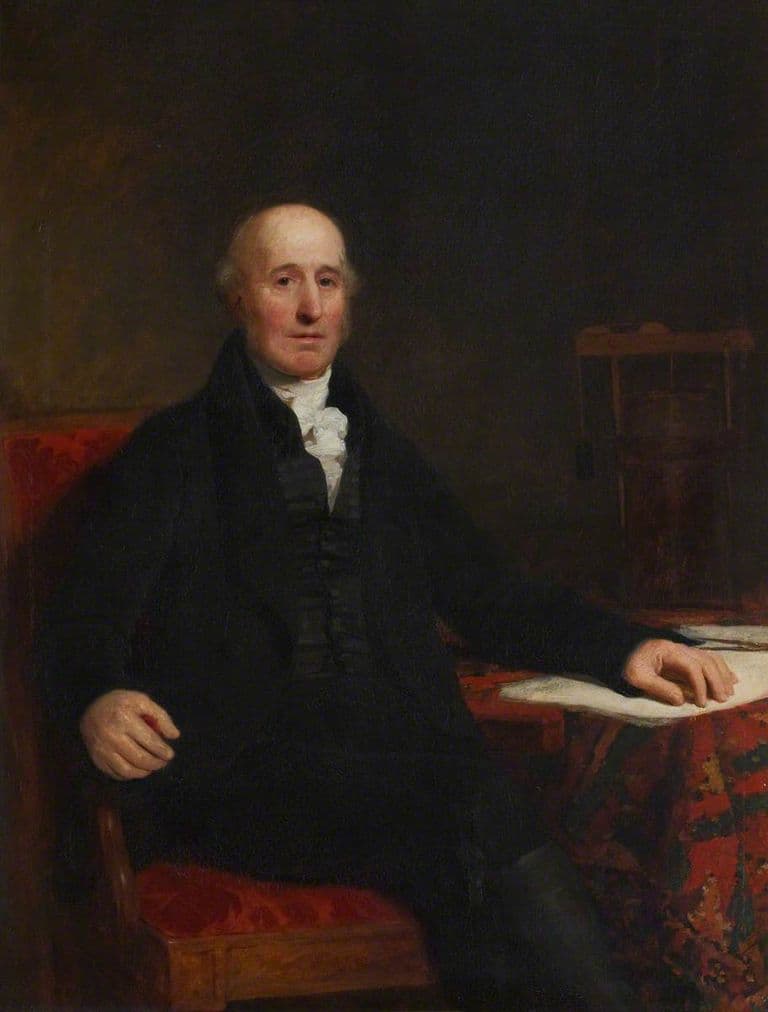
Light, in the 18th century, meant candles and oil lamps. William Murdoch found another way.
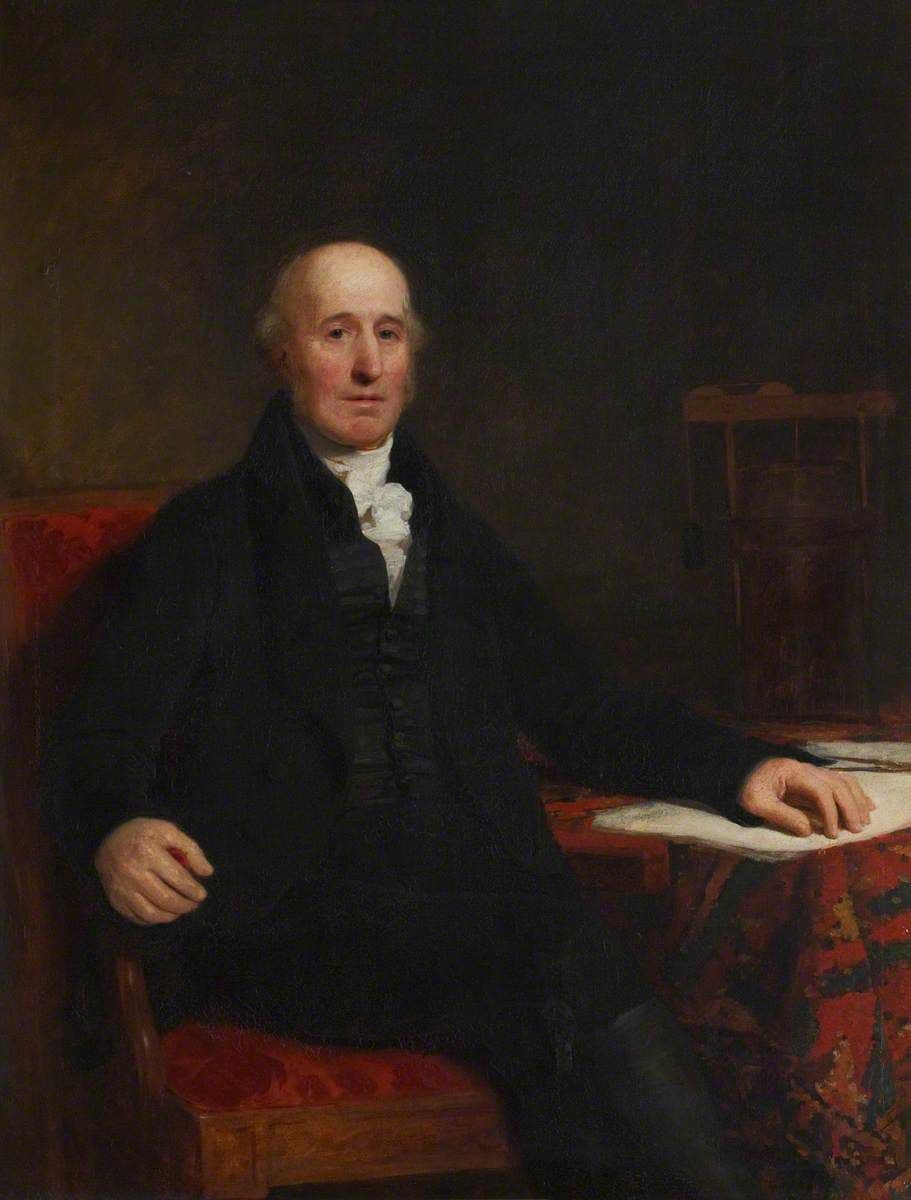
Murdoch was Boulton & Watt’s man in Cornwall, putting up pumping engines at the mines. In about 1792, at Redruth, he began heating coal and capturing the gas it gave off. He piped it through his house and offices and lit them with it.
Soho and the Foundry
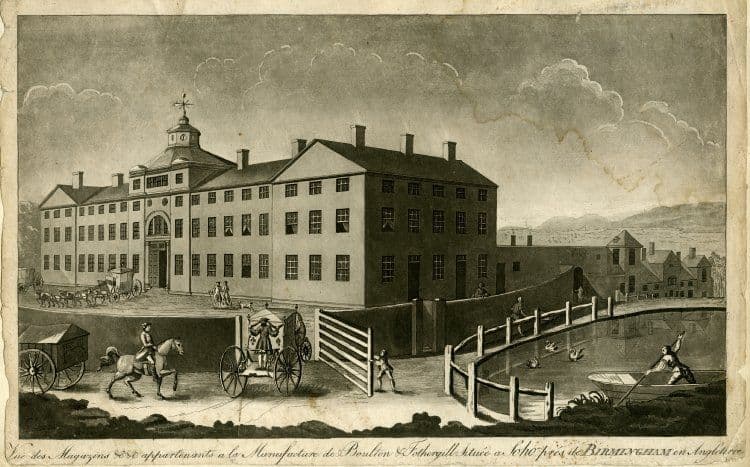
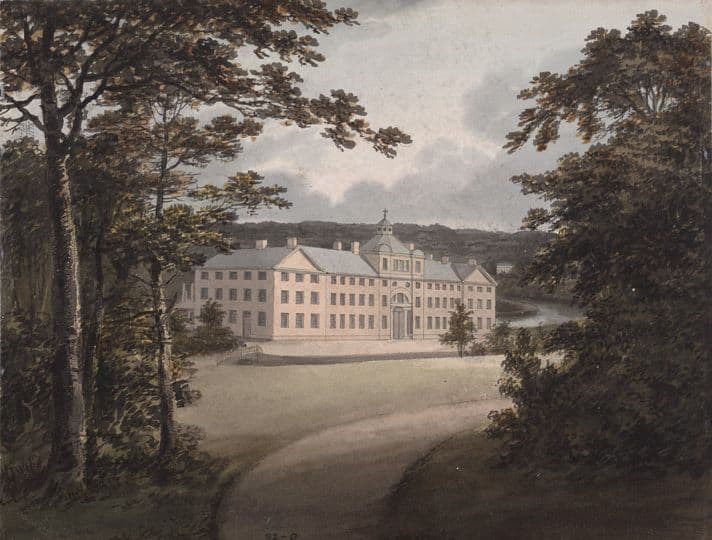
He brought the idea back to Soho at the end of the 1790s. In March 1802, during the celebrations for the Peace of Amiens, gas lights were shown at each end of the Soho Manufactory. That display is often exaggerated. It rests mainly on later accounts, and the old *Dictionary of National Biography* says the gas was used only “to a small extent … not in a manner to attract much attention”.
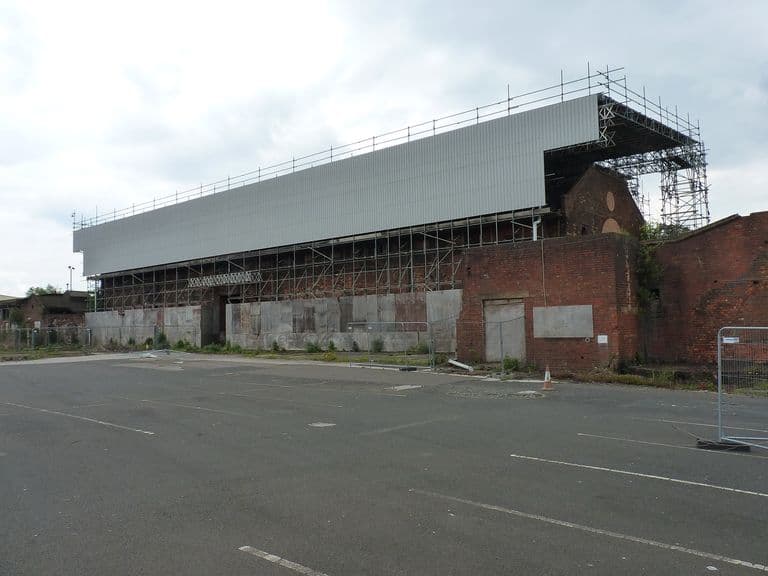
Soho Foundry in Smethwick was where it became routine. Historic England calls the Foundry one of the earliest factories lit by gas, though the dates given range from 1798 to 1803. From 1804 to 1806 Murdoch put in a gas plant at Phillips & Lee’s cotton mill in Salford. In 1808 the Royal Society gave him its Rumford Medal for his paper on coal-gas lighting.
Murdoch was not alone. Others were experimenting with gas lighting at the same time, and his assistant Samuel Clegg went on to become a gas engineer himself. “A pioneer” is the honest word.
Home comforts
In about 1816–17 Murdoch built himself a house at Sycamore Hill in Handsworth, within sight of the Foundry. It was lit by gas, of course, and fitted with pneumatic bells. He died there in 1839 and lies in St Mary’s, Handsworth, beside Boulton and Watt: the engineer who had started by lighting his own house in Redruth.
On the map
5 places connected with Gas lighting. Tap a number for directions — some sites are private homes or gardens, so each place’s page says what you can see from the street.

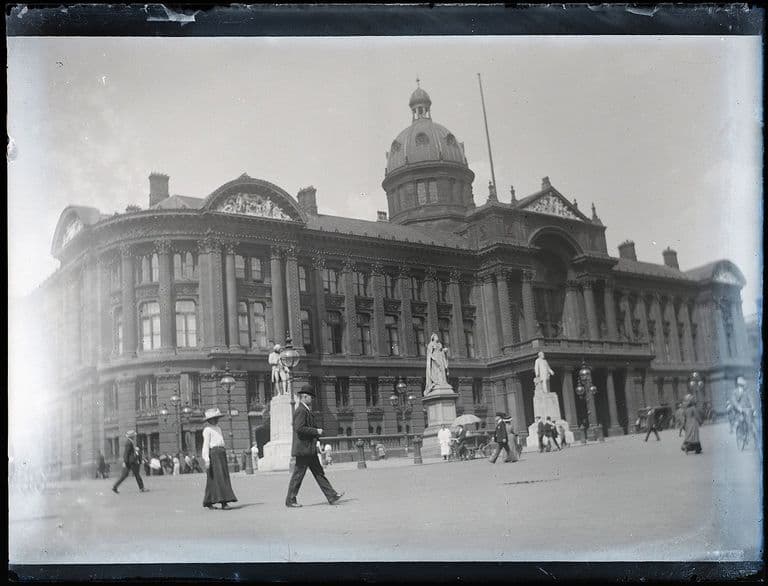
- The Council House, Victoria Square — Surviving · Directions to The Council House, Victoria Square (opens Google Maps)
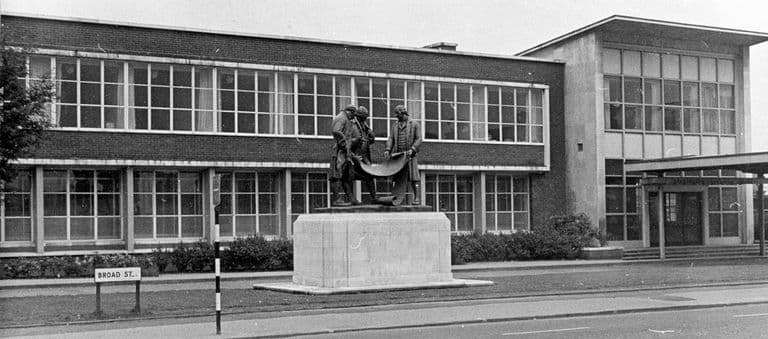
- Boulton, Watt and Murdoch (“The Golden Boys”) — Relocated · Directions to Boulton, Watt and Murdoch (“The Golden Boys”) (opens Google Maps)
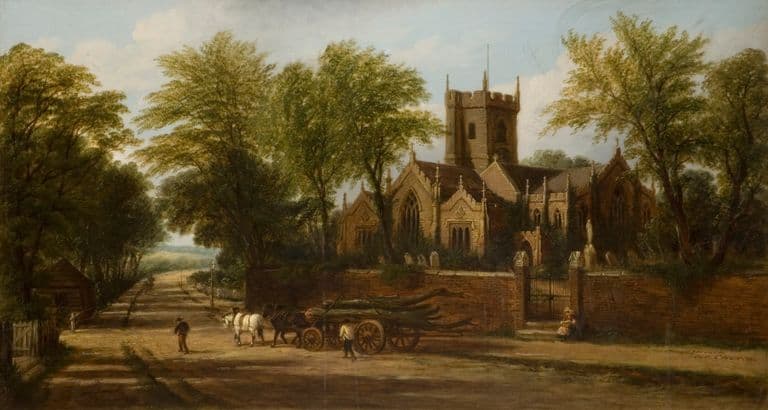
- St Mary’s Church, Handsworth — Surviving · Directions to St Mary’s Church, Handsworth (opens Google Maps)
- Soho Foundry — Partly surviving, At risk · Directions to Soho Foundry (opens Google Maps)
- Soho Manufactory — Lost, Site redeveloped · Directions to Soho Manufactory (opens Google Maps)
Key dates
- March 1802 — Gas lights at Soho for the Peace of AmiensGas lights are shown at each end of the Soho Manufactory during celebrations for the Peace of Amiens — a small display by William Murdoch, not a floodlit factory.
- 1875 — Gas and water come into public handsUnder Mayor Chamberlain the corporation takes over Birmingham’s two private gas companies and, by an Act of 1875, the waterworks.
Sources and further reading
- Murdock, William — Dictionary of National Biography, vol. 39 — R. B. Prosser, Smith, Elder & Co., 1894
- A Portrait of William Murdoch — Revolutionary Players, History West Midlands
- Soho Foundry, former Boulton and Watt foundry, pattern stores and erecting shops — National Heritage List for England entry 1268451 — Historic England. gas lighting 1800–03
- Remains of the Boulton and Watt Soho foundry and mint, Birmingham Canal, Smethwick — Scheduled Monument 1021388 — Historic England. gas lighting 1798
- Sycamore Hill — A History of Birmingham Places & Placenames from A to Y — William Dargue