
What was here?
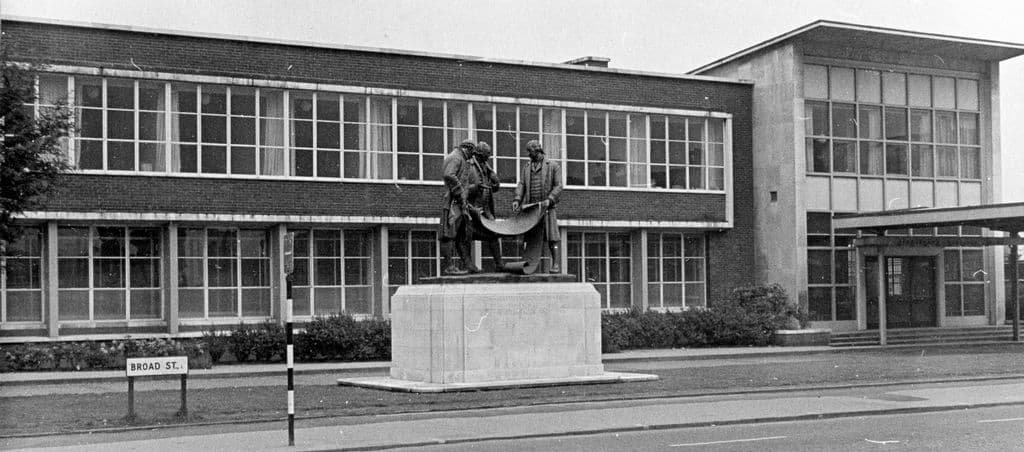
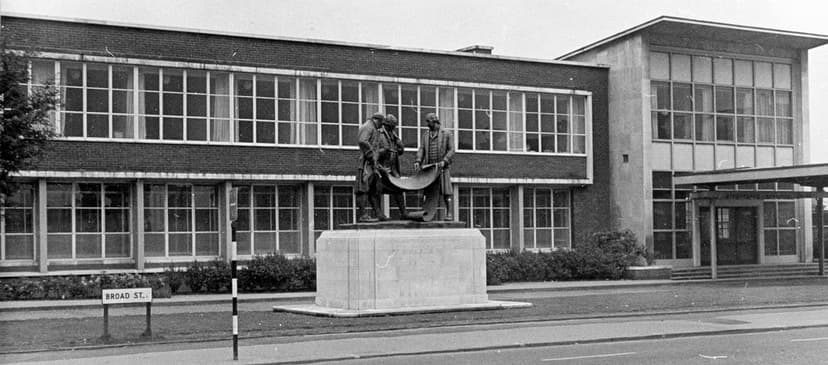
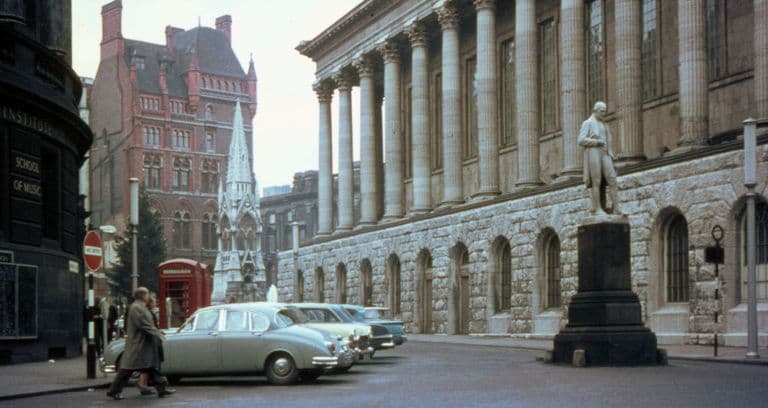
A gilded bronze group of the three men of the Soho engine business, set on a Portland stone plinth on Broad Street, outside the Register Office, in 1956.
History
Designed for war, made for peace
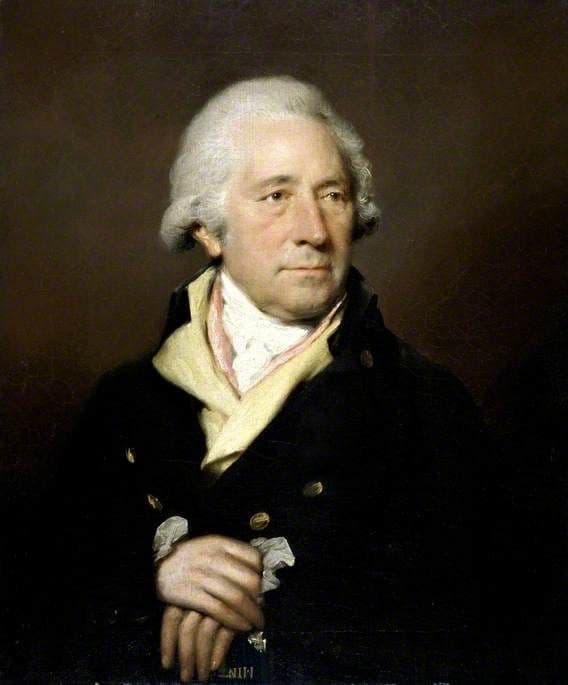
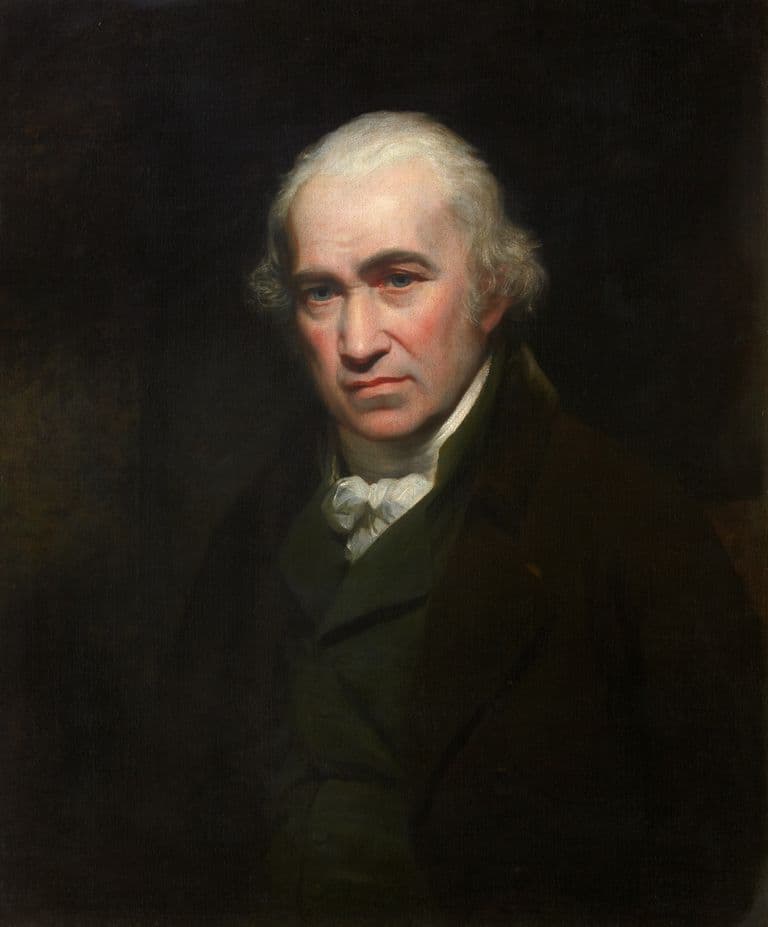
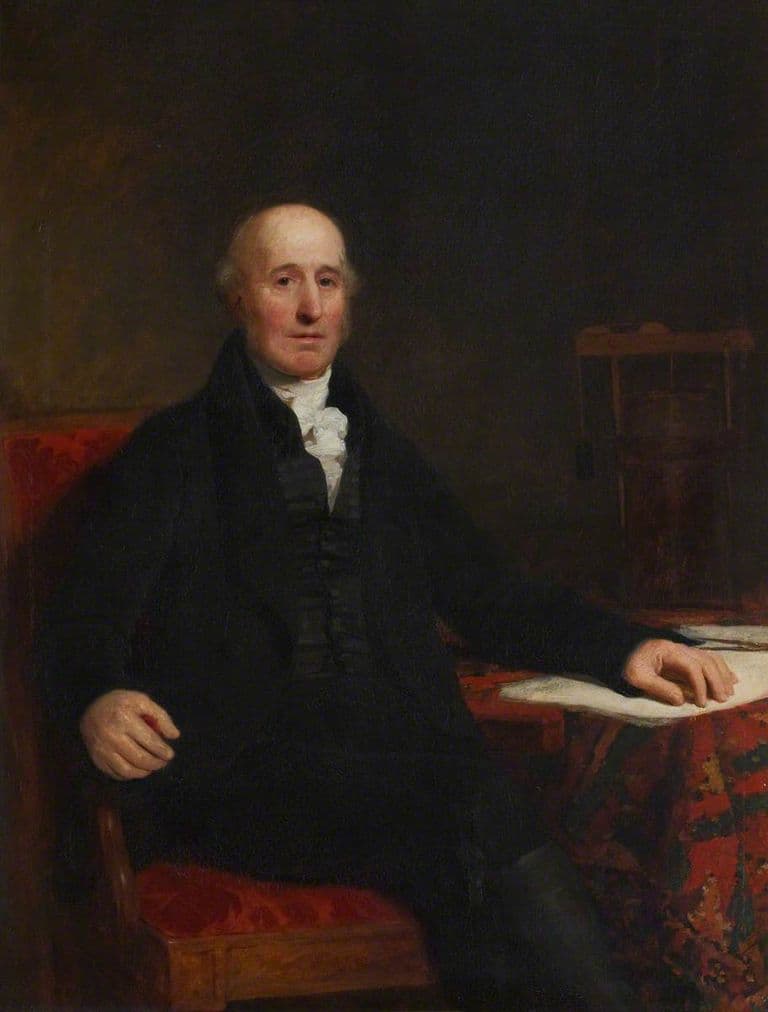
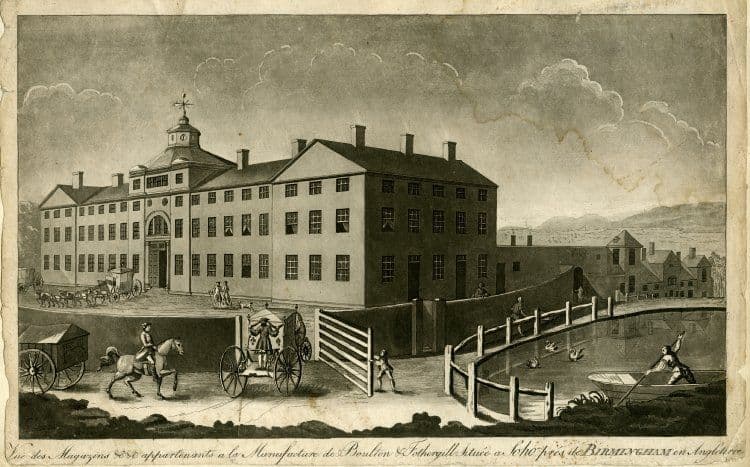
In 1938 Birmingham’s leading architectural sculptor, William Bloye, drew up designs for a monument to the three men who made the steam engine pay: Matthew Boulton, the manufacturer; James Watt, the inventor; and William Murdoch, the Scottish engineer who kept their engines running. The money came in 1939, from a bequest of £8,000 by Richard Wheatley, a local leather-goods maker, and £7,500 from the City Council.
Then war broke out. The group was not finished until the 1950s. It was cast in bronze by John Galizia & Son of London and covered in gold leaf. On 14 September 1956 Sir Percy Mills unveiled it on Broad Street, in front of the Register Office.
Three men and a drawing
Bloye shows the three men in eighteenth-century dress, studying a drawing of a steam engine, with their names and dates cut beneath. Brummies soon gave them nicknames. To some they were the Golden Boys. To others, less kindly, the Carpet Salesmen.
Away and back
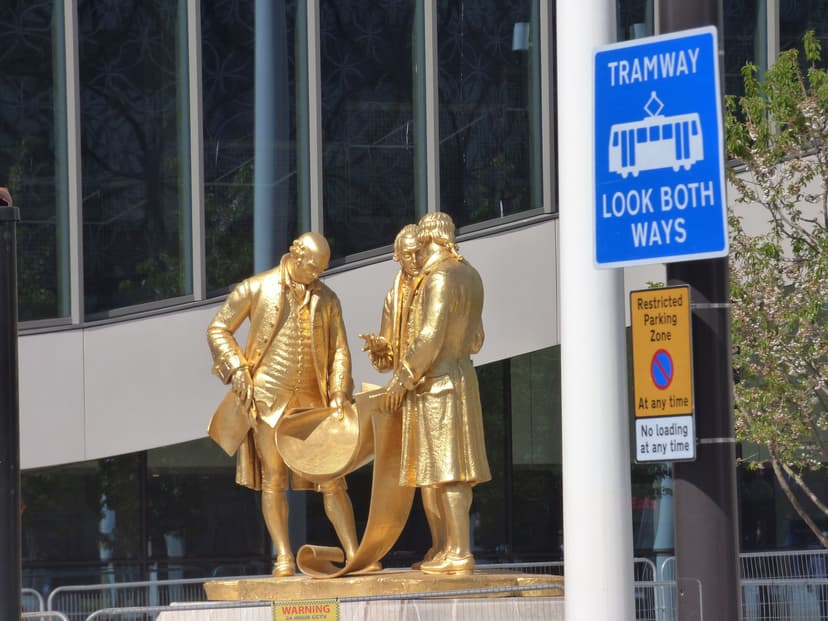
The statue was restored and re-gilded in September 2006. In 2017 the Metro tram extension came down Broad Street and the three went into storage. On 29 April 2022 they were lifted on to a new plinth in Centenary Square, outside Symphony Hall, close to their old spot.
In 2021 Birmingham Museums Trust commissioned the historian Stephen Mullen to appraise all three men’s links with slavery and the economy built on it. His findings are summarised on each man’s page.
The Golden Boys still catch the light in Centenary Square, three engineers bent over a drawing, as if the next great machine is about to come off the page.
What happened here?
A memorial to the Boulton & Watt partnership was unveiled on Broad Street in 1956, re-gilded in 2006, stored from 2017 for the tram works and reinstated in Centenary Square in 2022.
Why it mattered
It is Birmingham’s best-known monument to the steam engine and to the partnership at Soho that turned Watt’s invention into an industry.
The same spot, then and now
1888–1913
Today
Old map: Ordnance Survey six-inch, reproduced with the permission of the National Library of Scotland (CC BY 4.0). Today: © OpenStreetMap contributors.
What’s there now
What survives
The 1956 gilded bronze group, restored and re-gilded.
Today
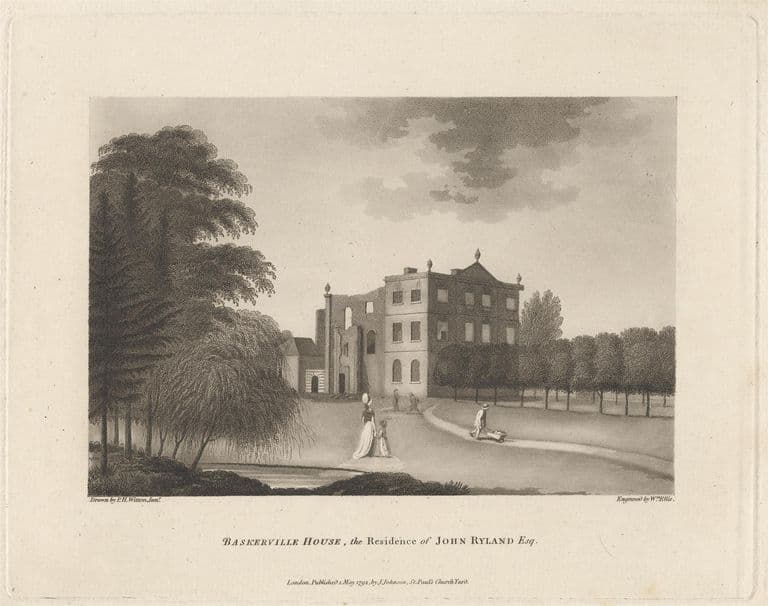
It stands in Centenary Square outside Symphony Hall, near the Library of Birmingham and Baskerville House.
Then and now
Then · 1966
Now · 30 April 2022
Today
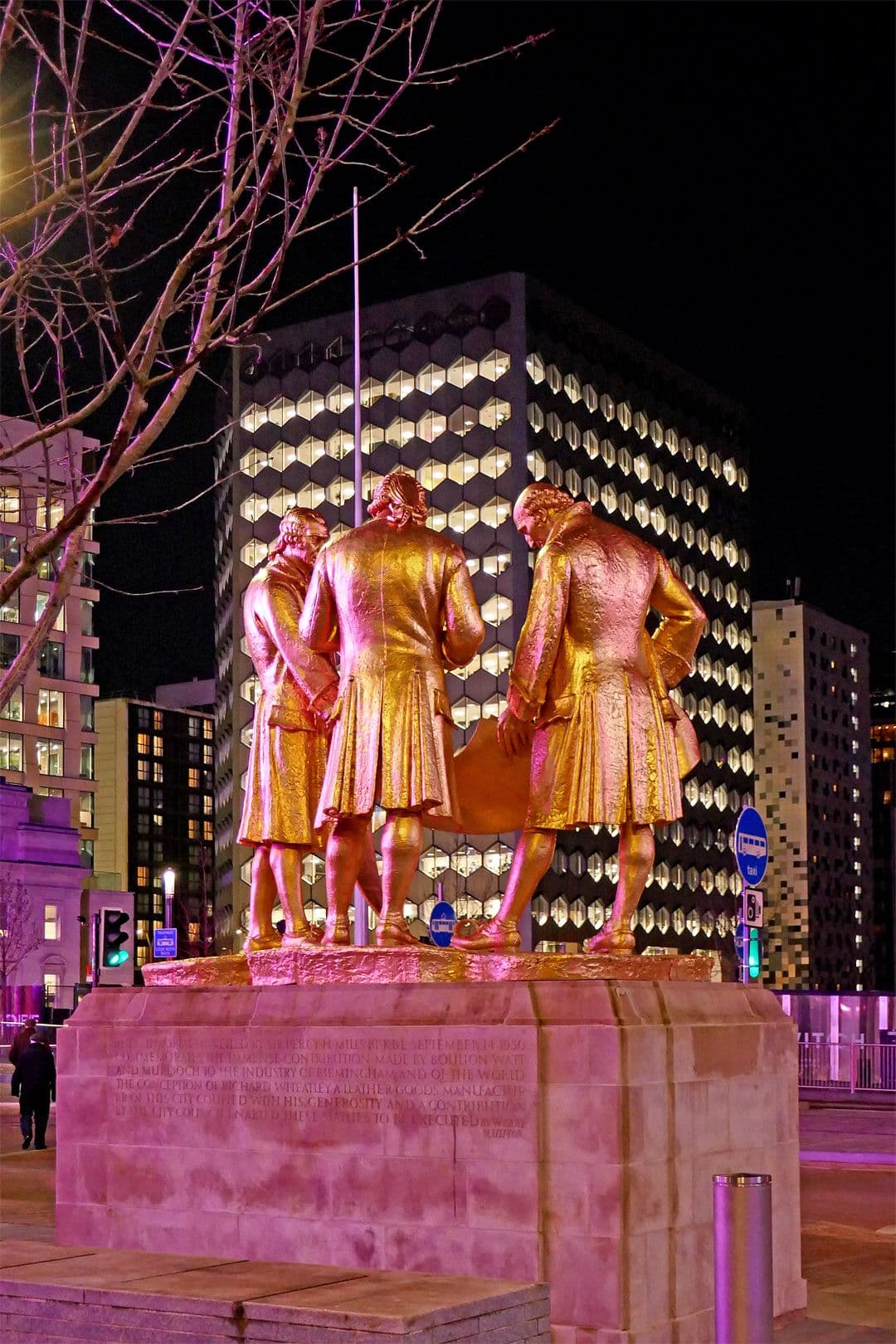
The Golden Boys in Centenary Square, 7 December 2022Roger D. Kidd, 7 December 2022. Geograph via Wikimedia Commons · CC BY-SA 2.0
Key dates
- 14 September 1956 — The Golden Boys are unveiledSir Percy Mills unveils William Bloye’s gilded bronze of Boulton, Watt and Murdoch on Broad Street, designed in 1938 and delayed by the war.
- 29 April 2022 — The Golden Boys return to Centenary SquareAfter five years in store during the Metro works, the statue of Boulton, Watt and Murdoch is reinstalled in Centenary Square outside Symphony Hall.
Sources and further reading
Bloye’s assistant is named Raymond Forbes-Kings (Wikipedia, and the James Watt page on this site) or Raymond Forbes Kings.
Wikipedia has at times described the statue as Grade II listed; it does not appear in the National Heritage List data checked on 2 October 2026.
The van der Krogt database transcribes Watt’s dates on the base as “1726–1819”; Watt was born in 1736, so this is probably a transcription slip and the base has not been checked.
The month of removal in 2017 is given as August in Wikipedia’s list of Birmingham public art.
- Boulton, Watt and Murdoch (statue) — Wikipedia
- Birmingham – Matthew Boulton, James Watt and William Murdoch — R. & D. van der Krogt (Hither & Thither). plaque and founder’s inscription
- List of public art in Birmingham — Wikipedia
- Matthew Boulton, William Murdock and James Watt: Appraisal for ‘Golden Boys’ Statue — Stephen Mullen, Birmingham Museums Trust, 2021
- OpenStreetMap node 950360437 (Boulton, Watt and Murdoch) — OpenStreetMap contributors
Comments
Comments will load here.