
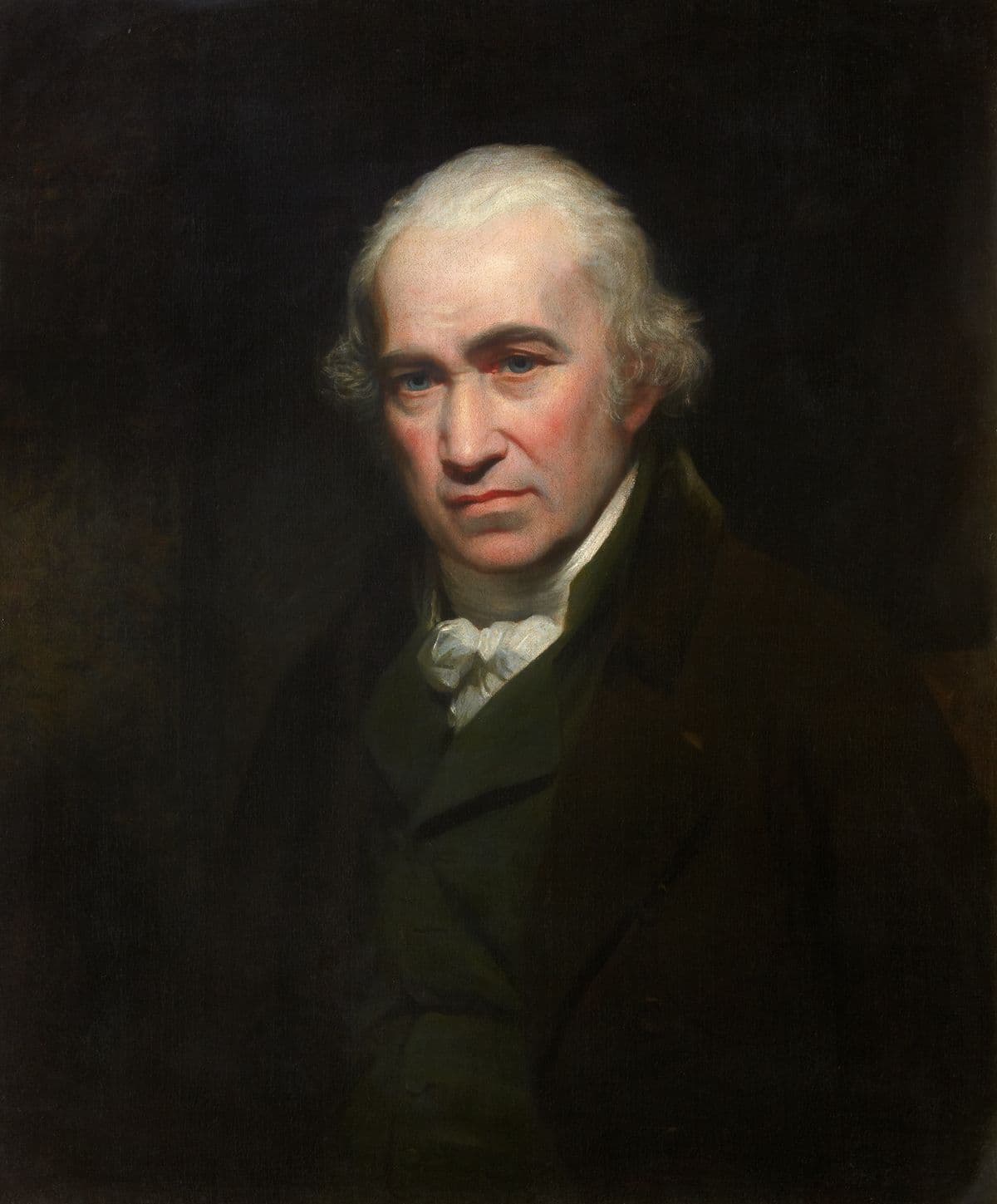
Start with what James Watt did not do. He did not invent the steam engine. Thomas Newcomen’s atmospheric engines had been pumping water out of mines since the early 1700s. And the story of the boy Watt watching the lid of a kettle rattle is a legend, not history.
What Watt did was make the steam engine efficient. Then, with Matthew Boulton, he made it pay. That took him from Glasgow to Birmingham, and it took the better part of a lifetime.
From Greenock to Glasgow
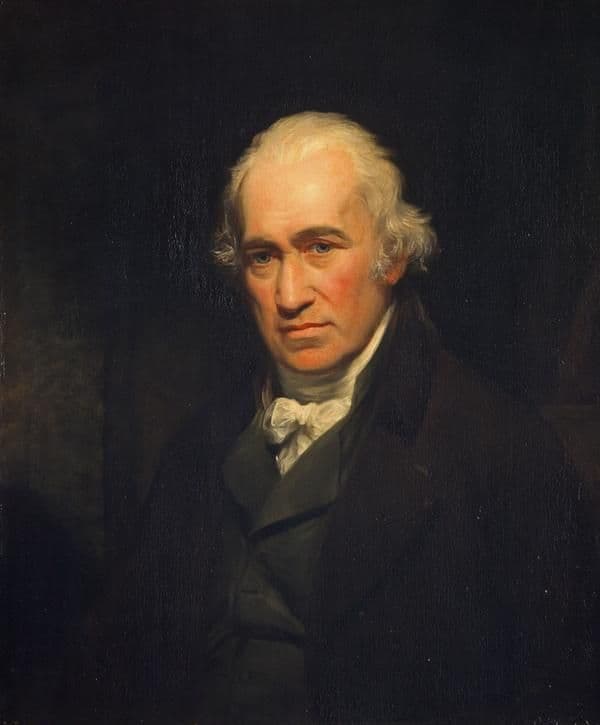
Watt was born in Greenock on the Clyde on 19 January 1736. His father, James Watt senior, was a merchant and ship-owner who traded sugar and tobacco with the Caribbean and North America. The young Watt trained as a mathematical instrument maker in London in 1755–56 (a letter of 31 March 1756 mentions the press gang), and then worked at Glasgow University.
There he was asked to repair the university’s model Newcomen engine. It wasted steam and fuel. Watt’s answer, which the Library of Birmingham dates to 1765, was the separate condenser: condense the steam in a vessel of its own, away from the working cylinder. In 1769 he patented “A New Invented Method of Lessening the Consumption of Steam and Fuel in Fire Engines”.
The family firm and Frederick
The Watt family fortune is part of this story, and it has to be told straight. James Watt senior’s papers, now in the Library of Birmingham, record dealings in enslaved people: in 1739 a return cargo of “Rum, Molasses, Salt & Negroes”, and in 1741 “a negroe man to be sold on James Watts account”. His father paid for Watt’s London training and his tools.
Yet in 1788 Wedgwood wrote to him, “I take it for granted that you & I are on the same side of the question respecting the slave trade”, and Watt’s cash book records subscriptions of a guinea to “the negro bill” in 1788 and 1789.
In 1762 the family firm moved a Black child, named in a clothing list as “Fridrick”, from Greenock to Glasgow, to be sent on to Lady Spynie near Forres. On 3 October 1762 James Brodie wrote to “James Watt junior merchant in Greenock” asking after “my Black boy” and what he had cost. The historian Stephen Mullen argues that this was the engineer himself, since Watt’s own son was not born until 1769, and that Watt had taken over the account from his brother John. Mullen concludes that Watt was “directly complicit in Atlantic slavery whilst resident in the west of Scotland”. Nobody knows what became of Frederick.
All of this happened before Watt came to Birmingham.
Coming to Soho
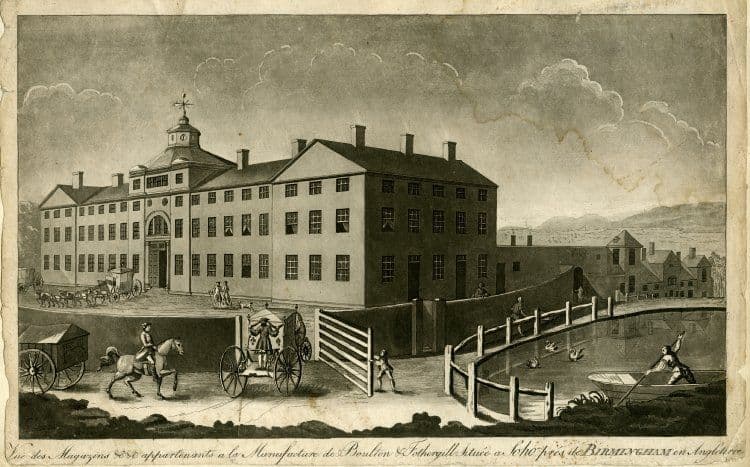
In 1767 Dr William Small showed Watt round Boulton’s works at Soho. Watt came to Birmingham in 1774, and his experimental engine came to Soho with him. In 1775 Parliament extended his patent to 1800, and the partnership of Boulton & Watt began.
The first proof came at a Black Country pit. A newspaper report of March 1776 announced that “On Friday last a steam engine constructed upon Mr. Watts’s new principles, was set to work at Bloomfield Colliery, near Dudley” (Chester Chronicle, 14 March 1776). That Friday was 8 March. The engine had a 50-inch cylinder. Today an orange plaque, unveiled in 2019, marks the spot at Bloomfield Road, Tipton.
Harper’s Hill
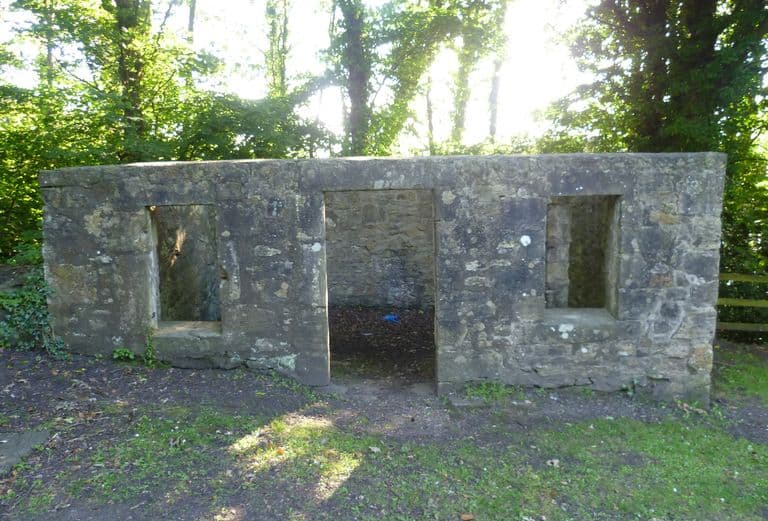
From 1777 until June 1790 Watt lived at Harper’s Hill, now Regent Place in the Jewellery Quarter. The house has gone, but a listed building at 13A Regent Place may be its rear wing or stables, and a blue plaque of 2003 marks the street.
These were the years of hard graft. Engines were improved to turn wheels as well as pump. Rotary motion came in 1781, using the sun-and-planet gear — patented in Watt’s name, but invented, says the Library of Birmingham, by Boulton & Watt’s engineer William Murdoch. The double-acting engine followed in 1782, and later the centrifugal governor. Watt devised the horsepower measure used to rate his engines. In 1785 he was elected a Fellow of the Royal Society.
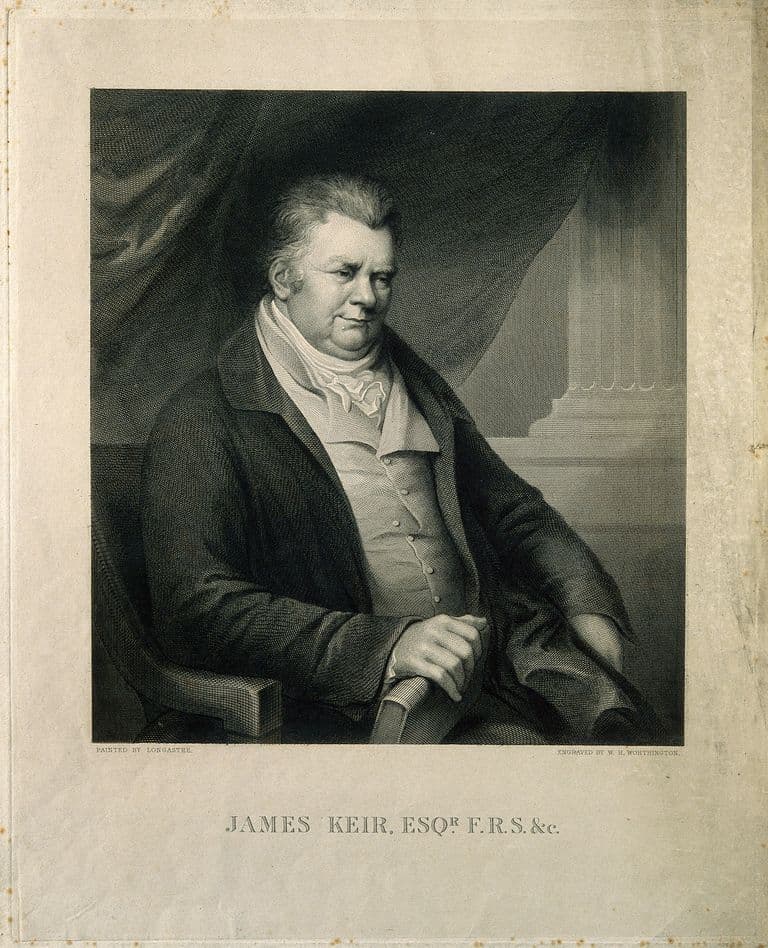
He invented an office machine too. On 24 July 1778 he told his friend Joseph Black that he had “lately discovered a method of copying [letters] instantaneously”. He took Boulton and James Keir as partners in James Watt & Co., and the presses went on sale in 1780. The firm kept selling them until 1840.
Watt was a full member of the Lunar Society. One of his surviving letters, of 1781, sets out for Erasmus Darwin the topics for the next meeting. Priestley wrote to him at Harper’s Hill in 1783, when Watt was working on the composition of water — a question whose credit was argued over with Henry Cavendish and Antoine Lavoisier.
Planters, petitions and a letter to Nantes
In Birmingham, Watt’s position on slavery was divided. He gave technical details in 1783 for a steam prospectus for a Jamaican estate, and in 1786 the planter Richard Pennant asked to meet him “on the subject of steam engine for Jamaica”. Yet in 1788 Wedgwood wrote to him, “I take it for granted that you & I are on the same side of the question respecting the slave trade”, and Watt’s cash book records subscriptions of a guinea to “the negro bill” in 1788 and 1789.
In October 1791 the firm suspended an engine order for Saint-Domingue after the revolution of the enslaved there. Watt wrote to the Nantes merchants: “we heartily pray that the system of slavery so disgraceful to humanity were abolished by prudent though progressive measures.” Historians read it with care. The firm had accepted an order for a slave colony, the “unhappy sufferers” it condoled with were the planters, Watt asked only for gradual abolition, and the letter was private, written to French merchants. Even so, the words are on the record.
Heathfield and the garret
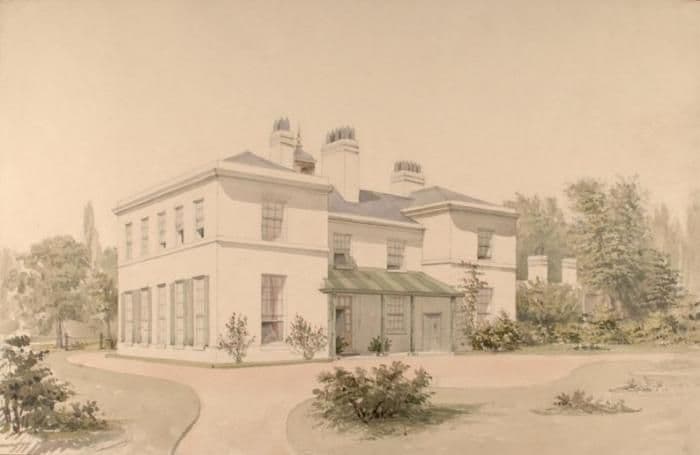
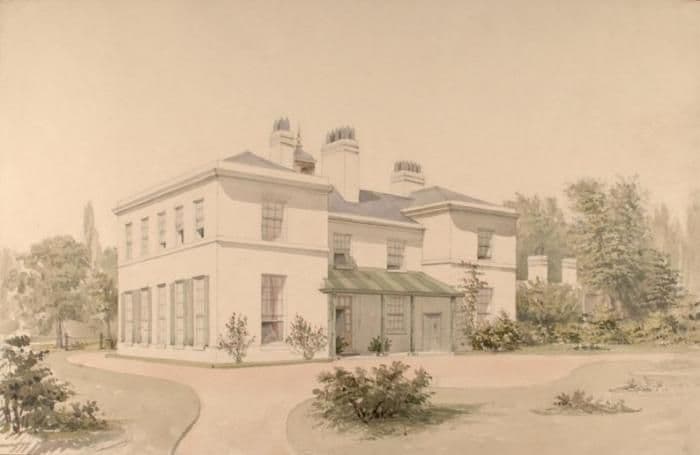
In June 1790 the Watts moved to Heathfield, a new house in Handsworth designed, according to the Library of Birmingham, by Samuel Wyatt. It cost £900. Watt confessed to Black on 5 December 1790 that it “has cost me much more money than I think I had a right to lay out”.
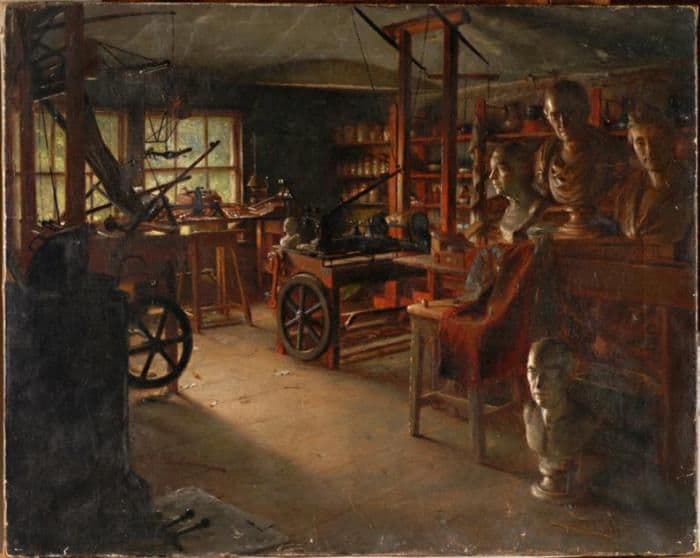
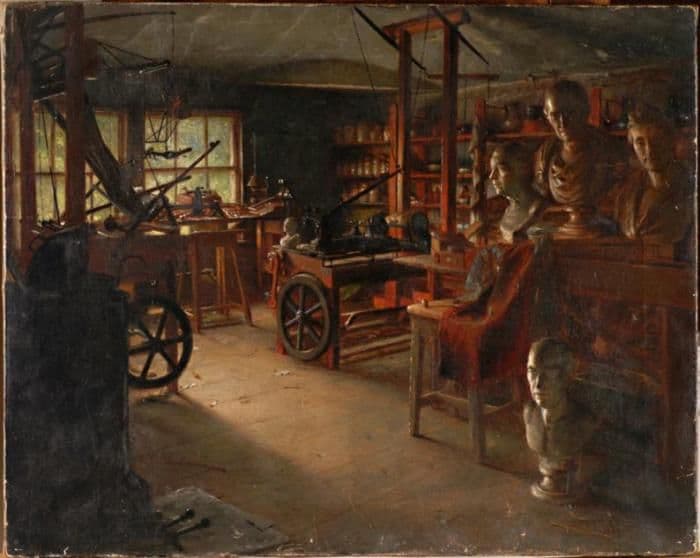
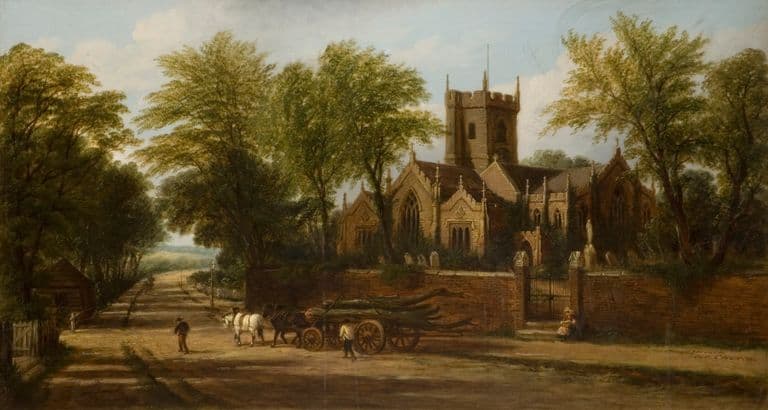
Watt retired in 1800, as the patent expired and the business passed to the sons. But he kept working, up in a garret workshop at the top of the house, from about 1790 until his death. He died at Heathfield on 25 August 1819 and was buried at St Mary’s Church, Handsworth. In 1826 Thomas Rickman added a chapel to the church as a mausoleum for him, holding Francis Chantrey’s white marble statue of Watt, made in 1825.
The garret was left almost untouched for a century. In 1924 its contents — more than 8,000 objects, with the door, window, skylight and floorboards — went to the Science Museum in London, where the workshop was redisplayed in 2011. Heathfield itself was demolished in 1927–28. Its lodge survives at 33 Radnor Road, with a blue plaque put up in 2019 for the bicentenary of Watt’s death.
Why it mattered
Watt’s separate condenser turned the steam engine from a fuel-hungry mine pump into a machine that could turn the wheels of industry. His papers on the condenser, held in the Library of Birmingham, are on UNESCO’s UK Memory of the World register. His Birmingham story is not a simple one: a man raised and trained on a merchant fortune that included trafficking enslaved people, who later prayed privately for slavery’s end. Birmingham has kept faith with him all the same. His statue by Chantrey still sits in its chapel at St Mary’s, Handsworth. The gilded “Golden Boys” stand in Centenary Square. And in the summer of 2026 Alexander Munro’s statue of Watt, carved in 1868 and kept in storage for a decade, came back to the city centre at Ratcliff Passage. The kettle story was always a myth. The engines were real, and they changed everything.
On the map
15 places connected with James Watt. Tap a number for directions — some sites are private homes or gardens, so each place’s page says what you can see from the street.

- Soho Manufactory new engine yard (site) — Lost, Site redeveloped · Directions to Soho Manufactory new engine yard (site) (opens Google Maps)
- Matthew Boulton’s monument by Flaxman, St Mary’s, Handsworth — Surviving, Relocated · Directions to Matthew Boulton’s monument by Flaxman, St Mary’s, Handsworth (opens Google Maps)
- Pickard’s mill, Snow Hill — Lost, Site redeveloped
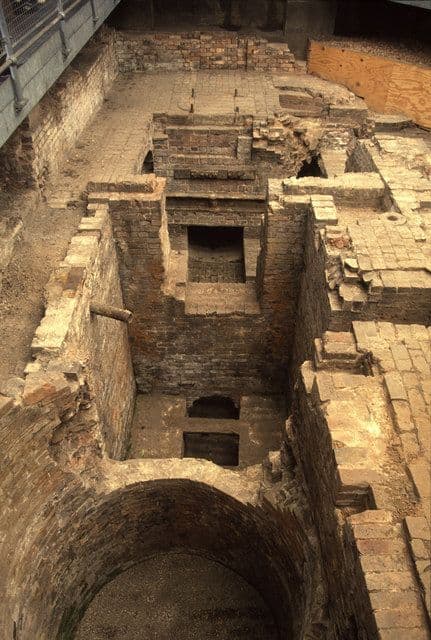
- Site of the Smethwick Engine, Bridge Street North — Partly surviving · Directions to Site of the Smethwick Engine, Bridge Street North (opens Google Maps)
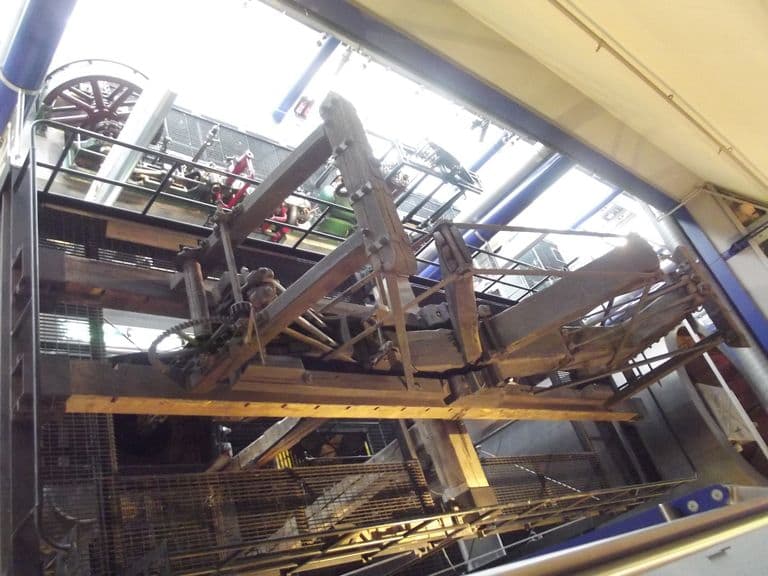
- The Smethwick Engine at Thinktank — Relocated · Directions to The Smethwick Engine at Thinktank (opens Google Maps)
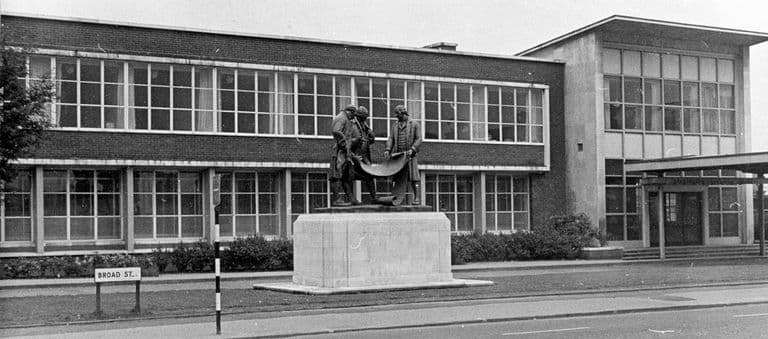
- Boulton, Watt and Murdoch (“The Golden Boys”) — Relocated · Directions to Boulton, Watt and Murdoch (“The Golden Boys”) (opens Google Maps)
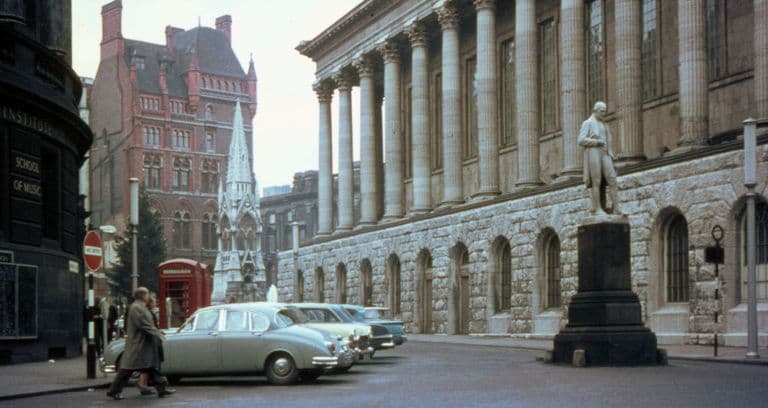
- Statue of James Watt, Ratcliff Passage — Relocated · Directions to Statue of James Watt, Ratcliff Passage (opens Google Maps)
- St Mary’s Church, Handsworth — Surviving · Directions to St Mary’s Church, Handsworth (opens Google Maps)
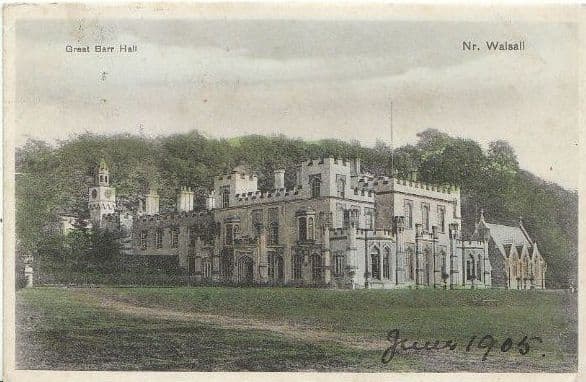
- Great Barr Hall — Partly surviving, At risk · Directions to Great Barr Hall (opens Google Maps)
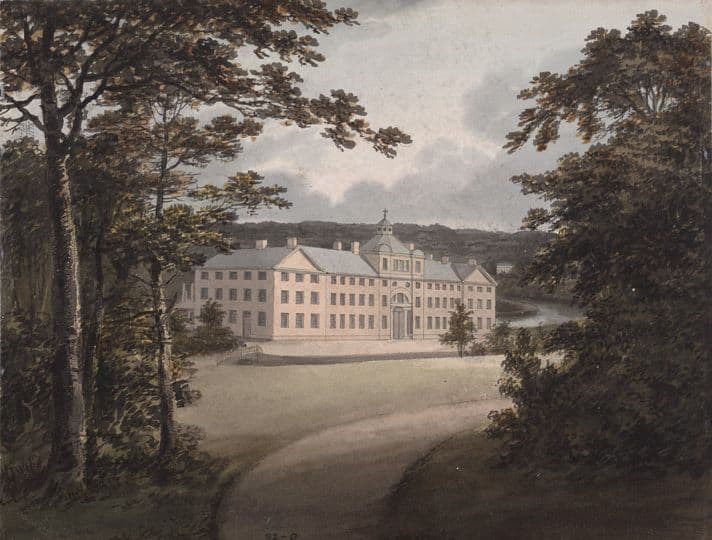
- Watt’s house at Harper’s Hill (Regent Place) — Lost, Partly surviving · Directions to Watt’s house at Harper’s Hill (Regent Place) (opens Google Maps)
- Heathfield Hall — Lost, Site redeveloped · Directions to Heathfield Hall (opens Google Maps)
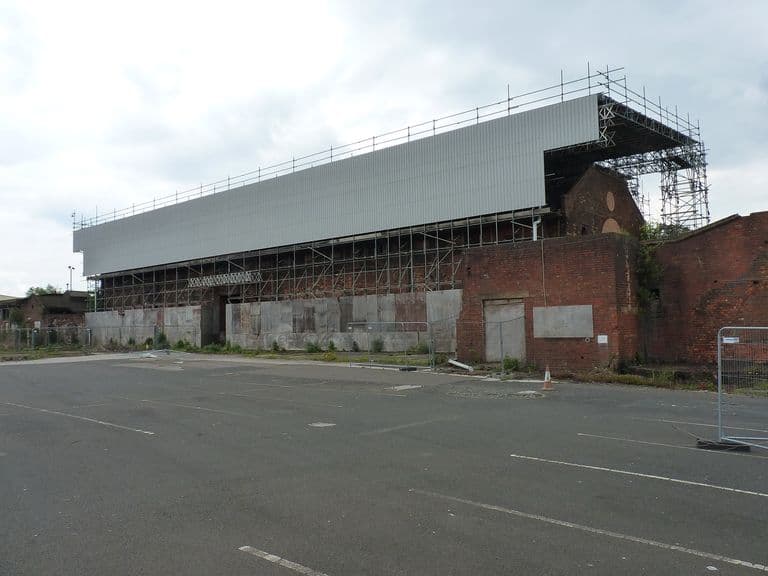
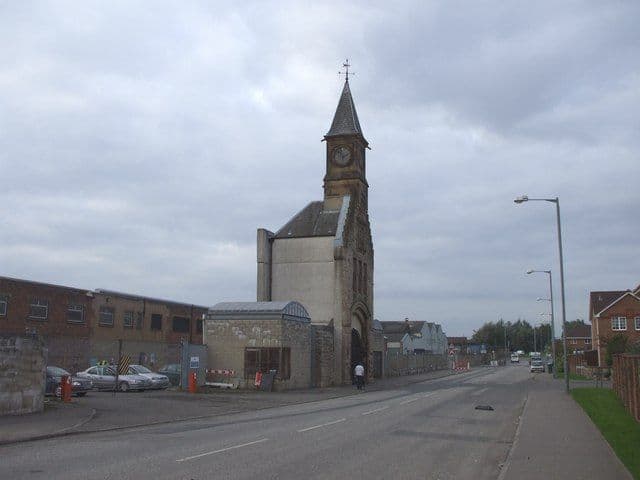
- Soho Foundry — Partly surviving, At risk · Directions to Soho Foundry (opens Google Maps)
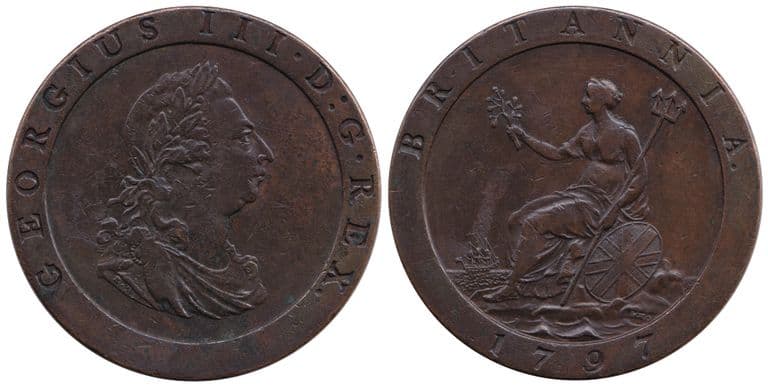
- Soho Mint — Lost, Site redeveloped · Directions to Soho Mint (opens Google Maps)
- Soho Manufactory — Lost, Site redeveloped · Directions to Soho Manufactory (opens Google Maps)
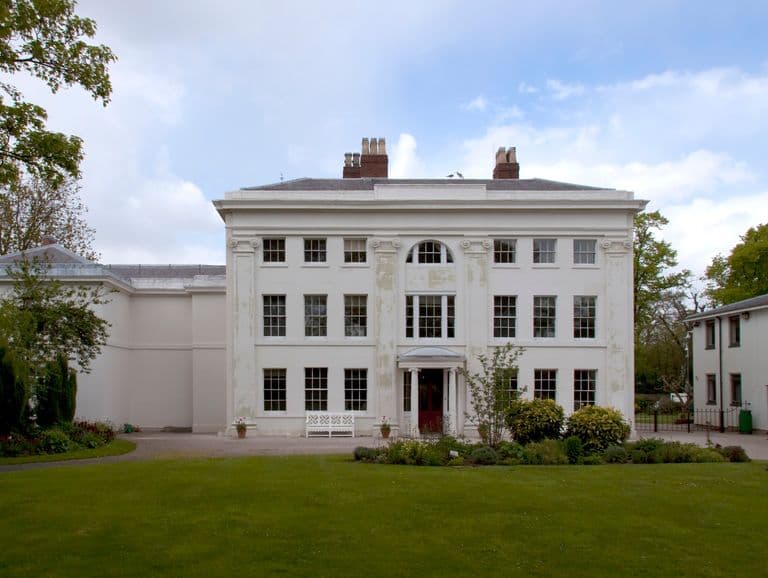
- Soho House — Surviving · Directions to Soho House (opens Google Maps)
Key dates
- 17 March 1762 — Frederick is sent from Greenock to GlasgowThe Watt family firm hands a Black child, named in a clothing list as “Fridrick”, to a carter to be taken to Glasgow for Lady Spynie. Later that year a letter to “James Watt junior merchant in Greenock” — argued by Stephen Mullen to be the engineer — asks what the boy has cost.
- 1765 — Watt conceives the separate condenserWhile repairing Glasgow University’s model Newcomen engine, James Watt hits on the separate condenser, the idea that made the steam engine far less wasteful. He patents it in 1769.
- 1773–74 — Roebuck’s share in Watt’s engine passes to BoultonRuined by flooded coal pits, John Roebuck settles a debt of about £1,200 to Matthew Boulton by handing over his two-thirds share in James Watt’s engine patent. Watt’s trial engine is shipped from Kinneil to Soho, and Watt follows in 1774.
- 1774 — Watt comes to BirminghamJames Watt moves to Birmingham, and his experimental engine is brought to Soho, where it pumps water back to the Manufactory’s mill pool.
- 1775 — The Lunar Society starts meeting by the full moonAfter Dr William Small dies in 1775, his friends decide to meet monthly on the Sunday nearest the full moon, so they have light to ride home by. They dine at two and talk until at least eight.
- 1775 — Boulton & Watt partnership beginsParliament extends Watt’s 1769 patent by 25 years, to 1800, with Boulton’s help, and the partnership of Boulton & Watt begins.
- 8 March 1776 — First commercial engine at Bloomfield CollieryA Boulton & Watt pumping engine with a 50-inch cylinder is set to work at Bloomfield Colliery, Tipton. A newspaper reports “a steam engine constructed upon Mr. Watts’s new principles”.
- 1778 — Keir runs SohoWith Boulton and Watt both away, James Keir manages the Soho works. He turns down the offer of a partnership as too risky.
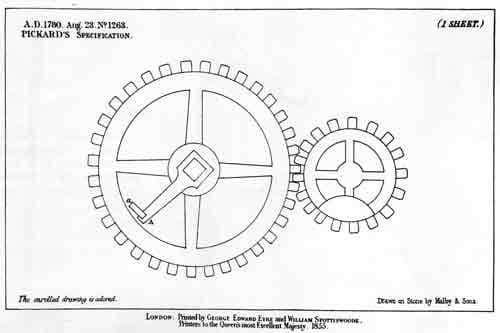
- 23 August 1780 — Pickard’s ‘crank patent’James Pickard of Snow Hill, button maker, patents a way of making a steam engine turn wheels (no. 1263), after a crank was fitted to Matthew Wasbrough’s engine at his mill. Watt claims the idea was leaked from Soho and avoids the crank with the sun-and-planet gear.
- 1780 — Copying presses go on saleJames Watt & Co., a partnership of Watt, Boulton and Keir, starts selling Watt’s letter-copying press. The firm sells them until 1840.
- 1781 — Sun-and-planet gear patentedWatt patents the sun-and-planet gear, which lets his engines drive wheels. The Library of Birmingham credits the original invention to William Murdoch.
- c. 1787–90 — Heathfield built for James WattHeathfield, Handsworth, was built for James Watt, who moved in in June 1790 and lived there until his death in 1819.
- June 1790 — Watt moves to HeathfieldJames and Ann Watt leave Harper’s Hill for Heathfield, their new house in Handsworth, where Watt sets up his garret workshop.
- 1795–96 — Soho Foundry is built at SmethwickBoulton & Watt, led by their sons, build a foundry beside the Birmingham Canal to make complete steam engines on one site. Historic England describes it as the first factory built for the purpose.
- 1800 — The sons take over the engine businessAs Watt’s patent expires, Boulton and Watt hand the engine business to Matthew Robinson Boulton and James Watt junior. Boulton keeps the Mint.
- 25 August 1819 — Death of James WattJames Watt dies at Heathfield and is buried at St Mary’s, Handsworth, where a chapel with Chantrey’s marble statue is later built for him.
- 1826 — Watt chapel added at St Mary’s, HandsworthThomas Rickman added a south-east chapel to St Mary’s Church, Handsworth, as a mausoleum to James Watt, holding Chantrey’s marble statue of 1825.
- 1868 — Watt’s statue goes up in Ratcliff PlaceAlexander Munro’s statue of James Watt, compasses in hand, is set up in Ratcliff Place beside the Town Hall.
- 1911 — George Tangye gives the Boulton & Watt papers to BirminghamGeorge Tangye presents the Boulton & Watt business archive, kept since 1895 in his ‘Watt Museum’, to Birmingham’s Reference Library. It is now the Library of Birmingham’s collection MS 3147.
- December 1924 — Watt’s workshop goes to the Science MuseumWith Heathfield about to be redeveloped, the Science Museum’s curator H. W. Dickinson arrives with lorries and takes away the entire contents of James Watt’s attic workshop, more than 8,000 objects, along with its door, window and floorboards.
- 1927–28 — Heathfield Hall is demolishedJames Watt’s home at Heathfield, Handsworth, is pulled down and its grounds built over with houses. The lodge on Radnor Road survives, with a Birmingham Civic Society blue plaque.
- 14 September 1956 — The Golden Boys are unveiledSir Percy Mills unveils William Bloye’s gilded bronze of Boulton, Watt and Murdoch on Broad Street, designed in 1938 and delayed by the war.
- 29 September 2001 — Thinktank opens with the Smethwick EngineThinktank, Birmingham’s science museum, opens at Millennium Point. Its centrepiece is the Boulton & Watt engine that worked at Smethwick from 1779.
- 29 April 2022 — The Golden Boys return to Centenary SquareAfter five years in store during the Metro works, the statue of Boulton, Watt and Murdoch is reinstalled in Centenary Square outside Symphony Hall.
- July 2026 — Watt and Priestley return to Ratcliff PassageAfter about ten years in store during the Paradise redevelopment, the statues of James Watt and Joseph Priestley are reinstated at either end of Ratcliff Passage, beside the Town Hall.
Sources and further reading
Arrival in Birmingham: the Library of Birmingham says 1775; Revolutionary Players, Birmingham Civic Society and Demidowicz point to 1774. The text says he came in 1774 and the partnership was formalised in 1775. Where he lived between 1774 and 1777 is not established.
Bloomfield Colliery: the date rests on a contemporary newspaper report (Chester Chronicle, 14 March 1776, “On Friday last”), as quoted by Grace’s Guide; that Friday was 8 March 1776.
Governor: Revolutionary Players dates it to 1786, most technical histories to 1788, so no date is given.
Sun-and-planet gear: patented by Watt (1781) but credited by the Library of Birmingham to William Murdoch.
Horsepower and water: Birmingham Civic Society says Watt “coined the term” horsepower and “co-proved that water is a compound”. Both are oversimplified; the water question was a priority dispute with Cavendish and Lavoisier.
Heathfield: built c.1787–90; Samuel Wyatt as architect comes from Library of Birmingham captions and has not been checked in Colvin. Demolition is dated 1927 or 1928.
Frederick: the Library of Birmingham guide’s introduction says 1763, but the documents are dated 1762. That “James Watt junior merchant in Greenock” was the engineer is Mullen’s argument, accepted by the Hunterian and the Science Museum Group.
The 1791 Nantes letter: some Glasgow University material reads it as abolitionist; Mullen notes that the firm had accepted an order for a slave colony, that the “unhappy sufferers” were the planters, and that Watt asked only for gradual abolition.
Munro statue: Paradise Birmingham says Portland stone, other sources marble, so the material is not given. Neither it nor the Golden Boys is confirmed as listed.
- James Watt (1736 to 1819) — Archives of Soho — Library of Birmingham, Birmingham City Council. Ref. MS 3219/3/93
- Steam engines — Archives of Soho — Library of Birmingham, Birmingham City Council. Ref. MS 3782/12/1/2
- Copying press — Archives of Soho — Library of Birmingham, Birmingham City Council. Ref. MS 3219/4/127/6, /13; MS 3219/4/18/22; MS 3147/18/2
- Heathfield — Archives of Soho — Library of Birmingham, Birmingham City Council. Ref. MS 3219/4/127; MS 3219/4/235
- The Lunar Society — Archives of Soho — Library of Birmingham, Birmingham City Council. Ref. MS 3782/13/53/87; MS 3219/4/86/7
- A Portrait of James Watt — Revolutionary Players, History West Midlands
- Blue Plaque: James Watt (Handsworth) — Birmingham Civic Society
- Bloomfield Colliery — Grace’s Guide to British Industrial History, Grace’s Guide. quoting Chester Chronicle, 14 March 1776
- 13A Regent Place — National Heritage List for England entry 1076194 — Historic England
- Church of St Mary, Hamstead Road, Handsworth — National Heritage List for England entry 1076358 — Historic England
- Our History — St Mary’s Church Handsworth
- Watt’s workshop: craft and philosophy in the Science Museum — Ben Russell, Science Museum Group Journal 1, 2014
- James Watt’s Garret Workshop, used 1790–1819 (object 1924-792) — Science Museum Group, Science Museum Group
- The Soho Manufactory, Mint and Foundry, West Midlands: Where Boulton, Watt and Murdoch Made History — George Demidowicz, Historic England / Liverpool University Press, 2022
- Matthew Boulton, William Murdock and James Watt: Appraisal for ‘Golden Boys’ Statue — Stephen Mullen, Birmingham Museums Trust, 2021
- James Watt and Slavery in Scotland — Stephen Mullen, History Workshop, 2020
- References to Slaves in the ‘Archives of Soho’ — Library of Birmingham, Birmingham Archives & Heritage. Ref. MS 3147; MS 3219; MS 3782
- James Watt, Slavery and Statues — Nicky Reeves, The Hunterian, University of Glasgow, 2020
- Commerce, Slavery and Anti-slavery; The Lunar Society and the Anti-slavery Debate — Revolutionary Players, History West Midlands
- Statues to return to Ratcliff Passage — Paradise Birmingham, Paradise Birmingham, 2026
- James Watt and Joseph Priestley statues return to Birmingham after ten years — TheBusinessDesk, TheBusinessDesk, 2026
- James Watt papers at Library of Birmingham placed on UNESCO register — Birmingham City Council, Birmingham City Council
- Boulton, Watt and Murdoch (statue) — Wikipedia
Comments
Comments will load here.