
What was here?
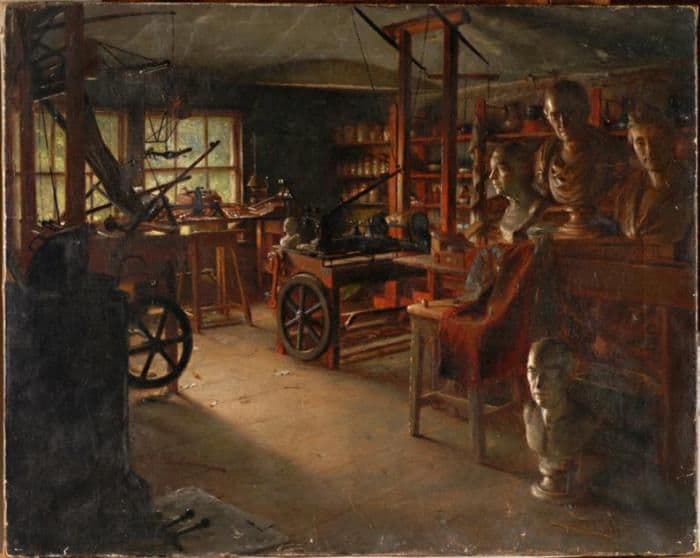
The second-floor garret at Heathfield Hall, Handsworth, where James Watt worked from 1790 until his death in 1819. More than 8,000 objects, with the room’s door, window, skylight, floorboards and stove, were taken to the Science Museum in 1924. It is on display there today, in the Energy Hall.
History
A room at the top of the stairs
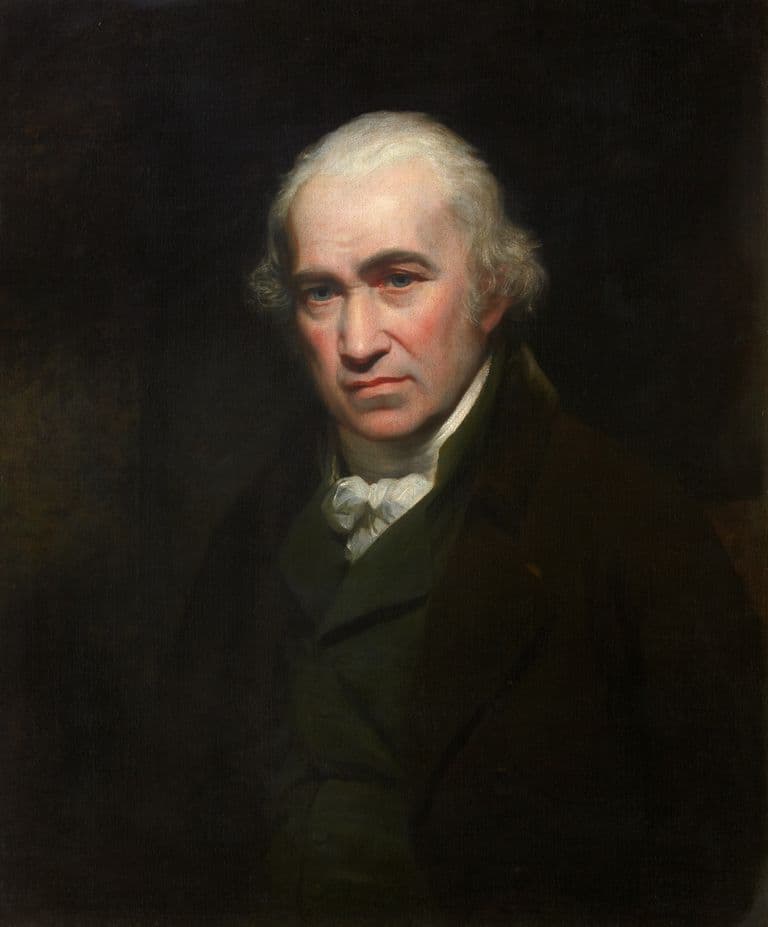
When James Watt moved into Heathfield in 1790 he made sure the new house had a workshop. Up under the roof, on the second floor, was a garret where he could work undisturbed. He used it for nearly thirty years, through his partnership’s most profitable years and his long retirement after 1800.
It was a working room, not a showroom. The Science Museum’s catalogue counts more than 8,400 objects: tools, materials, instruments, models, chemicals and the clutter of a lifetime’s experiments. Its Energy Hall page gives the figure as 8,430. Watt used it until the end. He died at Heathfield on 25 August 1819, aged eighty-three.
A time capsule
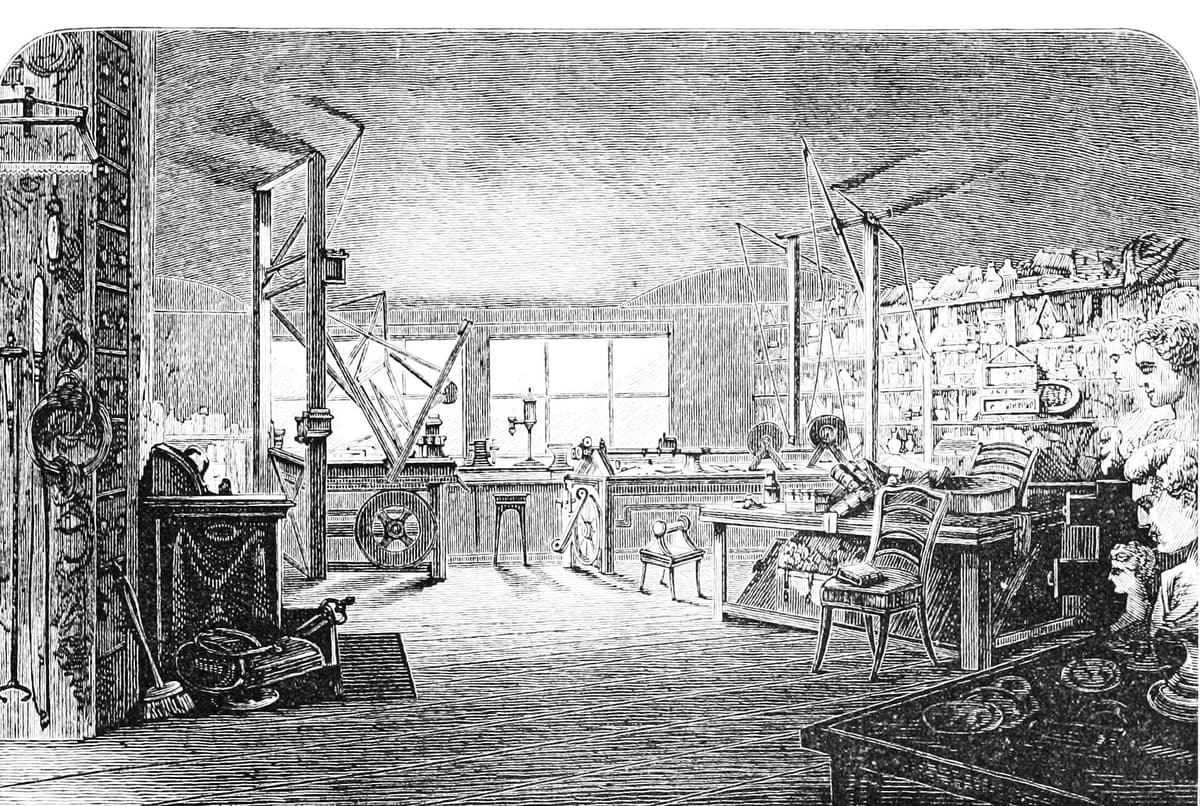
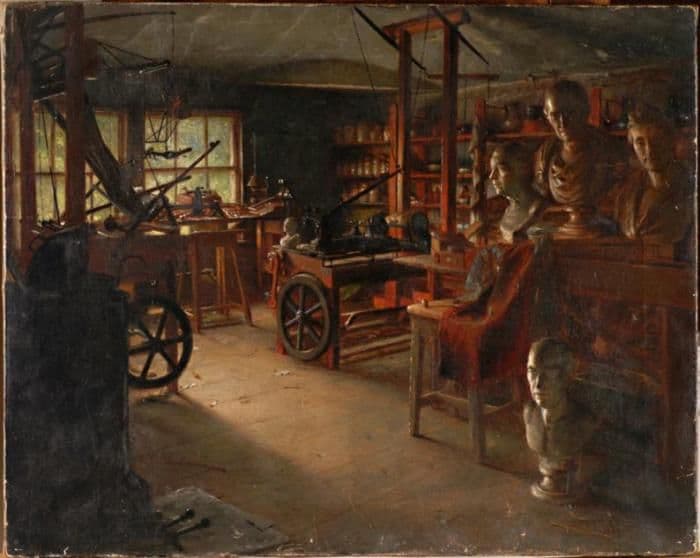
After his death the garret was closed up and left as it was. How firmly it stayed shut is not certain. The Science Museum says a few visitors were admitted after 1848; Library of Birmingham captions say it was “not re-opened until 1901”. A photograph of 1901 is described as showing it undisturbed since his death. In 1889 the painter Jonathon Pratt recorded the room; his picture is now in Birmingham Museums’ collection.
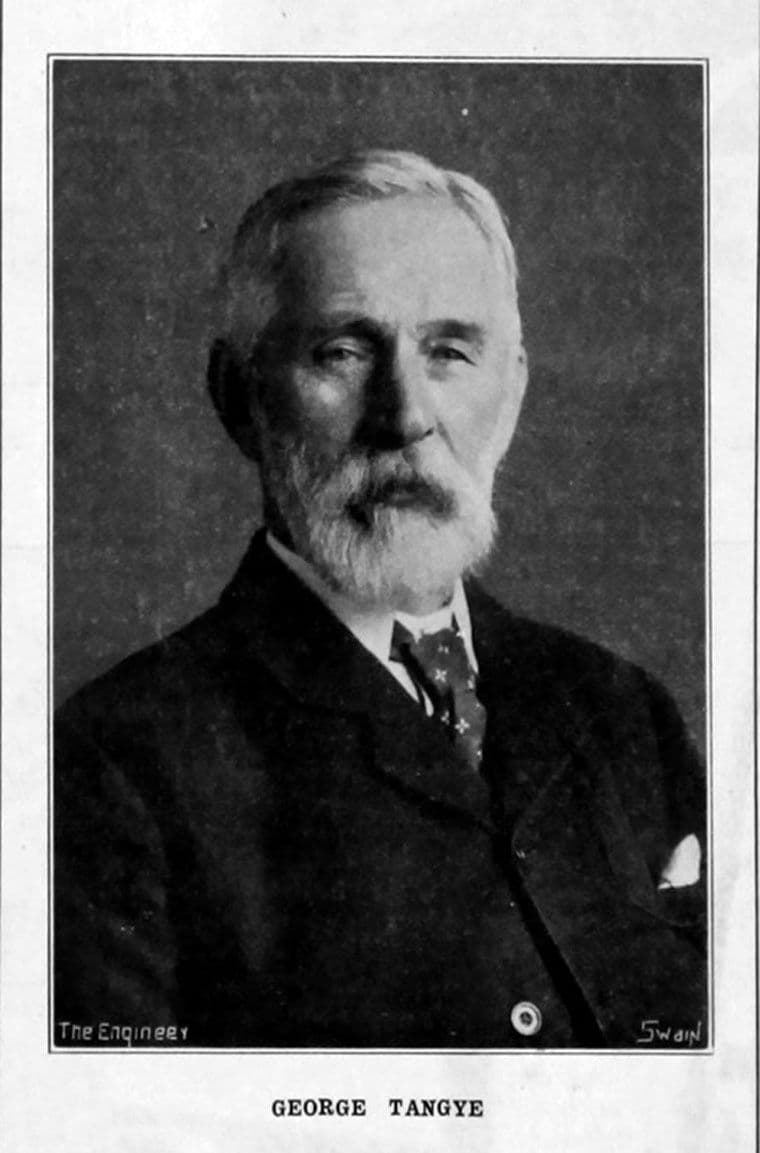
For a century the room survived because successive owners left it alone. One of them, the engineer George Tangye, lived at Heathfield for many years and took care of it.
The lorries arrive
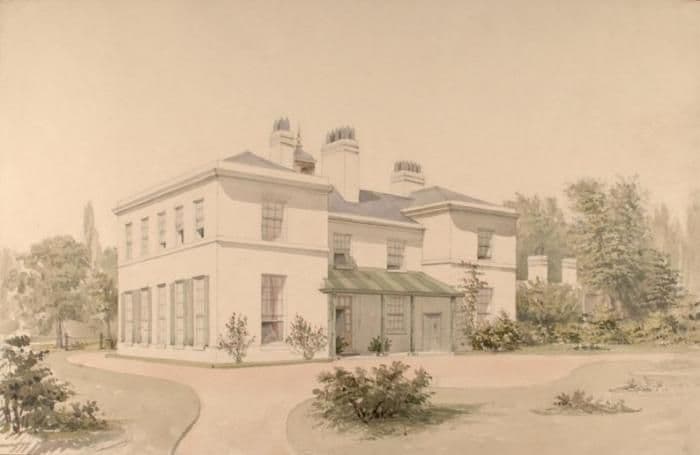
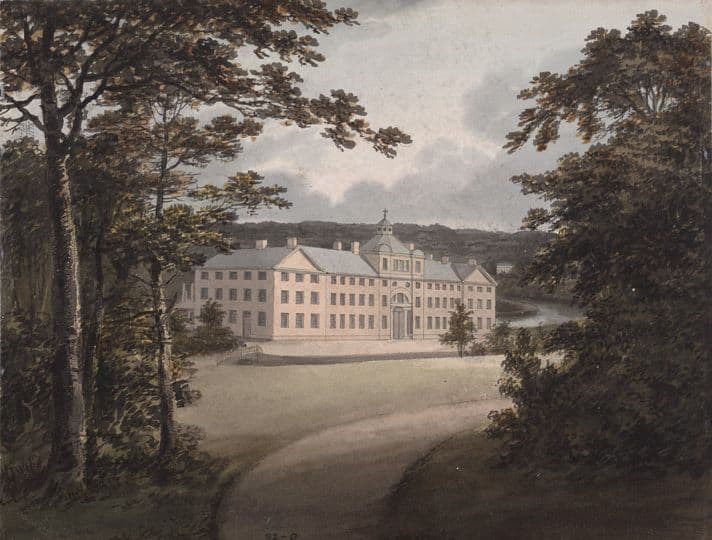
In the 1920s Heathfield’s estate was being broken up for housing, and the house itself was doomed. In 1924 the decision was made to save the workshop. That December, H. W. Dickinson, the Science Museum’s curator of mechanical engineering, arrived with lorries. Everything went: not just the contents, but the door, the window, the skylight, the floorboards, the stove and part of the banisters.
The land agent, Edward Collins, wrote descriptions of the items. His lists still underlie the museum’s catalogue today. The workshop entered the national collection as object 1924-792, credited to Major J. M. Gibson-Watt. Three or four years later, in 1927–28, Heathfield Hall was demolished.
Back on show
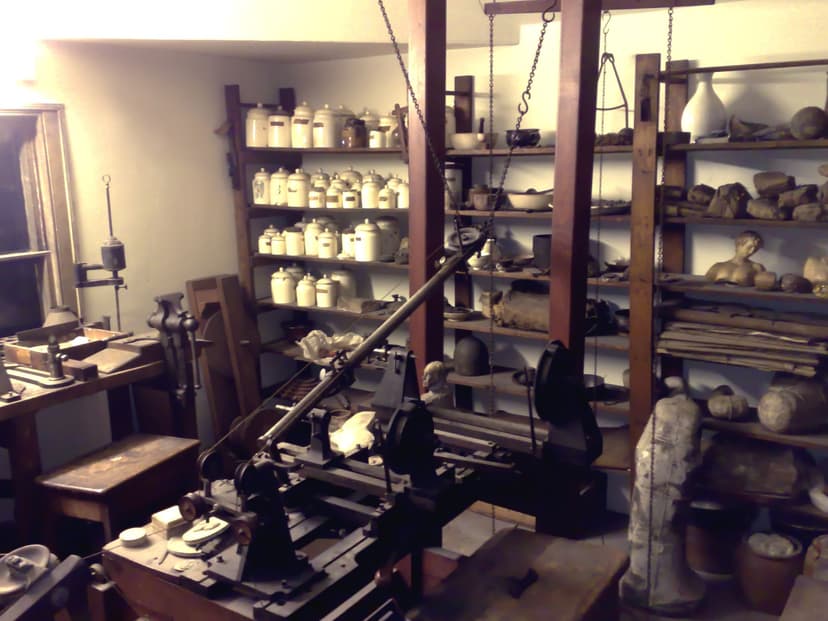
In March 2011 the Science Museum re-displayed the workshop as the centrepiece of a new permanent gallery, “James Watt and our world”. It is now in the Energy Hall on Level 0, alongside Old Bess, the early engine once used at Soho, and other Watt engines.
Why it matters
Most great inventors leave behind finished machines and patents. Watt left the mess in between: the tools he reached for, the experiments he abandoned, the materials he hoarded. Historians can study how he actually worked, and visitors can see an 18th-century engineer’s workshop in a way almost nowhere else allows.
There is one irony. This is Birmingham’s most complete relic of James Watt, and it is in London. The house it came from is a row of 1930s homes in Handsworth; the lodge on Radnor Road and its blue plaque are all that stand there now. But the workshop’s survival is a small miracle. If the lorries had not come in December 1924, it would have gone the way of the hall.
What happened here?
James Watt worked here in retirement from 1790 until 1819. After his death the room was kept almost untouched for about a century. In December 1924 the Science Museum removed it complete, and since March 2011 it has been displayed as a gallery centrepiece, now in the Energy Hall.
Why it mattered
The workshop is one of the most complete surviving records of how an 18th-century inventor worked. It links Birmingham’s industrial story directly to a national museum, and it survived only because people chose to save it when Heathfield was being demolished.
Why it disappeared
Redevelopment
It left Birmingham because Heathfield Hall was being redeveloped. The Science Museum Group says the removal was decided in 1924 while the estate was being broken up, and the hall was demolished in 1927–28.
What’s there now
What replaced it
At Heathfield, 1930s housing. The workshop itself now forms part of the Science Museum’s Energy Hall.
What survives
The complete workshop: more than 8,000 objects with the original door, window, skylight, floorboards, stove and part of the banisters (Science Museum Group object 1924-792). Edward Collins’s 1924 descriptions still underlie the catalogue. Jonathon Pratt’s 1889 painting records it in situ.
Today
The workshop is in the Energy Hall, Level 0, at the Science Museum on Exhibition Road, London SW7. In Handsworth, the site of the house that held it is now private gardens off West Drive and North Drive; the Heathfield lodge at 33 Radnor Road carries a blue plaque.
Then and now
Then · 1889
Now · 30 May 2008
Key dates
- June 1790 — Watt moves to HeathfieldJames and Ann Watt leave Harper’s Hill for Heathfield, their new house in Handsworth, where Watt sets up his garret workshop.
- December 1924 — Watt’s workshop goes to the Science MuseumWith Heathfield about to be redeveloped, the Science Museum’s curator H. W. Dickinson arrives with lorries and takes away the entire contents of James Watt’s attic workshop, more than 8,000 objects, along with its door, window and floorboards.
Sources and further reading
Object counts differ: ‘more than 8,400’ (Science Museum Group), 8,430 (Energy Hall page) and 8,300 in other sources; say ‘more than 8,000’. When the room was first reopened is disputed (after 1848, or 1901). How the workshop was displayed between 1924 and 2011 has not been established from the sources checked. The map point is the Science Museum building only.
- James Watt’s Garret Workshop, used 1790–1819 (object 1924-792) — Science Museum Group, Science Museum Group
- Watt’s workshop: craft and philosophy in the Science Museum — Ben Russell, Science Museum Group Journal 1, 2014
- Energy Hall — Science Museum
- Birmingham Images: Soho House and Heathfield captions (inventories 1850–51; James Wyatt bill 1796; Heathfield built 1787–90 by Samuel Wyatt; demolished 1928) — Library of Birmingham
- George Tangye — Grace's Guide
Comments
Comments will load here.