
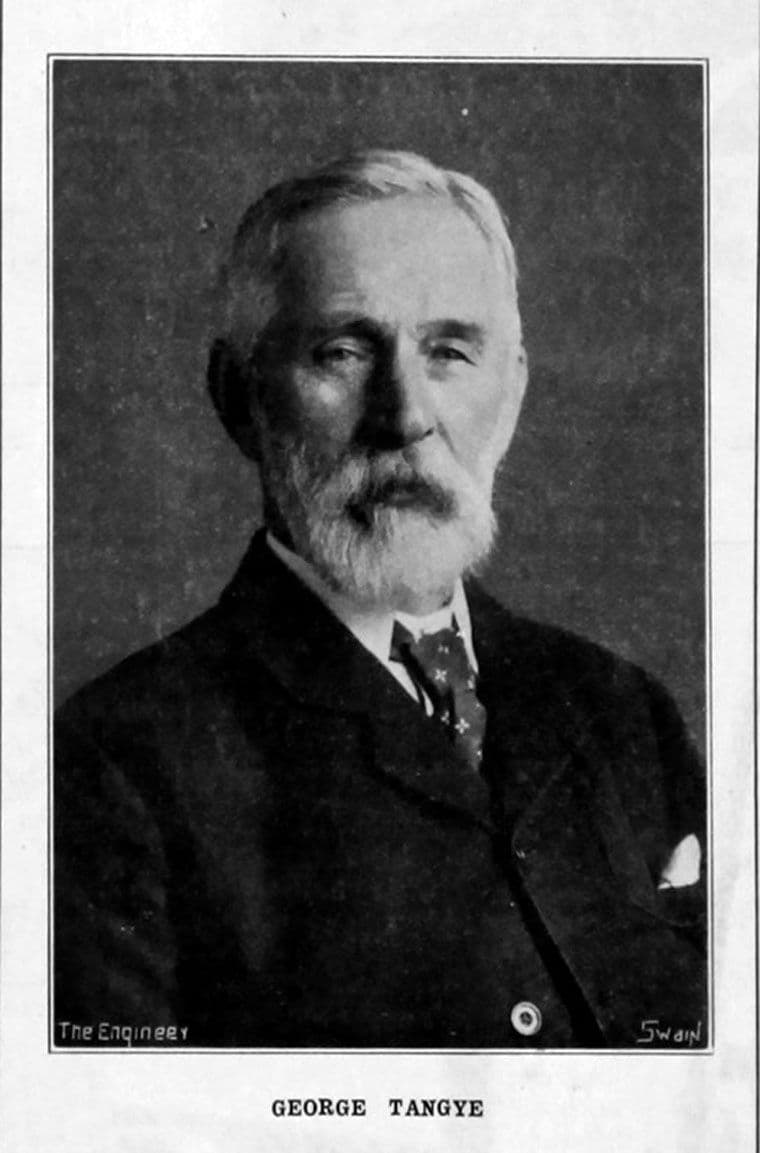
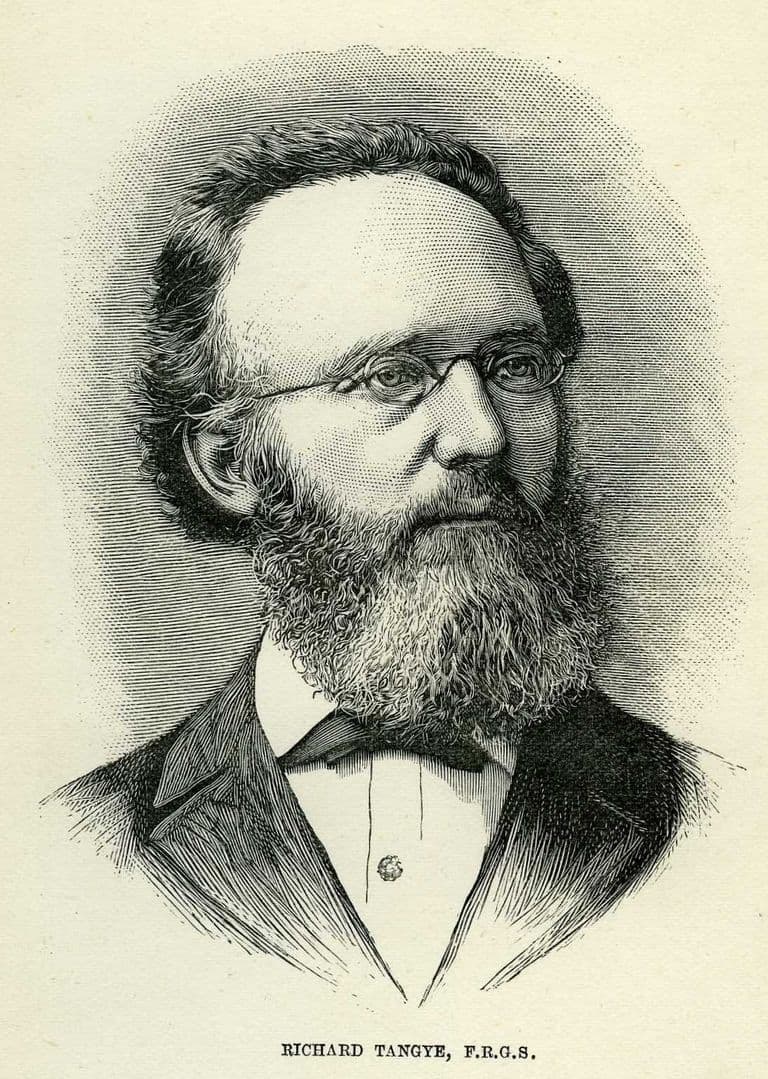
On the evening of 7 September 1853 a young Cornishman stepped off the train at the Lawley Street terminus in Birmingham. His brother Richard was waiting. A man pushed his luggage on a wheelbarrow to their lodgings in Bath Row, and that night Richard told him he had bought a load of coal and owed thirty shillings for it. George paid. “I then had about one shilling and sixpence left to begin life with in Birmingham,” George Tangye wrote half a century later, “and from that day to this I have never felt the want of money to provide for all I needed” (quoted in the firm’s centenary history, 1957).
He was right. The boy with eighteen pence ended his life as chairman of one of Birmingham’s great engineering firms, in the house where James Watt had died.
The youngest brother
George was born at Illogan, near Redruth, in 1835, the youngest of the six sons of Joseph and Ann Tangye, Quakers who kept a village shop and a small farm. Half a century later he wrote down what he remembered. The shop sold “everything that could be wanted by the country round — drapery, groceries, crockery and general haberdashery, and also a little stock of homely medicines.” His mother, he wrote, “was my father’s right hand, and more — for she managed the business and kept the accounts”, and she gave credit to miners who were paid only once a month (quoted in the firm’s centenary history, 1957). Like Richard he went to William Bellows’s school in Redruth and then to the Friends’ School at Sidcot. He learned double-entry bookkeeping in the office of William Brunton’s safety-fuse works, where his eldest brothers worked, then followed Richard to Birmingham.
The Quaker network looked after him. On his first Sunday he went with Richard to the Severn Street Adult School, founded by Joseph Sturge to teach working men to read and write, and was soon put in charge of its library. He stayed with the Adult School movement all his life, and in 1877 opened a branch at the Cornwall Works, with himself as superintendent.
Making it work
George worked as a clerk at Thomas Worsdell’s engineering works until a hard-nosed new partner sacked him. He then sold safety fuse for Brunton’s, picking up orders for his brothers’ hydraulic jacks on the side, and in 1857 became one of the five brothers of James Tangye and Brothers.
His mother, he wrote, “was my father’s right hand, and more — for she managed the business and kept the accounts”, and she gave credit to miners who were paid only once a month (quoted in the firm’s centenary history, 1957).
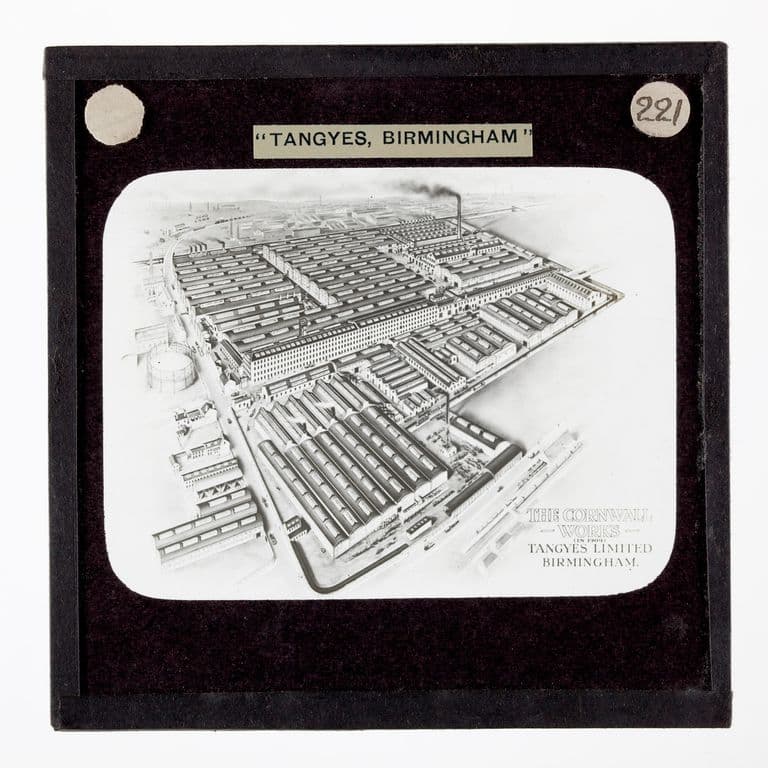
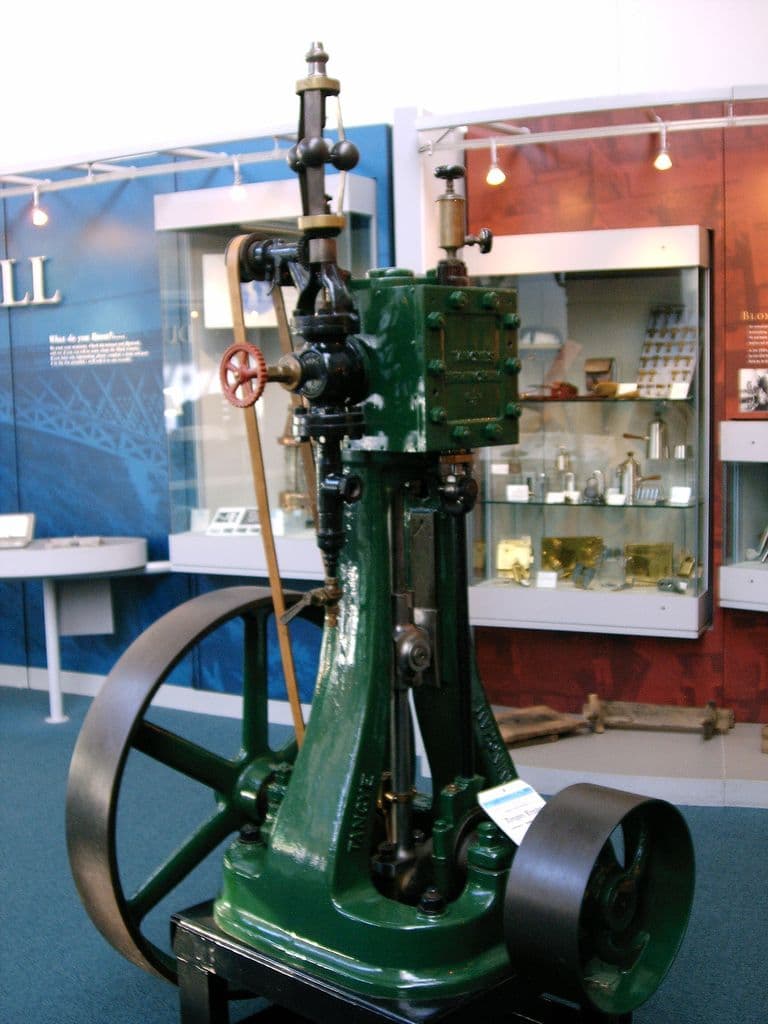
If Richard was the salesman, George was the manager. He made the first working model of Weston’s differential pulley block, the firm’s first bestseller, which went on to lift everything from artillery to a convalescent King of the Belgians. He suggested that the firm should design a simple, standard steam engine to sell from stock, and James designed it. He helped run the works as the payroll grew from two in 1858 to 800 by the end of the 1860s. In 1872 he and Richard became the sole partners, and in 1873 he set out for Australia in Brunel’s old ship, the Great Britain, to look for customers. When the firm became Tangyes Ltd in 1881 he was a director, and after Richard’s death in 1906 he became chairman.
At Heathfield
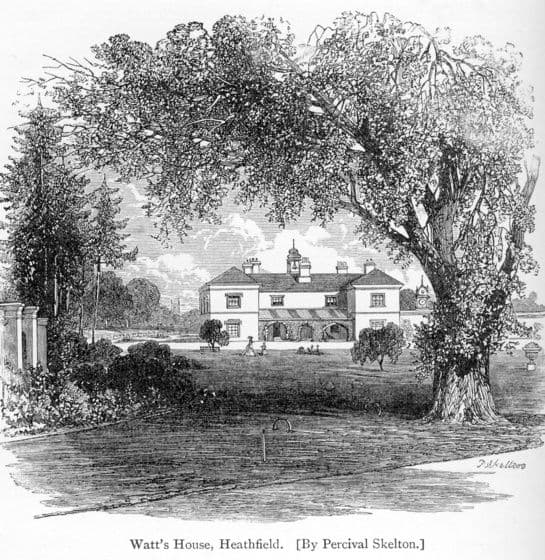
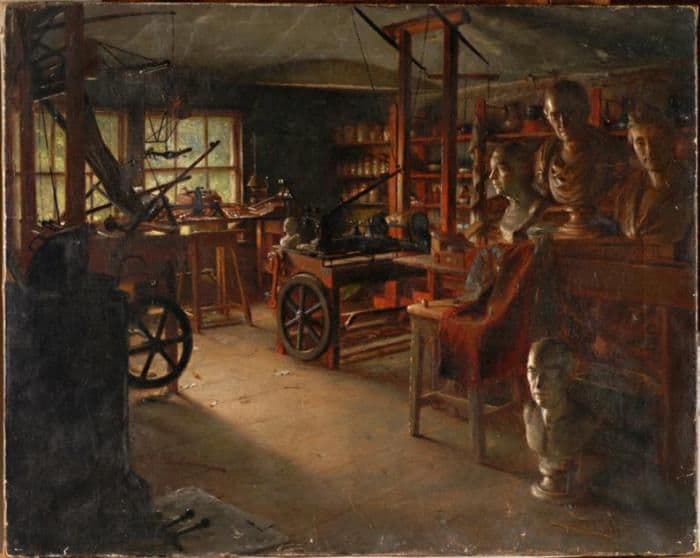
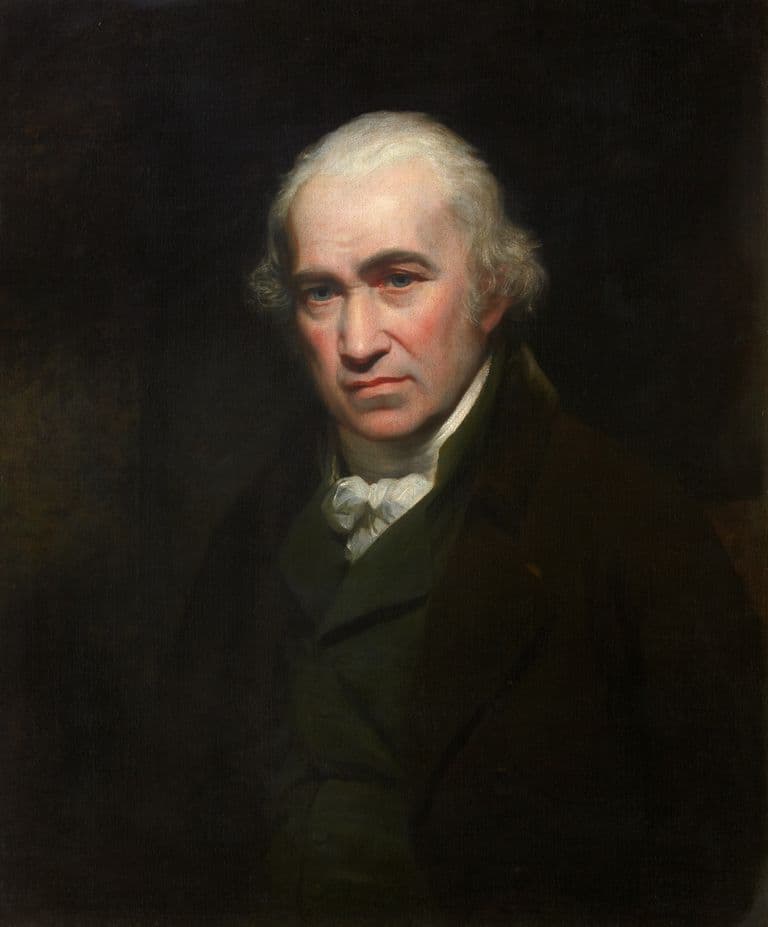
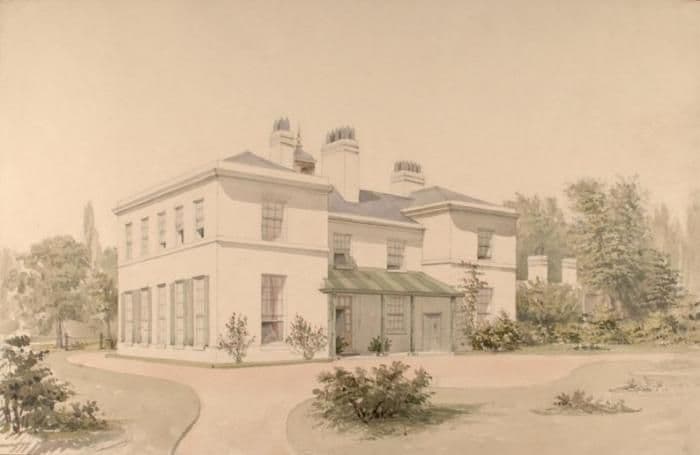
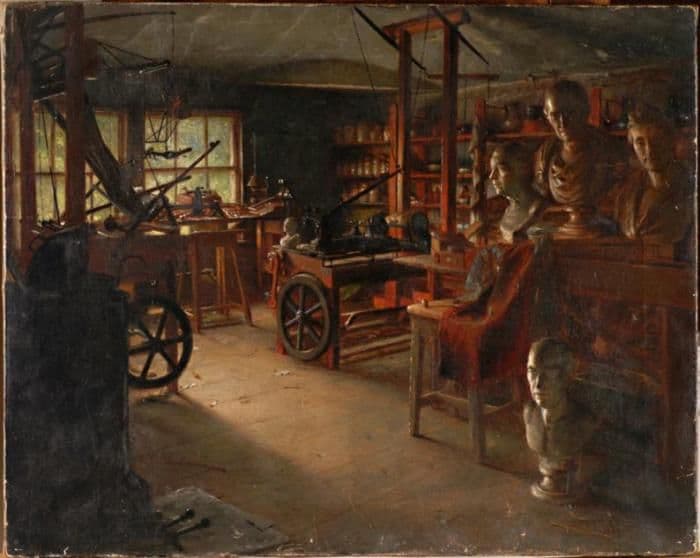
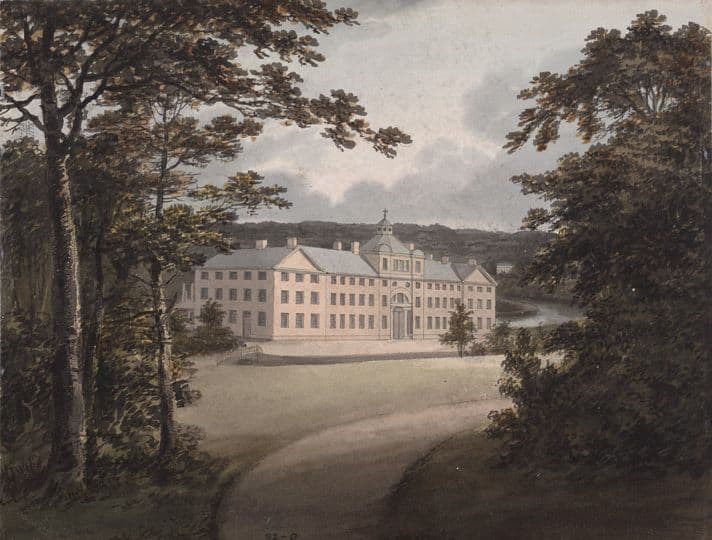
For more than forty years George Tangye lived at Heathfield Hall in Handsworth, the house James Watt had built around 1790 and where he died in 1819. At the top of the house was Watt’s garret workshop, closed up after his death and left much as he had left it. Tangye took care of it. In 1889, while he lived there, the painter Jonathon Pratt recorded the room as it stood.
He did more than keep a room. As a boy in Cornwall, among engine houses that Boulton & Watt engines had saved, he had grown up hearing about Watt. When James Watt & Co., the last firm at Soho Foundry, was wound up in 1895, Tangye took custody of the great mass of Boulton & Watt business papers and drawings. He kept them in a ‘Watt Museum’, looked after by a curator, R. H. Kirton, until they passed to the city. The firm’s centenary history dates his gift to 1911, and the Library of Birmingham records the papers as in his care from 1895 to 1915. In 1910, when the Institution of Mechanical Engineers met its American counterpart in Birmingham, he gave the American Society of Mechanical Engineers a framed letter written by Watt. In 1898 the Cornish Magazine interviewed him under the title ‘Romance in Hard Metal’.
A quiet public man
Unlike Richard, George never went into politics. He was a Birmingham magistrate for many years and worked for the General Hospital and Josiah Mason’s Orphanage. With Richard he helped pay for the city’s Art Gallery and School of Art.
He died at his home in Birmingham on 7 October 1920, aged 85. On 23 and 24 November that year the contents of Heathfield Hall were sold. The estate was broken up for housing, the hall was demolished in 1927–28, and in December 1924 the Science Museum had taken Watt’s garret, down to the floorboards, to London.
Why it mattered
George Tangye’s name is not on a famous engine or a famous slogan. His mark is in the archives. The Boulton & Watt Collection in the Library of Birmingham, catalogued as MS 3147, is one of the most important business archives of the Industrial Revolution. It holds letters, engine drawings, order books and accounts going back to the 1770s, and it is in Birmingham because a Cornish engineer kept it together when the firm that made it collapsed.
His care for Heathfield mattered too. Watt’s garret survived untouched into the twentieth century partly because the man who lived beneath it for forty years understood what it was. The workshop is now in the Science Museum, and the papers are in the Library of Birmingham. Both survive because George Tangye looked after them.
On the map
4 places connected with George Tangye. Tap a number for directions — some sites are private homes or gardens, so each place’s page says what you can see from the street.

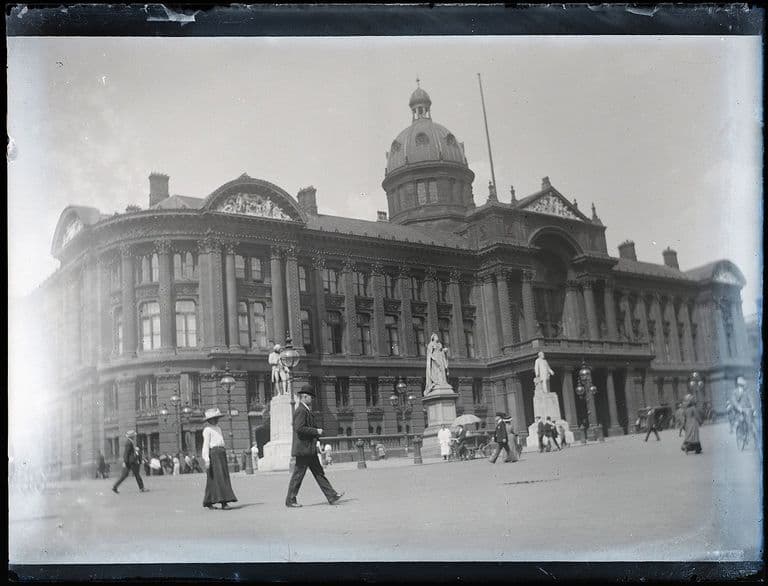
- The Council House, Victoria Square — Surviving · Directions to The Council House, Victoria Square (opens Google Maps)
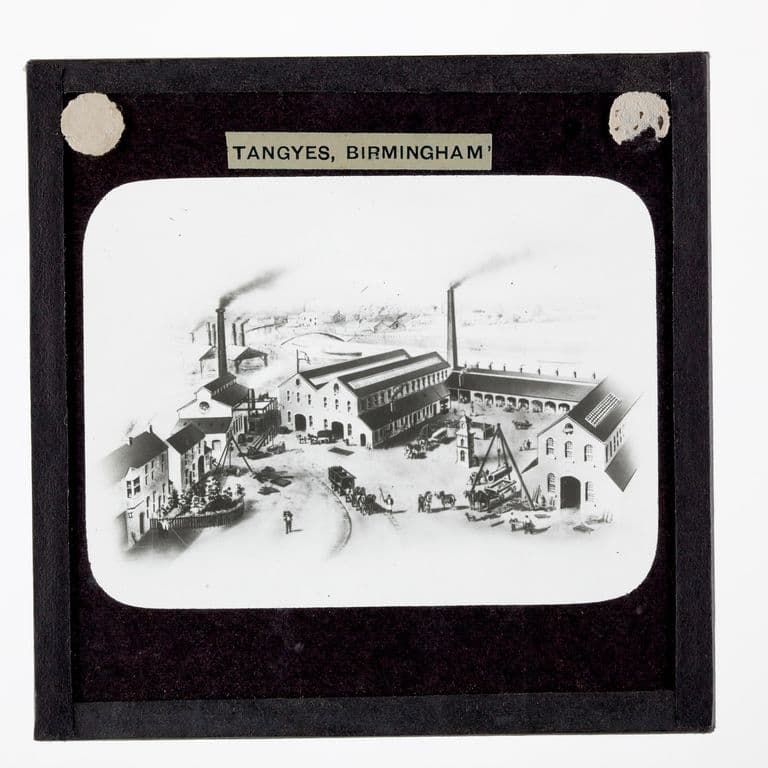
- Cornwall Works (Tangyes) — Lost, Site redeveloped · Directions to Cornwall Works (Tangyes) (opens Google Maps)
- Heathfield Hall — Lost, Site redeveloped · Directions to Heathfield Hall (opens Google Maps)
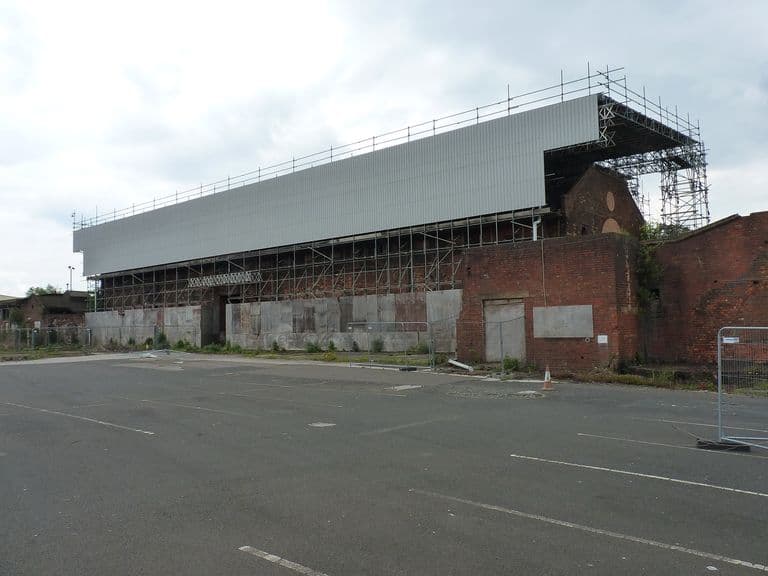
- Soho Foundry — Partly surviving, At risk · Directions to Soho Foundry (opens Google Maps)
Key dates
- 1857 — James Tangye and Brothers begin in Mount StreetFive Cornish brothers — James, Joseph, Richard, George and Edward Tangye — form James Tangye and Brothers in a rented room at 40½ Mount Street, off the Parade, making hydraulic jacks.
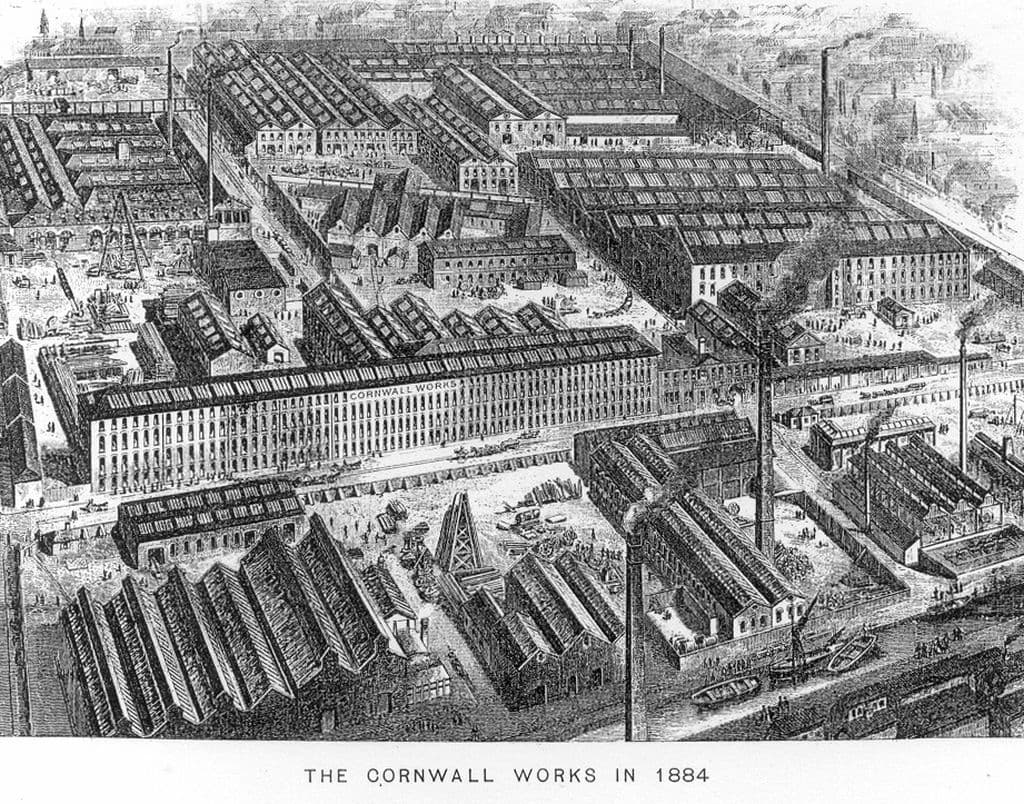
- 1864 — Cornwall Works opens at SmethwickTangye Brothers & Price open their new Cornwall Works on the site of Rabone Hall, beside the Birmingham Canal at Smethwick, and move most of their production there.
- 1872 — Tangyes grant the half-holiday and a nine-hour dayAs the three elder brothers retire, Richard Tangye makes the Saturday half-holiday permanent at the Cornwall Works and grants a nine-hour day before his workers ask for it.
- 1895 — Avery buys Soho FoundryW & T Avery, the weighing-machine makers, buy Soho Foundry from the failing James Watt & Co. and move all their manufacturing there. George Tangye takes custody of the Boulton & Watt papers.
- 1911 — George Tangye gives the Boulton & Watt papers to BirminghamGeorge Tangye presents the Boulton & Watt business archive, kept since 1895 in his ‘Watt Museum’, to Birmingham’s Reference Library. It is now the Library of Birmingham’s collection MS 3147.
- 7 October 1920 — Death of George TangyeGeorge Tangye, chairman of Tangyes Ltd and for over forty years the keeper of James Watt’s house at Heathfield, dies at 85. The contents of Heathfield Hall are sold on 23–24 November.
Sources and further reading
His birth date is given as 17 September 1835 in his Institution of Mechanical Engineers obituary and as 17 October 1835 elsewhere on Grace’s Guide. His title in 1881 is given as managing director (Grace’s Guide) or vice-chairman (IMechE obituary). The gift of the Boulton & Watt papers is dated 1911 by Waterhouse (1957); the Library of Birmingham says they were in his care from 1895 to 1915, so the formal handover may have been completed later. Exactly when he moved into Heathfield is not established; Waterhouse says he lived there “for over forty years”. His burial place has not been found in the sources checked.
- George Tangye — Grace's Guide. IMechE obituary, 1921
- A Hundred Years of Engineering Craftsmanship: Tangyes Ltd 1857–1957 — Rachel E. Waterhouse, Tangyes Ltd, 1957. ‘Arrival in Birmingham’; ‘Beyond the Cornwall Works’
- MS 3147: Boulton and Watt Collection — catalogue record — Library of Birmingham, Birmingham City Council. Ref. MS 3147. arrangement and custodial history
- MS 3147/32: Boulton & Watt — material added by Birmingham Library (list) — Library of Birmingham, Birmingham City Council. Ref. MS 3147/32. item 38, Heathfield sale catalogue, 23–24 Nov. 1920
- Tangye Brothers — Grace's Guide
- Tangye, Richard — Dictionary of National Biography, 1912 supplement, vol. 3 — William Benjamin Owen, Smith, Elder & Co., 1912
Comments
Comments will load here.