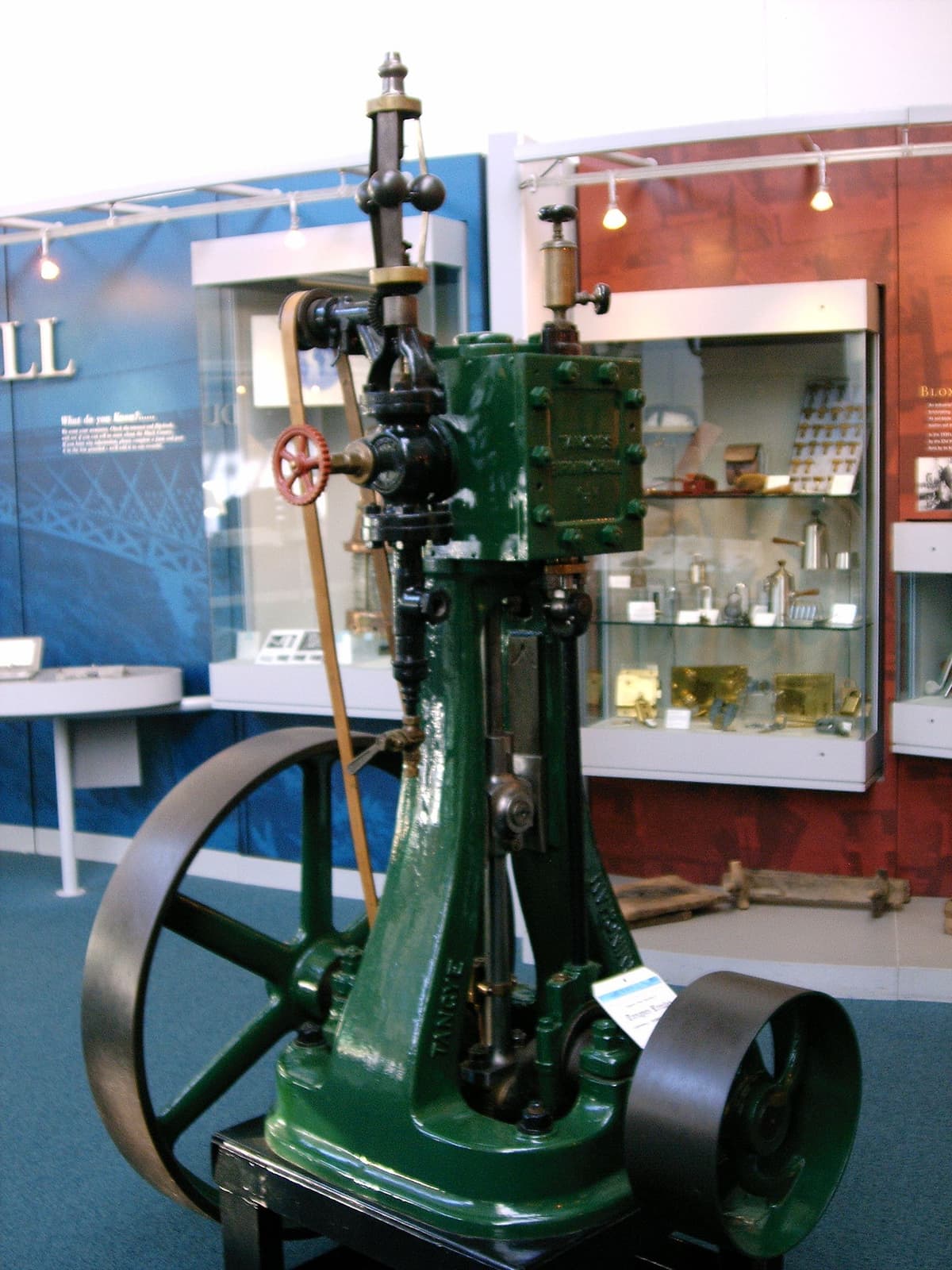
Push on a small piston filled with water or oil and a large piston will lift with far greater force. That principle, Pascal’s, was turned into the hydraulic press by Joseph Bramah at the end of the eighteenth century. In the 1840s hydraulic power lifted the tubes of the Britannia Bridge across the Menai Strait.
Birmingham’s great hydraulic firm was Tangye Brothers. Its compact jacks, made in a rented workshop off the Parade, helped push Brunel’s Great Eastern into the Thames in January 1858. Twenty years later four Tangye jacks, worked by four men, raised Cleopatra’s Needle on the Embankment. The firm went on to make presses for cotton and wool, punching and shearing machines, and machines for testing chain cables.
Making for stock
What made Tangyes different was how it sold. Instead of building every machine to order, it made standard designs in many sizes and kept them in stock: pulley blocks, the ‘Special’ steam pump and James Tangye’s plain horizontal engine. Parts were made to gauges and jigs so they could be swapped. Pumps and engines went to mines, breweries, waterworks and farms from Cornwall to Australia.
An engineering canal side
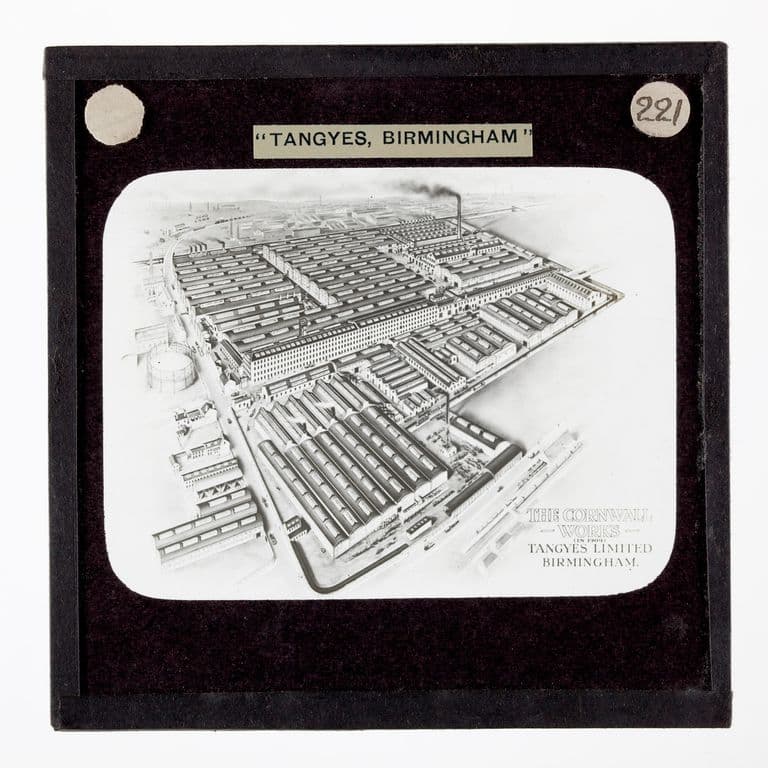
The canal between Birmingham and Smethwick became an engineering corridor. Boulton & Watt’s Soho Foundry had built engines there since 1796. Tangyes’ Cornwall Works opened nearby in 1864, and W & T Avery took over Soho Foundry in 1895 for scales and testing machines. Wire firms such as Webster & Horsfall at Hay Mills supplied the ropes and cables that hydraulic cranes and lifts needed.
Tangyes left Smethwick in 1969, but its name still appears on hydraulic jacks.
Pictures
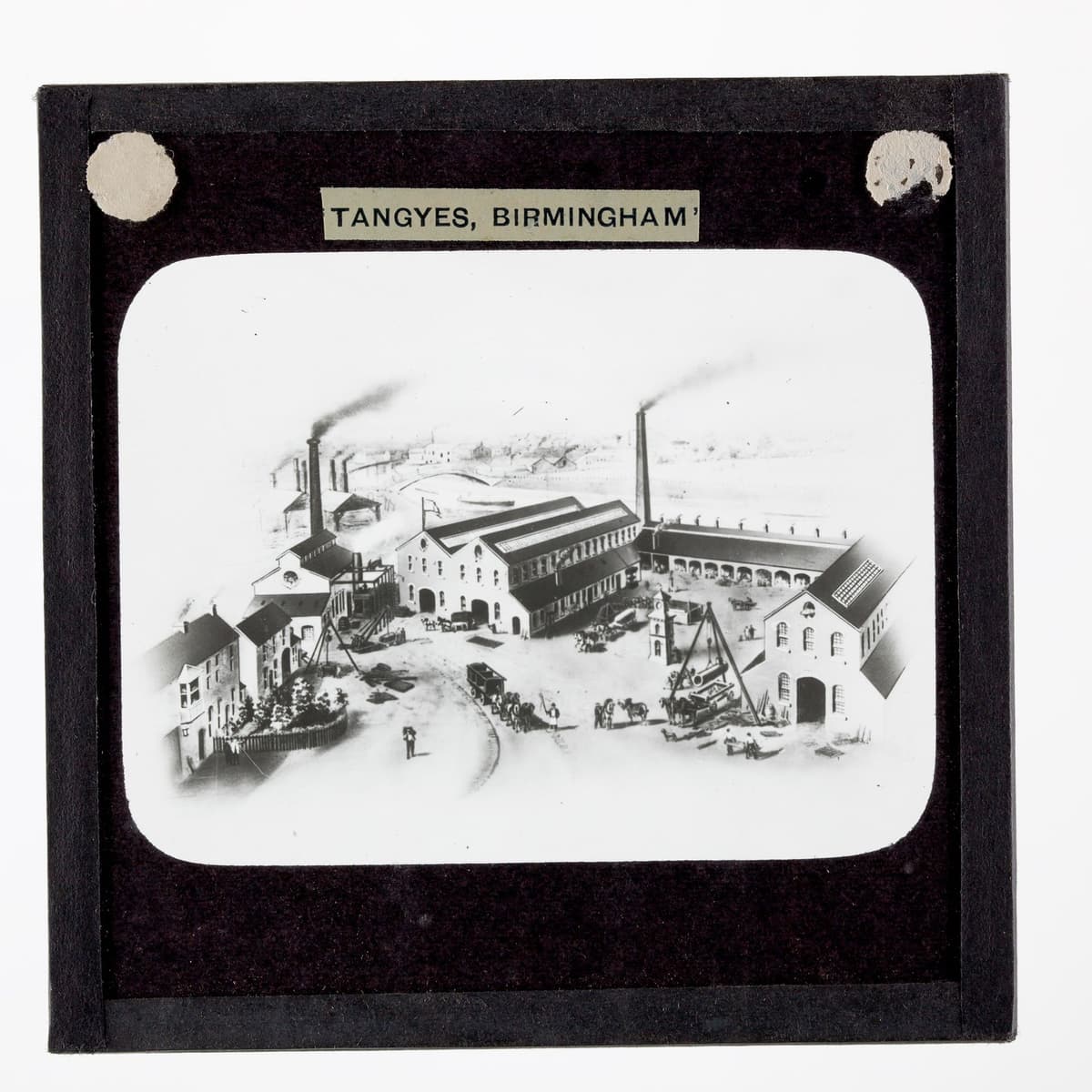
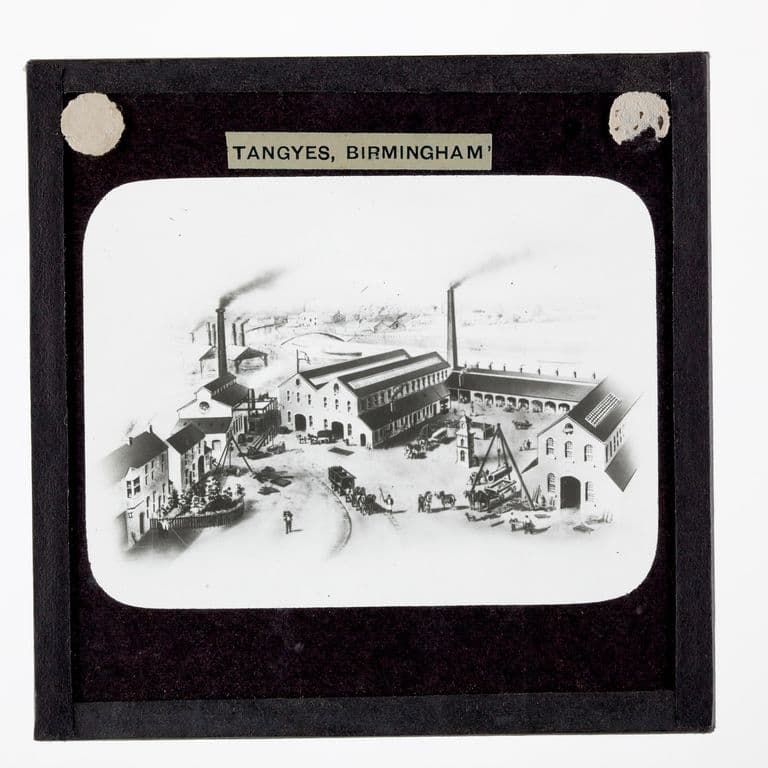
Cornwall Works illustration, 1869Unknown, 1869. Museums Victoria, via Wikimedia Commons · Public domain
On the map
One place connected with Hydraulics and heavy engineering. Tap a number for directions — some sites are private homes or gardens, so each place’s page says what you can see from the street.

- Cornwall Works (Tangyes) — Lost, Site redeveloped · Directions to Cornwall Works (Tangyes) (opens Google Maps)
Key dates
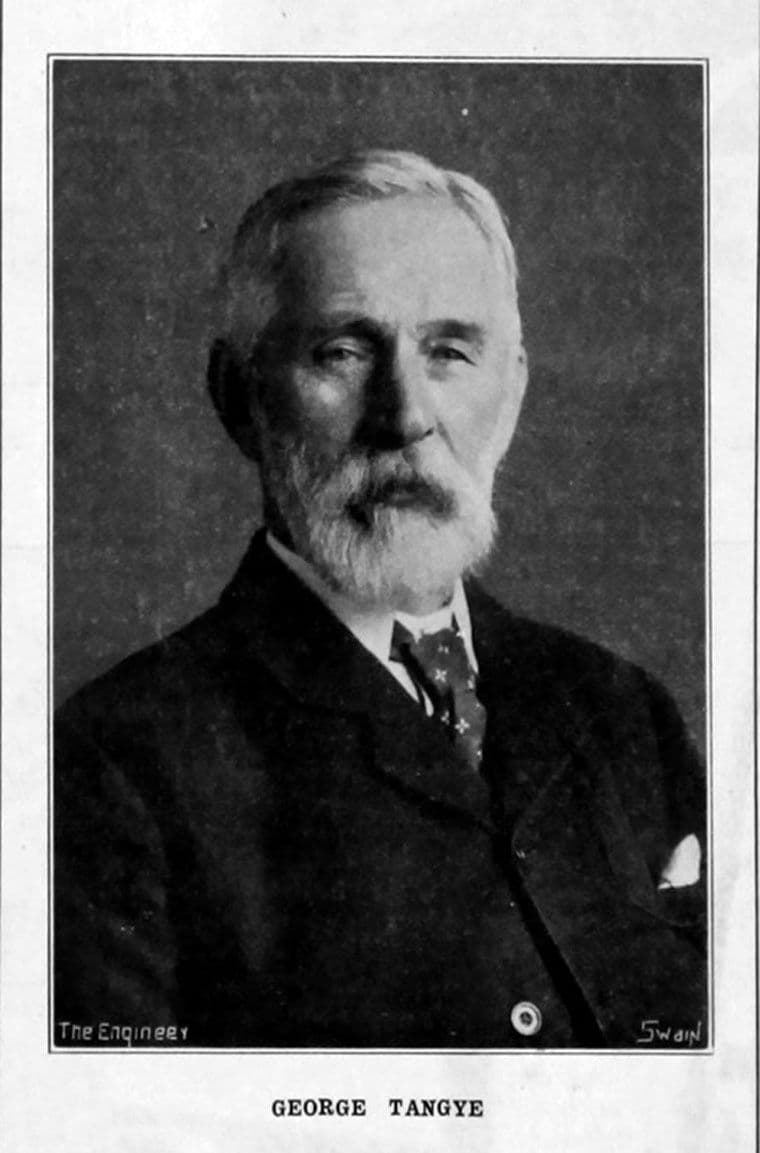
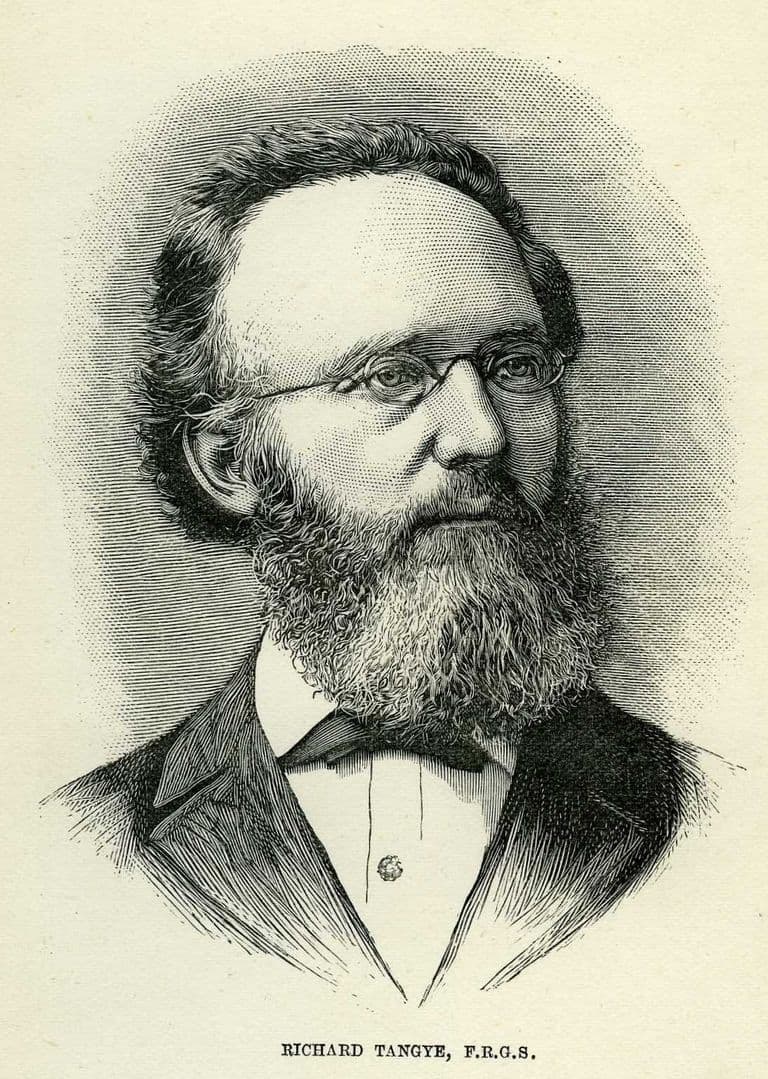
- 1857 — James Tangye and Brothers begin in Mount StreetFive Cornish brothers — James, Joseph, Richard, George and Edward Tangye — form James Tangye and Brothers in a rented room at 40½ Mount Street, off the Parade, making hydraulic jacks.
- 31 January 1858 — Tangye jacks help launch the Great EasternAfter weeks stuck on the slipway at Millwall, Brunel’s Great Eastern floats, pushed by hydraulic jacks including many made by the Tangye brothers in Birmingham. Richard Tangye later said: “We launched the Great Eastern, the Great Eastern launched us.”
- 1864 — Cornwall Works opens at SmethwickTangye Brothers & Price open their new Cornwall Works on the site of Rabone Hall, beside the Birmingham Canal at Smethwick, and move most of their production there.
- 1872 — Tangyes grant the half-holiday and a nine-hour dayAs the three elder brothers retire, Richard Tangye makes the Saturday half-holiday permanent at the Cornwall Works and grants a nine-hour day before his workers ask for it.
- 12 September 1878 — Tangye jacks raise Cleopatra’s NeedleCleopatra’s Needle, weighing more than 186 tons, is raised on the Thames Embankment with Tangye hydraulic jacks. The firm advertises that four jacks worked by four men did what had once taken hundreds of men and horses.
- 18 February – 3 March 1913 — Strike at the Cornwall WorksAbout 1,600 Tangye workers strike for a minimum wage of 23 shillings and recognition of the Workers’ Union. The firm concedes the wage, and the men return on 3 March, early in the wider Black Country strike.
- 1969 — Tangyes leave the Cornwall WorksThree years after joining the Central Wagon group, Tangyes moves from Smethwick to Greet in Birmingham, ending 105 years at the Cornwall Works. The site passes to another company and the old buildings are later cleared.
Sources and further reading
- A Hundred Years of Engineering Craftsmanship: Tangyes Ltd 1857–1957 — Rachel E. Waterhouse, Tangyes Ltd, 1957
- Tangyes — Grace's Guide
- Tangye, Richard — Dictionary of National Biography, 1912 supplement, vol. 3 — William Benjamin Owen, Smith, Elder & Co., 1912
- Smethwick: Economic history, in A History of the County of Stafford, vol. 17, pp. 107–118 — M. W. Greenslade (ed.), Victoria County History, 1976