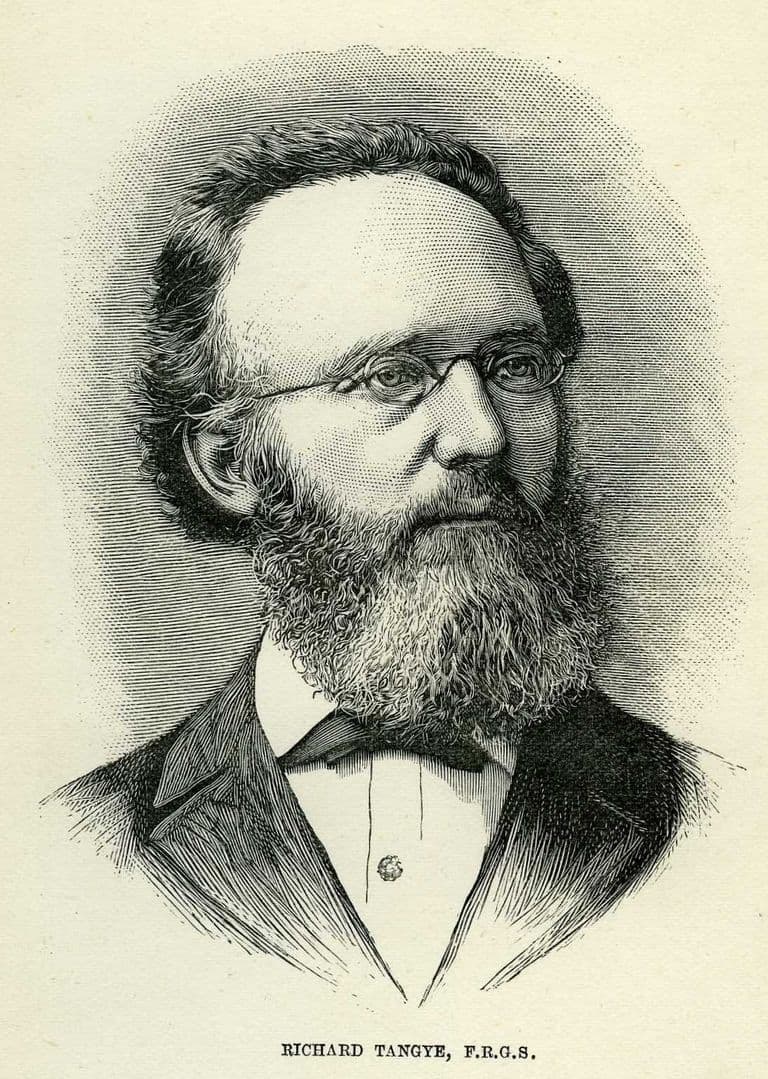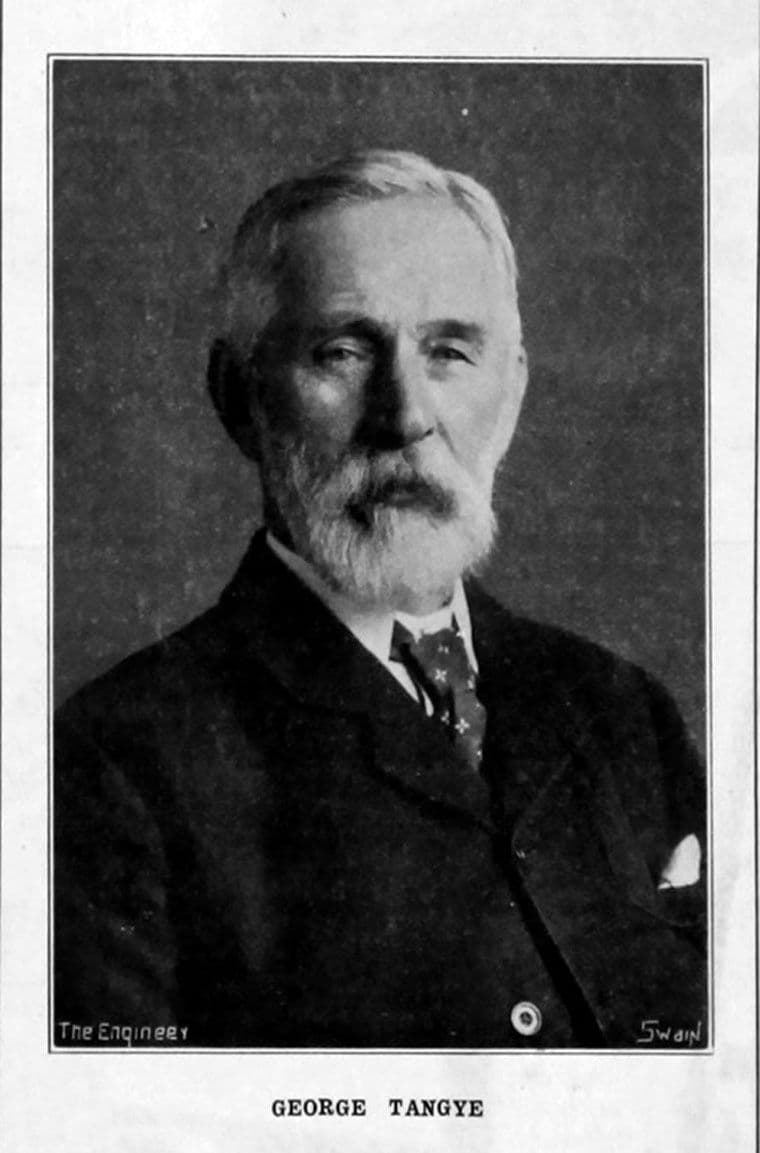
James Tangye and Brothers began in 1857 in a rented room at 40½ Mount Street, off the Parade, making hydraulic jacks on a lathe the brothers had built themselves in Cornwall. There were five of them: James and Joseph, the mechanics; Richard, the salesman; George, the manager; and Edward, who had come home from America.
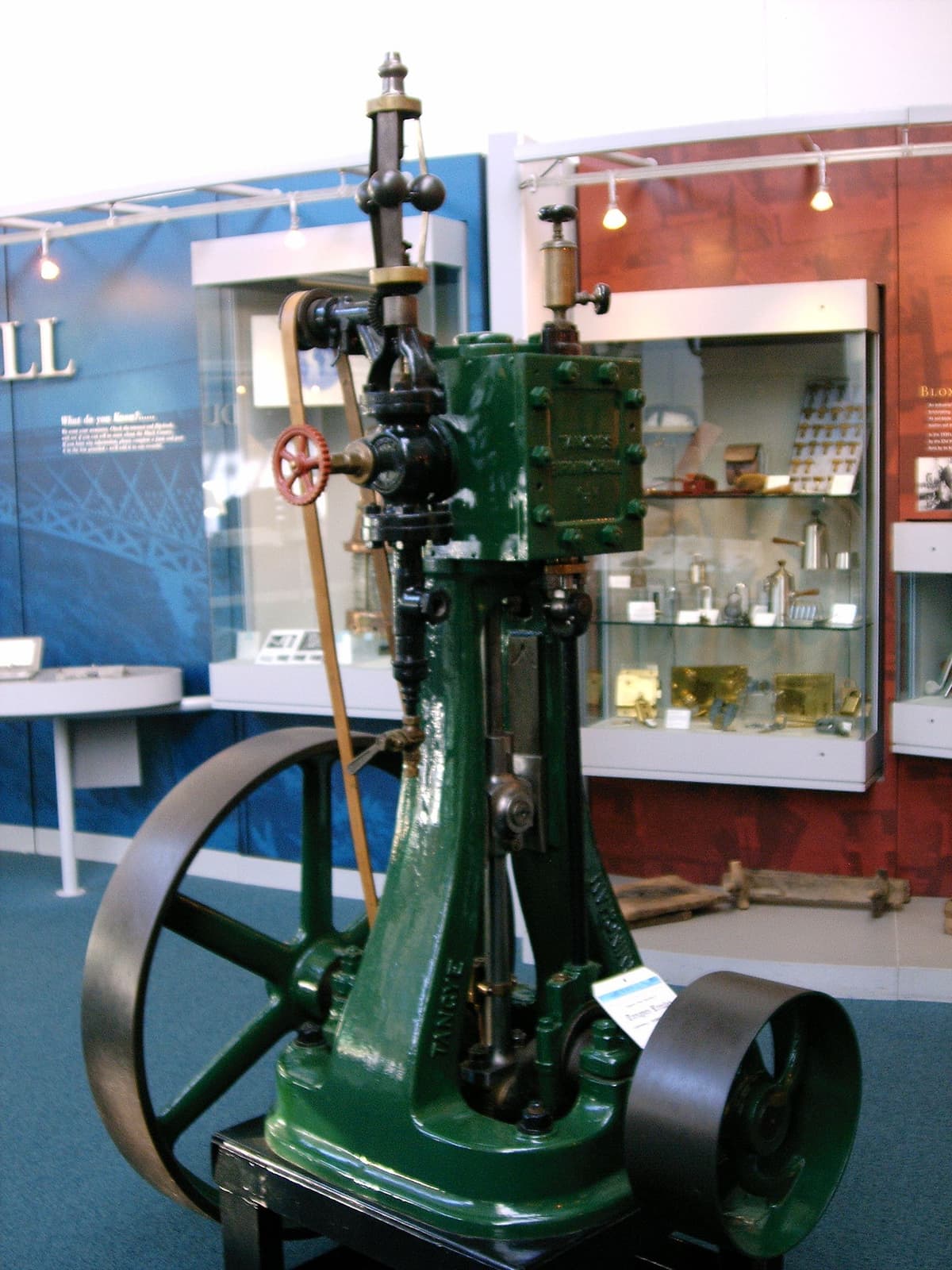
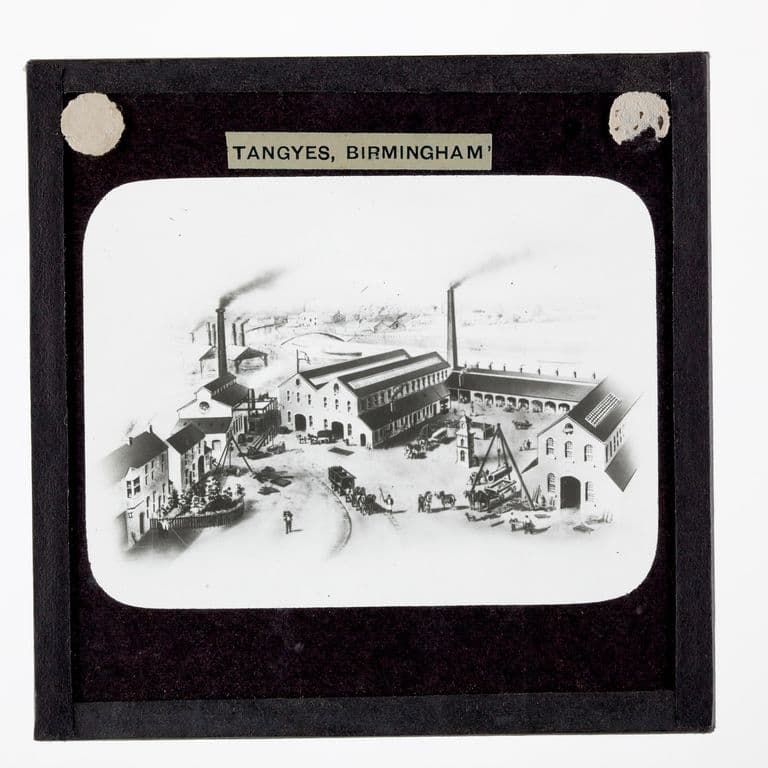
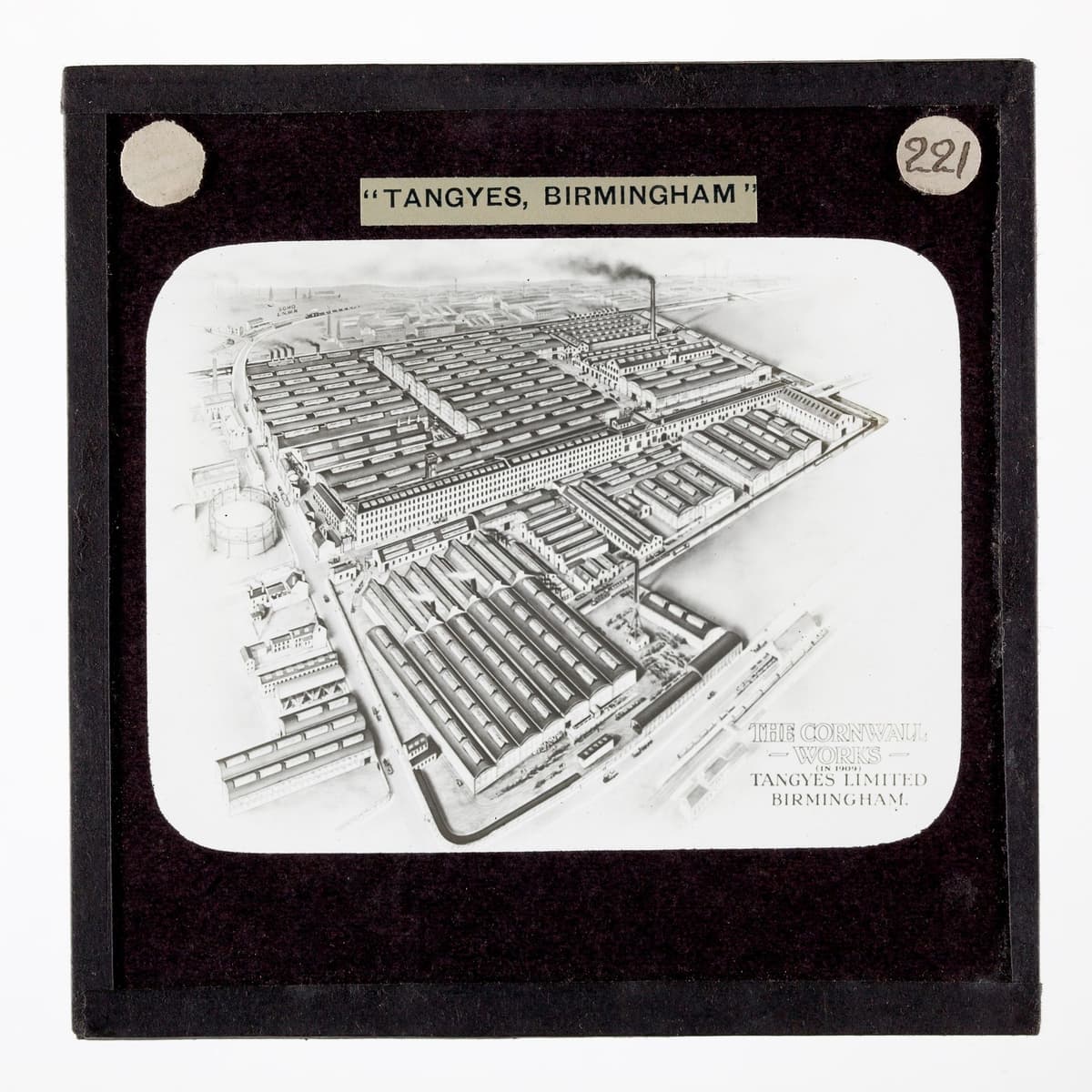
Their jacks helped push Brunel’s Great Eastern into the Thames in January 1858, and the firm never stopped saying so. In 1859, with capital from George Price, it became Tangye Brothers & Price and moved to Clement Street. It won the sole right to make Thomas Weston’s differential pulley block and, from 1867, Cameron’s ‘Special’ steam pump. In 1862 it bought Rabone Hall at Smethwick, and from 1864 most of the work was done at the new Cornwall Works there.
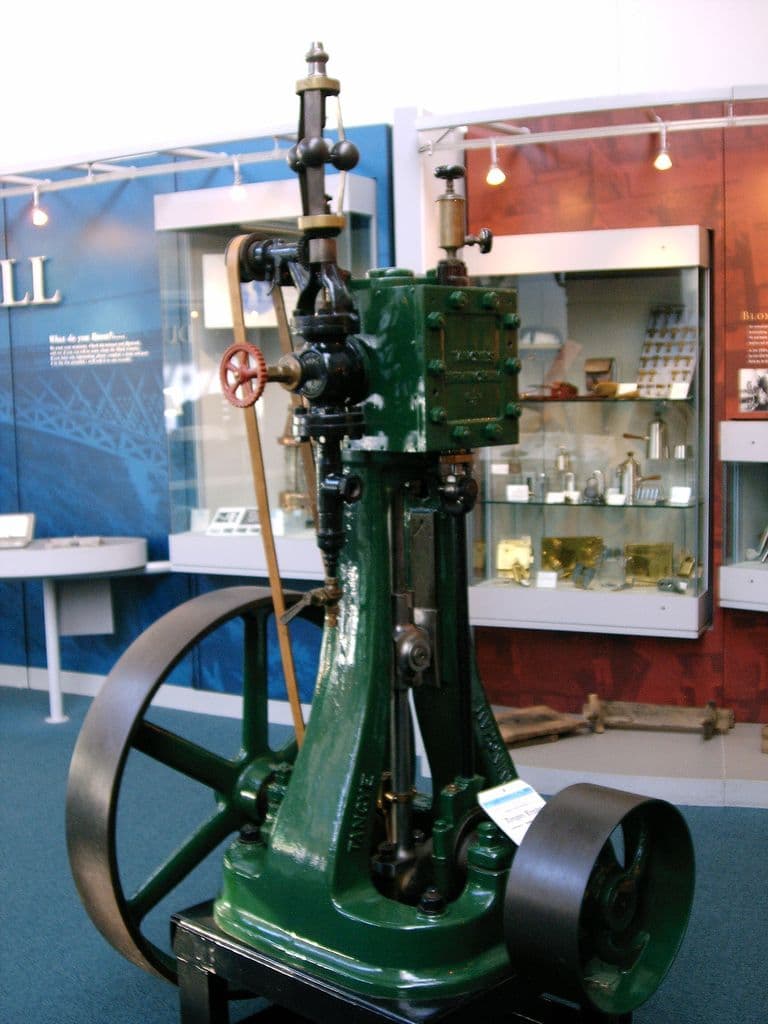
In 1872 James, Joseph and Edward retired, leaving Richard and George in charge. The firm became Tangyes Ltd at the end of 1881, taking in Robert Price & Co.’s malleable iron foundry at Winson Green. It opened branches in London, Newcastle, Manchester and Glasgow, an agency in Paris and branches in Australia and South Africa. Its products ranged from steam, gas and oil engines to machine tools and the hydraulic jacks that raised Cleopatra’s Needle in London in 1878. It employed 3,000 people in 1914.
The firm offered a dining hall, a sick society, an accident fund and an Adult School, but barred unionised foremen from its benefits. In February 1913 about 1,600 workers struck for a minimum wage of 23 shillings and union recognition; the firm conceded the wage within a fortnight. Tangyes joined the Central Wagon group in 1966 and moved to Greet in 1969. The name survives on hydraulic jacks to this day.
On the map
3 places connected with Tangye Brothers (Tangyes Ltd). Tap a number for directions — some sites are private homes or gardens, so each place’s page says what you can see from the street.

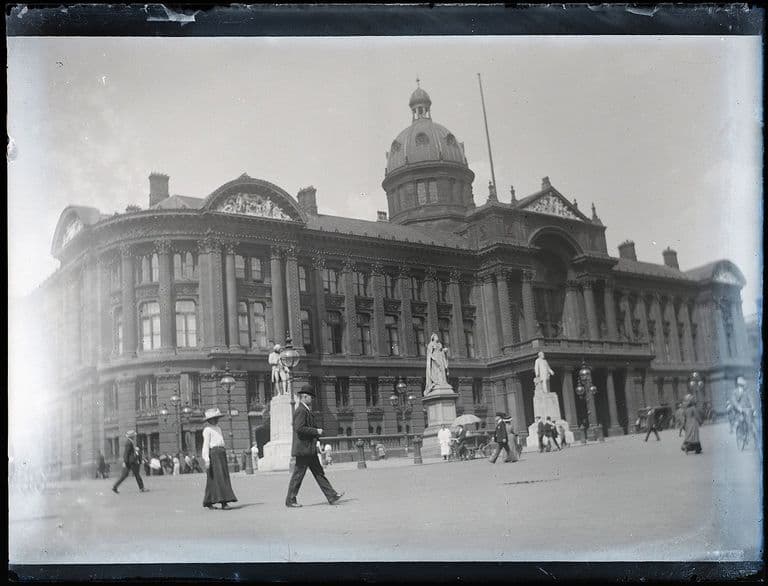
- The Council House, Victoria Square — Surviving · Directions to The Council House, Victoria Square (opens Google Maps)
- Cornwall Works (Tangyes) — Lost, Site redeveloped · Directions to Cornwall Works (Tangyes) (opens Google Maps)
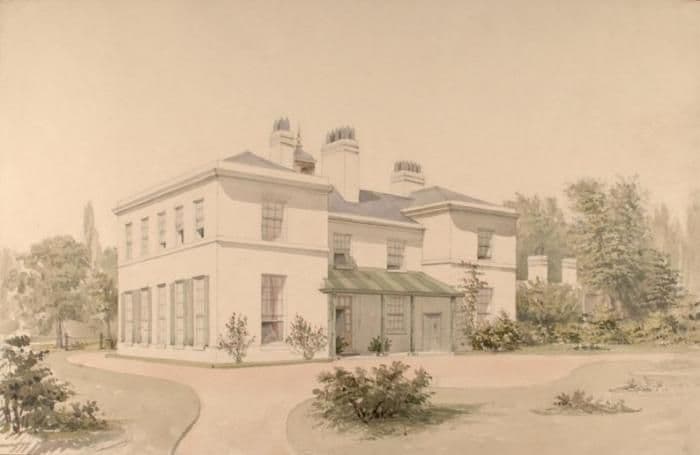
- Heathfield Hall — Lost, Site redeveloped · Directions to Heathfield Hall (opens Google Maps)
Key dates
- 1857 — James Tangye and Brothers begin in Mount StreetFive Cornish brothers — James, Joseph, Richard, George and Edward Tangye — form James Tangye and Brothers in a rented room at 40½ Mount Street, off the Parade, making hydraulic jacks.
- 31 January 1858 — Tangye jacks help launch the Great EasternAfter weeks stuck on the slipway at Millwall, Brunel’s Great Eastern floats, pushed by hydraulic jacks including many made by the Tangye brothers in Birmingham. Richard Tangye later said: “We launched the Great Eastern, the Great Eastern launched us.”
- 1864 — Cornwall Works opens at SmethwickTangye Brothers & Price open their new Cornwall Works on the site of Rabone Hall, beside the Birmingham Canal at Smethwick, and move most of their production there.
- 1872 — Tangyes grant the half-holiday and a nine-hour dayAs the three elder brothers retire, Richard Tangye makes the Saturday half-holiday permanent at the Cornwall Works and grants a nine-hour day before his workers ask for it.
- 12 September 1878 — Tangye jacks raise Cleopatra’s NeedleCleopatra’s Needle, weighing more than 186 tons, is raised on the Thames Embankment with Tangye hydraulic jacks. The firm advertises that four jacks worked by four men did what had once taken hundreds of men and horses.
- 18 February – 3 March 1913 — Strike at the Cornwall WorksAbout 1,600 Tangye workers strike for a minimum wage of 23 shillings and recognition of the Workers’ Union. The firm concedes the wage, and the men return on 3 March, early in the wider Black Country strike.
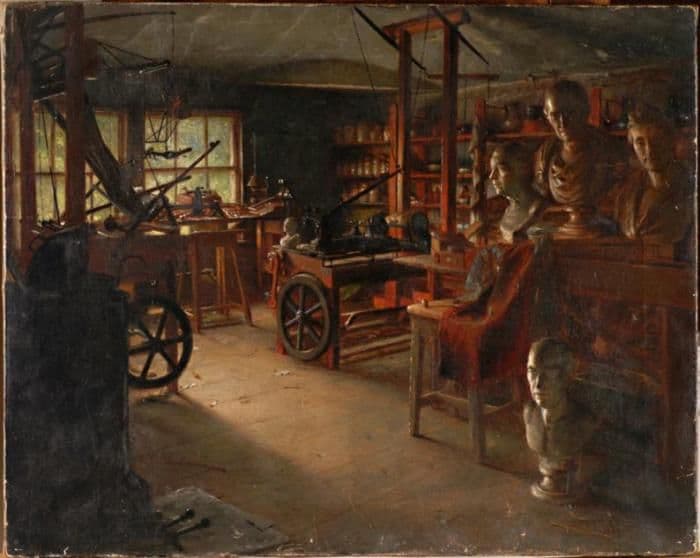
- 7 October 1920 — Death of George TangyeGeorge Tangye, chairman of Tangyes Ltd and for over forty years the keeper of James Watt’s house at Heathfield, dies at 85. The contents of Heathfield Hall are sold on 23–24 November.
- 1969 — Tangyes leave the Cornwall WorksThree years after joining the Central Wagon group, Tangyes moves from Smethwick to Greet in Birmingham, ending 105 years at the Cornwall Works. The site passes to another company and the old buildings are later cleared.
Sources and further reading
- A Hundred Years of Engineering Craftsmanship: Tangyes Ltd 1857–1957 — Rachel E. Waterhouse, Tangyes Ltd, 1957
- Tangyes — Grace's Guide
- Tangye Brothers — Grace's Guide
- James Tangye — Grace's Guide
- Tangye, Richard — Dictionary of National Biography, 1912 supplement, vol. 3 — William Benjamin Owen, Smith, Elder & Co., 1912
- Smethwick: Economic history, in A History of the County of Stafford, vol. 17, pp. 107–118 — M. W. Greenslade (ed.), Victoria County History, 1976