
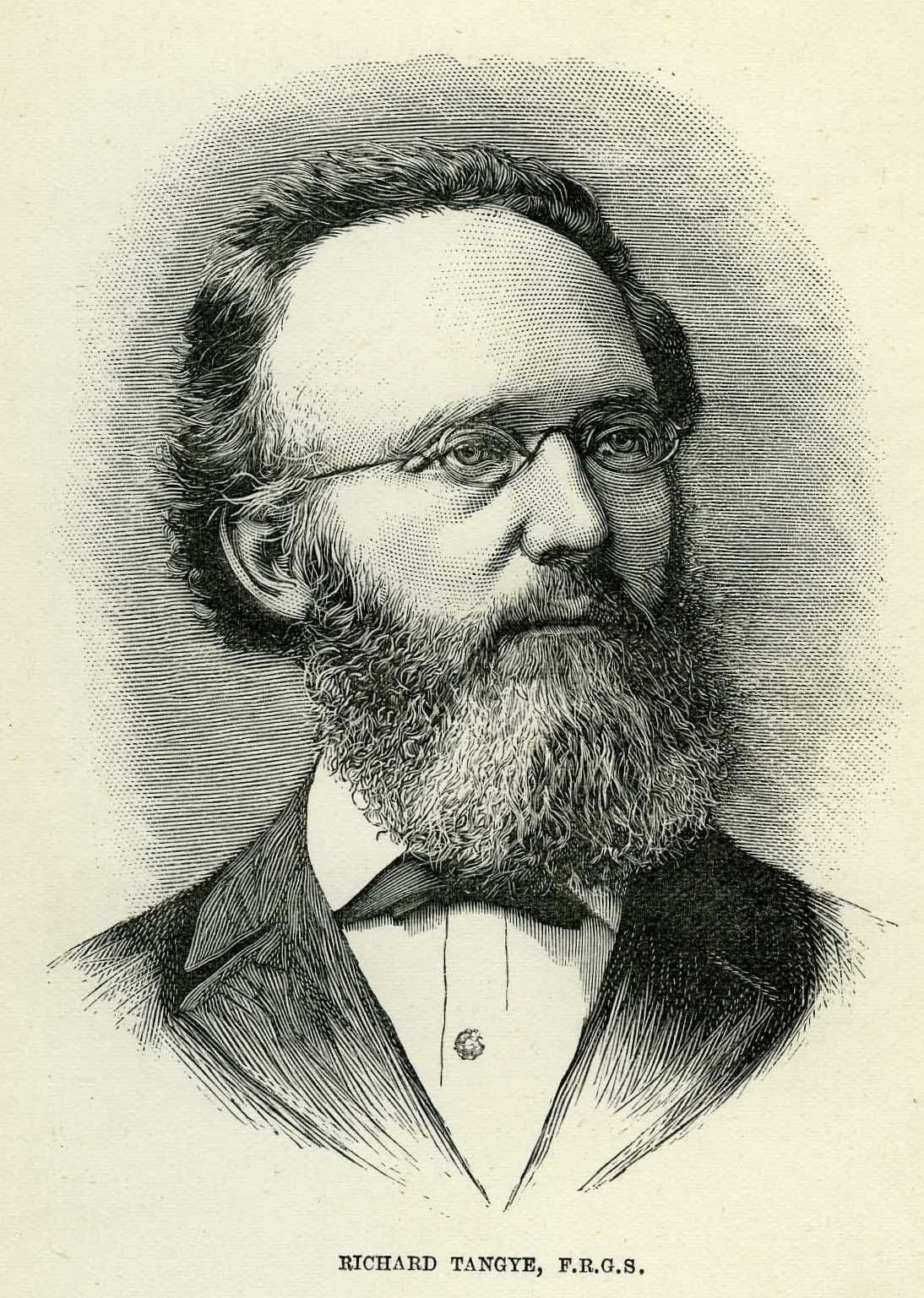
One dark winter evening a stranger picked his way down an alley behind a baker’s shop off the Parade in Birmingham and rang the bell of a tiny workshop. Richard Tangye opened the door. The visitor looked round, apologised and turned to go. Tangye could not afford to let anyone walk away. “Whose place are you looking for, sir?” he asked. “Tangye’s,” the man replied (as Tangye told the story in his autobiography, One and All, in 1889). He was Isambard Kingdom Brunel’s agent, and he had come to buy hydraulic jacks.
That knock on the door made a firm. Within thirty years the brothers who rented that room for four shillings a week employed 2,000 people.
A Cornish boy with a broken arm
Richard Tangye was born on 24 November 1833 at Broad Lane, Illogan, near Redruth, in the heart of Cornwall’s mining country. He was the fifth of six sons of Joseph Tangye, a Quaker miner who became a small shopkeeper and farmer, and his wife Ann, née Bullock. Ann’s father, Edward Bullock, minded a great mine engine, and the older boys learned their trade at his side.
Richard was not meant for the mines. At eight he broke his right arm and was left unfit for manual work, so his parents spent what they could on his schooling: first at William Bellows’s Quaker school in Redruth, then from 1847 at the Friends’ School at Sidcot in Somerset, where he stayed on as a pupil-teacher. He hated teaching.
Clerk in Birmingham
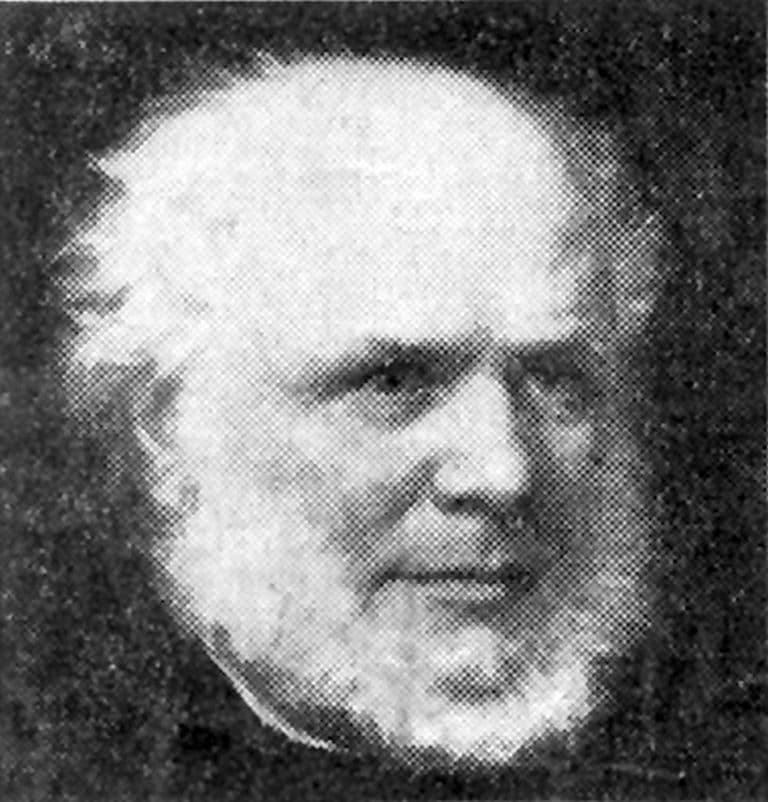
At the end of 1852 he answered an advertisement and became a clerk to Thomas Worsdell, a Quaker engineer in Birmingham, on £50 a year. His younger brother George followed in 1853, and the two older brothers, James and Joseph, skilled mechanics who had built hydraulic machinery in Cornwall, came after them. At Worsdell’s, Richard persuaded the firm to give its men a Saturday half-holiday. He also quarrelled with a new partner, and left.
“We launched the Great Eastern, the Great Eastern launched us,” he said, and the firm went on using the line.
For a while he scraped a living as a merchant, working from a Quaker bookshop in Bull Street. Then Joseph rented a room at 40½ Mount Street, off the Parade, to make pumps for hydraulic jacks on a lathe the brothers had built themselves. Power came by belt from a neighbour’s steam engine, and only when the neighbour chose to run it. Warmth came from the baker’s oven next door. By 1857 the brothers were trading as James Tangye and Brothers. James and Joseph made things. Richard sold them.
The ship that would not move
On the Thames at Millwall lay the largest ship in the world, Brunel’s Great Eastern. She was too long to launch stern first, so she had to go in sideways. The attempt began on 3 November 1857, and the ship stuck. Brunel called for more and more hydraulic presses, and the Tangyes’ jacks were among them. That November James and Joseph worked weeks of up to ninety hours making them. The final push began on 5 January 1858, and on 31 January the Great Eastern floated.
The ship was a financial disaster for her owners. For the Tangyes she was the best advertisement imaginable, and Richard knew it. “We launched the Great Eastern, the Great Eastern launched us,” he said, and the firm went on using the line.
From Clement Street to Smethwick
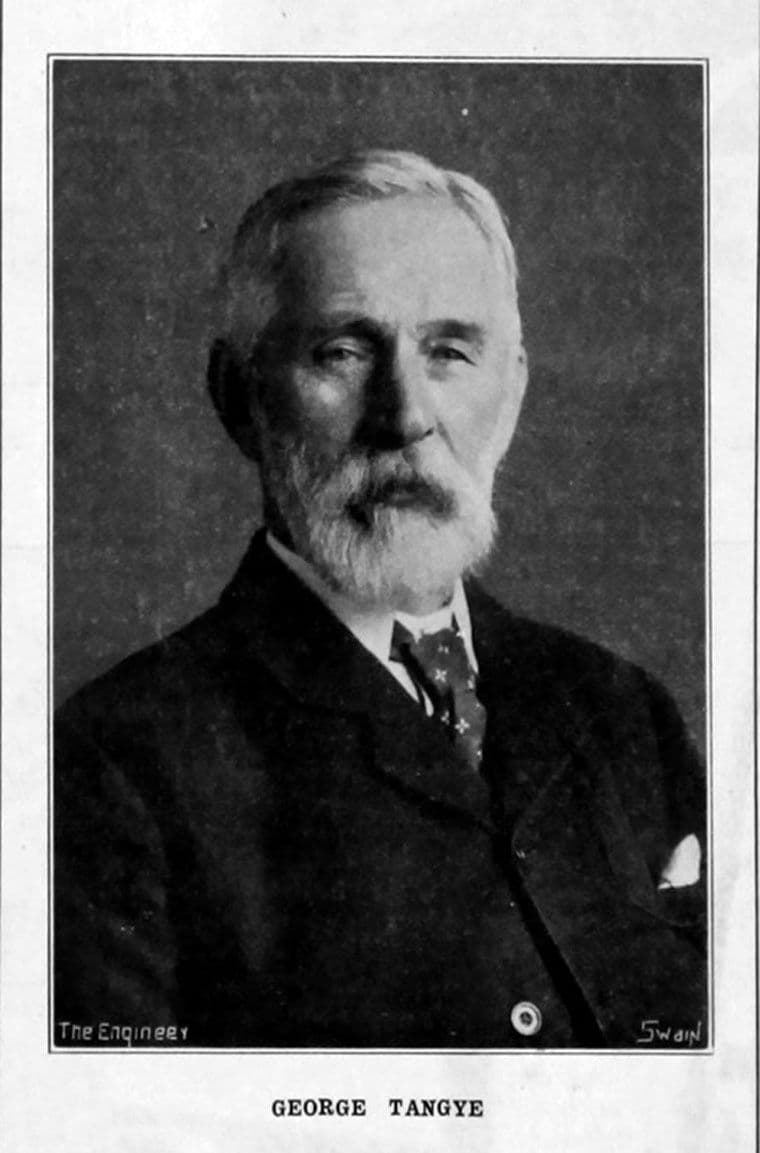
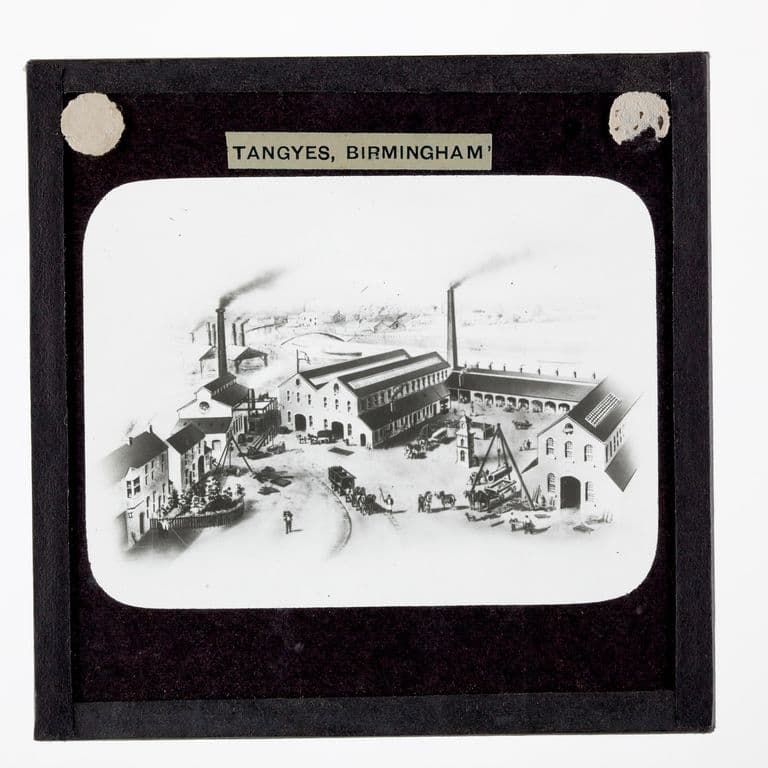
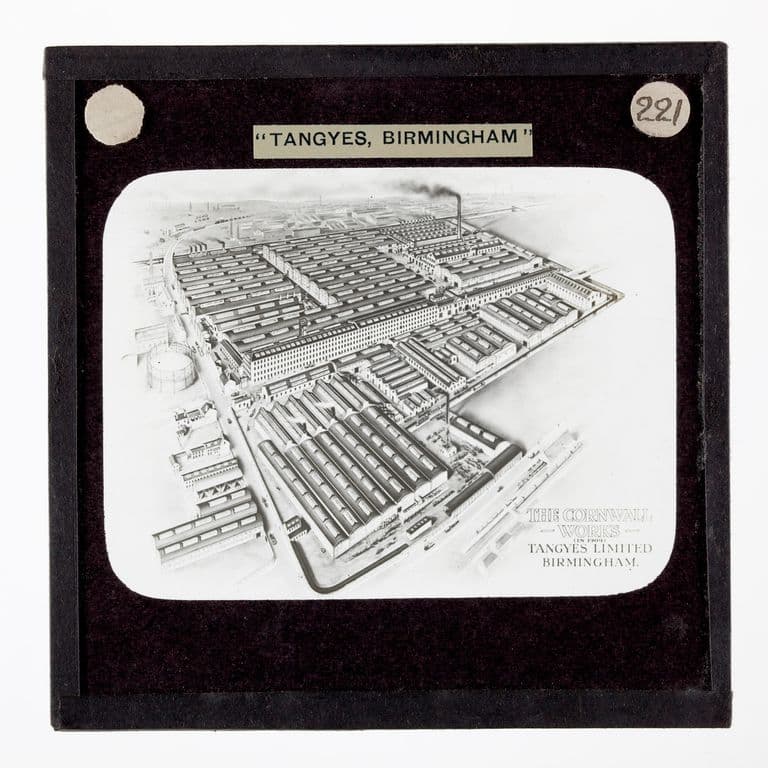
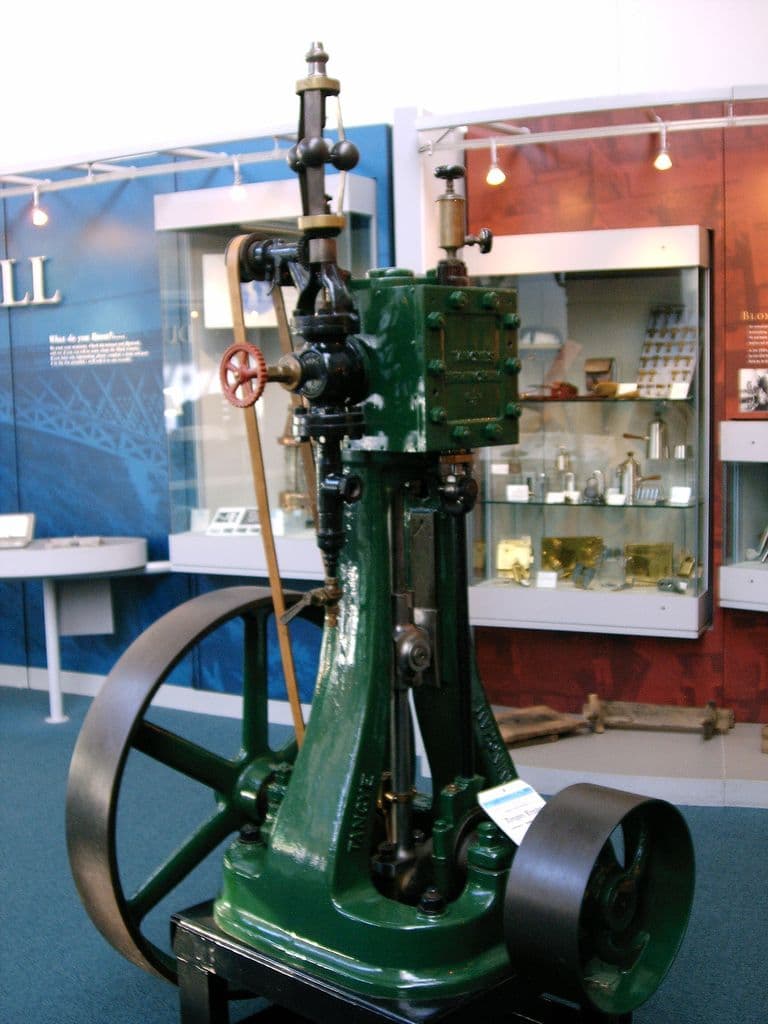
Money from a Quaker partner, George Price, paid for a new works in Clement Street in 1859, the first to carry the name Cornwall Works. The brothers took up Thomas Weston’s differential pulley block, and by the 1862 International Exhibition they had sold more than 3,000 sets in nine months. In 1862 the firm bought Rabone Hall and three acres beside the Birmingham Canal at Smethwick, pulled the house down and built a new Cornwall Works there. Most of the work moved in 1864. Pumps followed, then a standard steam engine so plain that it was nicknamed the ‘Quaker engine’, made in quantity for stock rather than to order.
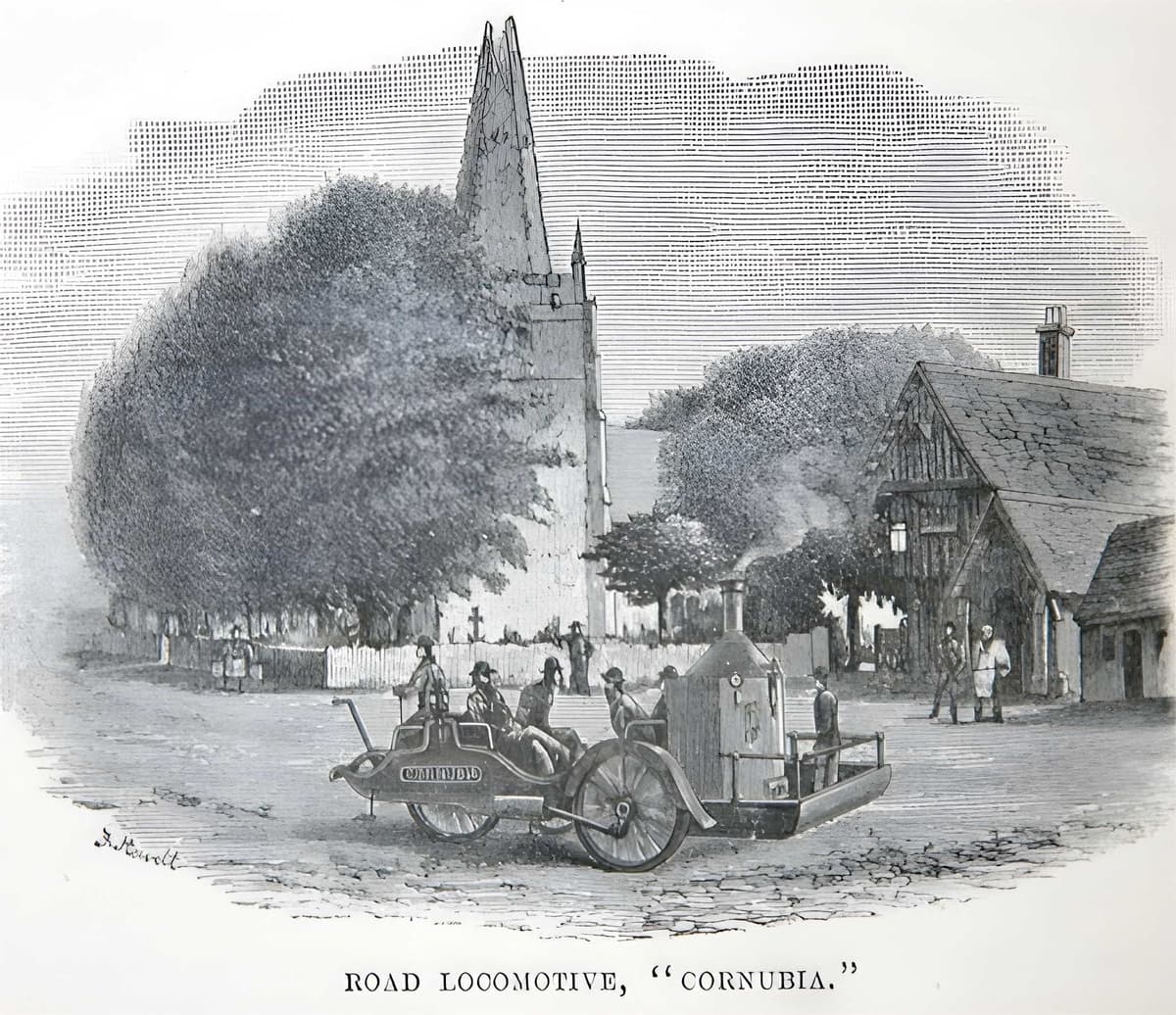
Not every idea worked. In 1862 the brothers built Cornubia, a steam carriage for ten people that could reach 20 miles an hour. The Locomotive Act of 1865, which made road engines crawl behind a man with a red flag, killed it.
Selling to the world
Richard’s gift was selling. He opened a London house, then branches in Newcastle, Manchester and Glasgow, an agency in Paris and, after long voyages of his own, branches in Sydney and Melbourne. He made eight great journeys between 1876 and 1904. When Cleopatra’s Needle was raised on the Thames Embankment on 12 September 1878, four Tangye jacks did the lifting. The firm’s advertisement compared the feat with the raising of an obelisk in Rome in 1586, which had taken 960 men and 75 horses. In London, it said, four jacks had been worked by four men.
A good employer, on his own terms
In 1872, when James, Joseph and Edward retired and left Richard and George in charge, Richard made the Saturday half-holiday permanent and granted a nine-hour day before his men asked for it. The works had a dining hall, classes, concerts and a sick fund. But the welfare came with conditions. When he set up a fund for foremen in 1878, he barred any foreman who joined a trade union, arguing that “a foreman ought to be entirely independent of the men under his superintendence and not subject to be censored at a trade union meeting by the men under his control” (Richard Tangye, 1878, as quoted in the firm’s centenary history).
Benefactor
A Liberal and a supporter of John Bright, Tangye sat on Birmingham council from 1878 to 1882 and on the Smethwick School Board. He and George put up more than £10,000 for the city’s new Art Gallery, which opened in 1885, and in 1881 gave £12,000 to the School of Art. He collected relics of Oliver Cromwell, and he was knighted in 1894. That year he moved to Kingston upon Thames, and he died at Coombe Bank, Kingston Hill, on 14 October 1906. He was buried at Putney Vale Cemetery.
Why it mattered
Richard Tangye was not an engineer, and he never pretended to be. His brothers designed the jacks, the pumps and the engines. What Richard did was make sure the world heard about them. He understood that one dramatic job, a stuck ship on the Thames or an obelisk on the Embankment, was worth a thousand catalogues.
His firm shows the shift from Birmingham’s small workshops to big engineering works. It began in a rented room heated by a baker’s oven, moved to a works on the canal at Smethwick, and by 1914 employed 3,000 people, making goods to standard designs and selling them from London to Sydney. It also shows how Victorian philanthropy worked: a half-holiday and a dining hall, but no union men among the foremen.
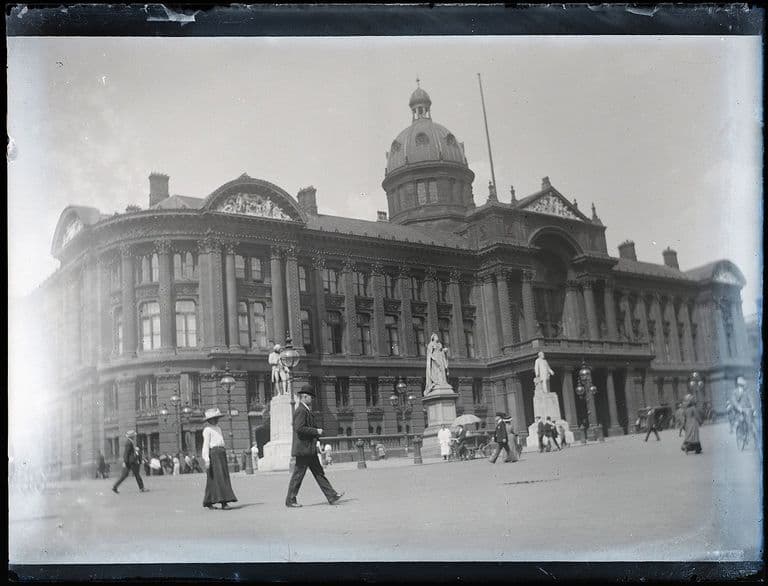
Two of his gifts outlived him: the Art Gallery that his money helped to build, opened in 1885 and now Birmingham Museum & Art Gallery, and the School of Art, rebuilt in 1884. Not bad for a boy who could not go down the mines because he had broken his arm.
On the map
3 places connected with Richard Tangye. Tap a number for directions — some sites are private homes or gardens, so each place’s page says what you can see from the street.

- The Council House, Victoria Square — Surviving · Directions to The Council House, Victoria Square (opens Google Maps)
- Cornwall Works (Tangyes) — Lost, Site redeveloped · Directions to Cornwall Works (Tangyes) (opens Google Maps)
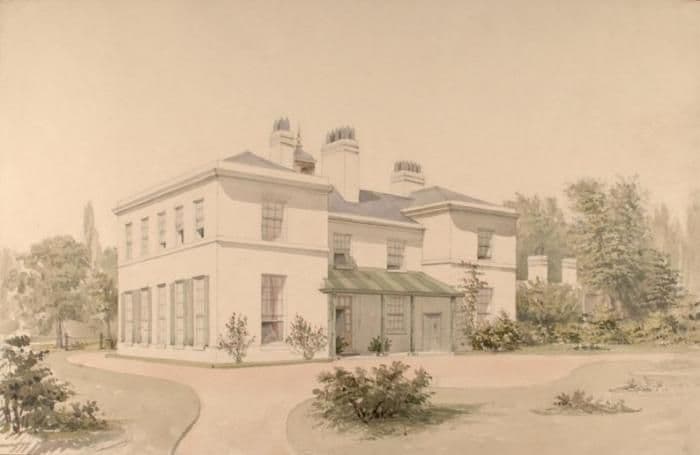
- Heathfield Hall — Lost, Site redeveloped · Directions to Heathfield Hall (opens Google Maps)
Key dates
- 1857 — James Tangye and Brothers begin in Mount StreetFive Cornish brothers — James, Joseph, Richard, George and Edward Tangye — form James Tangye and Brothers in a rented room at 40½ Mount Street, off the Parade, making hydraulic jacks.
- 31 January 1858 — Tangye jacks help launch the Great EasternAfter weeks stuck on the slipway at Millwall, Brunel’s Great Eastern floats, pushed by hydraulic jacks including many made by the Tangye brothers in Birmingham. Richard Tangye later said: “We launched the Great Eastern, the Great Eastern launched us.”
- 1864 — Cornwall Works opens at SmethwickTangye Brothers & Price open their new Cornwall Works on the site of Rabone Hall, beside the Birmingham Canal at Smethwick, and move most of their production there.
- 1872 — Tangyes grant the half-holiday and a nine-hour dayAs the three elder brothers retire, Richard Tangye makes the Saturday half-holiday permanent at the Cornwall Works and grants a nine-hour day before his workers ask for it.
- 12 September 1878 — Tangye jacks raise Cleopatra’s NeedleCleopatra’s Needle, weighing more than 186 tons, is raised on the Thames Embankment with Tangye hydraulic jacks. The firm advertises that four jacks worked by four men did what had once taken hundreds of men and horses.
Sources and further reading
Dates for the start of the firm vary: the 1912 Dictionary of National Biography places Brunel’s commission in 1856 and Tangye’s own memoir says “the winter of 1856”, but the firm’s centenary history (Waterhouse, 1957) shows the jacks were made in November–December 1857, during the launch; we follow Waterhouse. Grace’s Guide gives 1856 and 1858 for the brothers’ first partnership; Waterhouse gives 1857. The Saturday half-holiday was introduced at Worsdell’s in the 1850s and made permanent at Tangyes in 1872 (DNB); Cadbury’s biographers also claim to have pioneered it in Birmingham. The sum given for the Art Gallery differs: £10,000 (DNB) or £11,000 in total (Waterhouse). The Waterhouse history was commissioned by the firm.
- Tangye, Richard — Dictionary of National Biography, 1912 supplement, vol. 3 — William Benjamin Owen, Smith, Elder & Co., 1912
- A Hundred Years of Engineering Craftsmanship: Tangyes Ltd 1857–1957 — Rachel E. Waterhouse, Tangyes Ltd, 1957. Part One, ‘Beginnings’; ‘Selling to the World’
- Richard Tangye — Grace's Guide
- Tangye Brothers — Grace's Guide
- Getting a Leviathan Off — David Rooney, Science Museum, 2010
- Smethwick: Economic history, in A History of the County of Stafford, vol. 17, pp. 107–118 — M. W. Greenslade (ed.), Victoria County History, 1976
Comments
Comments will load here.