
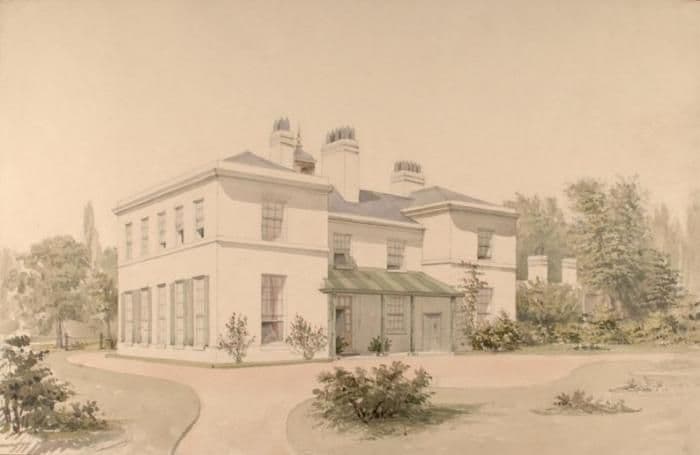
What was here?
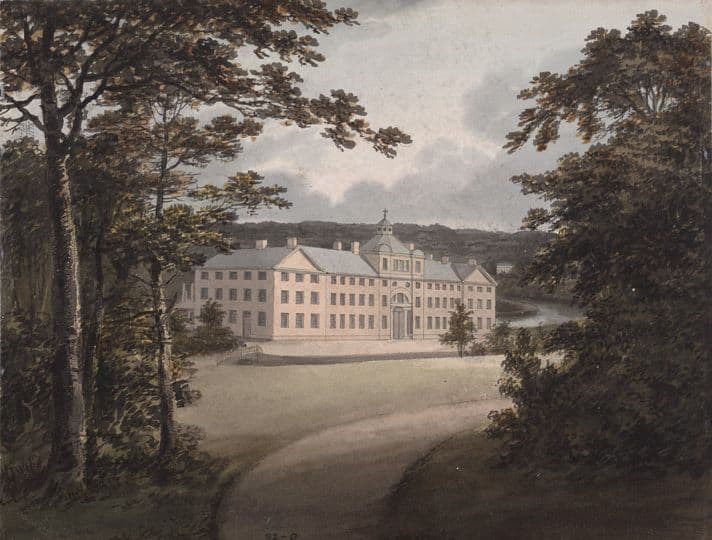
A plain, handsome country house on the heath north of Soho, built for James Watt around 1787–90. Watt lived here from 1790 until he died in 1819, and spent his retirement in a cluttered attic workshop at the top of the house. The hall was pulled down in 1927–28; 1930s houses now stand on its site.
History
Moving up the hill
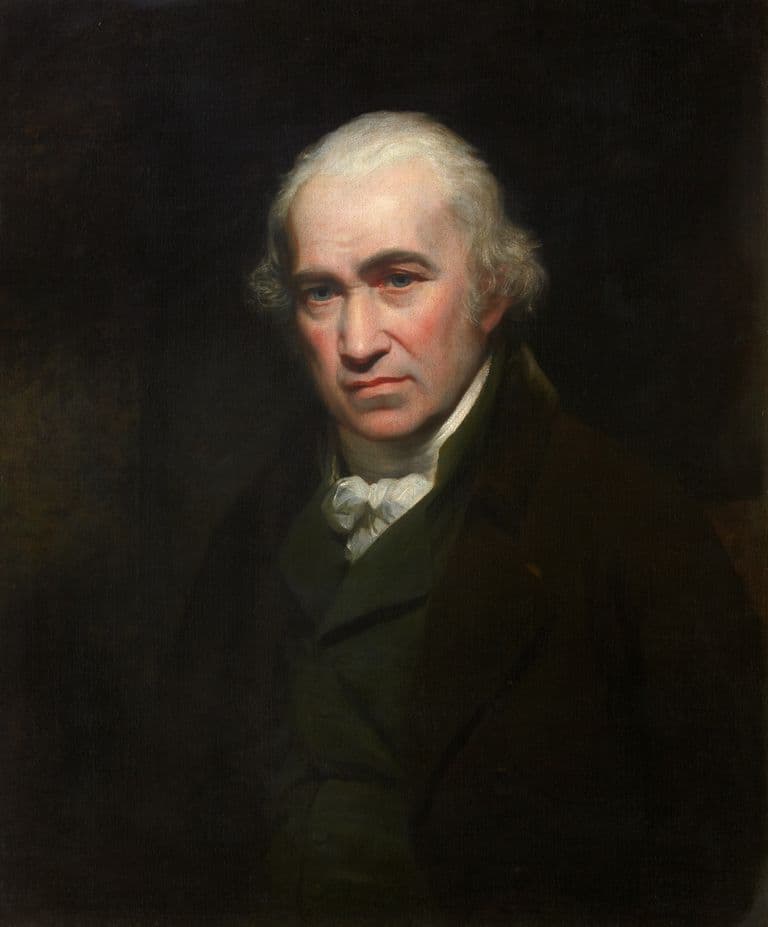
In June 1790 James Watt and his wife Ann left their town house at Harper’s Hill and moved out to Handsworth. Watt was fifty-four, and after sixteen years in Birmingham he was ready for a house of his own outside the town.
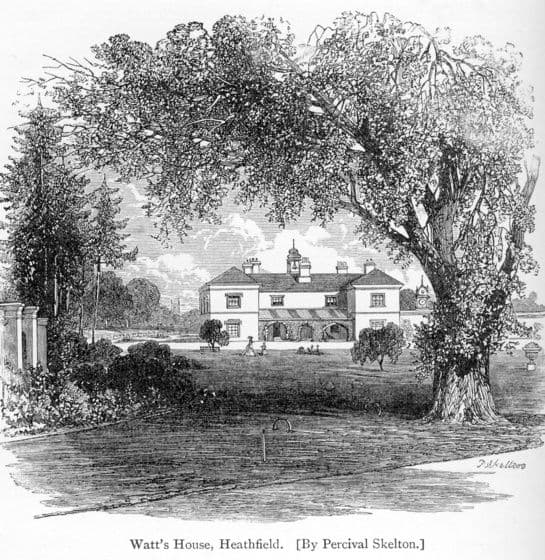
The new house, Heathfield, stood a short ride north of Boulton’s Soho House. Library of Birmingham captions say it was built between 1787 and 1790 and name the architect as Samuel Wyatt, who was working at Soho House in the same years. Plans of 1789–95 survive in the Library of Birmingham, and a workshop and steam heating were added.
It was not cheap. The house cost £900, and on 5 December 1790 Watt confessed to his old friend Joseph Black that it “has cost me much more money than I think I had a right to lay out”. Anyone who has overspent on a house move will recognise the tone.
Retirement, Watt-style
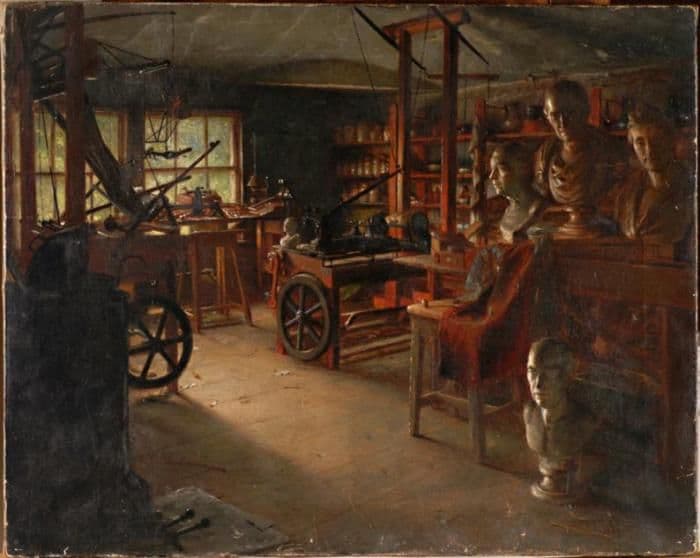
In 1800 Watt’s patent expired and he and Boulton handed the engine business to their sons. Watt retired to Heathfield. Retirement did not mean rest. At the top of the house was a second-floor garret workshop, and Watt kept working there for almost thirty years, from 1790 until 1819, among lathes, tools, chemicals and half-finished projects.
The house cost £900, and on 5 December 1790 Watt confessed to his old friend Joseph Black that it “has cost me much more money than I think I had a right to lay out”.
For a member of the Lunar Society it was well placed: Soho House, the Society’s usual meeting place, was close by. The 1888–1913 Ordnance Survey still shows a fish pond to the north and a lodge at the end of what became Radnor Road.
Death and a sealed room
James Watt died at Heathfield on 25 August 1819. He was buried at St Mary’s Church, Handsworth, near Boulton. Ann Watt lived on until 1832.
Then the garret was shut. The workshop was left as Watt had used it, and the sources disagree on how strictly. The Science Museum says a few visitors were let in after 1848; Library of Birmingham captions say it was “not re-opened until 1901”. Either way, it was kept almost untouched for a century, a time capsule at the top of the stairs.
Later lives
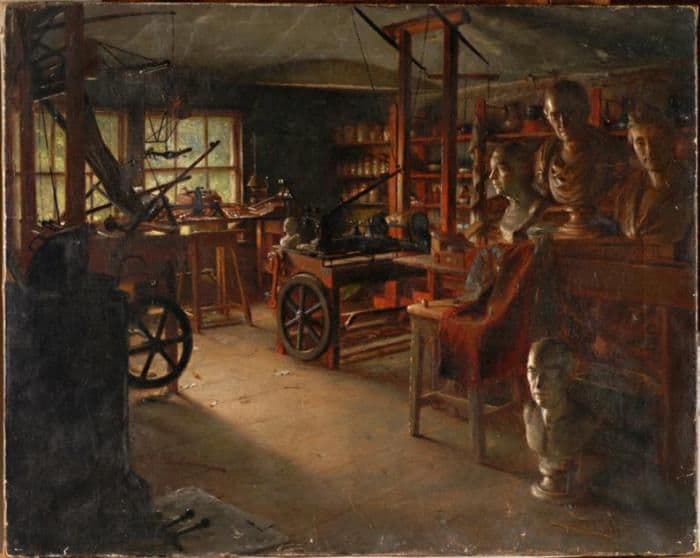
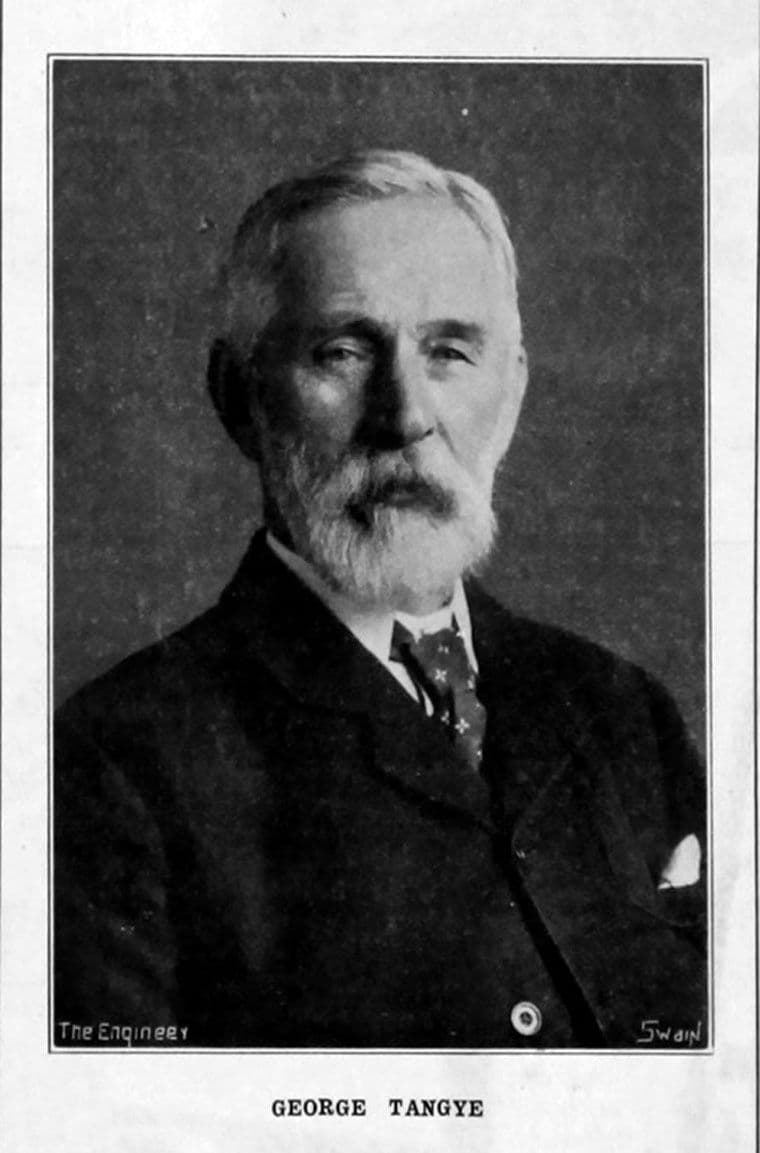
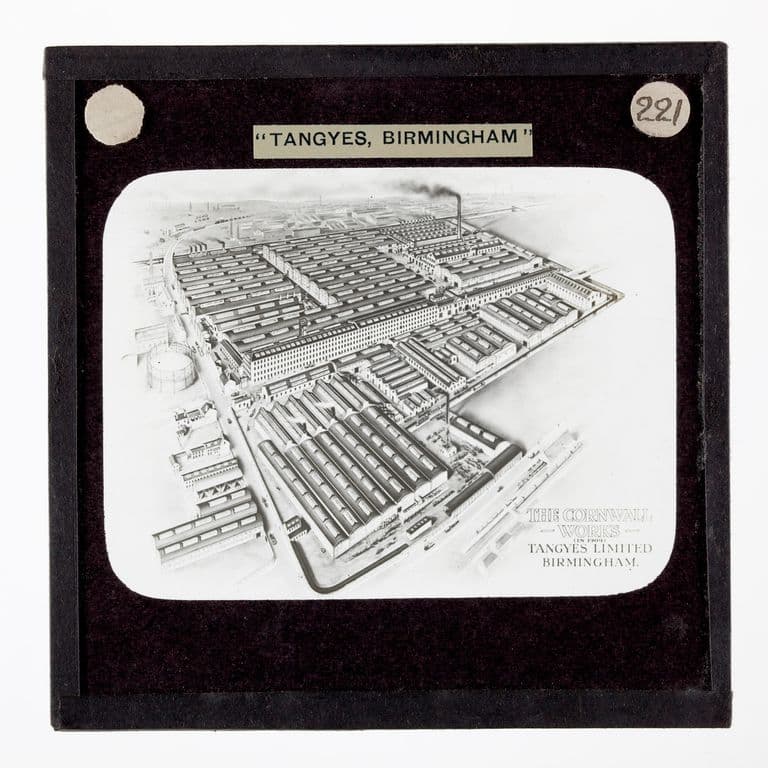
Heathfield passed to James Watt junior, who died in 1848, and later to the Gibson-Watt family. One of its best-known later residents was the engineer George Tangye of Tangyes Ltd, who, according to his obituary in Grace’s Guide, “for many years lived at Heathfield Hall”. Tangye looked after the garret and gave his collection of Boulton & Watt relics to the City of Birmingham.
The same spot, then and now
1888–1913
Today
Old map: Ordnance Survey six-inch, reproduced with the permission of the National Library of Scotland (CC BY 4.0). Today: © OpenStreetMap contributors.
Meanwhile the town crept up the hill. From 1876 villas were built around the edges of the grounds. The 1888–1913 Ordnance Survey shows the hall still standing in its park, with a Presbyterian chapel on Heathfield Road.
Going, going, gone
In the 1920s the estate was redeveloped. In 1924, while that was under way, the decision was taken to save the garret. In December that year H. W. Dickinson, curator of mechanical engineering at the Science Museum, arrived with lorries and took the whole workshop to London. The hall itself was demolished in 1927–28. In the 1930s the heart of the estate was covered with large houses on West Drive, North Drive, Brecon Road and James Watt Drive.
What is left
The lodge survives. At 33 Radnor Road, on the corner of North Drive and Heathfield Avenue, Birmingham Civic Society put up a blue plaque in 2019, the bicentenary of Watt’s death: “This lodge was the gatehouse to Heathfield Hall, home of James Watt (1736–1819) steam engineer, inventor and scientist”. An older stone tablet reads “The-Lodge / Gate-Keepers House / to the celebrated / James Watt / 1797”.
The house has gone, but the room where Watt spent his last thirty years survives intact, in London. Few great inventors have left behind so complete a picture of how they actually worked.
What happened here?
James Watt lived here from June 1790 until his death on 25 August 1819, working in his garret workshop through his retirement. His widow Ann lived on until 1832. Later residents included James Watt junior’s heirs, the Gibson-Watt family and the engineer George Tangye. The estate was gradually developed from 1876, the workshop was removed to the Science Museum in 1924, and the hall was demolished in 1927–28.
Why it mattered
Heathfield was the home of one of the most important engineers in history for the last three decades of his life. Its sealed garret preserved Watt’s working world almost untouched, and saving it in 1924 gave us one of the most complete inventor’s workshops anywhere.
Why it disappeared
Estate sold and built over · Redevelopment
Villas were built around the edges of the grounds from 1876 (Birmingham Museums). In the 1920s the estate was redeveloped: the removal of the garret workshop was decided in 1924 ‘while Heathfield was being redeveloped’ (Science Museum Group Journal), the hall was demolished in 1927–28, and the estate was built over in the 1930s (Library of Birmingham).
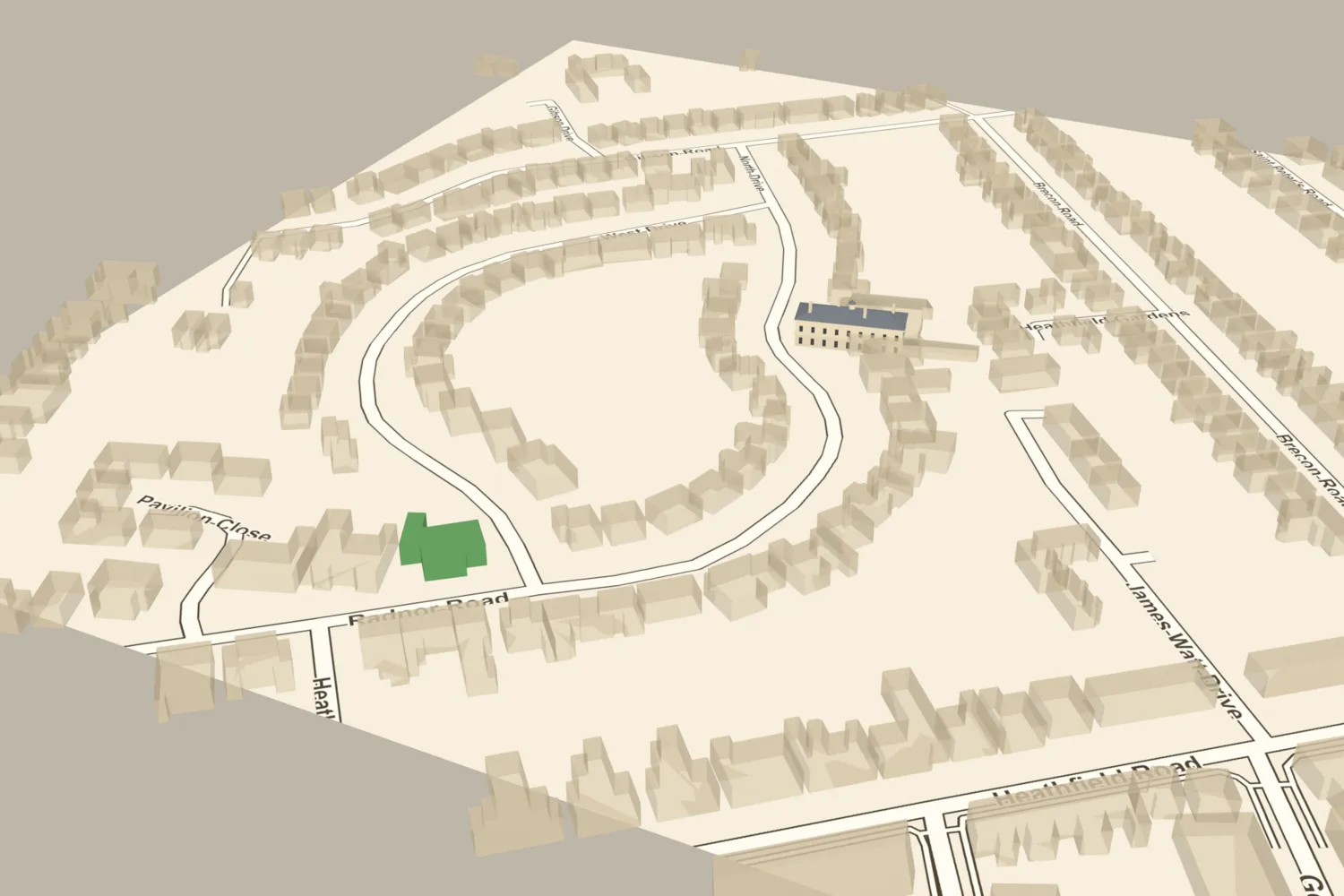
Heathfield Hall, on today’s streets
What’s there now
What replaced it
1930s detached houses on West Drive, North Drive, Brecon Road and James Watt Drive, Handsworth, B20, built after demolition; earlier villas around the edge of the grounds from 1876.
What survives
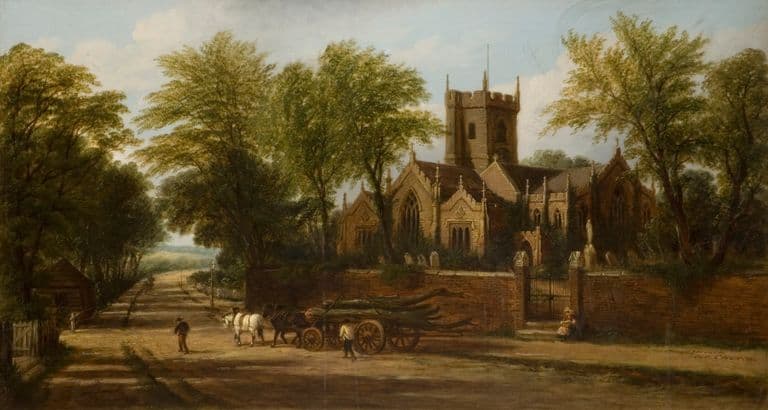
The lodge at 33 Radnor Road, with a Birmingham Civic Society blue plaque (2019) and an older stone tablet dated 1797. Watt’s garret workshop, complete, in the Science Museum, London. Street names: James Watt Drive, Heathfield Road, Heathfield Avenue and Heathfield Gardens. Pictures of the hall by Allen Edward Everitt (1853) and in Smiles’s Lives of Boulton and Watt (1865).
Today
Start at the lodge, 33 Radnor Road, where North Drive meets Heathfield Avenue, and read the two plaques. The hall stood a short way north-west, in what are now the back gardens inside the loop of West Drive and North Drive. These are private homes, so enjoy the view from the street.
Key dates
- c. 1787–90 — Heathfield built for James WattHeathfield, Handsworth, was built for James Watt, who moved in in June 1790 and lived there until his death in 1819.
- June 1790 — Watt moves to HeathfieldJames and Ann Watt leave Harper’s Hill for Heathfield, their new house in Handsworth, where Watt sets up his garret workshop.
- 25 August 1819 — Death of James WattJames Watt dies at Heathfield and is buried at St Mary’s, Handsworth, where a chapel with Chantrey’s marble statue is later built for him.
- 1911 — George Tangye gives the Boulton & Watt papers to BirminghamGeorge Tangye presents the Boulton & Watt business archive, kept since 1895 in his ‘Watt Museum’, to Birmingham’s Reference Library. It is now the Library of Birmingham’s collection MS 3147.
- 7 October 1920 — Death of George TangyeGeorge Tangye, chairman of Tangyes Ltd and for over forty years the keeper of James Watt’s house at Heathfield, dies at 85. The contents of Heathfield Hall are sold on 23–24 November.
- December 1924 — Watt’s workshop goes to the Science MuseumWith Heathfield about to be redeveloped, the Science Museum’s curator H. W. Dickinson arrives with lorries and takes away the entire contents of James Watt’s attic workshop, more than 8,000 objects, along with its door, window and floorboards.
- 1927–28 — Heathfield Hall is demolishedJames Watt’s home at Heathfield, Handsworth, is pulled down and its grounds built over with houses. The lodge on Radnor Road survives, with a Birmingham Civic Society blue plaque.
Sources and further reading
Building date: 1787–90 (Library of Birmingham captions; Birmingham Museums), 1790 (Science Museum Group Journal), ‘construction started 1790’ (Wikipedia); we say c.1787–90. Architect: Samuel Wyatt is named by Library of Birmingham and Birmingham Museums captions but has not been checked against Colvin’s Biographical Dictionary of British Architects. Demolition: 1927 (Birmingham Museums caption; Wikipedia) or 1928 (Library of Birmingham captions); a forum claim of 1924 probably confuses the removal of the workshop. When the garret was first reopened is disputed (after 1848, or 1901). The 1797 date on the lodge tablet may not be original. Whether Gibson Road and Gibson Drive are named after the Gibson-Watt family is unverified.
- Birmingham Images: Soho House and Heathfield captions (inventories 1850–51; James Wyatt bill 1796; Heathfield built 1787–90 by Samuel Wyatt; demolished 1928) — Library of Birmingham
- Heathfield — Archives of Soho — Library of Birmingham, Birmingham City Council. Ref. MS 3219/4/127; MS 3219/4/235
- Watt’s workshop: craft and philosophy in the Science Museum — Ben Russell, Science Museum Group Journal 1, 2014
- James Watt’s Garret Workshop, used 1790–1819 (object 1924-792) — Science Museum Group, Science Museum Group
- George Tangye — Grace's Guide
- Blue Plaque: James Watt (Handsworth) — Birmingham Civic Society
- Open Plaques #52652: Lodge to Heathfield Hall — Open Plaques
- Open Plaques #54171: ‘The Lodge, Gate-Keepers House to the celebrated James Watt 1797’ — Open Plaques
- Ordnance Survey six-inch map, second edition (1888–1913), georeferenced — National Library of Scotland
- Heathfield Hall — Wikipedia
Archive references: Library of Birmingham MS 3219/4/127 (Watt to Joseph Black, 5 December 1790); Library of Birmingham MS 3219 (James Watt papers)
Comments
Comments will load here.