
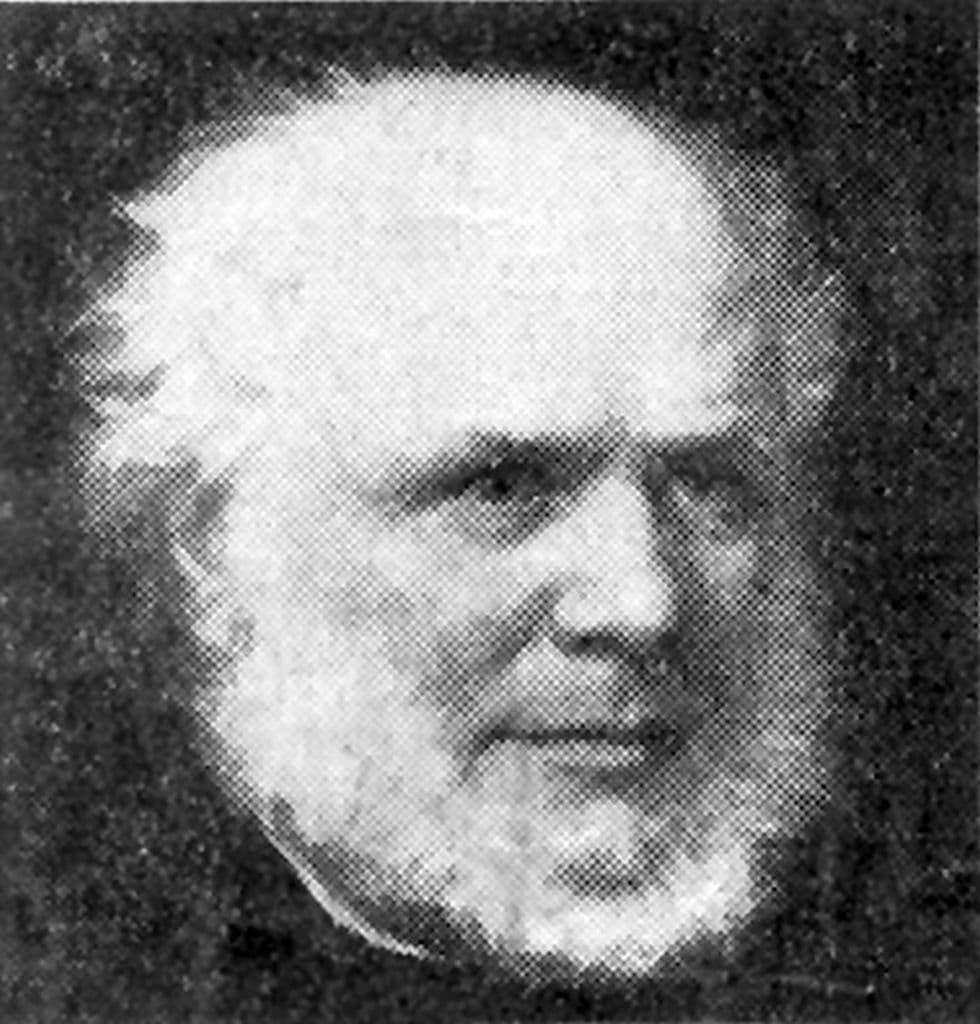
Picture a garret in Birmingham in the early 1830s. A man in his thirties is hunched over a fire, tempering slips of steel in a frying pan until they turn blue. He works in secret, helped by one woman. The little things he is making will change how the world writes.
The cutler from Sheffield
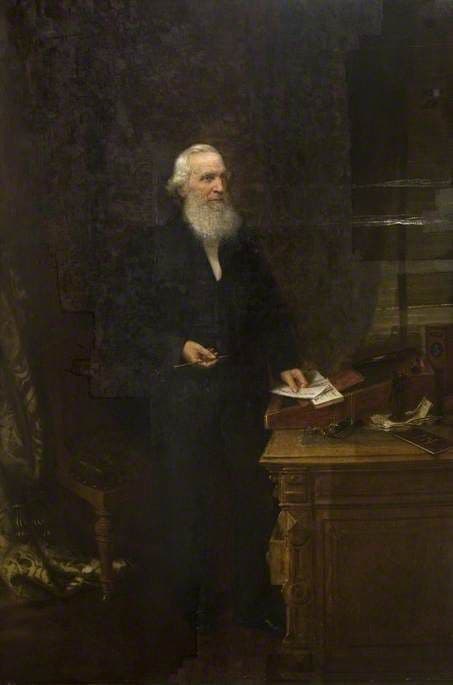
Joseph Gillott was born in Sheffield on 11 October 1799, the son of a workman in the cutlery trade. He learned to forge and grind knife blades and, says the Dictionary of National Biography (1890), became a “noted hand”. In 1821, short of work at home, he moved to Birmingham and found a job in the “light steel toy trade”, making steel buckles, chains and trinkets.
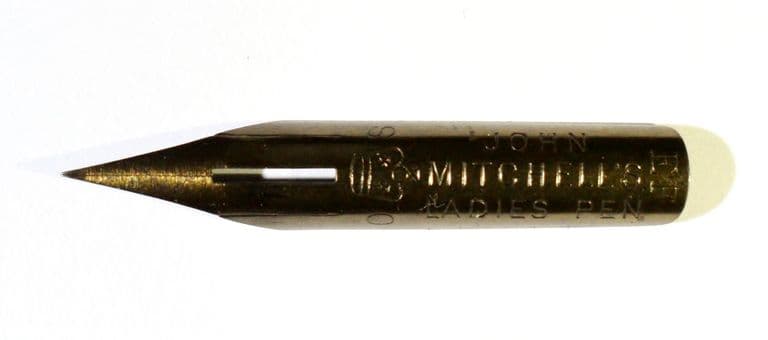
In 1823 he married Maria Mitchell. Her brothers John and William were already making steel pens. That marriage pulled Gillott into the trade that made him.
From quill to nib
Most people still wrote with goose quills. The Victoria County History says the quill was in universal use until about 1825. Steel pens existed, and the best known had been patented by James Perry of London, but they were cut out with shears and finished with a file. Made by hand they cost about twopence each, and they were stiff and scratchy to write with. The VCH is clear about where the answer came from: “the successful processes were all devised in Birmingham.”
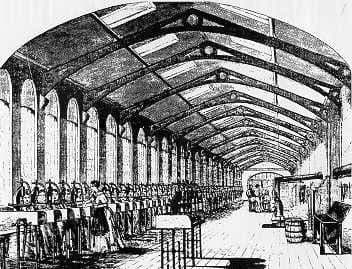
Gillott’s answer was the press. He adapted the stamping press to cut and shape pens, and experimented with grades of steel and ways of hardening it. The DNB credits him with two tricks that made a steel nib flex like a quill: side slits cut alongside the central slit, and cross-grinding of the point. He sold his first pens to a firm of stationers, Beilby & Knott, at a shilling each.
The dates of his start are blurred. The Victoria County History says he began in the trade in 1824; Birmingham Civic Society gives 1827; the DNB says about 1830. What is clear is the speed of what followed. The business moved from Bread Street to Church Street, then to 59 Newhall Street. In an advertisement of 1837, the firm claimed to have made some 36 million pens the previous year.
Victoria Works
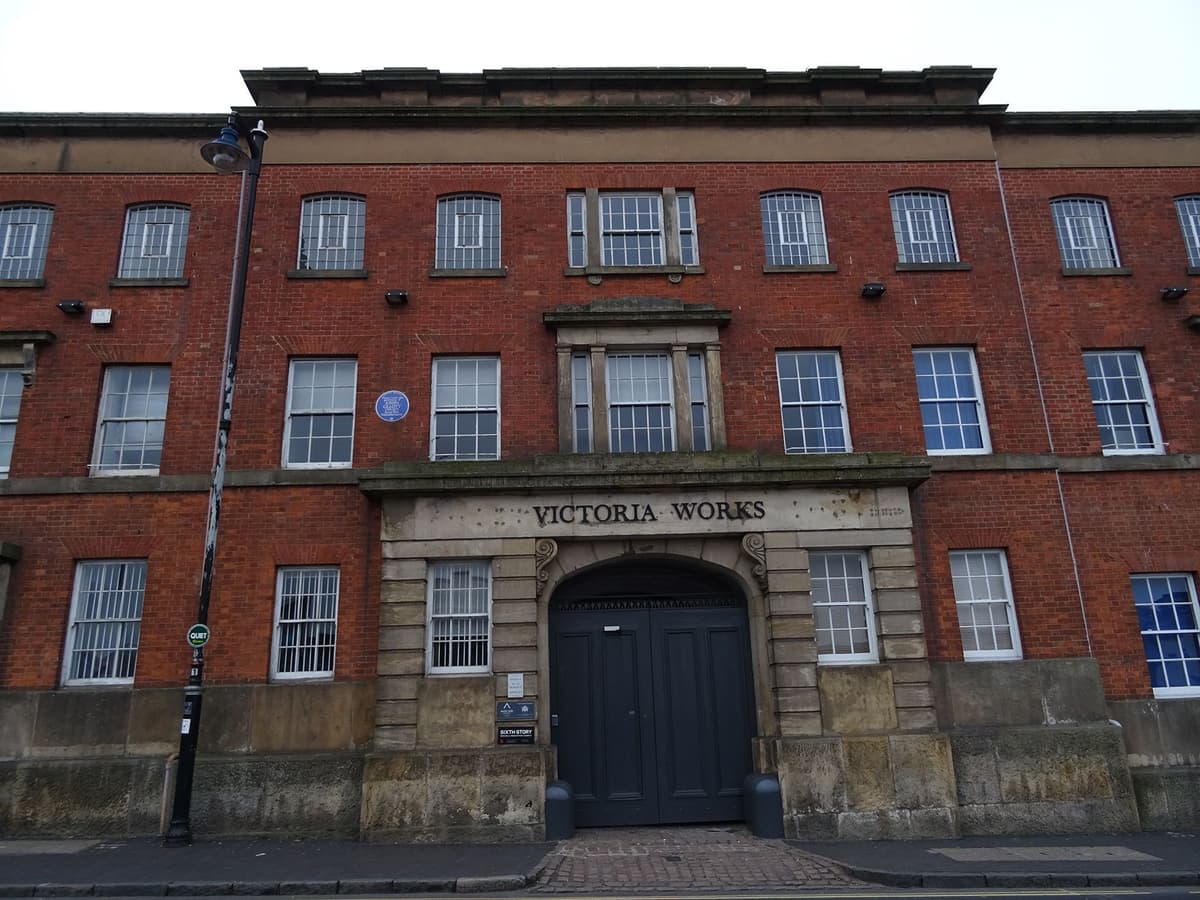
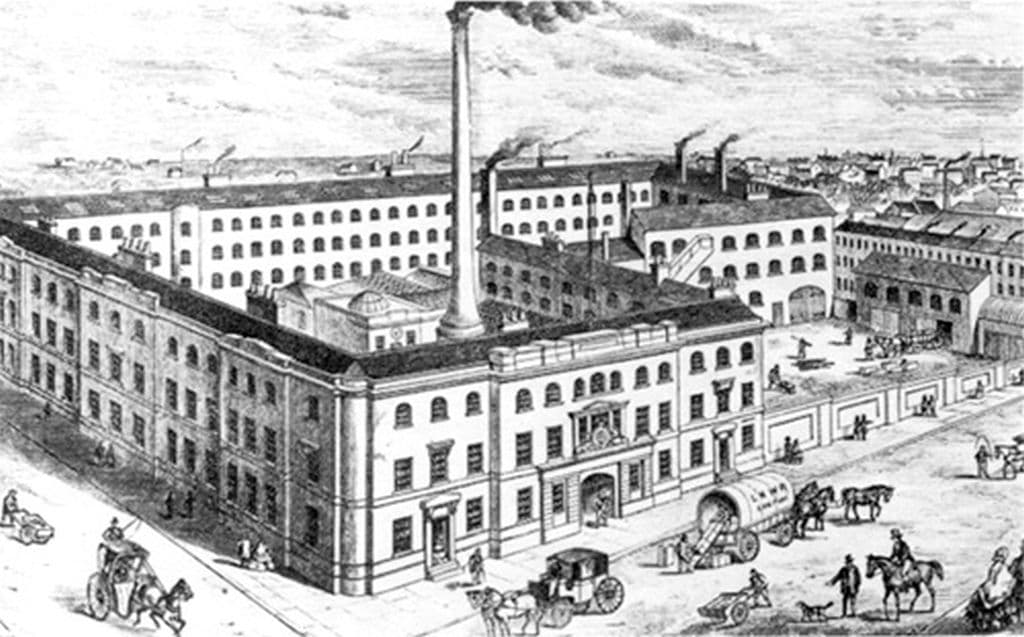
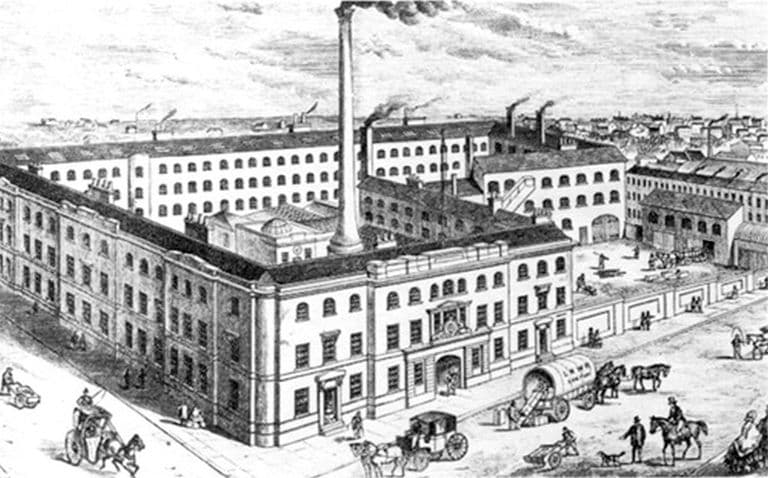
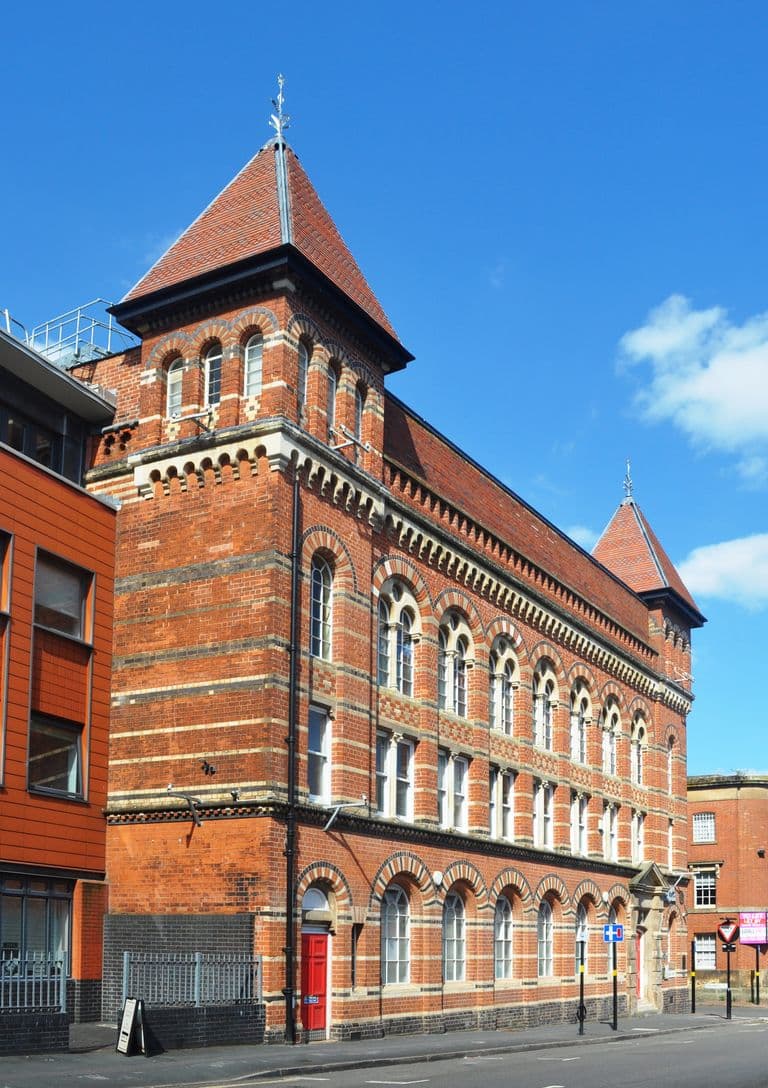
The final move was to Graham Street, on Newhall Hill, where Gillott built Victoria Works. The list entry dates the factory to 1838–45, about 1850 and 1887, and says it was “reputed to have been partly designed by Charles Edge”. It records that the works was listed because of “the international importance of this first mass production of pen nibs”.
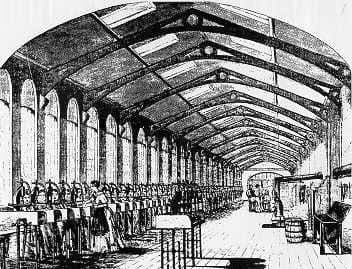
Inside, power presses did the work that skilled men had once done by hand, much of it by women and girls. By 1850, the Victoria County History says, Gillott, his rival Josiah Mason and the Mitchells shared most of the pen trade between them. Two-thirds of the workers in Birmingham’s pen factories were women, and together the factories made 65,000 gross of pens a week. Prices collapsed. The DNB says pens that once cost a shilling each came down to fourpence a gross.
A mid-century visitor, quoted by the Victoria County History, described Gillott’s factory as “an immense brick building, which looks something like a large asylum, a little like a manufactory, and more like a hospital than either”. It was one of the sights of industrial Birmingham. In 1874 the Prince and Princess of Wales were shown round.
His great rival was Josiah Mason, born in Kidderminster, who made all the pens sold under Perry’s name from about 1830. Gillott, Mason and the Mitchells between them squeezed out most of the small makers, who could not compete at that scale.
Gillott had a name as a good employer. He set up a benevolent society for his workpeople, paid into it generously and, according to the DNB, “never had a dispute with his ‘hands’”. He sold far beyond Birmingham, with showrooms in London and New York.
The collector
As soon as he had money to spare, Gillott bought pictures. The DNB says he “appreciated Turner’s talents before they had been generally recognised, and purchased his paintings when others doubted.” William Etty was a special friend, and he collected Linnell, Maclise, Mulready, David Roberts and many more. He commissioned Thomas Webster’s “Roast Pig” for 700 guineas; after his death it sold for 3,550. His house in Westbourne Road, Edgbaston, had its own picture gallery, and letters from his artists survive at the University of Birmingham. He collected violins too.
He loved the theatre. The DNB says that for years he was there nearly every evening, before adjourning to the Hen and Chickens Hotel to smoke a churchwarden pipe with friends.
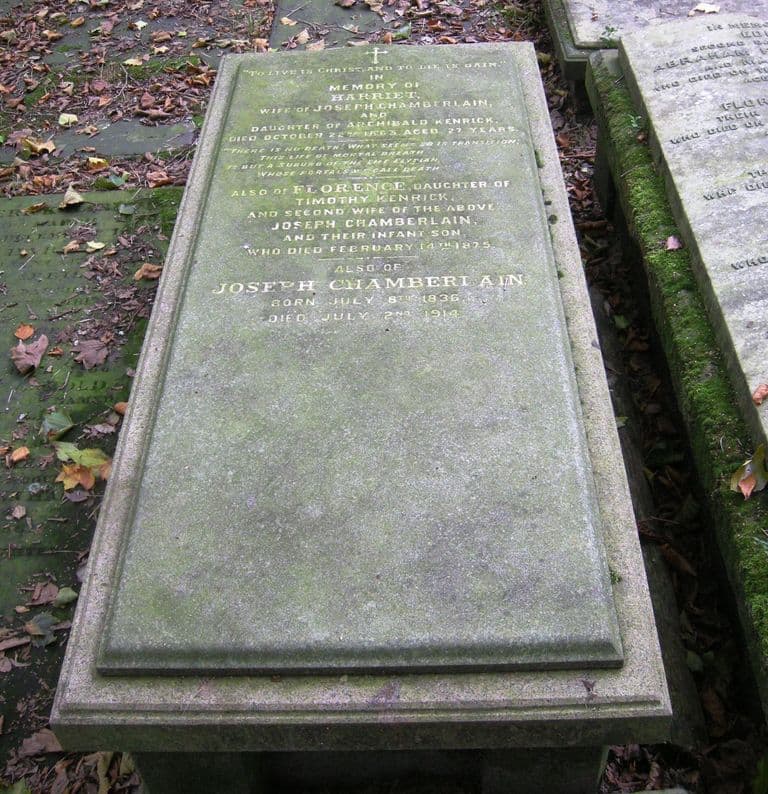
He died at Westbourne Road on 5 January 1872, after falling ill with pleurisy and bronchitis, and was buried at Key Hill Cemetery. His paintings sold for about £170,000 and his violins for £4,000.
The works that outlived the nib
His sons carried the firm on. In 1887 the firm marked Queen Victoria’s Golden Jubilee with a terracotta medallion of the Queen, set high on the Graham Street wall beneath a great flagstaff. The trade itself was slowly overtaken: the JQ Townscape Heritage project notes that the invention of the ballpoint in 1938 cut demand for nibs from the 1940s. Joseph Gillott & Sons stayed at Victoria Works until 1956, when it moved to a new factory near Dudley. After years of mixed use the buildings were restored between 1985 and 1994 as flats and offices, which they remain.
Why it mattered
Gillott did not invent the steel pen, and he was not alone in making it cheap. But his presses and his works on Graham Street did more than anyone to turn a costly novelty into something a schoolchild could afford. Birmingham Civic Society calls him “the man who democratised writing”. By the mid-nineteenth century his town was making most of the world’s steel pens, mainly with the hands of women and girls. Victoria Works still stands, with Queen Victoria’s medallion high on its Graham Street wall and a blue plaque by the door, and across the road the Pen Museum keeps the trade’s presses and its stories. Millions of letters, ledgers and exam papers across the empire and beyond were written with a nib from Birmingham. A cutler’s son with a frying pan put them there.
On the map
4 places connected with Joseph Gillott. Tap a number for directions — some sites are private homes or gardens, so each place’s page says what you can see from the street.

- Key Hill Cemetery — Surviving, Surviving but altered · Directions to Key Hill Cemetery (opens Google Maps)
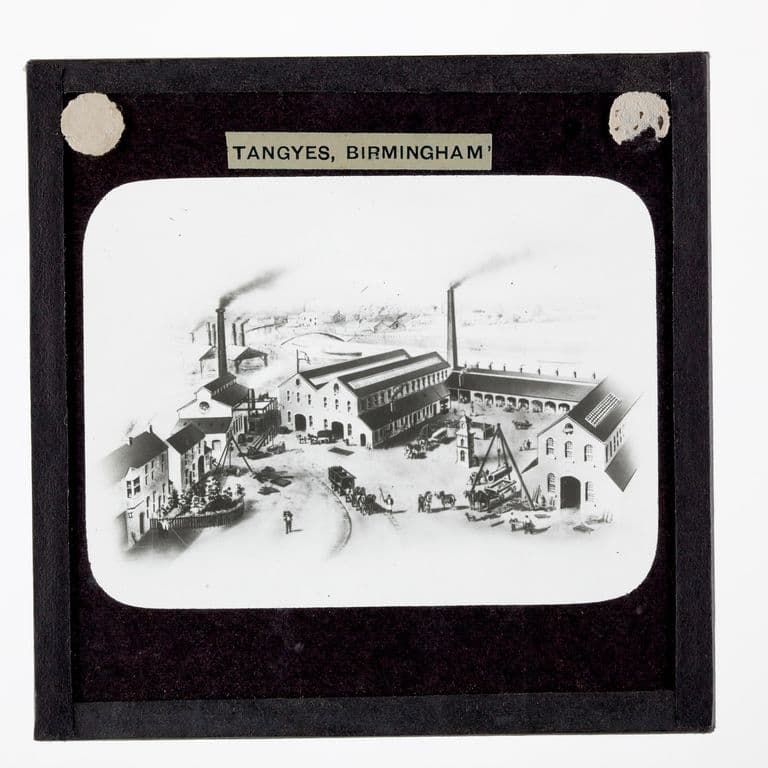
- Cornwall Works (Tangyes) — Lost, Site redeveloped · Directions to Cornwall Works (Tangyes) (opens Google Maps)
- Pen Museum, Argent Centre — Surviving · Directions to Pen Museum, Argent Centre (opens Google Maps)
- Victoria Works, Graham Street — Surviving, Surviving but altered · Directions to Victoria Works, Graham Street (opens Google Maps)
Key dates
- 1821 — Joseph Gillott comes to BirminghamThe Sheffield cutler Joseph Gillott moves to Birmingham to work in the “light steel toy trade”, making buckles and chains. Within a decade he is pressing steel pens by machine.
- 1837 — Gillott claims 36 million pens a yearAn advertisement for Joseph Gillott’s pens claims some 36 million made in the previous year, a sign of how fast machine-pressing had transformed the trade.
- c. 1838–45 — Victoria Works begun on Graham StreetBuilding begins on Joseph Gillott’s Victoria Works, Graham Street, reputedly partly designed by Charles Edge. Historic England dates the works to 1838–45, about 1850 and 1887.
- 5 January 1872 — Joseph Gillott diesJoseph Gillott dies at his home in Westbourne Road, Edgbaston, and is buried at Key Hill Cemetery. His collection of paintings later sells for about £170,000.
Sources and further reading
Date of death: the University of Birmingham catalogue, Birmingham Civic Society and Grace’s Guide give 5 January 1872. The DNB (1890) gives 5 January 1873, and the English Heritage plaque on Victoria Works reads “1799–1873”. The text follows 1872.
Start in the pen trade: 1824 (VCH Warwickshire vol. 7), 1827 (Birmingham Civic Society) or about 1830 (DNB).
Move to Graham Street: the list entry dates the buildings from 1838–45 and the JQ Townscape Heritage project says 1839–40; Grace’s Guide gives 1853 and the DNB 1859 for the firm’s final move there. The building may have been begun earlier and occupied in stages; the text gives the list entry’s dates.
Workforce: 450 (DNB) or 500 (VCH). Prices: “4d. the gross” (DNB) or “less than 2d. a gross” (VCH).
Gas lighting: the University of Birmingham catalogue says the factory “is believed” to have been the first in Birmingham lit by gas. This has not been confirmed and is left out of the text.
A JQ Townscape Heritage timeline claims 105 million nibs and over 80 per cent of world output in 1843; no primary source has been found and it is not used.
- Gillott, Joseph — Dictionary of National Biography, vol. 21 — George Clement Boase, Smith, Elder & Co., 1890
- Economic and Social History: Industry and Trade, 1500–1880, in A History of the County of Warwick, vol. 7, pp. 81–139 — W. B. Stephens (ed.), Victoria County History, 1964. pen trade; the large firm
- Letters of Joseph Gillott (MS94) — Cadbury Research Library, University of Birmingham, 2012. Ref. MS94
- Joseph Gillott — Grace’s Guide, Grace’s Guide to British Industrial History
- Joseph Gillott and Sons — Grace’s Guide, Grace’s Guide to British Industrial History
- Victoria Works (including formerly listed flagstaff and retaining wall), Graham Street — National Heritage List for England entry 1343427 — Historic England
- Victoria Works — Buildings Research — Tony Chesters, Jewellery Quarter Townscape Heritage
- Blue Plaque: Joseph Gillott — Birmingham Civic Society, Birmingham Civic Society
Comments
Comments will load here.