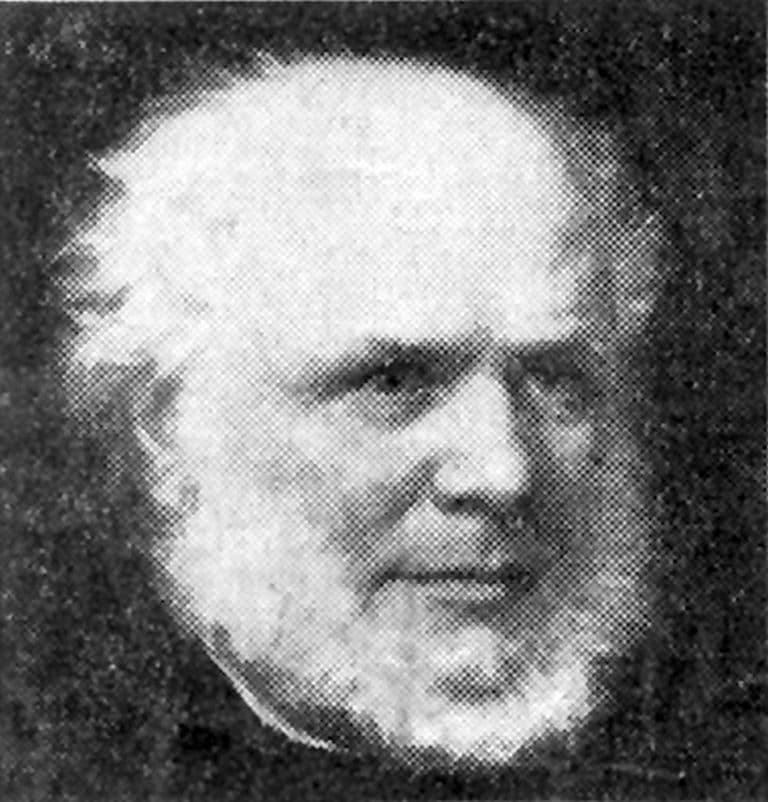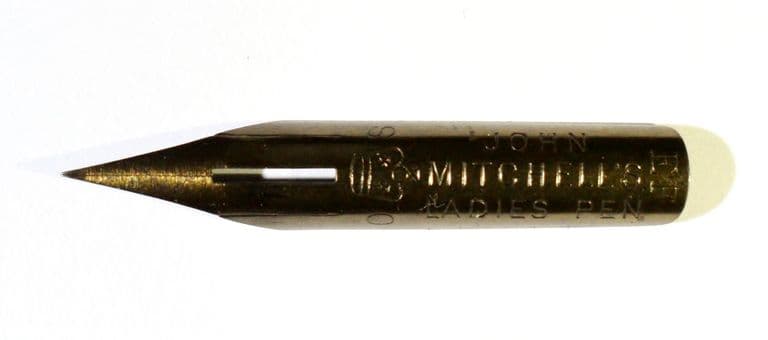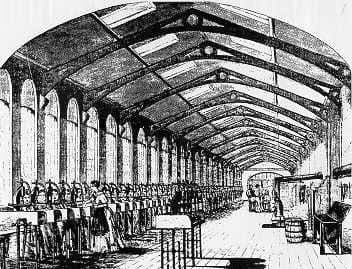
Joseph Gillott began making steel pens in Birmingham in the late 1820s or about 1830; the sources differ. Pressing nibs by machine and cutting extra slits to make them flexible, he sold his first pens for a shilling each and, as output soared, drove the price down to pennies a gross.
Victoria Works
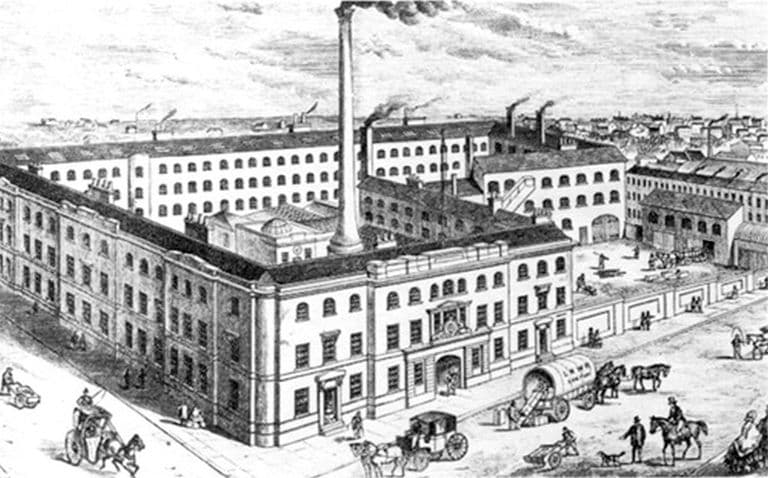
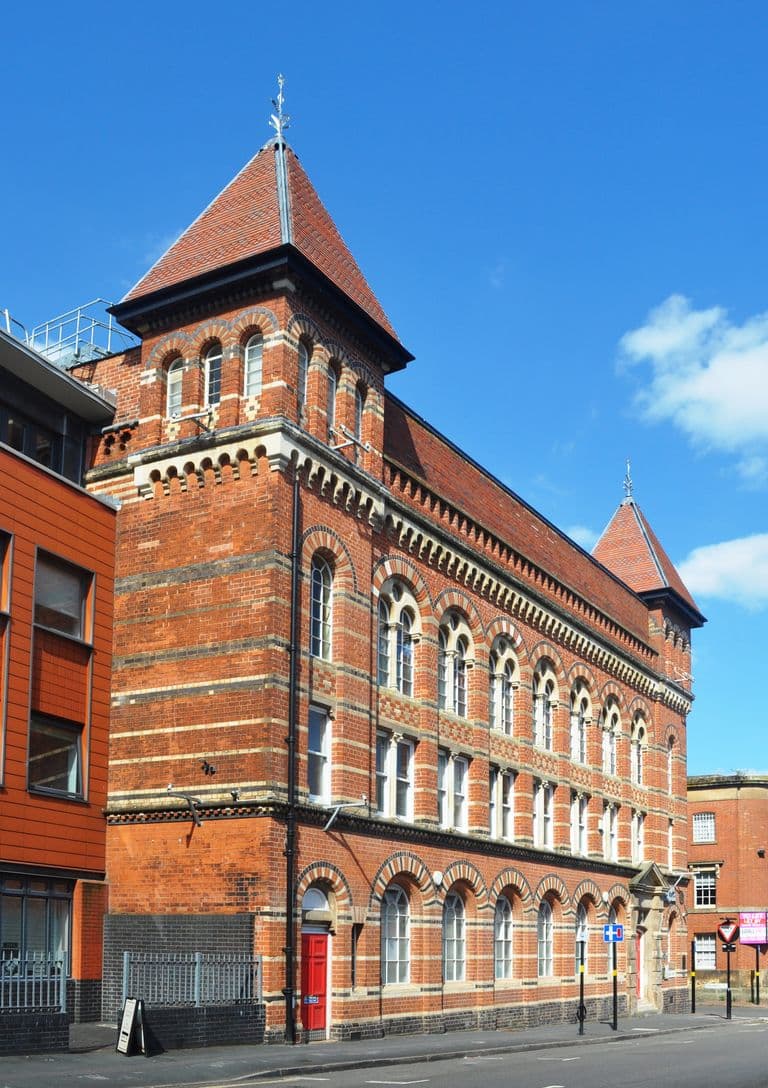
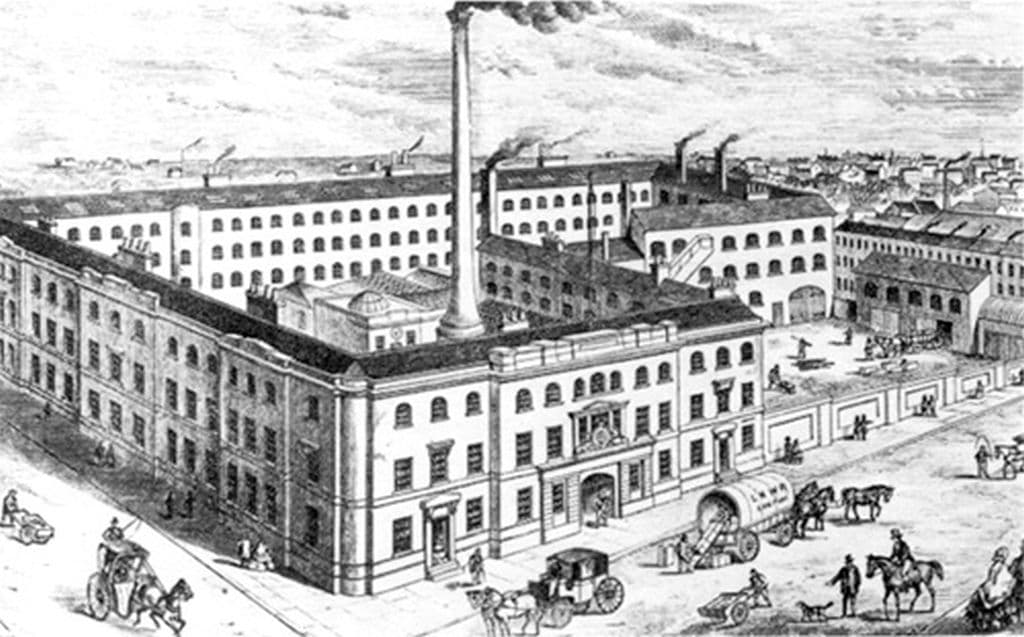
The business moved from Bread Street to Church Street and Newhall Street, and then to Victoria Works on Graham Street, built in stages in 1838–45. In 1837 the firm advertised that it had made about 36 million pens in the previous year. By 1850 Gillott, his rival Josiah Mason and the Mitchells, Gillott’s brothers-in-law, made most of Birmingham’s pens, with two-thirds of the workforce women. The firm sold through showrooms in London and New York.
After the founder
Joseph Gillott died in 1872 and his sons carried the firm on. In 1887 the works marked Queen Victoria’s Golden Jubilee with a terracotta medallion on the Graham Street wall. Demand for dip pens fell after the ballpoint arrived, and in 1956 Joseph Gillott & Sons left Victoria Works for a new factory near Dudley. The works survives as flats and offices, listed Grade II.
Pictures
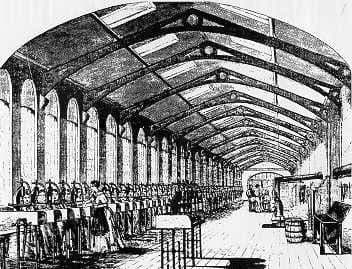
Inside Gillott’s pen factory, 1874Unknown, 1874. Wikimedia Commons · Public domain
On the map
2 places connected with Joseph Gillott & Sons. Tap a number for directions — some sites are private homes or gardens, so each place’s page says what you can see from the street.

- Pen Museum, Argent Centre — Surviving · Directions to Pen Museum, Argent Centre (opens Google Maps)
- Victoria Works, Graham Street — Surviving, Surviving but altered · Directions to Victoria Works, Graham Street (opens Google Maps)
Key dates
- 1837 — Gillott claims 36 million pens a yearAn advertisement for Joseph Gillott’s pens claims some 36 million made in the previous year, a sign of how fast machine-pressing had transformed the trade.
- c. 1838–45 — Victoria Works begun on Graham StreetBuilding begins on Joseph Gillott’s Victoria Works, Graham Street, reputedly partly designed by Charles Edge. Historic England dates the works to 1838–45, about 1850 and 1887.
- 5 January 1872 — Joseph Gillott diesJoseph Gillott dies at his home in Westbourne Road, Edgbaston, and is buried at Key Hill Cemetery. His collection of paintings later sells for about £170,000.
- 1874 — Royal visit to Victoria WorksThe Prince and Princess of Wales are shown round Joseph Gillott’s pen works on Graham Street.
- 1956 — Gillott’s leaves Victoria WorksJoseph Gillott & Sons moves pen production from Victoria Works on Graham Street to a new factory near Dudley.
Sources and further reading
- Joseph Gillott and Sons — Grace’s Guide, Grace’s Guide to British Industrial History
- Gillott, Joseph — Dictionary of National Biography, vol. 21 — George Clement Boase, Smith, Elder & Co., 1890
- Economic and Social History: Industry and Trade, 1500–1880, in A History of the County of Warwick, vol. 7, pp. 81–139 — W. B. Stephens (ed.), Victoria County History, 1964
- Victoria Works — Buildings Research — Tony Chesters, Jewellery Quarter Townscape Heritage
- Letters of Joseph Gillott (MS94) — Cadbury Research Library, University of Birmingham, 2012. Ref. MS94
- Victoria Works (including formerly listed flagstaff and retaining wall), Graham Street — National Heritage List for England entry 1343427 — Historic England