
What was here?
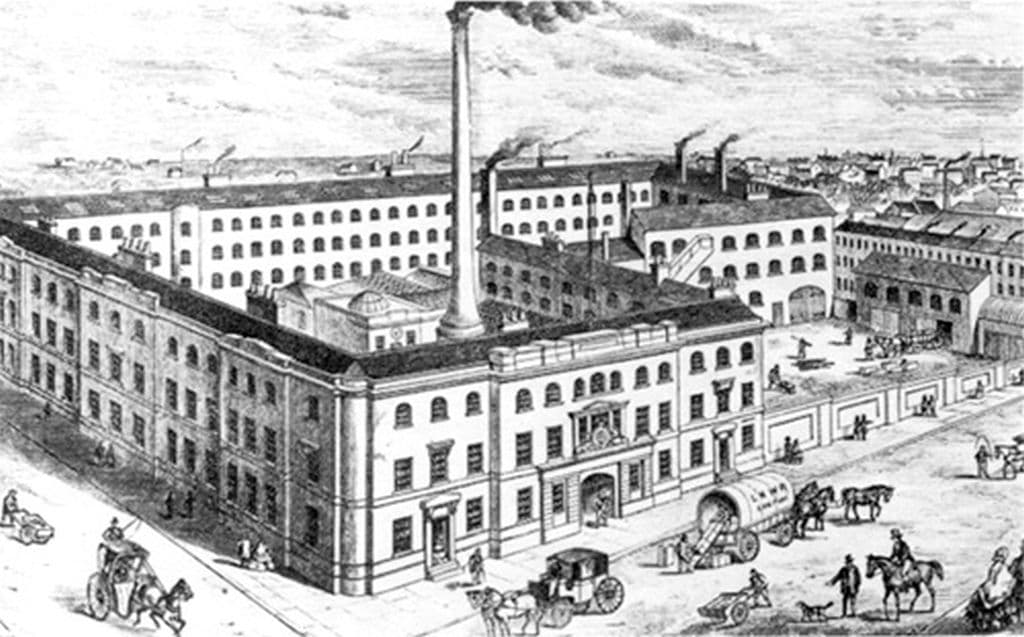
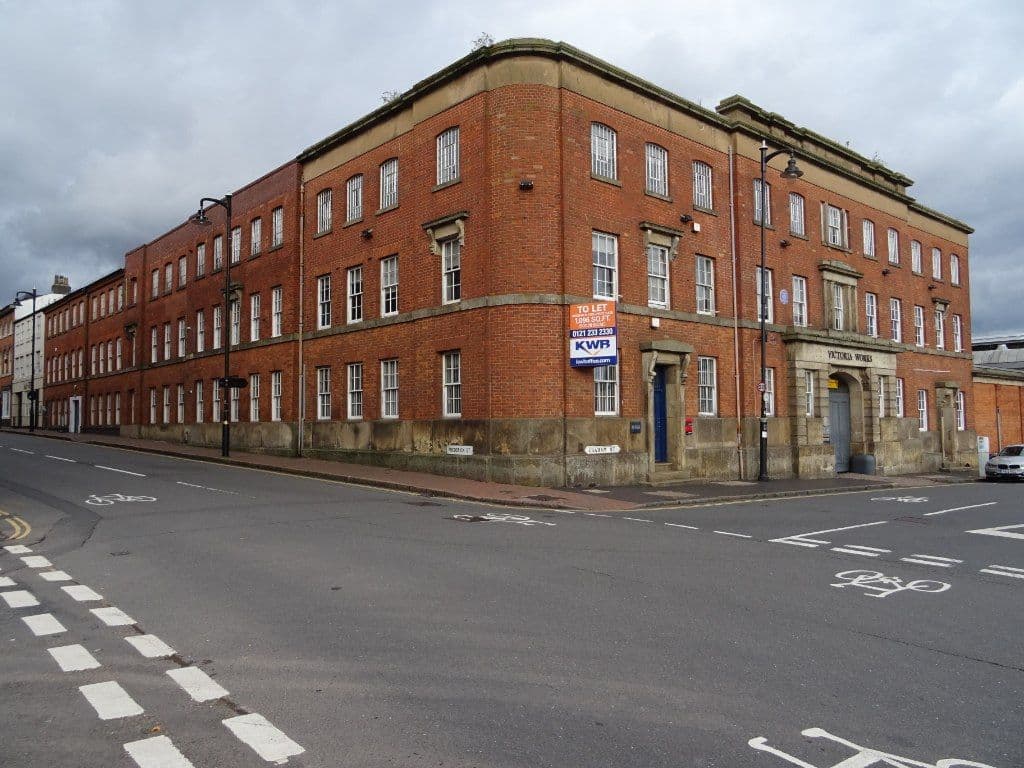
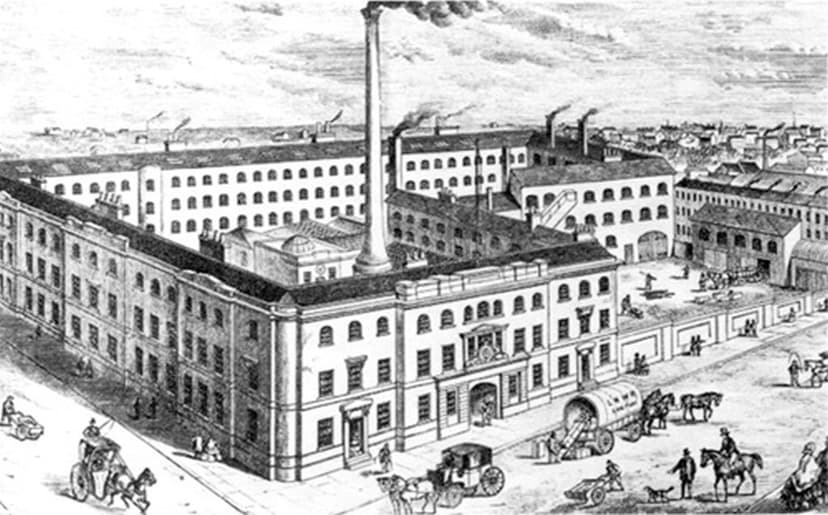
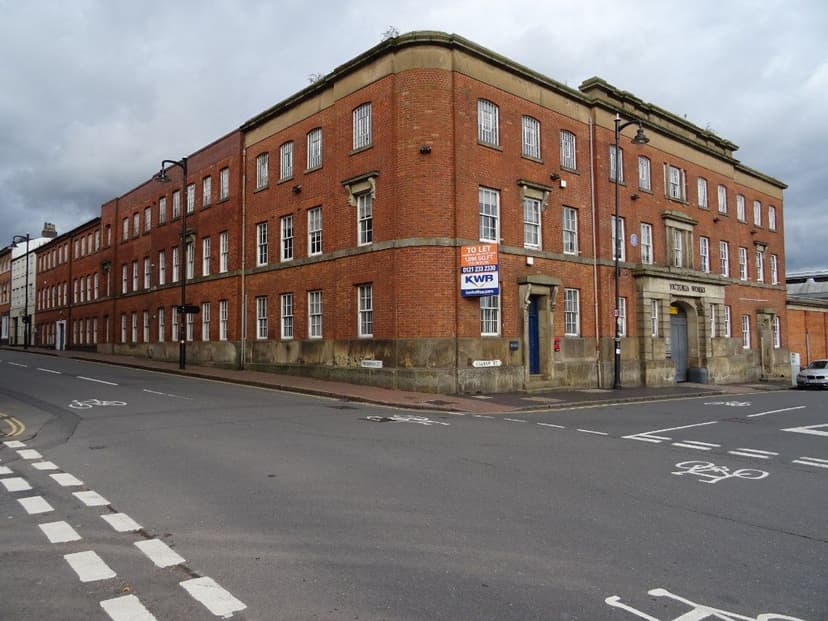
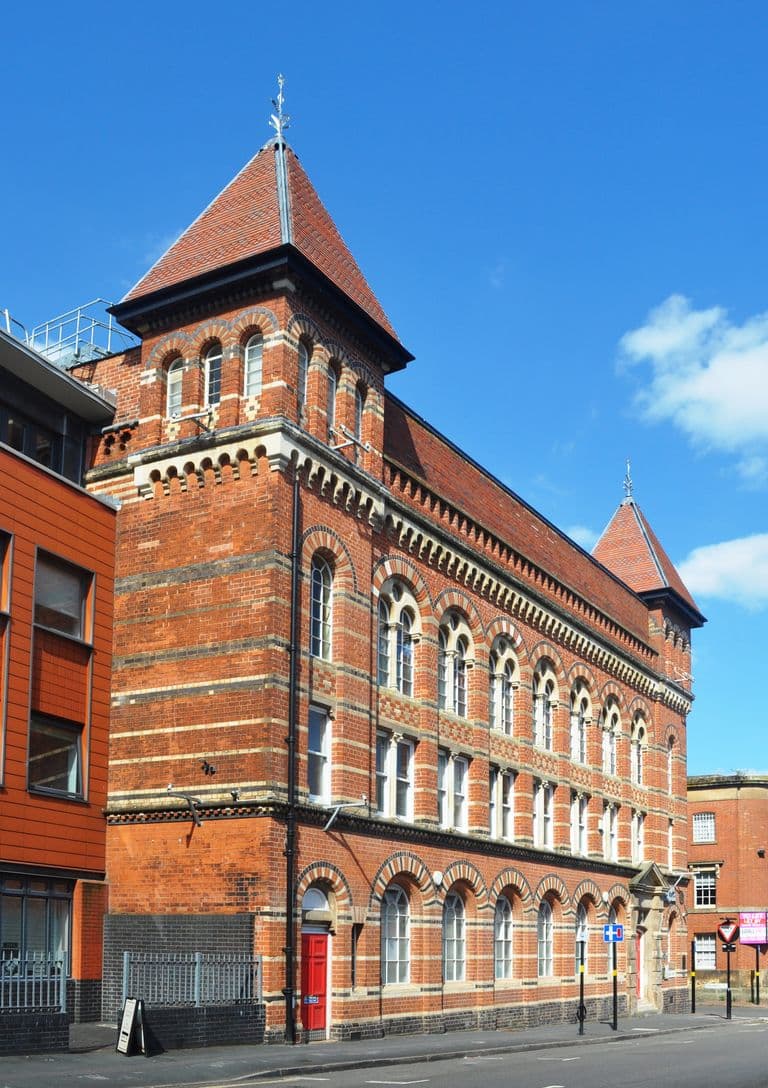
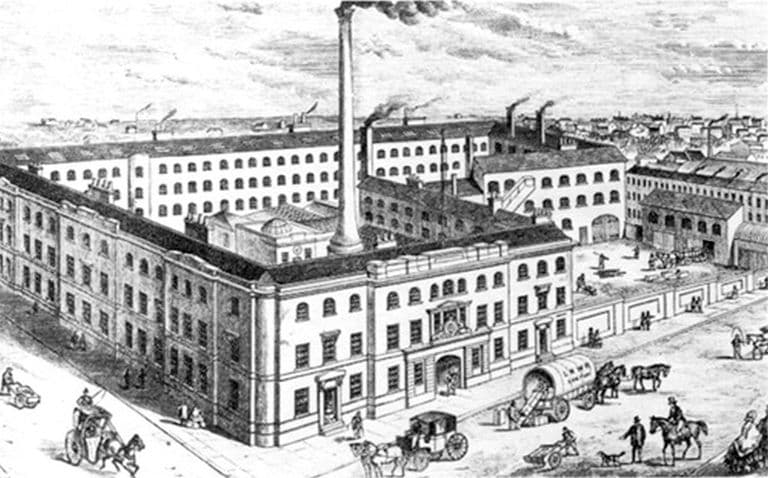
Victoria Works is the large brick pen factory of Joseph Gillott & Sons, filling the block between Frederick Street and Vittoria Street on Graham Street in the Jewellery Quarter. It still stands, converted to flats and offices.
History
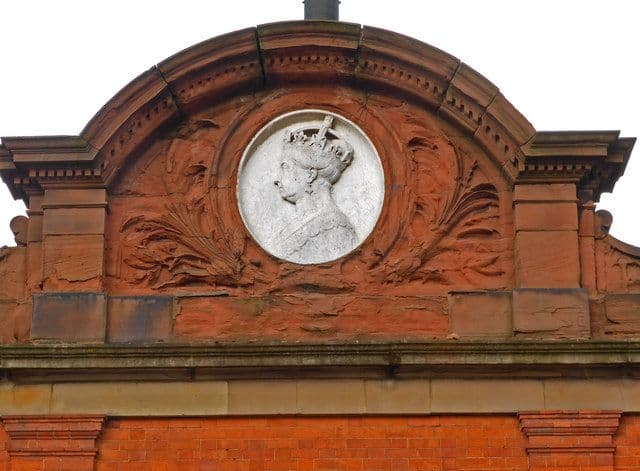
Walk up Graham Street and look up. High on a brick wall, framed by palm fronds, Queen Victoria looks down from a terracotta medallion, and behind her a tall flagstaff rises through a roof. This is Victoria Works, and for over a century it made pens for the world.
A pen factory
Joseph Gillott was a Sheffield cutler who came to Birmingham in 1821 and found a way to make steel pens on a press instead of by hand. His business moved from Bread Street to Church Street and Newhall Street before he built here, on Graham Street on the slope of Newhall Hill.
Historic England’s list entry dates the factory to 1838–45, with further building about 1850 and in 1887. It says the building “is reputed to have been partly designed by Charles Edge of Birmingham”. The main front is an eleven-bay, three-storey range in red brick with stone and stucco dressings and a central arched entrance. More ranges line Frederick Street and Vittoria Street, and a long three-storey wing runs round an inner courtyard.
Inside
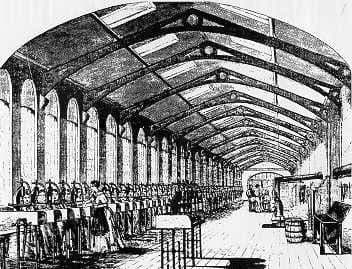
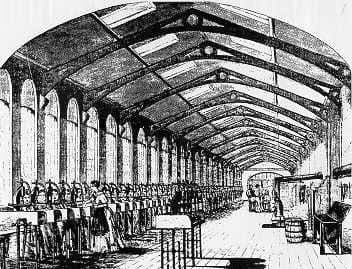
Here steel was cut, shaped, slit, hardened and ground into nibs, much of it by women and girls working power presses. By 1850, the Victoria County History says, two-thirds of the workers in Birmingham’s pen factories were women. The firm advertised in 1837 that it had made some 36 million pens in a year. Gillott, says the Dictionary of National Biography, eventually employed 450 people, who turned out more than five tons of pens a week.
The same spot, then and now
1888–1913
Today
Old map: Ordnance Survey six-inch, reproduced with the permission of the National Library of Scotland (CC BY 4.0). Today: © OpenStreetMap contributors.
A mid-century visitor, quoted in the Victoria County History, found “an immense brick building, which looks something like a large asylum, a little like a manufactory, and more like a hospital than either”. It was one of the showpieces of industrial Birmingham. In 1874 the Prince and Princess of Wales were shown round. An engraving of the same year shows the inside of the works.
Victoria on the wall
Gillott died in 1872, but the firm went on under his sons. In 1887 Queen Victoria’s Golden Jubilee was marked with the terracotta medallion on the Graham Street wall. The list entry describes the medallion within an attic storey that hides a small building set at right angles, “through whose roof a mighty flagstaff soars”.
After the pens
The ballpoint pen, invented in 1938, slowly ate into the trade. In 1956 Joseph Gillott & Sons left Victoria Works for a new factory near Dudley. Other firms, many in the jewellery trade, used the buildings, among them T. Holland from 1959 to 1981. By the mid-1980s the works was run down. Between 1985 and 1994 it was restored and converted into flats and offices, a mix it still holds.
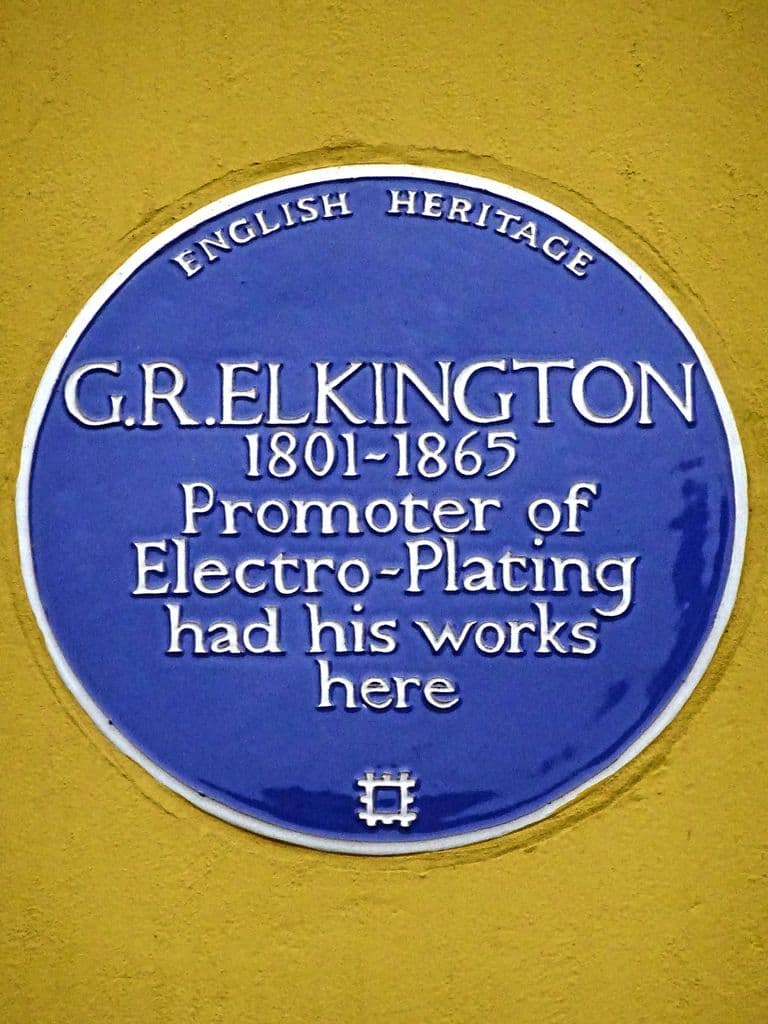
The building was listed on 8 July 1982. Historic England says it is listed “because of its importance in the industrial development of Birmingham and because of the international importance of this first mass production of pen nibs”. A blue plaque to Gillott is fixed to the Graham Street front.
What happened here?
Joseph Gillott & Sons made steel pen nibs here by machine from the mid-nineteenth century until 1956, selling across the world through showrooms in London and New York.
Why it mattered
Victoria Works was at the heart of Birmingham’s steel-pen trade, which by the mid-nineteenth century supplied most of the world’s pens. Historic England calls it the site of the first mass production of pen nibs, of international importance.
More pictures
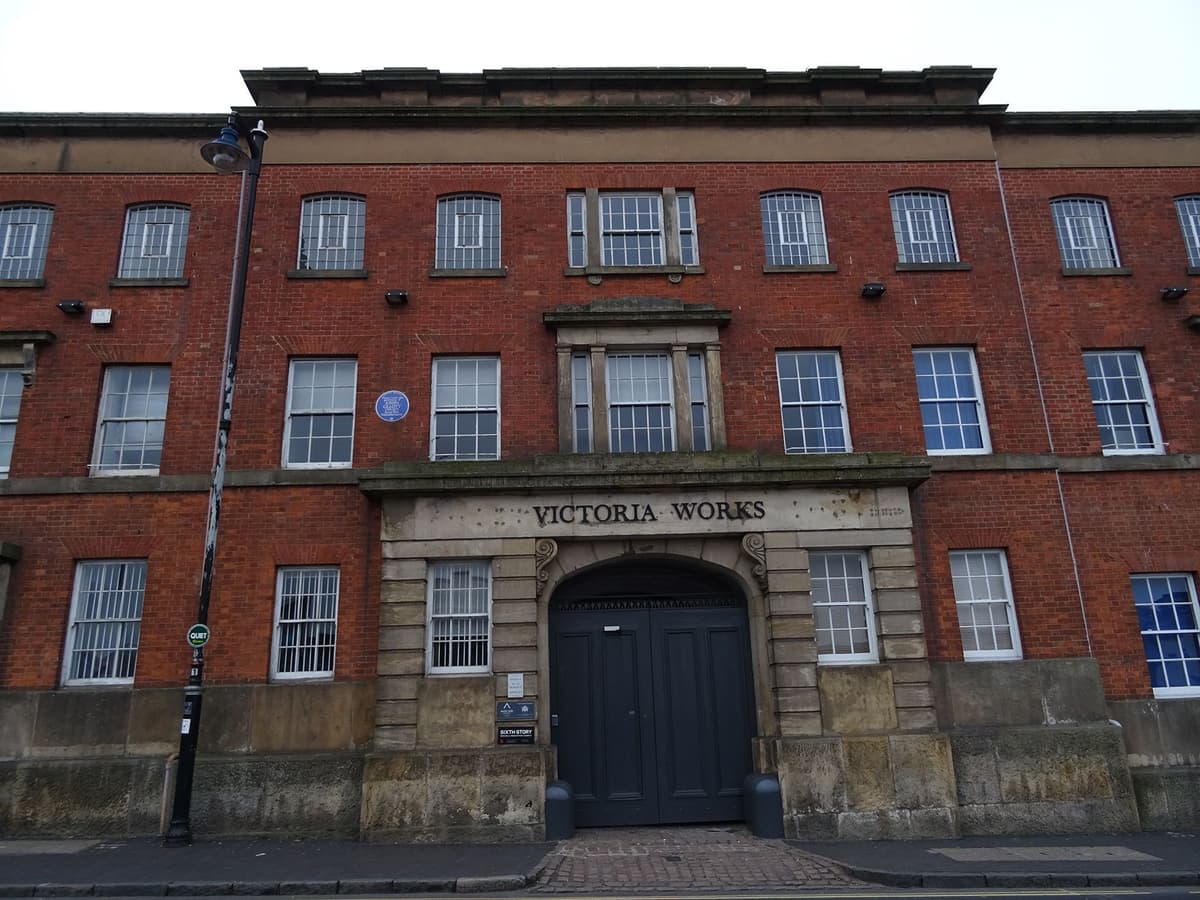
Blue plaque to Joseph Gillott, Victoria Works, 19 March 2016Spudgun67, 19 March 2016. Wikimedia Commons · CC BY-SA 4.0
What’s there now
What survives
The factory complex survives largely complete: the eleven-bay Graham Street front, the 1887 jubilee wall with its terracotta medallion of Queen Victoria and the flagstaff building behind it, ranges on Frederick Street and Vittoria Street, and the 27-bay courtyard wing. Listed Grade II (NHLE 1343427).
Today
Victoria Works is private flats and offices. The exterior, the Victoria medallion and the blue plaque can be seen from Graham Street, Frederick Street and Vittoria Street. The Pen Museum in the Argent Centre is a minute’s walk away.
Then and now
Then · about 1910
Now · 19 October 2019
Today
Queen Victoria medallion, Victoria Works, 20 December 2014Chris Allen, 20 December 2014. Geograph Britain and Ireland via Wikimedia Commons · CC BY-SA 2.0 Blue plaque to Joseph Gillott, Victoria Works, 19 March 2016Spudgun67, 19 March 2016. Wikimedia Commons · CC BY-SA 4.0
Key dates
- c. 1838–45 — Victoria Works begun on Graham StreetBuilding begins on Joseph Gillott’s Victoria Works, Graham Street, reputedly partly designed by Charles Edge. Historic England dates the works to 1838–45, about 1850 and 1887.
- 5 January 1872 — Joseph Gillott diesJoseph Gillott dies at his home in Westbourne Road, Edgbaston, and is buried at Key Hill Cemetery. His collection of paintings later sells for about £170,000.
- 1874 — Royal visit to Victoria WorksThe Prince and Princess of Wales are shown round Joseph Gillott’s pen works on Graham Street.
- 1956 — Gillott’s leaves Victoria WorksJoseph Gillott & Sons moves pen production from Victoria Works on Graham Street to a new factory near Dudley.
Sources and further reading
Building dates: the list entry gives 1838–45, c.1850 and 1887; the JQ Townscape Heritage project gives 1839–40. Grace’s Guide (1853) and the DNB (1859) date the firm’s final move to Graham Street much later. The works may have been built and occupied in stages; the text follows the list entry.
The designer: the list entry says only that Charles Edge is “reputed” to have been partly responsible.
Workforce: 450 (DNB) or 500 (VCH).
Gas lighting: the University of Birmingham catalogue of Gillott’s letters says the factory “is believed” to have been the first in Birmingham lit by gas. Unconfirmed, so not used.
Listing grade: some secondary sources give Grade II*; the National Heritage List entry 1343427 is Grade II.
- Victoria Works (including formerly listed flagstaff and retaining wall), Graham Street — National Heritage List for England entry 1343427 — Historic England
- Victoria Works — Buildings Research — Tony Chesters, Jewellery Quarter Townscape Heritage
- Gillott, Joseph — Dictionary of National Biography, vol. 21 — George Clement Boase, Smith, Elder & Co., 1890
- Economic and Social History: Industry and Trade, 1500–1880, in A History of the County of Warwick, vol. 7, pp. 81–139 — W. B. Stephens (ed.), Victoria County History, 1964. pen trade
- Letters of Joseph Gillott (MS94) — Cadbury Research Library, University of Birmingham, 2012. Ref. MS94
- Joseph Gillott and Sons — Grace’s Guide, Grace’s Guide to British Industrial History
- Blue Plaque: Joseph Gillott — Birmingham Civic Society, Birmingham Civic Society
Archive references: Cadbury Research Library, University of Birmingham MS94 (Letters of Joseph Gillott)
Comments
Comments will load here.