
What is it?
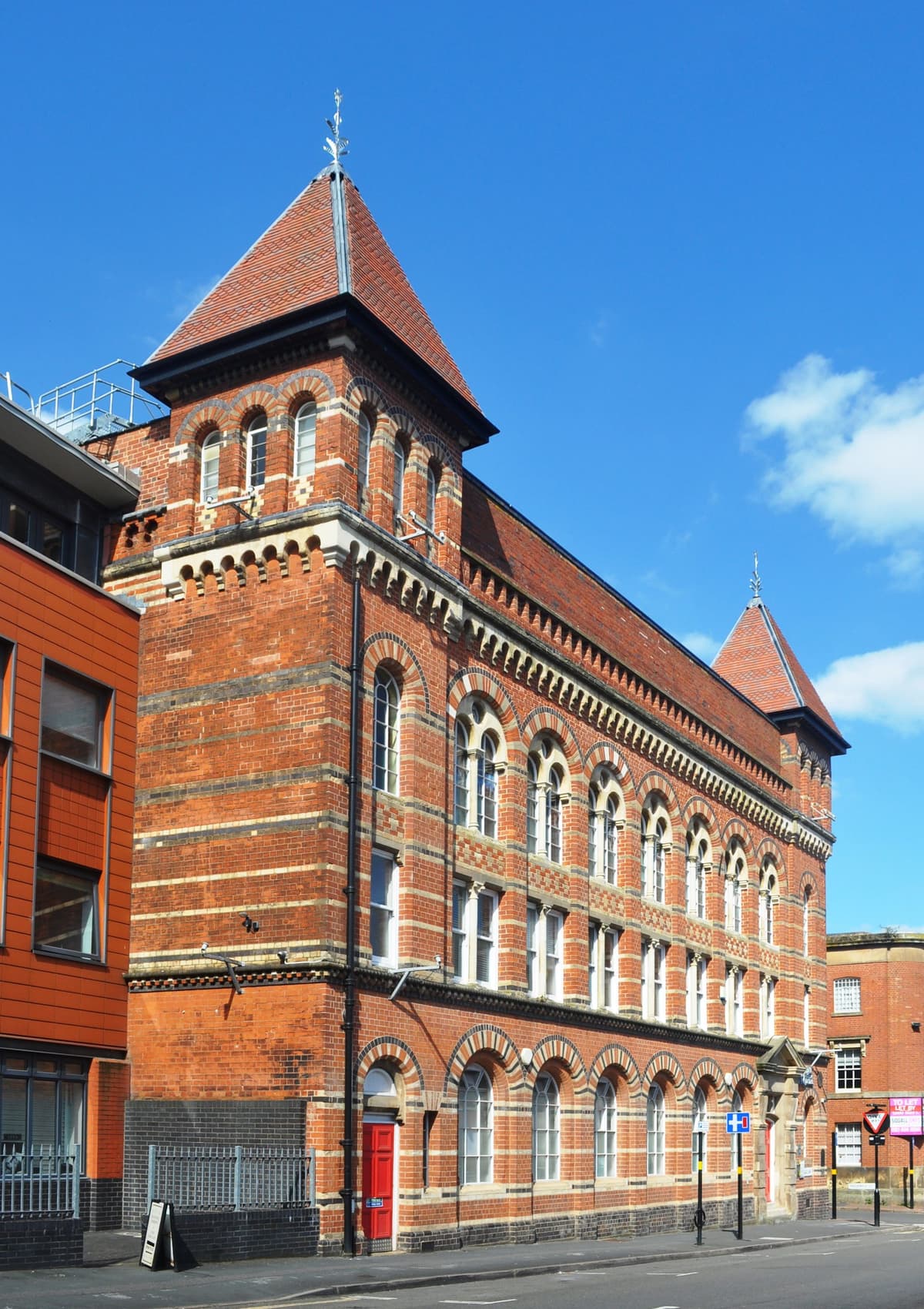
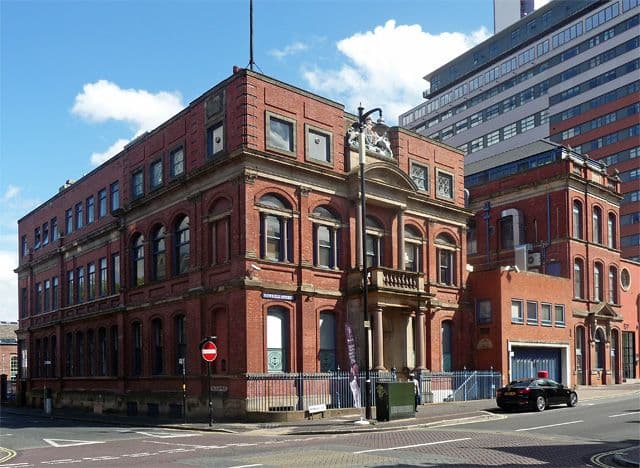
On the corner of Frederick Street and Legge Lane stands the Argent Centre, a polychrome brick pen factory of 1862–63. It now holds small businesses and the Pen Museum, an independent museum of Birmingham’s pen trade.
History
Some factories look like factories. This one looks like a Florentine palace that has wandered into the Jewellery Quarter.
A palace for pens
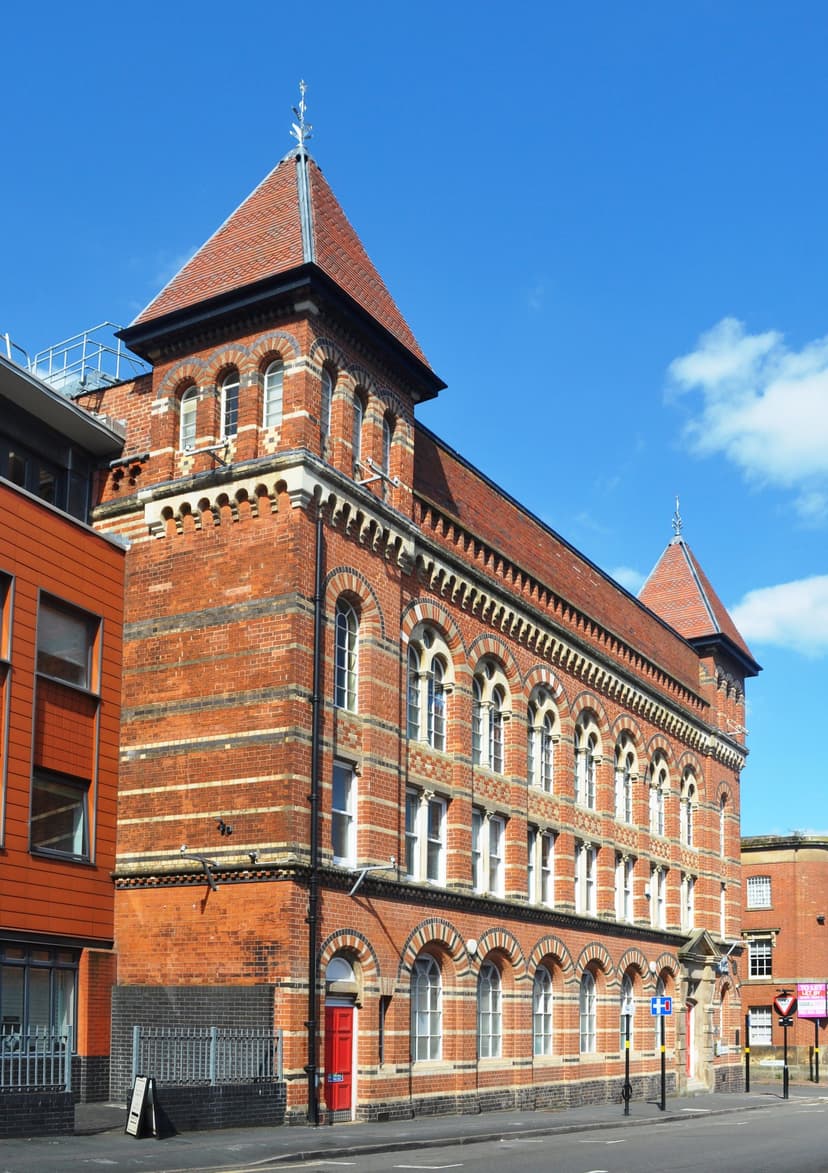
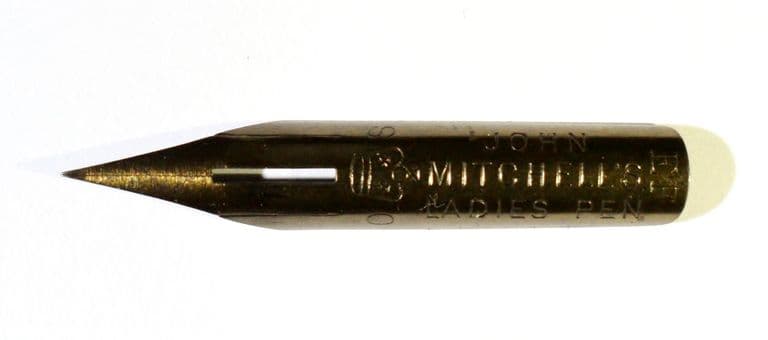
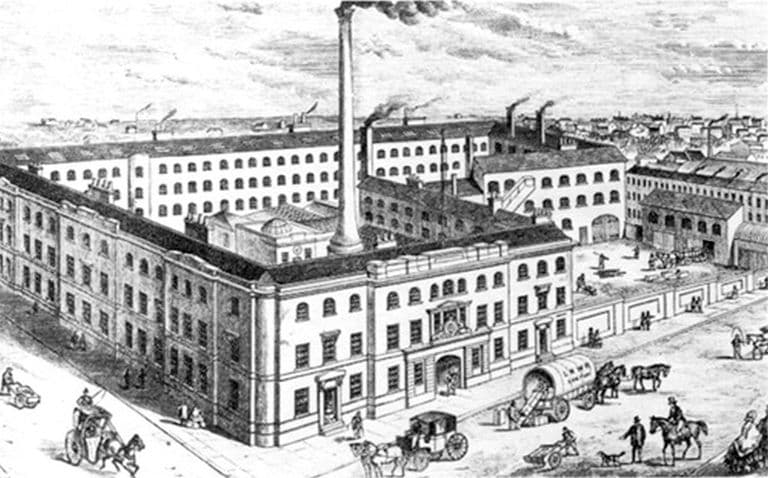
The building went up in 1862–63 for W. E. Wiley, a maker of gold pens and propelling pencils. The architect was John George Bland of Birmingham. Historic England’s list entry describes a large three- and four-storey L-shaped works in red brick with stone, gault and buff-brick dressings, banding and chequerwork “achieving a lively polychromy”. Its arcaded fronts take their cue from early Renaissance palaces in Florence and Lombardy, with corner towers on the Legge Lane front.
It was also built to be fireproof. The floors are flat arches of hollow brick with wrought-iron tie rods, paved in brick instead of timber. The JQ Townscape Heritage project says this let two more storeys be added a year after the basement and ground floor went up. The Building News described the construction in August 1863.
Pens and Turkish baths
The oddest thing about the works was at the end of the Frederick Street range. Wiley put a Turkish bath in the four-storey block there. The tapering, banded chimney behind it served the factory engine, and, the list entry says, excess steam from the engine was used for the baths.
The same spot, then and now
1888–1913
Today
Old map: Ordnance Survey six-inch, reproduced with the permission of the National Library of Scotland (CC BY 4.0). Today: © OpenStreetMap contributors.
The building was first called the Albert Works, probably because it faced Joseph Gillott’s Victoria Works across the street. It later took the name Argent Works from the silversmiths W. J. Myatt & Co. The list entry calls it the largest of the works in the inner Jewellery Quarter, with its Legge Lane front dominating Newhall Hill.
The museum
Since 1984 the building has been owned by the Midlands Industrial Association, a community benefit society that lets it as managed workspace. On 28 April 2001 four founders, Brian Jones, Larry Hanks, Colin Giles and Ray Handley, opened the Pen Room here, to preserve the story of the trade through a collection of steel nibs and family memories. It is now the Pen Museum, an independent museum and charity run largely by volunteers.
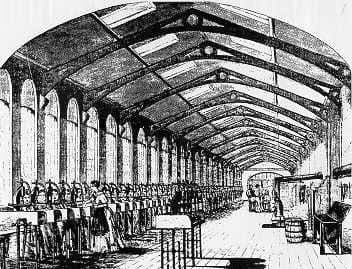
The museum tells the story of a trade that, at its height, employed an estimated 8,000 people in Birmingham, about 70 per cent of them women. Visitors can try making a nib on the same kind of hand-press that women operated in the nineteenth century.
Turrets restored
By the 2010s the building had lost its corner turrets, probably in the mid-twentieth century, and much of its carved stonework had been taken down for safety. In 2020 the Argent Centre became the first building funded by the Jewellery Quarter Townscape Heritage grant scheme. Brickwork, stone, roof and windows were repaired, carved capitals were re-cut and replaced, and the pyramid-roofed turrets were rebuilt from an engraving of 1863. The work was finished in February 2021 and won a Victorian Society conservation award that year.
What happened here?
W. E. Wiley made gold pens and propelling pencils here from 1863, with Turkish baths heated by the factory’s steam. Silversmiths W. J. Myatt & Co. later gave it the name Argent Works. Since 2001 it has housed the Pen Museum.
Why it mattered
One of the most striking factories in the Jewellery Quarter and an early fireproof industrial building, it is listed Grade II*. As the home of the Pen Museum it keeps alive the memory of a trade that made Birmingham the world’s pen-making capital.
Today
What survives
The whole 1862–63 works survives: the nine-bay Legge Lane front with corner towers, the 22-bay Frederick Street range, the former Turkish-bath block, the tapered chimney and the fireproof floors. The turrets were reinstated in 2020–21. Listed Grade II* (NHLE 1290277).
Today
The Argent Centre is a managed workspace owned by the Midlands Industrial Association, home to many small businesses and the Pen Museum.
Then and now
Then · 11 August 2024
Now · 11 August 2024
Today
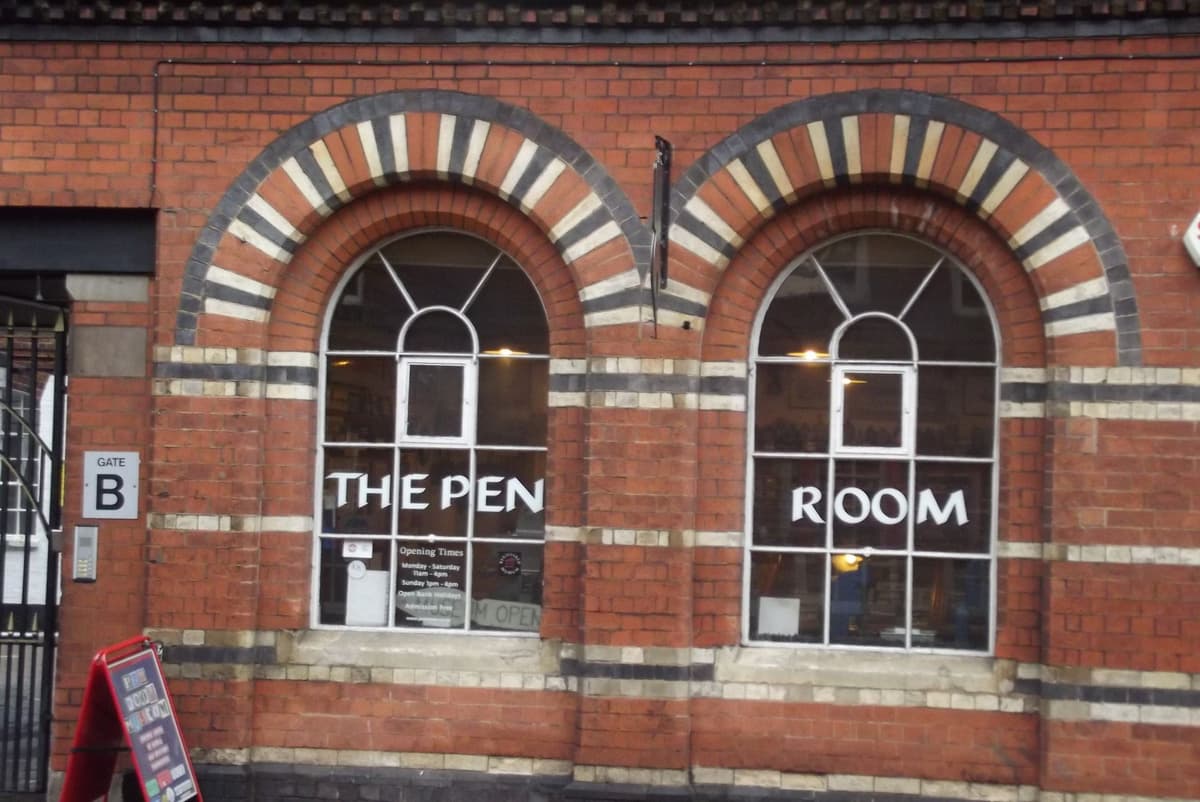
The Argent Centre and the Pen Room, Frederick Street, 28 December 2012Elliott Brown, 28 December 2012. Wikimedia Commons (from Flickr) · CC BY 2.0
Key dates
- 1862–63 — Wiley’s pen works built on Frederick StreetJ. G. Bland designs a polychrome, fireproof pen works for W. E. Wiley, with Turkish baths heated by its engine’s steam. It is now the Argent Centre and home of the Pen Museum.
- 28 April 2001 — The Pen Room opens in the Argent CentreFour founders open the Pen Room, now the Pen Museum, in the Argent Centre to preserve the story of Birmingham’s pen trade.
Sources and further reading
Name of the builder: the list entry prints “Q E Wiley”, apparently a typing error; the JQ Townscape Heritage project gives W. E. Wiley.
Date: the list entry gives 1862–63; the JQ Townscape Heritage project says built in 1862, with two storeys added twelve months later.
The museum figures (8,000 workers, 70 per cent women; 129 companies) are the Pen Museum’s own and have not been checked against census or directory evidence.
The turrets: the JQ Townscape Heritage project says no photograph showed the turrets as built, only sketches and engravings; the reinstatement followed the 1863 engraving.
- The Argent Centre (former Argent Works), 60 Frederick Street — National Heritage List for England entry 1290277 — Historic England
- The Argent Centre — Jewellery Quarter Townscape Heritage, Jewellery Quarter Townscape Heritage
- About Us — Pen Museum, Pen Museum, Birmingham
- Pen Museum — Discover the Legacy of the Birmingham Pen Trade — Pen Museum, Pen Museum, Birmingham

Comments
Comments will load here.