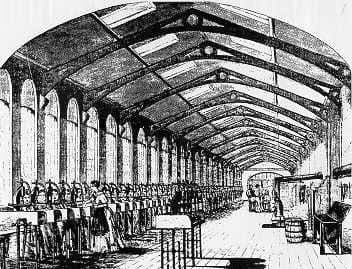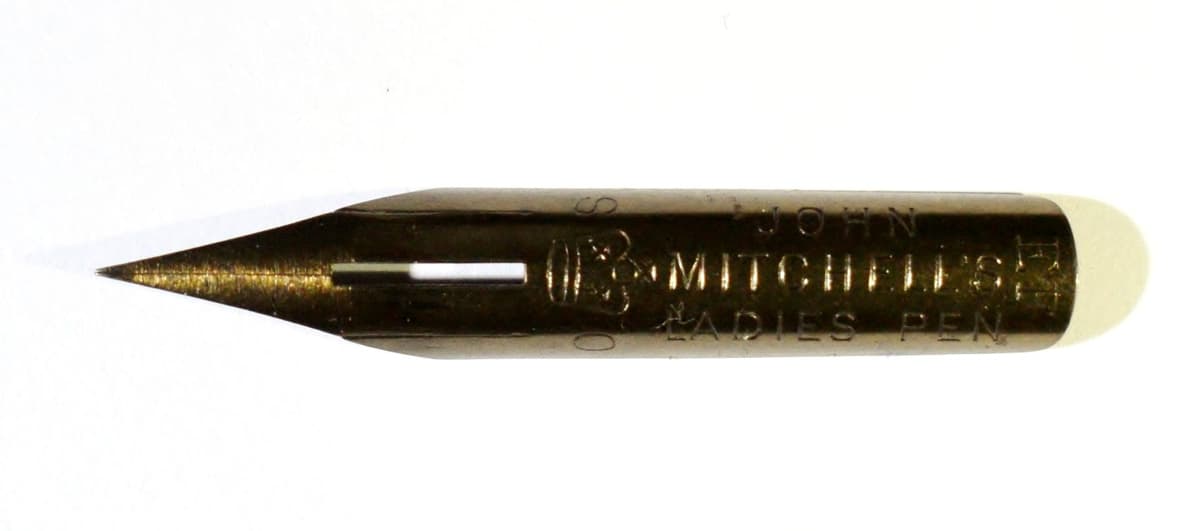
John Mitchell made steel pens at 36 Newhall Street, and later at 48 Newhall Street, from the early 1820s; his son claimed he was making them with press tools by about 1822. A government inspector visited the Newhall Street works in the early 1860s and found boys working in cellars he thought “unfit for human occupation”. The firm’s pens, among them the “plumes ballon”, sold widely in France and Belgium.
Moland Street
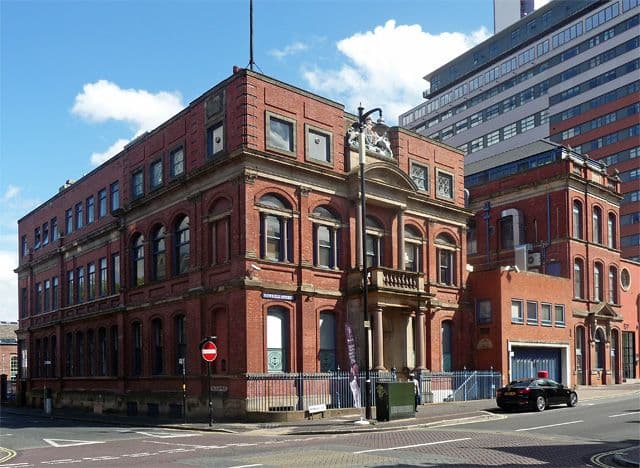
In 1908 the business moved to the Newhall Works in Moland Street. The works was damaged in an air raid in April 1941, and in 1947 the business was sold to Esterbrook Hazell Pens. Pen making on the Moland Street site ended in 1972. A separate business was run by John’s brother William, in St Paul’s Square from 1830 and Cumberland Street from 1852; it joined Hinks, Wells & Co. in 1920 to form British Pens.
Pictures
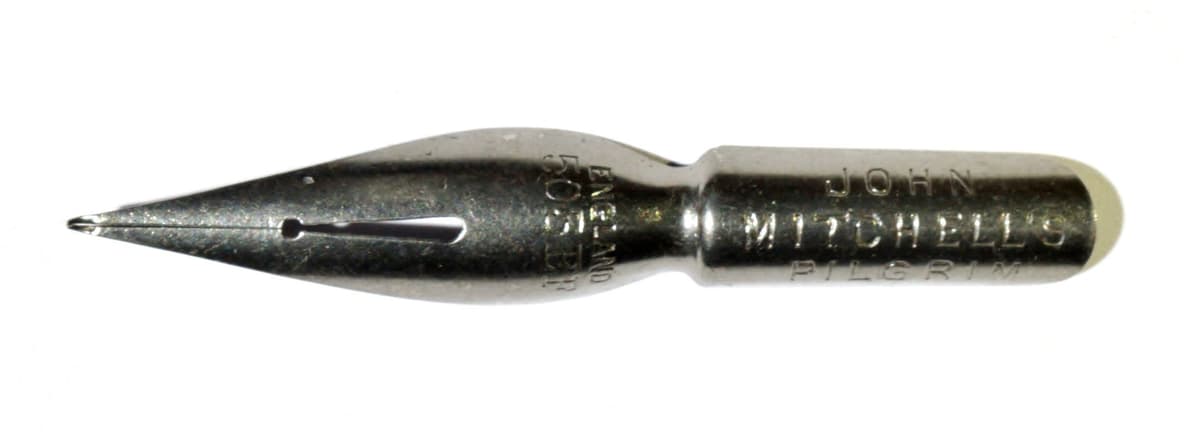
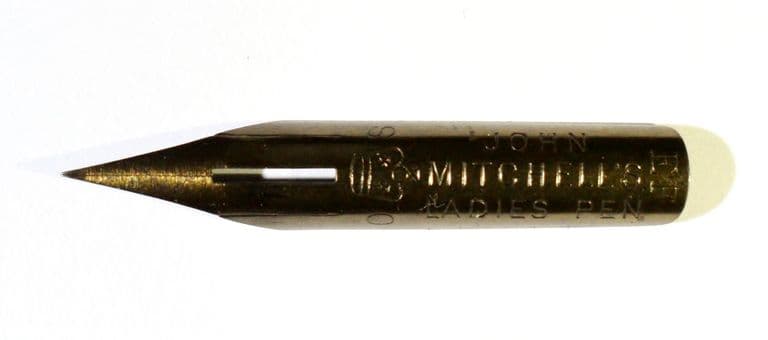
John Mitchell’s 503 EF Pilgrim steel nib, photographed 2020Enrique Íñiguez Rodríguez (Qoan), photographed 2020. Wikimedia Commons · CC BY-SA 4.0
On the map
One place connected with John Mitchell (pen makers). Tap a number for directions — some sites are private homes or gardens, so each place’s page says what you can see from the street.

- The Jewellery Quarter — Surviving, Surviving but altered
Key dates
- c. about 1822 — John Mitchell makes steel pens with press toolsAccording to his son, John Mitchell of Newhall Street began making steel pens with press tools of his own design in about 1822, replacing hand filing. It is the earliest claim for machine-made pens in Birmingham, though Gillott, Mason and Perry all have rival claims.
Sources and further reading
- John Mitchell — Grace’s Guide, Grace’s Guide to British Industrial History
- More about the pen trade — Birmingham Jewellery Quarter website (jquarter.org.uk)
- Children’s Employment Commission (1862): Third Report of the Commissioners, evidence of J. E. White on the Birmingham steel pen trade — Children’s Employment Commission, HMSO (command paper), 1864. pp. 86–87, 90
- The Story of the Invention of Steel Pens, with a Description of the Manufacturing Process by which they are Produced — Henry Bore, Ivison, Blakeman & Co., New York / Perry & Co., London, 1890