
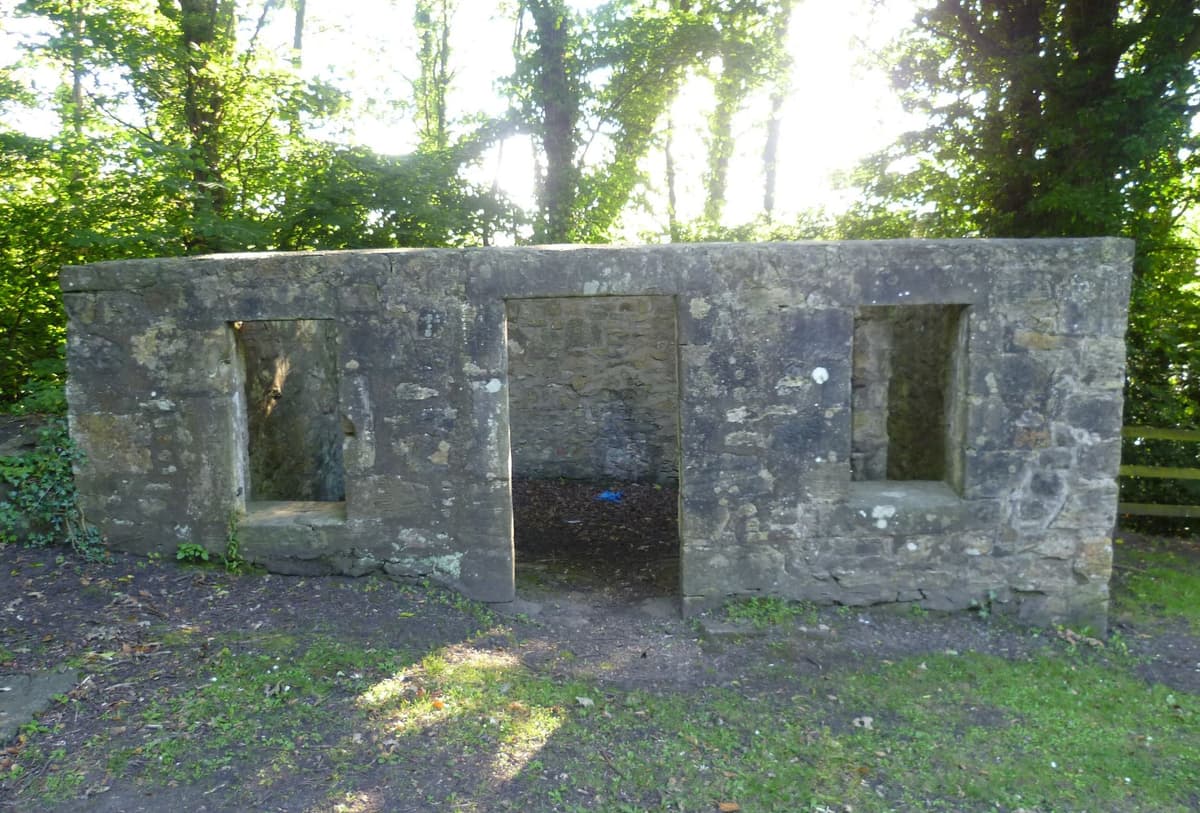
What was here?
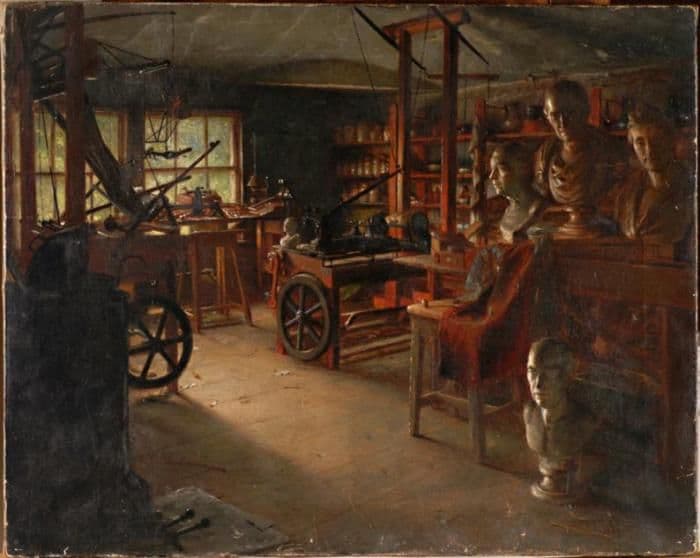
An outhouse behind Kinneil House, which John Roebuck leased from the Duke of Hamilton from about 1764. Watt put together his experimental engine here while Roebuck was his partner.
History
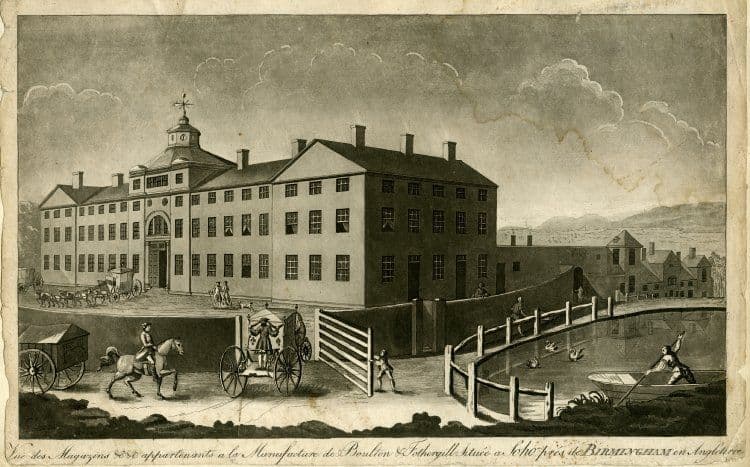
Roebuck moved to Kinneil about 1764 to run the Bo’ness coal and salt works. He backed Watt from 1767–68 for two-thirds of the invention, and Watt’s trial engine was built in an outhouse at Kinneil. After Roebuck’s bankruptcy his share passed to Matthew Boulton, and Watt had the engine taken apart and sent to Soho, where it arrived in 1774.
Why it mattered
The engine that started Boulton & Watt at Soho was first assembled here.
More pictures
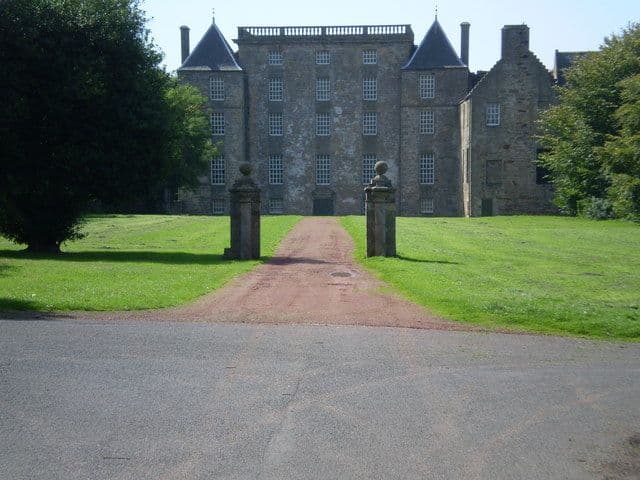
Kinneil House, Bo’ness, 22 August 2007Tom Sargent, 22 August 2007. Wikimedia Commons (from Geograph) · CC BY-SA 2.0
What’s there now
What survives
Roofless stone walls, with an old engine cylinder from a Bo’ness pit displayed beside them.
Today
In Kinneil Estate, Bo’ness.
Then and now
Then · 13 March 2012
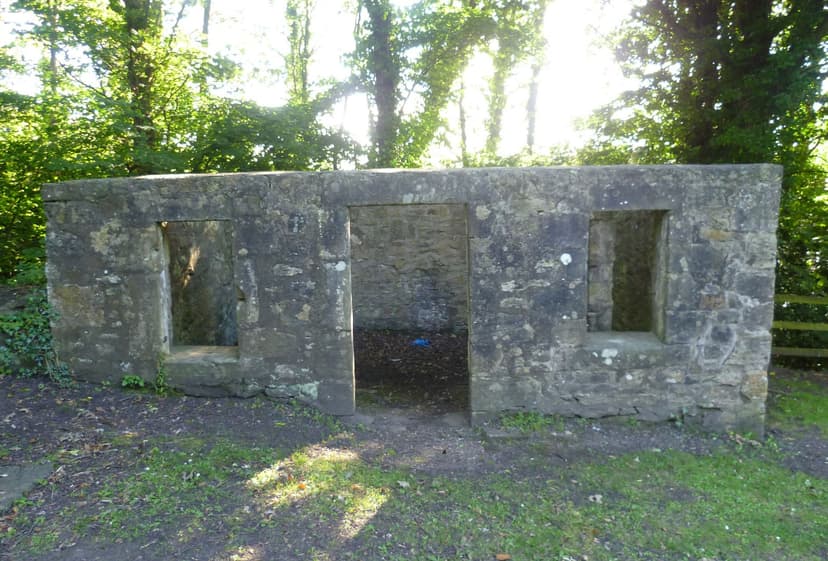
Now · 13 March 2012
Key dates
- 1773–74 — Roebuck’s share in Watt’s engine passes to BoultonRuined by flooded coal pits, John Roebuck settles a debt of about £1,200 to Matthew Boulton by handing over his two-thirds share in James Watt’s engine patent. Watt’s trial engine is shipped from Kinneil to Soho, and Watt follows in 1774.
Sources and further reading
The ruin is traditionally identified as Watt’s workshop; Geograph’s caption calls it “reputed”.
- Lives of Boulton and Watt — Samuel Smiles, John Murray, London, 1865
- Roebuck, John (1718–1794) — Dictionary of National Biography, vol. 49 — Francis Espinasse, Smith, Elder & Co., 1897
- Watt’s Cottage — Friends of Kinneil
Comments
Comments will load here.