
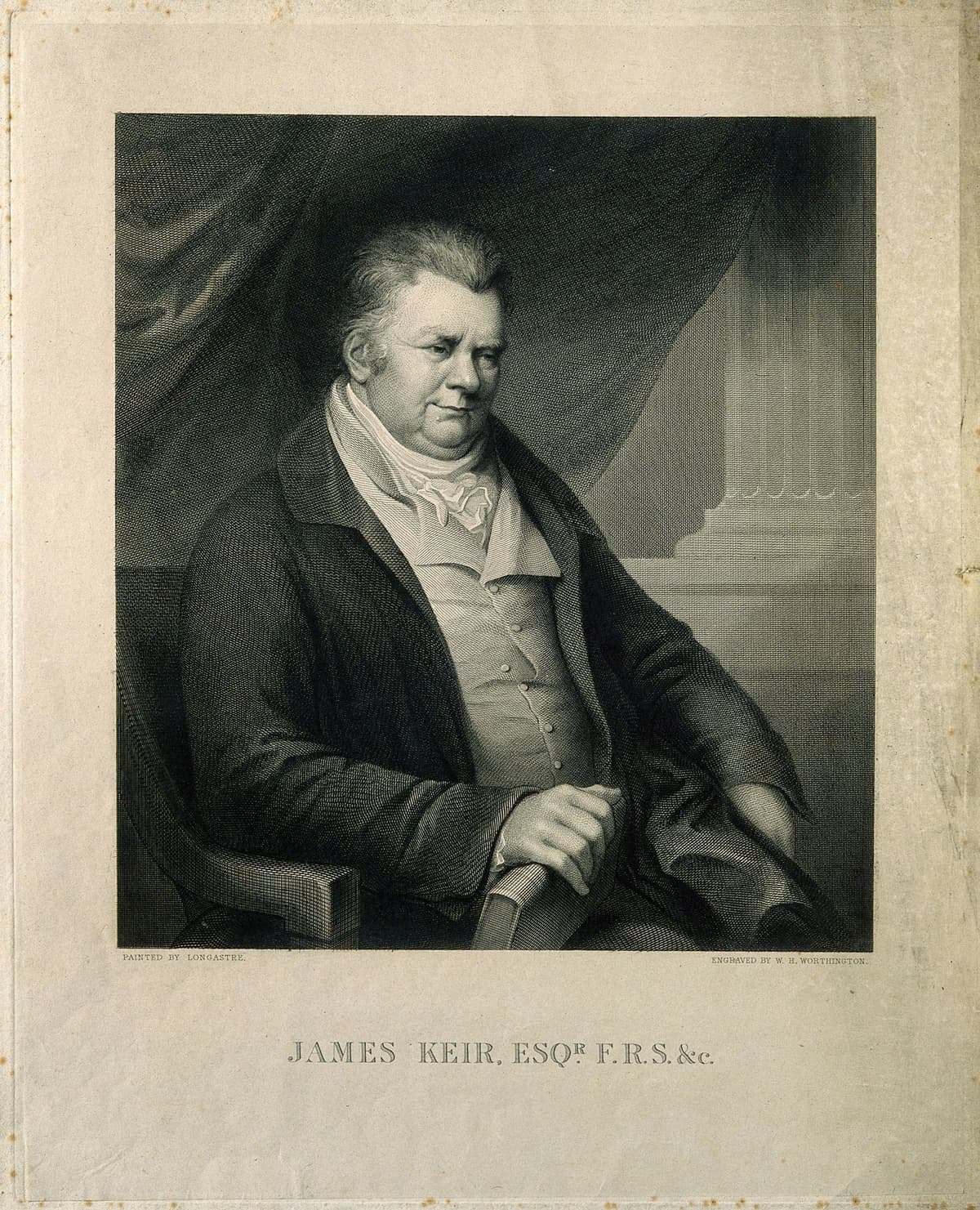
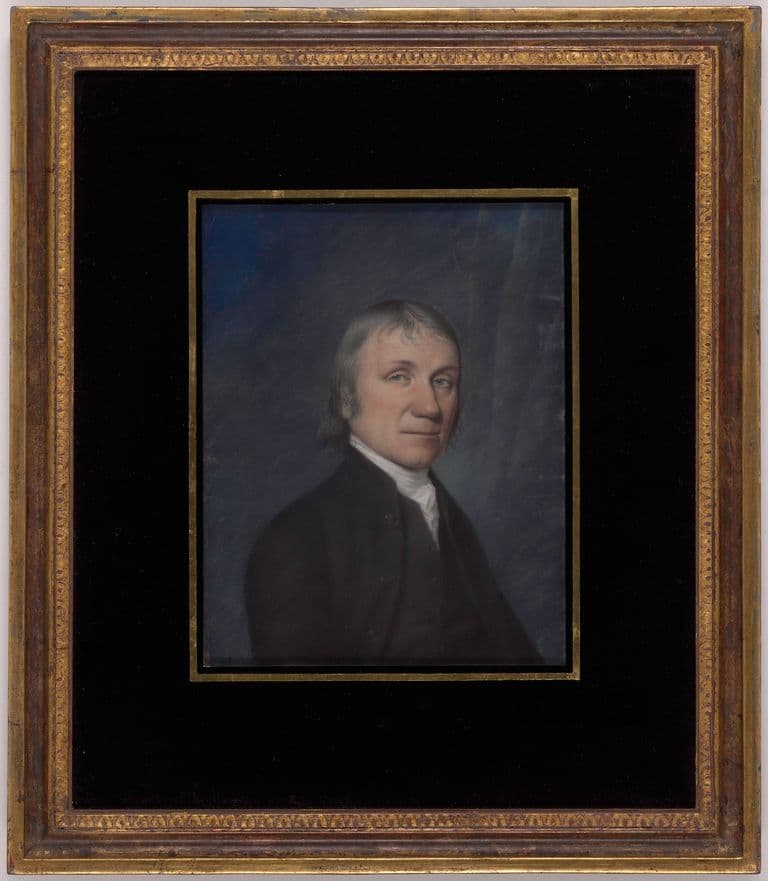
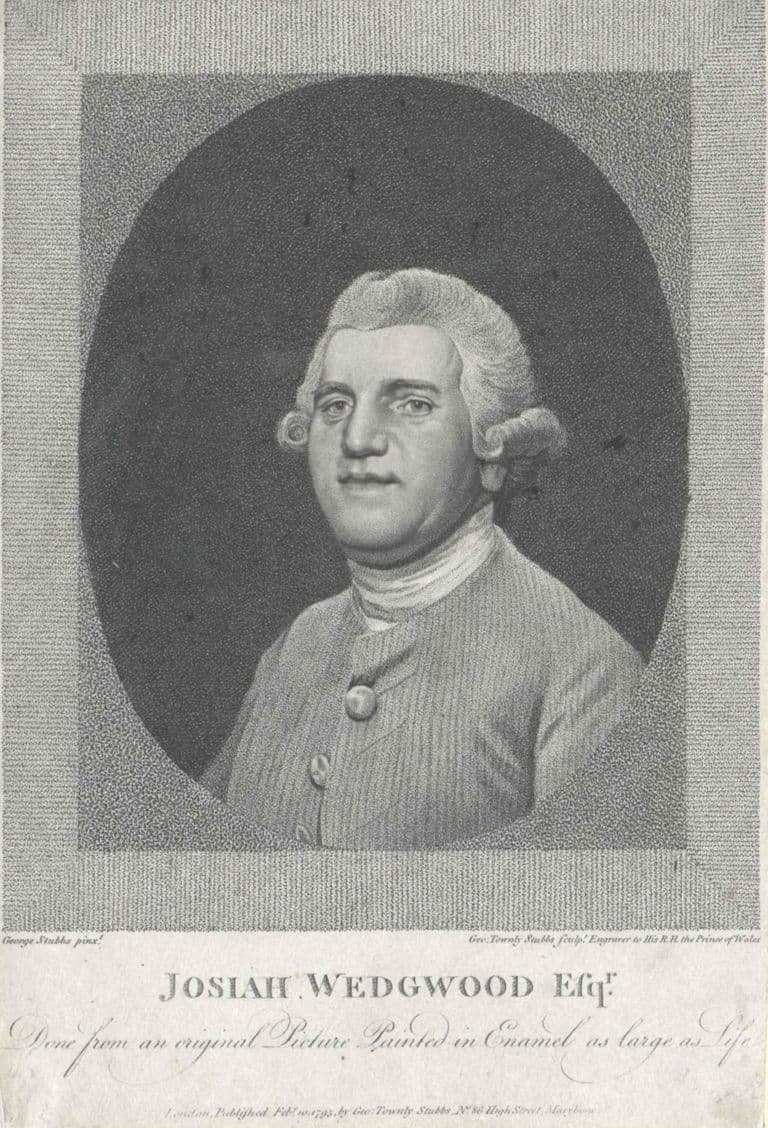
Of the four men in this story, James Keir is the one most people have never heard of. That is a strange fate for a man who ran Soho, partnered James Watt, built one of the great chemical works of the Black Country and chaired the dinner that set Birmingham on fire.
Soldier, doctor, chemist
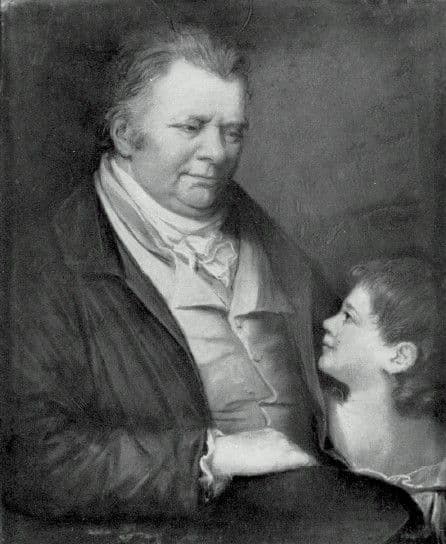
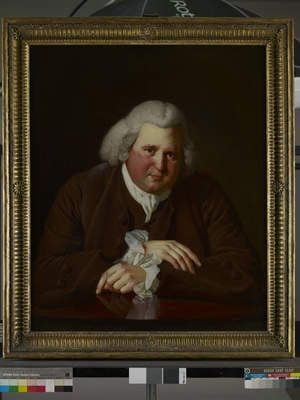
Keir was born on 29 September 1735, according to the Oxford Dictionary of National Biography, in Edinburgh, the youngest of the eighteen children of John Keir and Magdaline Lind. He went to Edinburgh High School and studied medicine at Edinburgh University, where he became friends with another young medical student, Erasmus Darwin.
He did not become a doctor. On 1 October 1757 he was commissioned as an ensign in the 61st Foot. He served in the West Indies, was made captain on 23 June 1766, and resigned in the spring of 1768.
That autumn he met James Watt at Matthew Boulton’s house. He settled at Hill Top, West Bromwich, and around 1770 or 1771 he married Susanna Harvey of Birmingham. The soldier had come home to the Midlands to be a chemist.
Glass and gases
His first venture was glass. At Holloway End in Amblecote, near Stourbridge, he went into partnership with Samuel Skey and John Taylor. On 22 October 1772 he wrote to Boulton about “chemical operations in an old glass-house”. The works made flint glass, window glass, decanters, wine glasses and chemical ware, and supplied Boulton among others. Keir used the furnaces for his own experiments.
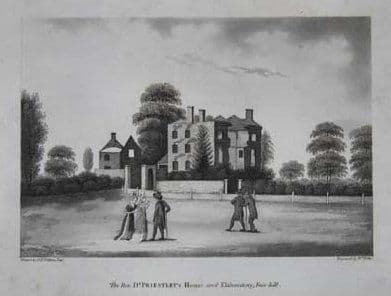
He was also a writer. He translated Macquer’s French Dictionnaire de Chymie in 1776, published a treatise on “elastic fluids”, or gases, in 1777, and later began his own Dictionary of Chemistry, of which the first part appeared in 1789. From 1780 he worked with Joseph Priestley on gases.
The Lunar chemist
Keir was one of the Lunar Society’s chemists. After Dr William Small died in 1775, the friends met monthly on the Sunday nearest the full moon, so that they could ride home by moonlight. They dined at two and talked until at least eight, most often at Boulton’s Soho House. Keir knew the circle from both ends: Darwin from university, Boulton and Watt from Soho, Priestley from the laboratory, and Thomas Day, whose life he would later write.
Minding Soho
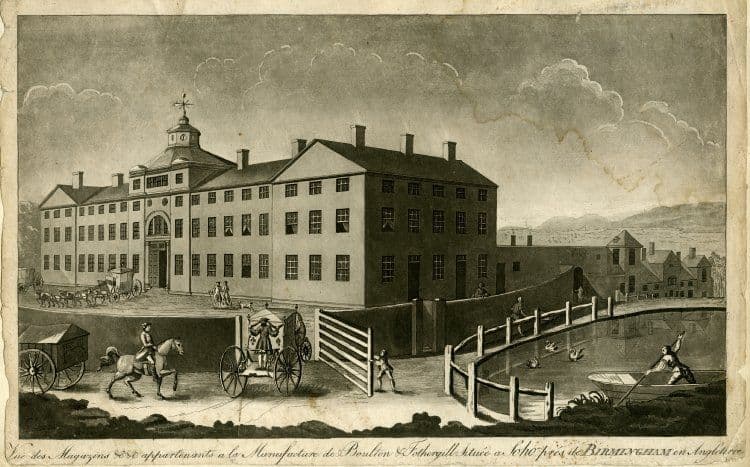
In 1778 Boulton and Watt were both away, and somebody had to run the Soho works. They chose Keir. He managed the business while they were gone. They offered him a partnership. He turned it down as too risky.
He did not walk away, though. In 1779 he patented an alloy of copper, zinc and iron that could be forged hot or cold, known as Keir’s metal. The old Dictionary of National Biography compared it with the later Muntz metal. It was used for window sashes. In the same year as his spell at Soho, 1778, he moved to Winson Green. In 1780 he joined Watt and Boulton as a partner in James Watt & Co., making Watt’s new letter-copying press.
Soap on the canal
Around 1780 Keir and Alexander Blair set up a chemical works at Bloomfield, Tipton, beside the Birmingham Canal. It is a neat coincidence that the first commercial Boulton & Watt engine had gone to work at Bloomfield Colliery in 1776.
The works made alkali, which the ODNB describes as made “from the sulfates of potash and soda”. Then came soap, white and red lead for potters and glassmakers, and metal window sashes. The canal carried the soap to Hull, Liverpool, Bristol and London. Factory Road in Tipton was once Soap Factory Road. Around 1794 Keir, Blair and Playfair bought Tividale Colliery, which fed the soap works with coal and fed Keir’s geological interests with specimens.
On 8 December 1785 Keir was elected a Fellow of the Royal Society.
The Bastille dinner
Keir sympathised openly with the French Revolution. On 14 July 1791 he chaired a dinner in Birmingham to mark the second anniversary of the fall of the Bastille. Keir was an Anglican, not a Dissenter, but it was this dinner that set off the Priestley Riots. That night the rioting began, and for three days crowds attacked the meeting houses and homes of Birmingham’s Dissenters, Priestley’s among them.
The Dictionary of National Biography says his “avowal of sympathy with the French revolution at a public dinner on 14 July exposed him to much virulent abuse”. He kept writing, all the same: a life of his Lunar friend Thomas Day in 1791, pamphlets on the Revolution, The Martial Character of Nations in 1793, and geology for Stebbing Shaw’s History of Staffordshire in 1798.
Hill Top
Around 1790 Keir was living at Finchpath Hall at Hill Top, West Bromwich. His daughter Amelia, born in 1780, married John Lewis Moilliet in 1801. A son, Francis, died in infancy. Susanna died on 20 November 1802, and on 19 December 1807 fire struck the house.
Keir died at West Bromwich on 11 October 1820, aged 85, and was buried at All Saints Church there on 19 October. By his own wish there is no monument. His house has gone too; shops stand on the site.
No evidence has been found that Keir himself was involved in the slave trade or in the campaign against it. The next generation was: his daughter, as Mrs Moilliet, sat on the committee of Birmingham’s women’s anti-slavery society, founded in 1825.
Why it mattered
Keir asked for no memorial, and for a long time he got his wish. Yet he was the chemist of the Lunar Society: the man who ran Soho when its owners were away, partnered Watt in his copying press, and turned the theories of the laboratory into soap, alkali and lead shipped along the canals of the Black Country. His glassworks, his alloy and his Tipton works show the Industrial Revolution was about chemistry as well as engines. He also paid a price for his opinions in 1791, when a dinner he chaired became the spark for the Priestley Riots. Today his name is cut into one of the Lunar Society Moonstones at Queslett, beside Boulton, Watt and Murdoch, close to Kingstanding. The quiet partner has his stone at last.
On the map
4 places connected with James Keir. Tap a number for directions — some sites are private homes or gardens, so each place’s page says what you can see from the street.

- Fair Hill — Lost, Site redeveloped
- Watt’s house at Harper’s Hill (Regent Place) — Lost, Partly surviving · Directions to Watt’s house at Harper’s Hill (Regent Place) (opens Google Maps)
- Soho Manufactory — Lost, Site redeveloped · Directions to Soho Manufactory (opens Google Maps)
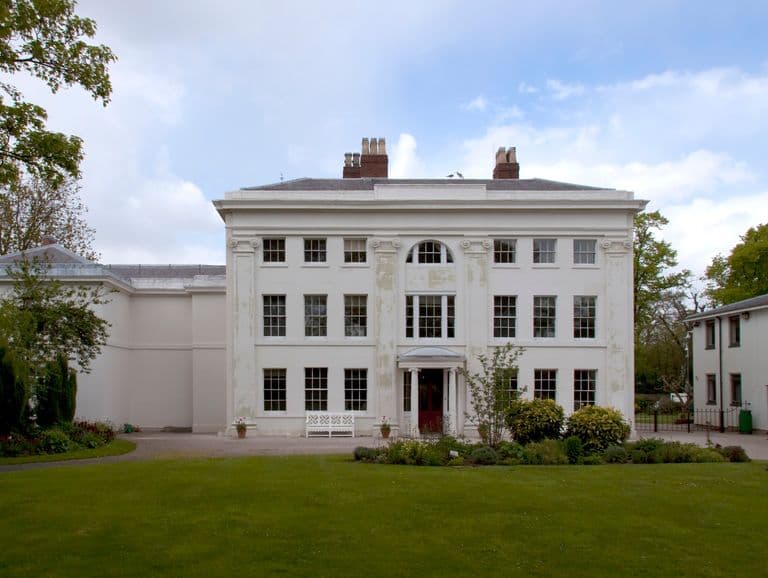
- Soho House — Surviving · Directions to Soho House (opens Google Maps)
Key dates
- 1778 — Keir runs SohoWith Boulton and Watt both away, James Keir manages the Soho works. He turns down the offer of a partnership as too risky.
- 1780 — Copying presses go on saleJames Watt & Co., a partnership of Watt, Boulton and Keir, starts selling Watt’s letter-copying press. The firm sells them until 1840.
- 14 July 1791 — Keir chairs the Bastille dinnerJames Keir chairs a Birmingham dinner celebrating the French Revolution. It sets off the Priestley Riots of 14–17 July 1791.
- 8 April 1825 — Birmingham women found an anti-slavery societyLucy Townsend and Mary Lloyd found the Female Society for the Relief of British Negro Slaves, usually called the first women’s anti-slavery society. Daughters of Lunar Society members, including Amelia Moilliet and Mary Anne Schimmelpenninck, sit on its committee.
Sources and further reading
Birth: the DNB, the ODNB and West Bromwich Local History Society give 29 September 1735; Wikipedia gives 20 September. The ODNB says he was born in Edinburgh; Revolutionary Players and others say Stirlingshire, where the family had estates.
Marriage: 1770 (DNB) or “by 1771” (West Bromwich Local History Society).
Amblecote glassworks: dated 1772 by Dudley’s Glass Quarter and others, and 1775 by the DNB and Revolutionary Players. Keir’s letter of 22 October 1772 supports 1772.
Keir’s metal: a local history site says it was used for window sashes at Windsor Castle and Carlton House. This is unverified and left out.
The Bastille dinner: the venue is given as the Royal Hotel (or Dadley’s Hotel), Temple Row, in sources not yet checked against a scholarly account, so it is not named.
- Keir, James — Dictionary of National Biography, vol. 30 — Gordon Goodwin, Smith, Elder & Co., 1892
- Keir, James (1735–1820), chemist and industrialist — Oxford Dictionary of National Biography — Oxford Dictionary of National Biography, Oxford University Press
- A Portrait of James Keir — Revolutionary Players, History West Midlands
- The annals of Tipton: James Keir & Company — Black Country History
- James Keir — West Bromwich Local History Society
- History and Heritage — Stourbridge Glass Quarter — Dudley Council, Dudley Council
- Copying press — Archives of Soho — Library of Birmingham, Birmingham City Council. Ref. MS 3219/4/127/6, /13; MS 3219/4/18/22; MS 3147/18/2
- The Lunar Society — Archives of Soho — Library of Birmingham, Birmingham City Council. Ref. MS 3782/13/53/87; MS 3219/4/86/7
- Birmingham Toast — Jennifer Dionisio, Distillations, Science History Institute, 2010
- Abolition of the Slave Trade and Slavery — Revolutionary Players, History West Midlands
- Bloomfield Colliery — Grace’s Guide to British Industrial History, Grace’s Guide
- Lunar Society Moonstones — Wikipedia
Comments
Comments will load here.