
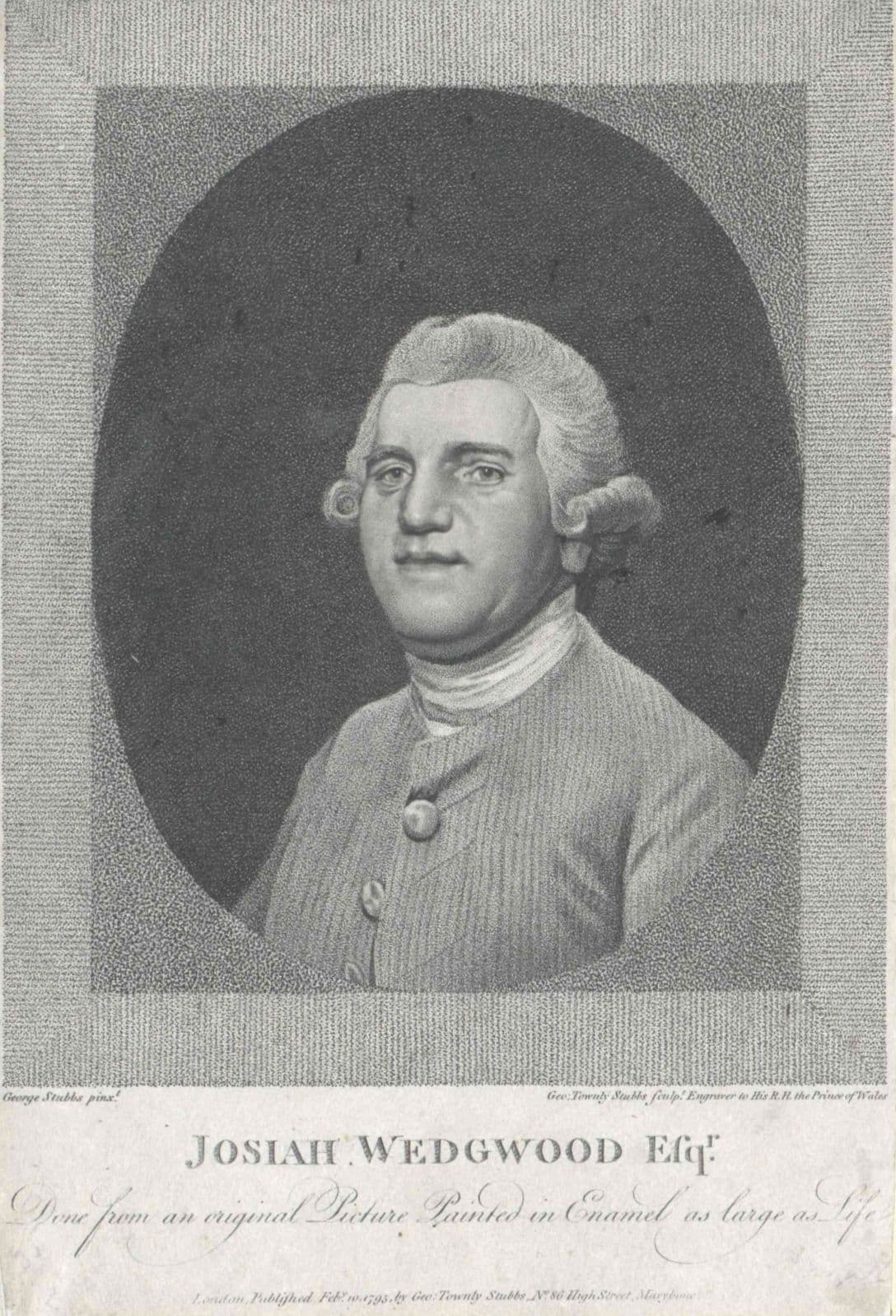
Josiah Wedgwood’s world was the Potteries of North Staffordshire, where he was born at Burslem and died at Etruria. He never lived in Birmingham. But he was a Lunar man, and some of his most important friendships and causes ran straight through the town.
Paying for Priestley
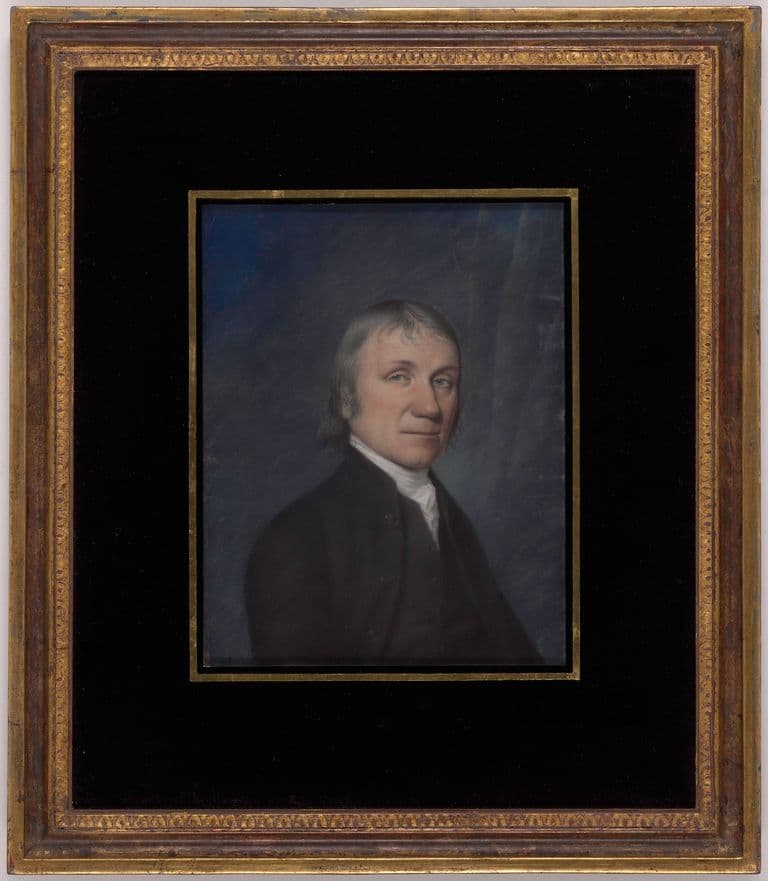
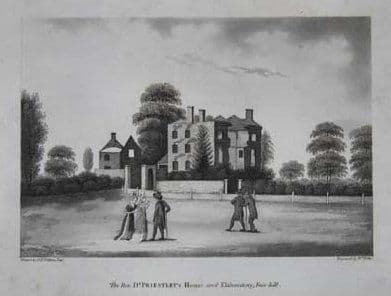
The clearest Birmingham evidence comes from Joseph Priestley himself. Priestley’s experiments at Fair Hill ran on subscriptions from friends. Wedgwood, he wrote, “who has distinguished himself by his application to philosophical pursuits … was very zealous to serve me, and urged me to accept of a much larger allowance than I chose”.
In other words, a potter from Staffordshire was one of the backers of the most famous laboratory in Birmingham. Priestley’s letters to Wedgwood were later published among his scientific correspondence.
Wedgwood, he wrote, “who has distinguished himself by his application to philosophical pursuits … was very zealous to serve me, and urged me to accept of a much larger allowance than I chose”.
Wedgwood was a scientist in his own right. He was elected a Fellow of the Royal Society in 1783, and his papers there include “A method of ascertaining very great degrees of heat”: the potter’s problem of measuring the fierce heat of a kiln.
“Am I Not a Man and a Brother?”
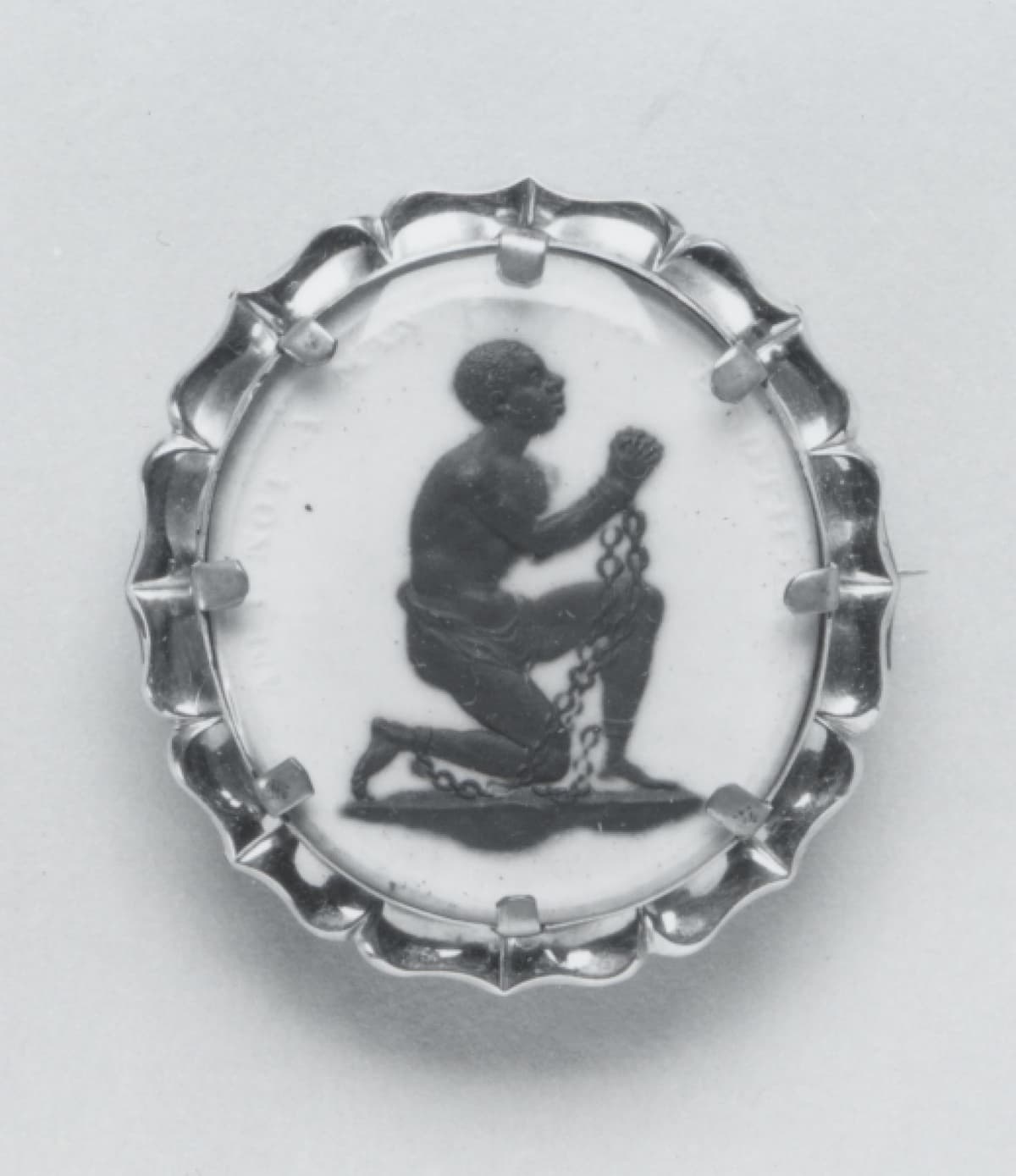
In 1787 the London committee campaigning to abolish the slave trade adopted a seal showing a kneeling, chained African with the words “Am I Not a Man and a Brother?” Wedgwood’s factory turned it into a small ceramic medallion, probably modelled by William Hackwood.
He gave the medallions away. Batches went to Thomas Clarkson and to Benjamin Franklin in 1788. By the 1790s thousands were in circulation. It became the most famous image of the campaign.
Wedgwood wrote to his Birmingham friend James Watt in February 1788 that he had joined a Potteries petition for abolition, “as I do not like a half measure in this black business”. He also wrote: “I take it for granted that you & I are on the same side of the question respecting the slave trade.”
The other side of the ledger
The story is not simple. The Victoria and Albert Museum notes that the medallion shows the enslaved man as “submissive, shackled, and ultimately unthreatening”: a plea for pity, not a picture of equals. And it says Wedgwood “profited hugely from the trade he personally opposed”. He sold to markets in the West Indies and to wealthy customers whose money came from slavery.
A family of scientists
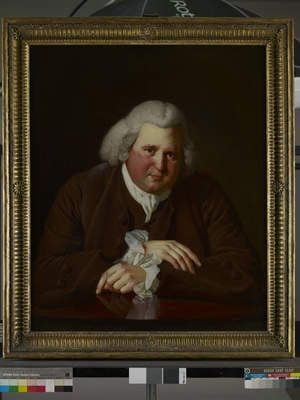
The Lunar friendships ran into the family. Wedgwood’s daughter Susannah married Robert Darwin, son of Erasmus Darwin. Their son was Charles Darwin, grandson of both Lunar men.
Why it mattered
Wedgwood belongs in Birmingham’s story as a friend and backer rather than a resident. He helped pay for Priestley’s science, wrote to Watt about the slave trade and sat in the same circle as Boulton, Darwin, Galton and Withering.
His medallion put the question of slavery into the pockets and onto the clothes of ordinary people. That was a brilliant piece of campaigning, made by a man who also profited from the slavery economy. Both are true.
Through his daughter Susannah he was also grandfather to Charles Darwin, which makes him part of the most remarkable family the Lunar Society produced. His Moonstone at Queslett, on the edge of Kingstanding, stands among those of his Lunar friends: a reminder that the circle that changed Birmingham reached far beyond the town.
On the map
3 places connected with Josiah Wedgwood. Tap a number for directions — some sites are private homes or gardens, so each place’s page says what you can see from the street.

- Fair Hill — Lost, Site redeveloped
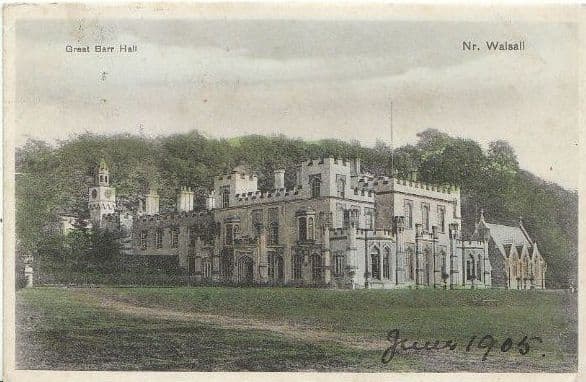
- Great Barr Hall — Partly surviving, At risk · Directions to Great Barr Hall (opens Google Maps)
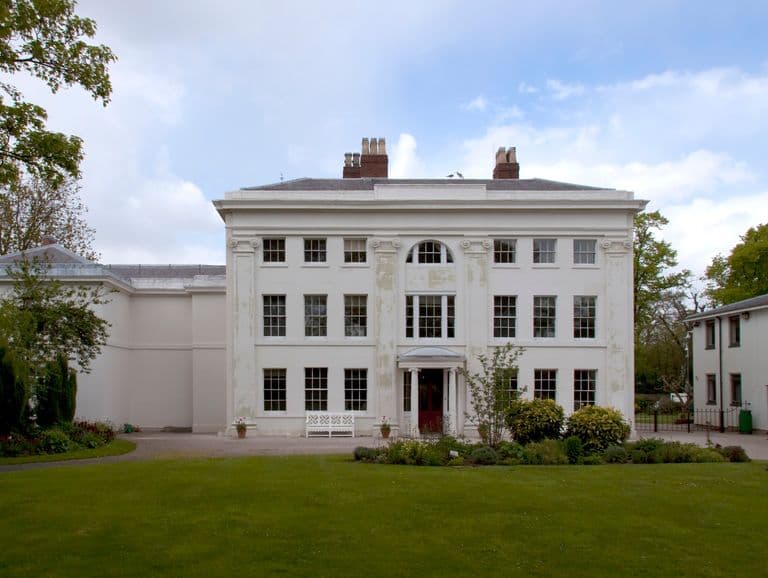
- Soho House — Surviving · Directions to Soho House (opens Google Maps)
Key dates
- 1998 — The Lunar Society Moonstones are madeSteve Field designs carved sandstone memorials to the Lunar men, including Priestley, Withering, Galton, Darwin and Wedgwood. They stand at Queslett, on the edge of Kingstanding.
Sources and further reading
Birth and baptism: the Royal Society gives his birthplace as Burslem without a date; Wikipedia (lead only) gives his baptism as 12 July 1730 at St John’s, Burslem.
Burial: from a local history source (thepotteries.org) and Wikipedia; not checked against parish records.
Not used for lack of evidence: the often-repeated claim that he made ceramic tubes and retorts for Priestley’s experiments is plausible but has not been checked against a specific letter; claims that he and Boulton were “friendly rivals”; and the claim that Boulton made steel mounts for the anti-slavery medallion, which is only an attribution for cut-steel mounts on Wedgwood jasper in general.
- Josiah Wedgwood — Science in the Making — The Royal Society. birthplace; death; FRS 1783; papers; family
- Memoirs of Dr. Joseph Priestley, to the year 1795, written by himself — Joseph Priestley, London, 1806. Wedgwood’s support
- Scientific Correspondence of Joseph Priestley: Ninety-seven letters addressed to Josiah Wedgwood, Sir Joseph Banks, … — H. C. Bolton (ed.), New York, 1892
- The Wedgwood anti-slavery medallion — Victoria and Albert Museum, V&A
- References to Slaves in the ‘Archives of Soho’ — Library of Birmingham, Birmingham Archives & Heritage. Ref. MS 3147; MS 3219; MS 3782. Wedgwood to Watt, 1788 (MS 3219/4/95/20)
- Matthew Boulton, William Murdock and James Watt: Appraisal for ‘Golden Boys’ Statue — Stephen Mullen, Birmingham Museums Trust, 2021. Wedgwood as a Lunar abolitionist
- The Arches, Stoke Churchyard — thepotteries.org. burial
- Josiah Wedgwood — Wikipedia contributors, Wikipedia. baptism (lead only)
Comments
Comments will load here.