
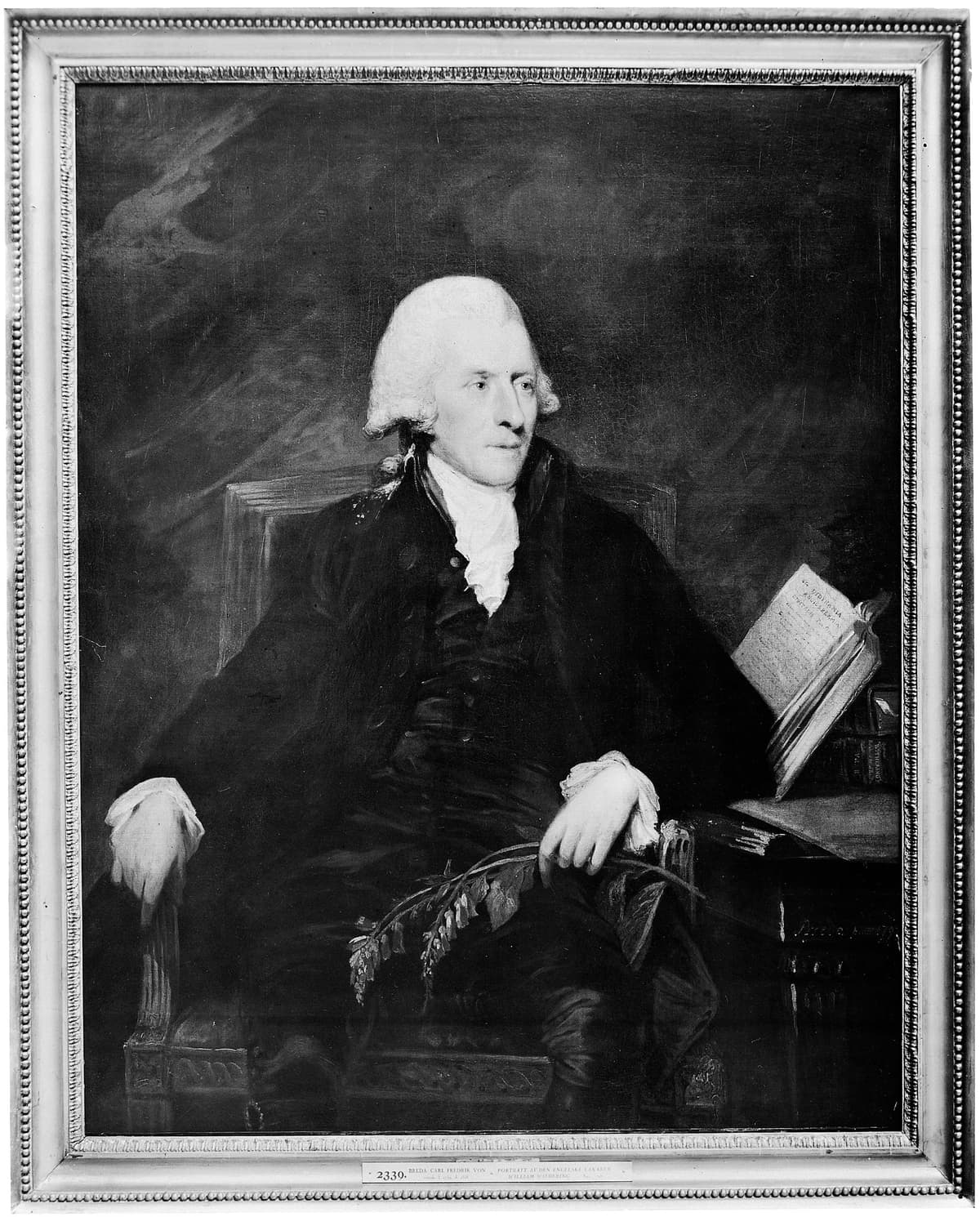
In 1775 a young doctor was handed a puzzle. A family in Shropshire had a secret cure for dropsy, the swelling of the legs and body that often meant a heart was failing. Would he give his opinion?
William Withering could have laughed it off. Instead he spent ten years on it. The result was one of the great books in the history of medicine, and a drug that is still saving lives.
A doctor comes to town
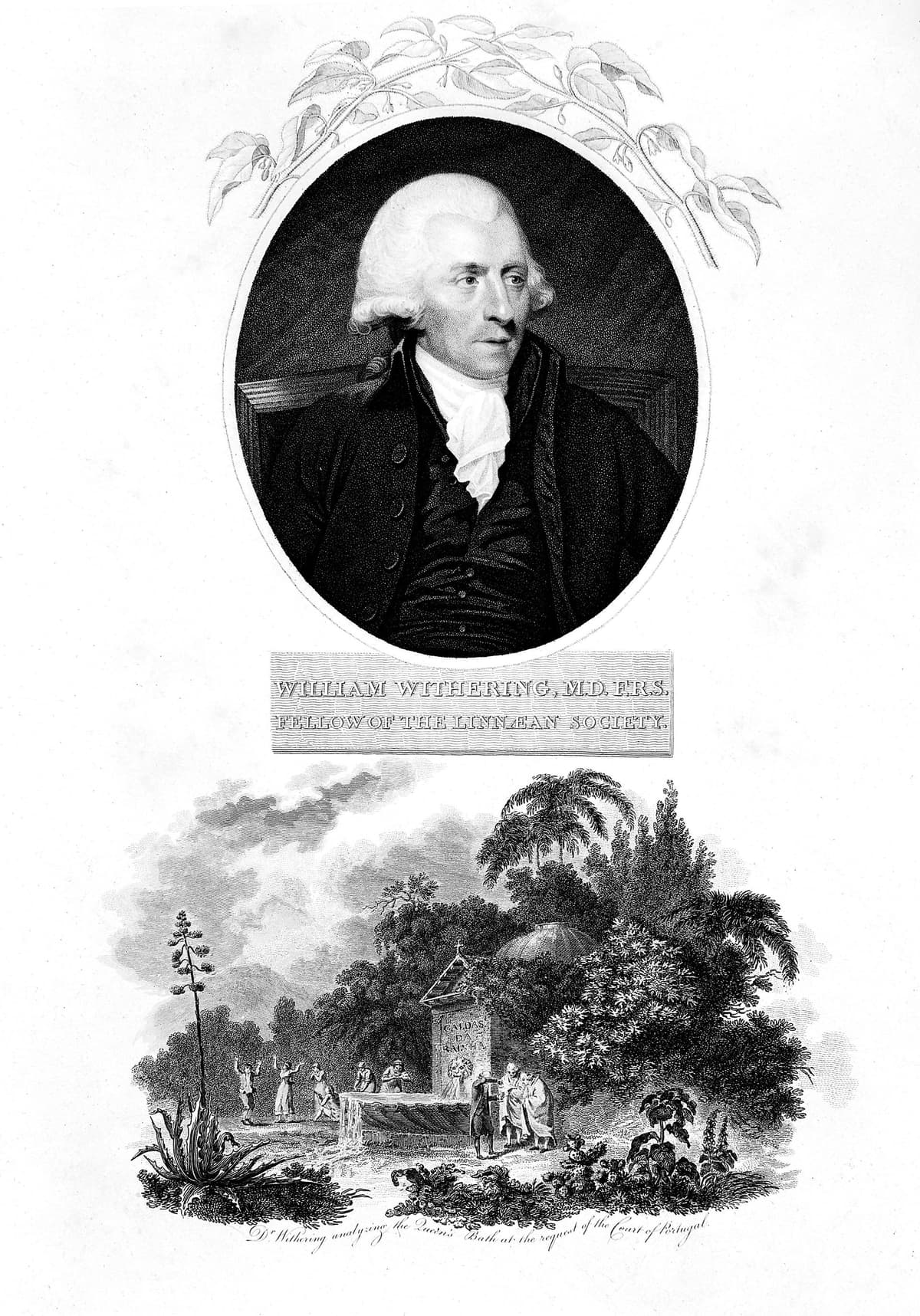
Withering was born in Wellington, Shropshire, in 1741, the son of a medical man. He took his M.D. at Edinburgh in 1766 and set up in practice at Stafford the next year.
Stafford gave him two things. One was botany. He gathered wild plants for a patient, Helena Cookes, to paint. The other was Helena herself: they married in September 1772.
Here is the story in Withering’s own words, published in 1785: “In the year 1775, my opinion was asked concerning a family receipt for the cure of the dropsy. I was told that it had long been kept a secret by an old woman in Shropshire.”
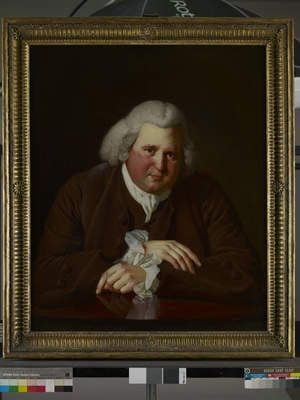
Then a letter arrived from Lichfield. Dr Erasmus Darwin wrote to tell him that a physician’s place had fallen vacant in Birmingham. In 1775 Withering moved to the town. He ran a daily clinic for the poor, and when the new General Hospital opened in 1779 he joined its medical staff.
In 1776 he published A Botanical Arrangement of all the Vegetables naturally growing in Great Britain, the first full account of British plants using Linnaeus’s new system. He was not yet 36.
The secret of the old woman in Shropshire
Here is the story in Withering’s own words, published in 1785: “In the year 1775, my opinion was asked concerning a family receipt for the cure of the dropsy. I was told that it had long been kept a secret by an old woman in Shropshire.”
The recipe contained twenty or more herbs. Most of them, Withering reasoned, were padding. The botanist in him picked out the one that mattered. It “could be no other than the Foxglove”.
Then came the hard part. Foxglove is poisonous, so the dose had to be right. Withering did something unusual for his day: he counted. He tried leaves and roots, fresh and dried, picked at different seasons. He varied the dose. He noted who got better, who did not, and who suffered side effects.
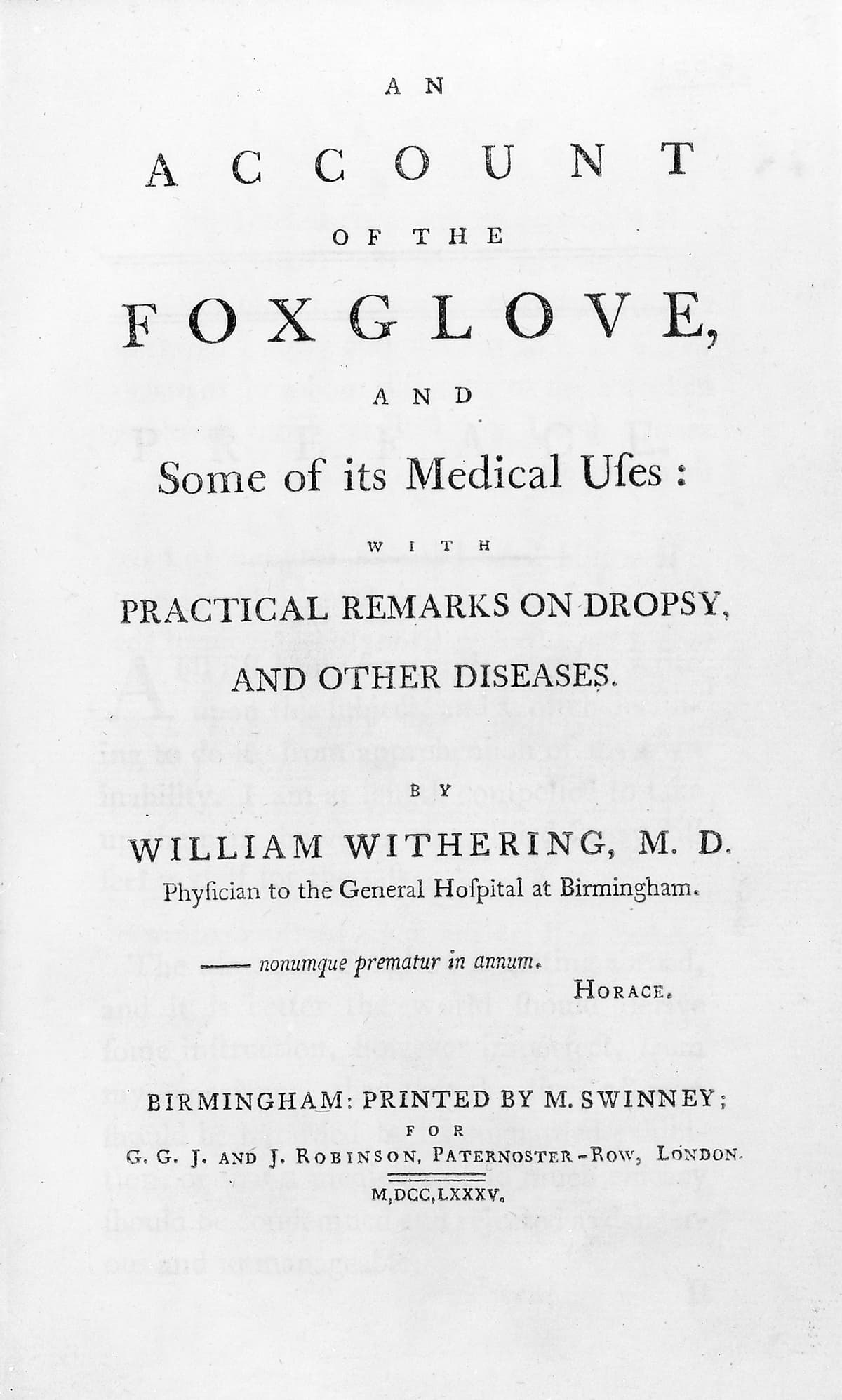
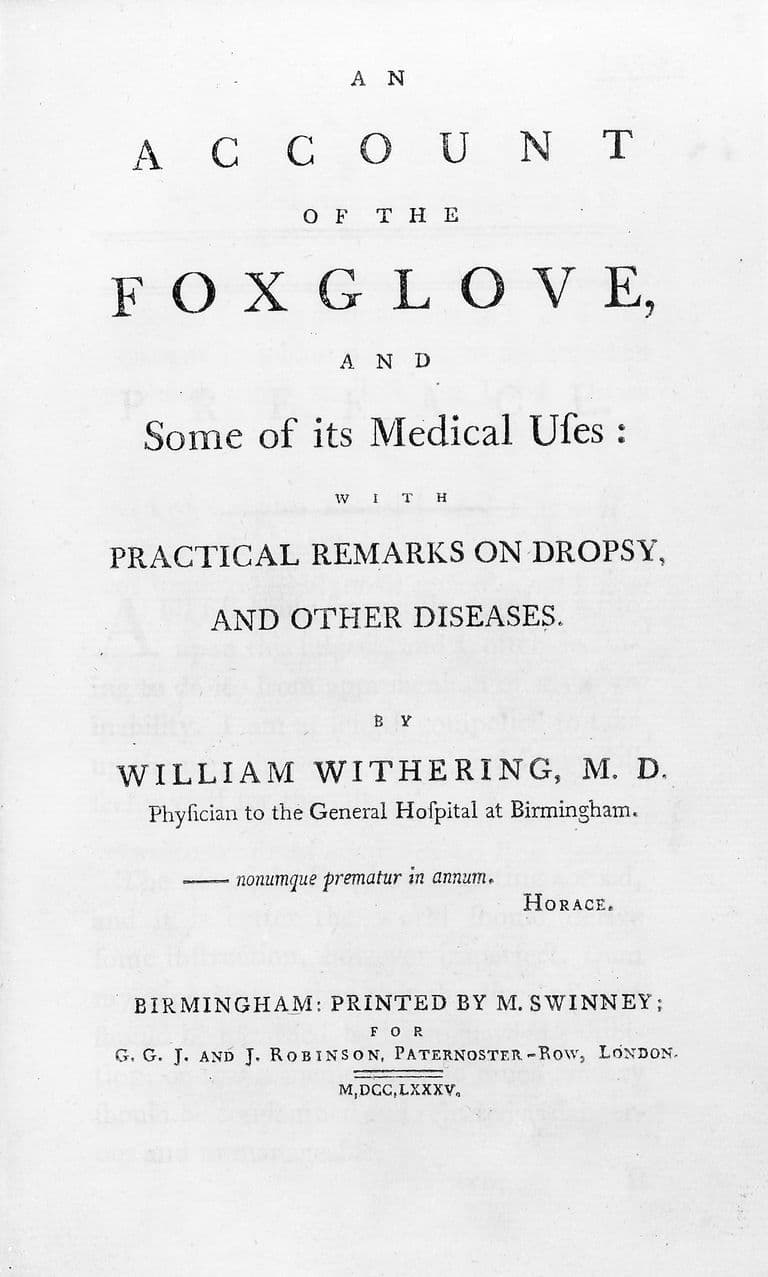
A success reported by his Birmingham colleague Dr John Ash encouraged him to go on. By 1785 he had enough. An Account of the Foxglove and some of its Medical Uses sets out 163 of his own cases treated between 1775 and 1785, the failures as well as the cures, plus reports from other doctors. It tells the reader how to prepare the leaf, how much to give, and the warning signs of an overdose.
That honesty is what makes the book special. It was not a miracle cure. It was evidence.
Myth-busting: there was no “Mother Hutton”
Many books and websites name the Shropshire woman as “Old Mother Hutton”, a wise woman of herbs. She never existed. The name and character were invented in 1928 for a Parke-Davis pharmaceutical advertisement. Withering himself names nobody: just “an old woman in Shropshire”.
Edgbaston Hall and the Lunar men
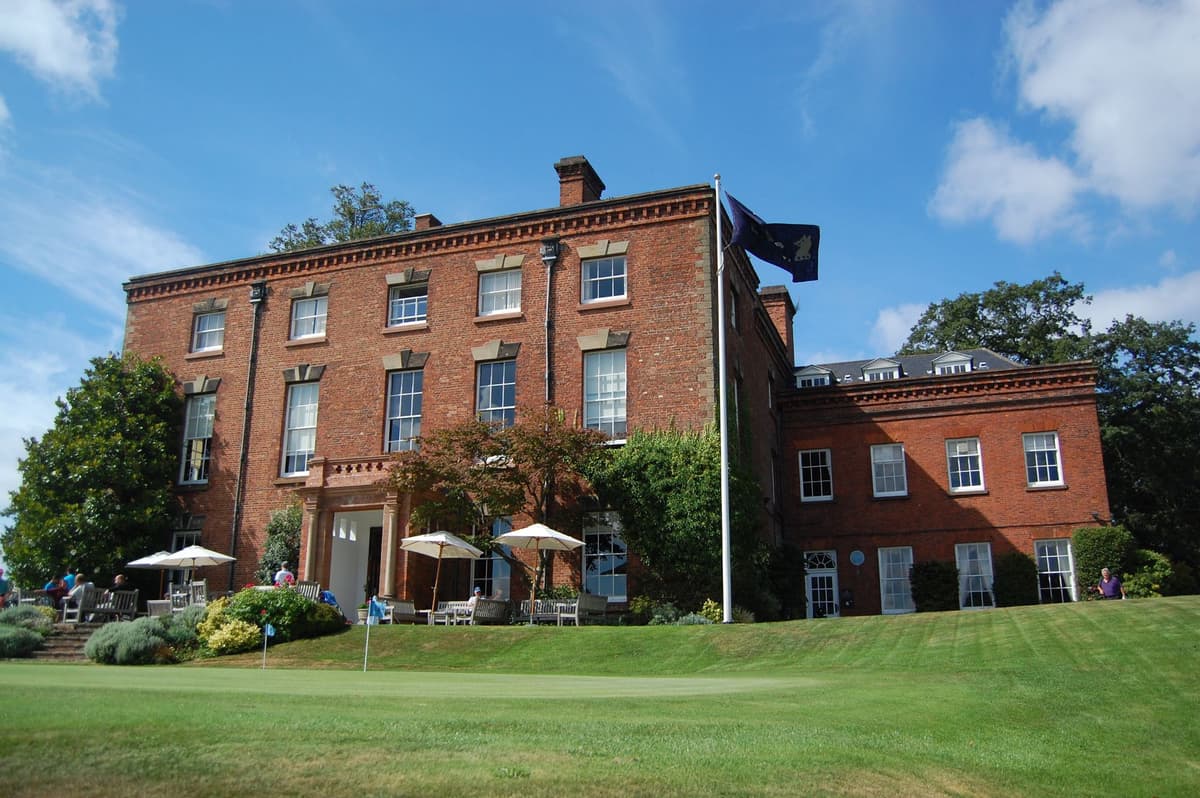
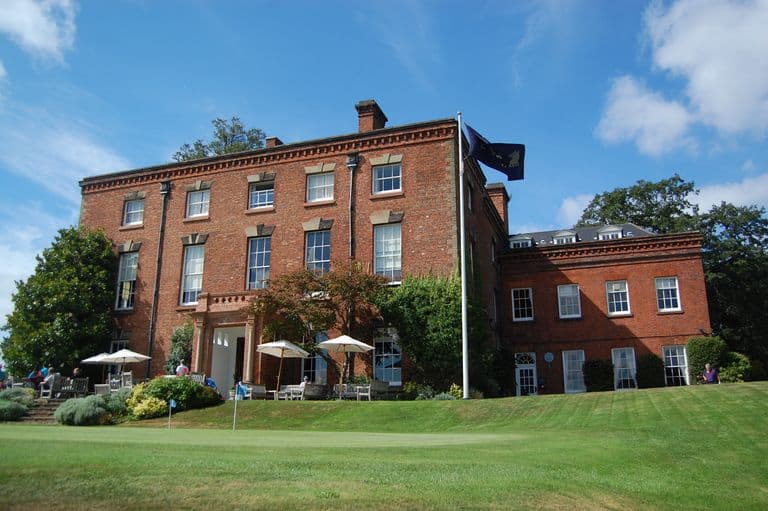
Success brought status. Withering was elected a Fellow of the Royal Society on 24 November 1785. In 1786 he took a fourteen-year lease of Edgbaston Hall, empty since the Gough-Calthorpe family had left.
There he lived like a scientific country squire. He bred Newfoundland dogs and French cattle. He paid professional plant collectors for a new edition of his Botanical Arrangement. He analysed minerals too: “terra ponderosa”, a barium mineral he analysed, was later named witherite in his honour. His friend Joseph Priestley sent his analyses of local rocks to Sir Joseph Banks at the Royal Society.
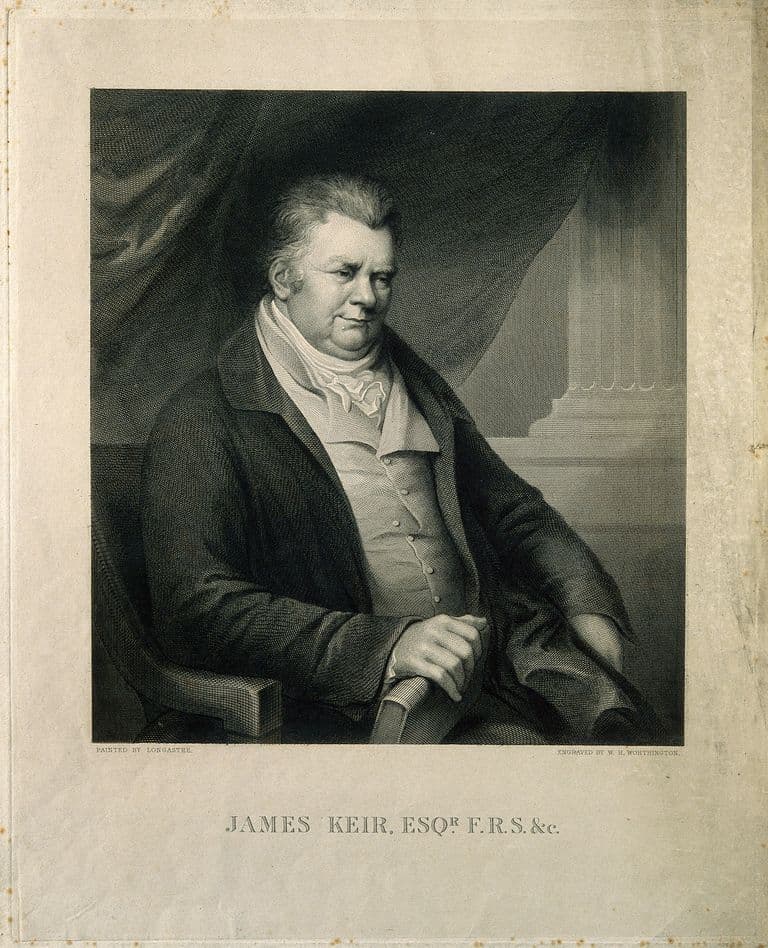
Withering was one of the Lunar Society, the circle of Boulton, Watt, Keir, Priestley, Galton and Darwin that dined together each month near the full moon. The friendship with Darwin did not last. The two men later fell out over the foxglove, and who deserved the credit for it.
The chemistry ran both ways. Withering translated the Swedish chemist Torbern Bergman’s work on minerals as Outlines of Mineralogy (1783), and the Victorian Dictionary of National Biography says he handed his own research on phlogiston “over to his friend Priestley”. This was how the Lunar Society worked: friends trading problems across the dinner table.
The mob at the gate
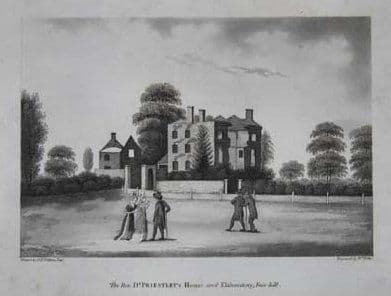
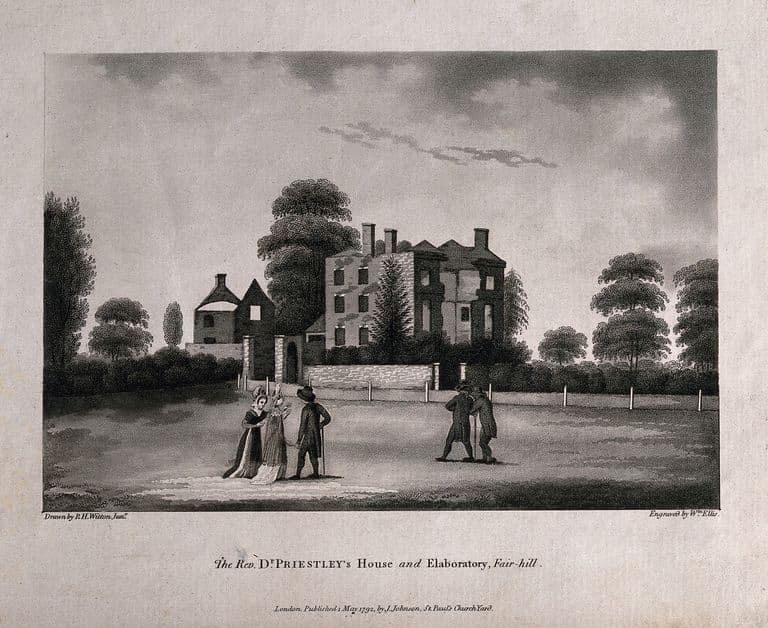
In July 1791 Birmingham exploded. Rioters burned Priestley’s home at Fair Hill and went on to attack the houses of Dissenters and their friends.
Withering was an Anglican, not a Dissenter, and he had not been at the dinner that started the trouble. But he was Priestley’s friend, and that was enough. As the crowd approached Edgbaston Hall he loaded “his books and specimens in wagons”, hid them under hay and prepared to flee. In the end, says the Victorian Dictionary of National Biography, “the arrival of the military ultimately saved his house”.
The last move
By then Withering was ill himself, with a chest disease thought to be tuberculosis. He spent the winter of 1792–93 in Portugal, where the royal court asked him to analyse the waters of the spa at Caldas da Rainha.
In 1799, unable to face another winter at Edgbaston Hall, he bought The Larches in Sparkbrook. It had been rebuilt on the ruins of Priestley’s Fair Hill. He moved in on 28 September 1799. He died there eight days later, on 6 October, aged 58.
He was buried at Edgbaston Old Church, St Bartholomew’s, on 10 October. One modern biographer writes of thousands of mourners following the procession.
Why it mattered
Withering’s gift to the world was not just a plant. It was a method. He took a secret folk cure, found the active ingredient, tested it patiently on real patients, wrote down everything including what went wrong, and published it so that any doctor could check his work.
Foxglove gave medicine digitalis, and digitalis gave it digoxin, a heart drug that is still on the World Health Organization’s List of Essential Medicines more than two centuries later.
Inside St Bartholomew’s, Edgbaston, his memorial tablet is carved with a foxglove on one side and Witheringia, the plant named after him, on the other. Out at Queslett, on the edge of Kingstanding, he has a Moonstone among his Lunar friends. But his truest monument is in pharmacies across the world: a Birmingham doctor’s careful counting, still keeping hearts beating.
On the map
5 places connected with William Withering. Tap a number for directions — some sites are private homes or gardens, so each place’s page says what you can see from the street.

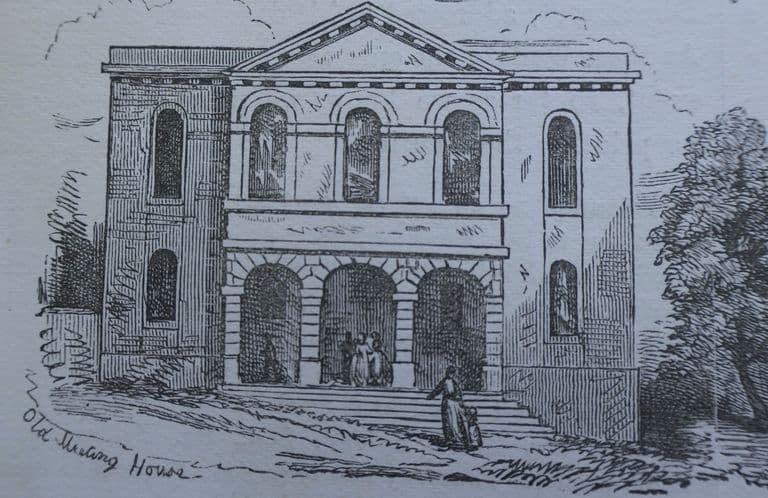
- Old Meeting House, Old Meeting Street — Lost, Site redeveloped · Directions to Old Meeting House, Old Meeting Street (opens Google Maps)
- General Hospital, Summer Lane (site) — Lost, Site redeveloped · Directions to General Hospital, Summer Lane (site) (opens Google Maps)
- Edgbaston Hall — Surviving · Directions to Edgbaston Hall (opens Google Maps)
- Fair Hill — Lost, Site redeveloped
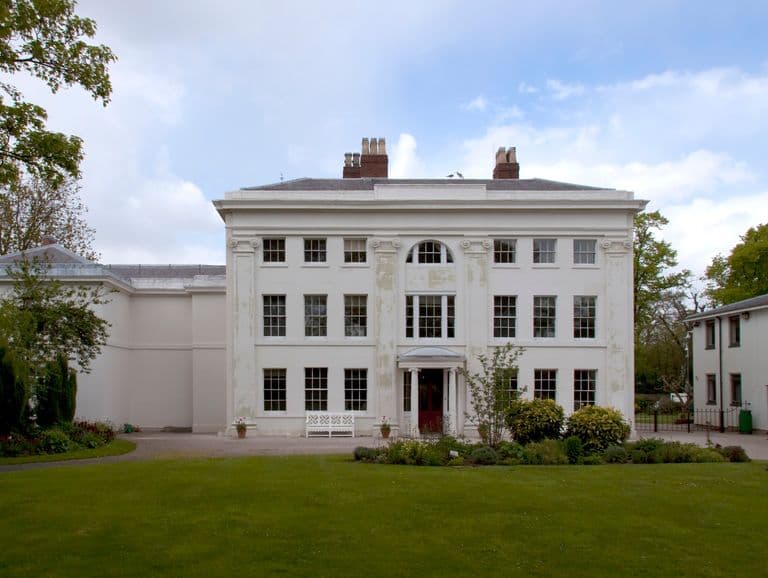
- Soho House — Surviving · Directions to Soho House (opens Google Maps)
Key dates
- 1717 — Edgbaston Hall rebuiltSir Richard Gough built the present Edgbaston Hall on the site of a house destroyed in 1688. William Withering leased it from 1786.
- 1775 — Withering comes to BirminghamTold of a vacancy by Erasmus Darwin, the physician William Withering moves from Stafford to Birmingham. The same year he is asked about a Shropshire family’s secret cure for dropsy, which leads him to the foxglove.
- 1785 — Withering publishes An Account of the FoxgloveWithering’s book sets out 163 cases treated over ten years, with doses, preparation and side effects. It brings foxglove (digitalis) into medicine; its drug digoxin is still used for the heart.
- 1786 — Withering leases Edgbaston HallWithering takes a fourteen-year lease of Edgbaston Hall, where he breeds dogs and cattle, studies minerals and works on his botany.
- c. 16–17 July 1791 — Rioters threaten Edgbaston Hall; troops restore orderWithering hides his books and specimens under hay in wagons as rioters approach Edgbaston Hall. The arrival of troops saves the house and ends the riots.
- 6 October 1799 — Withering dies at The LarchesWilliam Withering dies at The Larches, Sparkbrook, the house rebuilt on the site of Priestley’s Fair Hill, eight days after moving in. He is buried at Edgbaston Old Church.
- c. 1871 — The Larches (rebuilt Fair Hill) demolishedThe Larches, rebuilt on Priestley’s Fair Hill estate and later home of William Withering and the Galtons, was demolished and the estate built over.
- 1998 — The Lunar Society Moonstones are madeSteve Field designs carved sandstone memorials to the Lunar men, including Priestley, Withering, Galton, Darwin and Wedgwood. They stand at Queslett, on the edge of Kingstanding.
Sources and further reading
Place of death: the Historic England list entry for Edgbaston Hall (1075646) says he “died in the home in 1799”. The Royal Society, the Library of Birmingham and the sequence of his last weeks (he moved to The Larches on 28 September 1799) all place his death at The Larches, Sparkbrook. We follow the majority.
Royal Society election: the Royal Society’s own record gives 24 November 1785; the 1885 Dictionary of National Biography says 1784.
Birth date: the 1885 DNB and Royal Society give “March 1741”; the Library of Birmingham and Birmingham Civic Society give 17 March.
Hospital service: the DNB says he served the General Hospital for thirteen years; Lee (2005) says seventeen.
Arrival: the DNB links his move to “the death of Dr. Small” (William Small, d. 1775).
The Larches: it stood on the estate of Priestley’s Fair Hill and was rebuilt after the 1791 fire; it is not the same building Priestley lived in.
Portugal: sources differ on the start of his ill health (1776 or 1783); the DNB places the Portuguese winters in the early 1790s.
Not used for lack of evidence: the details of the foxglove quarrel with Erasmus Darwin and his son Robert (lead-only sources; the fact of a dispute is reported, its particulars are not checked here). Revolutionary Players and the 1885 DNB say he belonged to the Society for the Abolition of the Slave Trade, but no membership or subscription list has been found to confirm it. “Mother Hutton” was created for a 1928 Parke-Davis advertisement (Krikler, 1985).
- An Account of the Foxglove, and some of its Medical Uses — William Withering, Birmingham/London, 1785. introduction
- William Withering — Library of Birmingham (The Iron Room blog), Library of Birmingham Archives & Collections, 2023
- William Withering — Science in the Making — The Royal Society. Ref. L&P/7/251. FRS 1785; death at The Larches; letter L&P/7/251
- Withering, William — Dictionary of National Biography, Smith, Elder & Co., 1885–1900. Edgbaston Hall; riots; Portugal
- William Withering (1741–1799), a biographical sketch of a Birmingham Lunatic — M. R. Lee, James Lind Library, 2005. riots; funeral; memorial
- Edgbaston Hall — Register of Parks and Gardens entry 1001201 — Historic England. Edgbaston Hall park; 1786 lease
- Edgbaston Golf Club (formerly listed as Edgbaston Hall) — National Heritage List for England entry 1075646 — Historic England
- Church of St Bartholomew, Edgbaston — National Heritage List for England entry 1075647 — Historic England
- Digitalis: from Withering to the 21st century — British Journal of Cardiology, 2024. the 163 cases (lead)
- The foxglove, “the old woman from Shropshire” and William Withering — D. M. Krikler, Journal of the American College of Cardiology, 1985. Mother Hutton myth
- Mother Hutton — Wikipedia contributors, Wikipedia. lead only
- Memoirs of Dr. Joseph Priestley, to the year 1795, written by himself — Joseph Priestley, London, 1806. Lunar Society members
- The Life, Letters and Labours of Francis Galton, vol. 1 — Karl Pearson, Cambridge University Press, 1914. The Larches rebuilt on Fair Hill
- Blue Plaque: William Withering — Birmingham Civic Society
- A Portrait of Dr William Withering — Revolutionary Players (Malcolm Dick and Kate Iles), History West Midlands. abolition society claim (unconfirmed)
Comments
Comments will load here.