
What was here?
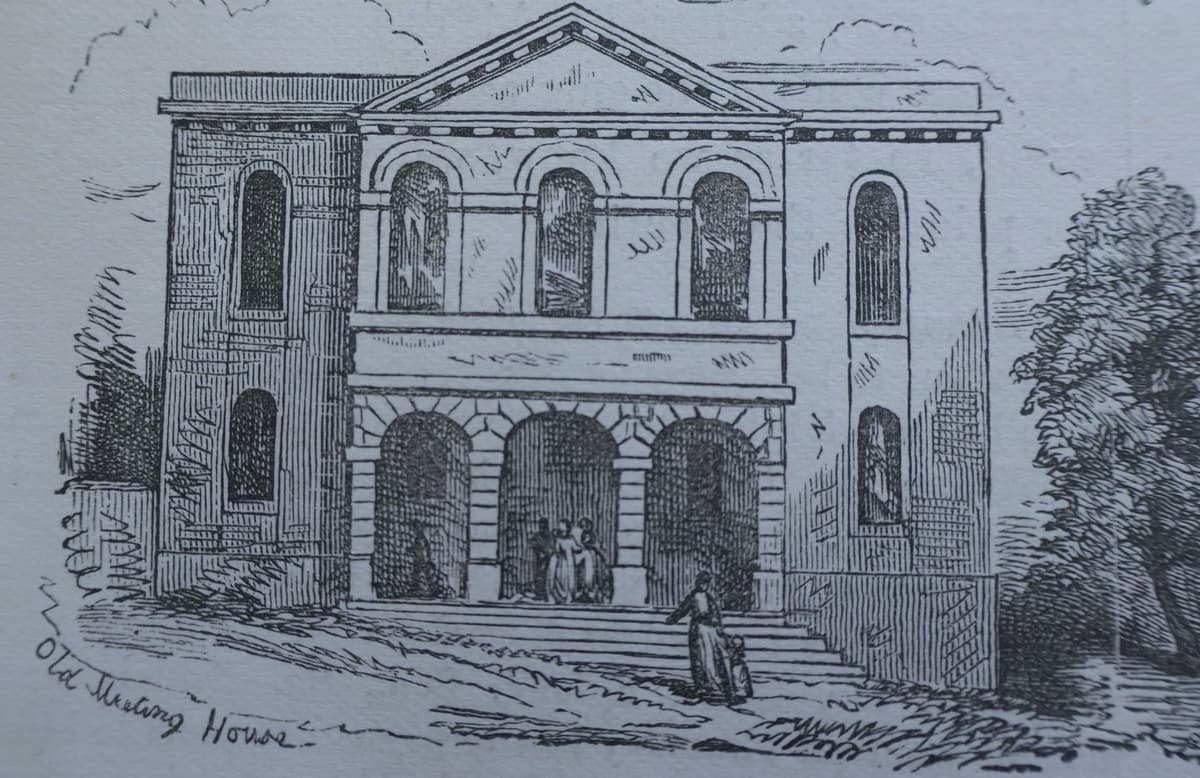
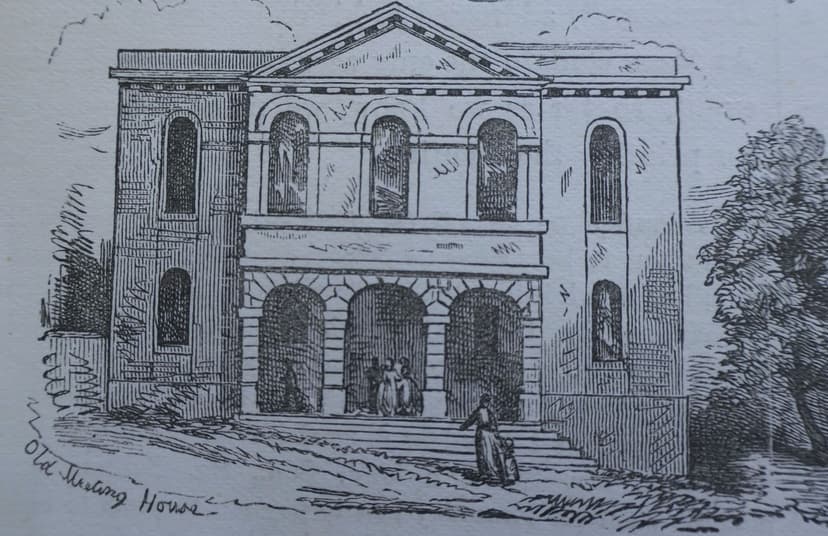
The chapel of the Old Meeting, Birmingham’s first Dissenting congregation: a plain meeting house of about 1689, burned in 1791, then a square brick chapel of 1795 with a pedimented front and three galleries, beside its own graveyard in Old Meeting Street.
History
A meeting house in Phillip Street
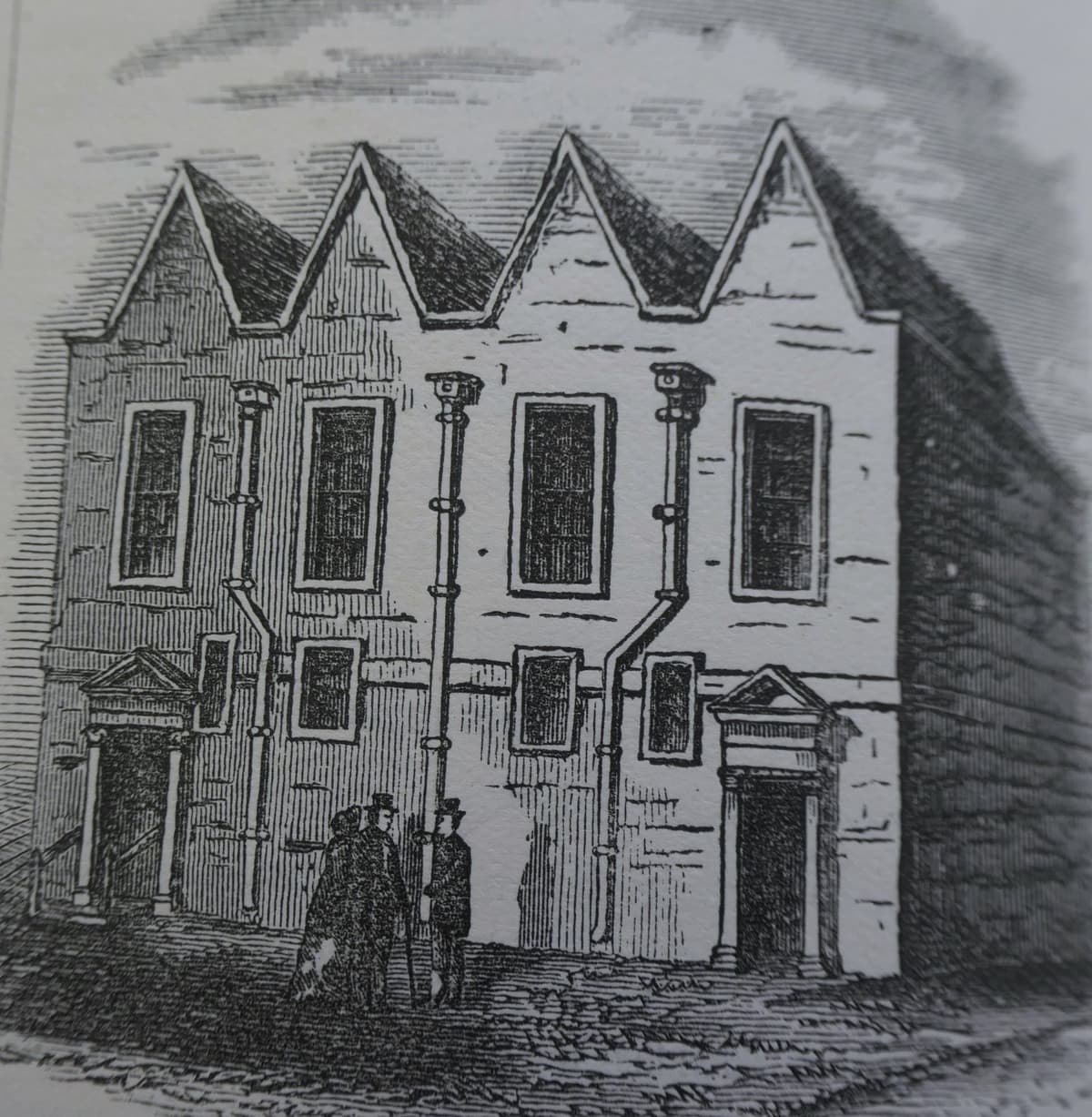
By October 1687 Birmingham’s Presbyterian congregation had arranged to buy land in Phillip Street, and in 1689 their meeting house was registered at the Warwickshire Quarter Sessions. Showell says it was “believed to have been the first Dissenting place of worship erected in Birmingham”. The street later took its name: Old Meeting Street.
The first building was a modest rectangle roofed under four small gables, with two doorways under pediments and four windows above them.
Two riots
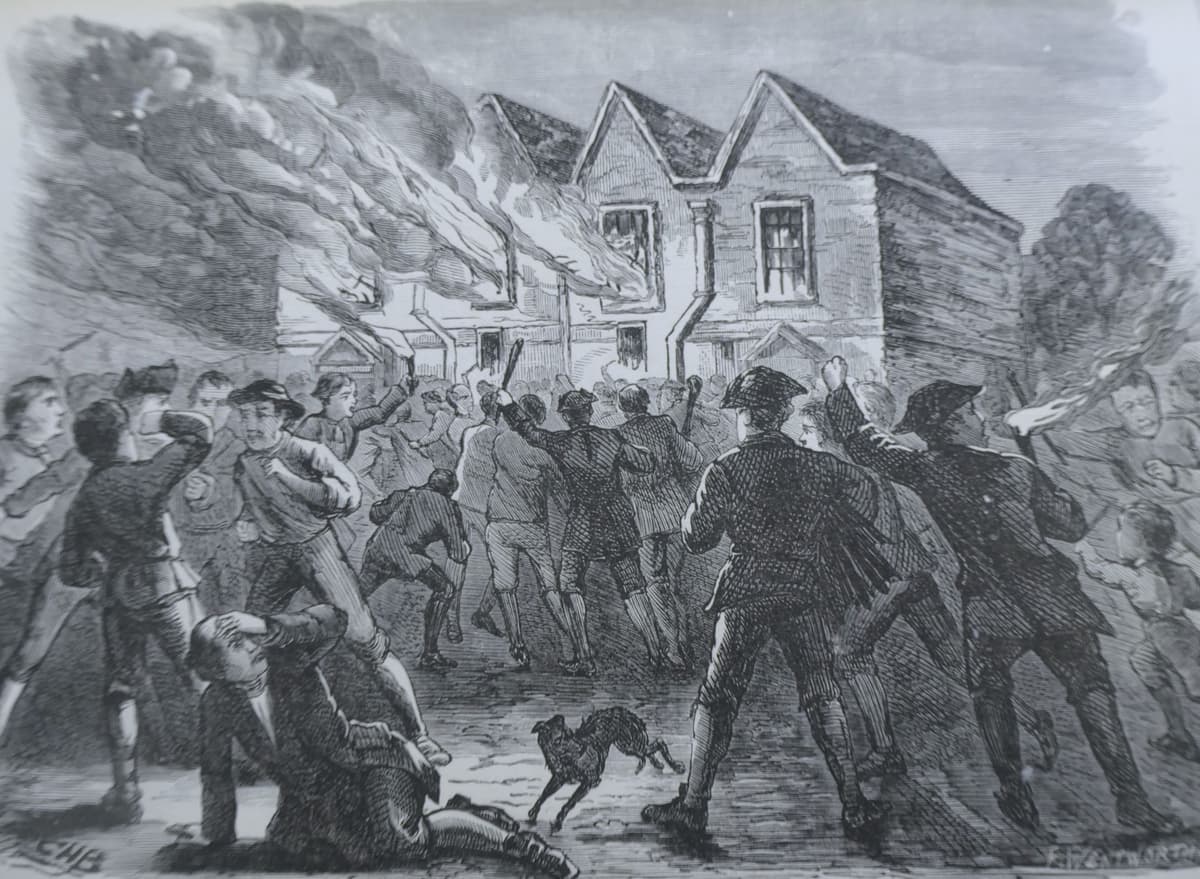
Being a Dissenter in Birmingham could be dangerous. In the riots of July 1715 the Phillip Street meeting house was sacked and its interior badly damaged. The congregation repaired it and carried on. In 1747–48 a group of stricter Calvinists left to found Carrs Lane, while the Old Meeting itself moved towards Unitarian views.
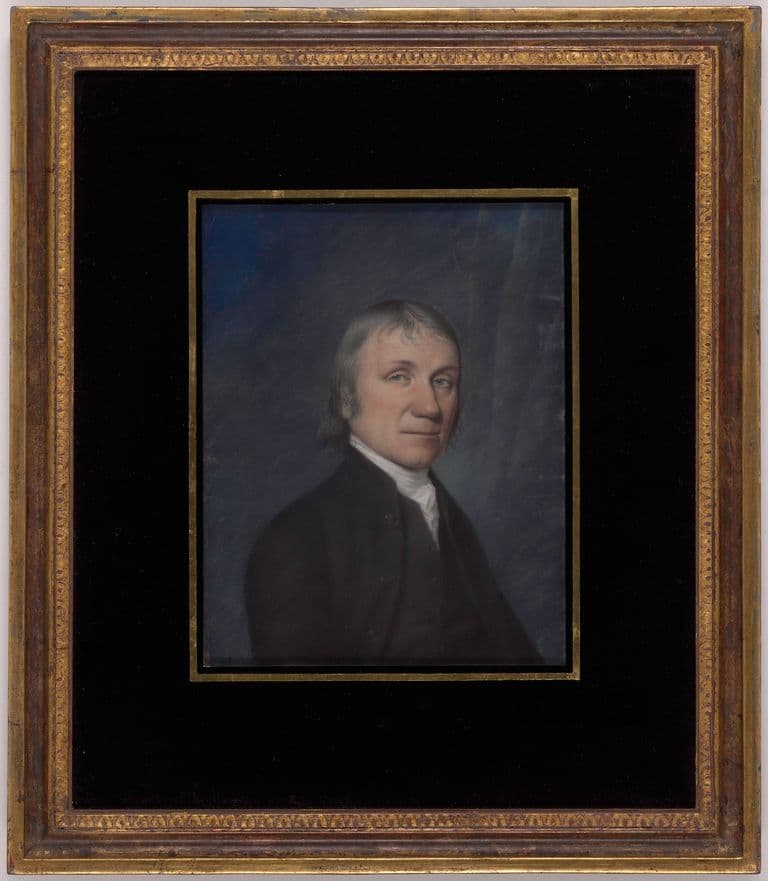
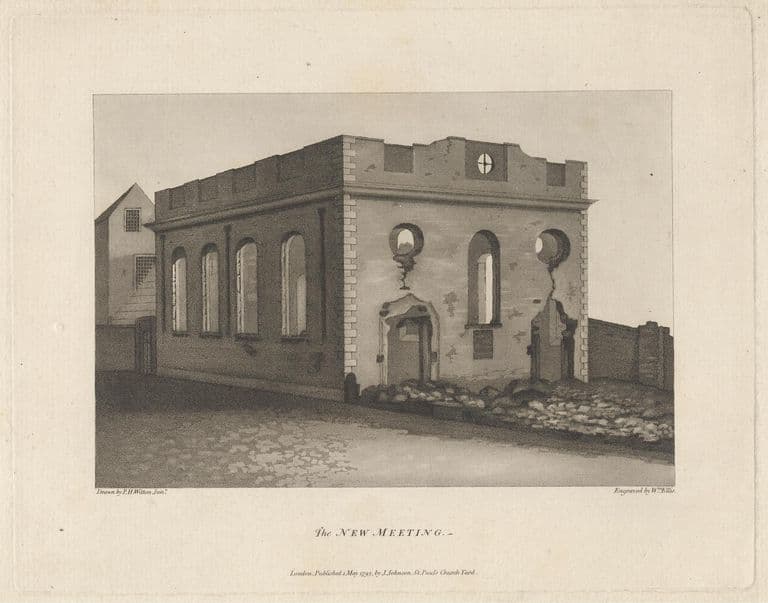
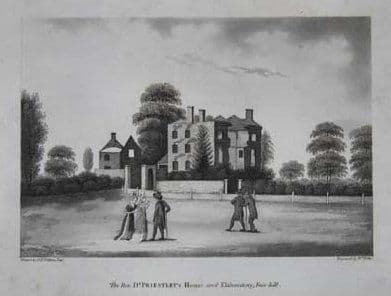
Then came July 1791. On 14 July a dinner was held to celebrate the fall of the Bastille. A crowd attacked the guests and then turned on the Dissenters’ chapels. They burned the New Meeting, where Joseph Priestley was minister, and they burned the Old Meeting too. A Victorian engraving shows the crowd at work.
Rebuilt in brick
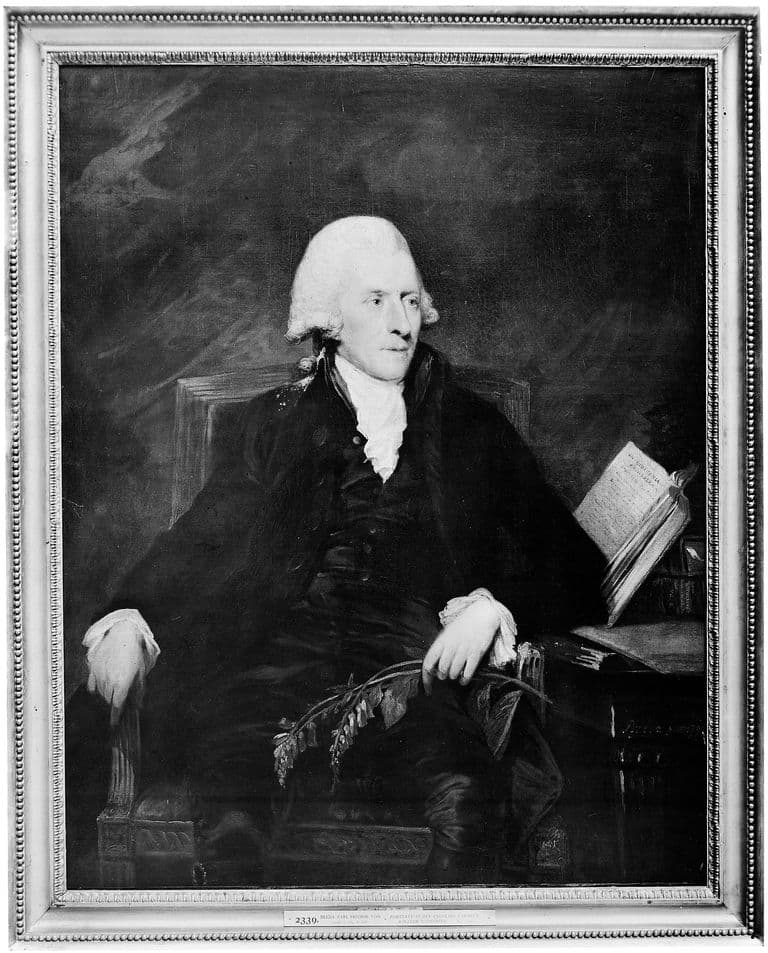
The congregation thought about moving. A deputation asked Dr Withering, the physician William Withering, whether he would let some of his land near Cherry Street. He wanted one shilling a square yard for a 99-year lease. In the end they resolved “to re-build the Meeting House on the old spot”.
This time they built to last. The chapel was of brick and Riga oak, and the committee decided to make the walls extra strong. A Mr Copeland went to London to consult “Mr. Wyatt” about the roof, which was covered with “best black Westmoreland slates”. The new chapel was 59 feet square, held 1,100 people and had three galleries on Doric columns, with box pews and a central two-decker pulpit. Its front had five bays of round-headed windows, a central pediment and a recessed porch entered through three arches. It opened on 4 October 1795.
The same spot, then and now
1888–1913
Today
Old map: Ordnance Survey six-inch, reproduced with the permission of the National Library of Scotland (CC BY 4.0). Today: © OpenStreetMap contributors.
Charles Pye admired it, but noted that “had this meeting been erected in a more spacious street, it might have been seen to advantage”. The poet John Freeth was buried in its yard. A school and lecture room opened next door in 1855, and in 1870 the burial ground was enlarged with land bought from the London and North Western Railway.
The railway comes
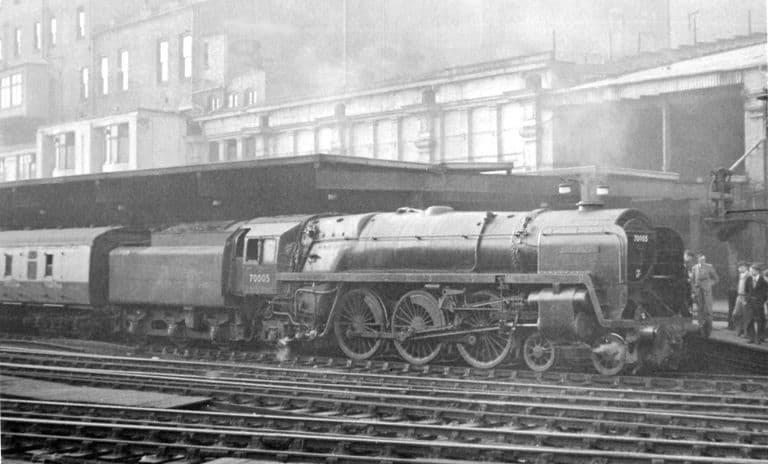
That neighbour wanted more. In 1875 the LNWR applied for the site, and the congregation petitioned against it. Negotiations began in October 1880, and in 1881 the chapel and graveyard were sold to the railway for £30,000, to enlarge New Street station. The last service was held on 19 March 1882.
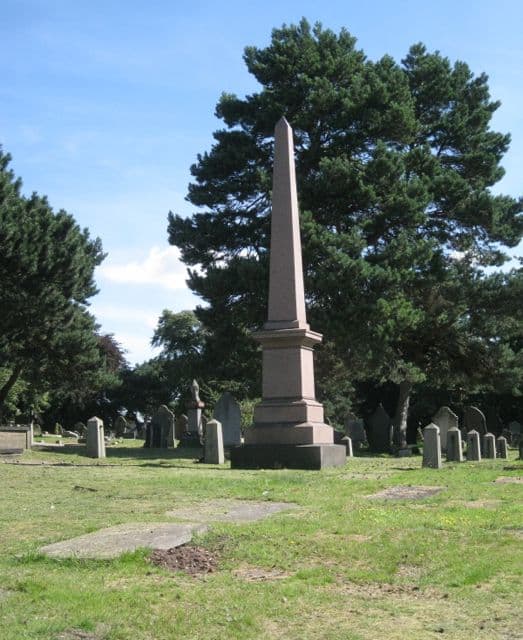
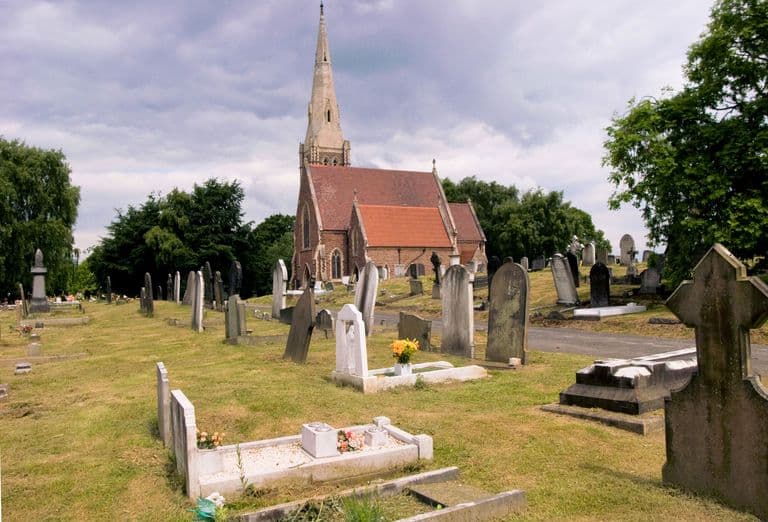
The dead were moved with care. Some went to private vaults. For the rest, a plot at Witton Cemetery was laid out so that the graves and vaults sat in the same positions as in the old graveyard, with the tombstones placed the same way. The congregation built a new Old Meeting Church in Bristol Street, opened in 1885 and destroyed by bombing in 1940.
The chapel itself has vanished under the station. But on the slope at Witton the old graveyard of Birmingham’s first Dissenters is still laid out as it was, stone by stone.
Why it mattered
The Old Meeting was the mother congregation of Birmingham’s Presbyterians and Unitarians, and possibly the town’s first purpose-built Dissenting chapel. Twice attacked by mobs, in 1715 and 1791, it shows how dangerous religious dissent could be in Georgian Birmingham. Its sale to the railway in 1881 is one of the clearest cases of the station swallowing the old town.
Why it disappeared
Railway changes
The London and North Western Railway wanted the land to enlarge New Street station. After resisting in 1876, the congregation sold the chapel and graveyard in 1881. The last service was held on 19 March 1882, the burials were moved to Witton in 1882–83, and the site was cleared for the station extension.
The Old Meeting House, on today’s streets
What’s there now
What replaced it
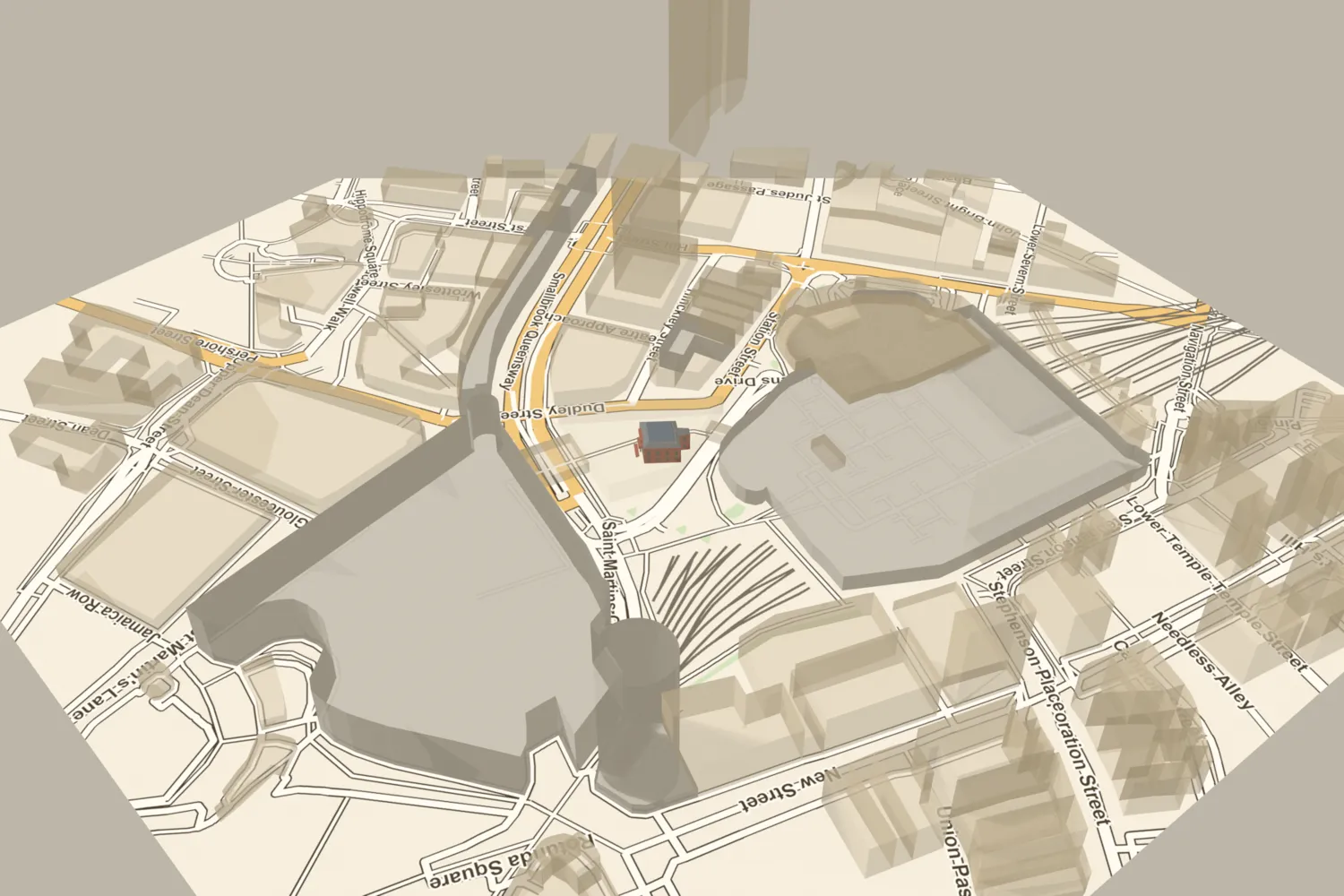
The site was cleared in the 1880s for the southern enlargement of New Street (Central) station, and Station Street and the station’s south side were built across it. It is now under the south side of the station complex, by Queens Drive and the Wades Building (TK Maxx) on Smallbrook Queensway.
What survives
Nothing on site. The burials and tombstones were moved in 1882–83 to a plot at Witton Cemetery laid out to match the old graveyard, where the re-interments can still be seen. The congregation’s later church in Bristol Street was destroyed by bombing in 1940.
Today
Stand on Smallbrook Queensway by the Wades Building (TK Maxx), on the south side of New Street station. The chapel stood just behind, under the station complex near Queens Drive. To see what survives, go to Witton Cemetery, where the Old Meeting graves were laid out again.
Then and now
Then · Published 1880
Now · 10 August 2012
Sources and further reading
The sale price is £30,000 in Beale and the VCH; Showell gives £32,250, including allowances for the minister and removals. The rebuilt chapel opened on 4 October 1795 (Beale, Showell, VCH); Pye says “about 1793”, and a Commons file title says 1792–96. The first building’s date varies: land arranged by October 1687 (VCH), registered 1689, “probably” built 1688 (Showell). The location comes from the 1855 plan only, because the large-scale Ordnance Survey plans were made after the clearance. Beale says a porch was added in 1870, but it is unclear whether this changed the front shown in Dent’s engraving. Dent’s woodcut of the first meeting house shows people in 19th-century dress and may be a later redrawing. The exact date of demolition between 1882 and 1885 was not found.
- A History of the County of Warwick, vol. 7: The City of Birmingham — Religious History: Protestant Nonconformity, pp. 411–434 — W. B. Stephens (ed.), Victoria County History, 1964. 1687 land, 1689 registration, 1715, 1747–48, 1791
- Religious History: Places of worship, in A History of the County of Warwick, vol. 7, pp. 434–482 — W. B. Stephens (ed.), Victoria County History, 1964. Old Meeting House Street; Bristol Street; 1851 census
- Memorials of the Old Meeting House and Burial Ground, Birmingham — Catherine Hutton Beale, 1882. rebuilding minutes, Withering, Wyatt, dimensions, sale
- Showell’s Dictionary of Birmingham — Thomas T. Harman and Walter Showell, Cornish Brothers, Birmingham, 1885. ‘Unitarians’, ‘Old Meeting-street’, ‘Freeth’
- An History of Birmingham (2nd edition) — William Hutton, Pearson and Rollason, Birmingham (Project Gutenberg text), 1783
- A Description of Modern Birmingham — Charles Pye, 1818–19
- Old and New Birmingham: a history of the town and its people — Robert K. Dent, Houghton and Hammond, Birmingham, 1880. engravings pp. 52, 223, 254
- Plan of the Borough of Birmingham (Pigott Smith), 1855 — J. Pigott Smith, National Library of Scotland (online), 1855. footprint traced
- Ordnance Survey 1:500 town plan of Birmingham, 1887–88, georeferenced — National Library of Scotland, 1888
- OpenStreetMap data (Overpass and Nominatim), central Birmingham — OpenStreetMap contributors, 2026. way 31515967
Comments
Comments will load here.