
What was here?
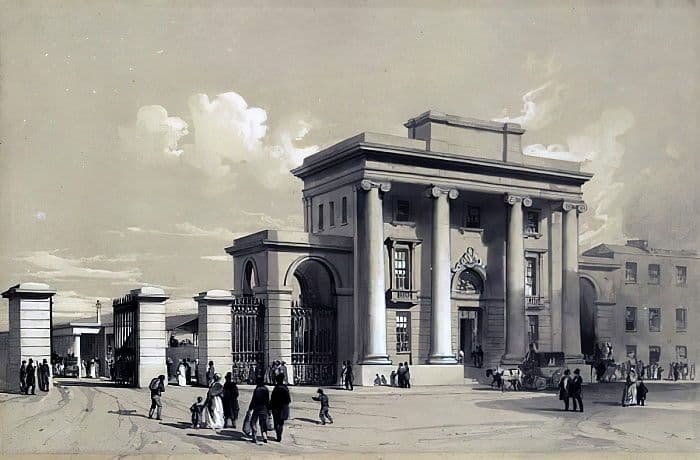
Before the 1960s concrete deck, New Street station was a great Victorian train shed under an iron-and-glass roof 212 feet wide, with the Queen’s Hotel on Stephenson Street and a later Midland Railway half to the south across Queen’s Drive.
History
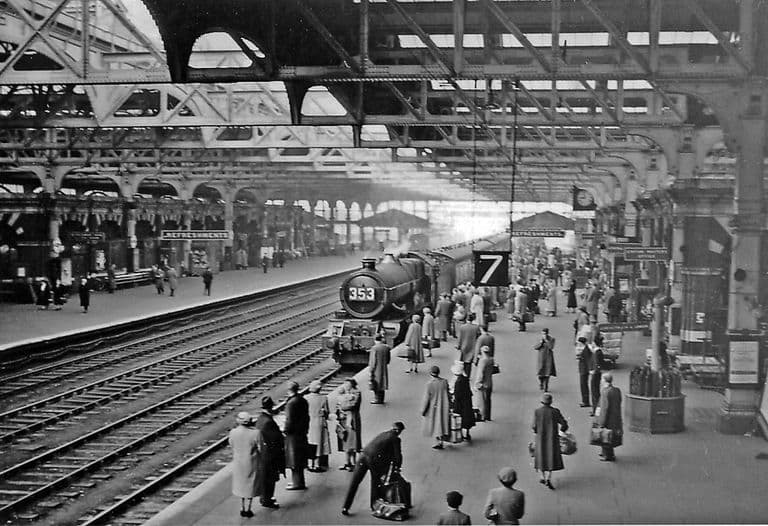
New Street station was a marvel of its age. Network Rail’s history records that it opened to passengers in stages and was officially opened on 1 June 1854. Its roof, designed by Edward Alfred Cowper, was the largest single-span arched roof in the world, 212 feet wide and 840 feet long.
Building it had itself cost the old town dearly. The Victoria County History notes that in the 1850s “buildings were cleared to construct the two central stations at New Street and Snow Hill”.
Twice the size
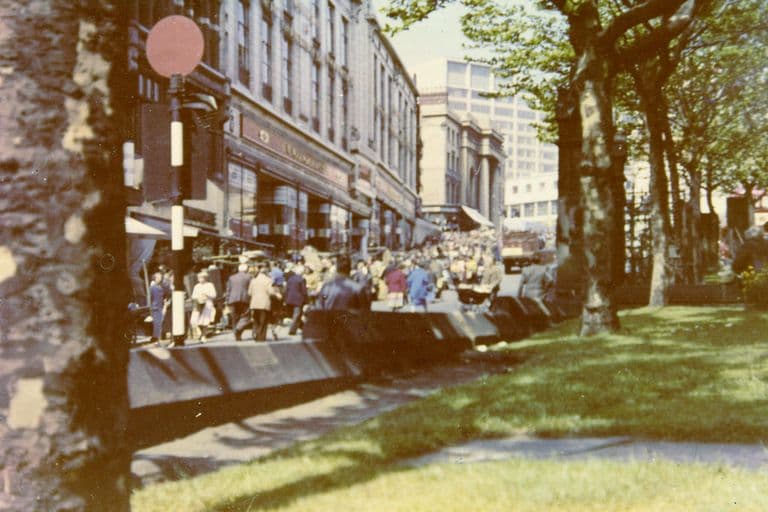
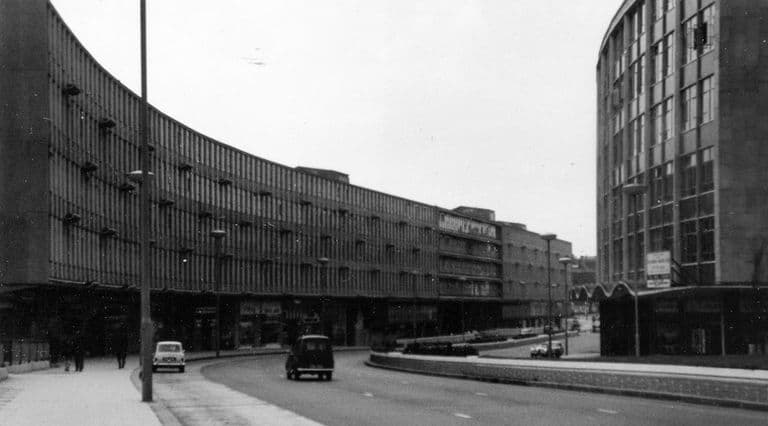
Traffic kept growing. An extension for the Midland Railway, designed by the LNWR’s chief engineer Francis Stevenson, opened on 8 February 1885 on the south side, taking the platforms to fifteen. A cobbled road, Queen’s Drive, ran between the two halves; John Ball photographed it in 1963, emerging opposite the Market Hall.
War and the decision
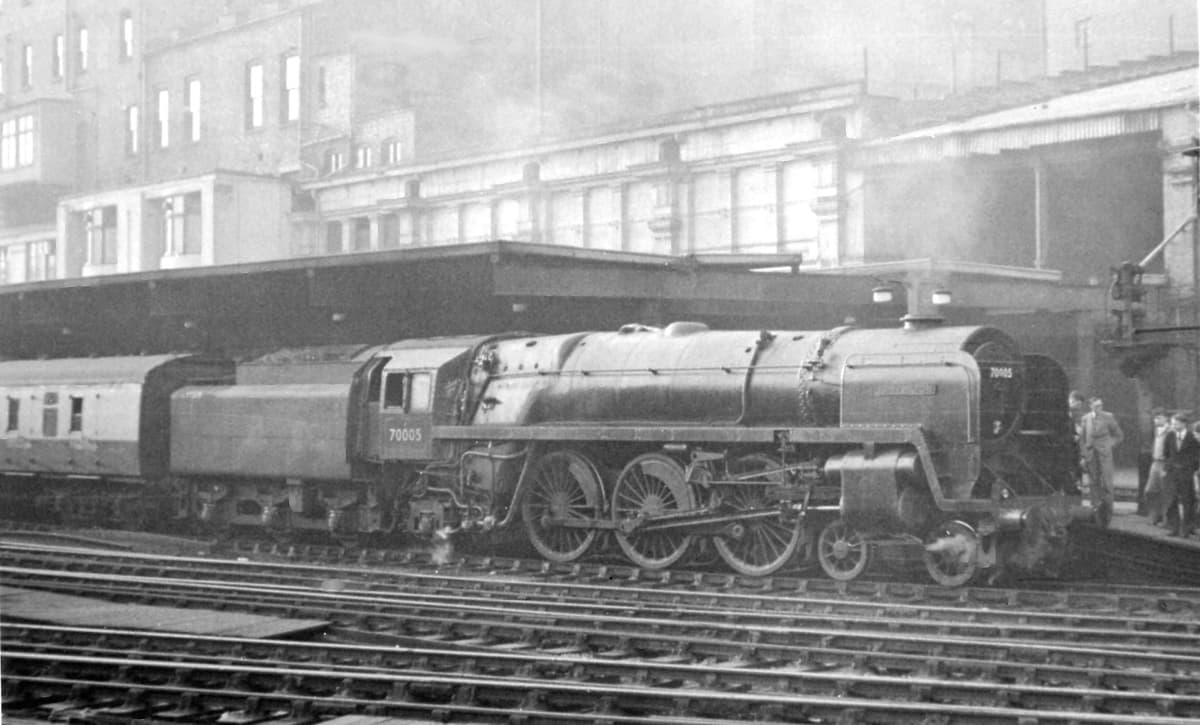
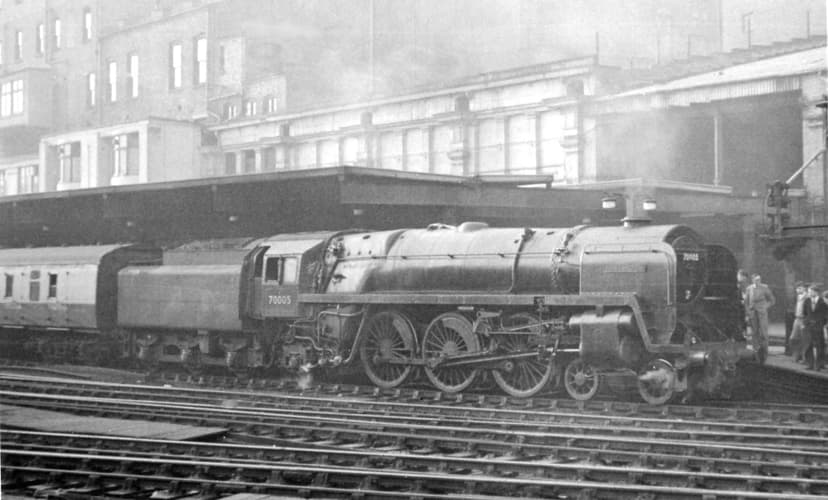
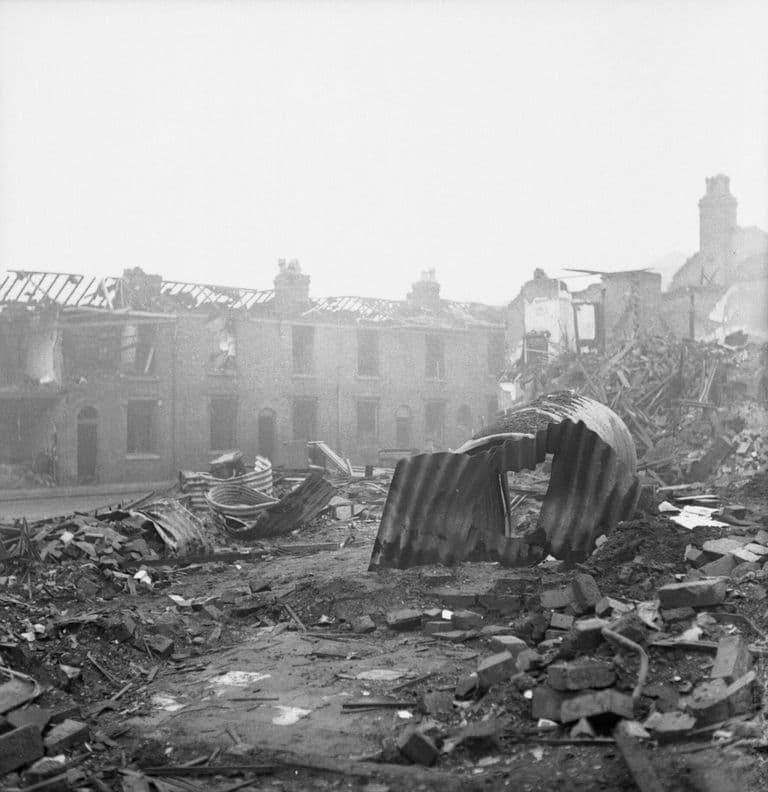
The war was hard on it. Network Rail records that the station “suffered significant bomb damage, leading to extensive repairs, including replacing the roof”. In 1955 Ben Brooksbank photographed express locomotives at its platforms.
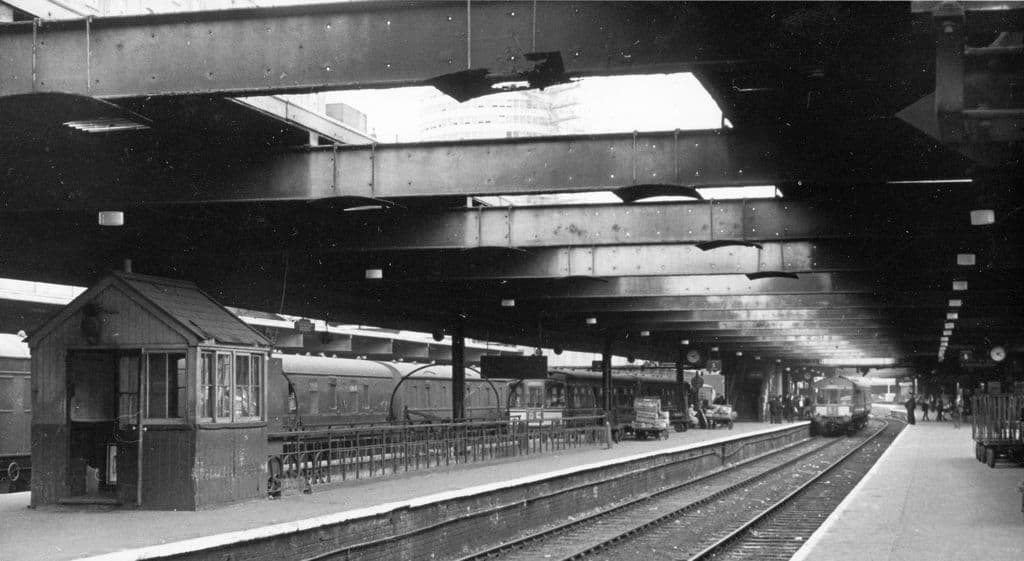
Its end came from the railway, not the council. When British Railways decided to modernise the West Coast Main Line and electrify the route between Birmingham and Euston, it chose to rebuild New Street completely. Network Rail states that “the 19th-century station and the Queen’s Hotel were demolished in 1964”. John Ball photographed platforms 5 and 6 that year, and a steam engine creeping into the station in the middle of the reconstruction.
Under the deck
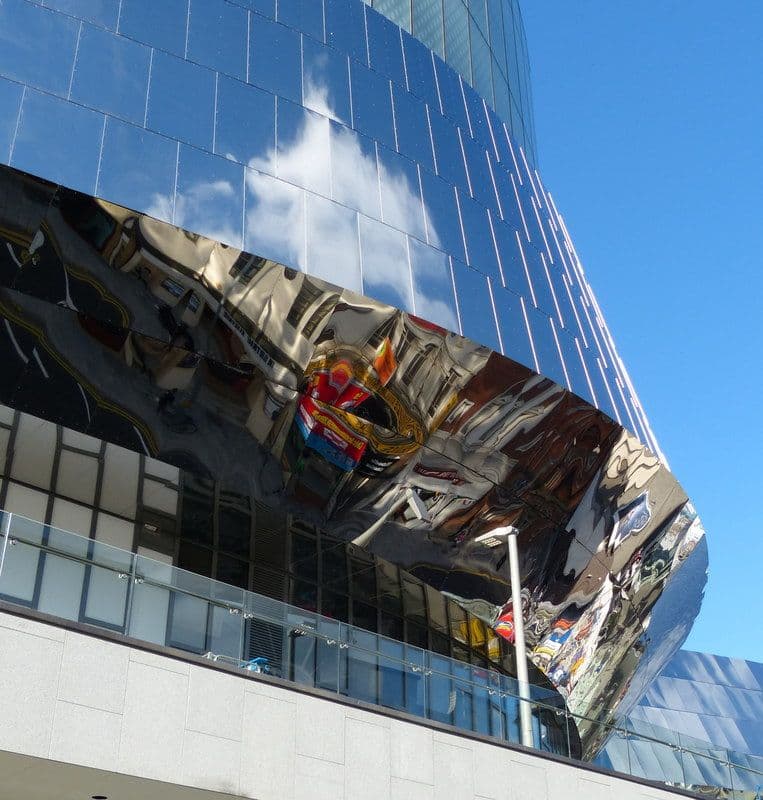
The new station, designed by Kenneth J. Davies, opened in 1967. Its platforms lay beneath a concrete deck carried on 200 columns, and British Railways sold the air rights above for a shopping centre. It worked, but it was dark, and in 2015 it was rebuilt again behind the steel skin of Grand Central.
The Victorian station went in Manzoni’s Birmingham, a few hundred yards from his ring road. But the people who decided to pull it down worked for British Railways.
What happened here?
Then The LNWR’s New Street station (1854), with Cowper’s record-breaking roof, the Queen’s Hotel, and the Midland extension of 1885.
What happened Bomb damage in the Second World War led to the roof being replaced; in 1964 the Victorian station and the Queen’s Hotel were demolished, and a new station opened in 1967.
Why British Railways’ modernisation of the West Coast Main Line and electrification between Birmingham and Euston (Network Rail).
What replaced it Kenneth J. Davies’s 1967 station under a concrete deck, with a shopping centre built in the air rights above.
Now The rebuilt New Street station and Grand Central shopping centre, completed in 2015.
Why it mattered
New Street’s roof was one of the engineering wonders of Victorian Britain, and the station made Birmingham the hub of the railway network. Its loss is a reminder that Birmingham was rebuilt by many hands in the 1960s, and that the national railway did as much to change the city centre as the council did.
Why it disappeared
Railway changes · Redevelopment · Wartime destruction
British Railways demolished the 19th-century station and the Queen’s Hotel in 1964 to rebuild for the modernisation and electrification of the West Coast Main Line between Birmingham and Euston (Network Rail). The Victorian roof had already been replaced after wartime bomb damage (Network Rail).
The same spot, then and now
1888–1913
Today
Old map: Ordnance Survey six-inch, reproduced with the permission of the National Library of Scotland (CC BY 4.0). Today: © OpenStreetMap contributors.
More pictures
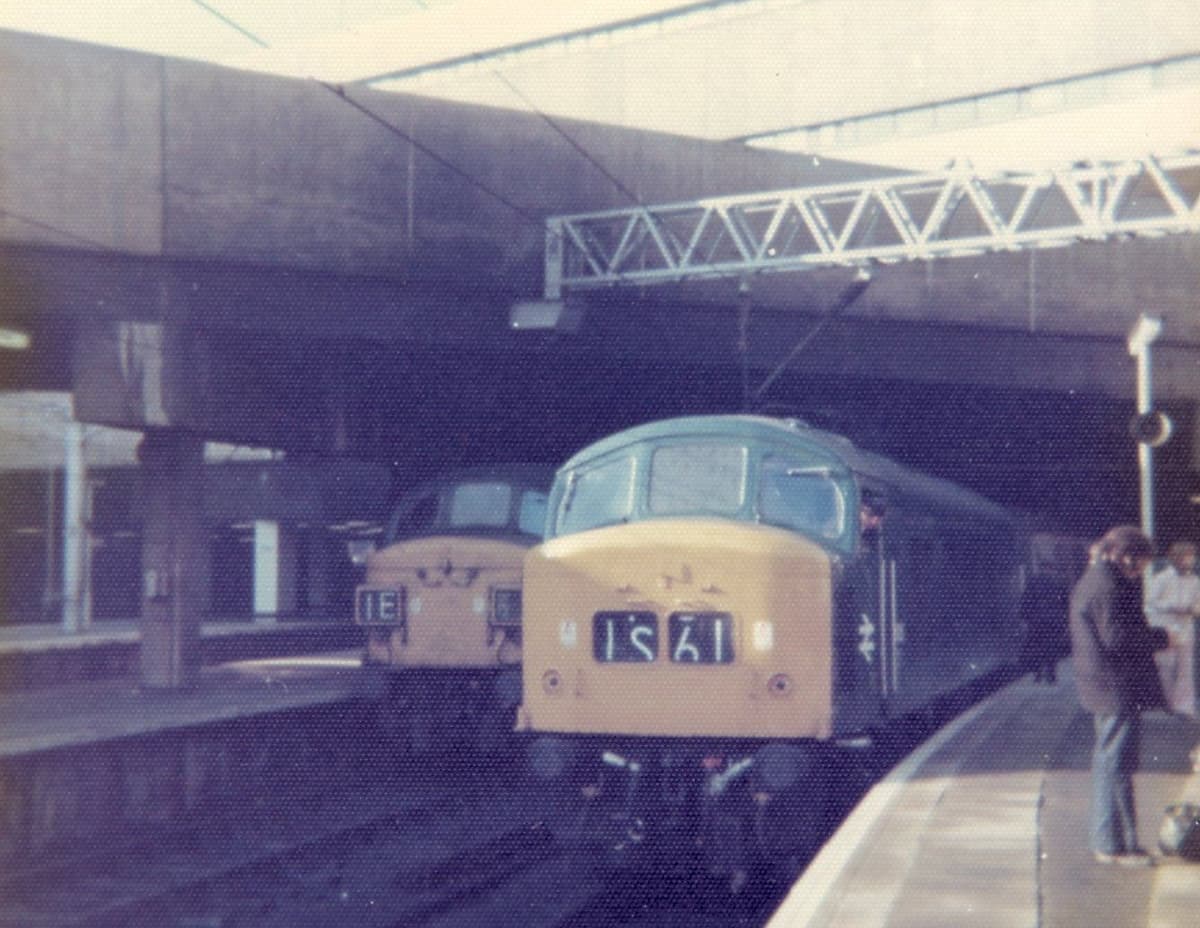
Diesel trains at New Street, 2 May 1976kitmasterbloke, 2 May 1976. Flickr via Wikimedia Commons · CC BY 2.0
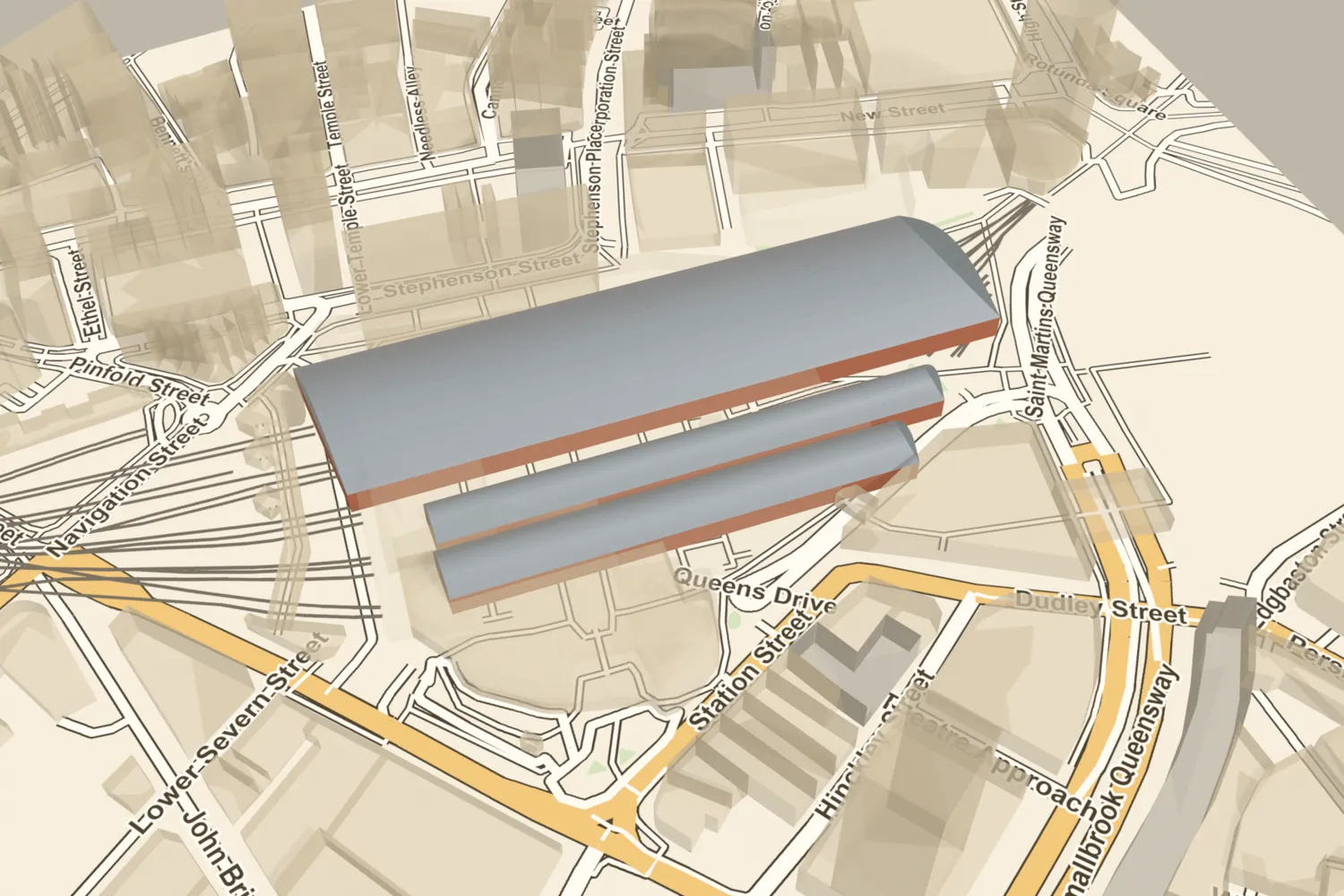
New Street station, on today’s streets
What’s there now
What replaced it
The 1967 New Street station designed by Kenneth J. Davies, beneath a concrete deck with the Birmingham Shopping Centre above; rebuilt again as New Street and Grand Central, completed in 2015.
What survives
Nothing of the Victorian station buildings is known to survive above platform level; the station still occupies the same cutting and site.
Today
Birmingham New Street station and the Grand Central shopping centre, between Stephenson Street, Navigation Street, Hill Street and Station Street.
Then and now
Then · 16 April 1955
Now · 27 September 2015
Key dates
- 1964 — British Railways demolishes the Victorian New Street stationThe 19th-century New Street station and the Queen’s Hotel are demolished as British Railways rebuilds for West Coast Main Line electrification. The new station opens in 1967.
Sources and further reading
Network Rail says the station “opened to passengers in 1851”, which conflicts with other accounts of a temporary station from 1852; only the official opening of 1 June 1854 is used.
When exactly the original roof was taken down after the war is not given by Network Rail; the text says only that it was replaced after bomb damage.
The demolition of the station took place in stages while trains kept running; 1964 is Network Rail’s date for the demolition of the Victorian station and Queen’s Hotel.
- The history of Birmingham New Street station — Network Rail, Network Rail
- A History of the County of Warwick, vol. 7: The City of Birmingham — The Growth of the City, pp. 4–25 — W. B. Stephens (ed.), Victoria County History, 1964. pp. 4–25
- Photographs by John Ball (Birmingham, 1959–1969) — John Ball, Wikimedia Commons (from jlb2011.co.uk)
Comments
Comments will load here.