
What was here?
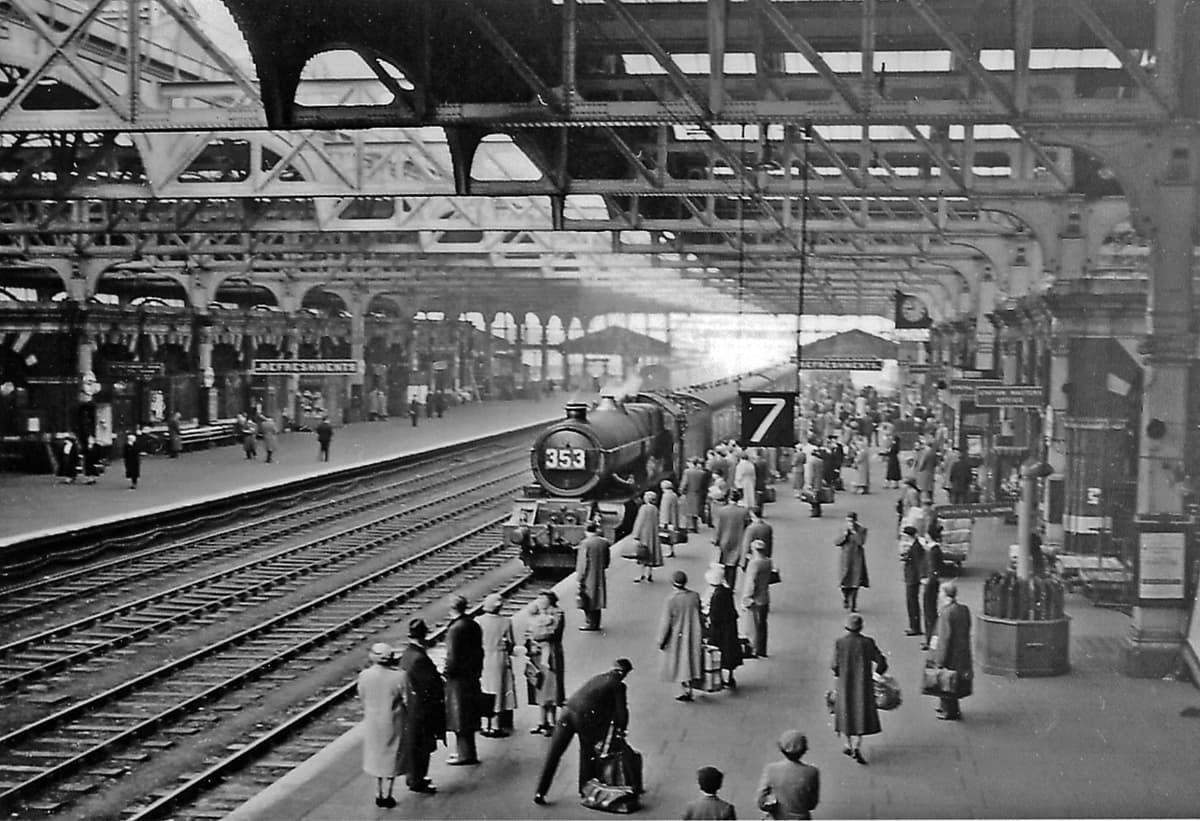
Before today’s Snow Hill station and the office blocks on Colmore Row, this site held the Great Western Railway’s grand Edwardian station: two enormous island platforms under glass, a great booking hall and, on Colmore Row, a former hotel that served as the station’s front door.
History
For most of a century Birmingham had two great stations. The London and North Western and the Midland ran from New Street. Snow Hill belonged to the Great Western Railway, and it was the GWR’s answer to its rivals.
Four stations on one site
The first was makeshift. On 1 October 1852 the GWR line from Oxford opened, with a temporary station that had a timber roof on timber posts and entrances from Snow Hill and Livery Street. Early timetables called it “Birmingham”, “Livery Street” or “Great Charles Street”. The GWR settled on “Birmingham Snow Hill” in 1858.
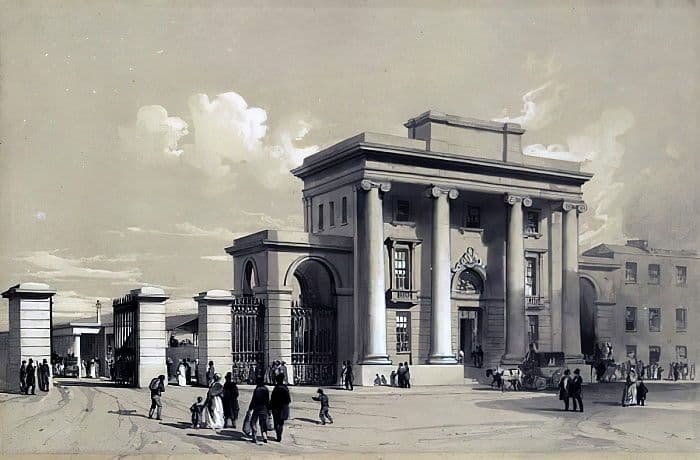
The second station was completed in 1871, with two platforms 450 yards long, four bays at the north end and an arched roof. On Colmore Row stood the Great Western Hotel, designed by J. A. Chatwin. It was leased out and never run by the railway. By 1906 it had closed as a hotel and become GWR offices, though its refreshment rooms carried on until bomb damage in 1940.
The same spot, then and now
1888–1913
Today
Old map: Ordnance Survey six-inch, reproduced with the permission of the National Library of Scotland (CC BY 4.0). Today: © OpenStreetMap contributors.
The third station was the one people remember. Works were authorised in November 1902 and rebuilding began in 1906. The design was by Walter Y. Armstrong, the GWR’s New Works Engineer, with Henry Lovatt Ltd as contractors and steelwork by E. C. and J. Keay. It had two island platforms, each 1,200 feet long, and a glazed booking hall roof spanning 93 feet 9½ inches. Passengers entered from Colmore Row through the old hotel building, cut through to make way. Many accounts call it the 1912 station.
Decline
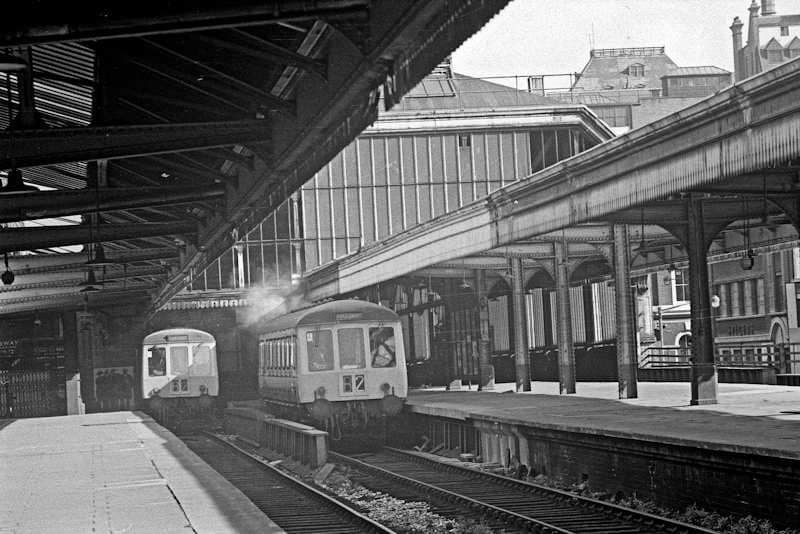
The blow came from electrification at New Street. When the electric service between Euston and New Street began, main-line services were withdrawn from Snow Hill on 6 March 1967. Services south of Snow Hill ended on 4 March 1968. From 5 May 1969 the remaining stations on the line became unstaffed “Paytrain” halts.
The demolition gangs started before the trains had gone. The former hotel and the booking hall came down from 23 October 1969. Closure was approved on 24 January 1972, the last trains ran on Saturday 4 March 1972, and the official closure date was 6 March. The great station was used as a car park.
Demolition of what remained began on 4 October 1976, carried out by L. E. Jones (Demolition) Ltd. Photographs taken by the Warwickshire Industrial Archaeology Society on 27 March 1977 show it derelict.
Back from the dead
Then something unusual happened: the railway came back. A new, smaller station was built on the old site, with a council car park above. The first train worked on 2 October 1987, and the station reopened to the public on 5 October 1987. It reused the old trackbed and tunnel.
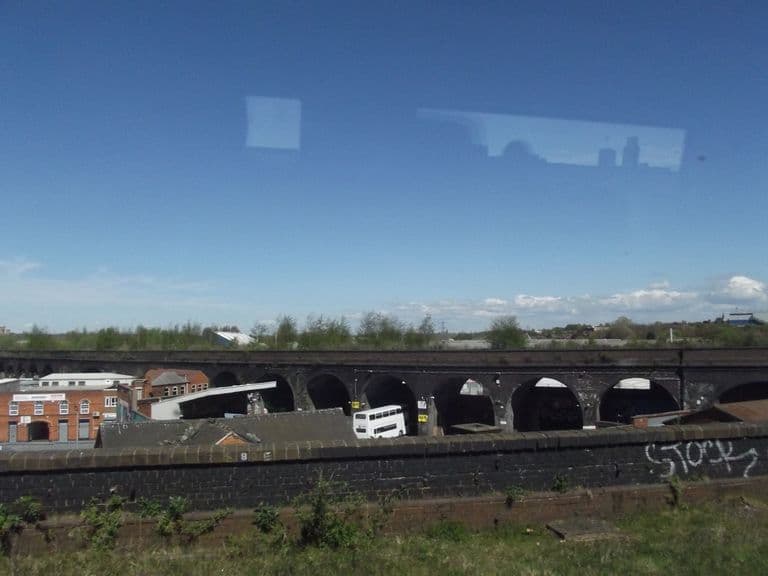
Look closely and the older stations are still there in pieces. On Livery Street a stretch of wall from the 1871 rebuild survives, with an entrance carrying the GWR crest. A Livery Street subway entrance with a coat of arms became part of the new station complex. At the corner of Livery Street and Lionel Street, public toilets built into the arch of the Snow Hill railway bridge are listed at Grade II. Out at Duddeston, an unfinished viaduct recalls a link between the GWR and the LNWR that was never completed.
Snow Hill is the rare lost station that returned. The building that made it grand has gone, but the trains run again on the Great Western’s line.
Why it mattered
Snow Hill was the Great Western Railway’s Birmingham showpiece and the city’s second great station, rival to New Street. Its rundown after electrification at New Street, and its closure in 1972, came to stand for the rail cuts of the 1960s. Its rebirth in 1987 showed the decision could be partly reversed, though the Edwardian station itself could not be brought back.
Why it disappeared
Railway changes · Redevelopment
Main-line services were transferred away when the electrified Euston–New Street service began in March 1967. Local services were cut back from 1968, the former hotel and booking hall were demolished from October 1969, and the station closed in March 1972. After use as a car park it was demolished from October 1976 (Disused Stations).
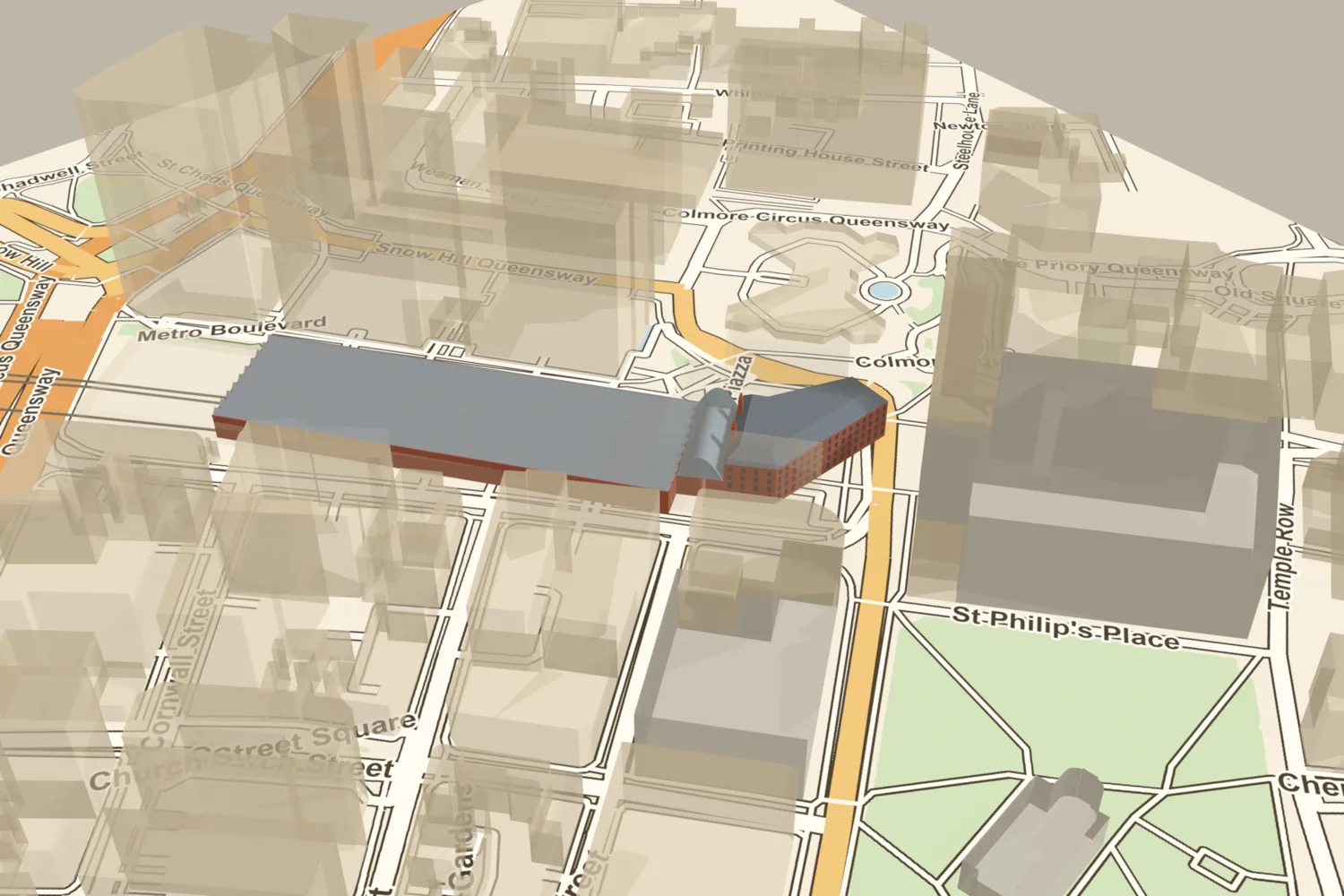
Snow Hill station, on today’s streets
What’s there now
What replaced it
The present Birmingham Snow Hill station (opened 5 October 1987), built on the old site with a car park above. The former hotel site on Colmore Row is occupied by office blocks.
What survives
A section of Livery Street wall from the 1871 rebuild with an entrance bearing the GWR crest; the Livery Street subway entrance with a coat of arms, which survives within the new station complex; the Grade II-listed public toilets built into the Snow Hill railway bridge arch at the corner of Livery Street and Lionel Street (NHLE 1247006); the unfinished viaduct at Duddeston; and the trackbed and tunnel, reused by the 1987 station.
Today
Snow Hill is a working station again, between Colmore Row and Livery Street. Walk down Livery Street to see the surviving wall and crest.
Key dates
- 1 October 1852 — Snow Hill station opensThe Great Western Railway opens its line from Oxford to Birmingham, with a temporary timber station at Snow Hill.
- 4–6 March 1972 — Snow Hill station closesThe last trains run from Snow Hill on Saturday 4 March 1972; the official closure date is 6 March. The former hotel and booking hall had been demolished from 1969.
- 4 October 1976 — Demolition of Snow Hill station beginsDemolition of the remaining Snow Hill station begins. A new, smaller station opens on the site in October 1987.
Sources and further reading
The Great Western Hotel’s opening is given as both 1863 and 1868 by the same source (Disused Stations); no year is used in the text.
Final demolition: Disused Stations says demolition began on 4 October 1976 and elsewhere refers to “demolition of the station in the 1980s”, after some years of NCP parking. The text says demolition began in 1976 and gives 1976–77 as the main phase.
Use of the 1987 station by Midland Metro has not been verified here and is left out.
- Birmingham Snow Hill — Terry Callaghan (Disused Stations), 2017
- Snow Hill Station — Warwickshire Industrial Archaeology Society
- Birmingham Snow Hill — Warwickshire Railways
- Public toilets built into Snowhill railway bridge arch, corner Livery Street and Lionel Street — National Heritage List for England entry 1247006 — Historic England
Comments
Comments will load here.