
What was here?
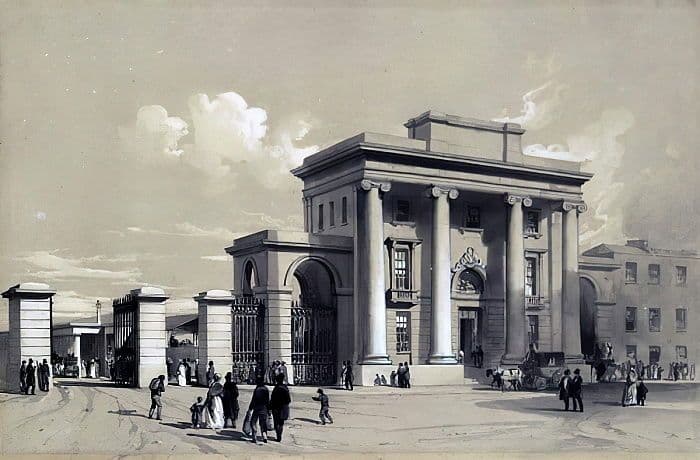
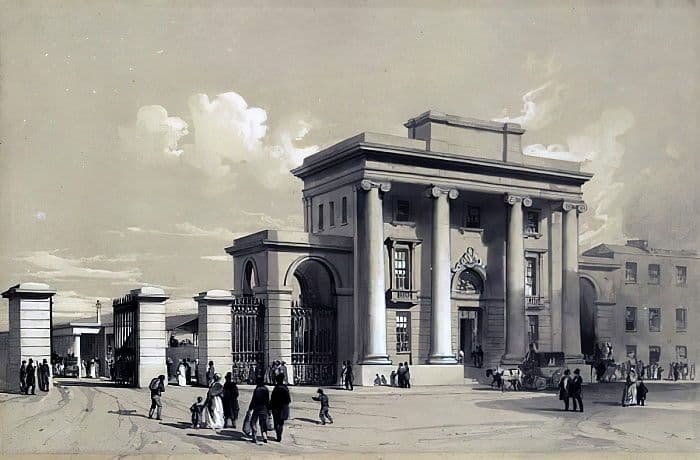
Before the goods yards and the HS2 works, this was the Birmingham terminus of the London and Birmingham Railway: a columned stone entrance building, a train shed, a hotel wing and an engine roundhouse designed by Robert Stephenson, with the Grand Junction Railway’s station next door. Only the entrance building is left.
History
In 1838 the journey from London to Birmingham changed for ever. The London and Birmingham Railway was the first long-distance inter-city main line joining London to a major provincial city, and this is where it ended.
A gateway in stone
The Birmingham terminus was designed by Philip Hardwick in the Greek Revival style. Grissell and Peto built it for £26,000. The site, Nova Scotia Gardens, was bought from Lord Howe.
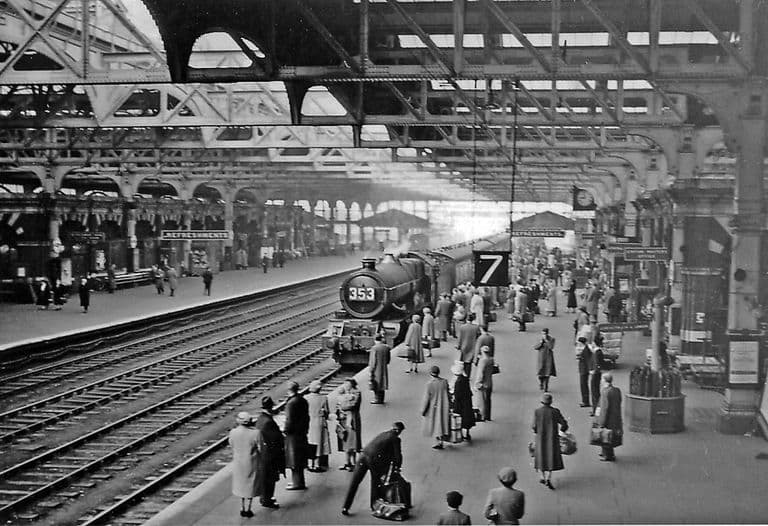
The station opened on 9 April 1838, when the line to Rugby came into use. The first through service between London and Birmingham ran on 17 September 1838. Behind Hardwick’s entrance building stretched a train shed by John Joseph Bramah, with an engine house and turntable. The Grand Junction Railway, running north to Liverpool and Manchester, shared the site.
The Principal Building held waiting and refreshment rooms and a board room. From 1839 it also offered refreshment “hotel” accommodation, and in 1841 a four-storey hotel wing by Robert Benson Dockray was added.
Overtaken
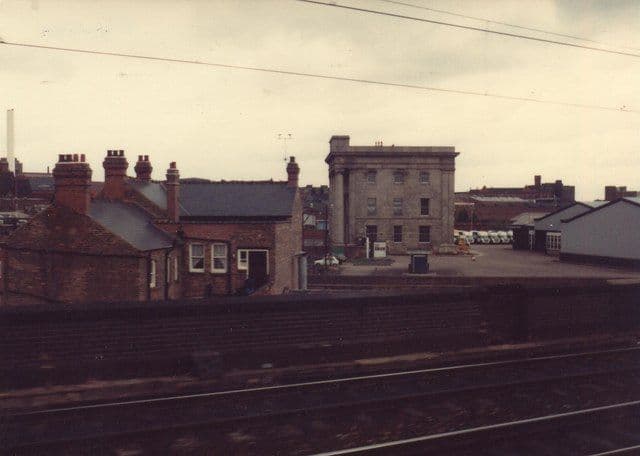
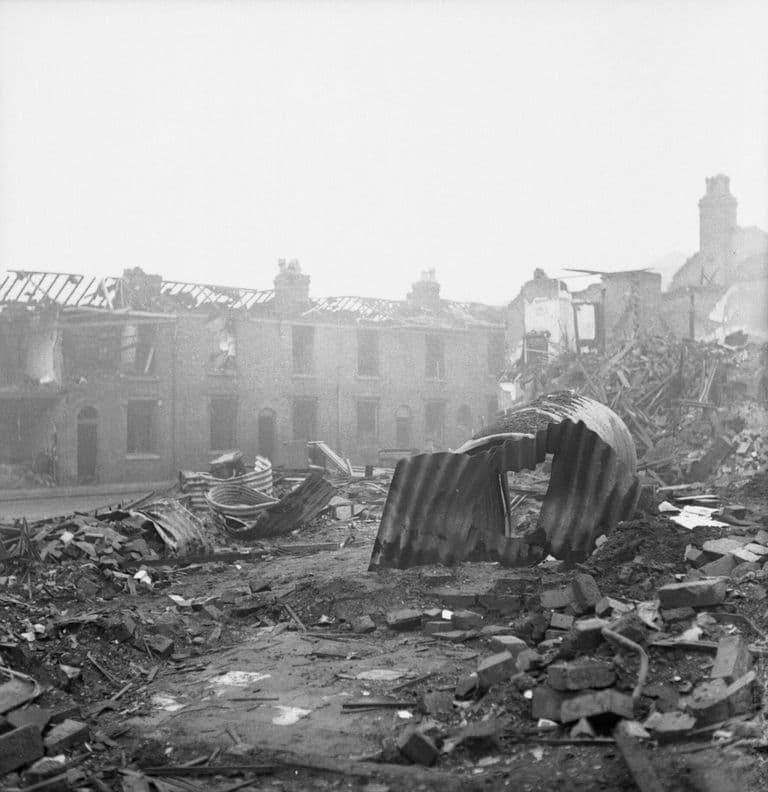
Its glory lasted barely sixteen years. By 1854 passenger trains had moved to New Street, closer to the town centre, and the hotel closed. Curzon Street became a goods depot for the London and North Western Railway, complete by 1865. It handled goods for a century before closing in 1966. During the Second World War it was hit by an oil bomb and incendiaries.
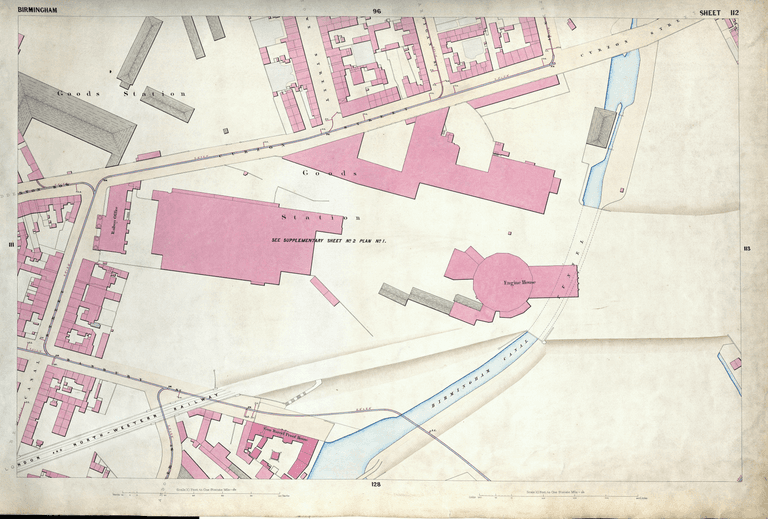
The same spot, then and now
1888–1913
Today
Old map: Ordnance Survey six-inch, reproduced with the permission of the National Library of Scotland (CC BY 4.0). Today: © OpenStreetMap contributors.
Demolition was proposed in 1970 and again in 1978, and both times it was resisted. In 1979 Birmingham City Council took ownership and repaired the building between 1979 and 1982. That rescue came at a price: Dockray’s hotel wing was demolished in the process. In 2003 planning permission was granted for the Royal College of Organists.
What lies under the ground
Most of the 1838 station has gone: the train shed, the waiting-room range, the hotel wing, the Grand Junction station, and the London and Birmingham Railway’s engine roundhouse, designed by Robert Stephenson. HS2’s archaeologists found the remains of that roundhouse in 2020: the base of its turntable, its outer wall and radial pits. HS2 says the roundhouse was working by 12 November 1837, and that it was probably the oldest in the world.
Second life
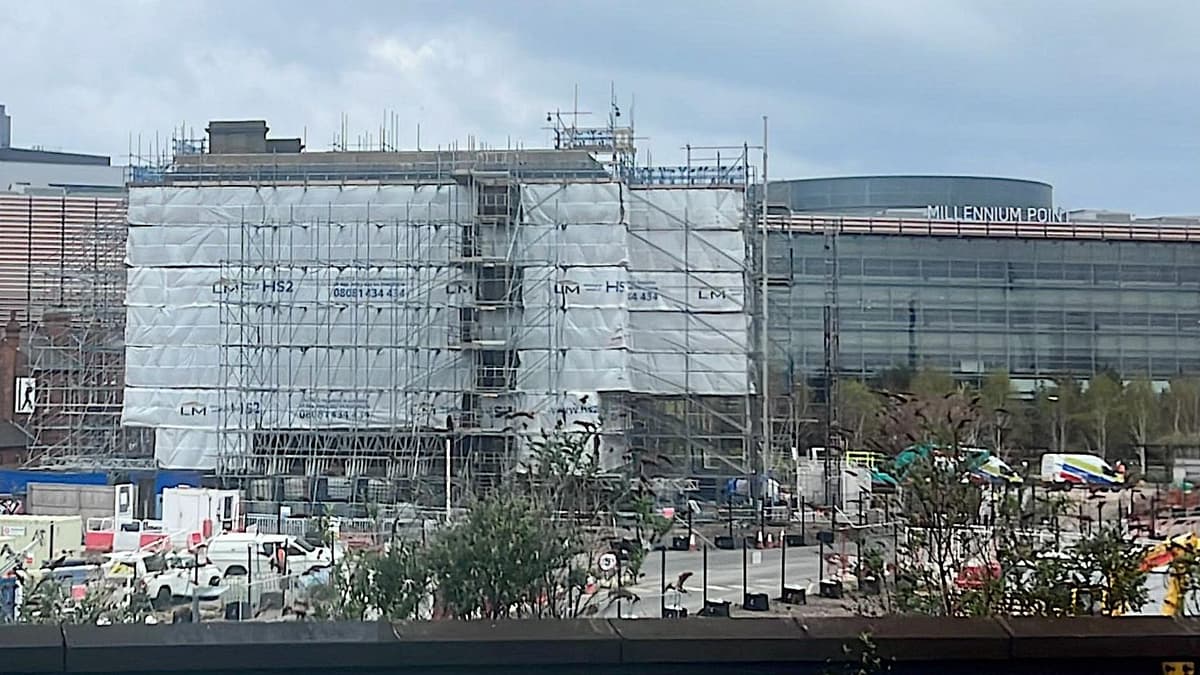
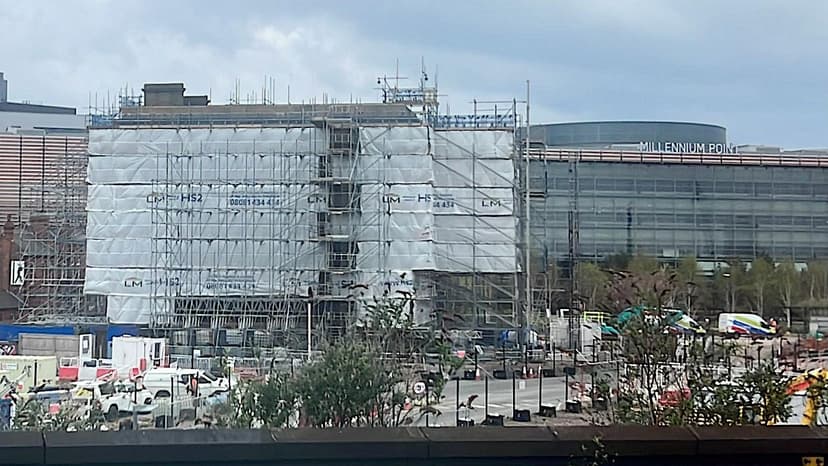
Today the old building stands beside the construction site of HS2’s new Birmingham Curzon Street station, designed by Grimshaw, where main works began in 2021. In September 2021 HS2 began a twelve-month restoration of the old building. The plans included a new steel frame, a lift, repairs to the roof and façade, and use as a visitor centre, offices and exhibition space. In January 2025 the city council granted listed building consent for further repairs.
It remains on Historic England’s Heritage at Risk Register, under the name “British Rail Goods Office (Curzon Street Station)”.
The story has turned full circle. The building that greeted the first trains from London in 1838 now waits for a new line to London to open beside it.
Why it mattered
Historic England’s list entry describes Curzon Street as the terminus of the first long-distance inter-city main line joining London to a major provincial city. The surviving Principal Building is listed at Grade I and is one of the oldest surviving pieces of monumental railway architecture. It shows how quickly the railway age outgrew its first buildings: within sixteen years passengers had moved on to New Street.
Why it disappeared
Railway changes · Redevelopment
Passenger services moved to New Street by 1854. The site became a goods depot, which closed in 1966. The train shed and other buildings were lost over the following decades, and Dockray’s hotel wing was demolished during the council’s repairs of 1979–82 (NHLE 1343086).
What’s there now
What replaced it
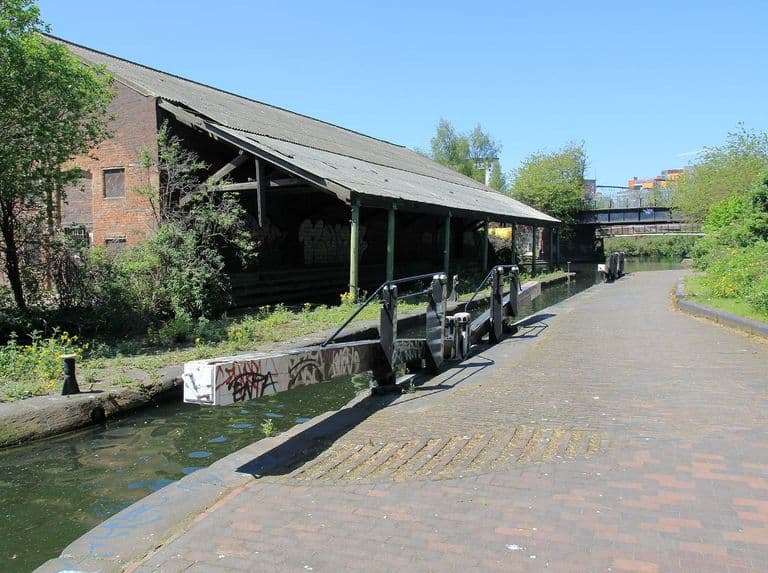
Goods yards, then cleared land; now the site of HS2’s new Birmingham Curzon Street station, under construction alongside the old building since 2021.
What survives
The Principal Building of 1838, Grade I listed, and a canal bridge of 1838, listed Grade II. Below ground, HS2 excavations in 2020 found the turntable base, outer wall and radial pits of the 1837 roundhouse.
Today
The Grade I building stands beside the HS2 construction site, under repair, and is on Historic England’s Heritage at Risk Register.
Then and now
Then · 1837
Now · 22 April 2022
Key dates
- 9 April 1838 — Curzon Street station opensPhilip Hardwick’s Birmingham terminus of the London and Birmingham Railway opens as the line to Rugby comes into use. Through trains to London follow on 17 September 1838.
- c. 1979–82 — Curzon Street hotel wing demolishedBirmingham City Council takes over the old Curzon Street station and repairs the Principal Building, demolishing Robert Benson Dockray’s hotel wing of 1841.
Sources and further reading
HS2’s description of the 1837 roundhouse as probably the world’s oldest is HS2’s own assessment. The excavated remains appear to have been recorded rather than preserved in place; this has not been confirmed.
The progress of HS2’s restoration since the listed building consent of January 2025 has not been checked.
Whether the Royal College of Organists ever occupied the building is not stated in the list entry; the text says only that permission was granted in 2003.
- Curzon Street: the former Principal Building of the Birmingham Terminus for the London–Birmingham Railway — National Heritage List for England entry 1343086 — Historic England
- Heritage at Risk Register open data, 2024 and 2025 — Historic England. HAR entry 49451
- Discoveries in Birmingham (Curzon Street station archaeology) — HS2 Ltd
- HS2 starts work to turn historic Birmingham station into a visitor centre — Building, Building, 2021
- HS2: plan to repair old Birmingham Curzon Street station building approved — Rail Magazine, Rail Magazine, 2025
Comments
Comments will load here.