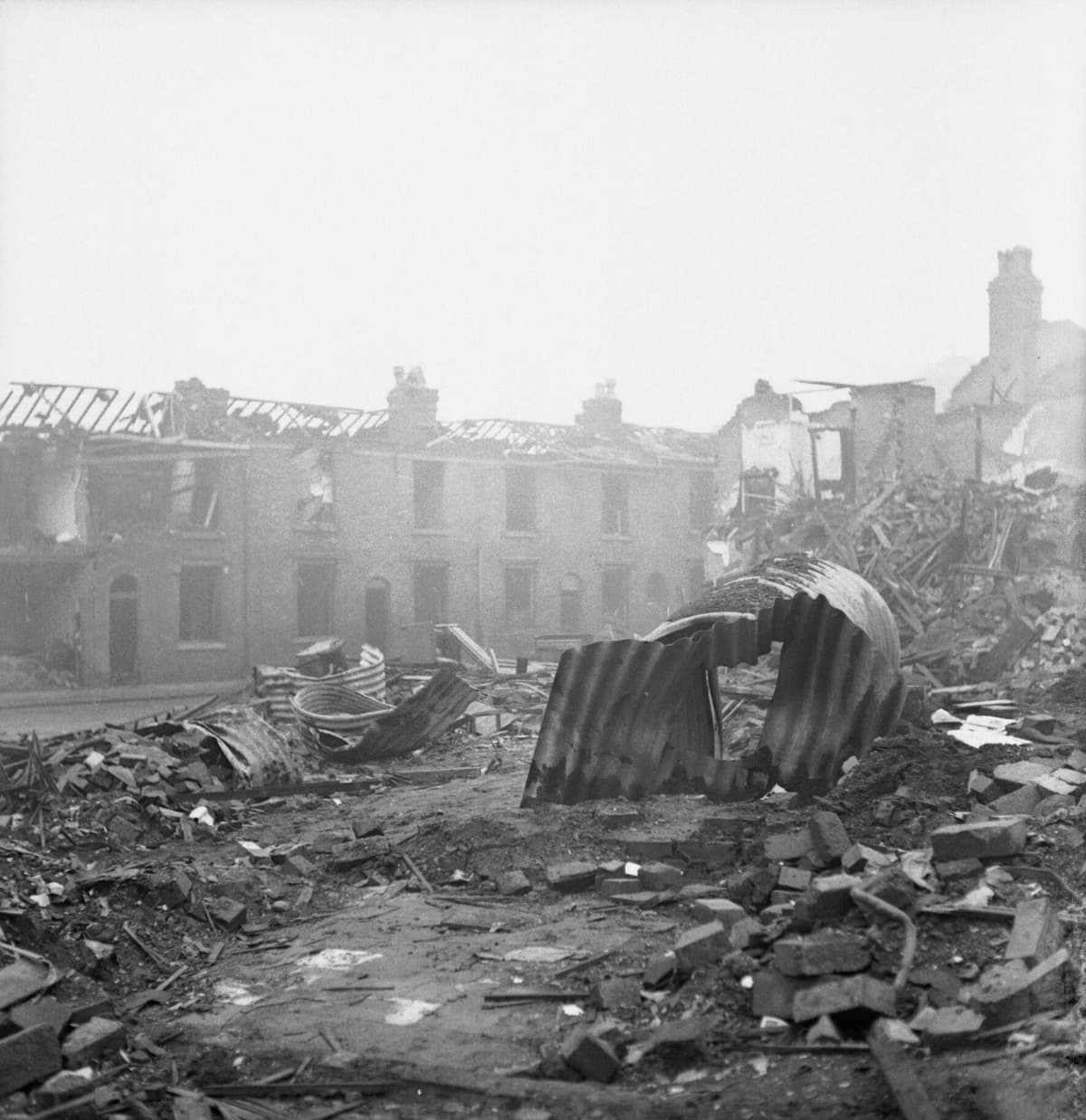
On the night of 8–9 August 1940 the first German bombs fell on Birmingham. The city council dates the Birmingham Blitz from 8 August; other records give the 9th, which suggests the bombs fell either side of midnight. It was the first of 77 raids. By the last, on 23 April 1943, 2,241 people in Birmingham had been killed.
The Imperial War Museum calls Birmingham Britain’s third most-bombed city, after London and Liverpool. The reason was simple. The city made guns, aircraft parts, engines and ammunition. Every factory was surrounded by streets of houses.
The Market Hall burns
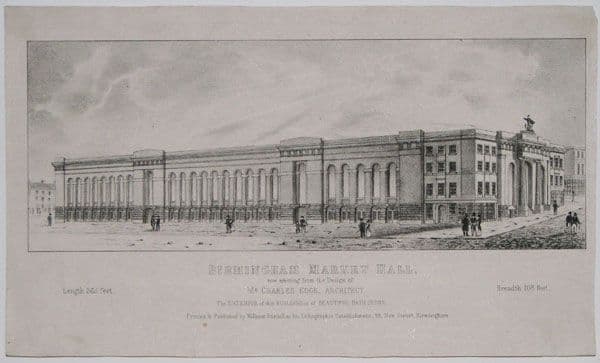
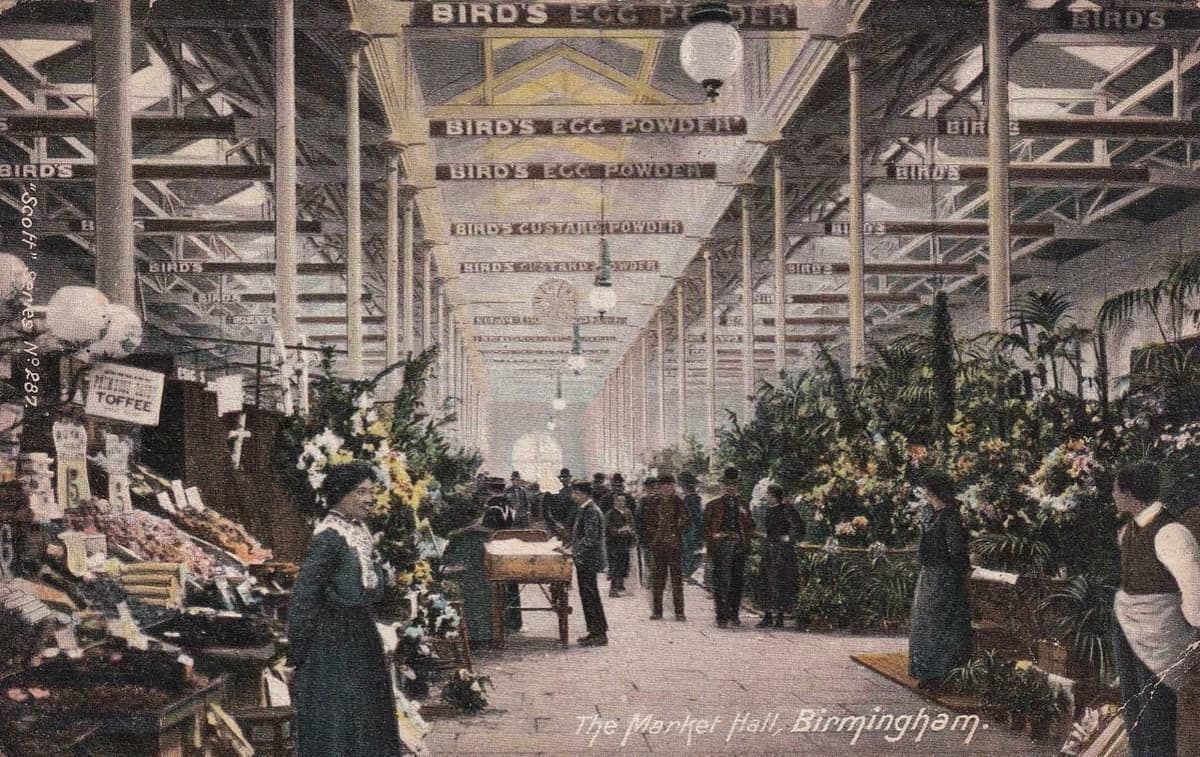
The first raid on the city centre came on the night of 25–26 August 1940. Incendiaries fell on the Bull Ring, and Charles Edge’s Market Hall of 1835 burned. Its famous clock and carved oak figures were destroyed. In the words of the Victoria County History, the hall was “reduced to a shell by enemy action in 1940”.
What happened next says a great deal about Birmingham. Covered stalls went up inside the roofless walls and the traders carried on. They would keep selling in the ruin for about twenty years.
November: the BSA
In November 1940 the Luftwaffe tried something new: raids on several nights running. German records, printed in Basil Collier’s official history of the air defence of Britain, list 357 aircraft over Birmingham on the night of 19 November, carrying 403 tons of high explosive. Two more big raids followed on the 20th and 22nd.
That first night, bombs brought down part of the New Building at the Birmingham Small Arms works in Small Heath, maker of rifles and motorcycles. The IWM records that 53 workers were killed.
The longest night
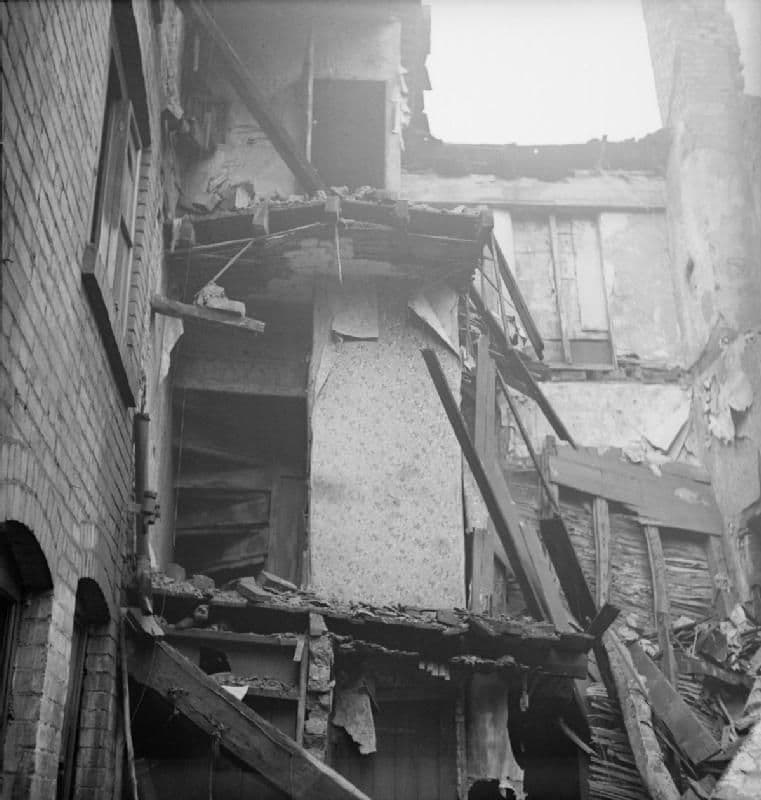
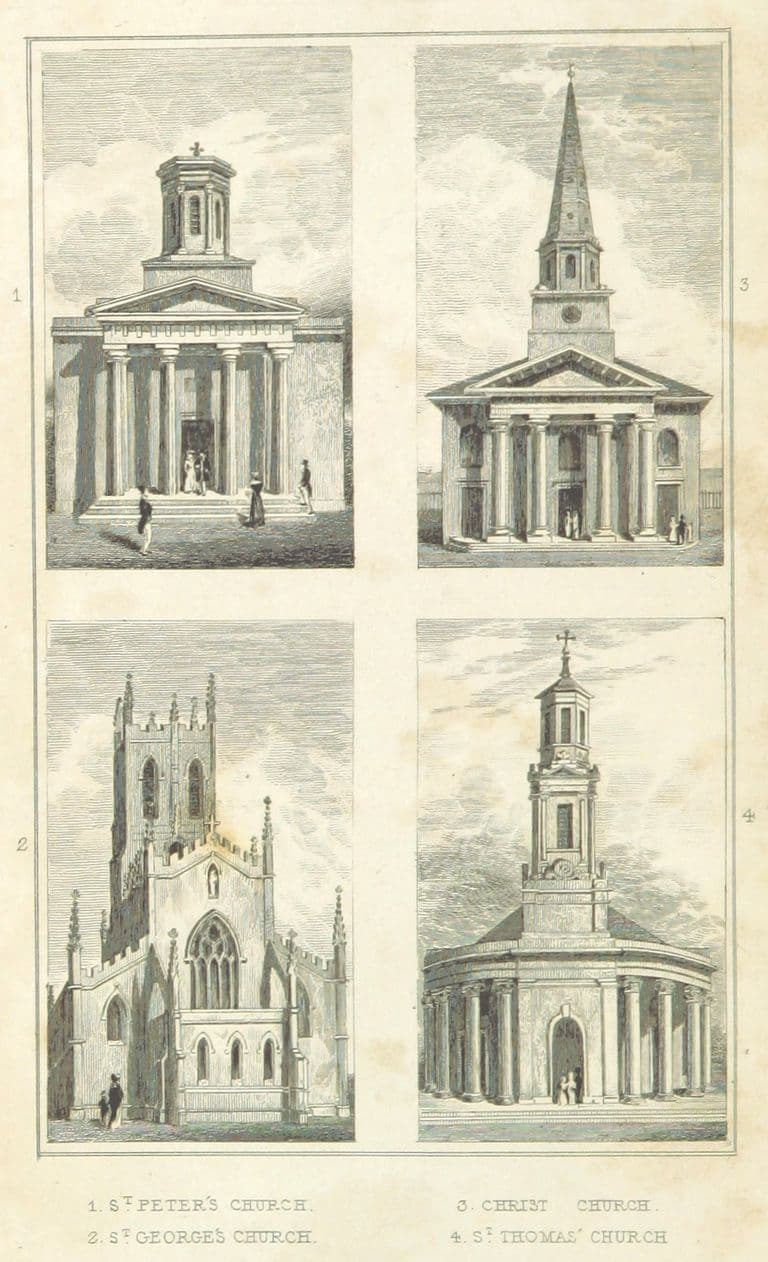
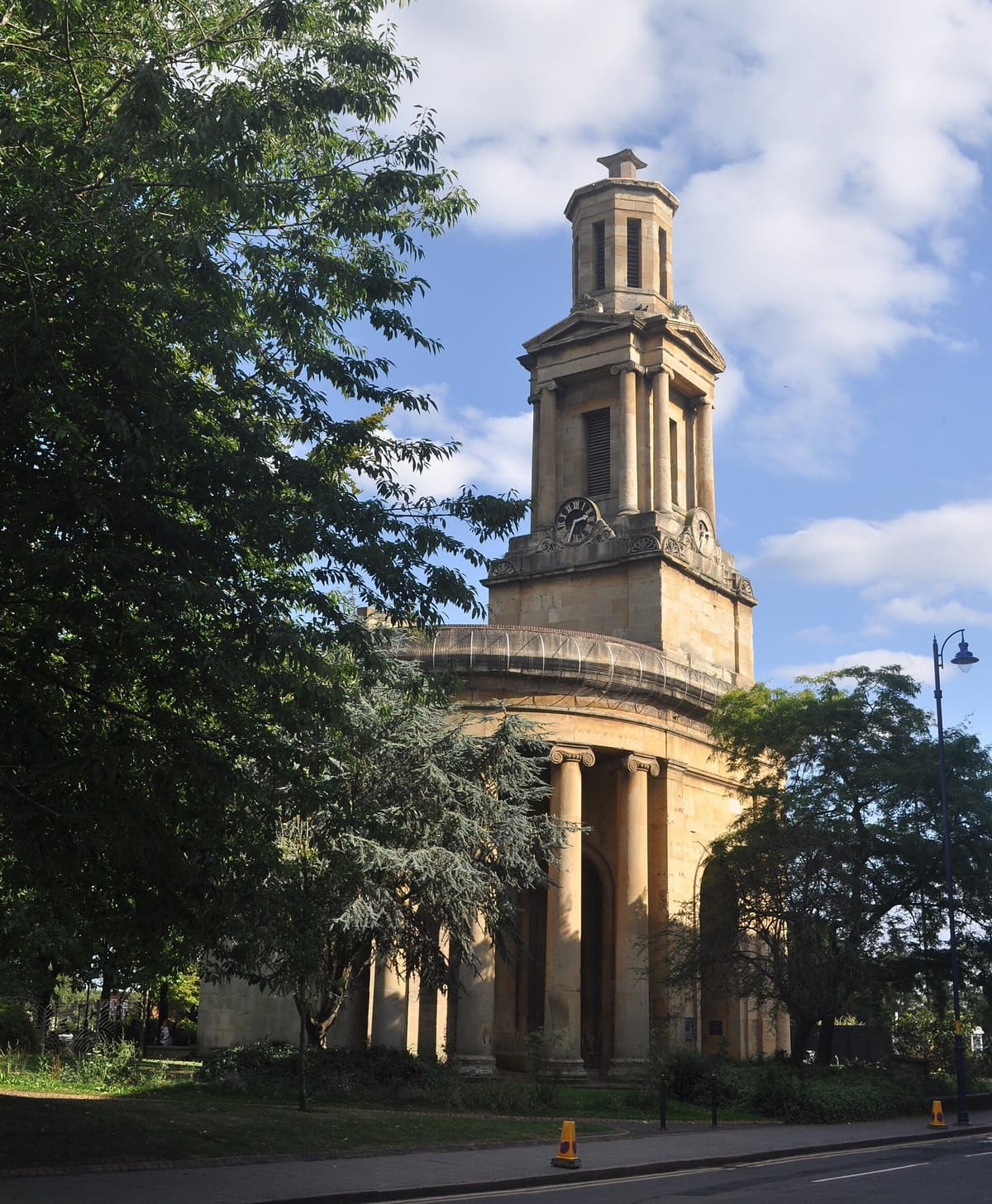
Collier’s figures make 11 December 1940 the second-heaviest raid on the city: 278 aircraft, 277 tons of explosive. It went on from dusk until dawn. That December the church of St Thomas in Bath Row, built by Rickman and Hutchinson in 1826–29, took a direct hit. The IWM’s memorial record notes that its clock stopped at 7.25pm. Only the west front, with its tower and portico, survived. It still stands in what is now the Peace Garden, opened in 1992, listed Grade II.
Spring brought more. On 9 April 1941 a direct hit destroyed the Prince of Wales Theatre in Broad Street. Collier records that the great night offensive of 1940–41 “closed with a raid on Birmingham” on 16 May 1941. Historic England notes that the last large raid came in July 1942.
“A West Midland City”
People elsewhere had little idea what Birmingham was going through. Censorship meant that newspapers rarely named the city. Historic England quotes the *Evening Despatch* of 23 November 1940 describing a fire in a restaurant in an unnamed “West Midland City”, put out when the heat burst the bottles of sauce on the tables. It was the kind of detail the censors allowed: human, cheerful and useless to the enemy.
Counting the cost
The bombs did not fall evenly. The VCH found that about 12,000 houses were “destroyed beyond repair, almost all of them in the central area and three-quarters of them slum or near-slum property”. The council’s 1995 history of the period counts 5,129 high-explosive bombs and 48 parachute mines, besides countless incendiaries.
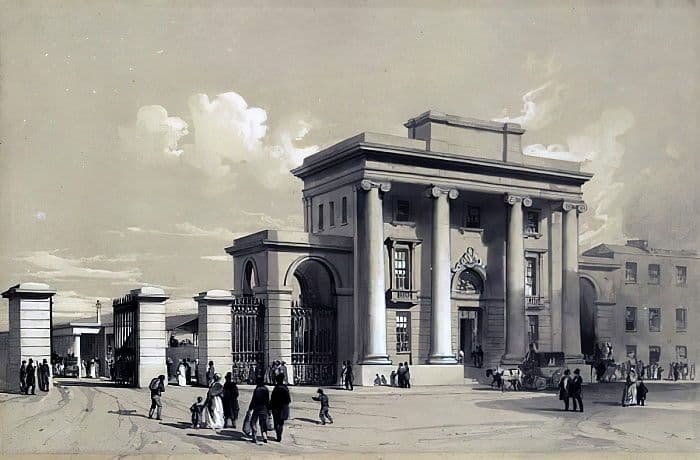
Some landmarks survived damaged. An oil bomb and an incendiary hit Philip Hardwick’s 1838 station building at Curzon Street, by then a goods office; it still stands, listed Grade I. At St Martin’s in the Bull Ring, a bomb in 1941 damaged the west end and destroyed nearly all the glass. The Museum and Art Gallery was hit, though staff had emptied it first.
A figure often quoted, 1,852 tons of bombs on Birmingham, comes from Collier’s table. But it counts only high explosive aimed in eight major night raids between September 1940 and May 1941, not the whole Blitz.
What the bombs decided
The raids shaped Birmingham for decades. Herbert Manzoni, the City Engineer, already had plans for a ring road and for clearing the inner slums. The bomb sites, and the gutted houses, gave those plans room. The shell of the Market Hall was finally cleared in the early 1960s for the Bull Ring Centre. The BSA went back to work; motorcycles were made at Small Heath until Christmas Eve 1975.
Remembering
The Birmingham Air Raids Remembrance Association campaigned for a permanent memorial, and on 8 October 2005 Lorenzo Quinn’s bronze *Tree of Life* was unveiled near St Martin’s: a tree growing from a rock, with two hands holding up the world. On 28 July 2026 it was taken away for restoration, to return to a new memorial space beside St Martin’s.
It will stand a few yards from where the Market Hall burned on the first night the bombs reached the centre. The traders who kept working in that shell would understand the choice.
On the map
9 places connected with Wartime Birmingham: the Blitz. Tap a number for directions — some sites are private homes or gardens, so each place’s page says what you can see from the street.

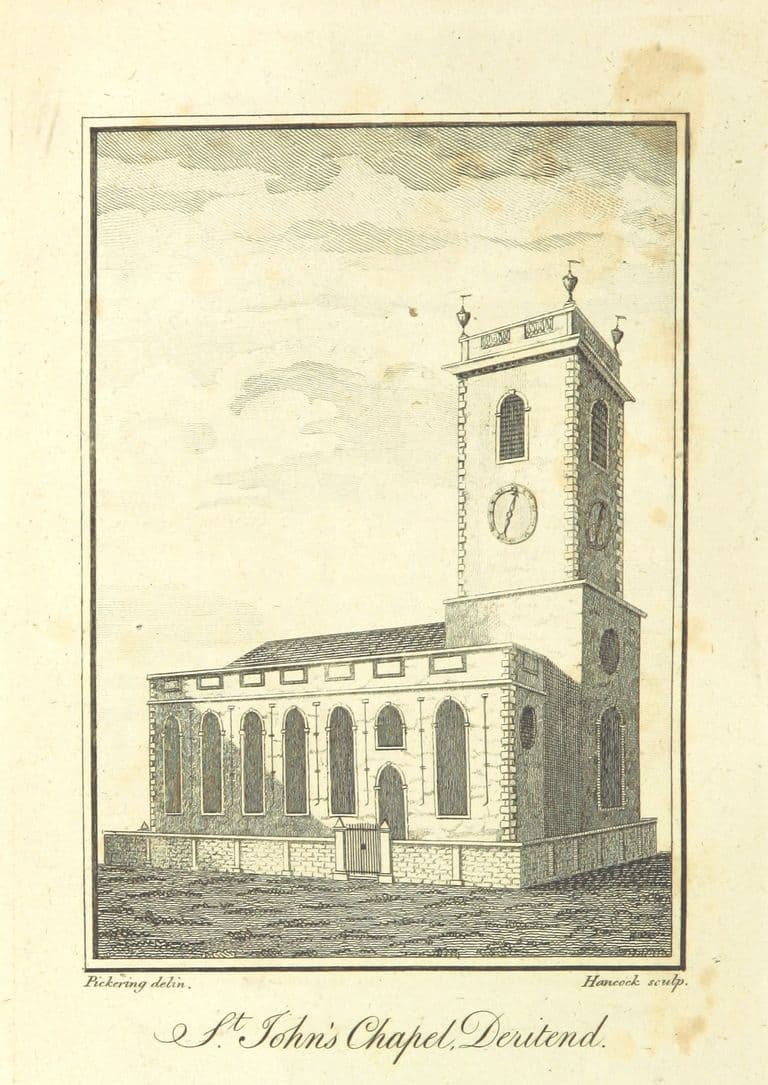
- St John’s Chapel, Deritend — Lost · Directions to St John’s Chapel, Deritend (opens Google Maps)
- Empire Palace Theatre, Hurst Street — Lost, Site redeveloped · Directions to Empire Palace Theatre, Hurst Street (opens Google Maps)
- St Thomas’s Church, Bath Row — Partly surviving, Lost · Directions to St Thomas’s Church, Bath Row (opens Google Maps)
- Boulton’s warehouse, Livery Street (site) — Lost, Site redeveloped · Directions to Boulton’s warehouse, Livery Street (site) (opens Google Maps)
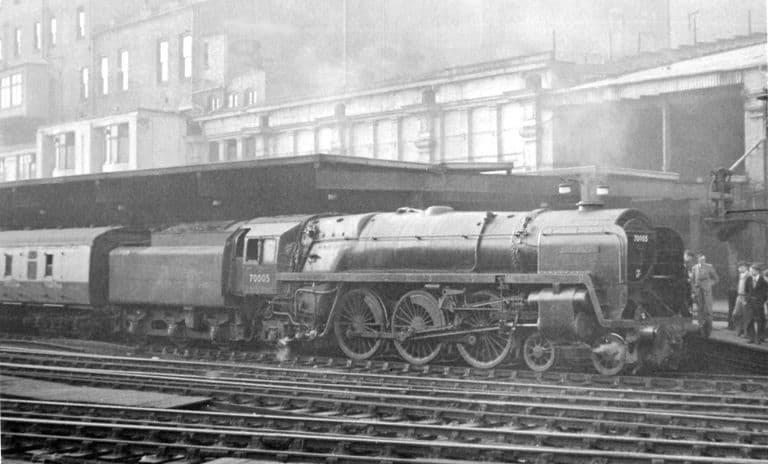
- The Victorian New Street Station — Lost, Site redeveloped · Directions to The Victorian New Street Station (opens Google Maps)
- Prince of Wales Theatre, Broad Street — Lost, Site redeveloped · Directions to Prince of Wales Theatre, Broad Street (opens Google Maps)
- BSA works, Armoury Road, Small Heath — Lost, Site redeveloped
- Curzon Street Station (1838) — Partly surviving, Surviving but altered, At risk · Directions to Curzon Street Station (1838) (opens Google Maps)
- Birmingham Market Hall — Lost, Site redeveloped · Directions to Birmingham Market Hall (opens Google Maps)
Key dates
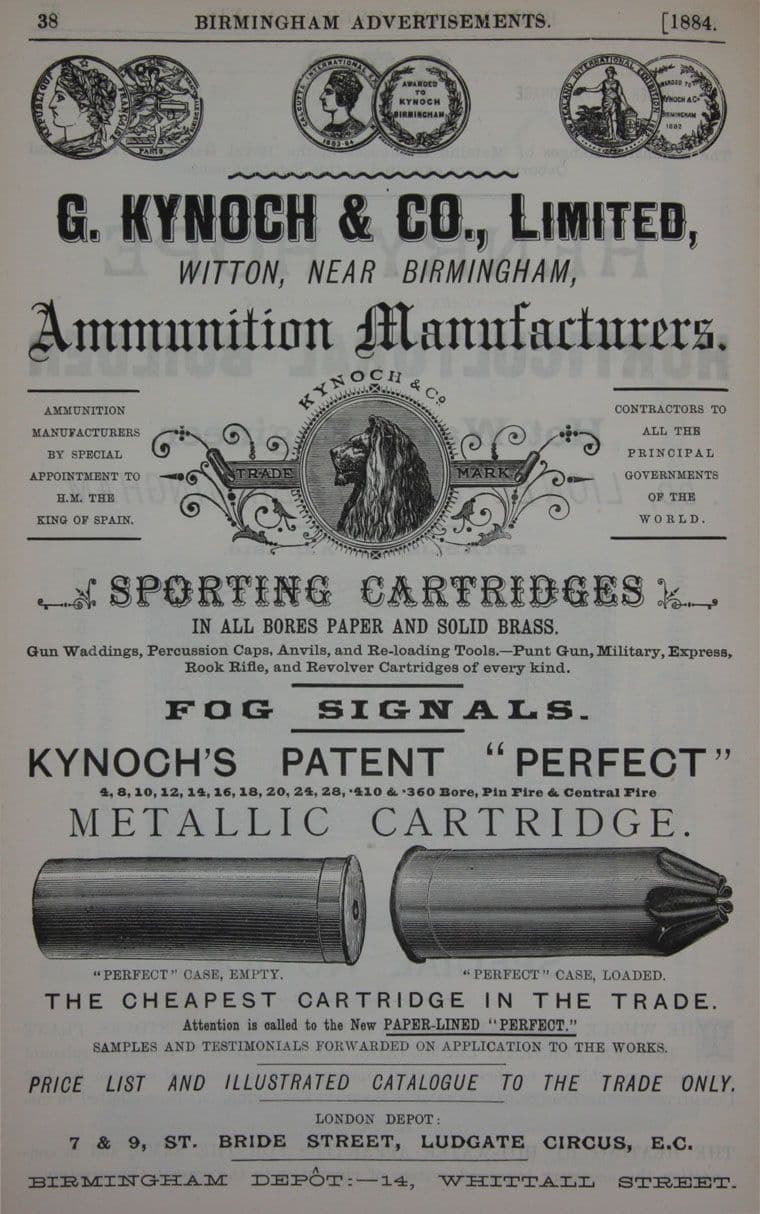
- November 1918 — Kynoch joins Nobel IndustriesKynoch Ltd, whose Witton works employed about 18,000 people in the war, joins the explosives merger that becomes Nobel Industries. In 1926 Nobel becomes part of ICI, and Witton becomes ICI Metals in 1929.
- c. December 1940 — St Thomas’s, Bath Row, is destroyedRickman and Hutchinson’s church of St Thomas, Bath Row, built 1826–29, is hit in an all-night raid in December 1940. Only its west front and tower survive, now in the Peace Garden.
- 8–9 August 1940 — The first bombs fall on BirminghamThe first bombs of the Birmingham Blitz fall. The council dates the first raid to 8 August, other records to the 9th. Over the next 77 raids 2,241 people are killed.
- 27 February 1941 — ‘We have not got to start replanning Birmingham’Asked by the Birmingham Mail whether the bombing has changed his plans, Manzoni says no: ‘we have not got to start replanning Birmingham. All we want is the opportunity to carry out the plans we have already.’
- 1 January 1941 — Manzoni appointed CBE for civil defence workIn the New Year Honours Manzoni, as City Engineer and Surveyor of Birmingham, is made a CBE ‘for services in connection with Civil Defence’.
- 9 April 1941 — Prince of Wales Theatre destroyedA direct hit destroys the Prince of Wales Theatre in Broad Street during the April 1941 raids.
- 23 April 1943 — The last air raid on BirminghamThe last of Birmingham’s 77 air raids. About 12,000 houses have been destroyed beyond repair, three-quarters of them slum or near-slum property, according to the Victoria County History.
- 6 June 1945 — Minister counts Birmingham’s bombed homesAnswering a written question, the Ministry of Works tells Parliament that about 90,000 Birmingham houses were affected by bombing, 5,000 of them destroyed, and about 2,000 other properties put out of use.
- 1987 — Prince of Wales Theatre site clearedThe remains of the bombed Prince of Wales Theatre on Broad Street are demolished to make way for Symphony Hall, which opens in 1991.
Sources and further reading
- Birmingham’s Tree of Life memorial removed for restoration — Birmingham City Council, 2026
- The Blitz Around Britain — Imperial War Museums
- Birmingham: Industrial City (Blitz Stories) — Historic England
- The Defence of the United Kingdom — Basil Collier, HMSO, 1957. pp. 271–278, Appendices XXX–XXXI
- A History of the County of Warwick, vol. 7: The City of Birmingham — Secular Architecture, pp. 43–57 — W. B. Stephens (ed.), Victoria County History, 1964
- A History of the County of Warwick, vol. 7: The City of Birmingham — The Growth of the City, pp. 4–25 — W. B. Stephens (ed.), Victoria County History, 1964
- St Martin in the Bull Ring — Looking at Buildings (Pevsner Books Trust)
- Birmingham, Market Hall — Church Bells of Warwickshire
- Birmingham Peace Garden — War Memorials Register 38693 — Imperial War Museums
- Remains of the Church of St Thomas, Bath Row — National Heritage List for England entry 1343348 — Historic England
- Prince of Wales Theatre (posts tagged) — The Iron Room, Library of Birmingham
- Architecture and Austerity: Birmingham 1940–1950 — Sheila McGregor, Chris Upton and Nicola Coxon, Birmingham City Council Department of Planning and Architecture, 1995
- Curzon Street: the former Principal Building of the Birmingham Terminus for the London–Birmingham Railway — National Heritage List for England entry 1343086 — Historic England
- Birmingham Air Raids database — Birmingham Air Raids Remembrance Association