

What was here?
Where Symphony Hall stands, Broad Street once had the Prince of Wales Theatre: a Victorian music hall turned playhouse, home to pantomime, touring drama and variety for more than eighty years.
History
The building began as a concert hall. Arthur Lloyd’s theatre history records that it opened on 3 September 1856 as the Music Hall, Broad Street, with performances of Messiah and Elijah, at a cost of £12,000. It became the Royal Music Hall, and in 1862 William Henry Swanborough of London’s Strand Theatre took it over and licensed it for plays.
On 10 March 1863 it was renamed the Prince of Wales Operetta House, to mark the marriage of the future Edward VII. Two years later it became simply the Prince of Wales Theatre.
Pantomime and players
Under James Rodgers from 1866, and later under the manager Philip Rodway from 1911 until his death in 1932, it became a fixture of Birmingham life. Postcards survive of Dorothy Ward as Robin Hood in Babes in the Wood here in 1909. In the 1930s the impresario Emile Littler, a director from 1935, staged a run of lavish pantomimes to revive its fortunes.
9 April 1941
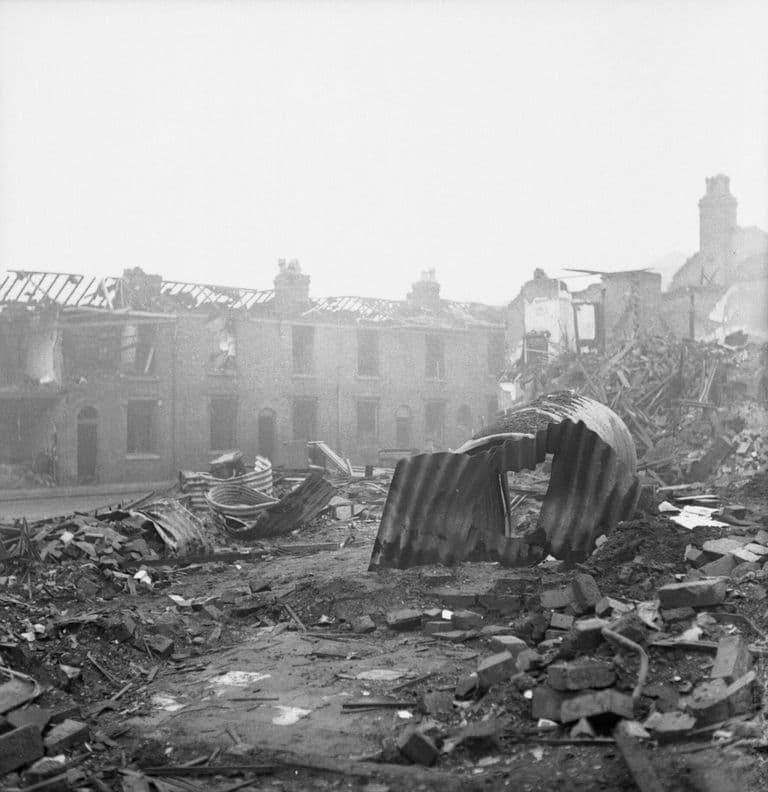
The war ended all that in one night. The Library of Birmingham’s archivists record that the theatre was “destroyed by German bombers in a direct hit on 9th April 1941”. Arthur Lloyd adds that the hit completely destroyed “the auditorium and interior”. It was one of the heaviest nights of the Birmingham Blitz; the official history lists major raids on both 9 and 10 April.
The theatre never reopened. For more than four decades the bombed site sat on Broad Street while the city around it changed.
Symphony Hall
Its end, when it came, was the beginning of something else. Arthur Lloyd records that the remains were “eventually demolished in 1987 to make way for its replacement, the New Birmingham Symphony Hall which opened in 1991”. The Iron Room puts it simply: the Prince of Wales “was located where the Symphony Hall is today”. On the ground where Birmingham once laughed at pantomime dames, one of the finest concert halls in Europe now stands.
What happened here?
Then The Music Hall of 1856, renamed the Prince of Wales Theatre in 1865, a leading Birmingham playhouse for pantomime, drama and variety.
What happened A direct hit on the night of 9 April 1941 destroyed the auditorium and interior. The theatre never reopened; what was left was demolished in 1987.
Why Bomb damage on 9 April 1941, then redevelopment of the site for the International Convention Centre and Symphony Hall.
What replaced it Symphony Hall, opened in 1991 as part of the International Convention Centre on Broad Street.
Now Symphony Hall, facing Centenary Square.
Why it mattered
The Prince of Wales was part of the everyday culture of the industrial city, the place families went for pantomime and touring plays. Its fate shows the war’s long shadow: a building ruined in a single night in 1941 and only finally cleared nearly half a century later, for a new kind of cultural landmark.
Why it disappeared
Wartime destruction · Redevelopment
Bomb damage: a direct hit on 9 April 1941 destroyed the auditorium and interior (Iron Room; Arthur Lloyd). It never reopened, and the remains were demolished in 1987 for Symphony Hall (Arthur Lloyd).
The same spot, then and now
1888–1913
Today
Old map: Ordnance Survey six-inch, reproduced with the permission of the National Library of Scotland (CC BY 4.0). Today: © OpenStreetMap contributors.
The Prince of Wales Theatre, on today’s streets
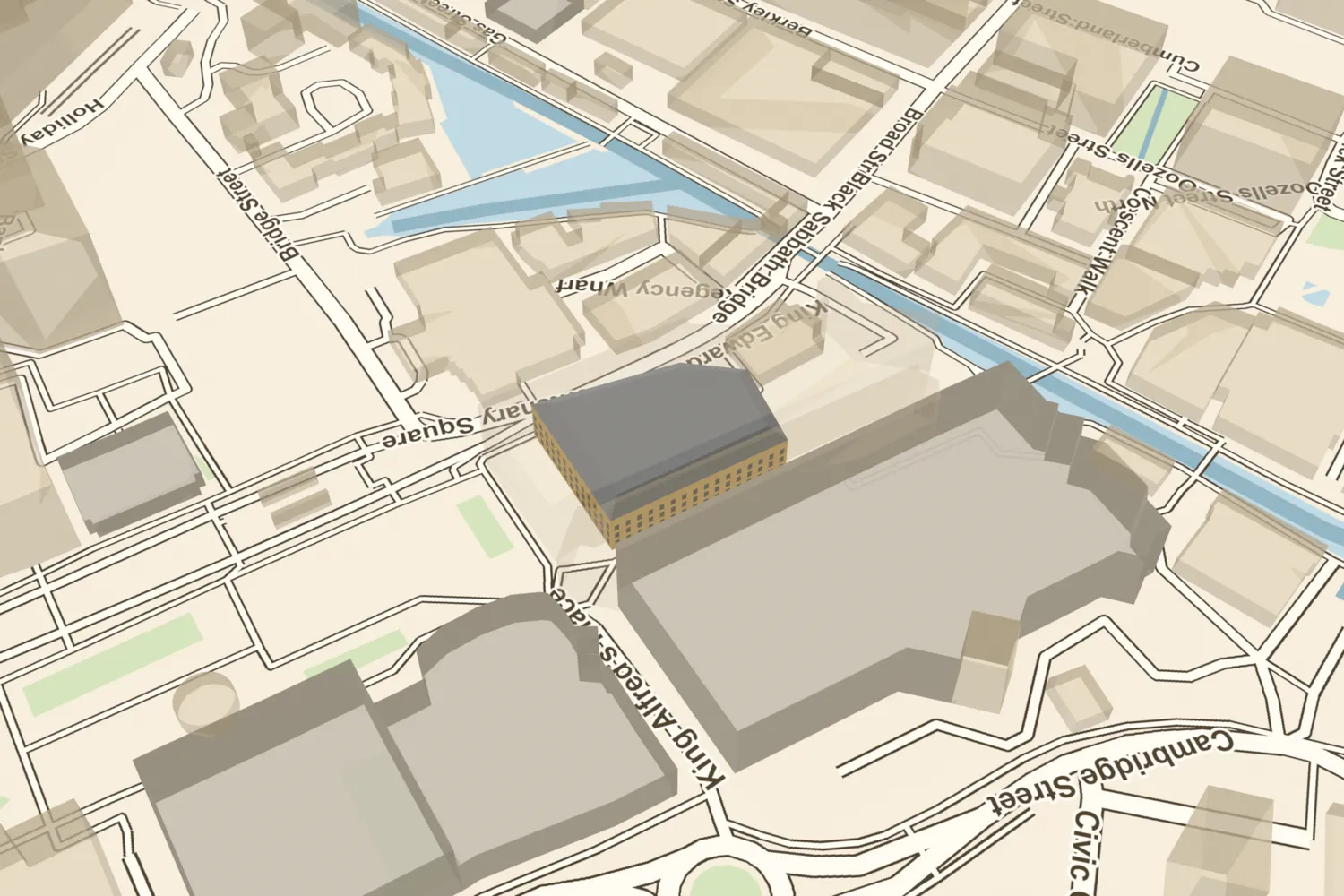
What’s there now
What replaced it
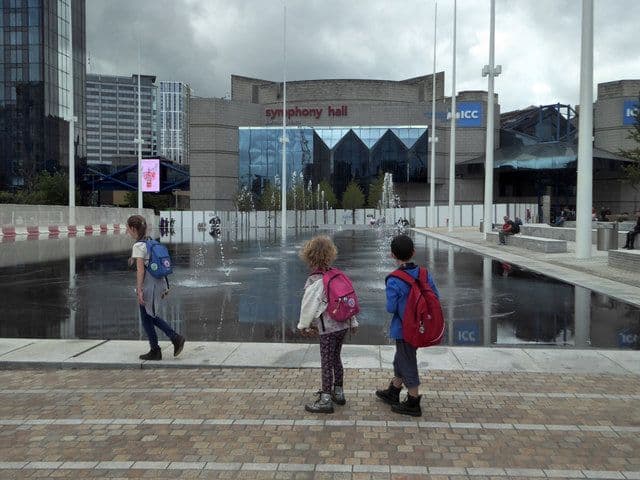
Symphony Hall, opened in 1991 as part of the International Convention Centre (ICC) on Broad Street.
What survives
Nothing of the theatre is known to survive on the site. Programmes, postcards and photographs survive in collections and on the Arthur Lloyd theatre history site.
Today
Symphony Hall and the ICC occupy the site, facing Centenary Square on Broad Street.
Then and now
Then · 1909

Now · 10 August 2019
Key dates
- 3 September 1856 — The Music Hall opens on Broad StreetThe Music Hall, Broad Street, opens with Messiah and Elijah. It is renamed the Prince of Wales Operetta House in 1863 and the Prince of Wales Theatre in 1865.
- 1987 — Prince of Wales Theatre site clearedThe remains of the bombed Prince of Wales Theatre on Broad Street are demolished to make way for Symphony Hall, which opens in 1991.
Sources and further reading
What stood on the site between 1941 and 1987 is not described in detail by the sources read; Arthur Lloyd says only that the building “remained in this state” until demolition in 1987.
Arthur Lloyd calls it “a casualty of one of the first air raids over Birmingham”; in fact the Birmingham Blitz had begun in August 1940, so that phrase is not used.
The 1909 postcard of Dorothy Ward is marked on Commons with a US public-domain tag (published before 1931); as an anonymous photograph published in 1909 it should also be out of UK copyright, but the rights note should be rechecked before use.
- Prince of Wales Theatre (posts tagged) — The Iron Room, Library of Birmingham
- The Prince of Wales Theatre, Broad Street, Birmingham — Matthew Lloyd, arthurlloyd.co.uk
Comments
Comments will load here.