
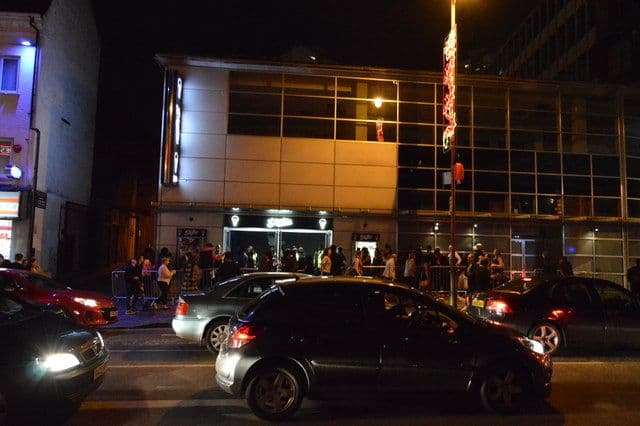
What was here?
A music hall and then a large variety theatre at the top of Hurst Street, by its corner with Smallbrook Street. Day’s Concert Hall of 1862 had a hall 130 feet long on the first floor. Frank Matcham’s Empire Palace of 1894 had a red-brick Italian Renaissance front with statues of music and dancing, and held about 3,000 people.
History
Mr Day’s concert hall
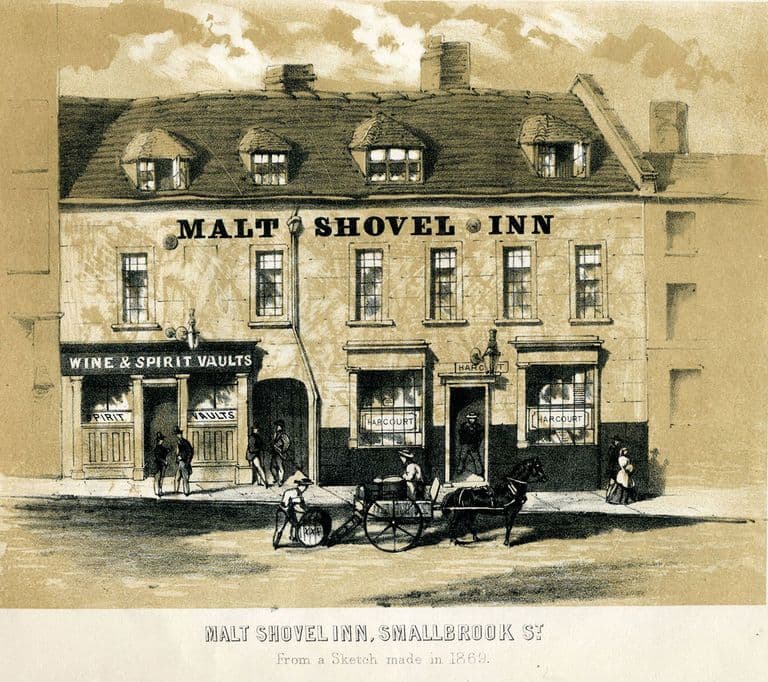
In 1861–62 James Day built a concert hall behind his Crystal Palace inn, on part of the site of the old White Swan, at the corner of Smallbrook Street and Hurst Street. The architect was T. Naden and the builder W. Matthews. It opened in September 1862, and the first night’s takings went to the Queen’s Hospital.
The Era described a hall 130 feet long on the first floor, reached by sixteen stone stairs 14 feet wide. Galleries ran round it on light iron pillars, lit by crystal star lights and doubled by mirrors. The stage was 30 feet wide, 30 feet high and 36 feet deep. Showell counted Day’s among Birmingham’s main music halls, with room for 1,500 people.
It was not always a happy place. On 12 November 1870 a trapeze performer known as “Fritz” was killed in a fall there.
Moss and Matcham
In September 1893 Day’s closed and was sold to H. E. Moss, who made it one of his Empire variety theatres. His Birmingham Empire Palace Company rebuilt it to the designs of the theatre architect Frank Matcham. “Certain portions of the walls, roof, and a part of the ceiling of the old building only remain,” reported The Era. Matcham lowered the whole house to street level, with fauteuils and pit on the ground floor, a balcony where the old pit had been and a new gallery above.
The same spot, then and now
1888–1913
Today
Old map: Ordnance Survey six-inch, reproduced with the permission of the National Library of Scotland (CC BY 4.0). Today: © OpenStreetMap contributors.
The New Empire Palace of Varieties opened on Monday 7 May 1894, with Gus Elen top of the bill. It had cost £18,000 and held “about 3,000 persons”. Its front was “in rich Italian renaissance, faced with red brick, with stone and cement-dressing”. Over the entrance a carved scroll pediment carried the words “Empire Palace”, topped by a lyre and flanked by life-size statues of music and dancing. An iron canopy in cream and gold, with coloured glass, sheltered the pavement.
Stars of the halls
For nearly half a century the Empire was one of Birmingham’s big variety houses. Marie Lloyd and Harry Lauder were among the stars who played there. It was redecorated in 1907, when films joined the variety bill, and the Empire Lounge opened in 1912.
Fire from the air
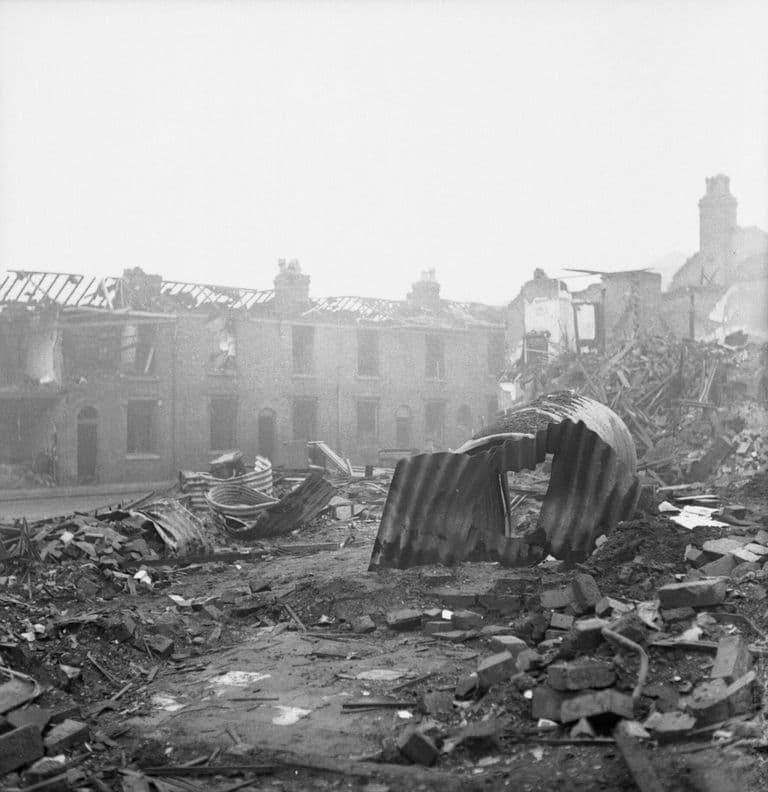
The Empire had been closed for some weeks when the bombers came on the night of 24 October 1940. Incendiaries gutted it, while the manager and his wife sheltered inside. The Hippodrome, a few hundred yards down Hurst Street, was hit in the same raid and survived. The Empire did not.
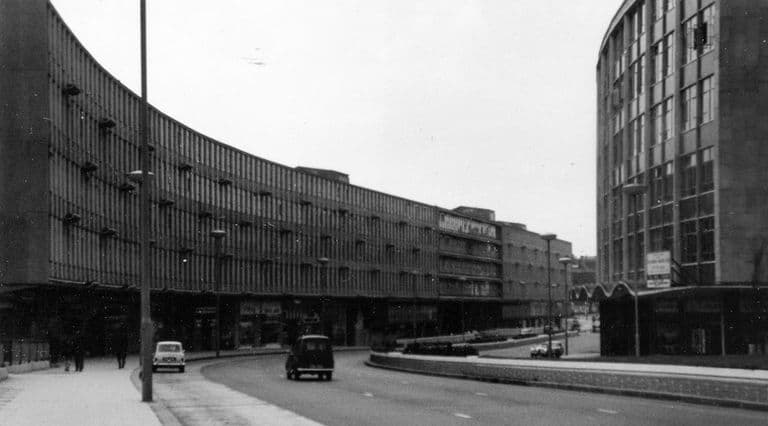
Its burnt-out shell stood for ten years. Around 1950–51 the ruins and the Empire pub on the corner were cleared, and a short row of prefabricated shops went up until Smallbrook Ringway was built. A low modern corner building at the top of Hurst Street now covers most of the site. Down the road the Hippodrome still stands; the Empire is the theatre Birmingham lost.
Why it mattered
Day’s was one of Birmingham’s main early music halls, and the Empire Palace, rebuilt by Frank Matcham for H. E. Moss, was one of the city’s large variety theatres, where stars such as Marie Lloyd and Harry Lauder played. It was among the best-known entertainment buildings Birmingham lost to the bombing of 1940.
Why it disappeared
Wartime destruction
Incendiary bombs gutted it on the night of 24 October 1940. It was never rebuilt; the ruins and the corner pub were cleared around 1950–51, and the site was later taken into the Smallbrook Ringway redevelopment.
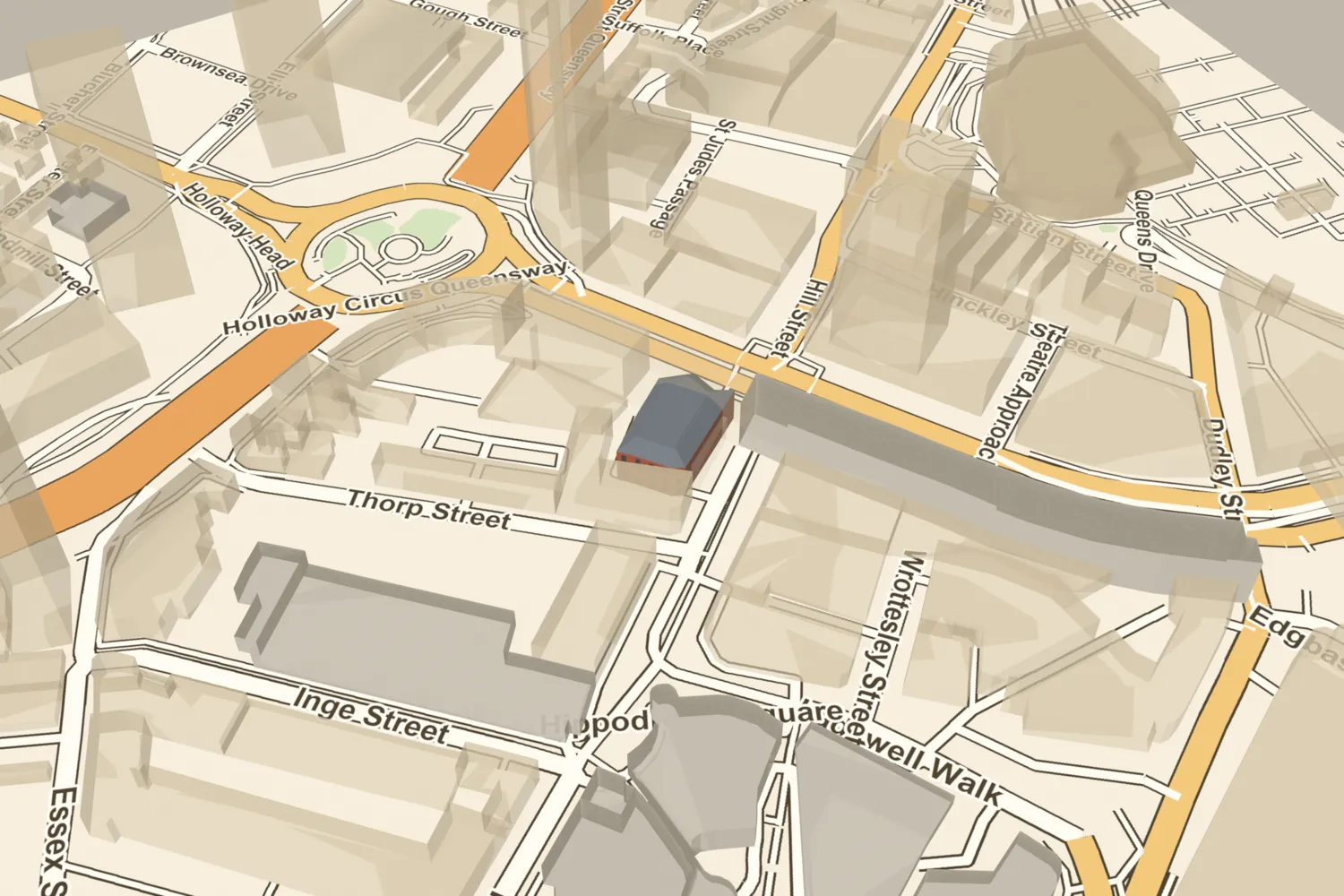
The Empire Theatre, on today’s streets
What’s there now
What replaced it
A short row of prefabricated shops after the ruins were cleared, then the Smallbrook Ringway (now Smallbrook Queensway) of the late 1950s and 1960s. The site is now a low corner building at the top of Hurst Street and the edge of the SBQ2 block.
What survives
Nothing, and there is no plaque.
Today
Stand at the top of Hurst Street on its west side, just south of Smallbrook Queensway. The Empire filled the corner here; the Hippodrome is a short walk down Hurst Street.
Today
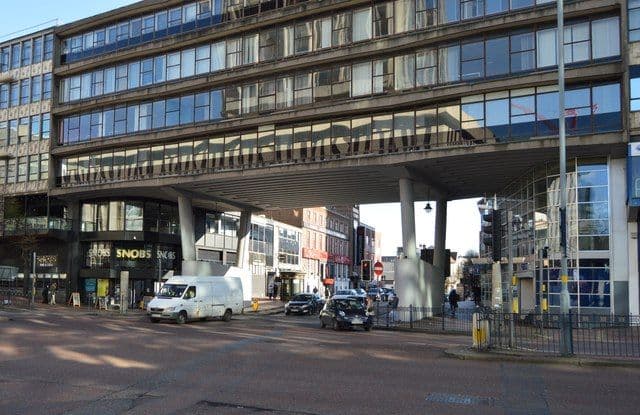
Hurst Street at Smallbrook Queensway, 17 February 2015N Chadwick, 17 February 2015. Geograph Britain and Ireland via Wikimedia Commons · CC BY-SA 2.0
Sources and further reading
The Era report gives the opening of Day’s as Thursday 18 September 1862; Showell says “the opening night, September 17”, and Cinema Treasures’ 18 October 1862 is probably wrong. The bombing is dated 24 October 1940 in the account on Arthur Lloyd and by Cinema Treasures, but 1941 appears elsewhere on Arthur Lloyd and on hurst-street.com. The ruins were demolished in 1950 (Cinema Treasures) or 1951 (Arthur Lloyd). Cinema Treasures gives the address as 75 Smallbrook Street, but early-1950s photographs show the theatre front along Hurst Street with the pub on the corner. The 1894 rebuilding kept only parts of the old walls and roof, so its outline may differ by several metres from the 1887–88 plan used for the map. Capacity is about 3,000 (The Era, 1894), or 2,000 seated and 1,000 standing (Cinema Treasures). The Victoria County History does not mention the Empire.
- Showell’s Dictionary of Birmingham — Thomas T. Harman and Walter Showell, Cornish Brothers, Birmingham, 1885. ‘Concert Halls’ and ‘Accidents’: Day’s, capacity, Fritz 1870
- Crystal Palace Concert Hall (The Era, 21 September 1862) and the Empire Palace (The Era, 5 May 1894) — The Era, 1862; 1894
- The Empire Theatre, corner of Smallbrook Street and Hurst Street, Birmingham — arthurlloyd.co.uk
- Birmingham Empire Theatre — Ken Roe (Cinema Treasures)
- 144 – The Empire Theatre — hurst-street.com, 2021
- The Empire Palace (1894–1941) (Birmingham): archive authority record — University of Sheffield Library, Special Collections
- Ordnance Survey 1:500 town plan of Birmingham, 1887–88, georeferenced — National Library of Scotland, 1888. Day’s hall traced
- Ordnance Survey 25-inch map, Warwickshire (Birmingham sheet), georeferenced — National Library of Scotland. ‘Empire Palace’
- OpenStreetMap data (Overpass and Nominatim), central Birmingham — OpenStreetMap contributors, 2026
Comments
Comments will load here.