
What was here?
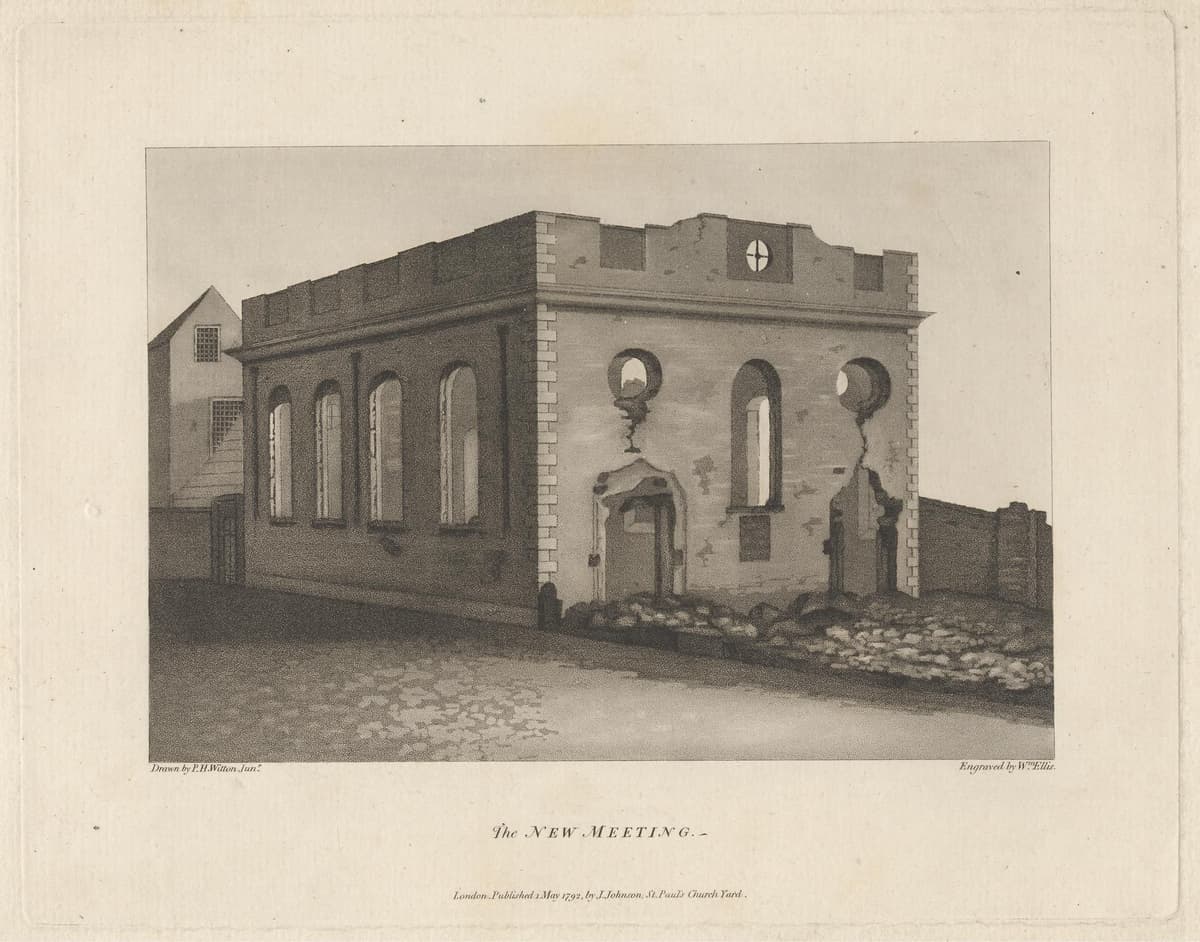
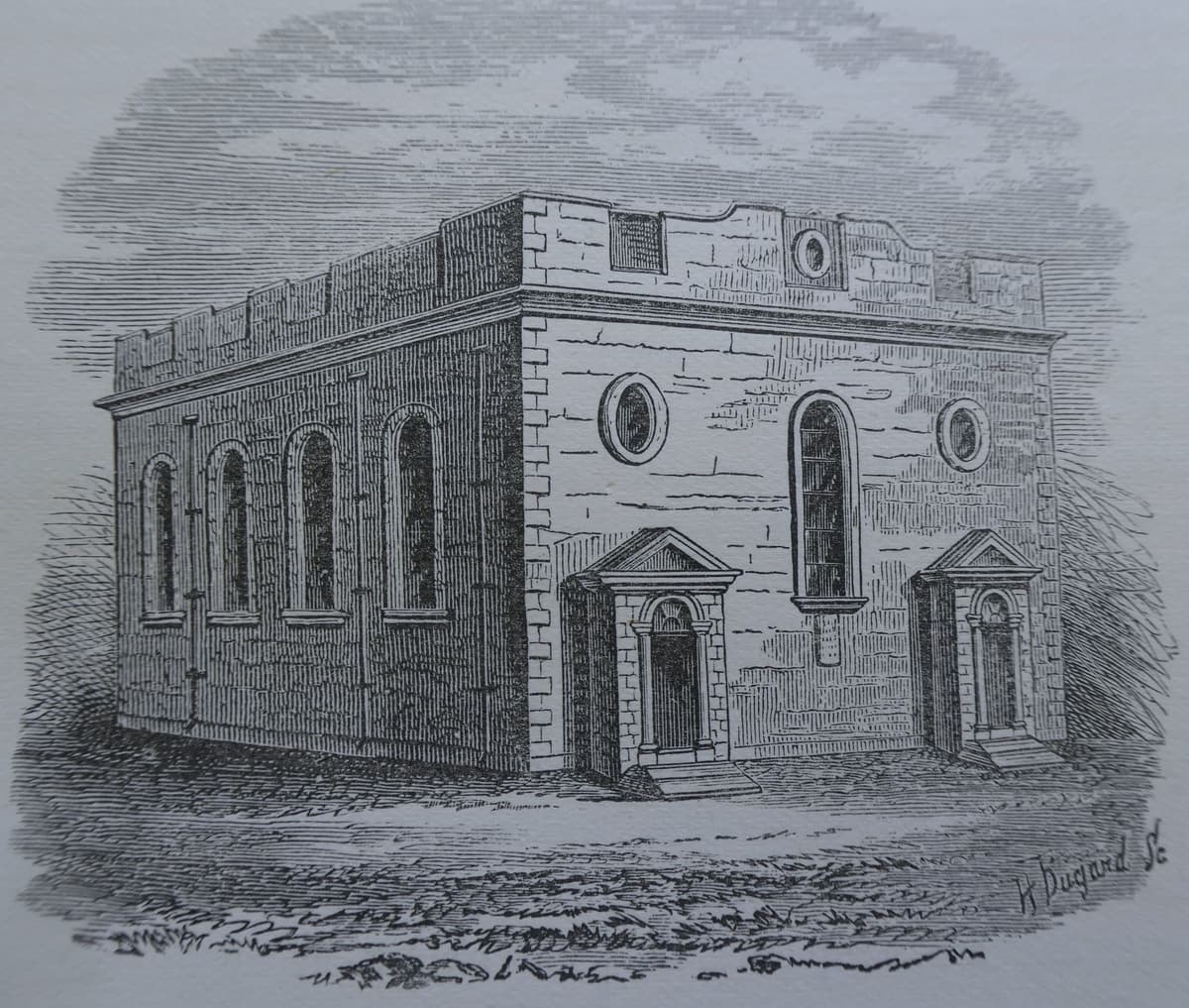
A Unitarian chapel in Moor Street, where Joseph Priestley preached from 1780 to 1791. Rioters burnt it on 14 July 1791. The congregation rebuilt on the same site, and the new chapel, reopened in 1803, survives as St Michael’s Catholic Church, with a blue plaque to Priestley.
History
A chapel for Dissenters
In the 18th century Birmingham had many Protestant Dissenters, people who worshipped outside the Church of England. They lived under legal restrictions, including the Test and Corporation Acts, which they campaigned to repeal. Two of the town’s main congregations were known simply as the Old Meeting and the New Meeting. The first New Meeting House was built in Moor Street in 1726.
Priestley in the pulpit
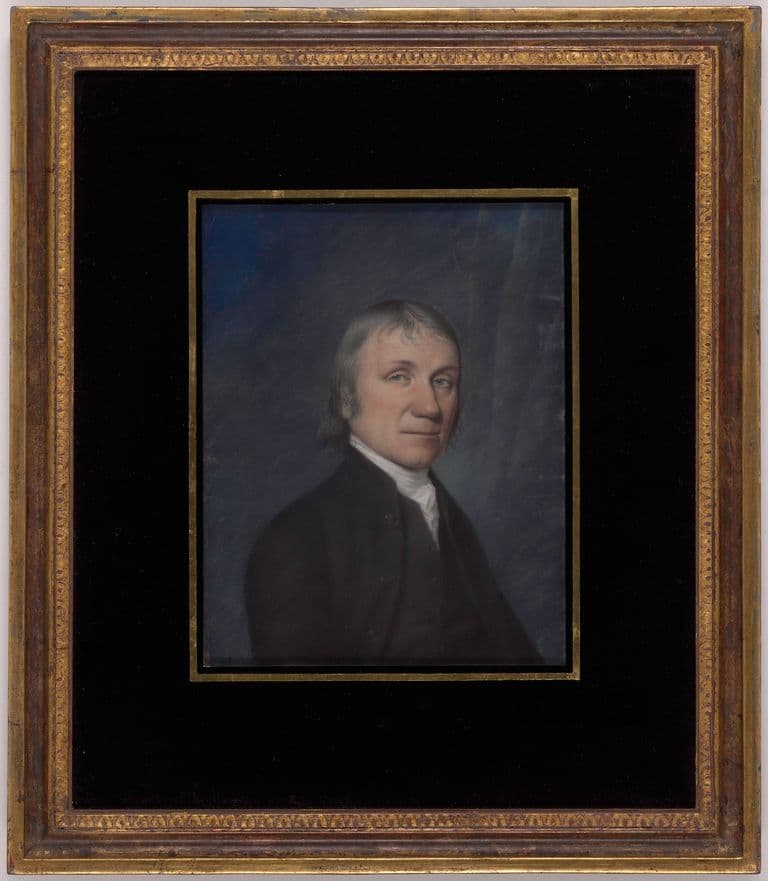
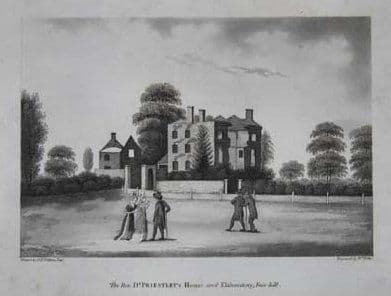
In 1780 Joseph Priestley arrived in Birmingham. Within a few months the New Meeting invited him to become its minister, as colleague to Mr Blyth. Priestley agreed on his own terms: he would preach and teach on Sundays only, leaving baptisms and sick visits to his colleague, so that he had the rest of the week for writing and experiments at Fair Hill.
He was a controversial preacher. His theology was Unitarian, denying the Trinity, and he campaigned for Dissenters’ rights. In a 1785 sermon-pamphlet he wrote that Dissenters were “laying gunpowder, grain by grain, under the old building of error and superstition”. He meant ideas, not explosives, but his enemies made the most of it.
The first night
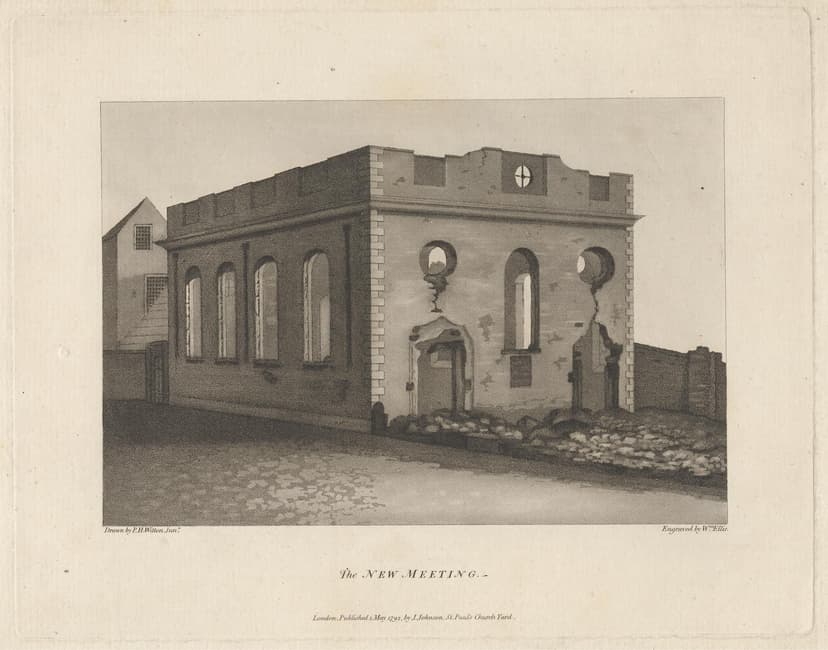
On 14 July 1791 a dinner in Temple Row marked the second anniversary of the fall of the Bastille. A crowd attacked the guests as they left. Then it turned on the chapels. The New Meeting was burnt that night, and so was the Old Meeting. From Moor Street the rioters went on to Priestley’s house at Fair Hill. Over the following days they attacked Dissenters’ homes across the town until troops restored order.
The same spot, then and now
1888–1913
Today
Old map: Ordnance Survey six-inch, reproduced with the permission of the National Library of Scotland (CC BY 4.0). Today: © OpenStreetMap contributors.
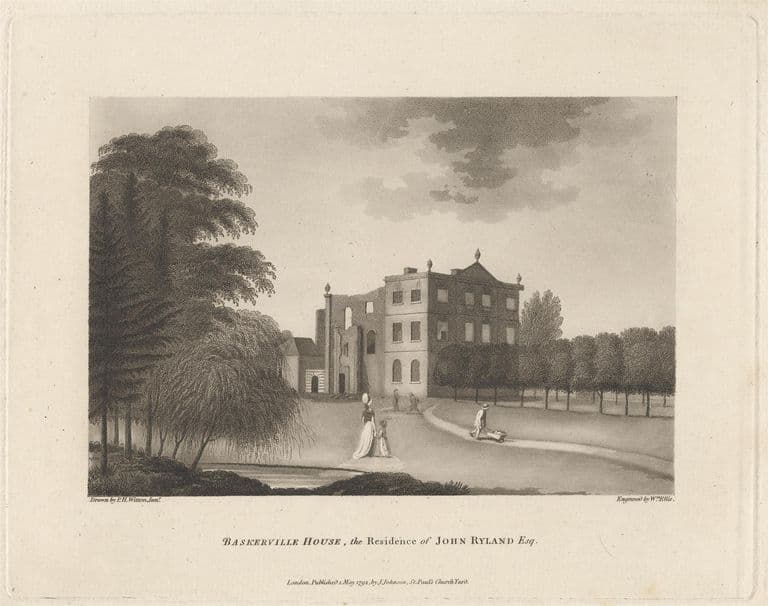
A print published in 1792, drawn by P. H. Witton junior and engraved by William Ellis, shows the New Meeting as a burnt-out shell.
Rising again
The congregation did not give up. They rebuilt on the same site, returning to the very spot where their first chapel had burned, and the new chapel reopened in 1803. Historic England’s list entry describes it as “circa 1800 originally a dissenting chapel”. Priestley never saw it: he had left Birmingham for good in 1791 and died in Pennsylvania in 1804.
A new faith in an old building
In 1862 the Unitarians sold the building. It was consecrated as St Michael’s Roman Catholic Church. The Unitarian congregation moved on; its successor is the New Meeting on Ryland Street in Ladywood. St Michael’s later became known locally as the Italian church.
The plaque
In 1980 Birmingham Civic Society and the Royal Society of Chemistry placed a blue plaque on the building, making it a National Chemical Landmark: “On this site in the former New Meeting House, Joseph Priestley, LLD, FRS, Scholar, Scientist, Theologian & discoverer of Oxygen, ministered to his congregation from 1780 - 1791”.
Priestley’s discovery of oxygen was made before he came to Birmingham. The plaque honours the man, not the place of the discovery. But it marks the spot where Birmingham heard him preach, and where it burnt his chapel down. The congregation’s answer was to build it again. It is still standing.
What happened here?
Joseph Priestley was minister here from 1780 until 1791. The first chapel was burnt by rioters on 14 July 1791, the opening night of the Priestley Riots. The congregation rebuilt it, reopening in 1803. In 1862 it was sold and became St Michael’s Catholic Church.
Why it mattered
The New Meeting was the centre of Priestley’s Birmingham life as a minister and a symbol of the town’s Dissenting community. Its burning opened the 1791 riots; its rebuilding shows the congregation’s defiance. The rebuilt chapel survives as a working church.
Why it disappeared
Riot
The first chapel was burnt by rioters on 14 July 1791 (Revolutionary Players; University of Birmingham). The congregation rebuilt it by 1803; that building survives, altered, as St Michael’s.
What’s there now
What replaced it
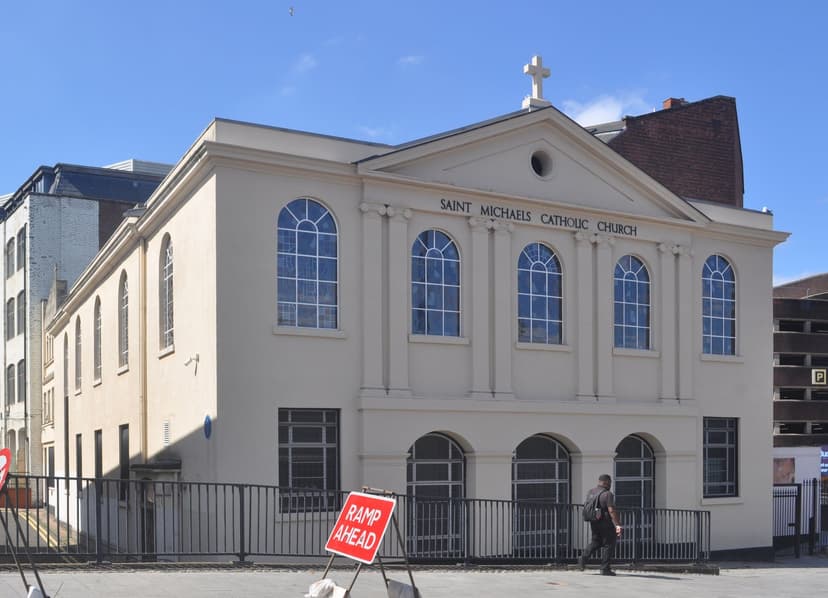
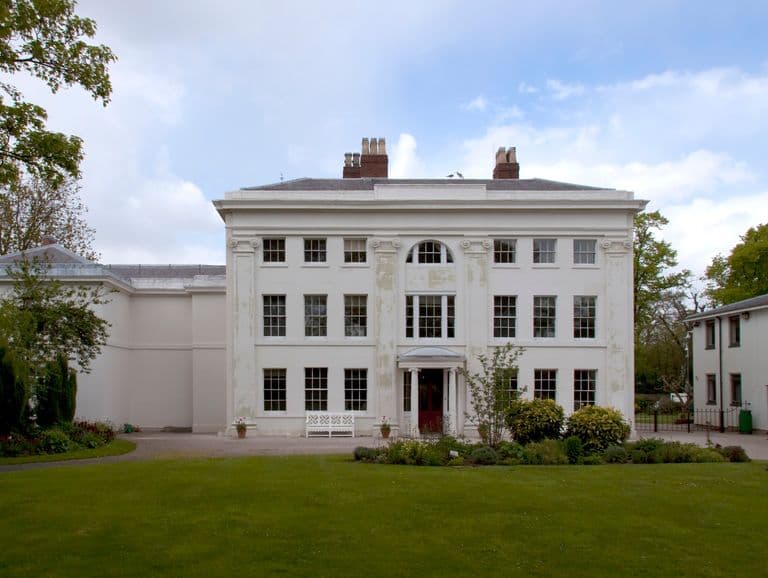
The rebuilt chapel of c.1802–03, which is the present St Michael’s Catholic Church.
What survives
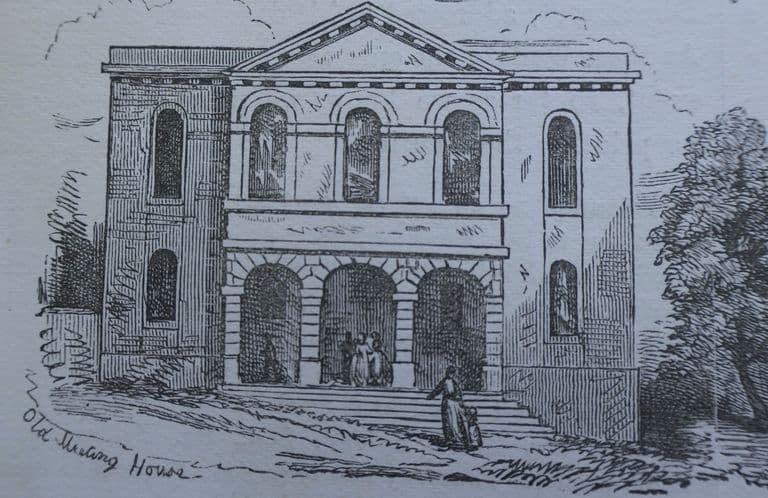
The rebuilt chapel (Grade II), now St Michael’s Catholic Church, with the 1980 blue plaque to Priestley. Prints of the burnt first chapel (1792) and of the original building.
Today
St Michael’s stands at Moor Street Queensway and New Meeting Street, B4, near Moor Street station. Look for the blue plaque to Priestley. It is a working Catholic church.
Then and now
Then · 1792
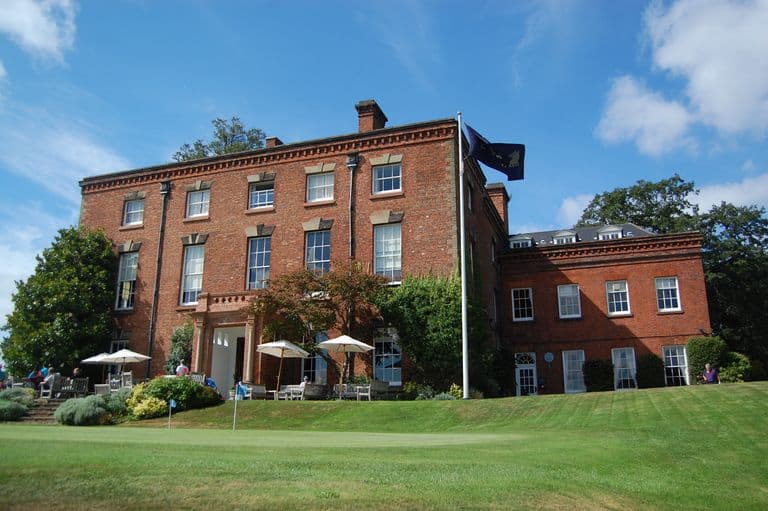
Now · 11 August 2024
Key dates
- 1726 — First New Meeting House built in Moor StreetBirmingham’s New Meeting congregation of Protestant Dissenters built its first chapel in Moor Street. Joseph Priestley became its minister in 1780; rioters burnt it in 1791.
- 1780 — Priestley settles at Fair HillJoseph Priestley moves to Fair Hill, Sparkbrook, in a house provided through his brother-in-law John Wilkinson. Within months he becomes minister of the New Meeting.
- c. early 1788 — Birmingham petitions against the slave tradeAfter Thomas Clarkson’s visit in late 1787, Birmingham campaigners, among them Sampson and Charles Lloyd and William Russell, send a petition against the slave trade to Parliament. Joseph Priestley preaches against the trade at the New Meeting the same year.
- 1788 — Priestley preaches against the slave tradeAt the New Meeting, Priestley calls slavery “perhaps the greatest, and most crying evil under the sun”, as Birmingham prepares a petition to Parliament for abolition. The sermon is printed in Birmingham.
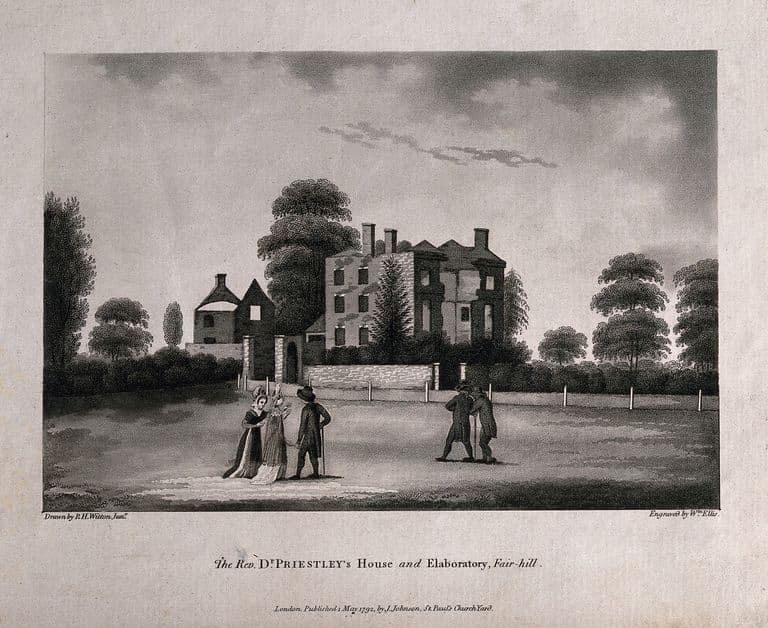
- 14 July 1791 — The Bastille dinner; the New Meeting and Fair Hill are burnedA dinner at the Royal Hotel marks the fall of the Bastille. A crowd attacks the guests, burns the New Meeting and Old Meeting, then ransacks and burns Priestley’s house and laboratory at Fair Hill. Priestley escapes.
- c. 1802; reopened 1803 — New Meeting House rebuiltThe New Meeting congregation rebuilt their chapel on the Moor Street site. The building survives as St Michael’s Catholic Church.
Sources and further reading
The rebuilding is dated c.1800 in the list entry and c.1802, reopening 1803, in other sources. The sale to Roman Catholics in 1862, the ‘Italian church’ name and the later congregation at Ryland Street come from Wikipedia (lead only). The 1785 ‘gunpowder’ quotation is from secondary sources and has not been checked against the original pamphlet. Open Plaques transcribes the plaque’s dates as ‘1870 to 1791’, a typo for 1780.
- Church of St Michael, New Meeting Street — National Heritage List for England entry 1219721 — Historic England
- Memoirs of Dr. Joseph Priestley, to the year 1795, written by himself — Joseph Priestley, London, 1806
- Blue Plaque: Joseph Priestley — Birmingham Civic Society
- The Priestley Riots and their Aftermath — Revolutionary Players (Malcolm Dick and Kate Iles), History West Midlands
- The Birmingham Riots of 1791 — Cadbury Research Library, University of Birmingham
- St Michael’s Catholic Church, Moor Street — Wikipedia
- Religious History: Places of worship, in A History of the County of Warwick, vol. 7, pp. 434–482 — W. B. Stephens (ed.), Victoria County History, 1964
Comments
Comments will load here.