
What was here?
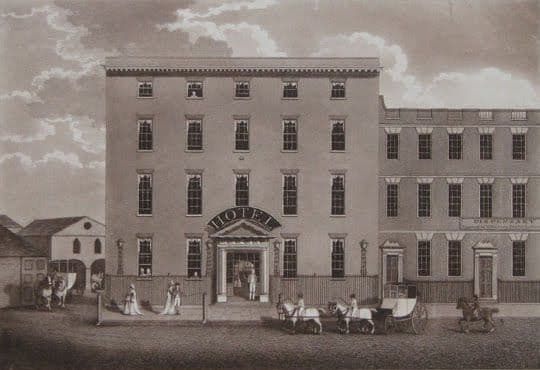
A large, plain four-storey Georgian building on Temple Row, facing St Philip’s churchyard, with an assembly room 80 feet long behind it. Built as ‘the Hotel’ in 1772, it was the town’s place for balls, concerts and political dinners, and from 1805 it was the Royal Hotel.
History
A room fit for a duke
In October 1765 the Duke of York visited Birmingham and was shown the town’s assembly room in the Square. He called it “mean, but the entrance still meaner”. The town’s polite society took the hint. In 1772 a new building went up at the head of Temple Row, paid for by a tontine subscription of fifty shares at £100 each. It was, said Hutton, “dignified with the French name of Hotel”.
Hutton liked it. “From a handsome entrance the ladies are now led through a spacious saloon, at the extremity of which the eye is struck with a grand flight of steps, opening into an assembly-room, which would not disgrace even the royal presence of the Duke’s brother. The pile itself is large, plain, and elegant.”
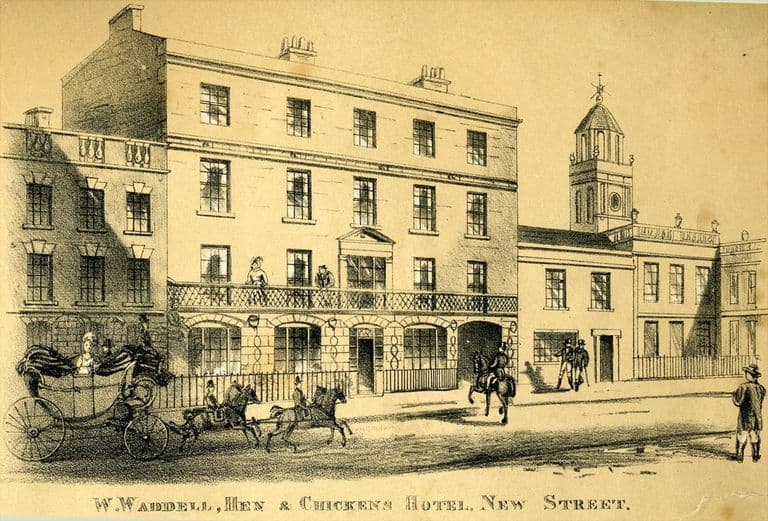
The assembly room was 80 feet long, including an orchestra with an organ, and 33 feet wide, lit by three cut-glass chandeliers. It held eight assemblies a season, from October to March. Before the Town Hall was built in the 1830s, the Birmingham music festivals and subscription concerts were held here too. The Hotel was also one of the three posting houses for “the superior class of travellers”, with the Hen and Chickens and the Swan.
The dinner that lit the riots
The same spot, then and now
1888–1913
Today
Old map: Ordnance Survey six-inch, reproduced with the permission of the National Library of Scotland (CC BY 4.0). Today: © OpenStreetMap contributors.
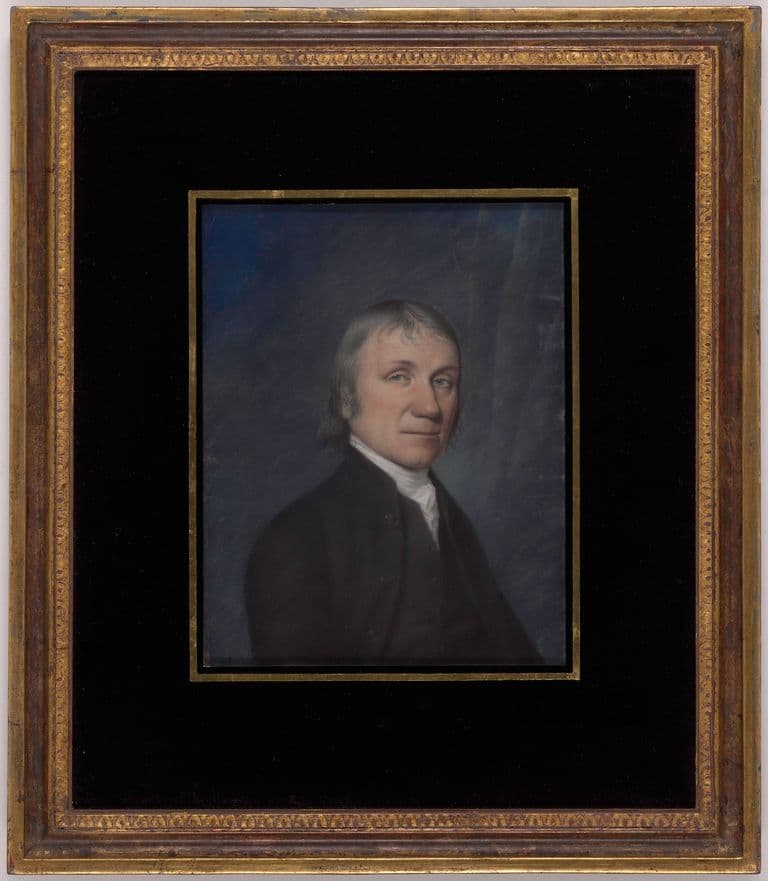
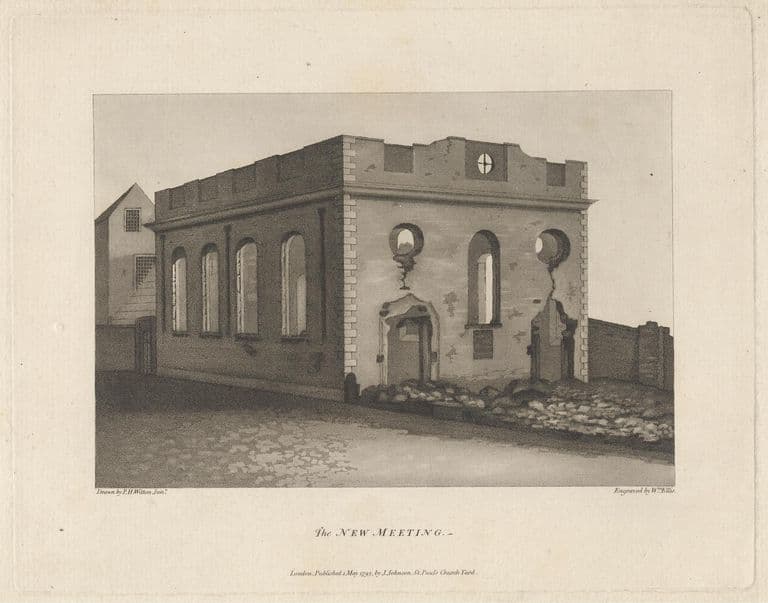
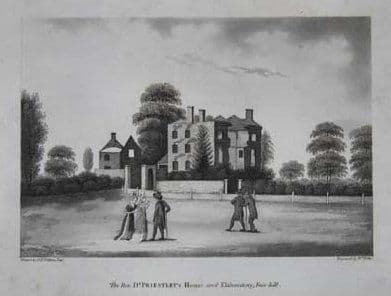
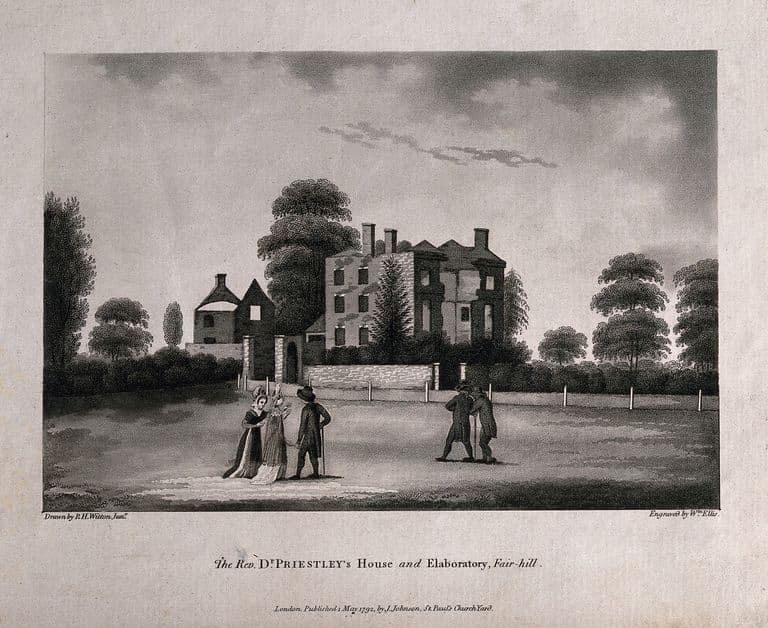
On 14 July 1791 about eighty “Friends of Freedom” dined at “the Hotel, in Temple-row (then kept by Mr. Dadley)” to mark the anniversary of the French Revolution. A crowd gathered outside and broke the Hotel’s windows. Then it moved on and burned the New Meeting, Joseph Priestley’s chapel. Before the night was out, rioters had burned Priestley’s house and laboratory at Fair Hill as well. On 27 November 1792 the loyalist Church and King Club held its first meeting in the same building.
Royal guests and radical politics
The assembly room was enlarged in 1804. In May 1805 the Duke of Gloucester stayed, and the Hotel became the Royal Hotel. The Duchess of Kent and the young Princess Victoria stayed in 1830.
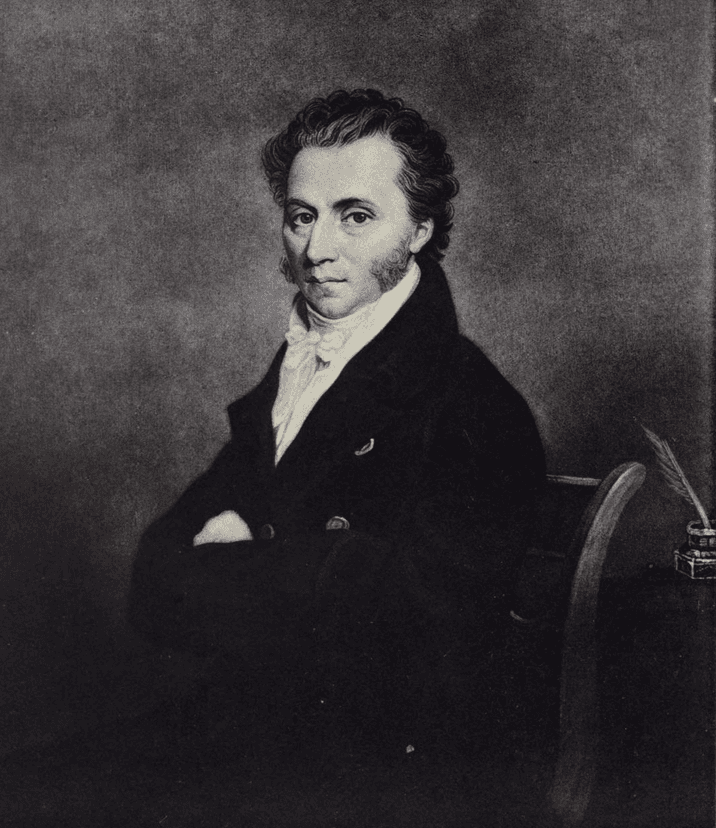
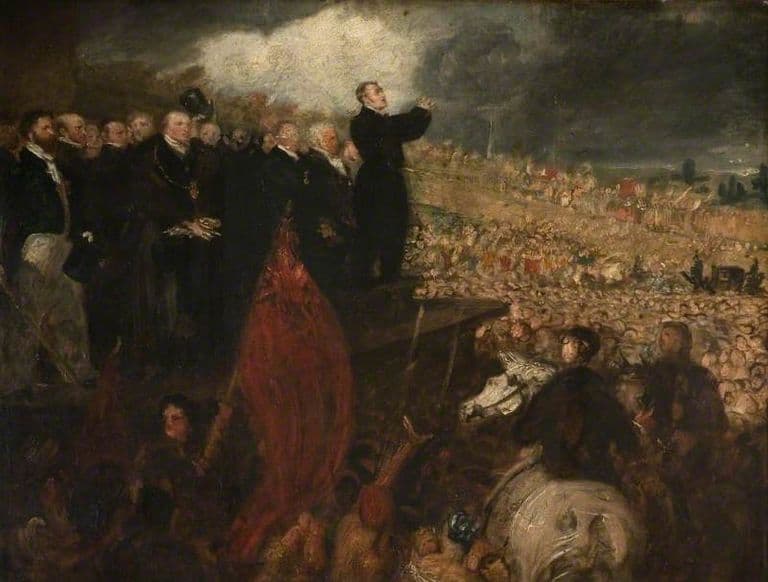
The year before, on 14 December 1829, about sixteen men met here with Thomas Attwood in the chair and founded the Birmingham Political Union. In 1837 the building was damaged at the general election, and a portico was added when it was repaired.
Hospital, pub, department store
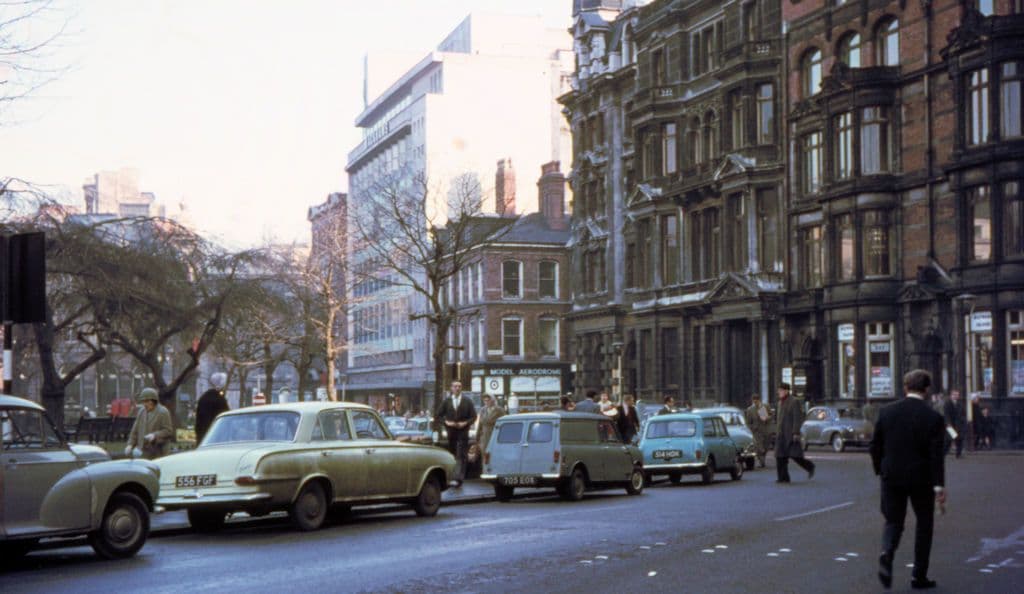
In 1862 the old hotel was bought for £1,900 and adapted, at a cost of over £8,000, as the Birmingham and Midland Eye Hospital, while the assembly rooms stayed in public use. The hospital moved to its new building in Church Street in 1884. By about 1890 the 1772 building had gone, replaced by a pub and restaurant called Ye Olde Royal. That in turn was cleared in the late 1950s for Rackhams department store.
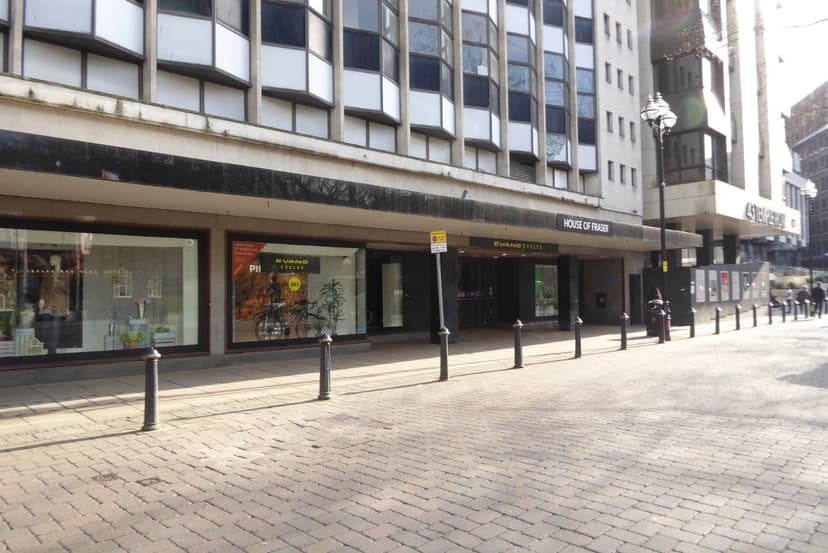
The former Rackhams, later House of Fraser, now covers the site on its Temple Row side, opposite St Philip’s Cathedral. Nothing on Temple Row marks the building where Birmingham danced, toasted the French Revolution and founded the Political Union.
Why it mattered
For ninety years it was the centre of polite Birmingham: its assembly room held the town’s balls, concerts and early music festivals. It also stood at two turning points in the town’s politics. The 1791 Bastille dinner held here set off the Priestley Riots, and in 1829 Thomas Attwood founded the Birmingham Political Union in the same building.
Why it disappeared
Redevelopment · Commercial redevelopment
In 1862 the hotel was sold and became the Eye Hospital. After the hospital moved to Church Street in 1884, the 1772 building was replaced, by about 1890, by the Ye Olde Royal pub and restaurant, which was cleared in the late 1950s for Rackhams department store.
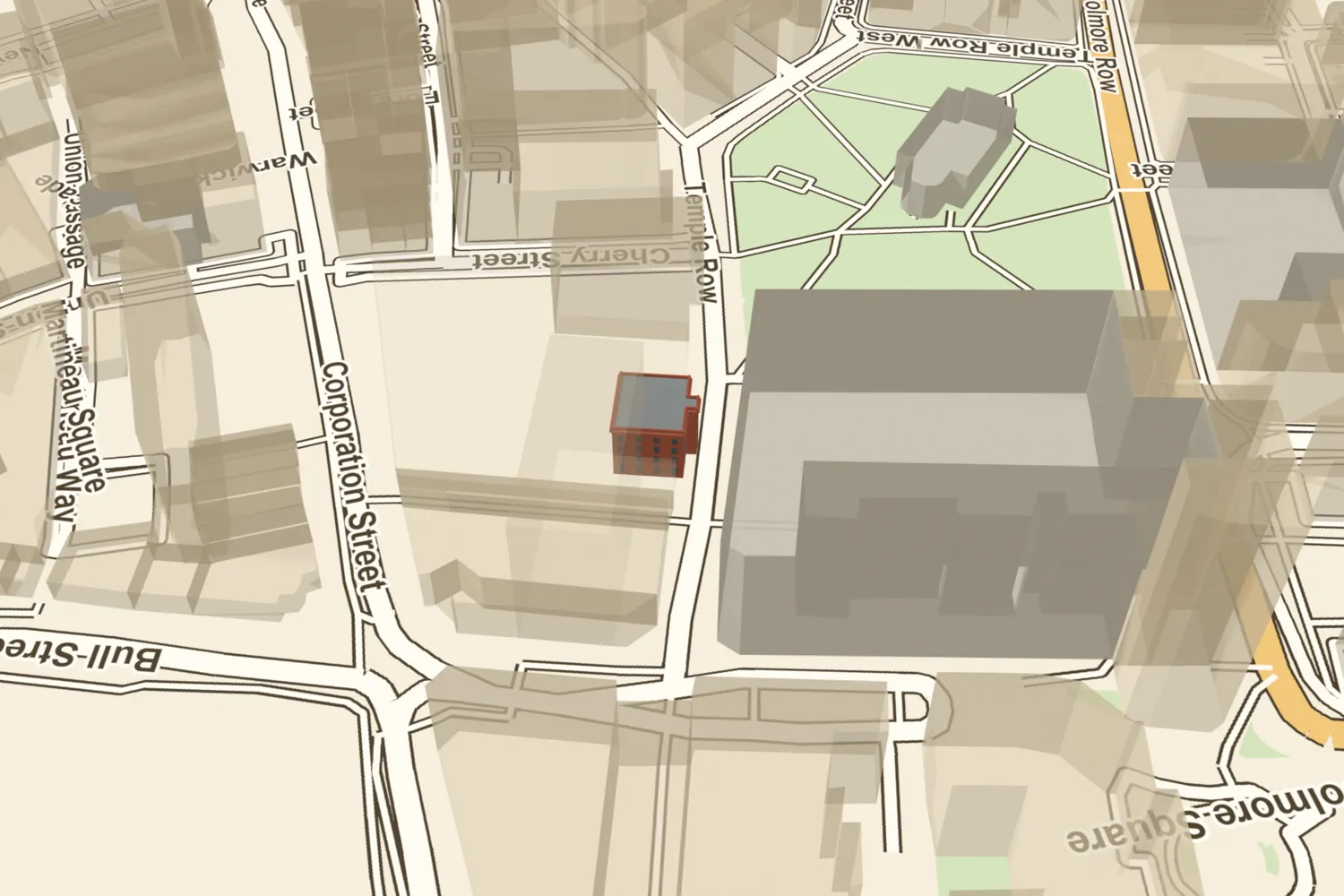
The Royal Hotel, on today’s streets
What’s there now
What replaced it
‘Ye Olde Royal’ pub and restaurant (c.1890), cleared in the late 1950s for Rackhams department store (1957–60), later House of Fraser, which now covers the site.
What survives
Nothing, and there is no plaque. A pub called Ye Olde Royal in Church Street carried the name on after 1959.
Today
Stand in St Philip’s churchyard and look south-east across Temple Row at the former Rackhams / House of Fraser store. The Hotel stood on that side of Temple Row, just south-west of the line of Bradford Passage.
Then and now
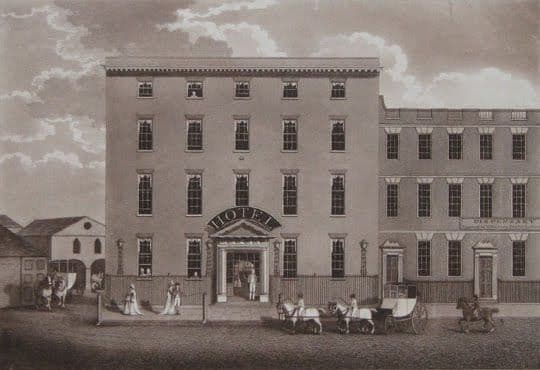
Then · 1800
Now · 19 March 2026
Sources and further reading
The date the 1772 building came down (about 1890) and the late-1950s demolition of its successor rest on local-history forum posts; the Victoria County History dates the clearance of the neighbouring Temple Row terrace to 1957. Wikipedia’s statement that the hotel was sold for redevelopment in 1861 conflicts with Showell, who has it as the Eye Hospital from 1862 with the assembly rooms still in public use; Showell is followed here. The 1855 plan draws the portico off-centre, though the 1800 view has a central door. No architect is recorded; T. Hollins drew the 1800 engraving but did not design the building.
- An History of Birmingham (2nd edition) — William Hutton, Pearson and Rollason, Birmingham (Project Gutenberg text), 1783. the Duke of York’s remark; the 1772 Hotel; description
- A Description of Modern Birmingham — Charles Pye, 1818–19. tontine shares; assembly room 80 × 33 ft; posting houses
- An Historical and Descriptive Sketch of Birmingham — Beilby, Knott and Beilby (publishers), 1830. 14 July 1791 dinner at the Hotel, then kept by Mr Dadley; the name Royal
- Showell’s Dictionary of Birmingham — Thomas T. Harman and Walter Showell, Cornish Brothers, Birmingham, 1885. Church and King Club 1792; enlargement 1804; royal guests; portico 1837; Eye Hospital 1862
- Old and New Birmingham: a history of the town and its people — Robert K. Dent, Houghton and Hammond, Birmingham, 1880. Political Union founded 14 December 1829
- A Century of Birmingham Life — John Alfred Langford, 1870. vol. 2: Political Union
- A History of the County of Warwick, vol. 7: The City of Birmingham — Economic and Social History: Social History before 1815, pp. 209–222 — W. B. Stephens (ed.), Victoria County History, 1964. assemblies and music festivals
- A History of the County of Warwick, vol. 7: The City of Birmingham — Secular Architecture, pp. 43–57 — W. B. Stephens (ed.), Victoria County History, 1964. Temple Row terrace demolished 1957
- The Hotel, Temple Row — Mapping Birmingham (blog), 2012
- 200 years of the Birmingham Eye Hospital — Library of Birmingham (The Iron Room blog), 2023
- Ye Olde Royal, Temple Row (forum thread) — Birmingham History Forum
- Royal Hotel, Birmingham — Wikipedia
- Plan of the Borough of Birmingham (Pigott Smith), 1855 — J. Pigott Smith, National Library of Scotland (online), 1855. revised sheet, ‘Eye Hospital’, traced
- Ordnance Survey 1:500 town plan of Birmingham, 1887–88, georeferenced — National Library of Scotland, 1888
- OpenStreetMap data (Overpass and Nominatim), central Birmingham — OpenStreetMap contributors, 2026
Comments
Comments will load here.