
What was here?
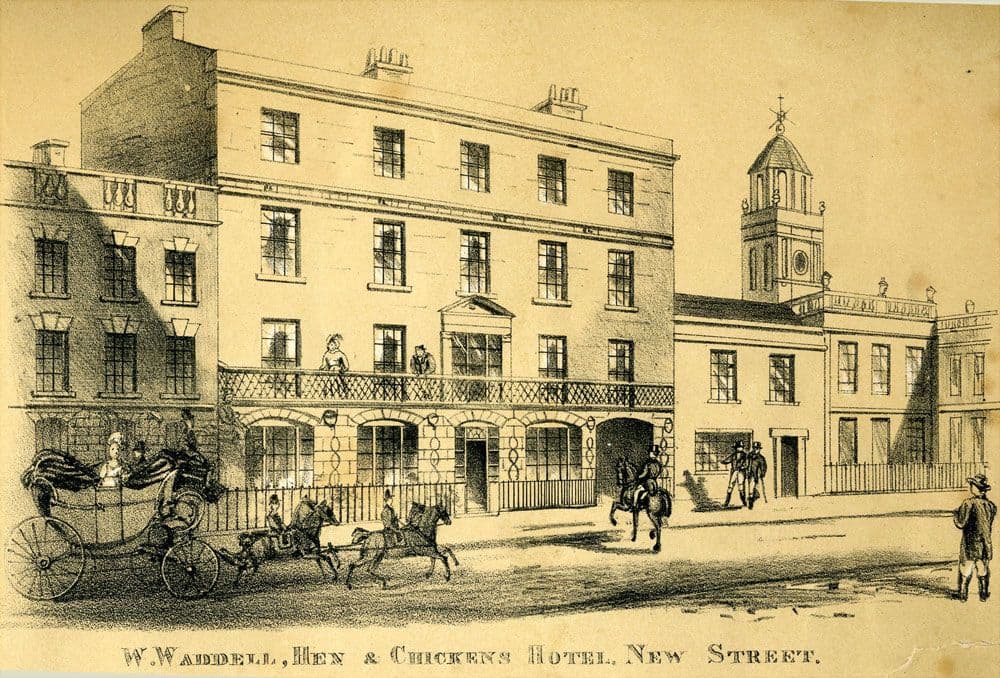
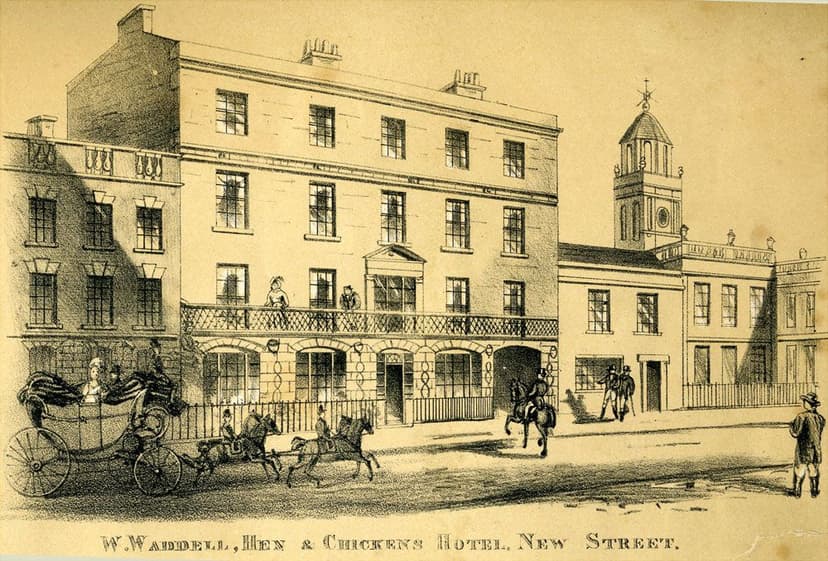
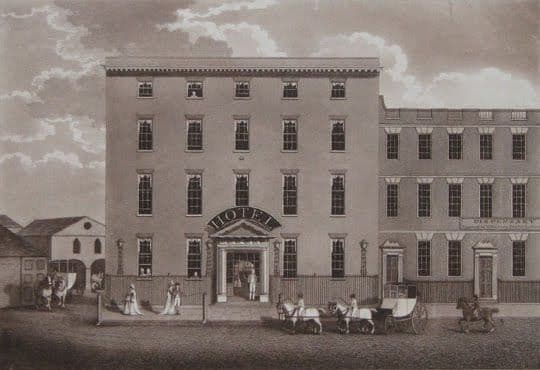
A four-storey hotel with a long first-floor iron balcony across its front, on the south side of New Street between King Edward’s School and the Worcester Street corner. From about 1830 a square portico on heavy round pillars stood out over the pavement. Behind lay a yard and back buildings for the coaching trade.
History
From High Street to New Street
There was a Hen and Chickens in Birmingham long before this one. In December 1741 “a very good-accustomed Inn, the sign of the Hen and Chickens” in High Street, with a bowling green, was advertised to let, and by 1742 the London flying coach called there.
Early in 1798 the landlady, Mrs Sarah Lloyd, moved to “her new house in New Street”, “built according to the plan of James Wyett [Wyatt], Esq., of London”. The Victoria County History is more careful, saying only that its balconied front was “attributed” to Wyatt. In 1800 Bisset engraved it as “Lloyd’s New Hotel, & Hen & Chickens Inn”: four storeys, with a long iron balcony across the first floor.
Coaches at the door
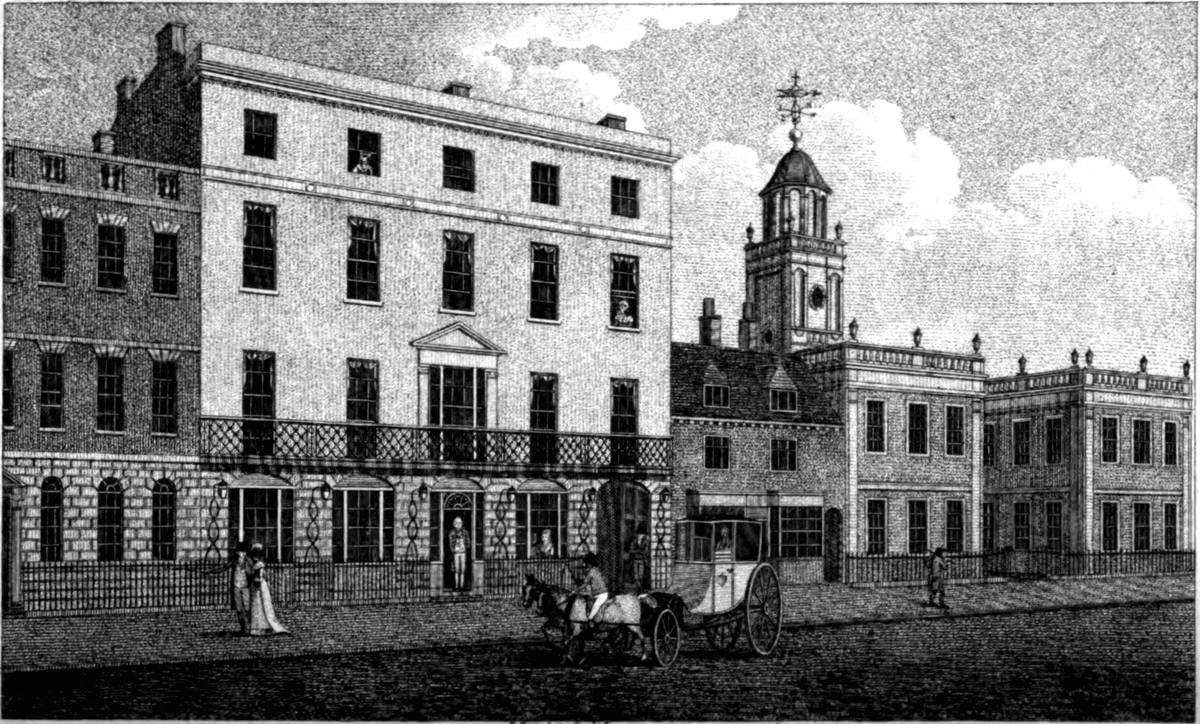
For about forty years this was one of the town’s three posting houses for “the superior class of travellers”, with the Royal Hotel in Temple Row and the Swan. Charles Pye’s timetable of 1819 lists coaches leaving the Hen and Chickens for Bristol, Bath, Cambridge and Cheltenham, as well as the Holyhead “Prince of Wales”. Under William Waddell it became, Showell said, “one of the most extensive coaching establishments in the Midlands”. Around 1830 a square portico “supported on heavy round pillars” was built out across the footpath.
Writers passed through too. Dent’s Old and New Birmingham gives a chapter heading to “Thomas De Quincey at the Hen and Chickens”.
A stage for politics
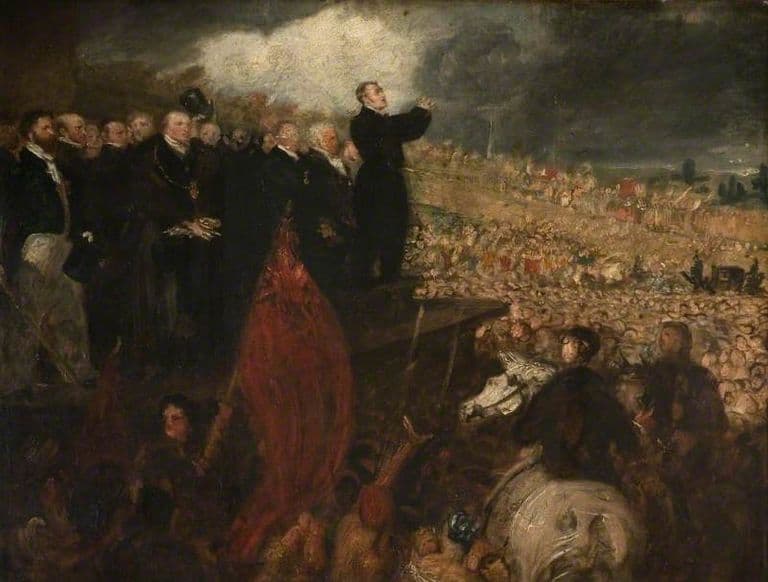
The balcony looked over one of the town’s main streets, and it was used. In July 1810, during the disturbances, the troops made the hotel their headquarters. In 1832 Thomas Attwood “ascended the balcony” to address the crowd, and the Political Union’s MPs spoke to their followers from the hotel. In 1859 it was T. D. Acland’s election committee room, and the Central Literary Association and other societies met in its rooms.
The end of the road
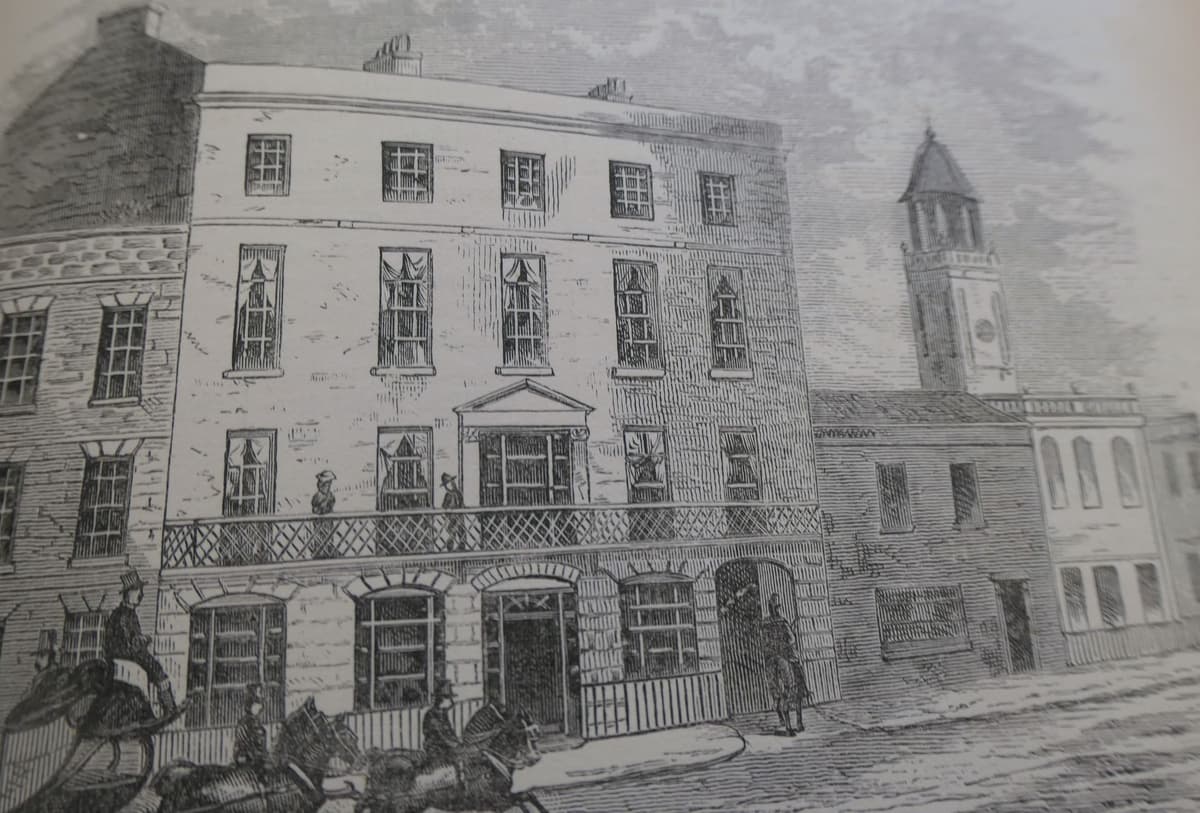
The railways ended the coaching trade, and the Hen and Chickens became a commercial hotel. In 1878 the Birmingham Aquarium Company bought it. The old building was “considerably altered”, and an arcade was begun instead of an aquarium. Dent complained in 1880 that the new work was “fast obliterating all the old familiar features”.
The same spot, then and now
1888–1913
Today
Old map: Ordnance Survey six-inch, reproduced with the permission of the National Library of Scotland (CC BY 4.0). Today: © OpenStreetMap contributors.
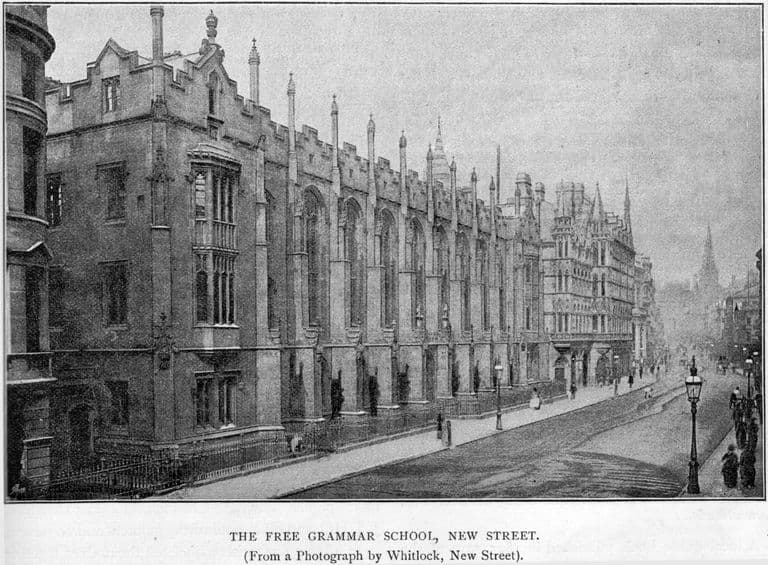
The end came at Christmas 1894. The hotel closed so that the ground could be cleared for the new King Edward VI High School for Girls, designed by J. A. Chatwin and opened in 1896. The school left New Street in 1940, and that building has gone too.
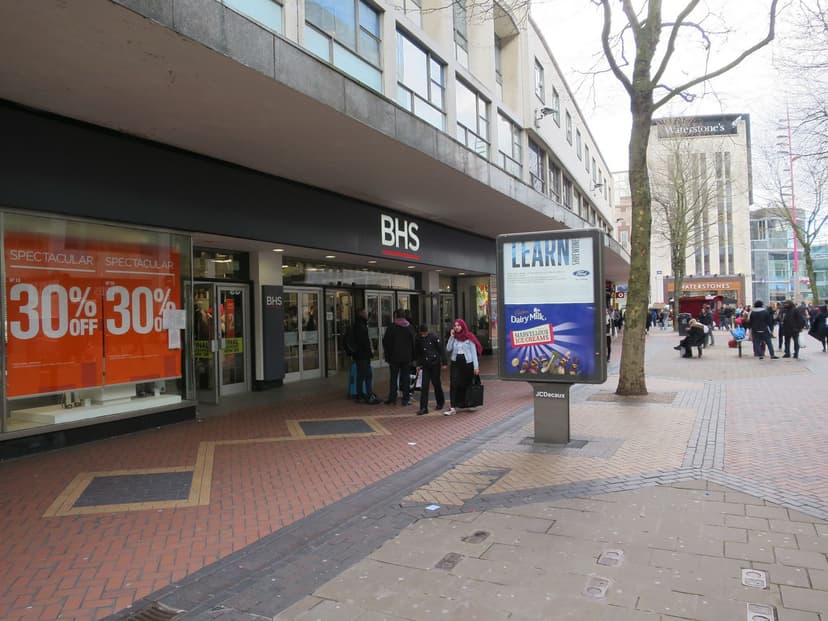
Today a modern shop building at 141 New Street, beside the Odeon, covers the site. Nothing marks the balcony from which Attwood spoke to Birmingham.
Why it mattered
For about forty years it was one of the town’s chief coaching inns, the starting point for mails and coaches to Bristol, Bath, Holyhead and beyond. Its balcony made it a political stage: troops were based here in 1810, and Thomas Attwood addressed the crowds from it in 1832. Its closure in 1894 made room for King Edward VI High School for Girls.
Why it disappeared
Commercial redevelopment · Redevelopment
The railways ended the coaching trade. An aquarium company bought and altered the building in 1878–80, and at the end of 1894 the hotel closed so that its site could be cleared for the Girls’ High School.
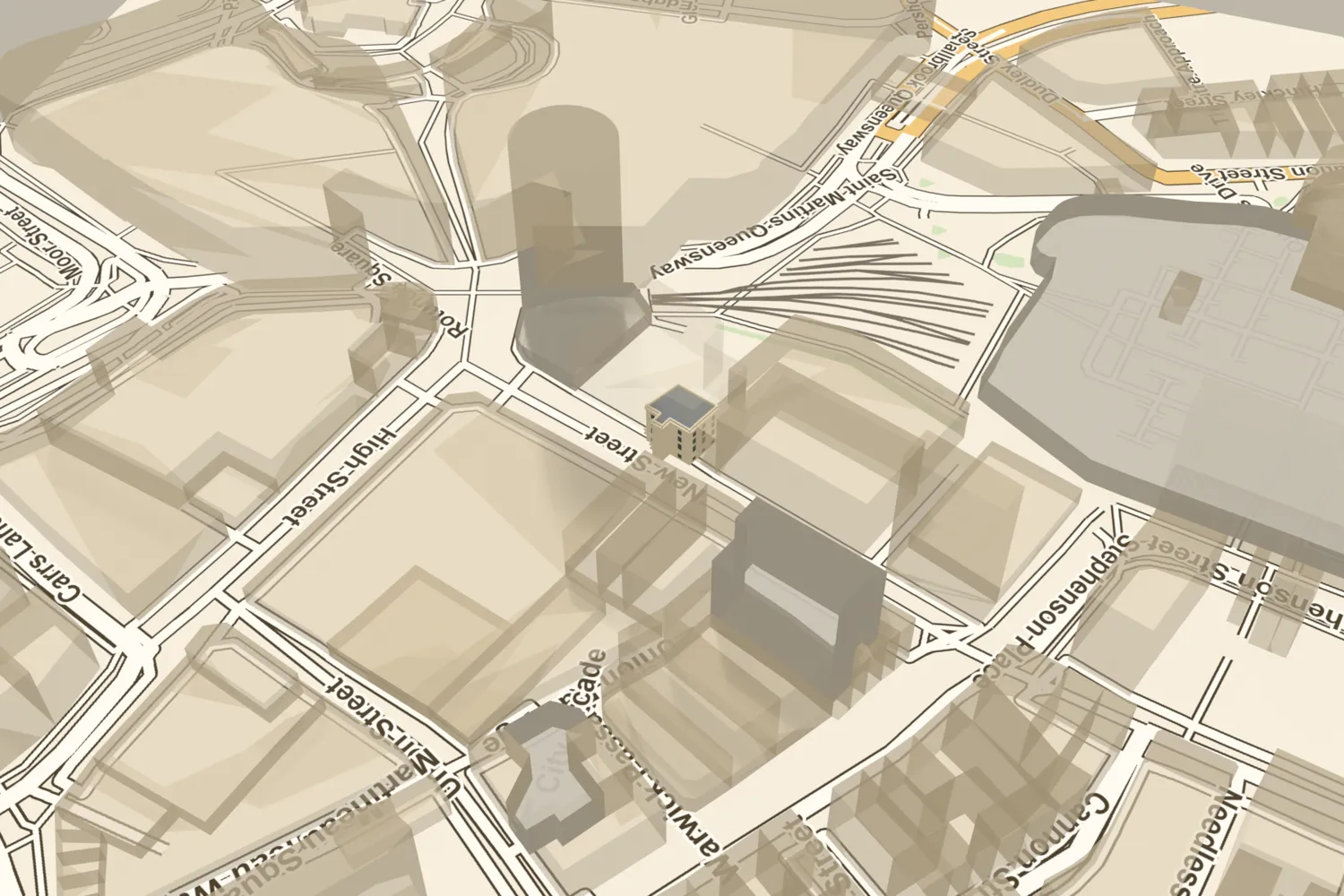
The Hen and Chickens, on today’s streets
What’s there now
What replaced it
King Edward VI High School for Girls by J. A. Chatwin (opened 1896; the school left in 1940), then twentieth-century redevelopment. The site is now a modern retail building at 141 New Street, next to the Odeon.
What survives
Nothing, and there is no plaque. Other pubs called the Hen and Chickens, such as the one on Constitution Hill, are unrelated.
Today
Stand on the south side of New Street just east of the Odeon. The shop building at 141 New Street covers the hotel’s site; King Edward House and the Odeon, on the old King Edward’s School site, are to the west.
Then and now
Then · c.1833 view, published 1869
Now · 29 April 2016
Sources and further reading
Three different houses have been called the Hen and Chickens: the High Street inn (by 1741–1798), this New Street hotel (1798–1894) and a later Hen and Chickens Hotel at 130 New Street, run by a coffee-house company until 1938. This record is the second. Dent’s date for the portico is unclear in the scanned text; 1830 comes from secondary sources. The closure in December 1894 and clearance in 1895 rest on a newspaper report quoted on a local-history forum, not seen. A 2016 newspaper claim that it was demolished in 1878 probably confuses the remodelling of 1878–80, since the hotel is still on the Ordnance Survey plan of 1887–88. Wyatt is named only by the 1798 advertisement; the Victoria County History says “attributed”.
- Old and New Birmingham: a history of the town and its people — Robert K. Dent, Houghton and Hammond, Birmingham, 1880. 1741 and 1742; Mrs Lloyd’s 1798 advertisement; portico; aquarium works
- Showell’s Dictionary of Birmingham — Thomas T. Harman and Walter Showell, Cornish Brothers, Birmingham, 1885. ‘Hotels’, ‘Arcades’: Waddell; 1878–80 alterations
- A History of the County of Warwick, vol. 7: The City of Birmingham — Secular Architecture, pp. 43–57 — W. B. Stephens (ed.), Victoria County History, 1964. balconied front attributed to James Wyatt
- A Description of Modern Birmingham — Charles Pye, 1818–19. posting houses; coach timetable 1819
- An Historical and Descriptive Sketch of Birmingham — Beilby, Knott and Beilby (publishers), 1830
- A Century of Birmingham Life — John Alfred Langford, 1870. vol. 2: troops in 1810; Attwood on the balcony, 1832
- Modern Birmingham and its Institutions, vols 1–2 — John Alfred Langford, 1873–77. 1859 election; societies
- A Poetic Survey round Birmingham, with a Magnificent Directory — James Bisset, Swinney & Hawkins for the author, Birmingham, 1800. plate V
- Tour of Lost Birmingham No. 61: A Regency Stay at the Hen and Chickens Hotel — Mapping Birmingham (blog), 2019
- Hen and Chickens Hotel, New Street (forum thread) — Birmingham History Forum. closure December 1894
- New Street, Birmingham — Wikipedia
- Ordnance Survey 1:500 town plan of Birmingham, 1887–88, georeferenced — National Library of Scotland, 1888. footprint traced
- Plan of the Borough of Birmingham (Pigott Smith), 1855 — J. Pigott Smith, National Library of Scotland (online), 1855
- OpenStreetMap data (Overpass and Nominatim), central Birmingham — OpenStreetMap contributors, 2026
Comments
Comments will load here.