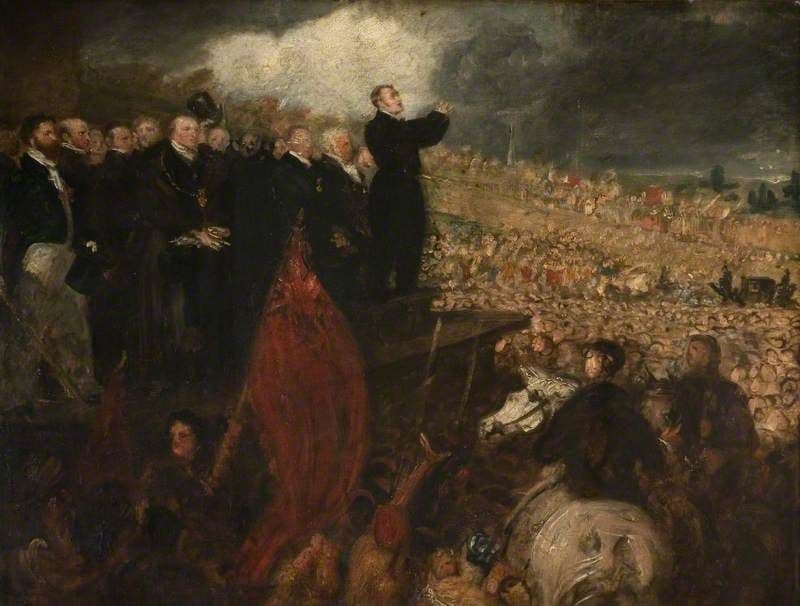
Until 1832 Birmingham had no Member of Parliament. One of the county members for Warwickshire was expected to look after it, and in 1812, when the town’s trade was choking under the Orders in Council, Thomas Attwood found them unresponsive. Birmingham’s petitions could be ignored.
The radicals
The first challenge came from below. George Edmonds’s Hampden Club held the first great open-air meeting on Newhall Hill on 22 January 1817, and in July 1819 a crowd there elected Sir Charles Wolseley as the town’s unofficial “Legislatorial Attorney”. The government answered with spies and prosecutions, and Edmonds went to prison.
The Union
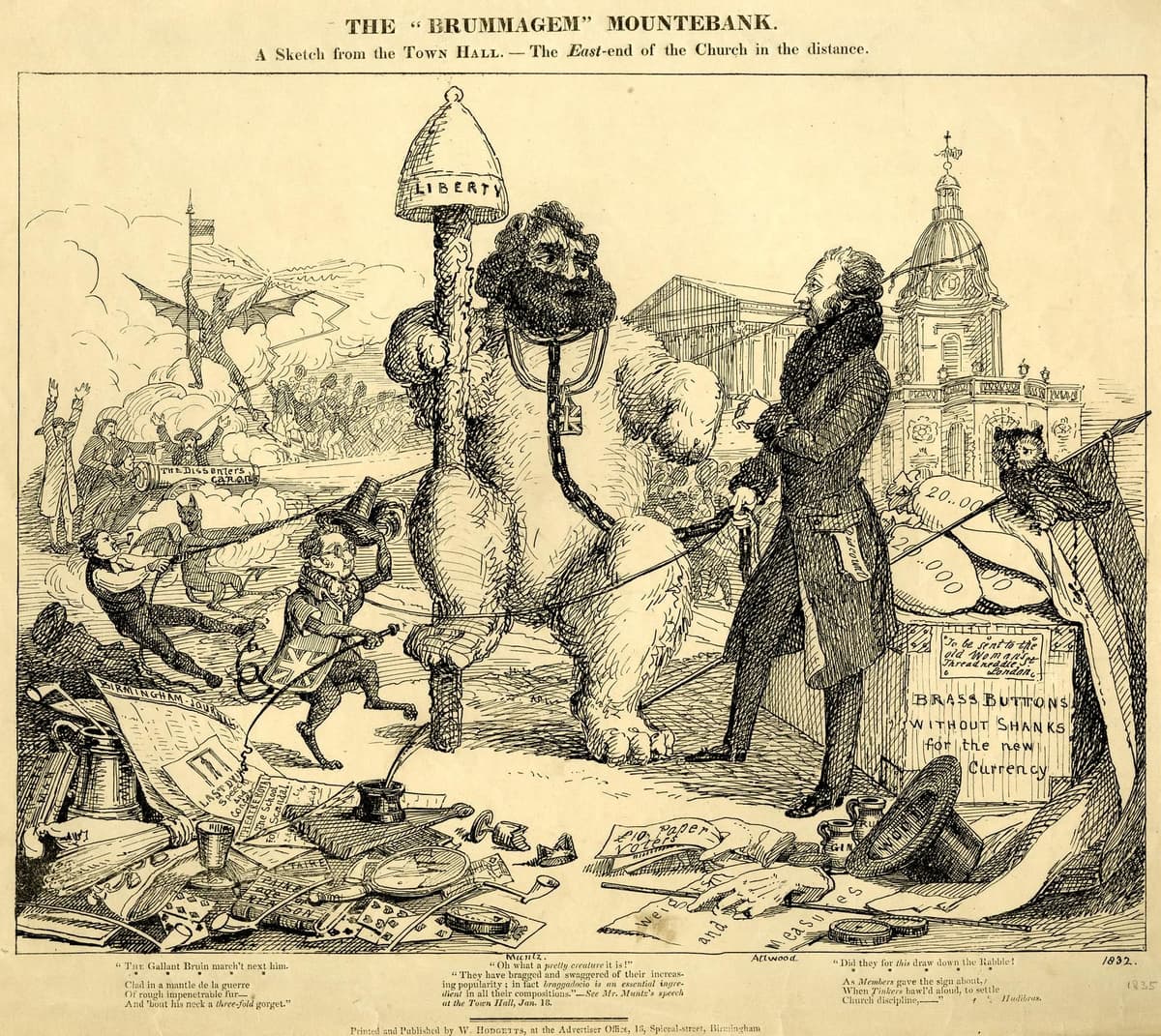
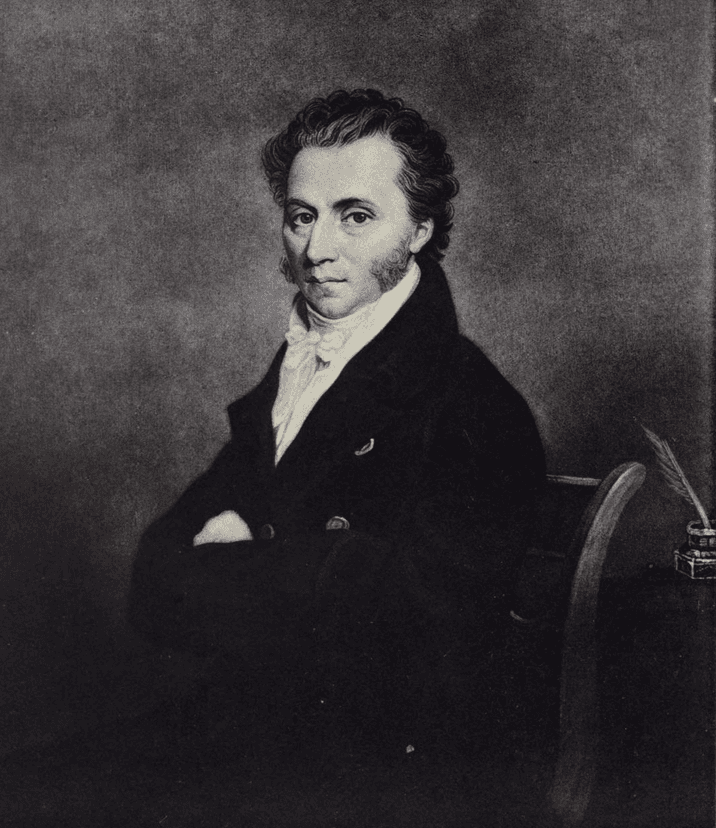
The second challenge came from the middle. After 1819 Attwood, a Tory banker, turned against a Parliament that would not listen to his ideas about money, and in January 1830 he founded the Birmingham Political Union, uniting “the lower and middle classes of the people”. During the Reform Bill crisis of 1831–32 its meetings on Newhall Hill drew crowds claimed at 100,000 and more, and its threat of mass resistance in the Days of May helped force the Bill through. The Reform Act of 7 June 1832 gave Birmingham two MPs. Attwood and Joshua Scholefield were elected unopposed in December.
The Charter
The vote was still limited to men of property. In 1837–38 the revived Union drafted the National Petition and launched it at Holloway Head on 6 August 1838. Attwood presented it to the Commons on 14 June 1839 with 1,280,000 signatures, and the House rejected it. That July the Bull Ring riots showed how far the old alliance of masters and men had broken down.
On the map
6 places connected with Reform and the vote. Tap a number for directions — some sites are private homes or gardens, so each place’s page says what you can see from the street.

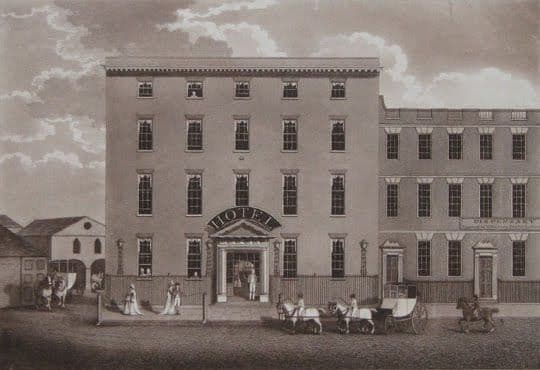
- The Royal Hotel, Temple Row — Lost, Site redeveloped · Directions to The Royal Hotel, Temple Row (opens Google Maps)
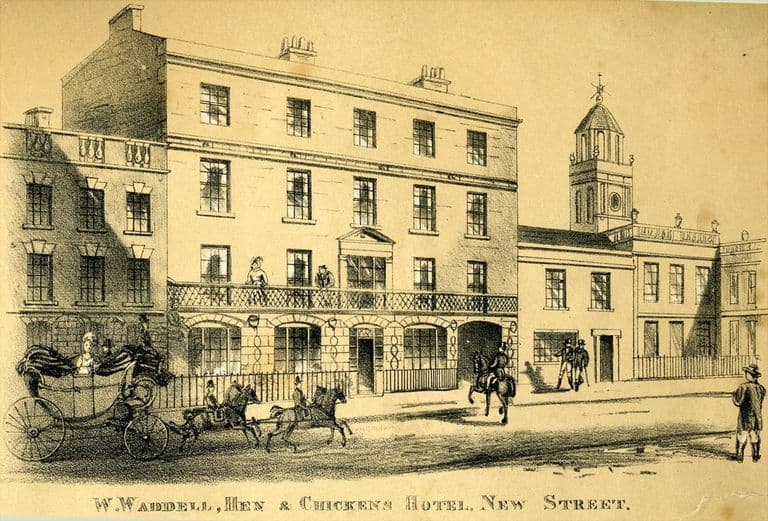
- Hen and Chickens Hotel, New Street — Lost, Site redeveloped · Directions to Hen and Chickens Hotel, New Street (opens Google Maps)
- The Grove, Harborne — Lost · Directions to The Grove, Harborne (opens Google Maps)
- Newhall Hill meeting ground — Site redeveloped
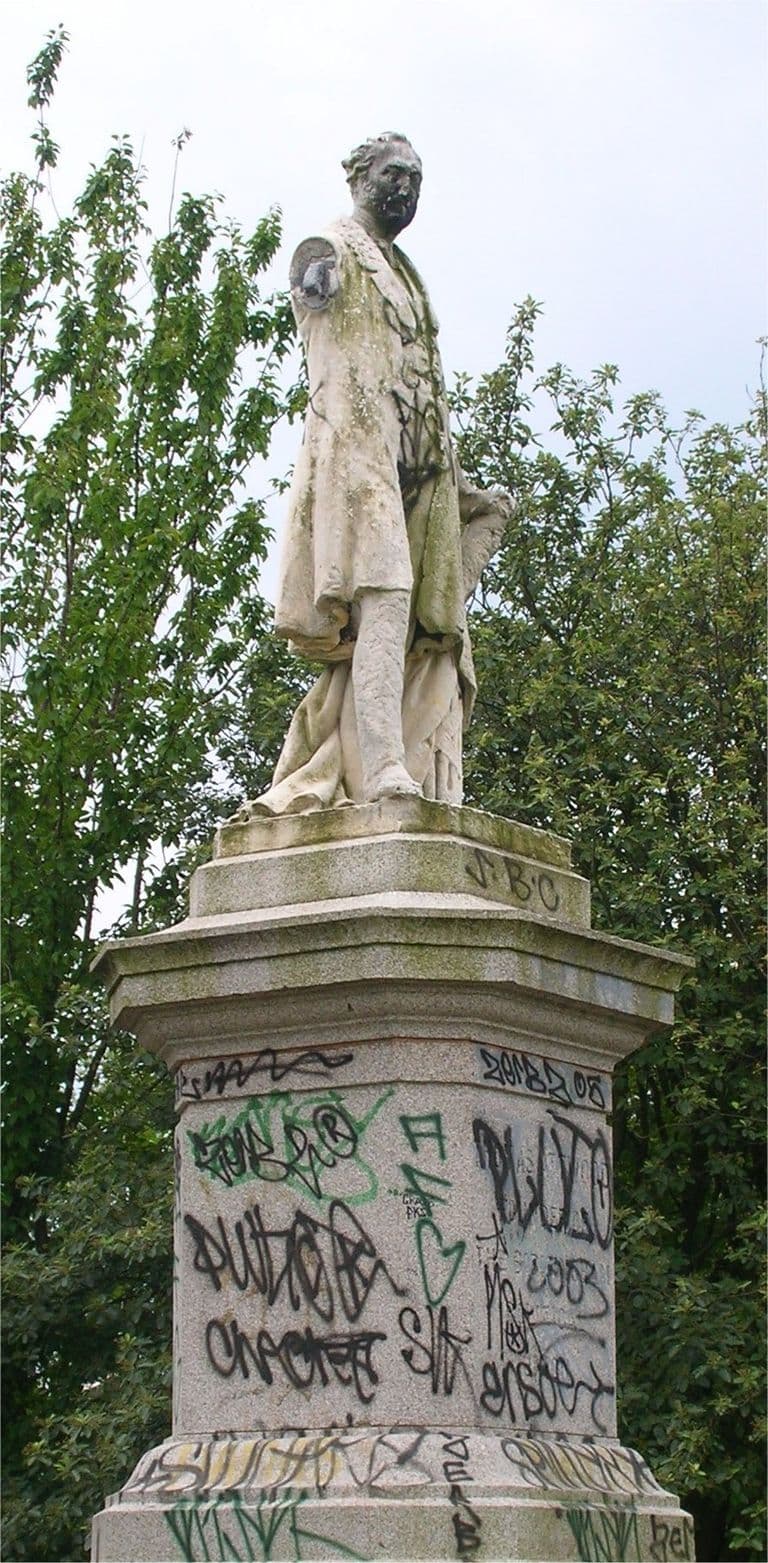
- Statue of Thomas Attwood (1859) — Relocated, At risk · Directions to Statue of Thomas Attwood (1859) (opens Google Maps)
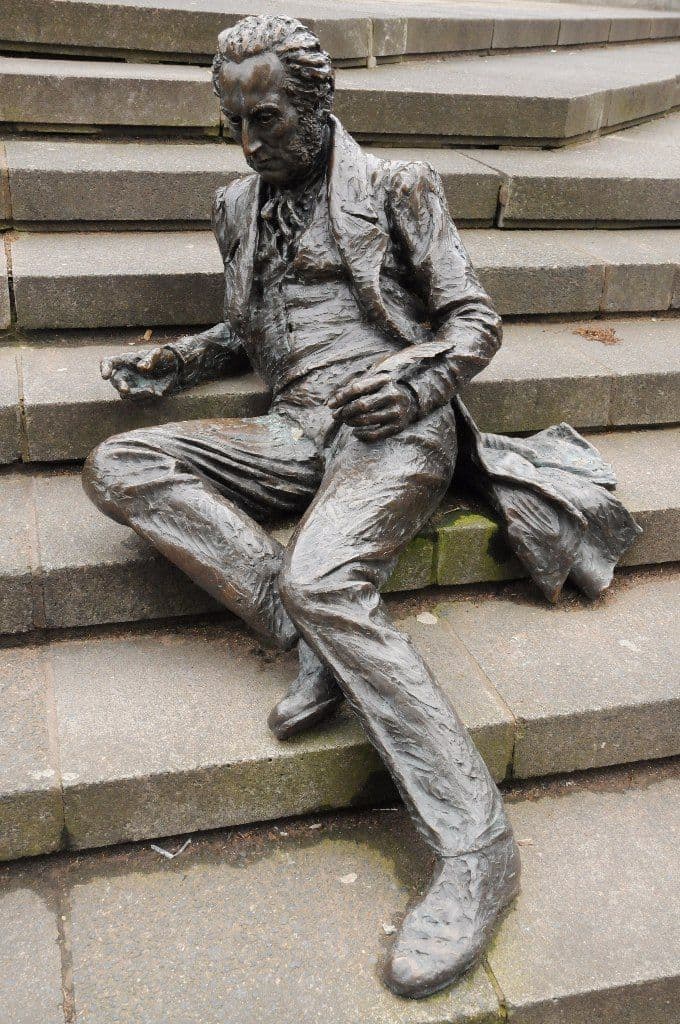
- Thomas Attwood statue, Chamberlain Square — Surviving · Directions to Thomas Attwood statue, Chamberlain Square (opens Google Maps)
Key dates
- 22 January 1817 — The first Newhall Hill meetingGeorge Edmonds of the Hampden Club chairs the first great open-air radical meeting on Newhall Hill. Between ten and twenty thousand people vote for universal suffrage and annual parliaments.
- January 1830 — The Birmingham Political Union is launchedThomas Attwood’s union of “the lower and middle classes of the people” is launched at Beardsworth’s Repository, near the Bull Ring, before a crowd said to number 15,000. Its watchword: “Peace, Law, and Order”.
- 3 October 1831 — 100,000 on Newhall HillAs the Reform Bill goes before the Lords, the Political Union fills Newhall Hill with a crowd claimed at over 100,000, including 20,000 from the Black Country. The meeting passes off peacefully.
- 12 December 1832 — Birmingham elects its first MPsThomas Attwood and Joshua Scholefield are returned unopposed as the first two Members of Parliament for Birmingham.
- 7 June 1832 — The Reform Act becomes lawThe Reform Act receives the royal assent. Birmingham, which has never had an MP of its own, is given two.
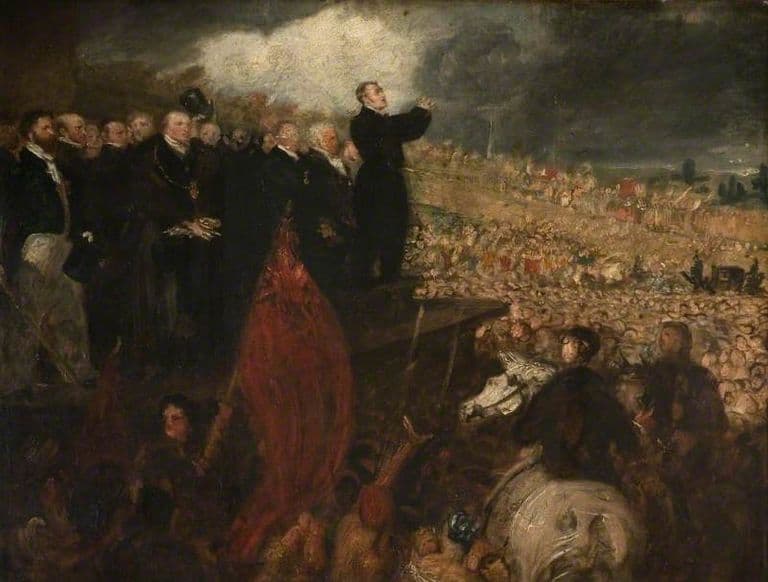
- 16 May 1832 — Triumph on Newhall HillNews of Earl Grey’s recall reaches Birmingham at dawn. Crowds fetch Attwood from his home at Harborne and the Union meets in triumph on Newhall Hill, a scene painted by Benjamin Robert Haydon.
- 4 July 1839 — The Bull Ring riotsMetropolitan Police brought in by the mayor break up a Chartist meeting in the Bull Ring. A pitched battle follows and troops restore order; there is more violence over the following days.
- 14 June 1839 — Attwood presents the Chartist petitionAttwood presents the National Petition, first adopted at Birmingham in August 1838, to the House of Commons with 1,280,000 signatures. On 12 July the House refuses to consider it, by 235 votes to 46.
- 7 June 1859 — Attwood’s statue is unveiledA marble statue of Attwood, paid for by a subscription of £800, is unveiled in Stephenson Place, New Street, on the anniversary of the Reform Act.
- 1993 — A bronze Attwood for Chamberlain SquareSioban Coppinger and Fiona Peever’s bronze of Thomas Attwood, sitting on the steps beside his empty soapbox, is installed in Chamberlain Square.
Sources and further reading
- A History of the County of Warwick, vol. 7: The City of Birmingham — Political History to 1832, pp. 270–297 — W. B. Stephens (ed.), Victoria County History, 1964
- A History of the County of Warwick, vol. 7: The City of Birmingham — Political History from 1832, pp. 298–317 — W. B. Stephens (ed.), Victoria County History, 1964
- Attwood, Thomas (1783–1856) — Dictionary of National Biography, 1901 supplement, vol. 1 — Edward Irving Carlyle, Smith, Elder & Co., 1901
- National Petition—The Chartists (House of Commons, 14 June 1839) — Hansard
- The National Petition (House of Commons, 12 July 1839) — Hansard