
What was here?
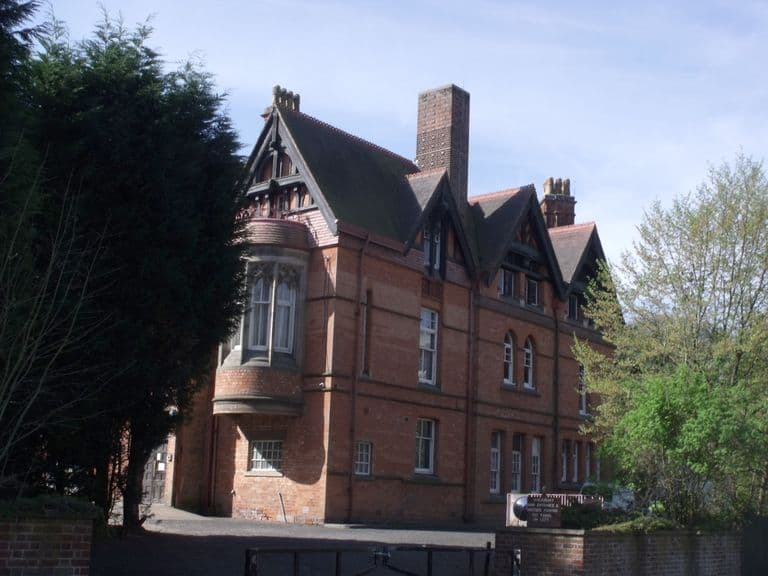
A country house in its own grounds at Harborne, four miles from the old town: first the Carless family’s Grove House, Thomas Attwood’s home, then William Kenrick’s richly decorated rebuilding by John Henry Chamberlain.
History
Attwood’s Harborne
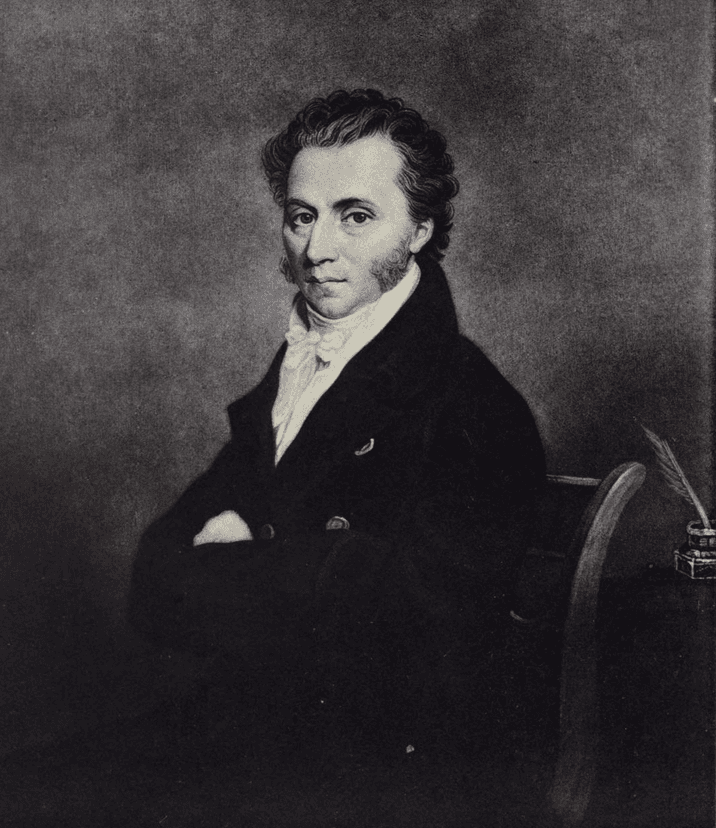
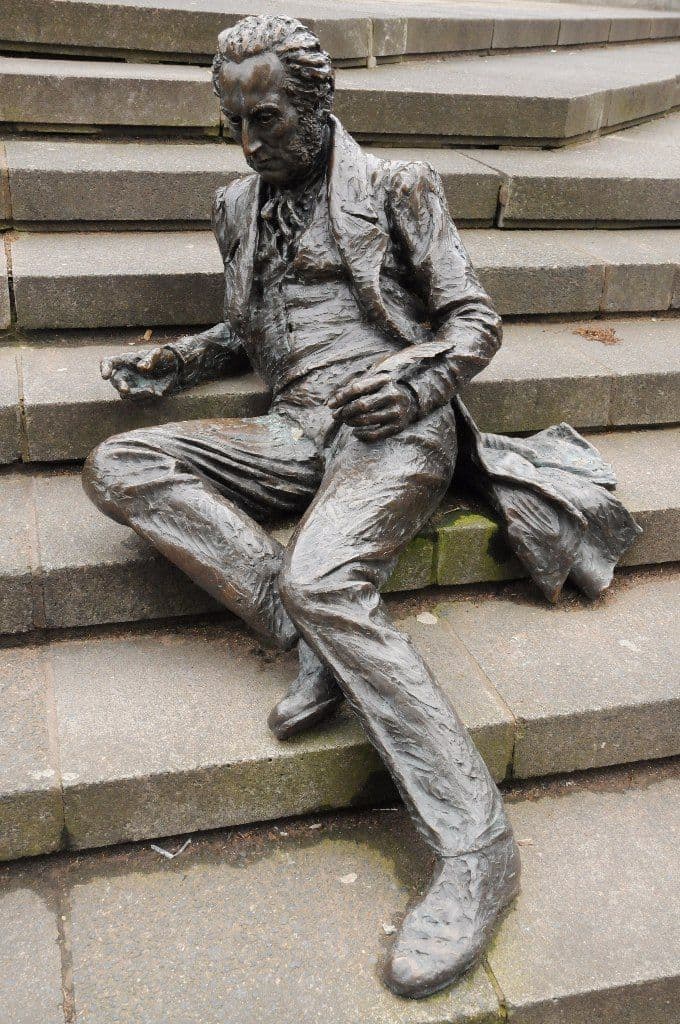
Grove House belonged to the family of Attwood’s wife, Elizabeth Carless. After her father’s death her mother moved there, and in about 1823, according to their grandson, Thomas Attwood moved his own family in from The Crescent in Birmingham. He stayed until 1845. So it was here, on the morning of 16 May 1832, that the news of Earl Grey’s recall was brought to him, and from here that he rode in triumph towards Five Ways through roads “completely choked with the population of Birmingham and its vicinity”, as the Birmingham Journal put it.
Kenrick’s Grove
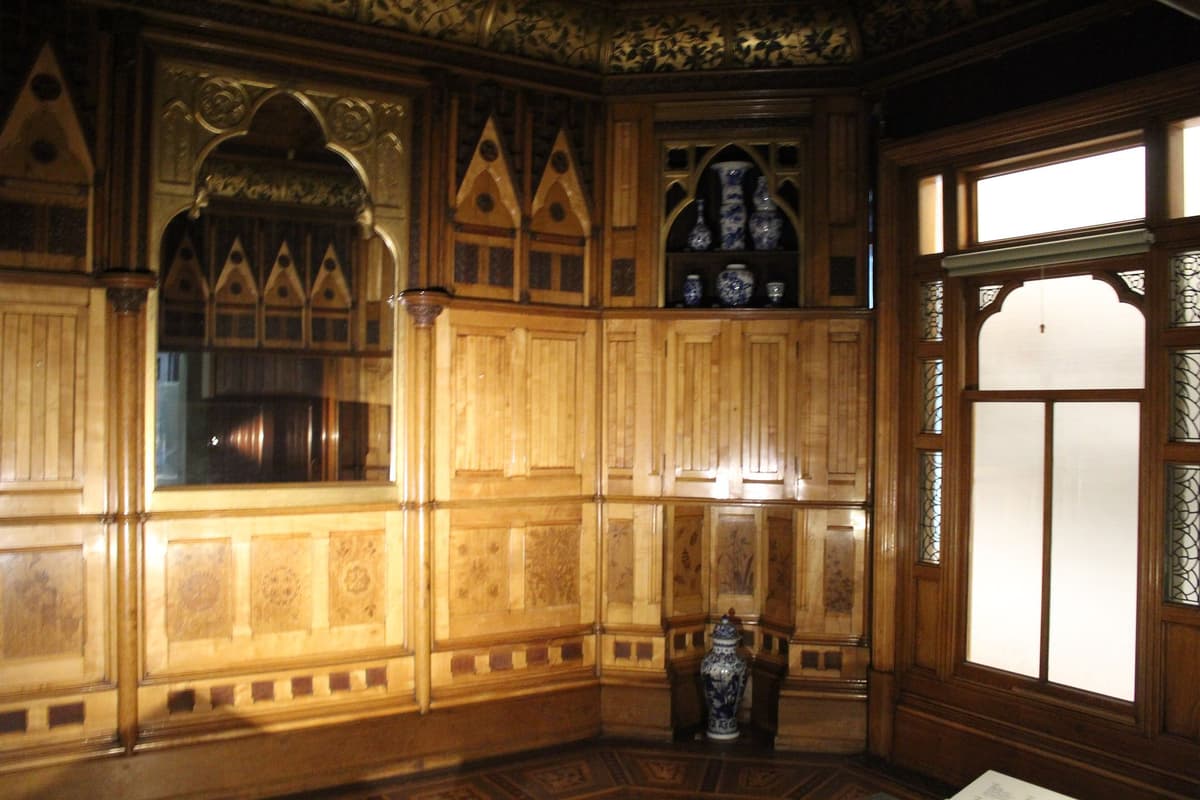
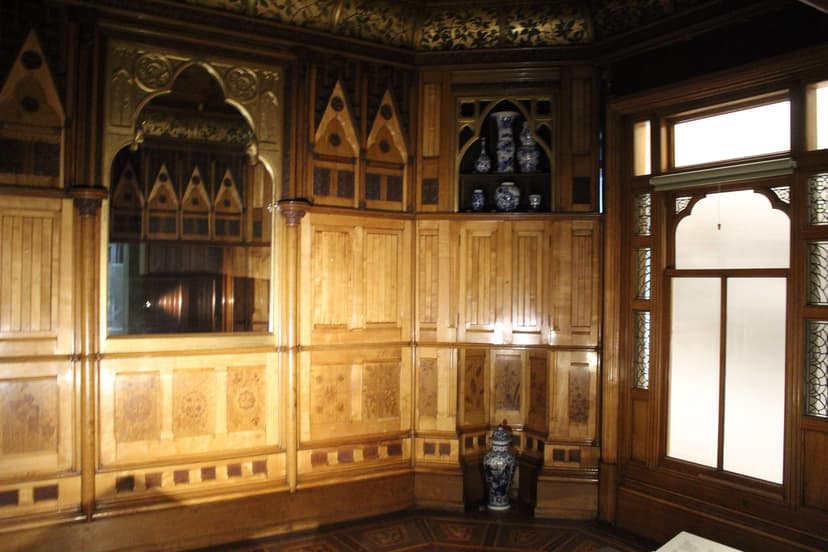
In 1877–78 the Birmingham architect John Henry Chamberlain rebuilt the house for William Kenrick, a Birmingham industrialist and MP. The Victoria and Albert Museum describes a mixture of classical and Gothic in the Aesthetic style. The anteroom to the drawing room was panelled in sycamore and oak, inlaid with walnut and other woods, with a gilded frieze painted with apple blossom and birds, and it held Kenrick’s collection of blue and white ceramics. It was probably made by Samuel Barfield, the woodcarver who often worked for Chamberlain.
The end of the house
The house and grounds were left to the city. The Birmingham Civic Society credits Alderman Wilfred Byng Kenrick with giving the Grove estate to the city. In 1962 the V&A’s curators were invited to inspect the house, and the museum removed the anteroom before the house was demolished in 1963. The grounds became Grove Park. The room went on show in London in June 1967.
What happened here?
Thomas Attwood lived here through the Reform Bill crisis and his years as Birmingham’s MP; in 1877–78 it was rebuilt as one of Birmingham’s finest Aesthetic Movement houses.
Why it mattered
It links the reform hero of 1832 with the Kenricks, one of the Unitarian families that ran Victorian Birmingham, and its surviving room is one of the best examples of John Henry Chamberlain’s domestic design.
Why it disappeared
Other or unknown
The house and grounds passed to the city council, which demolished the house in 1963 and opened the grounds as a public park. The sources consulted do not record why the house was not kept.
The same spot, then and now
1888–1913
Today
Old map: Ordnance Survey six-inch, reproduced with the permission of the National Library of Scotland (CC BY 4.0). Today: © OpenStreetMap contributors.
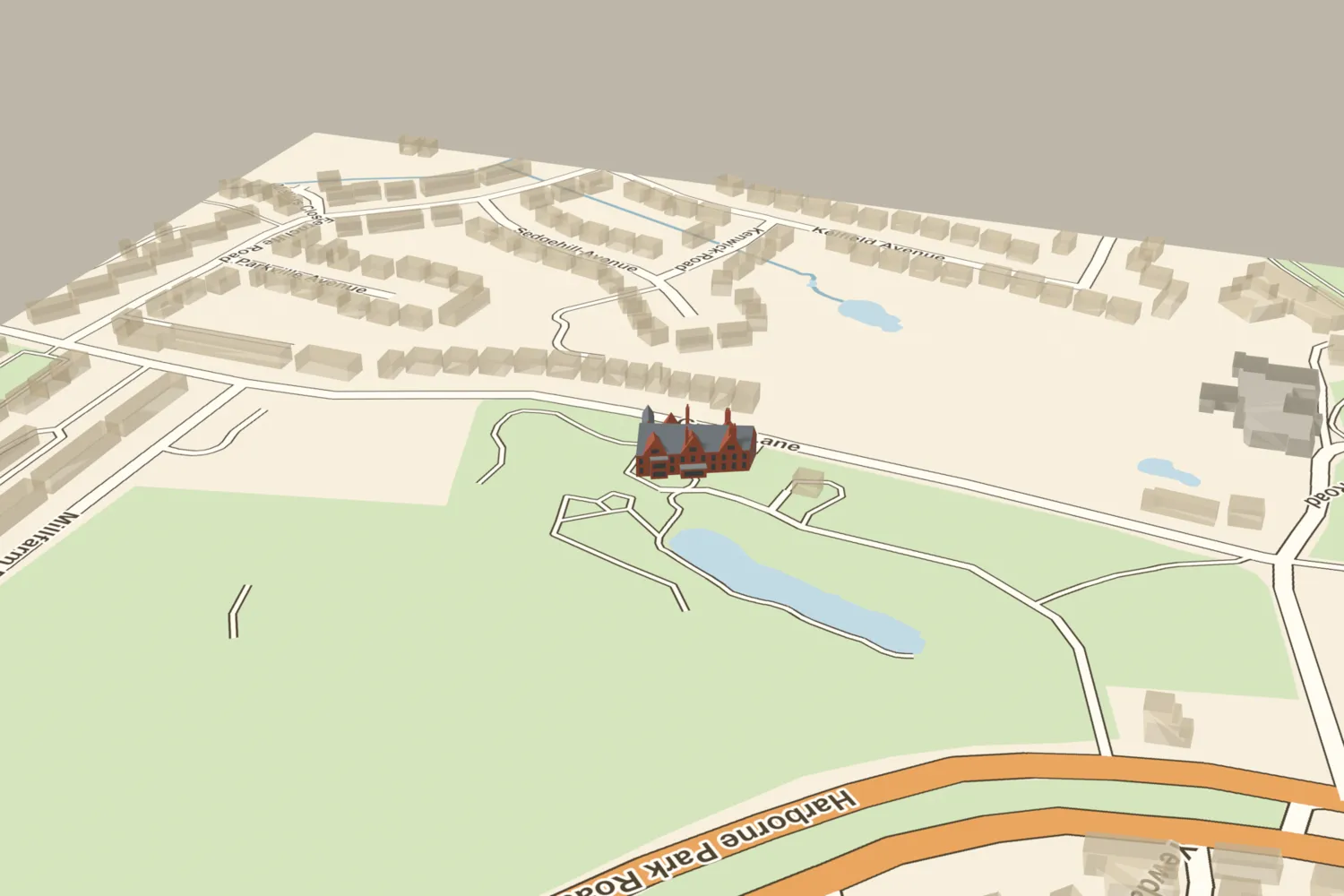
The Grove, on today’s streets
What’s there now
What replaced it
Grove Park, a public park opened on the grounds in 1963.
What survives
The panelled anteroom, now in the Victoria and Albert Museum (W.4:1 to 39-1964), and the grounds, now Grove Park. A Birmingham Civic Society blue plaque to Alderman W. Byng Kenrick, who gave the estate to the city, is at the Kenrick Centre on Mill Farm Road.
Today
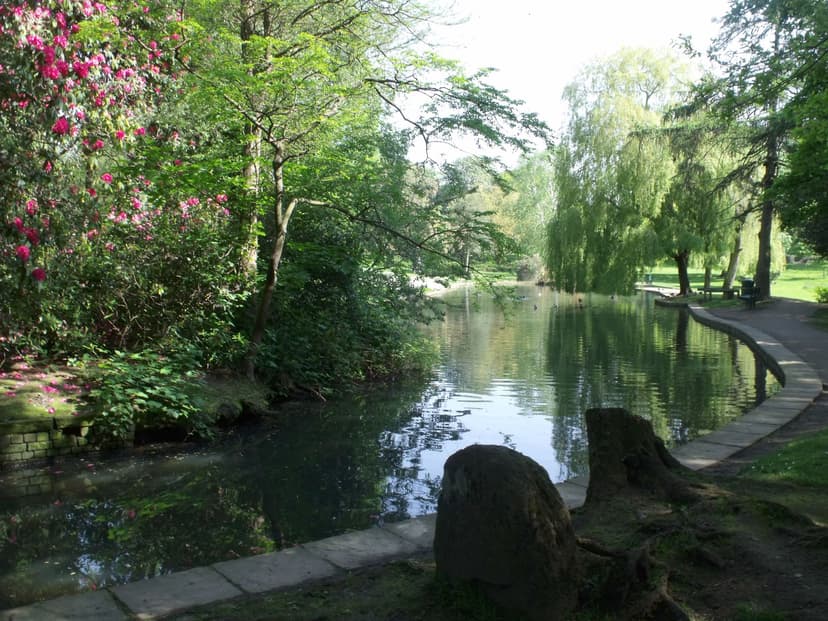
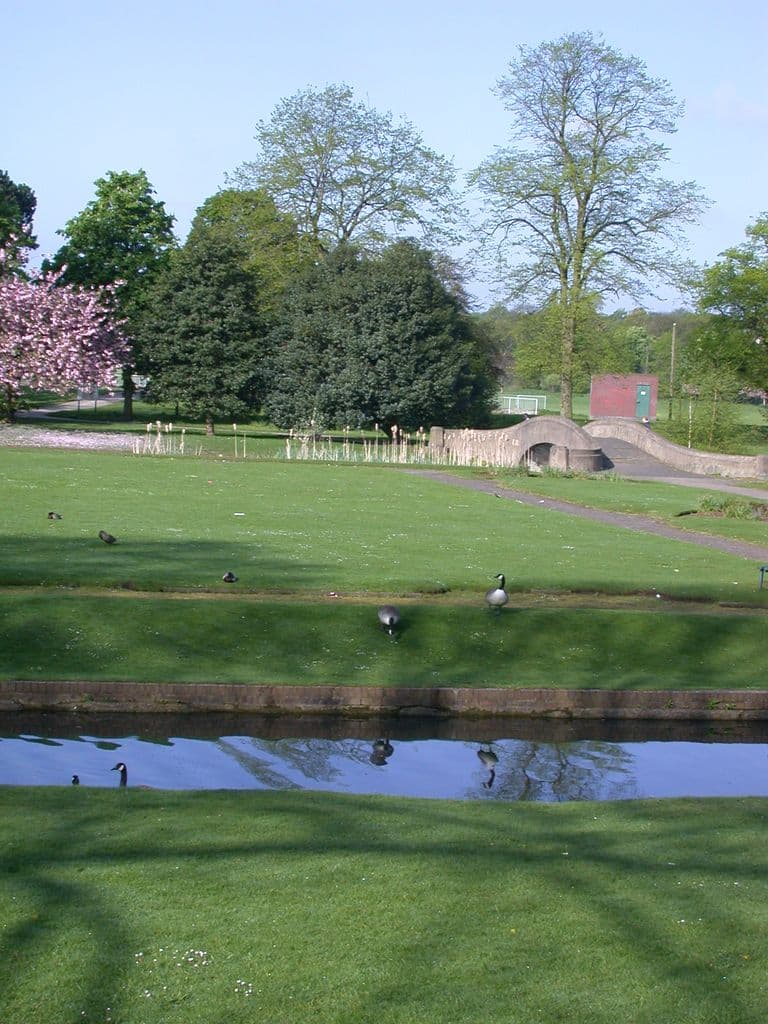
Grove Park, Harborne, off Harborne Park Road and Grove Lane: open grass, trees and a pond where the house and gardens stood.
Then and now
Then · 21 April 2024
Now · 23 May 2012
Key dates
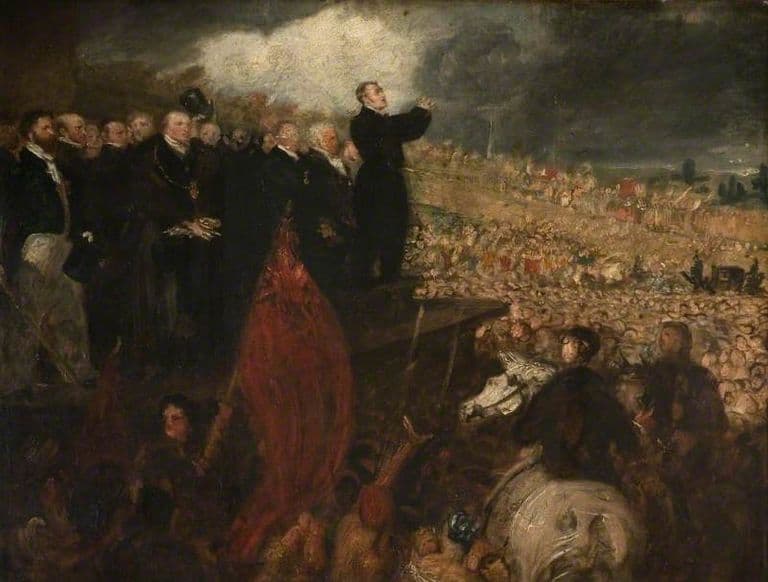
- 16 May 1832 — Triumph on Newhall HillNews of Earl Grey’s recall reaches Birmingham at dawn. Crowds fetch Attwood from his home at Harborne and the Union meets in triumph on Newhall Hill, a scene painted by Benjamin Robert Haydon.
- 1963 — The Grove, Harborne, is demolishedAttwood’s old home, rebuilt for William Kenrick in 1877–78, is pulled down and its grounds become Grove Park. One panelled room goes to the Victoria and Albert Museum.
Sources and further reading
That Attwood’s Grove House and Kenrick’s The Grove were the same house rests on the V&A (which says Chamberlain rebuilt the house) and on Wikipedia’s Grove Park article; the 1877–78 work may have been a rebuilding or a new house on the same site. Attwood’s dates there are about 1823–1845 (Wakefield) or 1823–1846 (Wikipedia). The demolition is dated 1963 by the Birmingham Civic Society; the V&A says only that the room was removed before demolition, after a visit in 1962. The exact site of the house within Grove Park has not been fixed.
- Panelled room from The Grove in Harborne (W.4:1 to 39-1964) — Victoria and Albert Museum
- Life of Thomas Attwood — C. M. Wakefield, privately printed, 1885. pp. 18, 90, 210–11
- Blue Plaque: Wilfred “Byng” Kenrick — Birmingham Civic Society
- Grove Park, Birmingham — Wikipedia
Comments
Comments will load here.