
What was here?
A bowl of worked-out sandpits on the north side of the town, on the slope where the Jewellery Quarter now begins, where tens of thousands of people met in the open air to demand the reform of Parliament.
History
A hole in the hill
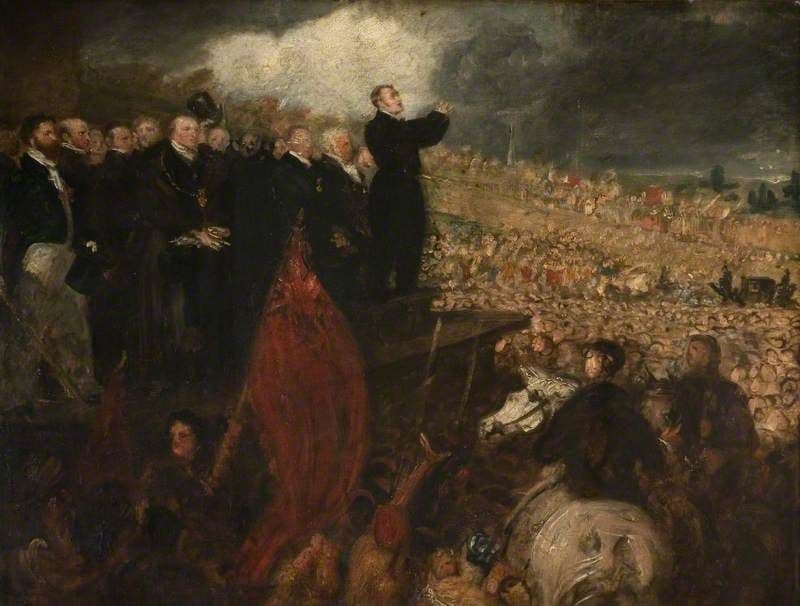
In the early nineteenth century Newhall Hill was dug for sand, used for building and for foundry moulds and carried away by the canal at its foot. The historian Bill Dargue describes extensive sandpits. When the digging stopped, it left a hollow, and a hollow is useful to anyone who wants to speak to a crowd. The Birmingham Journal described it in 1831 as “a large vacant spot of ground situated in the northern suburbs of the town, and peculiarly well formed for such a purpose”: about twelve acres of rising ground “in the form of an amphitheatre”.
The radical meetings
The first great meeting was called by George Edmonds of the Hampden Club on 22 January 1817, when between ten and twenty thousand people voted for universal suffrage and annual parliaments. In July 1819 a crowd elected Sir Charles Wolseley as Birmingham’s “Legislatorial Attorney” and told him to take a seat in the Commons that the town did not have.
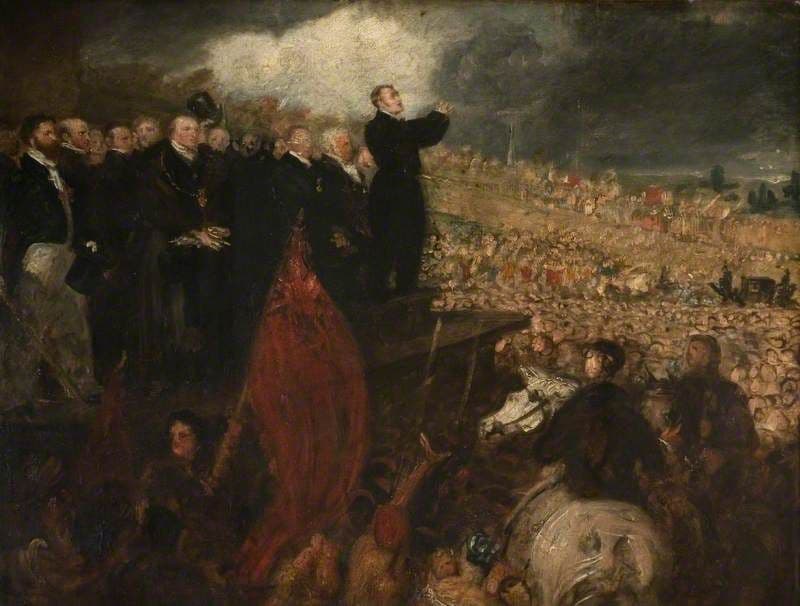
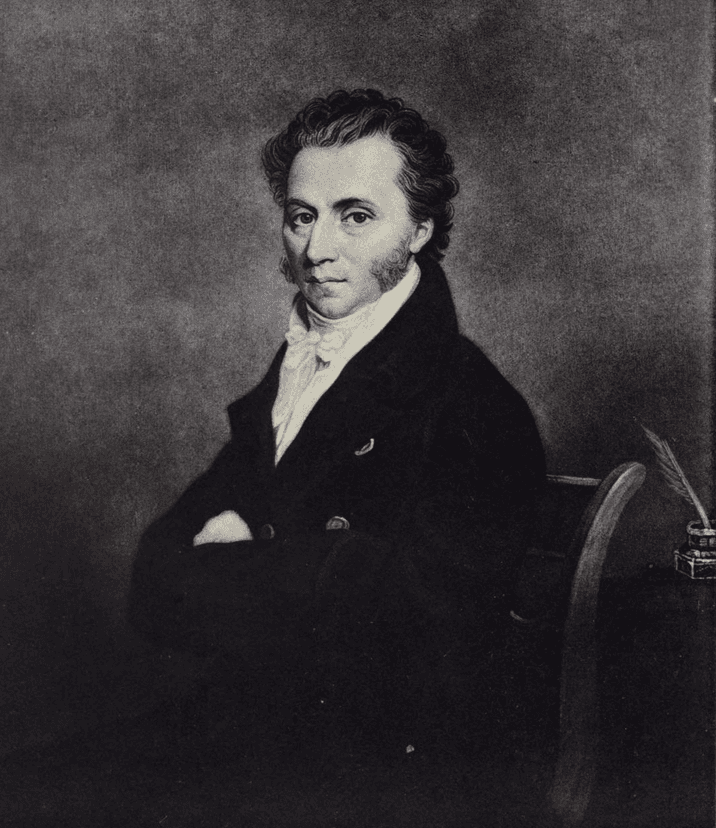
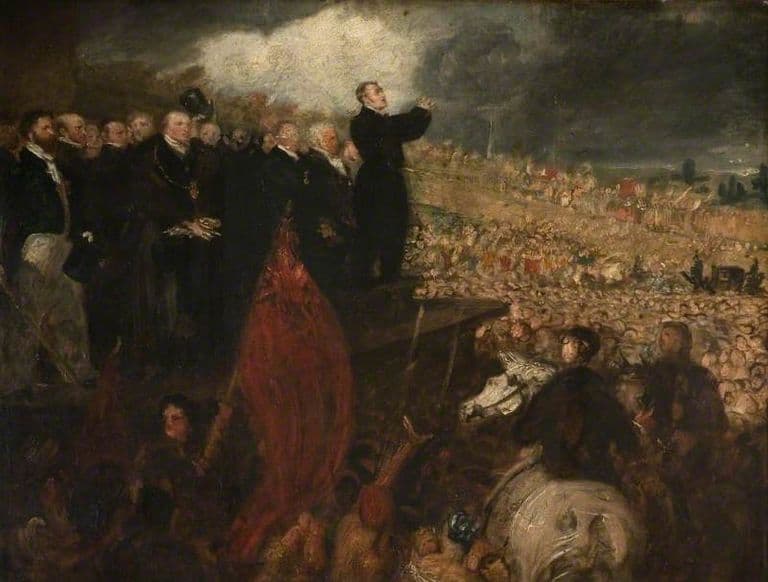
Thomas Attwood’s Political Union made the hill famous. On 3 October 1831 it brought more than 100,000 people there, according to contemporary claims, to back the Reform Bill. The speakers stood on a half-circle of wagons in the valley while banners crowded the slopes. In May 1832, as the Bill hung in the balance, came the “Gathering of the Unions”, put at 200,000, a figure the Victoria County History calls “probably much exaggerated”, and on 16 May a triumphant meeting to celebrate Earl Grey’s return. The Union met on the hill again in 1833 and 1837; one study counts eleven meetings there between 1817 and 1837.
Built over
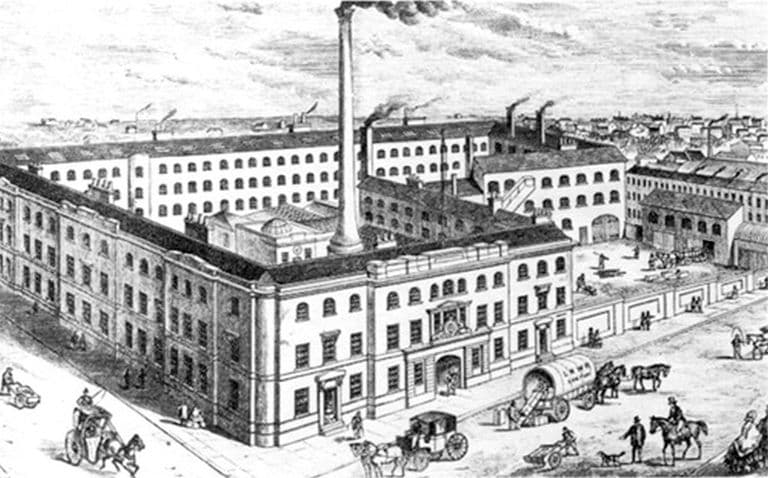
The hill was too close to town to stay empty. Within a few years the slope was being built up with workshops and factories. Joseph Gillott’s Victoria Works pen factory rose on Graham Street from about 1839, and Newhall Hill became part of the Jewellery Quarter.
What happened here?
The great open-air reform meetings of 1817–37, above all the Birmingham Political Union’s gatherings of October 1831 and May 1832.
Why it mattered
Nowhere else in Birmingham saw so many people demand the vote. The peaceful mass meetings here put pressure on Parliament and the Lords during the Reform Bill crisis and made Birmingham the model for political unions across the country.
Why it disappeared
Redevelopment
Once sand-digging ended, the land was vacant; as the town spread north-west in the 1830s and 1840s it was built over with streets and factories.
What’s there now
What replaced it
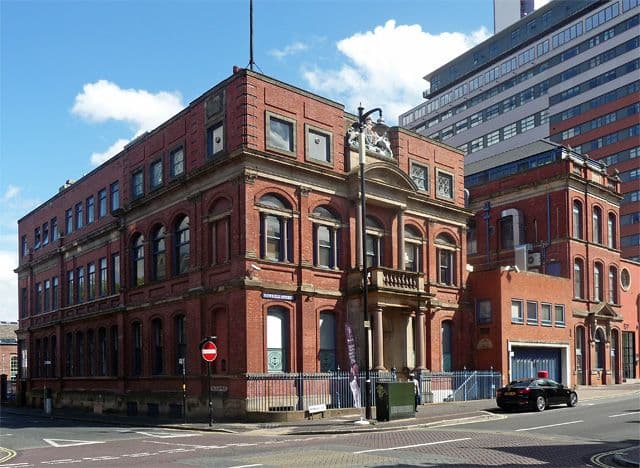
Streets and factory buildings of the Jewellery Quarter, including Victoria Works on Graham Street.
What survives
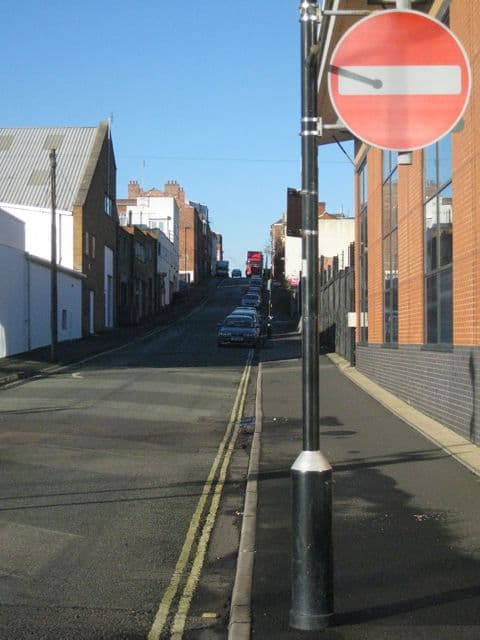
The name and the slope itself. The rise of Newhall Hill, the street, between George Street and Graham Street follows the hill the crowds stood on.
Today
Newhall Hill is a busy street climbing from the canal and Summer Row towards the Jewellery Quarter. The meeting ground lies under the factory blocks and offices between Newhall Hill, Graham Street and George Street.
Then and now
Then · 1832–33
Now · 5 December 2012
Key dates
- 22 January 1817 — The first Newhall Hill meetingGeorge Edmonds of the Hampden Club chairs the first great open-air radical meeting on Newhall Hill. Between ten and twenty thousand people vote for universal suffrage and annual parliaments.
- 3 October 1831 — 100,000 on Newhall HillAs the Reform Bill goes before the Lords, the Political Union fills Newhall Hill with a crowd claimed at over 100,000, including 20,000 from the Black Country. The meeting passes off peacefully.
- 16 May 1832 — Triumph on Newhall HillNews of Earl Grey’s recall reaches Birmingham at dawn. Crowds fetch Attwood from his home at Harborne and the Union meets in triumph on Newhall Hill, a scene painted by Benjamin Robert Haydon.
Sources and further reading
The exact edges of the meeting ground are not certain. Andy Higgs, working from maps of about 1820 and 1824, places the sandpit in the triangle bounded by modern Newhall Hill, Graham Street and George Street; the pin is placed there and is approximate. Contemporary reports give its size as about twelve acres (October 1831) or about six acres (May 1832). All crowd figures are contemporary claims. The date of the largest May 1832 meeting is given as 7 May (Dargue) and the triumphant meeting as 16 May (Wakefield; Haydon’s sketch). The count of eleven meetings comes from the To The Barricades project. No plaque to the meetings has been confirmed on site.
- A History of the County of Warwick, vol. 7: The City of Birmingham — Political History to 1832, pp. 270–297 — W. B. Stephens (ed.), Victoria County History, 1964
- A History of the County of Warwick, vol. 7: The City of Birmingham — Political History from 1832, pp. 298–317 — W. B. Stephens (ed.), Victoria County History, 1964
- Life of Thomas Attwood — C. M. Wakefield, privately printed, 1885. pp. 173–74, 197–98, 210–11 (Birmingham Journal reports)
- Attwood, Thomas (1783–1856) — Dictionary of National Biography, 1901 supplement, vol. 1 — Edward Irving Carlyle, Smith, Elder & Co., 1901
- Oil Sketch — Meeting of the Birmingham Political Union — To The Barricades
- The Newhall Estate, Newhall Hill, City Centre — William Dargue
- Turner, Newhall Hill & The Jewellery Quarter: A Historical Mystery — Andy Higgs
Comments
Comments will load here.