
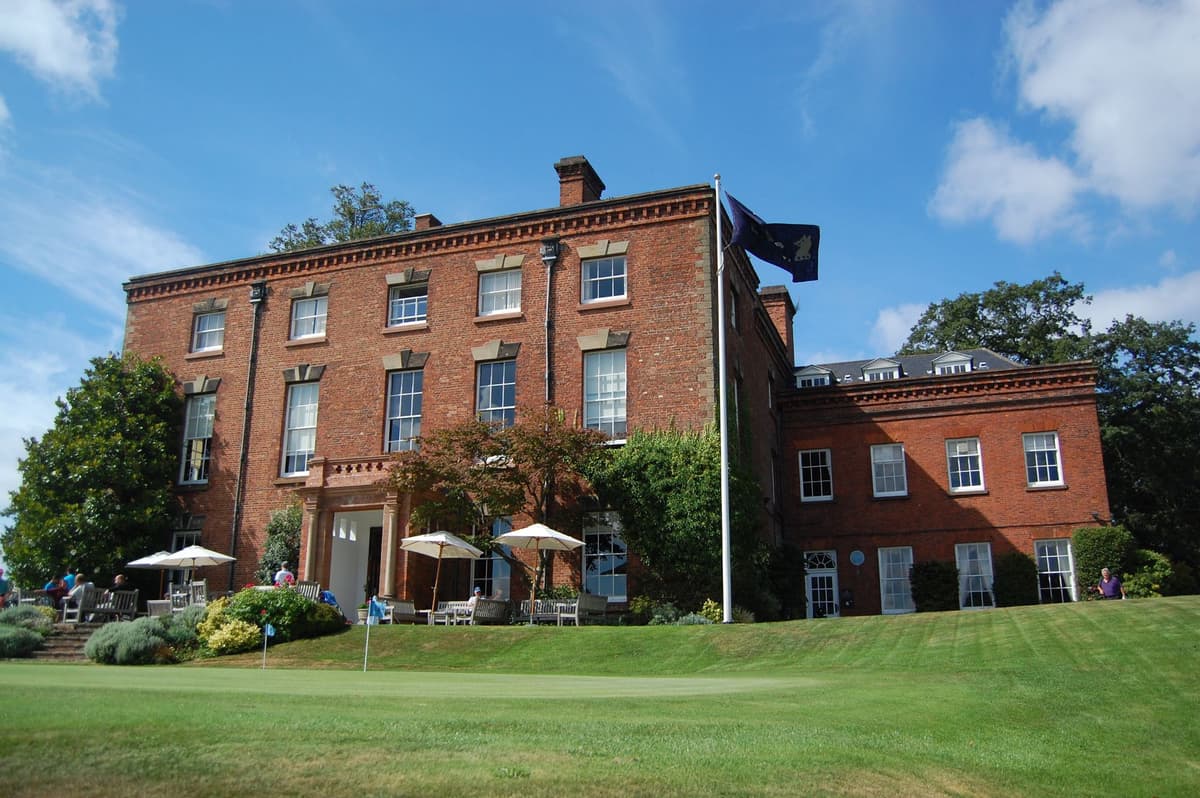
What is it?
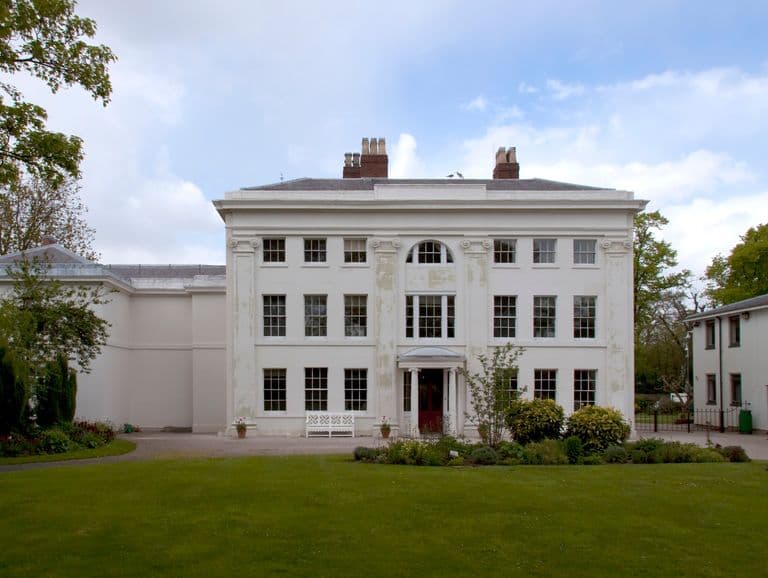
A brick country house in a landscaped park south-west of Birmingham, built in 1717. From 1786 it was the home of Dr William Withering, the doctor who showed how the foxglove could be used as a medicine. In 1791 rioters came for it. It survives as the clubhouse of Edgbaston Golf Club.
History
A house rebuilt
There had been a hall at Edgbaston long before the one that stands today. The earlier house was destroyed in 1688, and in 1717 Sir Richard Gough built a new one on the site, according to Historic England’s list entry. The Gough family, later the Gough-Calthorpes, owned Edgbaston, and the house sat at the heart of their estate.
By the 1780s the family had moved away and the hall stood empty. In 1786 it found a remarkable tenant.
The foxglove doctor
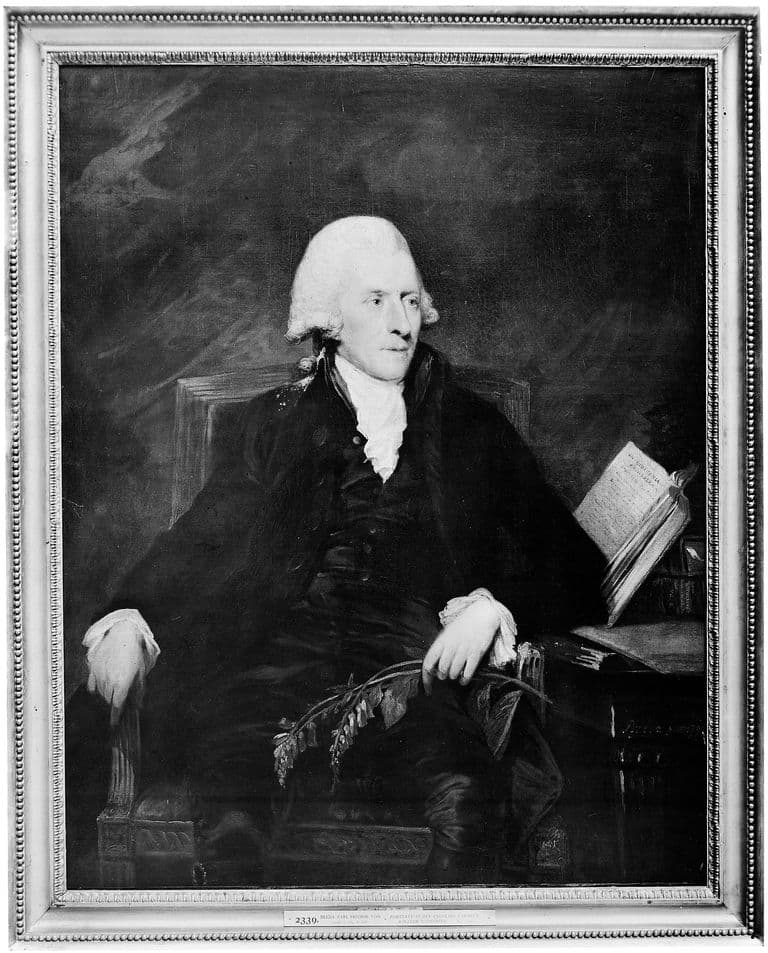
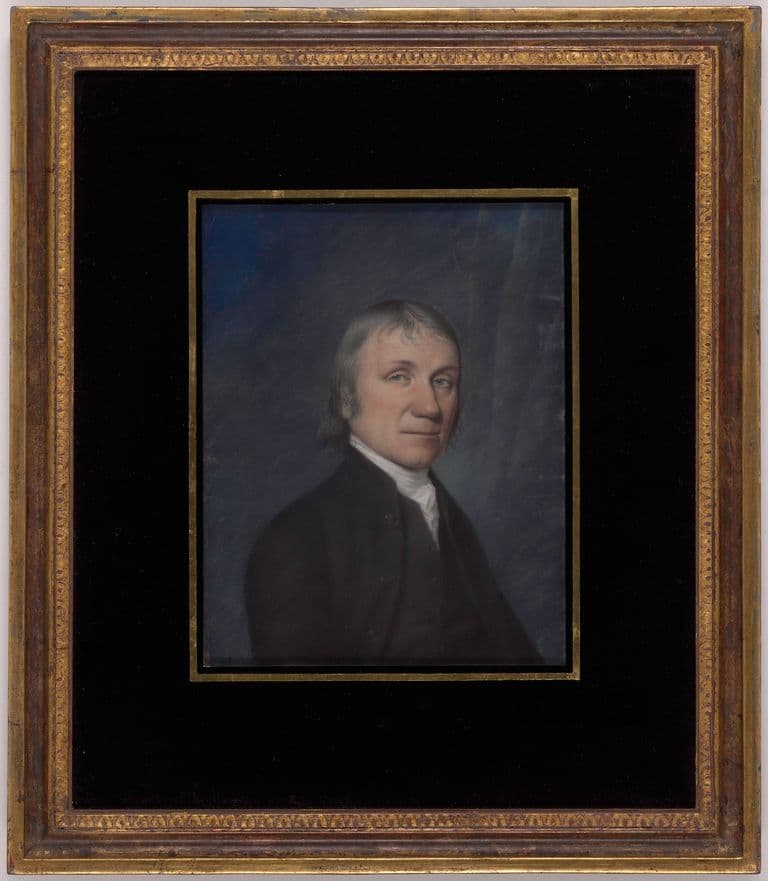
William Withering had come to Birmingham in 1775, tipped off by Erasmus Darwin that the town needed a physician. He ran a clinic for the poor and joined the staff of the new General Hospital. He was also a passionate botanist: in 1776 he published the first full account of British plants arranged by the system of Linnaeus.
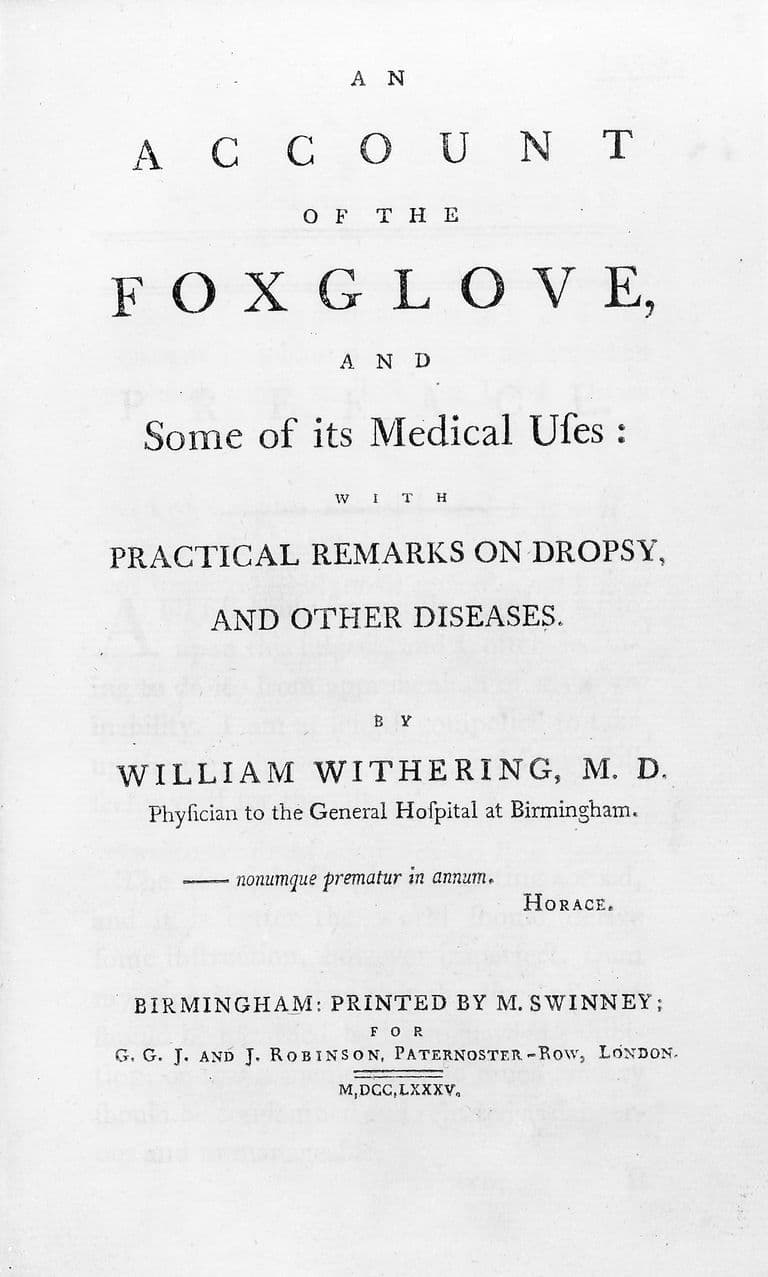
His great work was on the foxglove. In his own words, published in 1785: “In the year 1775, my opinion was asked concerning a family receipt for the cure of the dropsy. I was told that it had long been kept a secret by an old woman in Shropshire”. Withering worked out that the active ingredient was foxglove, then spent ten years testing it carefully on patients. His Account of the Foxglove set out 163 cases, with instructions on dose and side effects. Foxglove still yields digoxin, a heart medicine in use today.
Life at the hall
In his own words, published in 1785: “In the year 1775, my opinion was asked concerning a family receipt for the cure of the dropsy. I was told that it had long been kept a secret by an old woman in Shropshire”.
In 1786, a year after the foxglove book, Withering took a fourteen-year lease of Edgbaston Hall. It suited a man of his interests. He bred Newfoundland dogs and French cattle, and employed plant collectors for the second edition of his botany. He analysed minerals too; one, “terra ponderosa”, was later named witherite after him. He was a member of the Lunar Society, and he also joined the Society for the Abolition of the Slave Trade.
The same spot, then and now
1888–1913
Today
Old map: Ordnance Survey six-inch, reproduced with the permission of the National Library of Scotland (CC BY 4.0). Today: © OpenStreetMap contributors.
The sources we have checked do not confirm that the Lunar Society met at Edgbaston Hall.
The riots come to Edgbaston
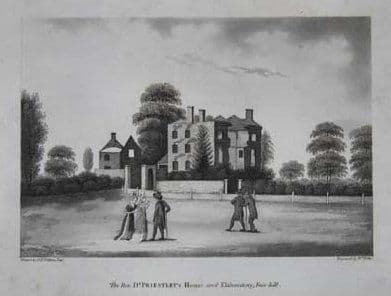
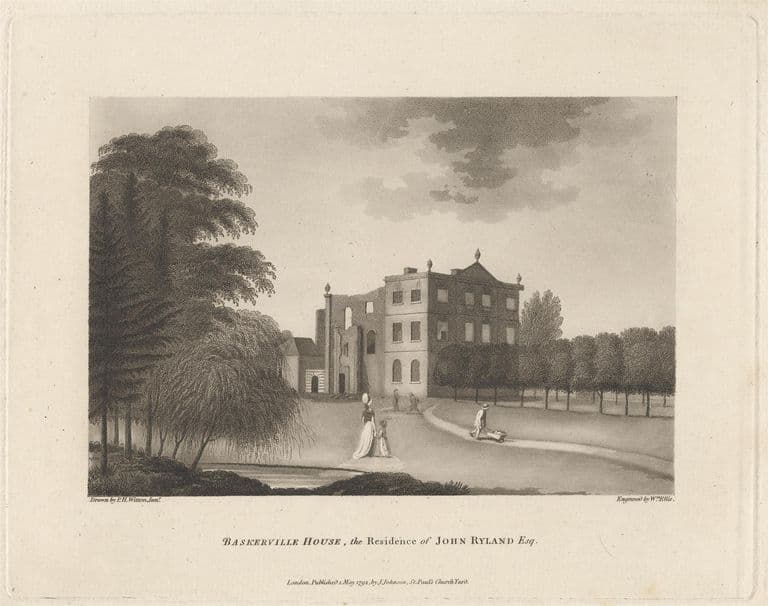
Withering was an Anglican, not a Dissenter, and he did not go to the dinner of 14 July 1791 that set off the riots. But he was Priestley’s friend, and that was enough. Around 16–17 July the rioters headed for Edgbaston Hall. Withering loaded his books and specimens into wagons, hid them under hay, and prepared to flee. According to the Dictionary of National Biography (1885), “the arrival of the military ultimately saved his house”.
Leaving
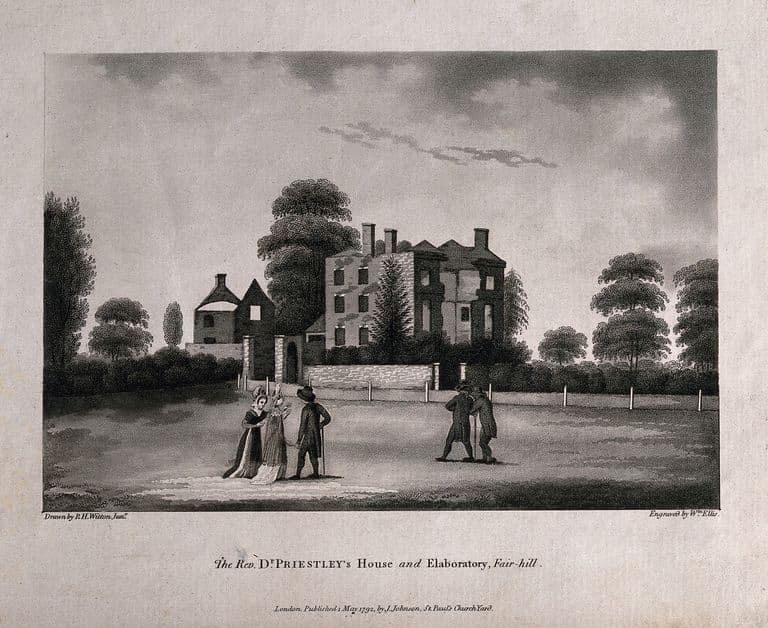
Withering suffered from a chest disease, believed to be tuberculosis, and spent the winters of the early 1790s in Portugal. In 1799, unable to face another winter at Edgbaston, he bought The Larches in Sparkbrook, the rebuilt house on Priestley’s old Fair Hill estate. He moved there on 28 September 1799 and died on 6 October. He was buried at Edgbaston Old Church, St Bartholomew’s, a short walk from the hall. His memorial there is carved with a foxglove.
Golf and a blue plaque
The hall outlived its famous tenant. Since 1936 it has been the clubhouse of Edgbaston Golf Club, and its park, now the golf course, is a registered historic landscape. In 1988 Birmingham Civic Society put up a blue plaque: “William Withering MD FRS 1741–1799 physician and botanist lived here”.
Withering’s careful counting of cases helped turn a folk remedy into modern medicine. The house where he lived in those years is still standing.
What happened here?
Sir Richard Gough built the present house in 1717. William Withering lived here from 1786 to 1799, breeding animals, collecting plants and analysing minerals. In July 1791 rioters approached the house, but troops arrived in time. Since 1936 it has been a golf clubhouse.
Why it mattered
Edgbaston Hall was the home of William Withering, whose foxglove research is a landmark in medicine. It is one of the few houses linked to the Priestley Riots that survived them, and it still stands in its historic park.
Today
What survives
The 1717 house, now Edgbaston Golf Club’s clubhouse (Grade II), its lodge (Grade II) and the historic park (Registered Park and Garden). A Birmingham Civic Society blue plaque to Withering. His memorial is in nearby St Bartholomew’s Church.
Today
Edgbaston Hall stands off Church Road, Edgbaston, B15, close to St Bartholomew’s Church, where Withering is buried. It is a private golf club. The blue plaque is on the house.
Today
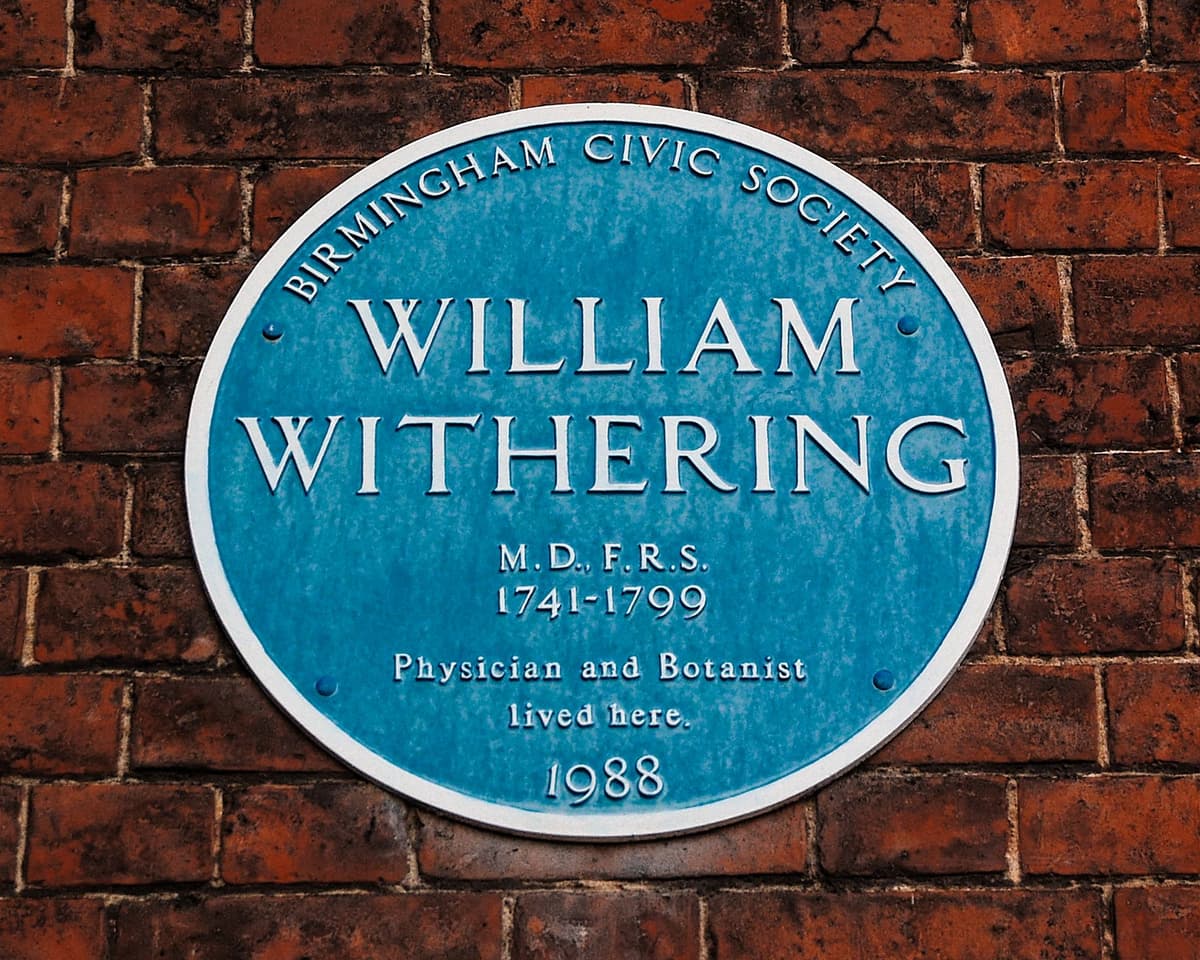
William Withering blue plaque, Edgbaston Hall, 30 August 2013Andy Mabbett (optimised by Acabashi), 30 August 2013. Wikimedia Commons · CC BY-SA 3.0
Key dates
- 1717 — Edgbaston Hall rebuiltSir Richard Gough built the present Edgbaston Hall on the site of a house destroyed in 1688. William Withering leased it from 1786.
- 1786 — Withering leases Edgbaston HallWithering takes a fourteen-year lease of Edgbaston Hall, where he breeds dogs and cattle, studies minerals and works on his botany.
- c. 16–17 July 1791 — Rioters threaten Edgbaston Hall; troops restore orderWithering hides his books and specimens under hay in wagons as rioters approach Edgbaston Hall. The arrival of troops saves the house and ends the riots.
Sources and further reading
Historic England’s list entry says ‘William Withering died in the home in 1799’, but the Royal Society, the Library of Birmingham and Withering’s own timeline place his death at The Larches, Sparkbrook, on 6 October 1799; we follow them. Whether the Lunar Society met at Edgbaston Hall is not confirmed. The plaque date (1988) is from Open Plaques.
- Edgbaston Golf Club (formerly listed as Edgbaston Hall) — National Heritage List for England entry 1075646 — Historic England
- Edgbaston Hall — Register of Parks and Gardens entry 1001201 — Historic England
- Withering, William — Dictionary of National Biography, Smith, Elder & Co., 1885–1900
- William Withering — Library of Birmingham (The Iron Room blog), Library of Birmingham Archives & Collections, 2023
- William Withering — Science in the Making — The Royal Society. Ref. L&P/7/251
- William Withering (1741–1799), a biographical sketch of a Birmingham Lunatic — M. R. Lee, James Lind Library, 2005
- Open Plaques #1613: William Withering, Edgbaston Hall — Open Plaques
- Digitalis: from Withering to the 21st century — British Journal of Cardiology, 2024
Comments
Comments will load here.