
What was here?
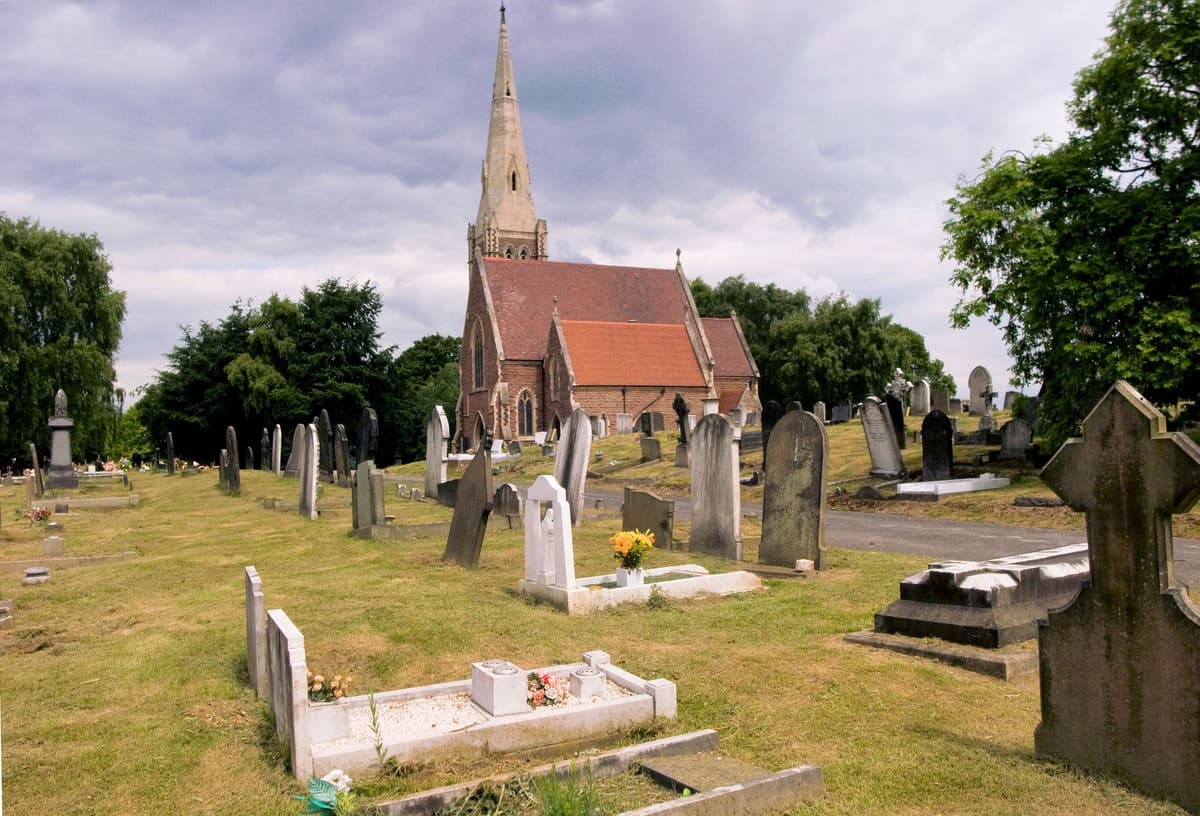
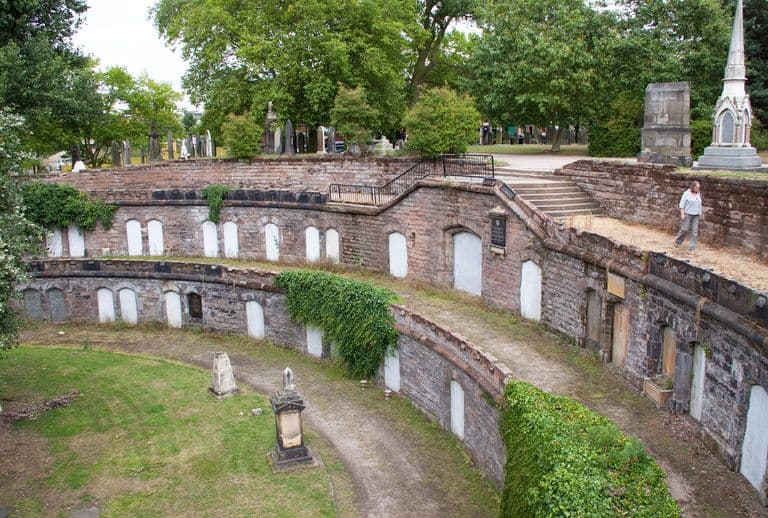
A large High Victorian cemetery of about 40 hectares, laid out for the borough’s Burial Board with avenues, lodges and chapels, between College Road, Brookvale Road and Moor Lane. It is still Birmingham’s city cemetery.
History
A town out of burial space
By the 1850s Birmingham’s churchyards were full. Apart from the private cemeteries at Key Hill and Warstone Lane, there was nowhere else to bury the dead of a fast-growing town. In 1857 the Corporation asked for an order to close the old churchyards; it was made in 1858, and a Burial Board was set up to find new land.
Witton
The Board chose a site at Witton, on a slope facing west and south over the valley of the Tame. Richard Ashwell, who had trained as a gardener at Chatsworth, laid it out, and R. Clarke of Nottingham designed the walls, lodges and chapels in 1859–61. The cemetery was consecrated by the Bishop of Worcester on 23 May 1863 and opened for burials five days later. It had an Anglican chapel and a chapel for Nonconformists, and in 1863 the Roman Catholics built their own. In 1868 a corner was sold to Birmingham’s Jewish congregation for a separate burial ground, with its own lodge and prayer hall.
Burials
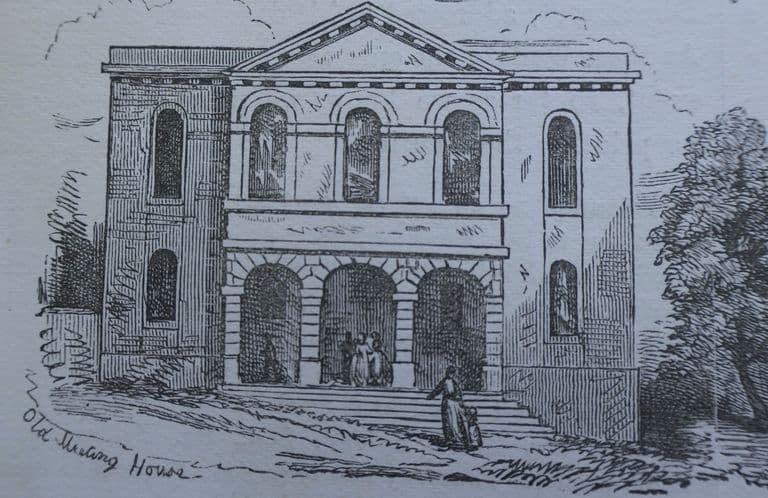
Witton became the resting place of many Victorian Birmingham families. John Cadbury, the Quaker founder of the Cadbury business, was buried here in May 1889 before a large crowd. In 1882–83 more than 1,500 coffins were moved here from the burial ground of the Old Meeting House in the city centre.
What happened here?
Birmingham’s first municipal cemetery, opened in 1863 and still in use.
Why it mattered
Witton was the town’s answer to overcrowded, unhealthy churchyards, and an early example of a council providing burial for everyone, of every faith.
The same spot, then and now
1888–1913
Today
Old map: Ordnance Survey six-inch, reproduced with the permission of the National Library of Scotland (CC BY 4.0). Today: © OpenStreetMap contributors.
What’s there now
What survives
Most of the original layout, the boundary walls, the Anglican chapel, the entrance lodges, gates and railings (Grade II), and the Jewish section with its prayer hall. The Nonconformist and Roman Catholic chapels were demolished around 1980.
Today
A working council cemetery bounded by College Road, Brookvale Road, The Ridgeway and Moor Lane, beside the M6.
Today
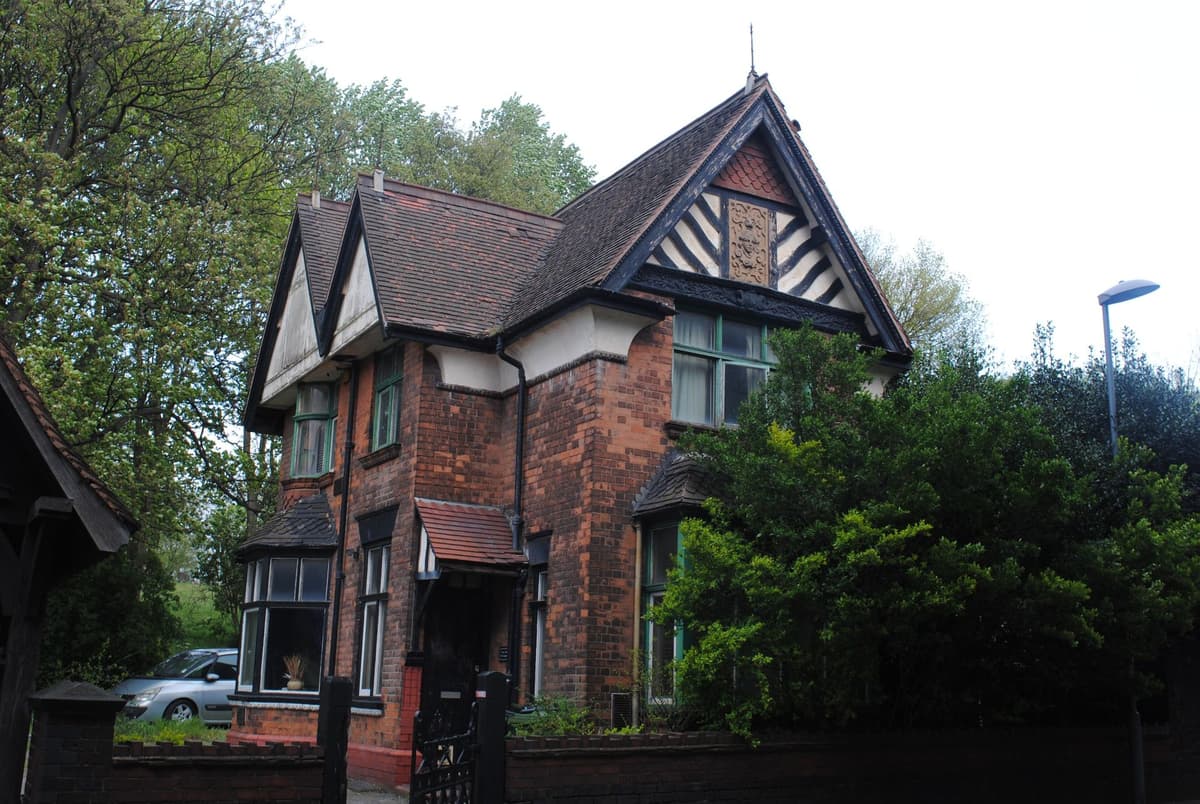
New Lodge, Witton Cemetery, 27 April 2019Andy Mabbett, 27 April 2019. Wikimedia Commons (own work) · CC BY-SA 4.0
Sources and further reading
The position of John Cadbury’s grave within the cemetery has not been traced.
- Witton Cemetery — Register of Parks and Gardens entry 1001612 — Historic England, 2002
- Witton Cemetery, Birmingham — Parks & Gardens UK
- Richard Cadbury of Birmingham — Helen C. A. Dixon (Helen Cadbury Alexander), Hodder and Stoughton, 1906. ch. 3, p. 40
- National Heritage List for England — listed building points (open data) — Historic England
Archive references: Library of Birmingham Birmingham Corporation Burial Board minutes, 1858–62; Corporation Plans 100, 106, 168
Comments
Comments will load here.