
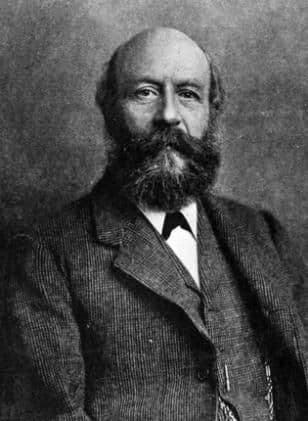
Early in the morning in the 1820s, anyone walking down Bull Street might have seen a young Quaker shopkeeper helping to clean his own shop windows. They were worth looking at. John Cadbury was among the first tradesmen in Birmingham to fit plate glass in mahogany frames, and his family remembered that people came from miles around to see them.
Inside he sold tea and coffee. In time he would sell something else: cocoa, ground by hand and sold as a drink. Out of that sideline came Cadbury Brothers, the Bridge Street works and, in the end, Bournville. But John Cadbury’s own story is less about chocolate than about a restless, practical conscience let loose on a fast-growing industrial town.
A Quaker upbringing
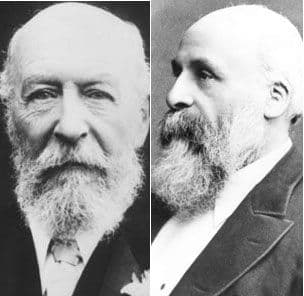
John Cadbury was born in Bull Street on 12 August 1801, the third son and fifth child of Richard Tapper Cadbury, a Quaker who had come up from the West Country and opened a drapery business in Birmingham in 1794. His father became a leading figure in the town, chairman of the Board of Commissioners that ran its streets and lighting before Birmingham had a council.
Quakers could not go to the English universities, and a pacifist faith ruled out the army. Trade was the natural path. As a teenager John was sent to Leeds for a seven-year apprenticeship with a Quaker grocer, John Cudworth. He had learned to play the German flute, but Friends then frowned on music, and at his father’s wish he gave it up. He loved music all his life. After Leeds he spent a year learning the tea trade in the bonded warehouses of London.
Sink or swim
In 1824 he came home and opened as a tea and coffee dealer at 93 Bull Street. His father gave him some money and, as the family told it, a warning: with ten children to provide for, John “must sink or swim”. He never asked for more.
He swam. Alongside the tea and coffee he began to sell cocoa and drinking chocolate that he prepared himself. Cocoa then was a drink, heavy with fatty cocoa butter, and the cheap kinds were bulked out with starch and other fillers. To a man who would soon refuse all alcohol, a warm, filling drink that was not beer or gin had obvious appeal, and accounts of his life link his choice of trade to his temperance beliefs.
Some time in the 1830s he rented a warehouse in Crooked Lane, in the old town centre, and began experimenting with cocoa and chocolate using a pestle and mortar. The family biographies date this to about 1835; Cadbury’s own history says 1831. Either way, a shopkeeper had become a manufacturer.
The town’s business
Grief pushed him into public life. In March 1826 he married Priscilla Ann Dymond of Exeter. She died barely two years later. In the lonely years that followed, John threw himself into the Quaker meeting and the town.
In 1830 he was elected to the Board of Commissioners, which his father chaired. In 1832 he became an Overseer of the Poor, and was appalled to find the overseers dining weekly at the ratepayers’ expense while paupers queued outside in the cold. At his first meeting the clerk advised the gentlemen to take a glass of brandy before starting work. Cadbury and a colleague, Henry Knight, showed the dinners were illegal, and they stopped.
When cholera reached the Black Country in 1832, the overseers took a house in Bath Row as a cholera hospital. The only cholera victim brought there was a Bilston man, and nobody would bury him. A family account, quoted by his granddaughter, describes the scene: a clergyman trotting along the road reading the burial service as fast as he could, a bare coffin carried by four men each smoking a pipe, and behind them John Cadbury in his broad-brimmed Quaker hat.
Climbing boys
His best-known campaign was against climbing boys, the small children sent up chimneys to sweep them. Cadbury took a “scientific chimney-sweeper” with a sweeping machine to Hagley Hall to show that it could be done without a child. He called a meeting of Birmingham’s sweeps in the Town Hall to argue that machines would pay. Then he bought machines himself and set master sweeps up with them.
He wrote to the Duke of Sutherland, who chaired a House of Lords committee on the question, that hospitals, asylums, banks, the principal hotels and Oscott College were now swept by machine. His interest, he said, was “on the ground of humanity alone”. He signed it, plainly, “John Cadbury, Tea Dealer.”
He also took a leading part, according to his granddaughter, in trying to cure the town’s smoke nuisance. He opposed cruelty to animals. And he chaired the committee that steered through Parliament the Bill handing the Commissioners’ powers to the Corporation, a measure the Birmingham Daily Post later said would have been very different without his vigilance.
Temperance and Candia
In 1832 he married Candia Barrow of Lancaster, whom he had first met when she was not yet sixteen. Her father, George Barrow, was a merchant whose ships traded chiefly with the West Indies. Before emancipation in 1834 that was a trade in the produce of enslaved people, and it was Barrow family money that would later rescue the Cadbury firm.
The same year John took the pledge of total abstinence. He was one of the founders of the Birmingham Auxiliary Temperance Society, whose first annual meeting was held at the Friends’ Meeting House in Bull Street on 1 July 1833. He would be a teetotaller for more than half a century.
In 1835 the family moved out of Bull Street to Edgbaston, where all but the eldest of their seven children were born. Two of them were Richard and George.
Bridge Street
In 1847 the Great Western Railway took over and pulled down the Crooked Lane premises, and Cadbury moved his manufacturing to Bridge Street, off Broad Street. His brother Benjamin Head Cadbury became his partner, and the firm became Cadbury Brothers. In November 1849 they gave up shopkeeping and handed the Bull Street shop to their nephew, Richard Cadbury Barrow. Barrow’s became one of Birmingham’s best-known stores. On 4 February 1854 the brothers received a royal warrant as manufacturers of cocoa and chocolate to Queen Victoria.
Grief and decline
Then, in 1855, Candia died. John was prostrated, and the same year a severe attack of rheumatic fever left him permanently weakened. In 1860 the partnership with Benjamin was dissolved, and the business slid. By 1861 Bridge Street had about a dozen workers and falling sales.
That year John handed the works to Richard, 25, and George, 22. How they nearly lost it, saved it with pure cocoa and moved it to Bournville in 1879 is their story. John lived to see all of it.
A long evening
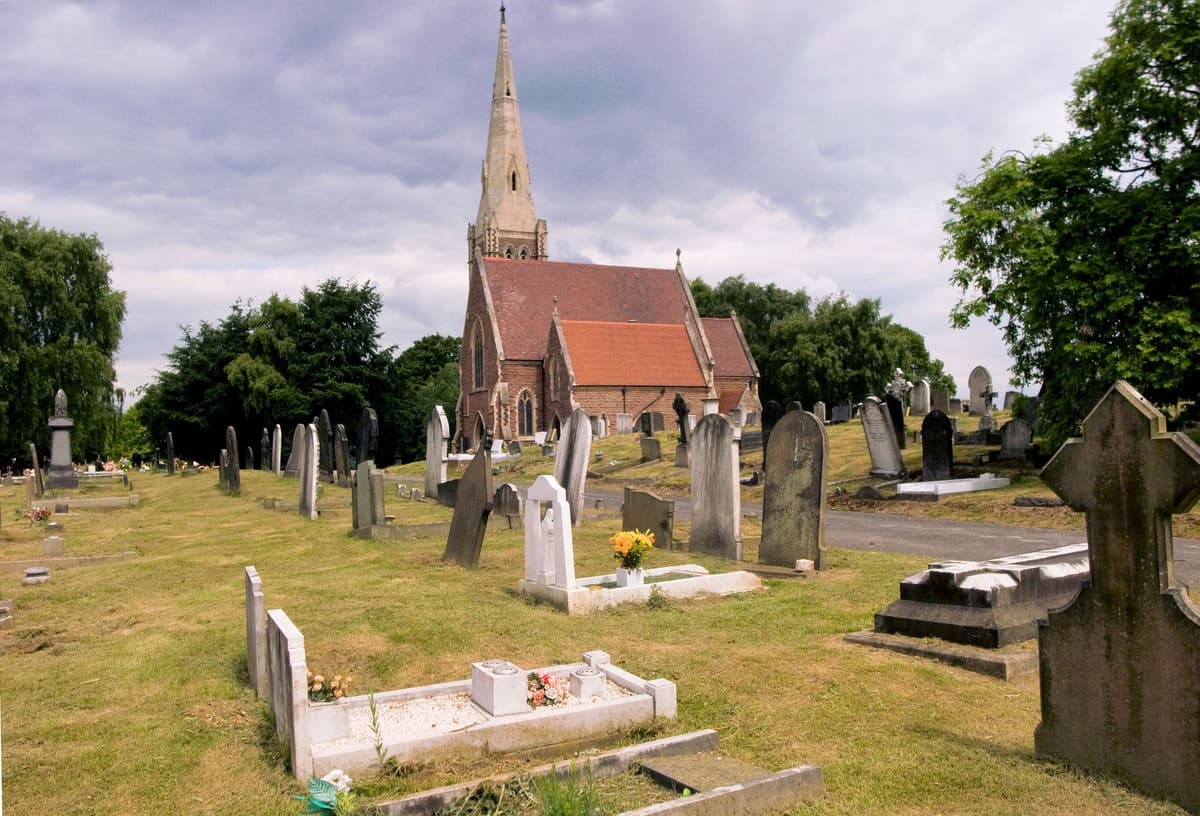
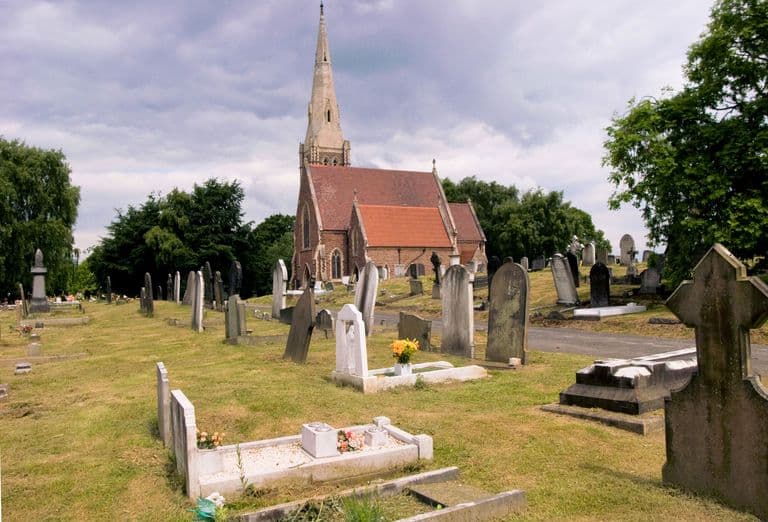
He spent his last decades in religious and charitable work. He died at his home, 10 Harborne Road, Edgbaston, on 11 May 1889, in his eighty-eighth year. He was buried in Witton Cemetery in north Birmingham, the town’s first municipal cemetery. At the graveside an old friend, William White, said he could remember a time, forty years before, when scarcely any active form of philanthropy in Birmingham did not claim John Cadbury’s money and energetic personal support.
Why it mattered
John Cadbury did not build Bournville, and he did not invent anything. What he built was a habit of mind. He made cocoa because he believed in temperance. He swept chimneys with machines because he could not stand the sight of children sent up flues. He stopped the overseers’ dinners because the poor were waiting outside in the cold.
His sons took that habit and joined it to a business that worked. Bournville’s sports fields, its pension fund and its village without a pub all echo the Quaker grocer of Bull Street. So does the refusal to sell adulterated cocoa.
His own firm was small, and by 1861 it was failing. But the shop at 93 Bull Street was where one of Britain’s best-known food companies began. The man who cleaned his own plate-glass windows lies in Witton Cemetery in north Birmingham. Across the city at Bournville, the works that grew from his shop still makes chocolate under his name.
On the map
5 places connected with John Cadbury. Tap a number for directions — some sites are private homes or gardens, so each place’s page says what you can see from the street.

- Witton Cemetery — Surviving, Surviving but altered · Directions to Witton Cemetery (opens Google Maps)
- John Cadbury’s shop, 93 Bull Street (site) — Lost, Site redeveloped · Directions to John Cadbury’s shop, 93 Bull Street (site) (opens Google Maps)
- Bournville village — Surviving · Directions to Bournville village (opens Google Maps)
- Bournville works (Cadbury) — Surviving, Surviving but altered · Directions to Bournville works (Cadbury) (opens Google Maps)
- Cadbury’s Bridge Street works — Lost, Site redeveloped
Key dates
- 1824 — John Cadbury opens his shop in Bull StreetJohn Cadbury, a 23-year-old Quaker, opens as a tea and coffee dealer at 93 Bull Street. He also sells cocoa and drinking chocolate he grinds himself: the beginning of the Cadbury business.
- c. 1831 or about 1835 — Cadbury starts making cocoa in Crooked LaneJohn Cadbury rents a warehouse in Crooked Lane and begins making cocoa and chocolate with a pestle and mortar, turning a shop sideline into manufacturing. Sources differ between 1831 and about 1835.
Sources and further reading
Dates for the early business differ. Dixon (1906) and Gardiner (1923), both family-approved biographies, date the Bull Street shop to 1824 and the Crooked Lane warehouse to about 1835. Cadbury’s own history and Grace’s Guide give 1831 for Crooked Lane. The Victoria County History dates the shop to 1834, apparently a slip, since its source is Gardiner. Cadbury’s website says John began manufacturing in 1831 ‘with help from his sons George and Richard’, which cannot be right: they were born in 1835 and 1839. The partnership with Benjamin Head Cadbury began in 1847 (Dixon; Grace’s) and was dissolved in 1860 (Grace’s); some secondary sources give 1846 and 1856. Several websites say John Cadbury founded the Animals’ Friend Society as ‘a forerunner of the RSPCA’. The dates do not fit: the SPCA was founded in 1824, and the Animals’ Friend Society was set up in London in 1832 by Lewis Gompertz. Cadbury is said to have supported it; that is all we have used. The cholera funeral is told by Dixon from a local magazine, Edgbastonia, and William White’s words are as Dixon reported them. The exact position of No. 93 Bull Street has not been fixed on a map.
- Richard Cadbury of Birmingham — Helen C. A. Dixon (Helen Cadbury Alexander), Hodder and Stoughton, 1906. chs. 2–3 (Richard Tapper Cadbury; John Cadbury, pp. 27–40)
- Life of George Cadbury — A. G. Gardiner, Cassell, 1923. ch. 1, pp. 7–11 (incl. letter to the Duke of Sutherland)
- John Cadbury — Grace’s Guide
- Cadbury Brothers — Grace's Guide. royal warrant, 4 February 1854
- Economic and Social History: Industry and Trade, 1500–1880, in A History of the County of Warwick, vol. 7, pp. 81–139 — W. B. Stephens (ed.), Victoria County History, 1964. ‘1840–1880’: the cocoa industry
- The Cadbury Story — Cadbury UK
- Witton Cemetery — Register of Parks and Gardens entry 1001612 — Historic England, 2002
- John Cadbury — Wikipedia
- Animals’ Friend Society — Wikipedia
Comments
Comments will load here.