
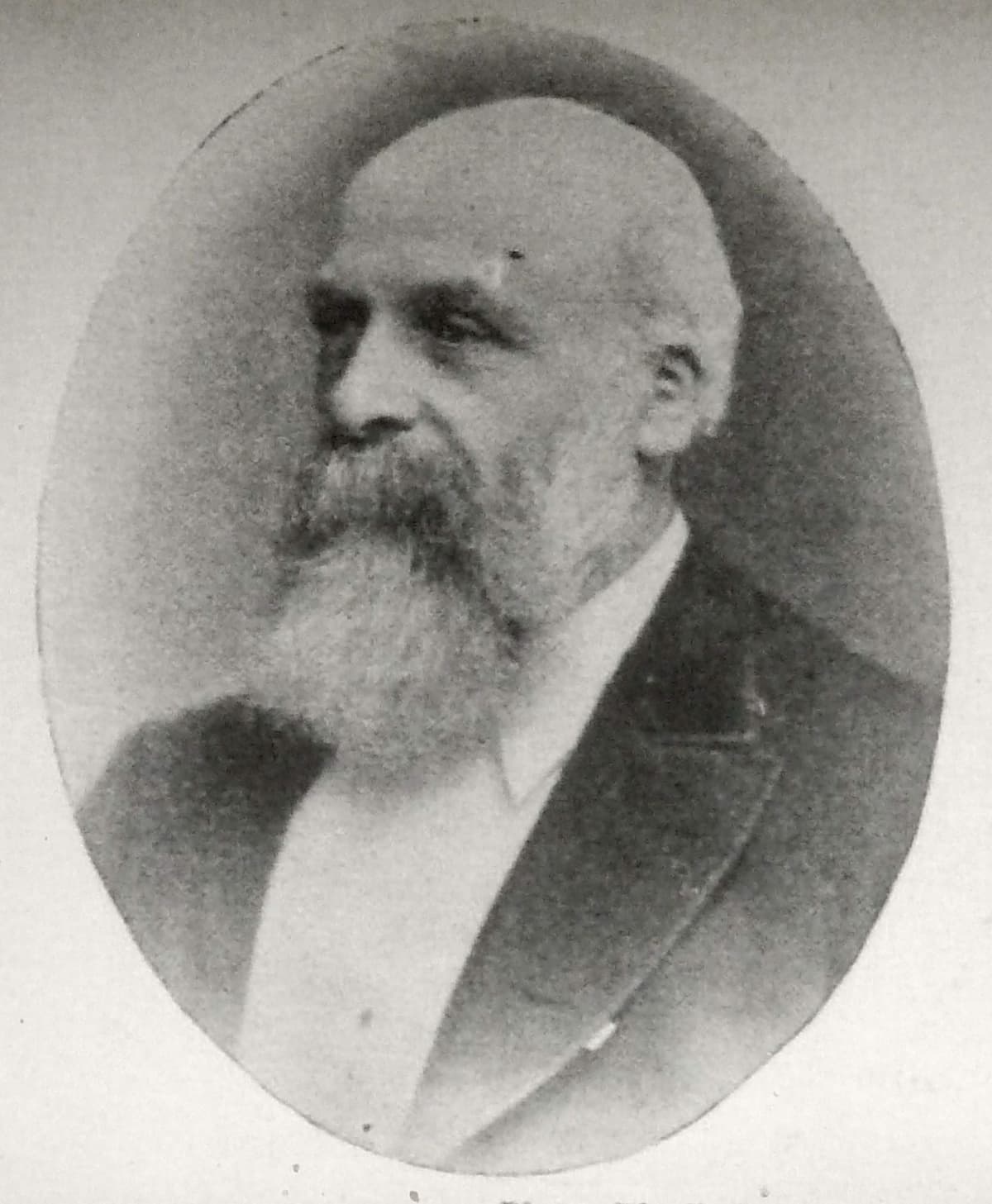
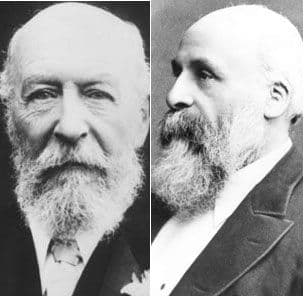
In 1861 Richard Cadbury and his younger brother George took over a dying business. Their father’s cocoa works in Bridge Street was down to about a dozen workers, some of the girls earning half a crown a week. Richard was 25. He had modest ambitions, at least by his biographer’s account: he said that if he ever saw the firm making £1,000 a year, he would be satisfied.
He saw a great deal more than that. When he died, 38 years later, the Bournville works employed thousands and his brother was building a model village beside it.
Edgbaston childhood
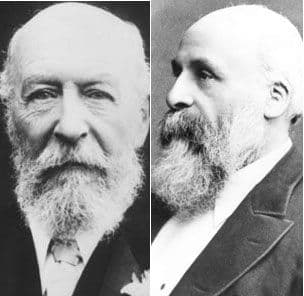
Richard Barrow Cadbury was born on 29 August 1835 at 17 Frederick Road, Edgbaston, a temporary home while his parents prepared to move from Bull Street. He was the second son of John Cadbury and Candia Barrow, a Quaker family of shopkeepers, temperance campaigners and town commissioners. He joined his father at Bridge Street as a young man, around 1850, and learned the business from the bottom. In 1849, when Birmingham staged an exhibition of local manufactures at Bingley House for a visit by Prince Albert, the family firm showed “Chocolate, Cocoa, and Chicory, in various stages of manufacture”.
An account of the works in 1852, when he was 17, gives a picture of what he saw. The roasting ovens and the kibbling mill, which broke up the beans, were on the ground floor. Upstairs a score of girls weighed and packed cocoa and wrapped chocolates in tinfoil, wearing washable holland frocks over their own clothes. In summer they had a weekly half-holiday, and twice a week they left an hour early to go to evening school.
Two brothers, one firm
Richard and George were partners for 38 years, and they divided the work. George ran production and pushed for new methods; Richard ran sales and the office. A. G. Gardiner, George’s biographer, called Richard the “more restful” of the two. He sketched, wrote religious verse, collected, and researched the family’s history. In the 1850s he captained the football and hockey teams that played at Edgbaston.
The early years were grim. The brothers lived on almost nothing, and family tradition remembers a weekly menu of a leg of mutton, roasted, then cold, then minced, then the smaller half boiled, then the bones. The business turned the corner in 1864, and in 1866 their pure Cocoa Essence began to win back customers.
Richard married first, in 1861, the year the brothers took over. His wife, Elizabeth Adlington, was a Quaker from Mansfield and a school friend of his sister. She was often ill, and she died at the turn of 1868–69, ten days after the birth of their third son. The 1871 census found Richard a widower in Wheeleys Road, Edgbaston, with two small sons, describing himself as a cocoa manufacturer employing 220 people. He later married Emma Wilson, who was with him for the rest of his life.
By the late 1870s Bridge Street was cramped, dingy and too small. The brothers shared the dream of a factory in the country, and Richard’s biographer gives him a full share in the decision to move to Bournville in 1879. There, the brothers enjoyed walking out of the office into a garden of roses after years of looking out on Bridge Street.
Gifts
Richard gave as steadily as he worked. In 1891 he gave Moseley Hall, his former home, as a convalescent home for children from the city, and he and his wife Emma moved to Uffculme, a new house in Moseley. In 1892 the brothers opened an institute on the main street of Stirchley, below Bournville station, with a meeting room for Friends, a coffee house and classrooms. He was a magistrate and an Adult School teacher, and a supporter of temperance.
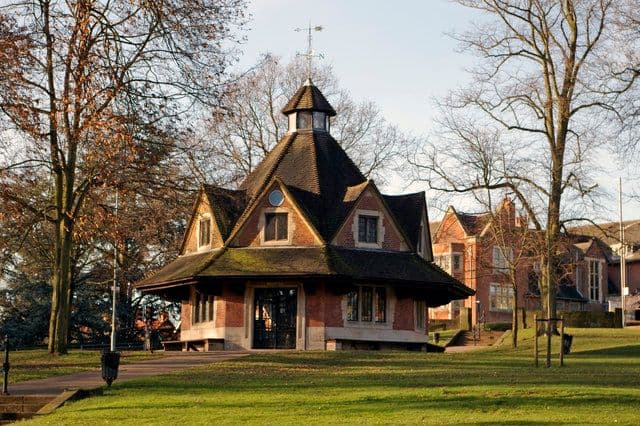
In the last year of his life he was building 33 almshouses near the new village, single-storey cottages round a green quadrangle with a clock tower, for old people and especially for the firm’s pensioners. To pay for their upkeep for ever, he built 38 ordinary houses on the roads beside them and gave the rents. The residents were to have fire, light, medical care and medicine free, and the old orchard of Bournville Hall behind the quadrangle was tied to the almshouses so that it could not be built over. Historic England dates the almshouses, designed by Ewan Harper, to 1897. Shortly before he left England for the last time, Richard admitted the first six residents himself.
Death in Jerusalem
Early in 1899 Richard and Emma set out with members of their family on a tour of Egypt and Palestine. He fell ill with diphtheria on the way. He reached Jerusalem, seemed to rally, and died there on 22 March 1899. His family brought his body home, and he was buried at Lodge Hill Cemetery, Selly Oak. Later that year Cadbury Brothers became a limited company, with George as chairman.
Why it mattered
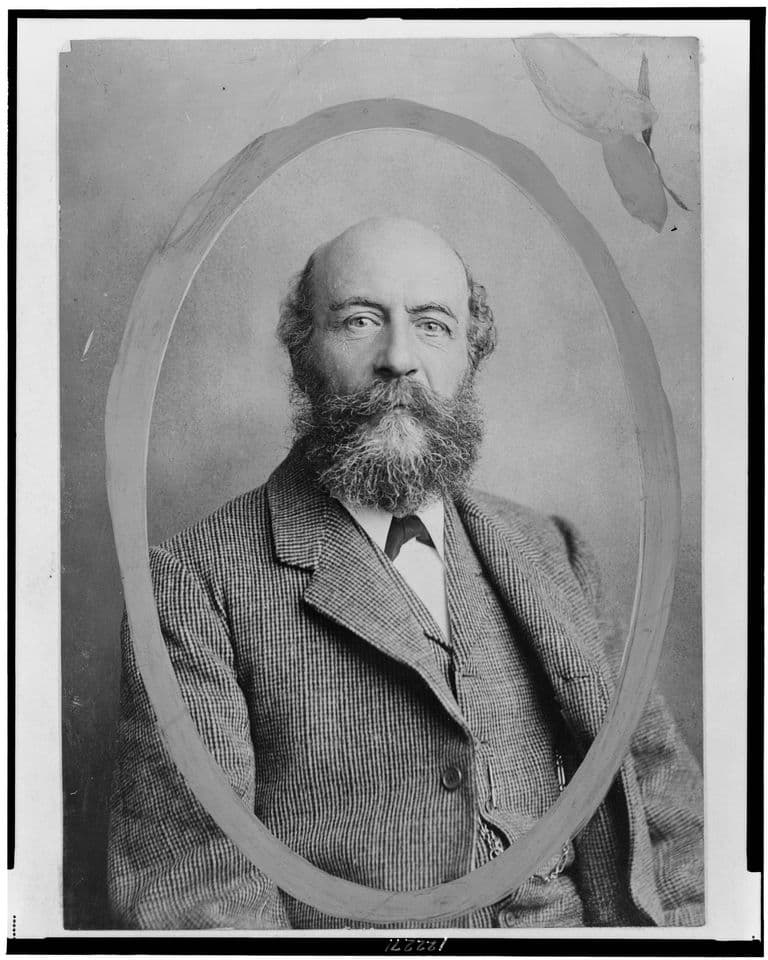
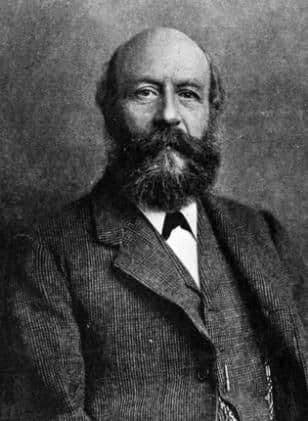
Richard Cadbury is the less famous brother, and it is easy to forget that Cadbury Brothers meant two brothers. George had the drive and the big ideas. Richard kept the accounts, sold the cocoa, steadied the partnership through the lean years and gave his share of the money away.
His almshouses of 1897, designed by Ewan Harper as single-storey cottages round a quadrangle on Mary Vale Road, still stand on the Bournville estate and are Grade II listed, paid for by the houses he built beside them. Moseley Hall became a home where sick city children could recover. He shared in the move to Bournville, the decision that made the firm’s name, but he did not live to see the village grow. His sons, Barrow and William, became directors of the new company, and the Barrow Cadbury Trust still carries the family name.
On the map
4 places connected with Richard Cadbury. Tap a number for directions — some sites are private homes or gardens, so each place’s page says what you can see from the street.

- John Cadbury’s shop, 93 Bull Street (site) — Lost, Site redeveloped · Directions to John Cadbury’s shop, 93 Bull Street (site) (opens Google Maps)
- Bournville village — Surviving · Directions to Bournville village (opens Google Maps)
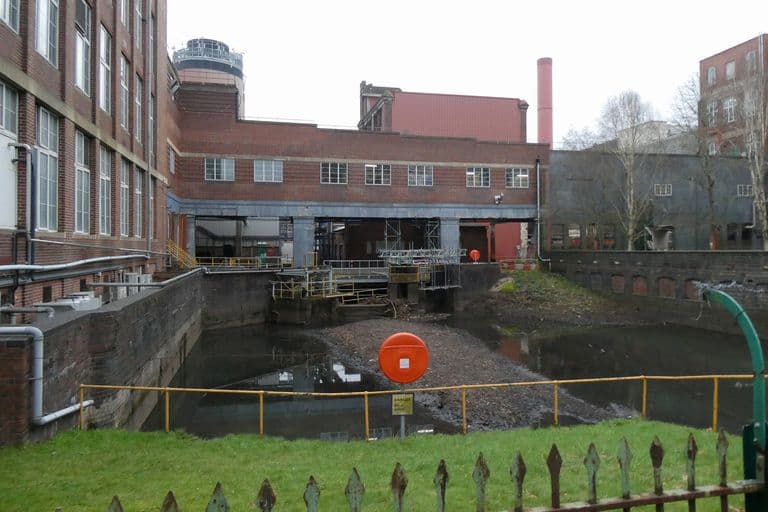
- Bournville works (Cadbury) — Surviving, Surviving but altered · Directions to Bournville works (Cadbury) (opens Google Maps)
- Cadbury’s Bridge Street works — Lost, Site redeveloped
Key dates
- 1861 — Richard and George Cadbury take overJohn Cadbury retires and hands the failing Bridge Street cocoa works, with about a dozen employees, to his sons Richard (25) and George (22). They put in about £10,000 of family money and nearly fail by 1863.
- 1866 — Cadbury’s Cocoa Essence goes on saleUsing a Dutch press to remove cocoa butter, Richard and George Cadbury launch Cocoa Essence, sold as “Absolutely pure”, at a time when most cheap cocoa was bulked out with starch and other fillers.
- 1879 — Cadbury moves to BournvilleRichard and George Cadbury build a new factory on the Bournbrook estate, four miles south of Birmingham, with playing fields and sixteen foremen’s houses. Bridge Street closes and the works moves in the autumn.
- 22 March 1899 — Richard Cadbury dies in JerusalemRichard Cadbury dies of diphtheria in Jerusalem during a family tour of Egypt and Palestine. He is buried at Lodge Hill Cemetery, Selly Oak, and Cadbury Brothers becomes a limited company under George.
Sources and further reading
Much of this account comes from Richard Cadbury of Birmingham (1906), written by his daughter Helen Cadbury Alexander under the name Helen C. A. Dixon, and from Gardiner’s admiring life of George (1923); both are family-friendly sources. The division of roles (George production, Richard sales) comes from Cadbury’s own history. The almshouses are dated 1897 in the Historic England list entry; Dixon places the work in the last year of his life. The date of the move to Uffculme is given by Dixon only as part of the period 1892–96, but the convalescent home at Moseley Hall opened in 1891.
- Richard Cadbury of Birmingham — Helen C. A. Dixon (Helen Cadbury Alexander), Hodder and Stoughton, 1906. chs. 2, 4, 14–18, 28–29
- The Quadrangle (Bournville Almshouses), Mary Vale Road — National Heritage List for England entry 1076259 — Historic England
- Life of George Cadbury — A. G. Gardiner, Cassell, 1923. ch. 3
- The Cadbury Story — Cadbury UK
- Richard Cadbury — Grace's Guide
- Economic and Social History: Industry and Trade, 1500–1880, in A History of the County of Warwick, vol. 7, pp. 81–139 — W. B. Stephens (ed.), Victoria County History, 1964
Comments
Comments will load here.