
What was here?
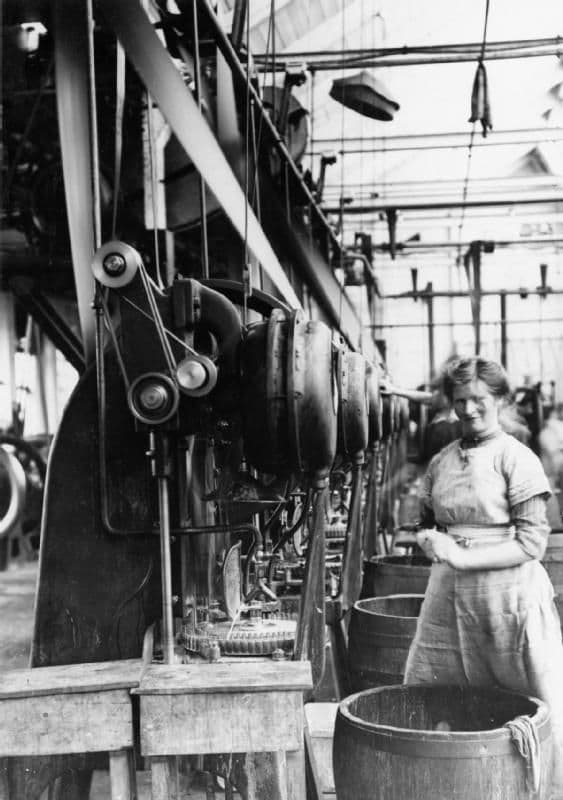
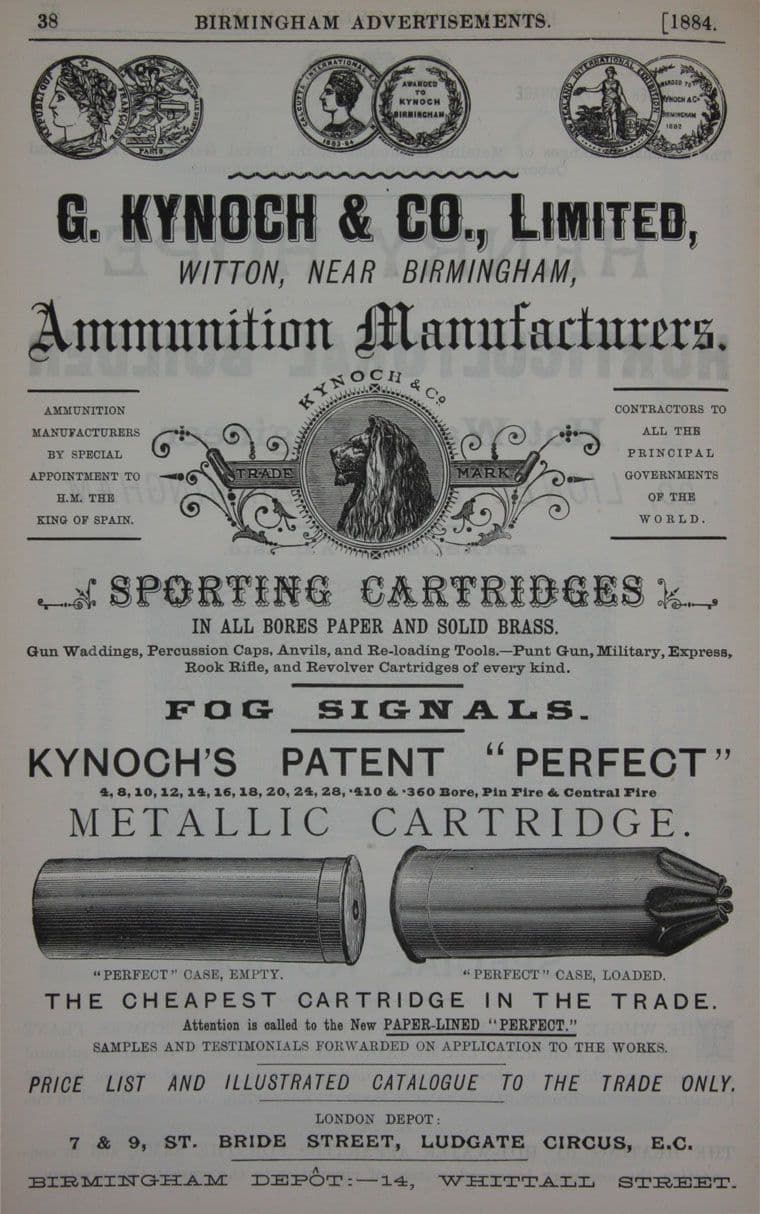
Before the Holford industrial estate and later development around Brookvale Road, this was Kynoch’s Lion Works: an ammunition and non-ferrous metals works that grew from a four-acre percussion-cap factory in 1861 into one of north Birmingham’s biggest employers.
History
It began with an explosion. In 1859 Pursall and Phillips’ percussion-cap works on Whittall Street, in the middle of Birmingham, blew up. Two years later, in 1861, a powder magazine and percussion-cap works was licensed on a four-acre site out at Witton, outside the town.
Kynoch
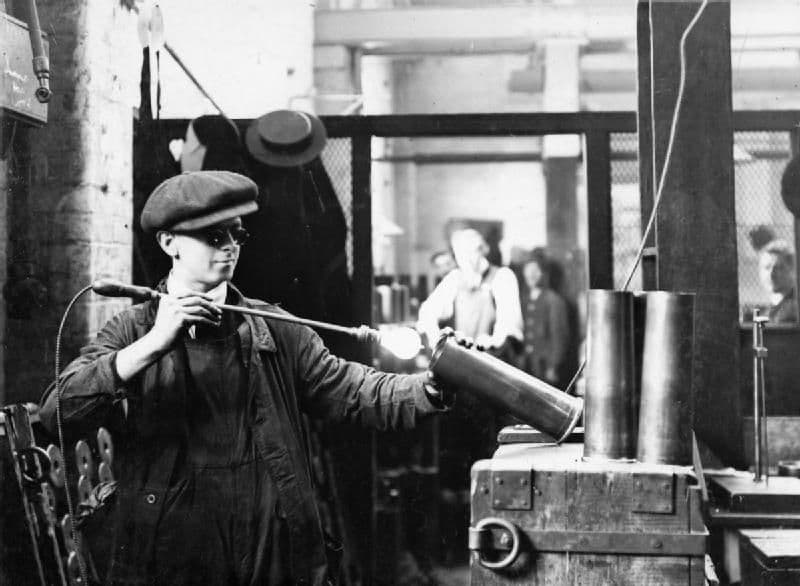
In 1862 George Kynoch was recognised as the proprietor, and the works took his name. Under him and his successors it grew from a cap factory into a major maker of ammunition and metal goods.
The business became a limited company, Kynoch Ltd, in 1884. Arthur Chamberlain, Joseph Chamberlain’s brother, became chairman in 1888, and the company was refloated in 1897. In 1902 it bought the neighbouring Holford Works, which is why the later industrial estate carries the Holford name. By 1914 it employed about 5,000 people. The First World War made it part of a bigger story: in 1918 it joined Explosives Trades, part of Nobel Industries, and in 1926 it passed into the new Imperial Chemical Industries. Witton became ICI’s centre for ammunition and metals.
From ICI to IMI
In 1962 the metals business became IMI, and in 1977 IMI became independent of ICI. For more than a century, then, this one site in Witton passed through the hands of some of the largest firms in British industry.
The works’ war service is remembered on site. The IWM War Memorials Register records the ICI Kynoch Works memorial for the Second World War, which stands “by the Main Gate” on Brookvale Road. It commemorates 64 service personnel and 17 civilians, and the register records it in good condition at its original location.
Running down
The end came in stages. From 1983 IMI and the city council developed half of the site as the Holford industrial estate. In 2003 IMI moved its headquarters to near Birmingham Airport, and most of the remaining buildings were demolished. A photograph caption on the Outer Circle bus history site records the “IMI Witton gates & head office building 2003 – not long before demolition”. The last associated firms left around 2014.
What remains
The memorial by the main gate is the clearest survivor. The factory that carried Kynoch’s name has mostly gone.
The Lion Works tells the whole arc of Birmingham’s heavy industry in one site. It was born out of danger, after an explosion in the town centre. It grew into a giant under Kynoch and Chamberlain, and was absorbed into ICI and IMI. Then, piece by piece, it gave way to industrial units. The memorial by the gate on Brookvale Road still commemorates 64 service personnel and 17 civilians from the Second World War.
What happened here?
Percussion caps, ammunition and non-ferrous metals were made here from 1861, under George Kynoch, Kynoch Ltd, ICI and IMI.
Why it mattered
The Lion Works was one of north Birmingham’s largest employers, with about 5,000 workers in 1914, and a centre of Britain’s ammunition and metals industry under Kynoch, ICI and IMI. It was set up at Witton after the 1859 explosion at Whittall Street in the town centre, and its run-down from the 1980s traces the end of heavy industry in the area.
Why it disappeared
Industrial decline · Redevelopment
From 1983 half the site was developed as the Holford industrial estate. IMI moved its headquarters to near Birmingham Airport in 2003, and most of the remaining buildings were demolished; associated firms left about 2014 (Staffordshire Home Guard history of Kynoch).
What’s there now
What replaced it
The Holford industrial estate (from 1983) on half the site, and later development after the demolitions that followed 2003.
What survives
The ICI Kynoch Works Second World War memorial by the main gate on Brookvale Road (B6 7BA), recorded by the IWM War Memorials Register as in good condition at its original location. The state of the gatehouses is unknown.
Today
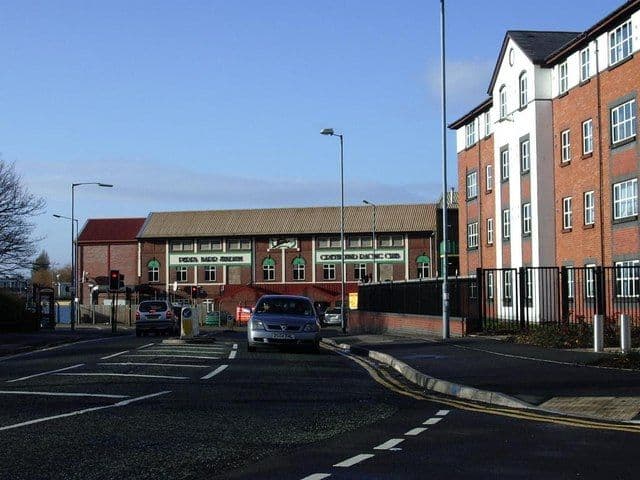
The area between Wellhead Lane, Perry Barr, and Brookvale Road, Witton, is now largely industrial units and later development. The memorial stands by the main gate on Brookvale Road.
Key dates
- 1861 — Percussion-cap works licensed at WittonAfter the 1859 explosion at Whittall Street, a powder magazine and percussion-cap works is licensed at Witton. George Kynoch becomes proprietor in 1862.
- November–December 1870 — Explosions at Witton and Ludlow’s cartridge worksAn explosion at Kynoch’s Witton works kills eight; three weeks later one at Ludlow & Co.’s neighbouring cartridge works kills 51. The outcry brings government regulation of cartridge-filling.
- 6 July 1884 — Kynoch’s becomes a limited companyGeorge Kynoch sells his Witton ammunition business to a new limited company for £260,000 in cash plus shares. Four years later he is forced off the board and Arthur Chamberlain becomes chairman.
- November 1918 — Kynoch joins Nobel IndustriesKynoch Ltd, whose Witton works employed about 18,000 people in the war, joins the explosives merger that becomes Nobel Industries. In 1926 Nobel becomes part of ICI, and Witton becomes ICI Metals in 1929.
- c. after 2003 — Most of the Witton works demolishedIMI moves its headquarters to near Birmingham Airport, and most of the remaining buildings of the former Kynoch works at Witton are demolished.
Sources and further reading
The works’ history here relies mainly on the Staffordshire Home Guard website’s history of Kynoch and on Grace’s Guide; these agree but are not primary records. The Outer Circle bus history page’s statement that Kynoch owned the company “by 1836” is a typing error and is not used.
A report that the twin gatehouses were threatened in 2016 is unverified, and their present state is unknown. The main works have not been plotted from historic OS maps; the pin shows only the general area.
- History of Kynoch, part 1 — Staffordshire Home Guard website
- History of Kynoch, part 2 — Staffordshire Home Guard website
- Kynoch — Grace’s Guide to British Industrial History
- ICI Kynoch Works — WW2 (War Memorials Register 28357) — Imperial War Museums
- Then & Now on the Outer Circle: stage 25 — Outer Circle bus history
- A History of the County of Warwick, vol. 7: The City of Birmingham — Industry and Trade, 1880–1960, pp. 140–208 — W. B. Stephens (ed.), Victoria County History, 1964
- Obituary of George Kynoch, MP — Birmingham Daily Post, Birmingham Daily Post, 1891. Ref. Birmingham Daily Post, Monday 2 March 1891
- George Kynoch — Grace’s Guide to British Industrial History
Archive references: Media Archive for Central England (MACE) Kynoch Works, Birmingham (film)


Comments
Comments will load here.