
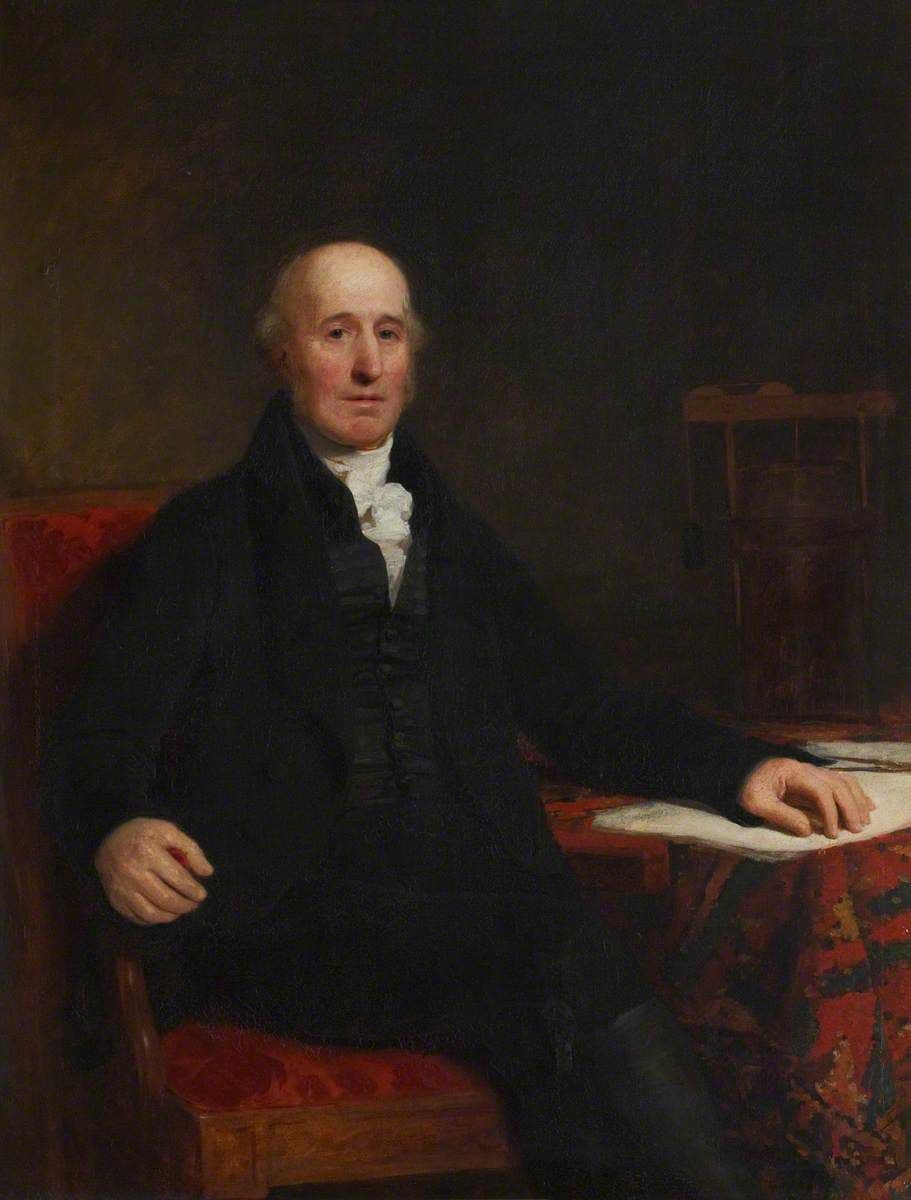
The most famous story about William Murdoch is a hat. In the version told by Victorian biographers, a young Scot turned up at Soho looking for work, and Matthew Boulton was so struck by the wooden hat on his head — turned on a lathe of the man’s own making — that he hired him on the spot. It is a lovely tale. It is also exactly that: a tale, which comes from Victorian biography rather than the records. What the records do show is a mechanic of genius who spent more than fifty years with Boulton & Watt, and who lit up a factory with coal gas.
The long road south
William Murdoch was born on 21 August 1754 at Bellow Mill, near Old Cumnock in Ayrshire. His father, John Murdoch, was a millwright.
In 1777 he joined Boulton & Watt at Soho. The Revolutionary Players project says he walked about 300 miles to get there. In Scotland his family spelled the name Murdoch. In England he came to use Murdock, and that is how the old Dictionary of National Biography files him. The Golden Boys statue in Centenary Square says Murdoch.
Cornwall
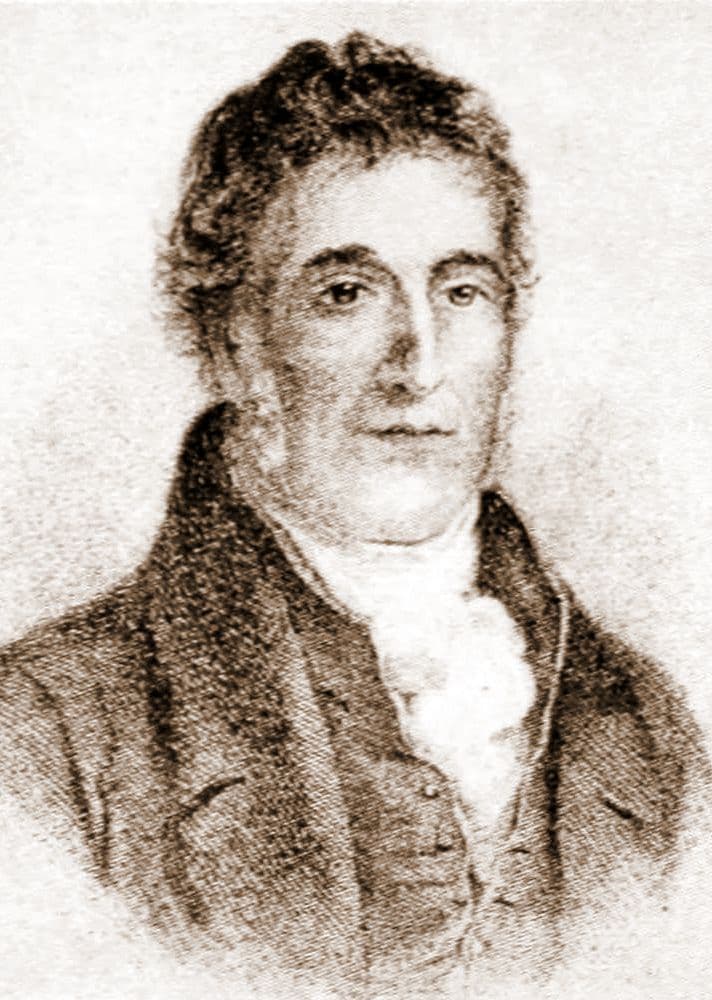
Within a couple of years the firm sent him to Cornwall. From about 1779 until the end of the 1790s he lived at Redruth, putting up Boulton & Watt pumping engines and keeping them running.
He could not stop inventing. In his spare time he built a model steam carriage. Watt was not impressed. On 31 August 1784 he told Boulton it would take “much time to bring it to any tolerable degree of perfection”. On 12 September 1786 he was “extremely sorry that W.M. still busys himself with the Steam carriage”. The firm never developed it. So Boulton & Watt did not invent the locomotive — but their man in Redruth had been thinking about it.
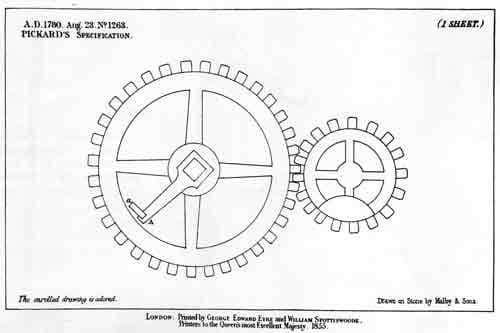
Murdoch also built a model oscillating-cylinder engine around 1784. And the sun-and-planet gear, the device that let Watt’s engines turn wheels, was patented in Watt’s name in 1781. The Library of Birmingham is plain about it: “the initial invention was by the Soho manufactory engineer William Murdoch.” The fairest wording is that it is usually credited to Murdoch, though patented by Watt.
Burning coal for light
In Redruth, around 1792, Murdoch began heating coal and capturing the gas it gave off. He piped it through his house and offices and burned it for light. It was the start of the work that made his name.
He was not the only person in Europe working on gas lighting at this time, so it is wrong to say he invented it alone. But he was one of its great practical pioneers, and he did it inside a working industrial firm.
Back to Soho
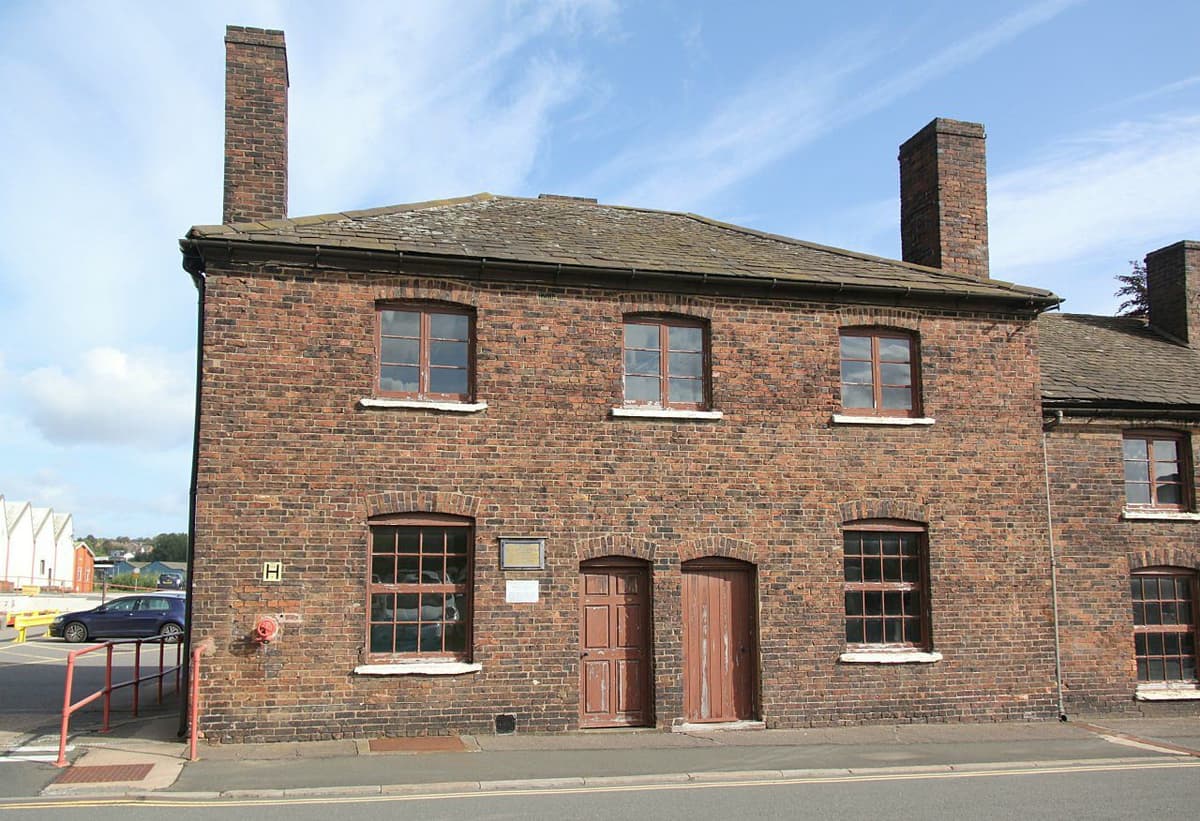
At the end of the 1790s Murdoch came back to the Birmingham area, to the new Soho Foundry at Smethwick, built in 1795–96 to make complete steam engines. The Historic England listing says he became foundry manager in 1798, and a formal agreement making him engineer and superintendent was signed on 30 March 1800. In 1799 he devised the long D slide valve for steam engines.
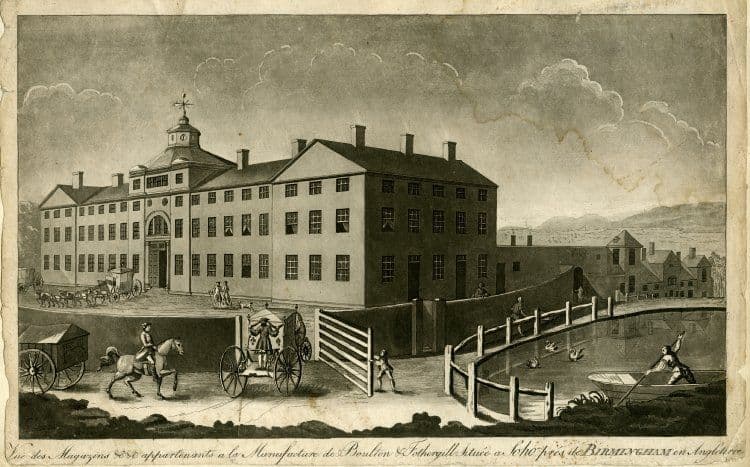
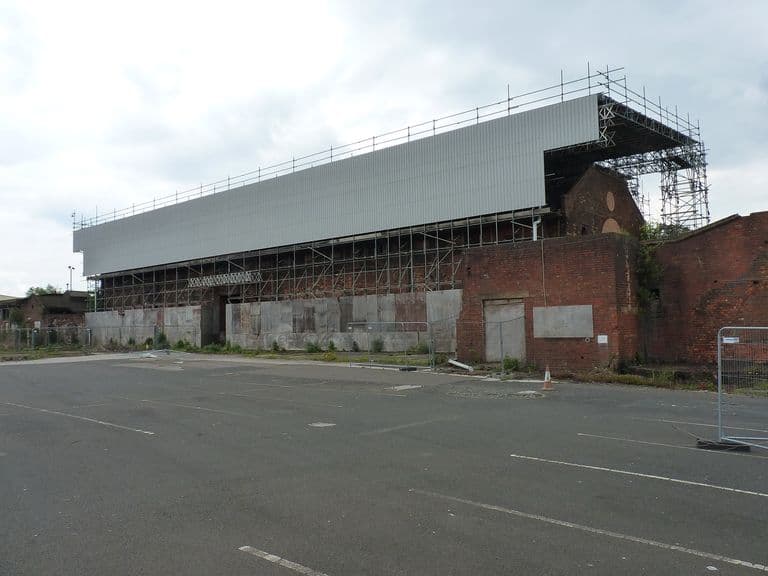
The Foundry was a different place from Boulton’s Manufactory, about 1.8 kilometres to the west, beside the Birmingham Canal in Smethwick. Under Murdoch and the sons it turned out complete engines, and from 1804 marine engines too. Steam engines were made there until 1895, when the works passed to W. & T. Avery. Remarkably, the original foundry building of 1795–96 still stands, listed Grade II* and protected as a scheduled monument, though it is on Historic England’s Heritage at Risk register.
In March 1802 Britain celebrated the Peace of Amiens with illuminations. At Soho, lights burning gas were shown at each end of the Manufactory. It is easy to imagine the whole factory blazing, but the evidence does not support that. The Dictionary of National Biography says the gas was used “to a small extent … not in a manner to attract much attention”.
The real breakthrough was quieter and more lasting. Soho Foundry itself was lit by gas, from somewhere between 1798 and 1803 depending on the source, making it, in Historic England’s words, one of the earliest factories lit by gas. In 1804–06 Murdoch put in a gas plant for Phillips & Lee’s cotton mill in Salford. In February 1808 he read a paper on coal-gas lighting to the Royal Society, which awarded him its Rumford Medal that year.
His assistant at Soho, Samuel Clegg, went on to become a gas engineer in his own right.
Sycamore Hill
In 1816 or 1817 Murdoch built himself a house at Sycamore Hill in Handsworth. True to form, it was lit by gas and fitted with pneumatic bells. By 1830 he was, as the Dictionary of National Biography puts it, “practically retired”.
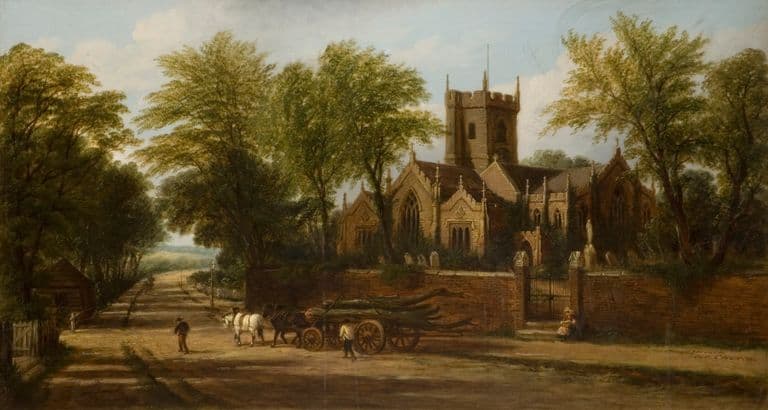
He died at Sycamore Hill on 15 November 1839, “within sight of the Soho foundry”. He was buried at St Mary’s Church, Handsworth, alongside Boulton and Watt. His monument there, facing Boulton’s, is a stone bust by Francis Chantrey set in a pointed arch. The house has gone; its site is now Murdock Grove.
The third Golden Boy
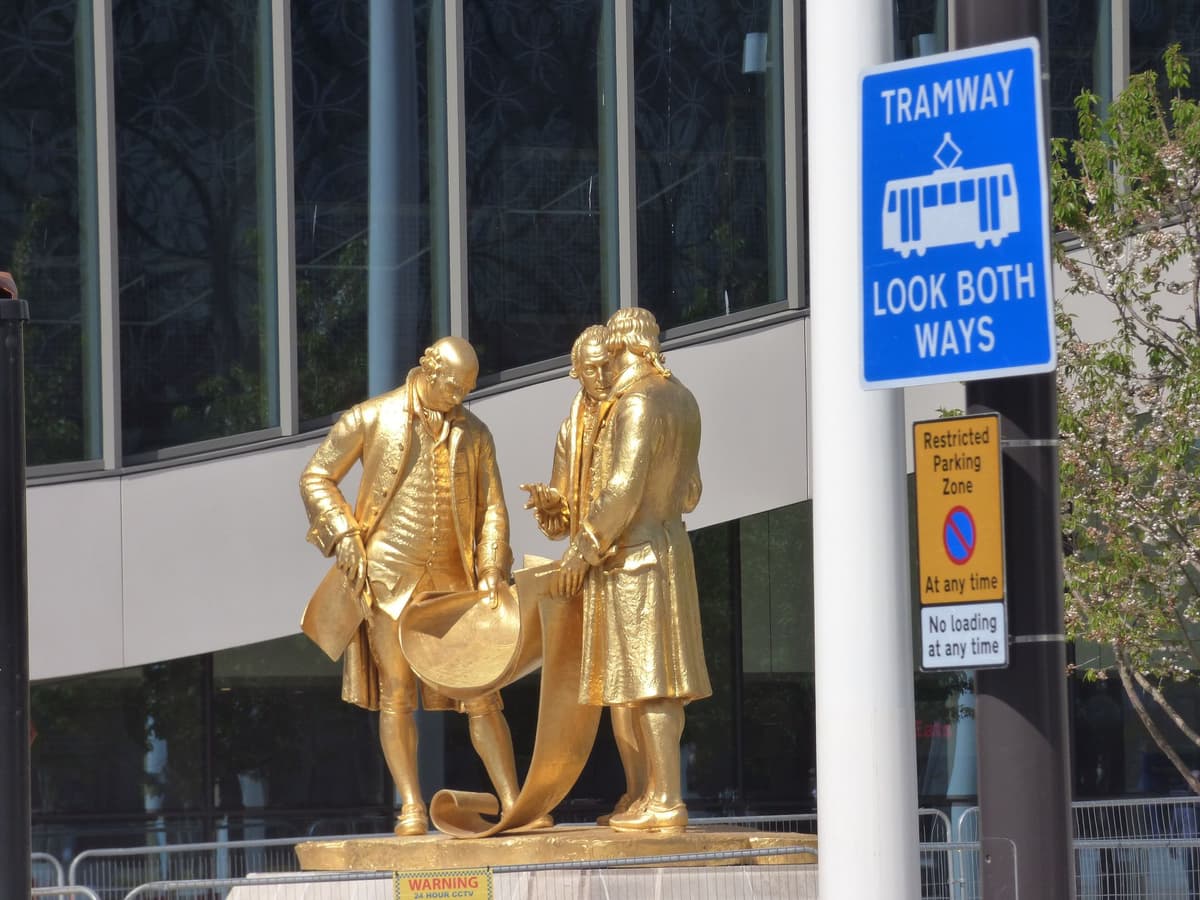
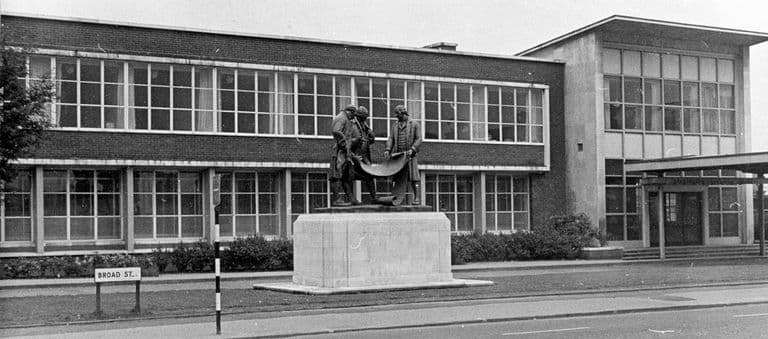
Birmingham chose to honour the three men together. In 1938 the sculptor William Bloye, assisted by Raymond Forbes-Kings, designed a single gilded bronze group of Boulton, Watt and Murdoch. It was funded in 1939, from a bequest by Richard Wheatley and a grant from the City Council, but it was not unveiled until 14 September 1956, on Broad Street. It went into storage in 2017 and returned to Centenary Square, outside Symphony Hall, on 29 April 2022.
A footnote on slavery
In 2021 Birmingham Museums Trust asked the historian Stephen Mullen to look at all three men on the Golden Boys statue. Watt was the only one of the three with a documented direct link to trafficking an enslaved person. The large trade in steam engines for Caribbean sugar estates came after 1800, under the firm run by Boulton’s and Watt’s sons.
Why it mattered
Murdoch never had his name on the firm, and for a long time he lived in his employers’ shadow. His engines kept Cornish mines dry, his gear helped Watt’s engines turn, and his gas lit one of the first factories to be lit by gas. The gaslight that spread through nineteenth-century Britain owed much to pioneers like him. In Redruth, where it began, Richard Tangye put up a commemorative tablet in 1892. In Birmingham his name is on Murdock Grove, his bust by Chantrey is in St Mary’s, Handsworth, and his stone, spelled “Murdock”, stands with the Lunar Society Moonstones at Queslett. Above all, he is the third of the gilded Golden Boys, back in Centenary Square since April 2022. The man the story remembers for a wooden hat should be remembered for light.
On the map
5 places connected with William Murdoch. Tap a number for directions — some sites are private homes or gardens, so each place’s page says what you can see from the street.

- Boulton, Watt and Murdoch (“The Golden Boys”) — Relocated · Directions to Boulton, Watt and Murdoch (“The Golden Boys”) (opens Google Maps)
- St Mary’s Church, Handsworth — Surviving · Directions to St Mary’s Church, Handsworth (opens Google Maps)
- Watt’s house at Harper’s Hill (Regent Place) — Lost, Partly surviving · Directions to Watt’s house at Harper’s Hill (Regent Place) (opens Google Maps)
- Soho Foundry — Partly surviving, At risk · Directions to Soho Foundry (opens Google Maps)
- Soho Manufactory — Lost, Site redeveloped · Directions to Soho Manufactory (opens Google Maps)
Key dates
- 1777 — William Murdoch joins Boulton & WattThe young Ayrshire millwright’s son William Murdoch joins the firm at Soho. He will work for Boulton & Watt for more than fifty years.
- 1781 — Sun-and-planet gear patentedWatt patents the sun-and-planet gear, which lets his engines drive wheels. The Library of Birmingham credits the original invention to William Murdoch.
- 1795–96 — Soho Foundry is built at SmethwickBoulton & Watt, led by their sons, build a foundry beside the Birmingham Canal to make complete steam engines on one site. Historic England describes it as the first factory built for the purpose.
- March 1802 — Gas lights at Soho for the Peace of AmiensGas lights are shown at each end of the Soho Manufactory during celebrations for the Peace of Amiens — a small display by William Murdoch, not a floodlit factory.
- 14 September 1956 — The Golden Boys are unveiledSir Percy Mills unveils William Bloye’s gilded bronze of Boulton, Watt and Murdoch on Broad Street, designed in 1938 and delayed by the war.
- 29 April 2022 — The Golden Boys return to Centenary SquareAfter five years in store during the Metro works, the statue of Boulton, Watt and Murdoch is reinstalled in Centenary Square outside Symphony Hall.
Sources and further reading
The wooden hat: the anecdote comes from Victorian biography (Samuel Smiles) and is repeated on Wikipedia. It is not documented and is told here only as a story.
The walk to Soho: “about 300 miles” is from Revolutionary Players and is not independently documented.
Name: his Scottish family wrote Murdoch; he used Murdock in England; the DNB and ODNB use Murdock; the statue uses Murdoch.
Return to Soho: 1798 (Soho Foundry listing), c.1799 (Revolutionary Players), formal agreement 30 March 1800 (DNB). The text says “at the end of the 1790s”.
Gas at Soho Foundry: the scheduling text says 1798, the list entry 1800–03, the DNB and Revolutionary Players 1803. The 1802 display rests mainly on Samuel Clegg’s later account and an 1805 note in Nicholson’s Journal.
Gas lighting priority: others, including in France, worked on gas lighting at the same time; he is described as “a pioneer”.
Sycamore Hill: built 1816 (DNB) or 1817 (Dargue). One lead-only source says it was demolished in 1927; this is not used.
- Murdock, William — Dictionary of National Biography, vol. 39 — R. B. Prosser, Smith, Elder & Co., 1894
- A Portrait of William Murdoch — Revolutionary Players, History West Midlands
- Coach design — Archives of Soho — Library of Birmingham, Birmingham City Council. Ref. MS 3782/12/78/133; MS 3782/12/79/73
- Steam engines — Archives of Soho — Library of Birmingham, Birmingham City Council. Ref. MS 3782/12/1/2
- Soho Foundry, former Boulton and Watt foundry, pattern stores and erecting shops — National Heritage List for England entry 1268451 — Historic England
- Remains of the Boulton and Watt Soho foundry and mint, Birmingham Canal, Smethwick — Scheduled Monument 1021388 — Historic England
- Church of St Mary, Hamstead Road, Handsworth — National Heritage List for England entry 1076358 — Historic England
- Our History — St Mary’s Church Handsworth
- Sycamore Hill — A History of Birmingham Places & Placenames from A to Y — William Dargue
- The Soho Manufactory, Mint and Foundry, West Midlands: Where Boulton, Watt and Murdoch Made History — George Demidowicz, Historic England / Liverpool University Press, 2022
- Matthew Boulton, William Murdock and James Watt: Appraisal for ‘Golden Boys’ Statue — Stephen Mullen, Birmingham Museums Trust, 2021
- Boulton, Watt and Murdoch (statue) — Wikipedia
- Birmingham – Matthew Boulton, James Watt and William Murdoch — R. & D. van der Krogt (Hither & Thither)
- Lunar Society Moonstones — Wikipedia
Comments
Comments will load here.