
What was here?
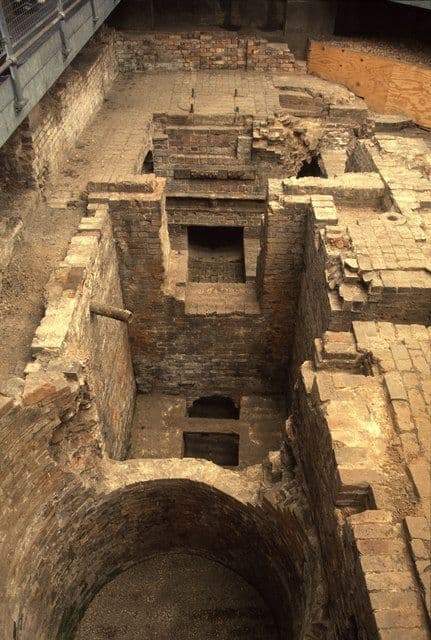
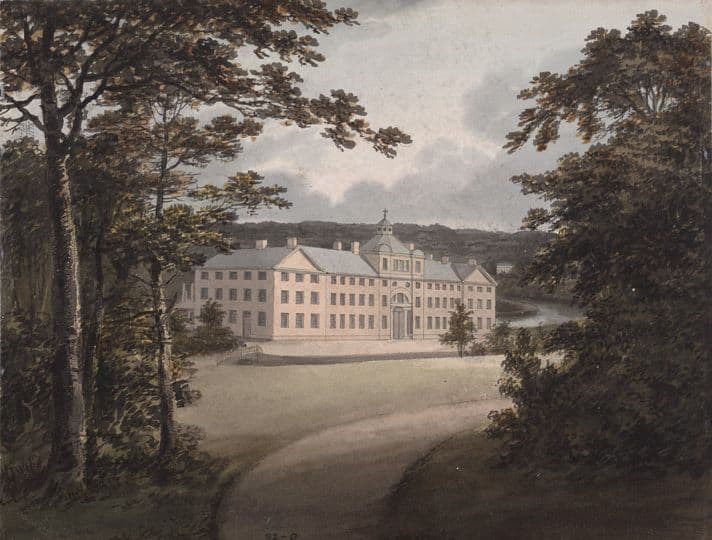
An engine house beside the Birmingham Canal at the top of the Smethwick locks, holding the Boulton & Watt pumping engine that kept the summit level full.
History
The summit problem
James Brindley’s Birmingham Canal crossed the Smethwick ridge with locks, because the ground was too unstable for a tunnel. Locks drink water. From May 1779 a Boulton & Watt engine stood here, beside the flight, pumping water back up to the summit; a second engine worked at the other end of the summit at Spon Lane, and another Boulton & Watt engine was added here in 1804.
In the 1820s Thomas Telford dug a new, lower canal through a deep cutting alongside, but the old engine was still needed. Telford built the Engine Arm Aqueduct to carry the branch canal that brought its coal across his new line.
Last strokes
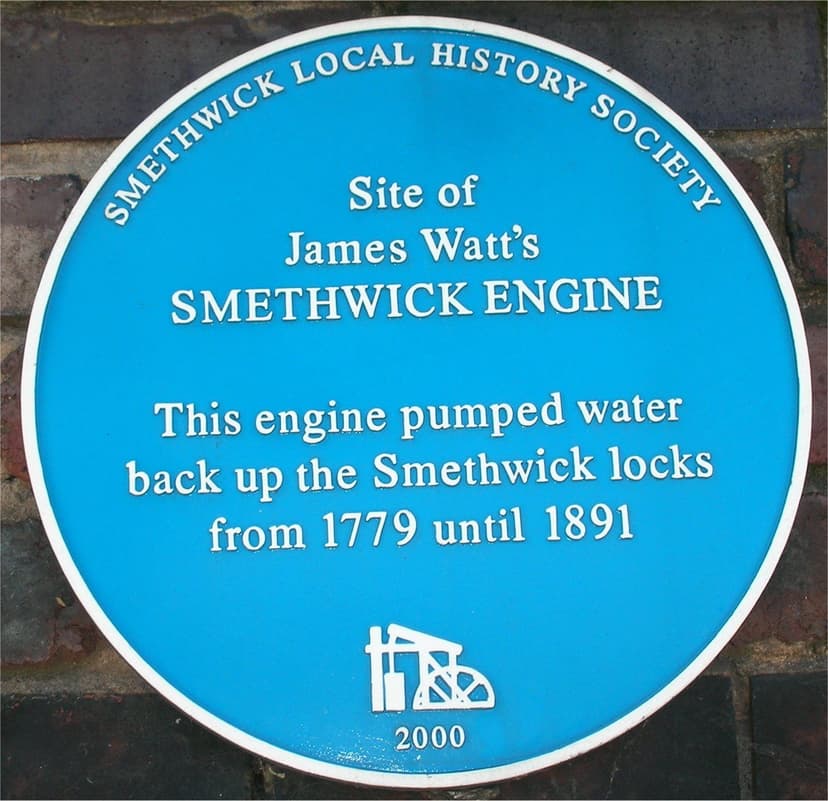
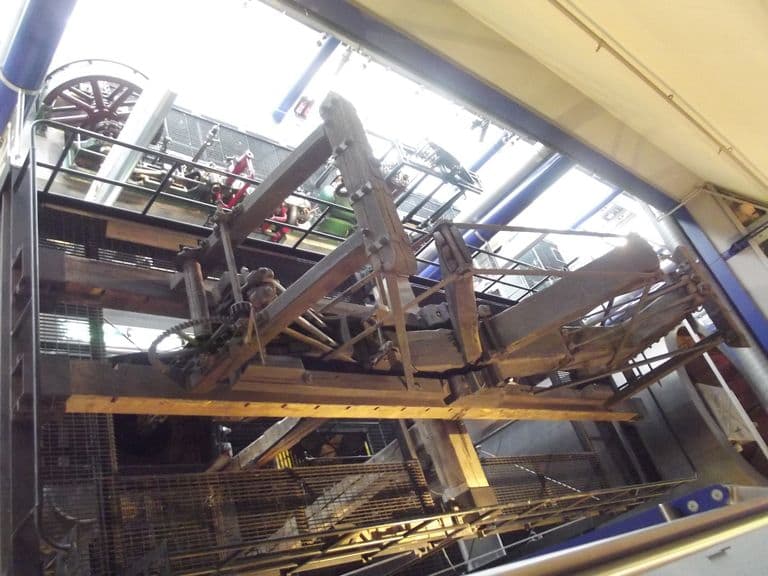
The Smethwick Local History Society’s plaque says the engine worked here until 1891. A new pumping house was built on Brasshouse Lane in 1892. The engine house was pulled down in 1897 and the engine taken away for preservation. It is now at Thinktank in Birmingham.
What is left
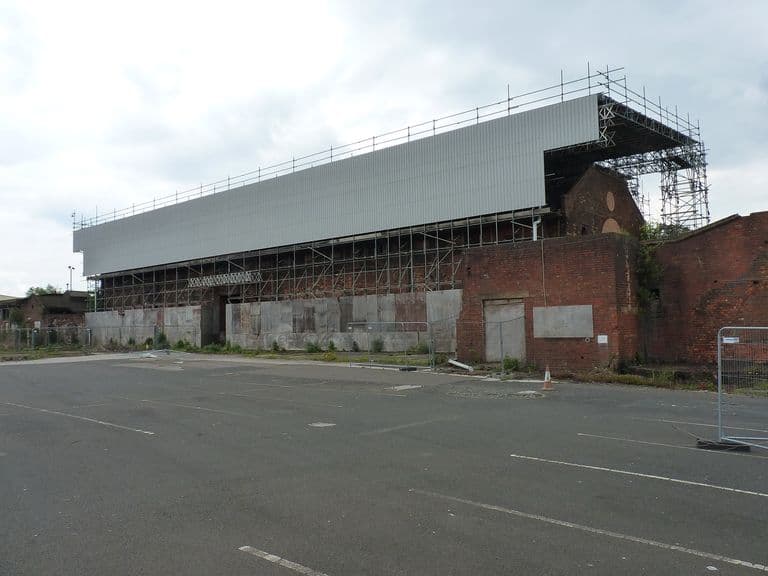
The engine’s foundations survive, excavated and covered by a later building at the corner of Bridge Street North and Rolfe Street. A blue plaque marks the site. Most people who pass it have no idea that the world’s oldest working engine once thumped away here.
What happened here?
A Boulton & Watt beam engine pumped canal water up the Smethwick locks here from 1779 until the 1890s.
Why it mattered
It is the working site of the oldest surviving working Boulton & Watt engine, a link between Watt’s invention, the canal network and the factories of Soho and Smethwick.
Why it disappeared
Condition of the building
The engine was considered uneconomic to repair and was replaced by a new pumping station in 1892; the old engine house was demolished in 1897.
The same spot, then and now
1888–1913
Today
Old map: Ordnance Survey six-inch, reproduced with the permission of the National Library of Scotland (CC BY 4.0). Today: © OpenStreetMap contributors.
What’s there now
What replaced it
A modern building over the excavated foundations; the new pumping house of 1892 on Brasshouse Lane took over the work.
What survives
The engine’s foundations, and the engine itself at Thinktank.
Today
A blue plaque on the building over the site, at Bridge Street North and Rolfe Street, Smethwick.
Then and now
Then · 13 November 1993
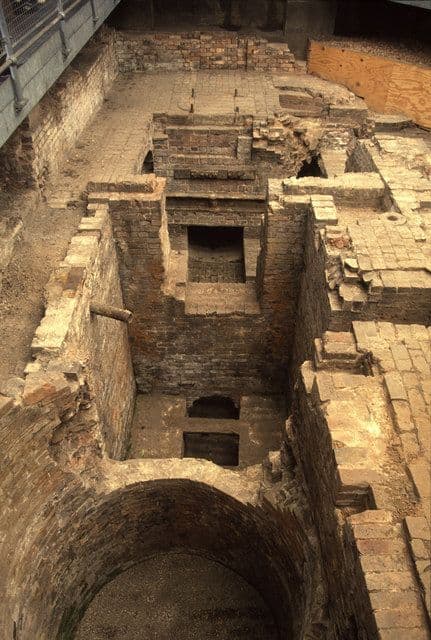
Now · Photographed 1 May 2007
Sources and further reading
End of work: 1891 (plaque) or after the replacement engine of 1892 (Wikipedia). The plaque’s erection date is not recorded.
Access to the foundations: a 1993 photograph caption says they are “rarely opened to the public”; Wikipedia says tours can be arranged through the Galton Valley Canal Heritage Centre. This has not been checked.
- Open Plaques plaque 10757 (site of James Watt’s Smethwick Engine) — Open Plaques
- Smethwick Engine — Wikipedia
- Smethwick Engine and Power Up — Birmingham Museums Trust
Comments
Comments will load here.